St. Angela School for Deaf and Blind
Project Snapshot
Country: Kenya
GPS Coordinates:
  Latitude 0.326100
Longitude 34.498050
Impact:
Total Served: 450
Status: Completed (?)
Completion Date (or estimate): 02/28/2011
Share this Project
Our implementing partner received this request for a new well in Kenya... (edited for clarity)
"We humbly request your esteemed establishment to consider supporting our school to get a developed well.
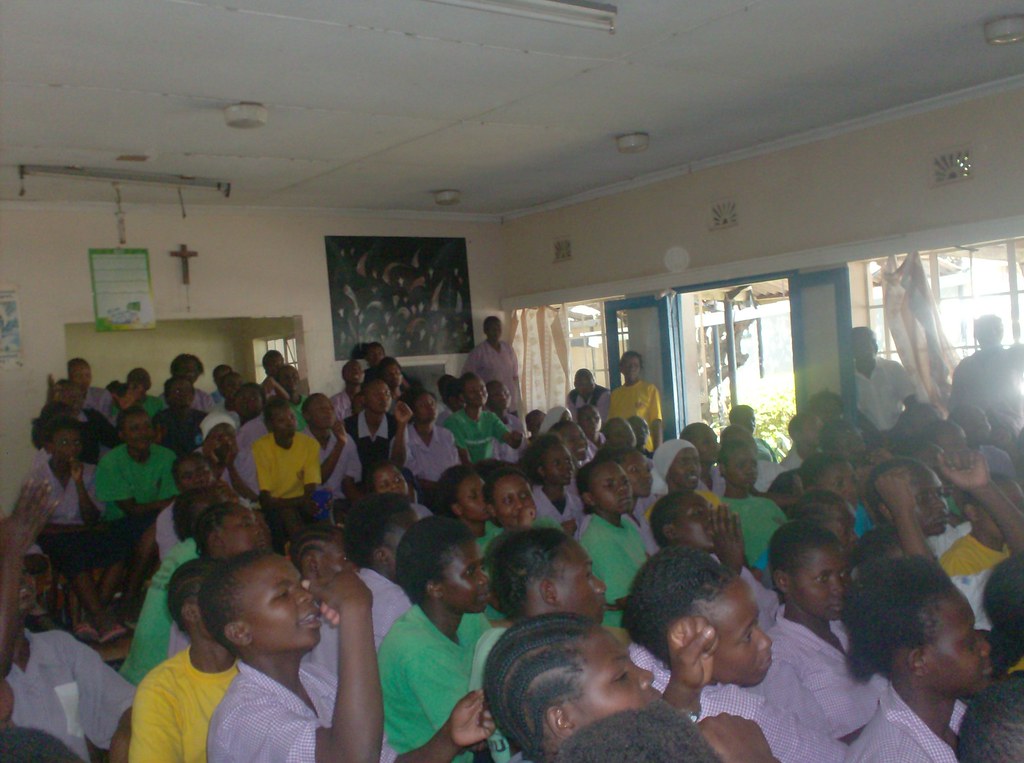
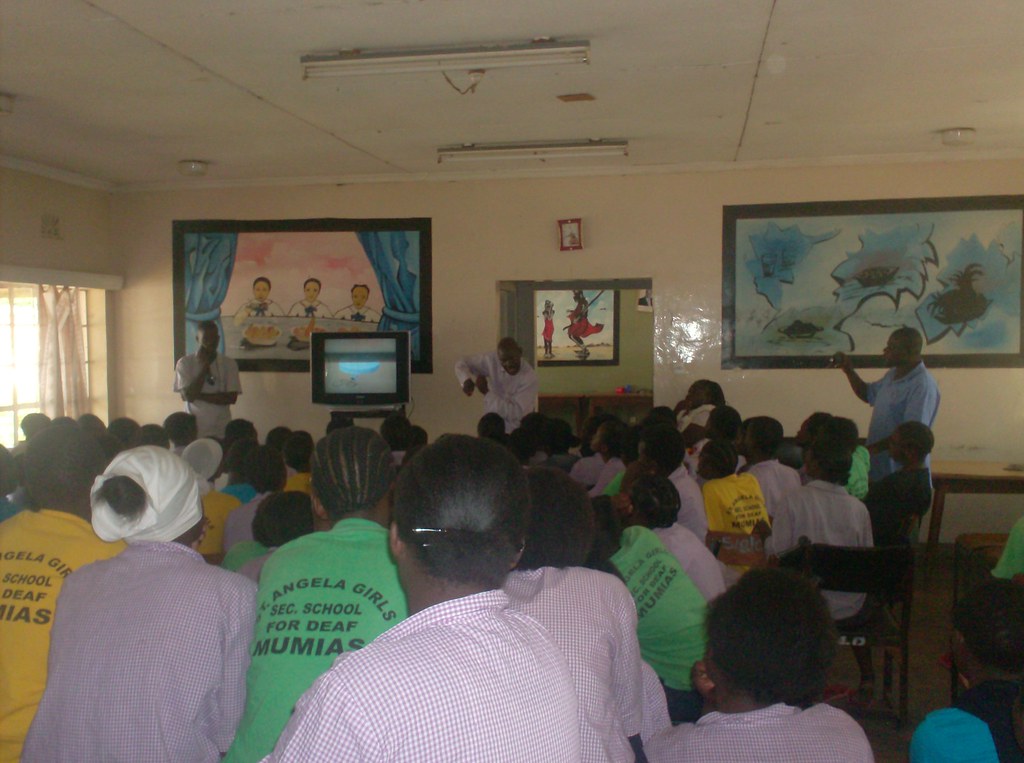
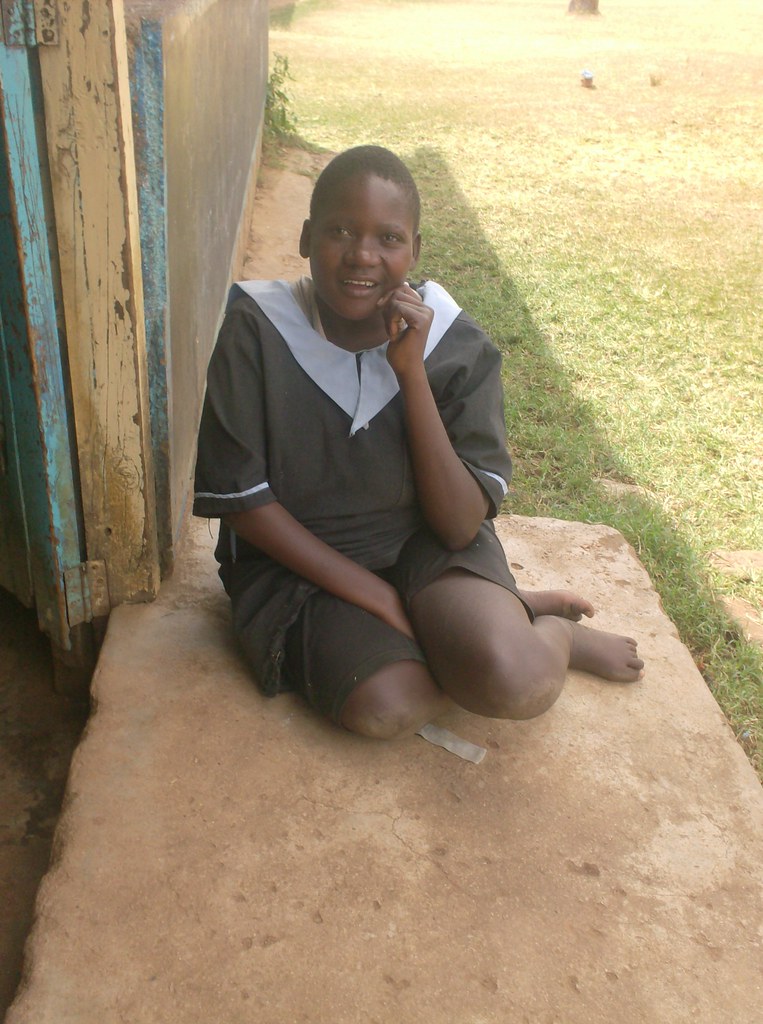
St. Angela Mumias Secondary Vocational School for Deaf Girls was founded by the Ursline Sisters of Netherlands in 1970 with an initial population of 5 deaf Girls pursuing vocational skills training. The institution is strategically located in Mumias Municipality; adjacent to St. Mary’s Mumias Mission Hospital along the Kakamega-Bungoma Highway. The school hosts students from East and Central Africa thus; Kenya, Uganda, Tanzania, Sudan, Somali and Mozambique.
The school got its legal mandate in 1975. A deaf-blind unit was added on the establishment in 1995. The secondary section was started in 1997. A technical training wing was later introduced in the year 2006. The school currently commands a population of 350 Students projected to be 450 by the year 2012. St. Angela Mumias Secondary Vocational for Deaf Girls has a teaching staff of 39 teachers and 28 support Staff.
Despite the early initiative of constructing classrooms and hostels, the initial sponsors missed the important need for an independent water source for the school in their plans. The water at the time of construction was under the ministry of water that had lower billing rates with adequate supply. Since then, the management of water resource was privatized and moved to Western Water Company. This culminated into hikes in water bills.
Failure by this same company to pay their electricity bills prompts Kenya Power and Lighting Company to disconnect power causing disruptions of water flow subjecting the school to lack of adequate water and utter lack of water during the dry spells.
The Deaf and Deaf Blind Girls have been subjected to a situation that compels them to fetch water from a stream. It is possible, as has been the case, that students get infected with typhoid prompting unexpected expenditure on treatment from their ill-resourced parents/guardians.
Also, from experience, the Deaf and Deaf Blind Girls are harassed by men and young boys who attempt to compromise and coerce them into sexual actions when they fetch this water. The fear of dogs enroute the water source makes the girls feel more vulnerable and insecure. At one time a girl was engaged by a harsh dog, chased and while getting to escape, she crashed into a glass dormitory door and received severe cuts.
We hope that if the well is developed, it will benefit our neighboring institutions that suffer the same problem of water scarcity such as St. Anne’s Mumias Girls Primary boarding School and St. Martin’s primary School for the Deaf Pupils."
The Project:
Funded by SodaStream, this well will serve the entire school and surrounding community. Construction is underway.
Project Photos
Project Photos
Recent Project Updates
03/08/2011: St. Angela Well is Complete
We've received word that the new well installed at the St. Angela Girl's school is now tested and complete. It has been officially handed over the the school administration for use!
The team recently attended a brief ceremony at the school to celebrate the new water source. It almost goes without saying, but it was a day of great joy at the school.
We're waiting on final reports from the project site and will update the project as we begin to hear about the impact this water project is having.
02/22/2011: St. Angela's Water Pump Installed
The pump has been installed at St. Angela's School for the Deaf and blind.
02/14/2011: St. Angela Girls School Test Pumping
Test pumping has been completed successfully at St. Angela school. The well pad is being constructed and will cure for a week before the pump is attached!
Good news indeed.
02/07/2011: St. Angela Girls School Well Drilled
A new well for the St. Angela Girls Schools near Kakamega, Kenya is now well into the construction phase.
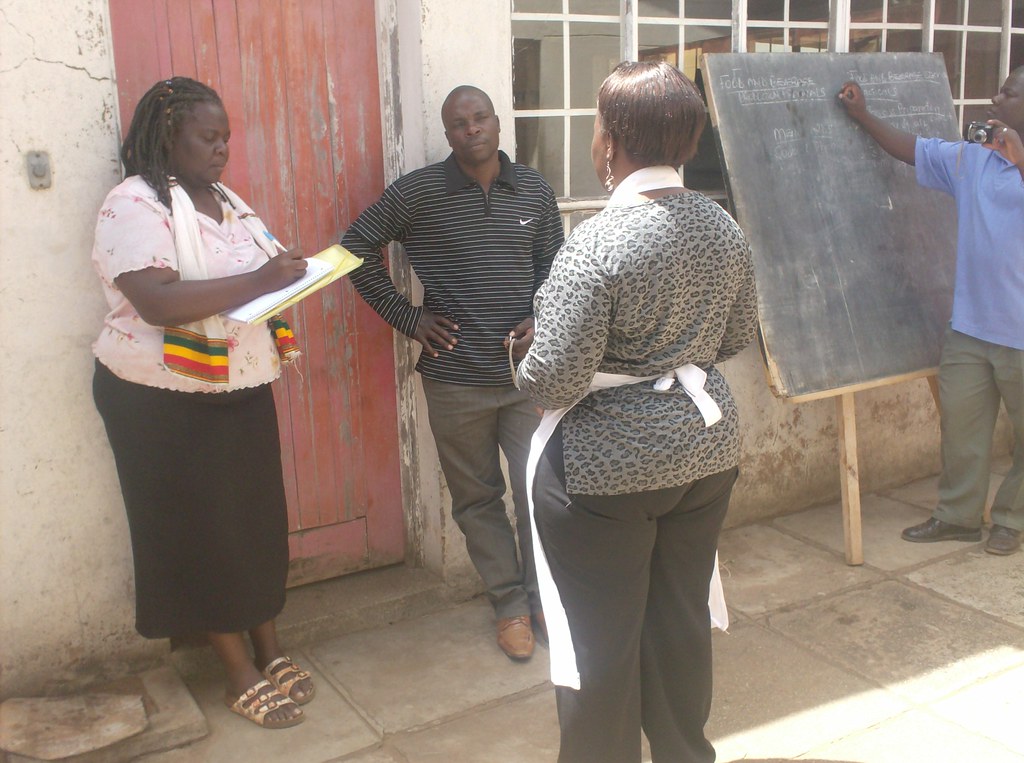
Our implementing partner visited the school to begin taking baseline surveys of the students and staff to document their current water situation and sanitation and hygiene knowledge. They also discussed sickness rates, time lost from studies to gather water, and other effects that a lack of reliable and safe water has had on the girls.
We take a baseline survey so that the team can return in six months or a year to assess what, if anything, has changed. It's important that we have something to measure.
While on site, the drill team also got to work. They borehole was sunk and water initially appears to be available. The next step is test-pumping to determine if there is adequate water in this borehole. We're all hopeful that will be the case.
Country Details
Kenya

- Population: 39.8 Million
- Lacking clean water: 43%
- Below poverty line: 50%
- Climate: Varies from tropical along coast to arid in interior
- Languages: English (official), Kiswahili (official), numerous indigenous languages
- Ethnic Groups:Kikuyu 22%, Luhya 14%, Luo 13%, Kalenjin 12%, Kamba 11%, Kisii 6%, Meru 6%, other African 15%, non-African (Asian, European, and Arab) 1%
- Life Expectancy: 57 years
- Infant Mortality Rate: 55 deaths per 1000 live births
Partner Profile
Bridge Water Project
BWP staff and crew were originally trained by David Hansen, a retired water engineer from California. David visited Kenya, saw a need, and then recruited and organized this team. He got them equipment and trained them how to use it. He also trained them how to manage their new business.
Today they are drilling at least one well per week. They work in communities they know and help mobilize them. They are able to return and fix broken parts. They are committed to seeing their own people changed when clean water comes.