Facts about Water:
Statistics of the Water Crisis
- STATISTICS OF THE WATER CRISIS
-
There are 2.1 billion people in the world living without access to safe water at home. -- source
-
In 2022, one in four people lacked safely managed drinking water. -- source
-
Compared with 2000, 583 million fewer people used unimproved sources and surface water in 2022. However, during that same period, the global population increased from 6.1 billion to 8 billion people. -- source
-
Nearly half (45%) of the 1.2 billion people in sub-Saharan Africa still collect water from sources not at home. -- source
-
Less than a third (31%) of the population in sub-Saharan Africa has access to safely managed drinking water, though 68% have access to at least basic drinking water services. -- source
-
In 2024, 354 million people worldwide did not use a toilet and practiced open defecation. -- source
-
In 2024, half of the 1.5 billion people without at least basic sanitation lived in sub-Saharan Africa. -- source
-
Since 2000, coverage of basic hygiene services has increased in most regions, but in sub-Saharan Africa, coverage has declined. -- source
-
In 2024, 611 million people worldwide still had no hygiene facility. Half of them lived in rural areas, and three out of five lived in sub-Saharan Africa. -- source
-
Every dollar invested in hand hygiene yields a return on investment of $15. -- source
-
Investment in water and sanitation services generates a quantifiable, positive return on investment through saved medical costs and increased productivity: Urban basic drinking water: $3 return for every $1 invested. Urban basic sanitation: $2.5 to $1 Rural basic drinking water: $7 to $1 Rural basic sanitation: $5 to $1 -- source
-
The usual five-gallon container for water collection in Africa, the jerrycan, weighs over 40 lbs when full.
- Water and Education
-
Sub-Saharan Africa is the only region of the world where less than half (45%) of schools have access to basic drinking water. -- source
-
In sub-Saharan Africa, fewer than a third of schools have basic hygiene facilities. -- source
-
Nearly two-thirds of schools (63%) in sub-Saharan Africa have no hygiene facilities at all. -- source
-
Globally, at least 1.7 billion people use a drinking water source contaminated with feces. -- source
- Water and Gender
-
Women are four times as likely as men to fetch water in sub-Saharan Africa when there is no water source at home. -- source
-
Globally, women and girls spend 200 million hours per day collecting water. This 200 million hours represents 8.3 million days, or over 22,800 years. -- source
-
The physical burden of water collection puts women and girls at higher risk of disease related to exposure to contaminated water and of sustaining musculoskeletal trauma due to carrying the weight of the water. -- source
-
Inadequate privacy, inconveniently located latrines, and a lack of locks and security expose women to a disproportionate risk of violence when accessing sanitation facilities. -- source
-
While access to basic WASH services is essential for everyone, poor-quality services disproportionately impact adolescent girls due to menstrual needs. 335 million girls attend primary and secondary schools without water and soap available for washing their hands when changing sanitary pads or cloths. -- source
- Water and Healthcare
-
505,000 people are estimated to die each year from diarrhea as a result of unsafe drinking water, sanitation, and hand hygiene. -- source
-
1 million deaths each year are associated with unclean births. Adequate sanitation and hygiene in healthcare facilities (running water, soap, sterile equipment, onsite toilet facilities, adequate sharps disposal) could prevent 26% of neonatal deaths and 11% of maternal mortality. -- source
- Water and Climate Change
-
Africa only accounts for about 2% to 3% of global greenhouse gas emissions, but suffers disproportionately from the results. Four out of five African countries are unlikely to have sustainably managed water resources by 2030. -- source
-
The frequency and intensity of heavy precipitation events are projected to increase almost everywhere in Africa with additional global warming. -- source
-
Heavy precipitation events can cause floods that damage water and sanitation infrastructure, carry runoff into water systems, and contaminate groundwater. -- source
-
The rate of surface temperature increase has generally been more rapid in Africa than the global average, with human-induced climate change being the dominant driver. -- source
-
Rising temperatures can lead to deadly pathogens in freshwater sources, making the water dangerous for people to drink. -- source
Help Solve the Problem
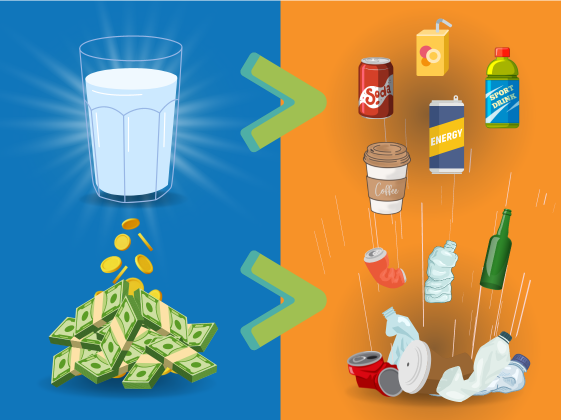
Join our #1 fundraising activity.
Take "The Water Challenge"
Last year, hundreds of groups took part. Every one is now watching their water projects being built!
We provide all the resources you need, for free. You bring some passion to help. Together, we'll change lives. Your group can make an enourmous impact!
Get the Free Kit