August, 2020: Through Their Eyes: COVID-19 Chronicles with William Ochango
This post is part of a new series by The Water Project meant to highlight the perspectives and experiences of the people we serve and how the COVID-19 pandemic is impacting them. We invite you to read more of their stories here.
Our team recently visited Ebubayi to conduct a COVID-19 prevention training (read more about it below!) and monitor their water point. Shortly after, we returned to check in on the community, offer a COVID-19 refresher training, and ask how the pandemic is affecting their lives.

William Ochango and his familiy
It was during this most recent visit that William Ochango shared his story of how the coronavirus has impacted her his life.
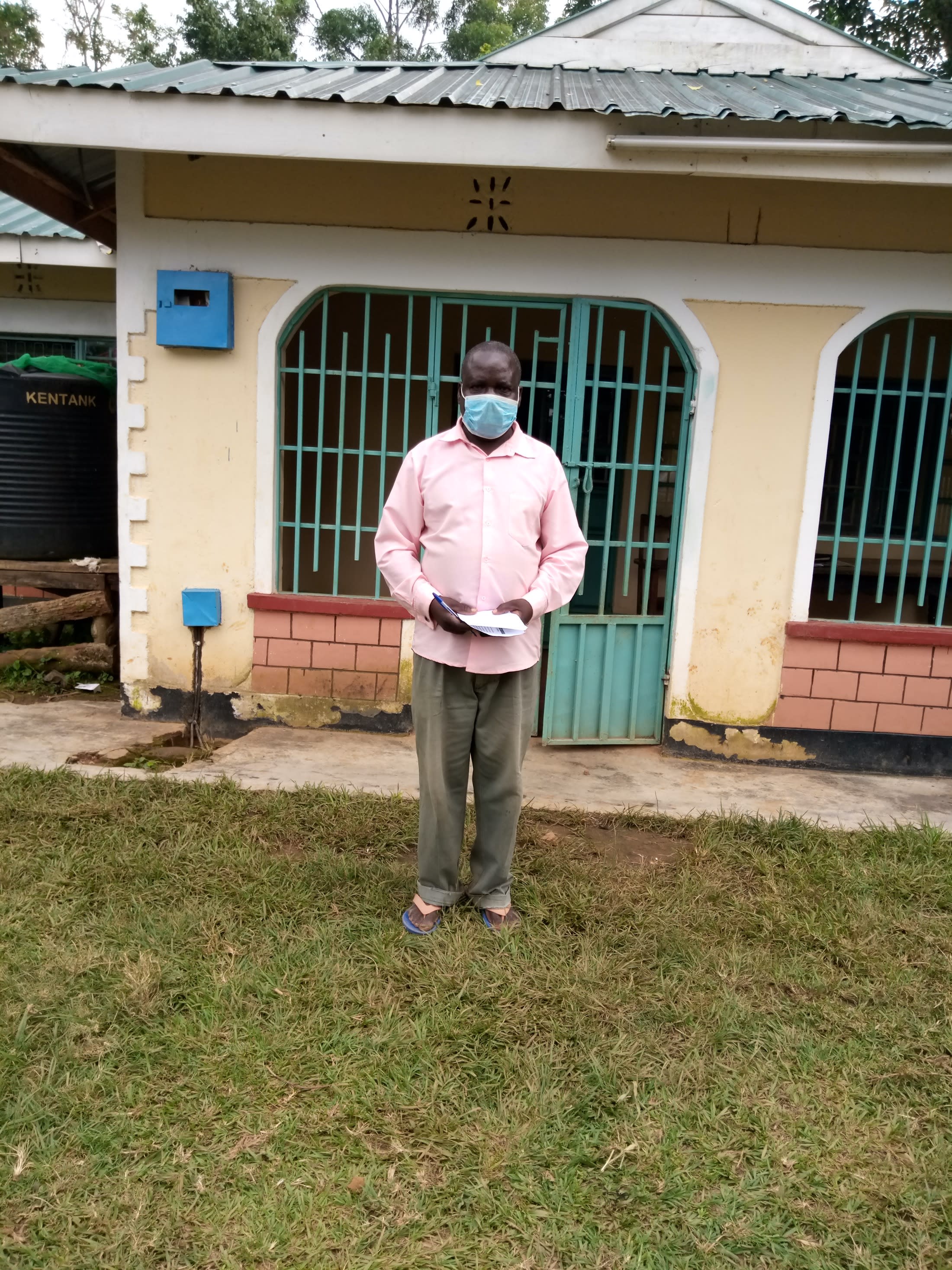
Field officer William Muruli met William outside his home to conduct the interview. Both William and William observed social distancing and other precautions throughout the visit to ensure their health and safety. The following is William's story, in his own words.
What is one thing that has changed in your community since the construction of the well?
"Since the installation of the water pump community members are enjoying short distance to the water source. Initially, they could walk almost half a kilometer to access water. Waterborne diseases have reduced due to access to clean water."
How has having a clean water point helped you through the pandemic so far?
"We have the availability of water throughout this period thus improved hygiene standards."
Since the outbreak of COVID-19 in Kenya, has fetching water changed for you because of restrictions, new rules, or your concerns about the virus?

"The water fetching guidelines at the water pump has changed a little bit in the sense that we discouraged overcrowding at the pump due to COVID-19. We have insisted on hygiene at the water point and the pump itself."
How has COVID-19 impacted your family?
"COVID-19 has affected us a lot since kids school are not going to school. The effect of which the cost of food has gone up tremendously due to high consumption. The kids are very idle and controlling them occupies a lot of my time."
What other challenges are you experiencing due to the COVID-19 pandemic?
"Buying of masks and sanitizers is now eating into my budget but it is something which I must do. The movement has been restricted also thus keeping us indoors most of the time; something we were not used to."

William at the community COVID training.
What hygiene and sanitation steps have you and your community taken to stop the spread of the virus?
"The hygiene measures include cleaning hands frequently with soap from a leaky tin which we have erected outside the house. We don't participate in public gatherings and when we do, we have to wear masks and observe social distance."
When asked where he receives information about COVID-19, William listed the radio, television, newspaper, word of mouth, and our team's sensitization training.
What has been the most valuable part of the COVID-19 sensitization training you received from our team?
"The demonstration on how soap destroys and kills the virus."
 Borehole Well and Hand Pump
 Rehabilitation Project