 Rainwater Catchment
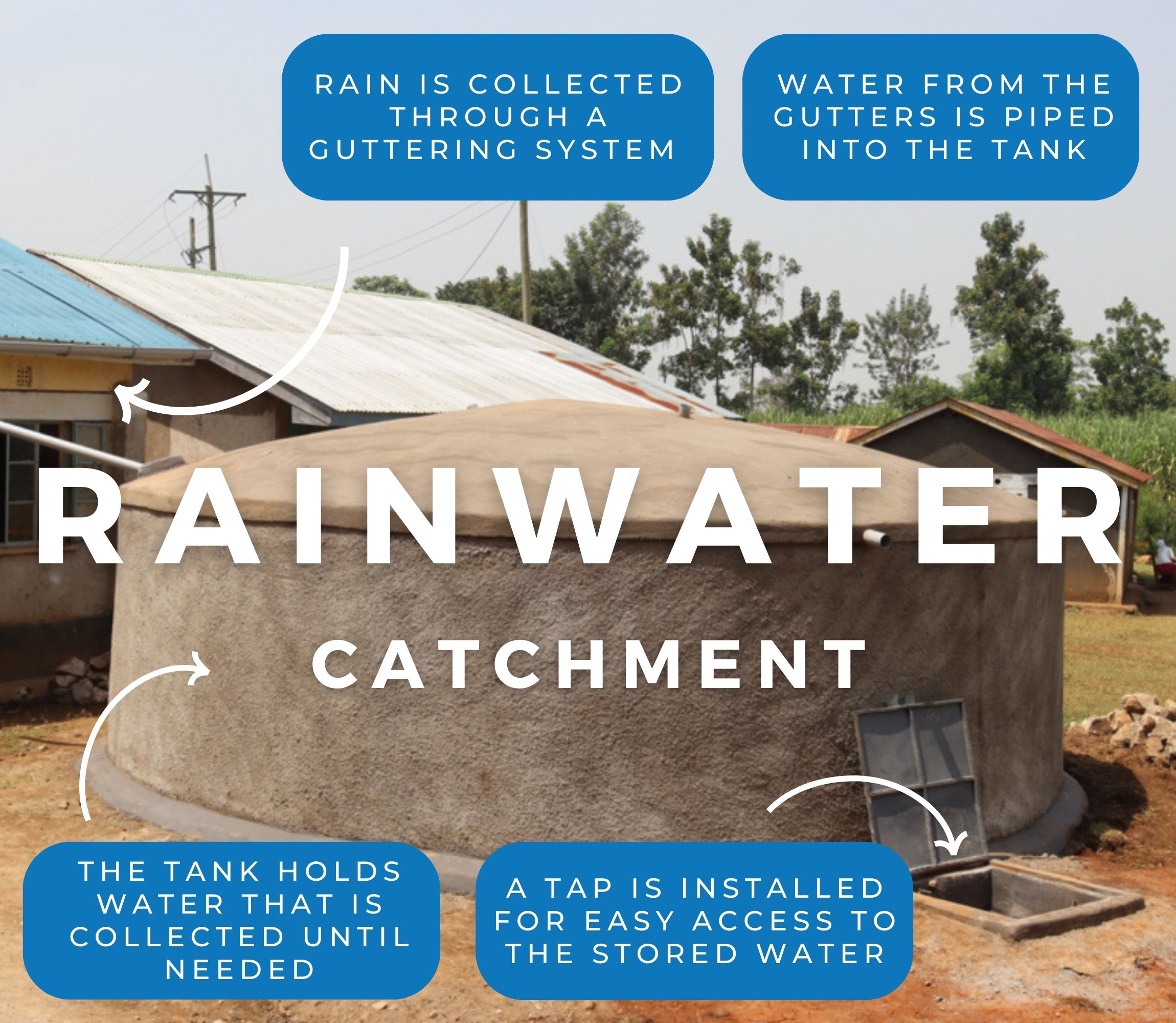
For a rainwater collection system, we build gutters around a building with good, clean roofing to channel rain where we want it. From there, the water falls through a filtered inlet pipe into a high-capacity storage tank, the size of which is based on population and average rainfall patterns. In the tank, water can be stored for months, where it is easily treated and accessed. Learn more here!
 Sand Dam
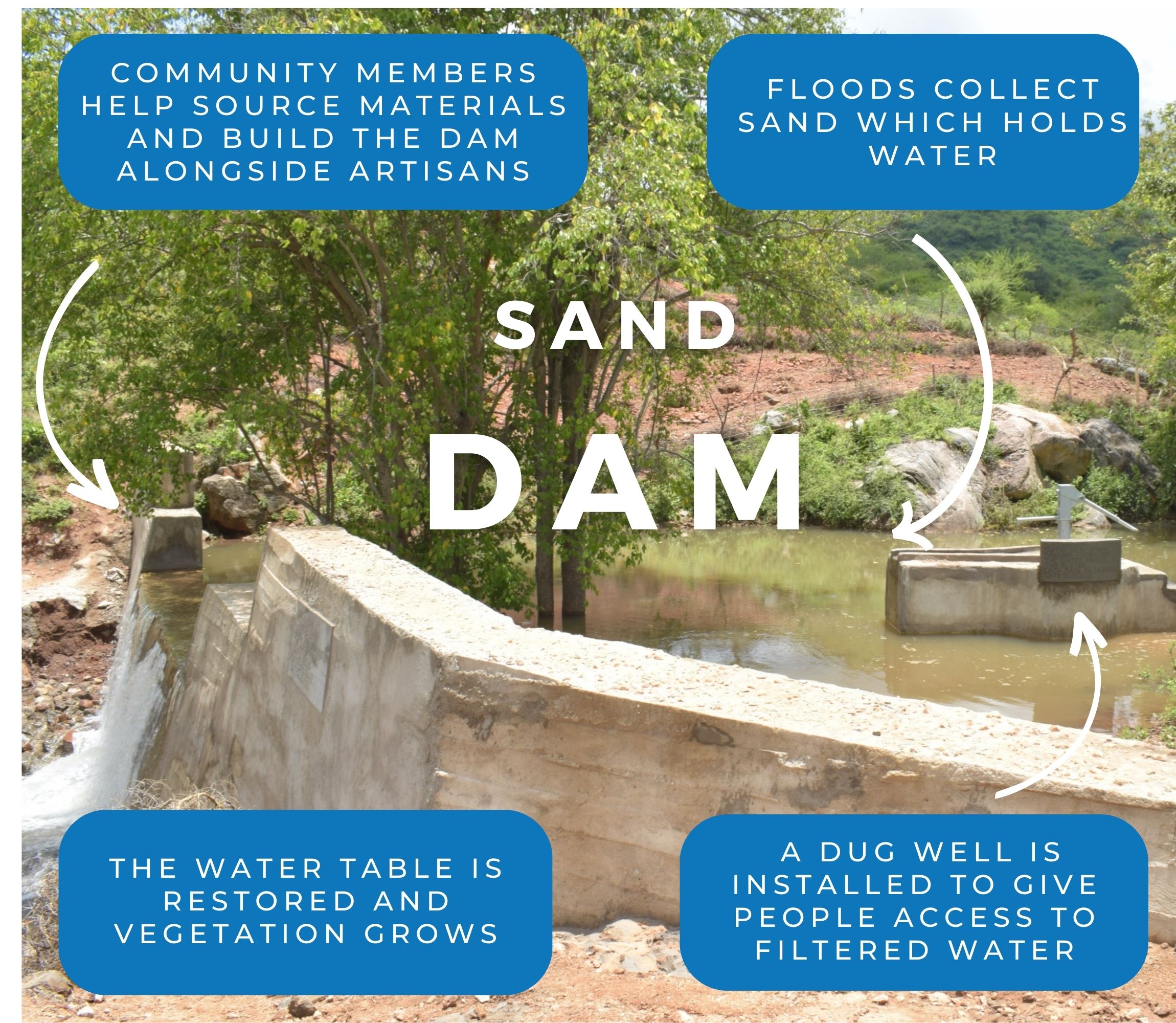
Sand dams are huge, impressive structures built into the riverbeds of seasonal rivers (rivers that disappear every year during dry seasons). Instead of holding back a reservoir of water like a traditional dam would, sand dams accumulate a reservoir of silt and sand. Once the rain comes, the sand will capture 1-3% of the river’s flow, allowing most of the water to pass over. Then, we construct shallow wells on the riverbank to provide water even when the river has dried up, thanks to new groundwater reserves. Learn more here!
 Protected Spring
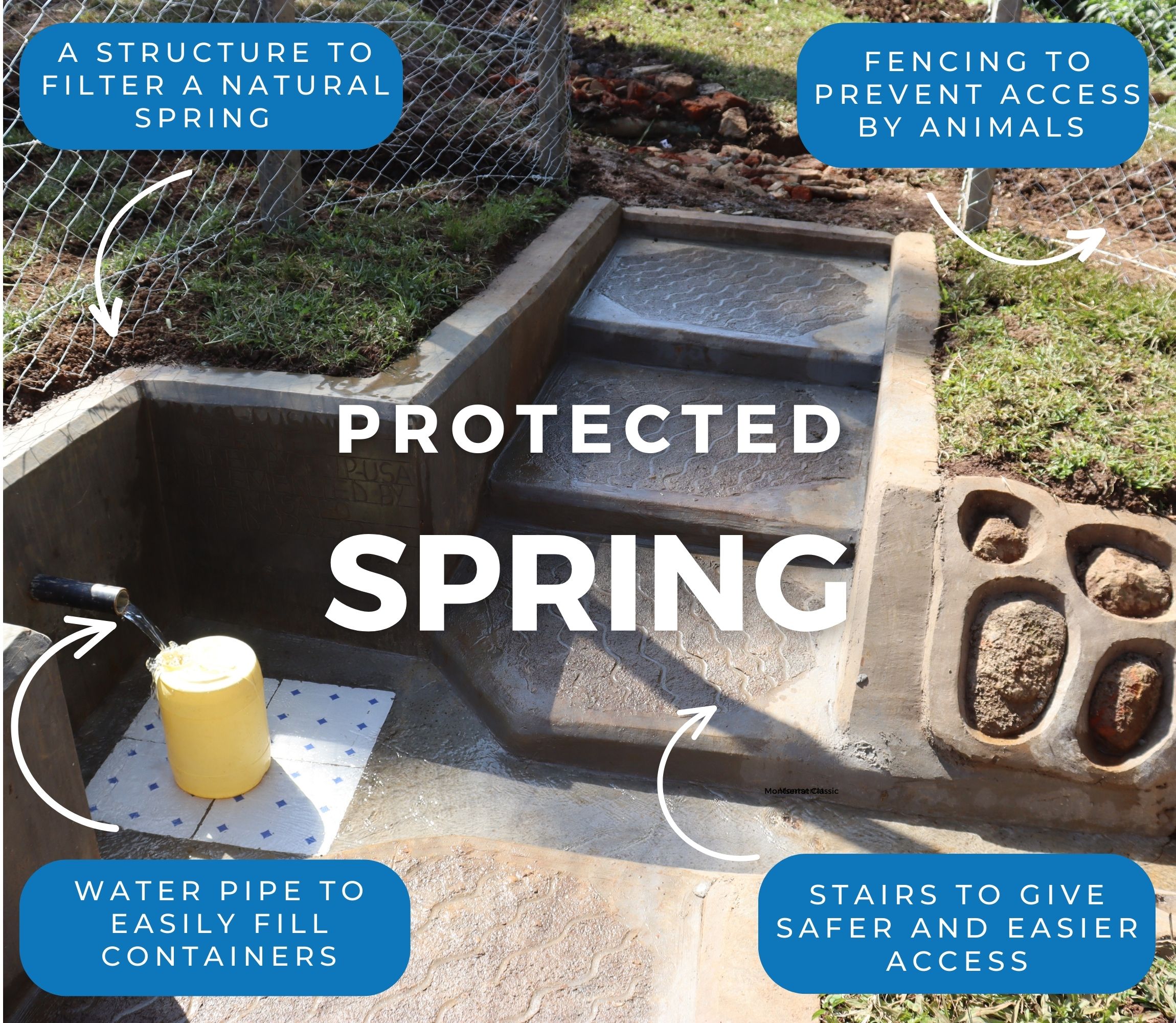
Springs are water sources that come from deep underground, where the water is filtered through natural layers until it is clean enough to drink. Once the water pushes through the surface of the Earth, however, outside elements like waste and runoff can contaminate the water quickly. We protect spring sources from contamination with a simple waterproof cement structure surrounding layers of clay, stone, and soil. This construction channels the spring’s water through a discharge pipe, making water collection easier, faster, and cleaner. Each spring protection also includes a chlorine dispenser at the waterpoint so community members can be assured that the water they are drinking is entirely safe. Learn more here!
 Hygiene and Sanitation Training
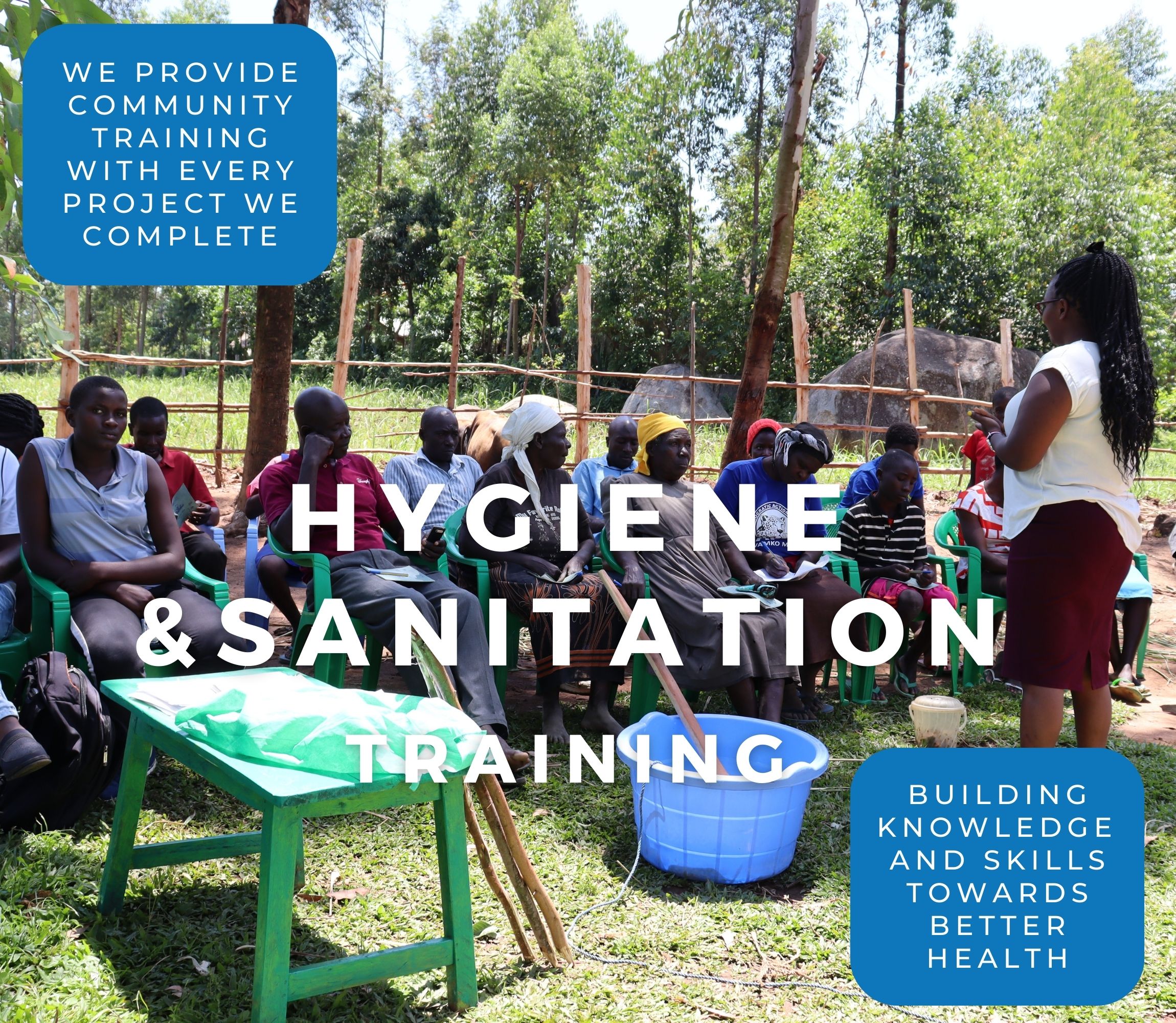
For many communities, water is just the beginning. Living without water deprioritizes things that deplete water rations, like bathing, cleaning, and even handwashing. Also, in some cases, community members who couldn’t afford to go to school never learned topics usually covered in health classes. A steady water supply on its own won’t solve these issues, which is why we train the people in every community, school, and health center we provide with a water project.
Although we tailor the subjects we cover in each training to each region and community, there are some staples we always touch on: water handling and storage; personal and environmental hygiene; disease transmission; how to form and maintain a water user committee; and the operation/maintenance of the community’s new water project.
With each training, our goal is to empower communities to take back their personal health so growth and development can begin.
 Borehole Well and Hand Pump
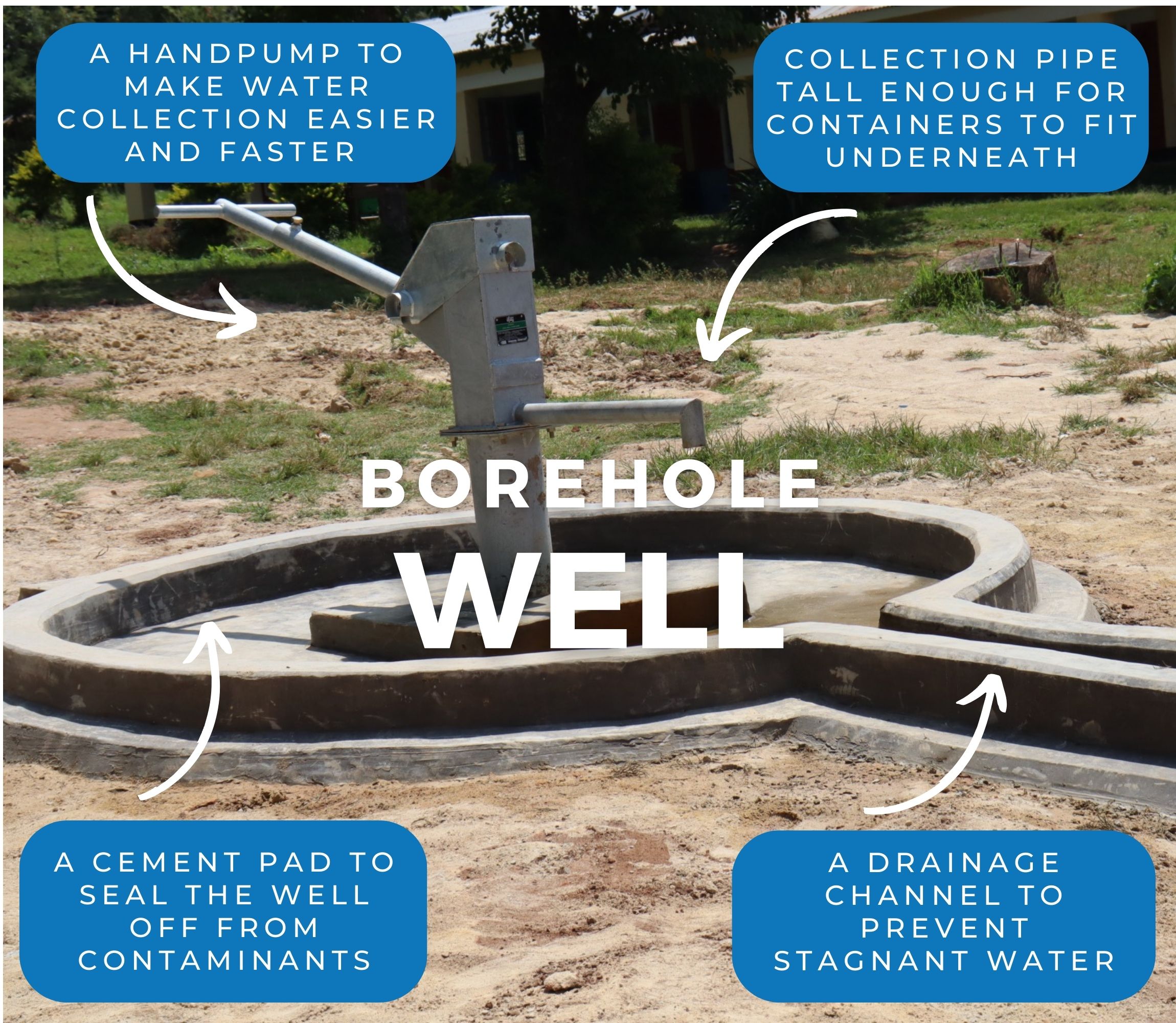
Abundant water is often right under our feet! Beneath the Earth’s surface, rivers called aquifers flow through layers of sediment and rock, providing a constant supply of safe water. For borehole wells, we drill deep into the earth, allowing us to access this water which is naturally filtered and protected from sources of contamination at the surface level. First, we decide where to drill by surveying the area and determining where aquifers are likely to sit. To reach the underground water, our drill rigs plunge through meters (sometimes even hundreds of meters!) of soil, silt, rock, and more. Once the drill finds water, we build a well platform and attach a hand pump. If all goes as planned, the community is left with a safe, closed water source providing around five gallons of water per minute! Learn more here!
 Kenya is a beautiful mix of cities and countryside, mountains and desert, remarkable potential amidst deseprate
poverty. It is home to a people of inspiring hospitality, kindness and joy.
Kenya is a beautiful mix of cities and countryside, mountains and desert, remarkable potential amidst deseprate
poverty. It is home to a people of inspiring hospitality, kindness and joy.