What Does “Water is Life” Mean to You?
Before starting at The Water Project (TWP), I had never heard the phrase “Water is life” before. But in my first few days as a Reporting Officer way back in 2021, it showed up in the quote of an interviewee who had just received a safe water point in their community.
It turns out that “Water is life” is a common saying where we work in Africa. And, as I was researching this article, I found that people in indigenous communities also say this phrase.
The proverb makes intuitive sense, because all living things on Earth require water. But the simplicity of the phrase also leaves it open to interpretation.
Which is why I was so curious to reach out across our network of Water, Sanitation, and Hygiene (WASH) professionals and learn their perspectives on this phrase. What does “water is life” mean to the people who bring safe, reliable water sources to others who need them every day?
We’re about to find out.
Elvine Atsieno, Information Technology Assistant, Western Kenya:
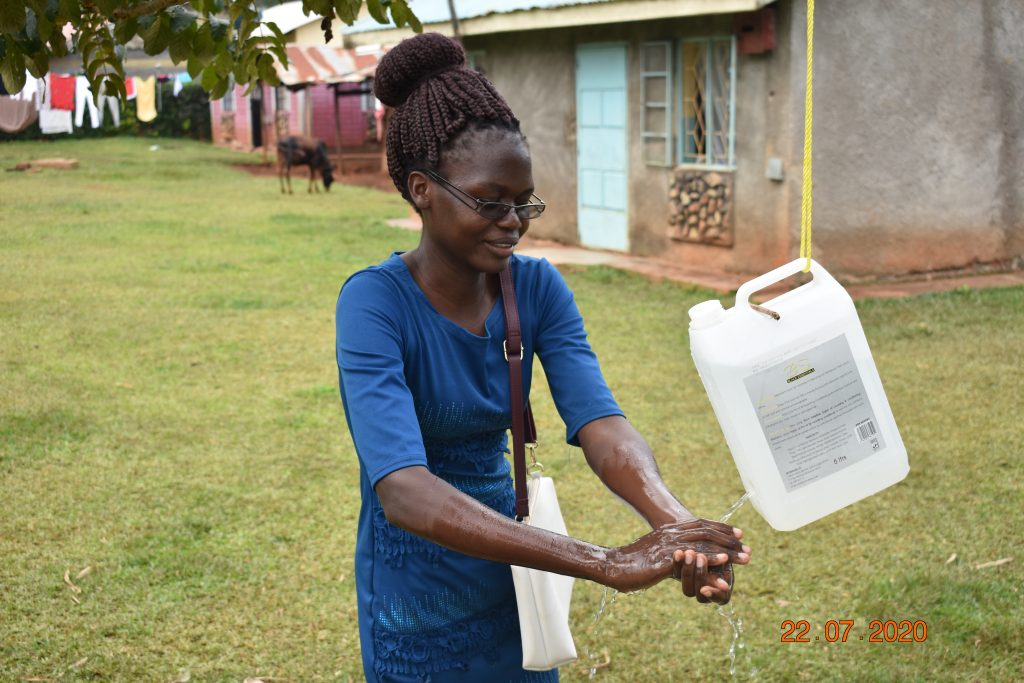
When I hear the phrase “water is life,” it clearly reflects the work I do every day. I have seen how [a] lack of clean water brings sickness, worry, and lost hope. Especially for children and mothers. I have also seen the relief on a mother’s face and the joy in a child’s smile when safe water finally becomes available. The moment that reminded me why water matters was seeing children in school struggle because they had no clean water. Many were often sick and learning was difficult. When clean water was finally provided, change was immediate. No missing school, no falling sick, and joy was restored.
One moment that truly showed me that “water is life” was the day clean water first flowed in a community I was serving. I remember children gathering around, laughing and filling their cups, while parents watched with quiet relief. I felt a deep sense of gratitude and responsibility as I saw how something so simple could bring so much change. In that moment, I realized that clean water is not only about health; it brings dignity, joy, and hope for a better future.
When we say “water is life,” I think about all the kinds of life clean water makes possible. It brings health by preventing disease and allowing families to live without constant fear of illness. It gives time back to children who can stay in school and to parents who no longer walk long distances searching for water. Clean water creates opportunity, dignity, and joy. It allows people to focus on their dreams. To me, this is what “life” truly means: the chance to live with hope, purpose, and dignity.
Spencer Bogle, Director of Program, US:
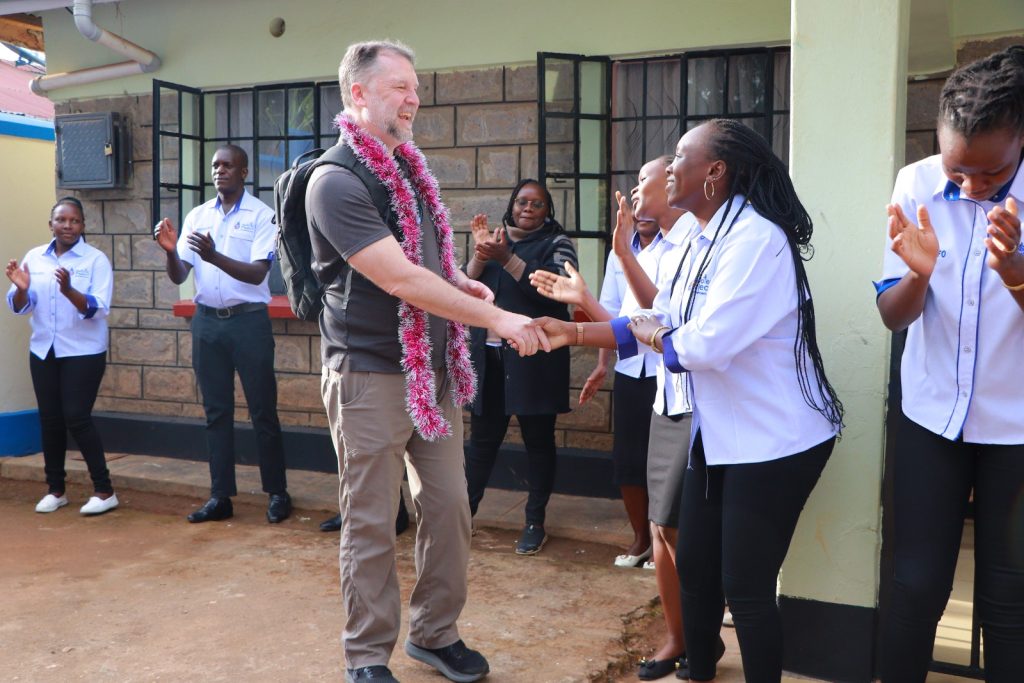
When I hear the phrase “water is life,” I think of the W.H. Auden quote, “Thousands have lived without love, not one without water.”
It is a constant reminder that we get to participate in helping people meet one of the most fundamental, basic requirements for life. What I love about The Water Project is that we are in a relationship with the teams in the field, and through them with the people who benefit the most from reliable access to safe water — children, grandmothers, mothers, and fathers trying to balance all of the tasks for the day, trying to care for their families. We are working to ensure that the love we have for each other is expressed through our commitment to see no one within our program regions experiences a day without safe water.
Earlier this year, we received a notification in our small town that traces of lead were identified in the water supply. As the town worked to mitigate the problem, our family was extra-cautious about using bottled water for drinking and cooking. All of a sudden, we were thinking about water. For us, it meant an extra item at the grocery store, an extra step in our daily routines. It was a minor inconvenience, but something that we had to consider for our health — and it raised questions about the quality that added to our worries of the day. Our experience pales in comparison to families that walk kilometers for water every day. It also motivates me to help build a system where people in Kenya, Uganda, and Sierra Leone don’t even think about where they will get their water or whether it is safe or not.
Humphrey Buradi, Regional Director, Western Kenya:
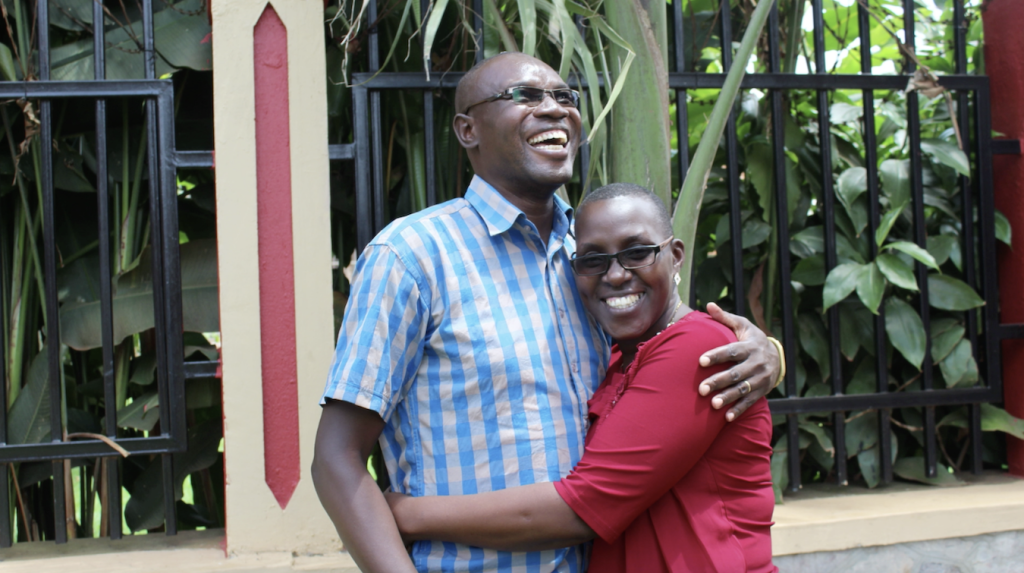
As a team leader in Western Kenya, I witness the phrase “water is life” daily, not as a slogan, but as a lived reality. I’ve stood with communities as clean water systems are being developed and watched the immediate shift: relief on faces, laughter where there was once uncertainty, and a quiet confidence that tomorrow will be healthier than yesterday with safe and reliable water in place. One moment that stays with me is seeing mothers fill containers from a safe source without fear, knowing their children would drink it without getting sick. In such moments, water feels less like infrastructure and more like a promise kept.
When we say “water is life,” I always think about all the life that follows access to clean water: health restored, time reclaimed, dignity protected, and opportunity made possible. In Western Kenya, clean water means children staying in school, families saving income that was once spent on medical care, and communities able to plan beyond survival. I feel great pride in leading teams who serve with integrity and commitment, and I remain humble knowing this work is bigger than any one person. It’s about partnership with communities, with donors, and with one another. Working together so that life, in all its fullness, can truly be meaningful.
Chris Carvache, Full Stack Developer, US:

A couple of years ago, in the summer, lightning hit the ground and shorted out me and my neighbors’ water pumps. We both didn’t realize this had happened until my neighbor ran out of water, and then maybe 12 hours later, we did. The IMMEDIATE shift in priorities was incredible. My neighbors had to come over to shower and use our water for cooking. When we realized that our water reserves ran out, we had to immediately go to the store to buy several gallons of water to use for essential living, which very few people in the states ever have to think about. Our mindset completely changed. We had to guide our kids through rationing our water while simultaneously diagnosing what had happened to these essential machines. We had to purchase a new water pump and install it, which was a stressful but necessary expense. For our neighbors, we had to go to the town hall, pull blueprints to FIND where their water pump was located, and then dig a 4’x4’ hole in their front lawn to expose the damaged water pump.
For 3 days, we worked on this problem together, all while taking care of the kids and juggling work. Life kept on moving despite the detour we were forced to take.
As soon as we lost access to water, fixing it instinctually became the top priority for all of us. It made me (and my neighbors) almost instantly realize that our shared problem was only a FRACTION of what the people we serve have to deal with as part of THEIR daily lives. I’m grateful for the experience as it made me eternally grateful for what we have, and offered me a way to empathize with the people we serve.
Jacklyne Chelagat, Impact Communication Officer, Western Kenya:
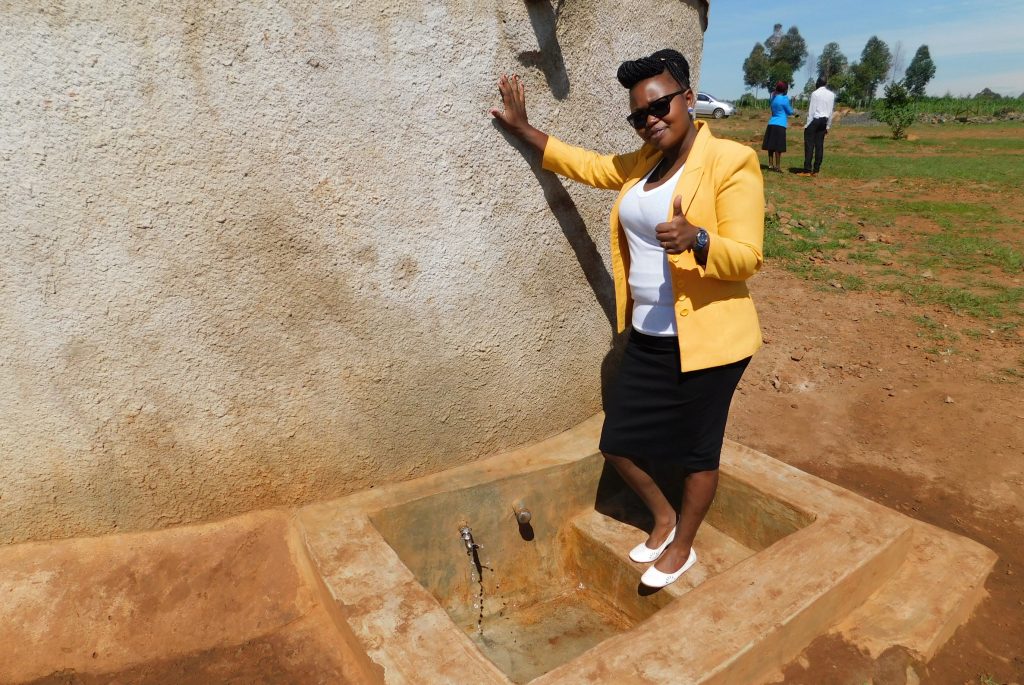
Someone can survive in an environment that is marked with violence, one can also survive in a place where there is no peace, but there is no one who can survive in a place without water. Just as blood is to a human body, so is water to any living organism and institution.
I have worked with The Water Project for a while, and in different capacities. During that time, I have witnessed the implementation of projects in learning institutions, health centers, churches, and in communities. Before a project is implemented, we first conduct initial surveys to assess the need for the project. While conducting these initial surveys, we meet desperate situations that symbolize lack of life, or a frustrated life, at that place. This means that assisting the people to gain access to clean and safe water also means injecting life or bringing life to a people.
The main function of a school is to transform lives and to produce individuals who are productive and fit for the society. A school that does not meet this objective is as good as dead. For instance, when we visited Khaunga Primary School before The Water Project’s intervention, the head teacher, Mr. Benson, had this to say: “As a school, we are really struggling to attain excellence in every sector. This school has got many students from the community and the biggest problem we have is water.” This is a clear indication that, without water, life is almost impossible.
He went on to say, “Our learners are getting it rough because of lack of water. Water is life, and everybody knows that without water, there is no life.” The case of Khaunga primary school is just one among many schools that did not have life as a result of lack of water.
After a project has been implemented, officers working with TWP visit these institutions to establish the impact of the project to the school. One thing that comes out clear is the change brought about by the availability of water. Most schools report that the school has improved in academic performance, sanitation and cleanliness, and school enrollment.
After our intervention at Khaunga Primary School, the deputy head teacher, Madam Otwisa, made these remarks: “We are now happy. My pupils will no longer waste time going to the river, my children are no longer going to be sick, the classrooms are going to be neat. We will even have enough water to sprinkle and make the grass to be green throughout. We thank The Water Project for enabling us to have plenty of water. Now, there is life in our school.” Samuel, a grade six student, had this to say, “Thank you, The Water Project, for bringing us this water. As you are aware, water is life, and by bringing water, you have brought life to us. [I] am now sure that I will fulfill my dream of becoming an engineer.”
It is impossible to run a health center without water. For many years, Khaunga Dispensary was depending on water carried by patients’ caretakers from home. Patients were going through a hard time for lack of water. Doctors and nurses were not left behind either. They talked about helping mothers during delivery using water from home. Without water, mothers are at risk of losing their newborns. In some cases, it was even difficult to get water to clean new mothers after they had delivered.
Handwashing in that health center was unheard of, since there was no water for the same. This let one wondering whether the dispensary was addressing health issues or if it was a hazard in itself. In an interview between Stan (the president of TWP) and Robert (the nurse in charge of Khaunga Dispensary), Robert said, “Water is a problem and has been a major issue in service delivery, and, as you know, water is life. At times, we depend on rainwater, and when there is no rain there is no water. Water is everything.”
In response to this crisis, The Water Project drilled a borehole well at Khaunga Dispensary, and there is plenty of water now. We made a visit to the health facility to establish whether water had brought life.
Robert had the following as feedback, “On behalf of the facility and the entire community, I want [to] appreciate [the] donors who funded this project. They have enabled us to have enough water, and the problem of water is now fully solved. Water is life, and water is everything in the management of the facility, and the lives of the patients in the facility. Water has really assisted us in achieving our goals as a facility. I can comfortably declare that there is sufficient water now, and there is life as well.”
The Water Project has also protected springs in the Khaunga community. Members of this community can comfortably access safe and clean water. This means that cases of waterborne diseases are no longer a topic in this community. They have enough water for domestic use. Indeed, there is life in these homes.
Pupils are able to access clean and safe water both in primary and secondary school. Patients are able to access sufficient clean and safe water in the dispensary, and members of this community are also able to get clean water from the springs.
This means that Khaunga Community, as a whole, has water, and therefore has life. It has life in the sense that children are healthy and will pursue their academics comfortably. In the end, Khaunga Community will be having doctors, engineers, teachers and other professionals. There is water in Khaunga, there is life in Khaunga. Water is life!
Protus Ekesa, Executive Director, Western Kenya:
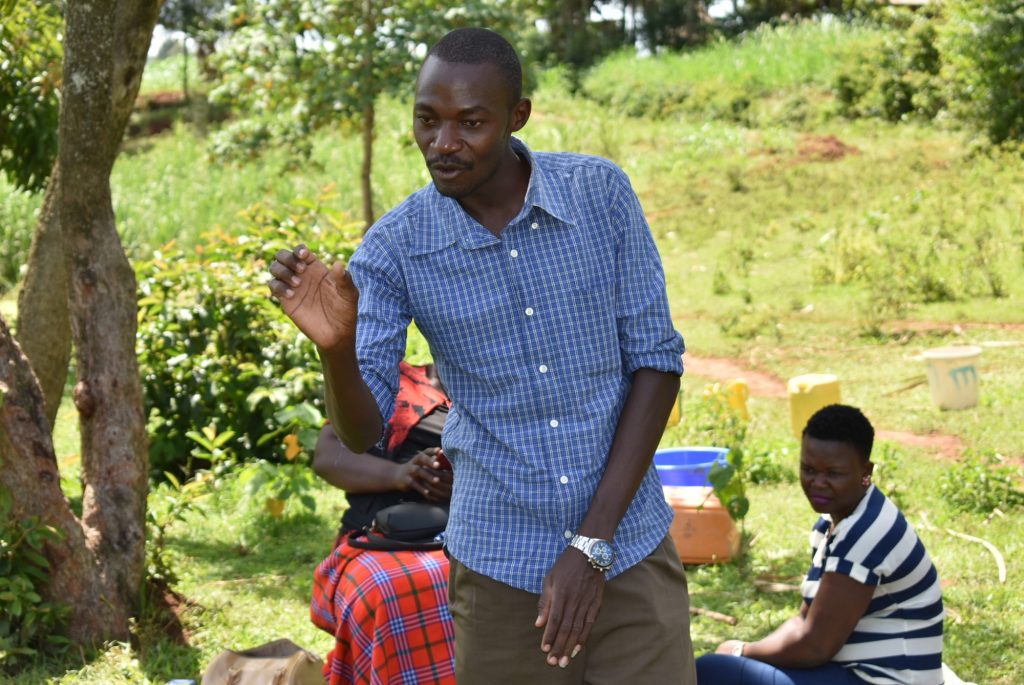
“Water is life” — as the phrase sounds, so it is. In reference to work we do in the community, schools, and healthcare facilities, we have seen practical examples of the meaning of this phrase. As we provide clean and safe water to various communities, we have seen the communities spring back to life. The water has always brought about life.
There is this particular community in Mumias East subcounty that had literally died in terms of association and socialization. The time I went there to conduct a vetting survey, I literally felt the community had been drained of life. When the work began, I felt the community come back slowly to life. The members were able to gather together, work together, know how each other is faring on. The provision of water brought life to this community.
In Lubinu Primary School, a school which was once vibrant in academics, sports, and other cocurricular activities had died after lacking water. When we drilled a borehole there, the school came back to life. It was the first time the school hosted ball games, drama, and so many teachers’ meetings. The school came back to its position topping in academia. The provision of water brought this school to life. Indeed, water is life.
At Issa Spring in Elukuto Community, the plants were brought to life. The provision of water allowed the plants, which had dried, to spring back to life. Mr. Issa Matala and his family came back to life. The money that they once used to treat water-related diseases was saved, and bricks were formed and baked using the provided water. This enabled the family to come up with a modern house over their heads. Today, if you visit Issa spring, Issa’s family is full of life.
Animals in the communities have access to clean water, the vegetation have been brought to life because of the provision of water. The institutions have been brought to life, the communities have been brought to life.
One moment that stays with me: when we went to Khaunga Secondary School and saw the school program had been brought to a standstil, I felt like the programs had died literally. When we intervened and the school got water in the school compound, this was academics brought to life in this school, and cocurriculars brought to life. “WATER IF LIFE “.
To me, the “water is life” phrase not only applies to human beings, but speaks to the dreams that have been brought to life, visions that have been brought to life, the aspirations. Water is life, indeed.
Jacquey Kangu, Monitoring & Evaluation Lead, Western Kenya
You can own the whole world, but without water, life can be very difficult and meaningless. I remember one day, while I was carrying out a vetting survey, I came across a community that was mourning a child who had been knocked down by a car while crossing the roads in search for water. It was heartbreaking, and it disturbed me the entire season — how the search for water had just terminated great dreams.
Surprisingly, the community members reported that, every year, people lost lives through the same way while crossing the road to get water from a spring. If water didn’t matter, members from this community would not have continued crossing the road and dying in search for water.
Many thanks to TWP and God, who enable us to save lives through water provision. I feel humbled to report that, three years down the line, after TWP drilled a borehole for Emusoma Community, no life has been lost through the search for water. They all enjoy clean water, and whenever I visit, I meet happy faces that are filled with hopes.
Emma Kelly, Program Manager, US:
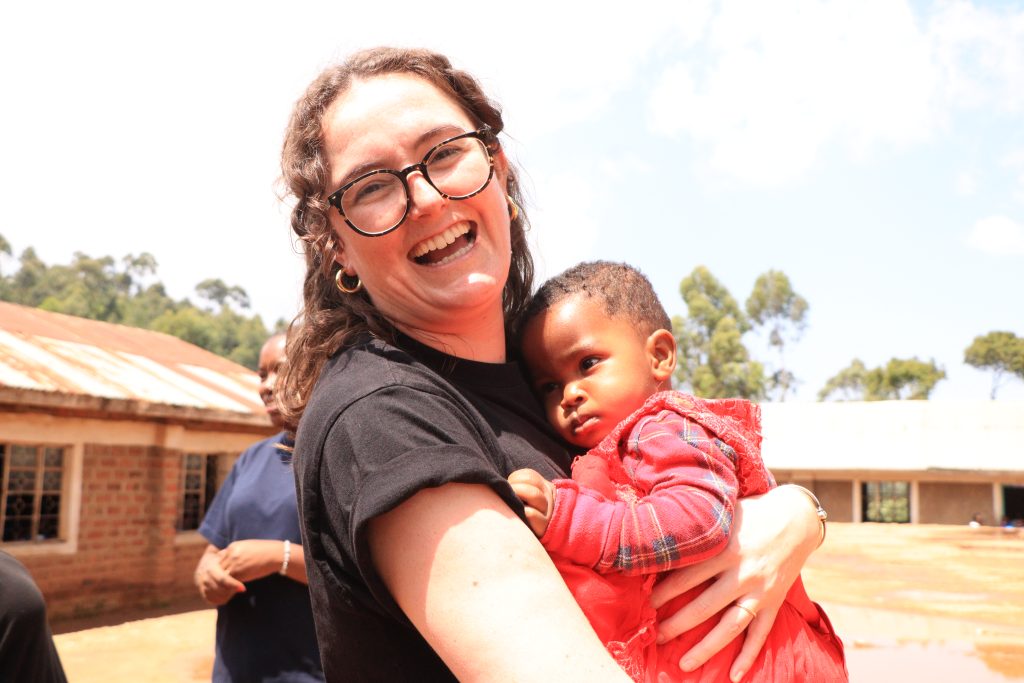
My education was in Public Health, and I always like to remind people that health is not simply the absence of disease or ailment. Health is a state of being that comprises a person’s physical, mental, and social well-being — it includes so many things! Whether someone has purpose in their life, is living in a clean and dignified environment, or has the means to pursue their aspirations all affect their health.
So when people say “Water is Life,” I know that it is true, because safe water access is the foundation of good health, which affects all aspects of life. Safe water protects people from disease, but also gives them the stable foundation on which they can build dignity, comfort, and joy. The known benefits of water access on education, ability to earn an income, gender equality and so many other aspects mean that a person can actually live a healthy life, instead of surviving.
Tom Murphy, Program Officer, US:

Water became a daily obsession when I lived in western Kenya, specifically in Malava, for a year. I did not have access to running water in our house. There was an open dug well on the property and a rainwater harvesting tank at our house. We had a water filter that could hold a few gallons of water at a time. It took hours for it to clean the water. We quickly learned that the water from the well was so full of mud that we had to clean the ceramic filters multiple times a day. As a result, we switched to using only the rainwater tank.
Each morning, we filled the filter with water and went off to work, then came back and boiled the filtered water to kill off any remaining bacteria. We repeated this every single day. Forgetting meant we would have to ration water until we treated the next batch. And that was just for our drinking water. When it rained, we put buckets everywhere possible to get water from the roof to have extra for bathing, washing our clothes, and “flushing” the toilet. I went from never thinking about water because it was always there to always thinking about water because it required work and planning. It forever changed my relationship with water, and so the opportunity to work at an organization on this very issue in the same place where I lived some 15 years ago is serendipitous.
Joyce Naliaka, Program Coordinator, Western Kenya:
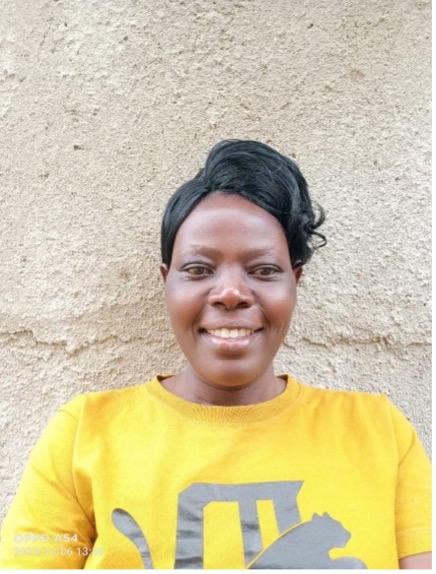
Every day, I am reminded of the sincere truth that “water is life” in the work we do together. Whether it’s seeing a child drink clean water for the first time, or watching a community thrive because they no longer get sick, these moments state clearly why this mission matters so deeply.
One moment that stays with me is when I implemented a spring in a village where women and children once walked miles to search for clean water. The day their water source was completed, the joy and relief on their faces were unforgettable. I also felt so excited when one young boy approached me and said, “I can now go to school daily because we have water near our home.”
This clearly showed that it was not just about water — it was about health, dignity, and the freedom to pursue education and dreams. That’s what “life” truly means: the ripple effect of hope and opportunity that clean water creates.
What keeps me humble is knowing how much work remains, but what fills me with pride is seeing the tangible difference we have already made. Every drop of clean water is a step towards a brighter future, and it’s an honor to be part of this journey, because together we are not just providing a resource — we are giving life.
Adelaide Nasimiyu, Training Officer Lead, Western Kenya:
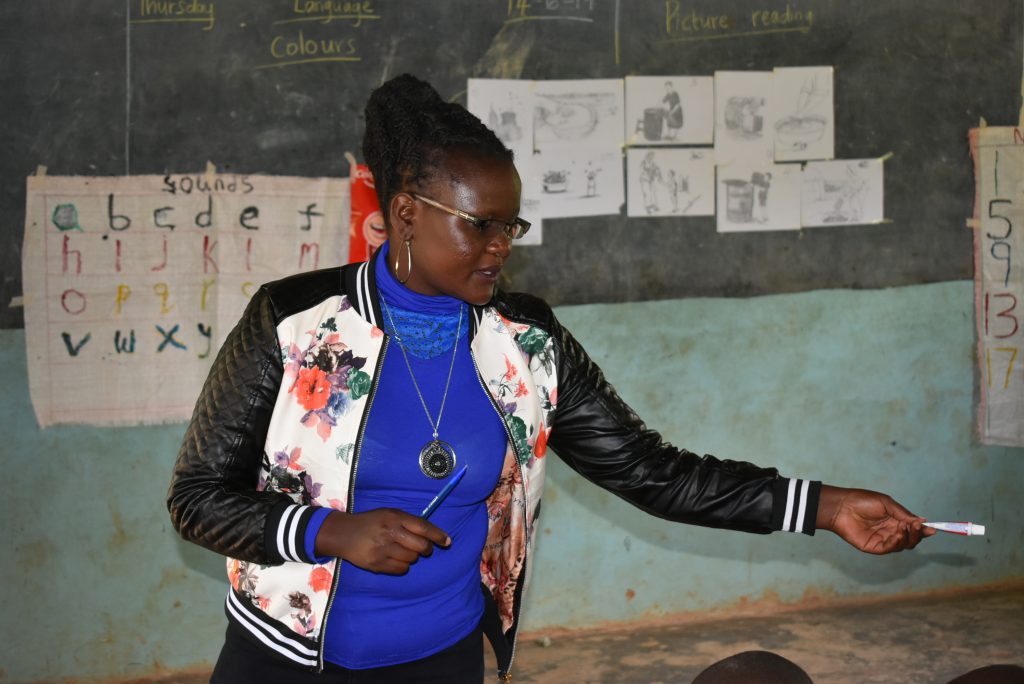
When I hear the phrase “water is life,” it strongly connects to the work I do every day. Water is the foundation of health. It reflects my daily work of helping people stay healthy and live with dignity.
What gives me pride is seeing a real improvement in people’s health and daily lives because of access to clean water. What keeps me humble is remembering the struggles a community faced before, and knowing that this impact comes from teamwork and the resilience of the people we serve, not just my efforts alone.
When we say “water is life,” life means more than just staying alive. It means health, because clean water prevents diseases and keeps families strong. It means dignity because people can bathe, cook, and live clean without shame or struggle. It means opportunity, because children can go to school instead of fetching water, and adults can work, farm, or start small businesses.
Life means hope and peace of mind — not worrying about where the next drop of water will come from or whether it will make someone sick. In this sense, water gives people the chance to live fully, grow, and dream.
Samuel Ngidiwe, Program Officer, US:
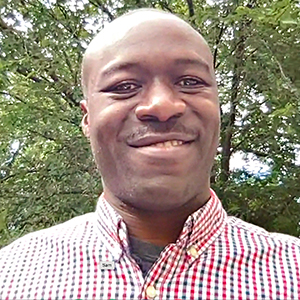
Water is life reminds me that my work is about creating opportunities for communities without safe, clean, and reliable water to access safe, clean, and reliable water all year round. In helping to create the opportunity, I have contributed to improving health, access to education, and the economy of the communities we are serving. With access to water, I am helping people in different communities thrive.
In 2018, the city of Cape Town’s main water supply was running low due to a severe, record-breaking drought. Had Day Zero occurred, the city of Cape Town’s local authority would have forced residents to queue at designated water collection points to receive rationed water. While the city was nearing Day Zero, there were strict water-use restrictions. However, Day Zero was averted by the saving grace of Mother Nature.
This situation affected my day-to-day functioning, as I had to cut back on how I shower, do my laundry, and clean the dishes. The water crisis I experienced in Cape Town made me realize more of the pain and challenge people in rural areas face daily in search of clean and safe water to respond to their households’ needs.
Clean water is essential to human life. Communities and nations cannot thrive. Clean water is the source for human and societal development. There is no sustainable development without clean water. Clean water promotes peace and harmony among people and communities. Clean water also reduces the burden of disease and boosts households’ livelihoods.
I take pride when I see water flowing at a site that had nothing yesterday, and what keeps me humble is that the success of our work is a collective effort, which cannot be attributed to one person.
Joy Ongeri, WASH Officer, Western Kenya:
“Water is life” is not just a saying to me, but it has been evident in communities, and has a quiet truth behind every decision I make at work. I’ve seen many communities’ members walk long distances just to access water, students stop their school programs and classes to go and fetch water outside school, and the sick and medical officers in health facilities struggle just to be able to access clean water.
Access to clean, reliable water turns daily survival into possibility. Most of the rural healthcare facilities struggle a lot when water is not present, and nurses or medics in charge are the ones who are mostly challenged with this, because care for patients requires clean water, and when water dries, [others] ridicule their work as medical personnel.
One moment that stays with me is the day clean water finally flowed at a small rural health clinic. I watched a mother wash her hands calmly before holding her newborn, something she had never been able to do safely before. In that moment, I felt a deep sense of pride knowing that our work helped protect that fragile life, and humility in realizing how something so basic can mean everything.
Mercy Wamalwa, WASH Officer, Western Kenya:
When I hear the phrase “water is life,” I normally think of the quiet, powerful ways clean water transforms everything it touches. I have seen how reliable water source turns daily survival into possibility. How children arrive at school with a lot of energy instead of illness, how parents gain extra hours back each day once spent searching for clean and reliable water, and how dignity is restored when families can care for themselves safely.
One moment that stays with me is watching a community gather around a new water point with laughter mixed with relief. It reminds me that water is not just a resource; it’s the foundation on which health, learning, and hope are built.
What gives me pride in this work is knowing that, whether directly or indirectly, my efforts help make life more abundant for others. And what keeps me humble is the resilience of the communities we serve, the strength they show long before help arrives, and the partnership they normally bring to every solution. Clean water creates more than health; it normally creates time, opportunity, and joyous moments. It also allows life to flourish in ways both visible and invisible. I am so grateful to be part of this mission because we believe that when clean and reliable water flows, automatically, life follows.
Home More Like ThisTweet

Jamie Heminway
Jamie is a storyteller by nature. In joining the Water Project, she’s finally found a workplace where that pesky bleeding heart of hers can be put to use (and, less importantly, that BA in English Language & Literature from New England College).