Stories from the Field
As we work to provide water, we're committed to helping people like you meet your global neighbors and to realize that we all share the same basic needs. We hope to break down stereotypes and the false distinctions between the so-called winners and losers, rich and poor, the needy and charitable, by introducing you to the people we serve with the respect and admiration they rightfully deserve.
These are stories of hope, told in the words of those who carry out this work every day - our friends in the field.
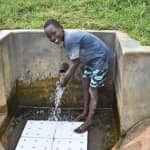
A Year Later: Dreams Realized, and Dreams in the Making!
Before our intervention in Mulukobha, people had to mince their way through mud to reach the opening of a spring whose water often made them sick. Fetching water took a long time, and so did boiling it. With all these limitations, people hardly ever had spare time. "Before, fetching water from this water point was risky and uncomfortable," said ni...
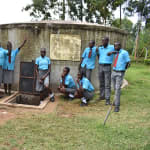
A Year Later: Safety and Dignity for Girls!
Before we installed a rain tank at Mahola Mixed Secondary School last year, students would have to leave school grounds on a regular basis to fetch water from dubious sources. This sent them out of class while fetching water and kept them out of class when they inevitably got sick from drinking it. "I can say without shame it was so tiresome, espe...

A Year Later: Planting, Building, and Feeding Programs!
Last year, everyone at Migwani DEB Primary School depended on one tiny rain tank, which rarely, if ever, satisfied all the school's water needs. And, even worse, the supplementary water students brought with them to school came from open scoop holes, which often made them sick. “The rampant water scarcity within the school caused a lot of issues...

A Year Later: "Things are looking up quite well."
Last year, students at Kwa Maluvyu Primary School not only had to bring water with them to school every day, but they would also have to leave school during recess to collect water from scoop holes. “Initially, we experienced a lot of challenges pertaining [to] water," explained 12-year-old Mary M. "Regardless of the time of the season, we used ...

A Year Later: Building Made Easy!
Last year, Mother Teresa's Pre-Primary School had to share one seasonal well with the primary school next door. The well would dry out periodically, leaving both schools without a source of water. When this happened, the students would have to bring water from home, which would be difficult for such small children. "Before, we were struggling to g...