Close to Home: What I’m Learning About Water in My First Months at The Water Project
This is an installment in the ‘Still Reading the Handbook’ blog series featuring new members of our team.
I’ve spent much of my career thinking about generosity. What moves us to give, what connects us to one another, and what makes us believe that something better is possible.
Now, in my new role at The Water Project, I find myself thinking about something much more basic: water.
Before the Day Has Begun
I imagine a school morning in a community we serve in Kenya, Uganda, or Sierra Leone, where there’s no faucet to turn on.
Before the day has really begun, a mother lifts an empty jerry can and starts walking. Perhaps her daughter walks beside her. The container is relatively light on the way there. Filled with water, it may weigh more than 40 pounds on the way home.
I imagine the heat. The distance. A weight like that, carried the whole way home, and then carried again tomorrow.
And I imagine what’s happening while they walk.
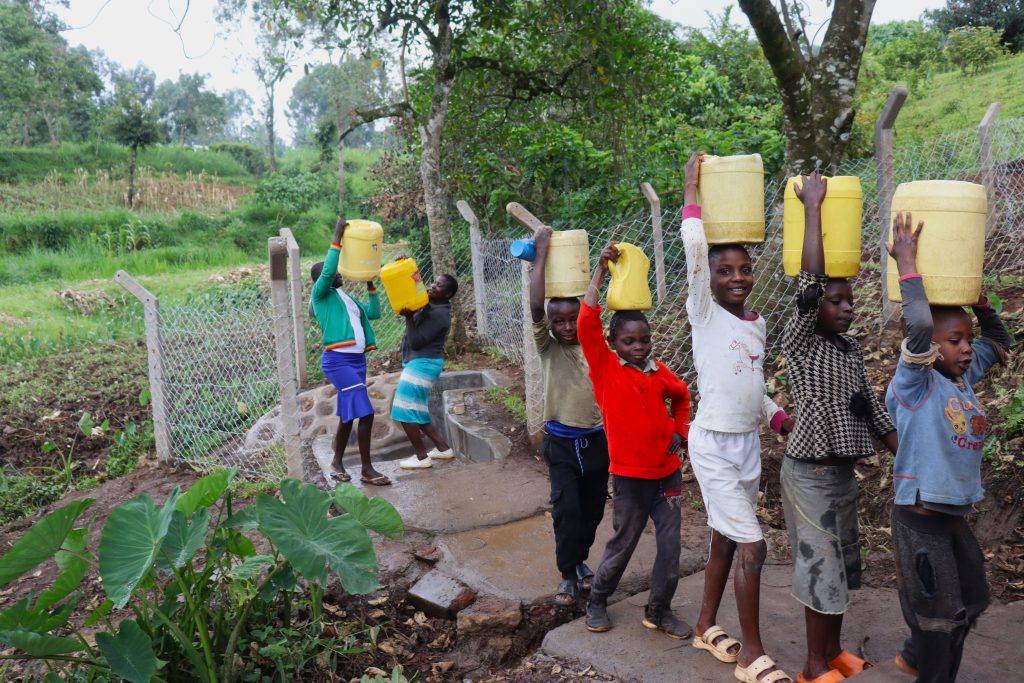
A child may be missing part of the school day. A mother gives hours to a task that has to be repeated tomorrow. A father may be wondering how to protect his family from illness, even when the only water available is water he knows may not be safe.
I think about how different that same morning can be when reliable, safe water is close to home.
A child can be in a classroom rather than on a water path. A mother can spend those hours caring for her family, tending a garden, earning an income, or reclaiming time that was never really hers. A teacher can focus on teaching. Families can make plans that are about more than meeting today’s most basic need.
A Patient Question
One of my early conversations with a donor has stayed with me. They didn’t ask how many new water points we could build. They asked how we make sure the water’s still flowing years later.
I’ve thought about that question a lot since. It was a hopeful question, but it was also a patient one.
In my first four months here, I’ve heard that same patience in the way my colleagues talk about a finished project. They don’t treat it as a finish line. They ask whether the water’s still flowing, whether it’s safe, and how fast a local team can get there when something breaks. What I’ve come to understand is that we’re promising more than a new water point. We’re promising reliable water, and a relationship that lasts.
It Starts With Listening
The people who live in these communities understand their needs, challenges, and hopes better than anyone. Our local teams bring that knowledge to every decision, and they help make sure communities stay at the center of their own solutions.
That matters deeply to me.
As I begin this new chapter, I hope to bring you closer to these communities and to the people whose lives are connected to yours through generosity.
I keep coming back to that donor’s question. The walk I’ve been imagining ends when the water is close, and it stays ended because the people who live there keep it that way. What we can do is help that day come sooner.
I’m grateful to be starting this work with you.
Written by: Kim MacEwan
Senior Major Gifts Officer
The Water Project
Other instalments in the Still Reading the Handbook series:
Tweet