Stories from the Field
As we work to provide water, we're committed to helping people like you meet your global neighbors and to realize that we all share the same basic needs. We hope to break down stereotypes and the false distinctions between the so-called winners and losers, rich and poor, the needy and charitable, by introducing you to the people we serve with the respect and admiration they rightfully deserve.
These are stories of hope, told in the words of those who carry out this work every day - our friends in the field.

A Year Later: "It can now serve the entire community"
Before we rehabilitated the well in Rotifunk last year, students used to rise ridiculously early to try and collect water from the dysfunctional hand-dug well before the water diminished each day. "The old water source was a [dug well with a] hand pump, but the water was not pure to drink. It was difficult to fetch enough water. During the dry sea...

A Year Later: Time for Playing!
The community members of Yongoroo used to have to rely on local streams for their daily water needs. "The water was having a taste and not pure to drink. The water sometimes [was] dirtied by community members that are closer to this water source. Most times, I [was] sick of fetching water from [a] long distance away from my home," said 13-year-old...

A Year Later: "We have time for reading our notes."
The community members in Masoila used to face a daily water crisis before the well in their community was rehabilitated last year. People had to rely on the local swamp as their primary water source, which brought many problems. "It was really difficult for [us] the children because we have to go all the way to the swamp in the morning hours to fe...
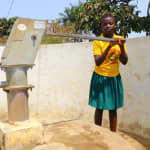
A Year Later: "It is very easy for children to fetch water"
Before we installed a well at Sierra Leone Church Primary School, the school was often left without sufficient water because its source dried out seasonally and was shared with the surrounding community. "There was a concern for us as pupils of this school because we were not having full access to the pump, and above all, the pump was too noisy an...
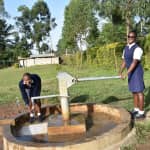
A Year Later: "You can access the water any time of the day or night"
Before a well was installed at St. Paul's Ebusia Secondary School last year, students spent much of their time and energy finding and collecting water because their school did not have a reliable water source on campus. "It was hard because we had to carry water from home, which was not enough," said 18-year-old Linet S. "It was hard because the ...