Improvements at Stanley Godia Secondary School
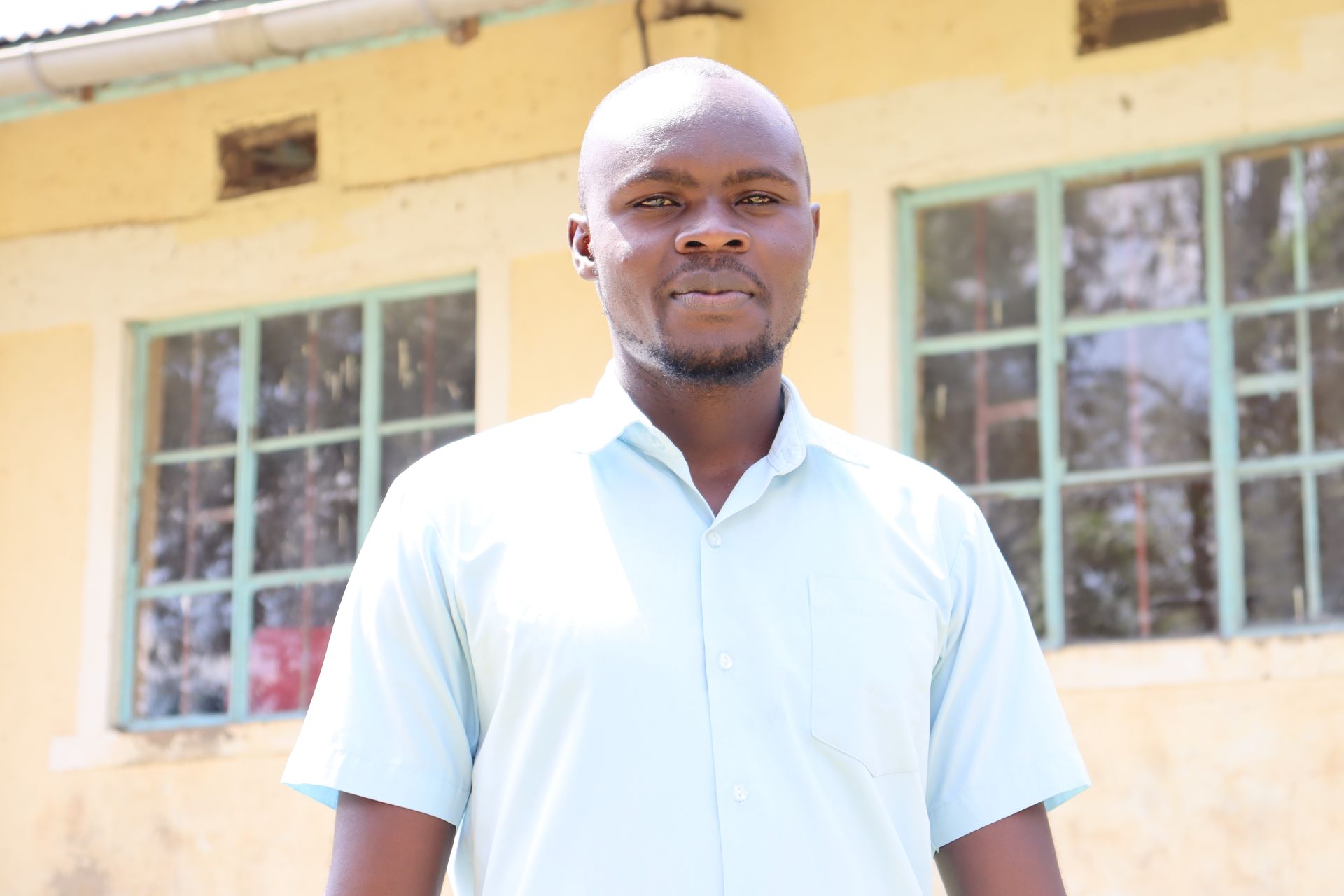
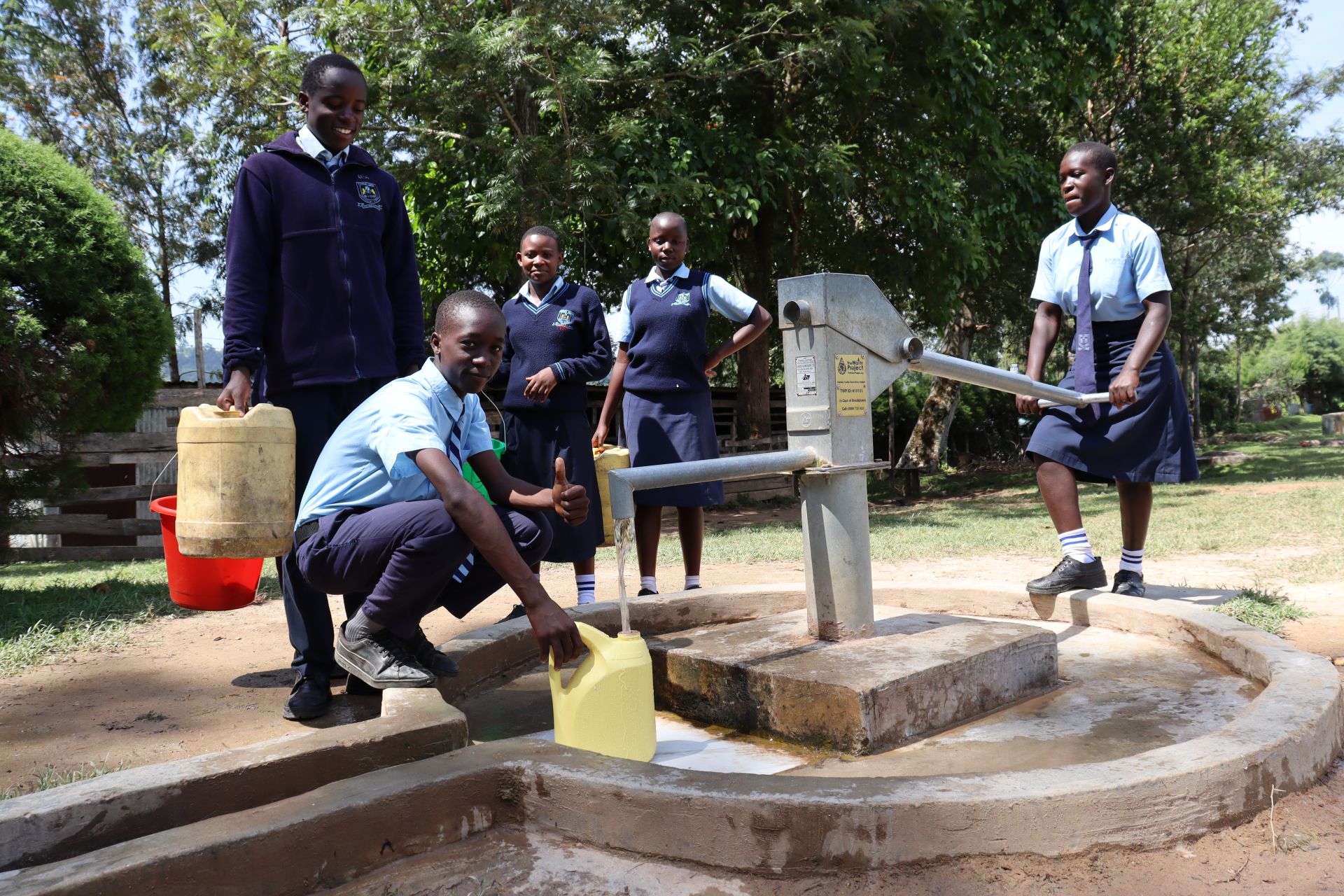
Last year, your gift unlocked the potential for a brighter future for Mr. Gangu and his students. Since then, he and the 845 students and teachers at Stanley Godia Secondary School have had access to clean, reliable water. Your contribution has made a significant impact. Thank you for making a difference!
"I like that water is now easily accessible, clean, and reliable within the school compound. Fetching water no longer takes much time or energy, allowing students and teachers to focus more on learning and teaching activities," celebrated Mr. Gangu.
Before the Well Installation
Like many teachers in Western Kenya, 34-year-old Kevin Gangu was responsible for supervising and helping his students collect water to meet their daily water needs. Before last year’s water intervention, this task stole their time and negatively affected them.
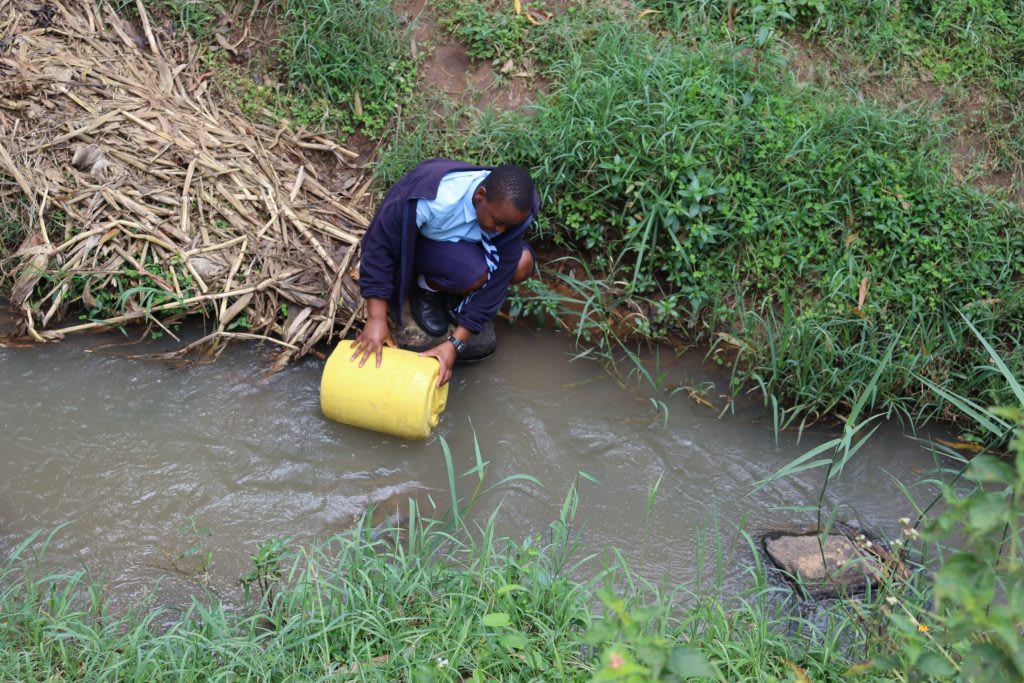
Students collected water from the local stream.
Drinking water from the previous water source caused severe consequences. Many in the school suffered from waterborne diseases that created health problems, affecting their daily lives. Limited accessibility also meant people wasted time collecting sufficient water to meet their needs. The difficult journey to collect water sapped their physical and emotional energy. For Mr. Gangu and his students, it meant learning time was limited.
"Before this project was completed, getting water was very difficult and exhausting. During dry seasons, the school’s water sources would dry up, forcing students and teachers to walk long distances in search of water. The process consumed a lot of time and energy, affecting lesson attendance and concentration in class," recalled Mr. Gangu.
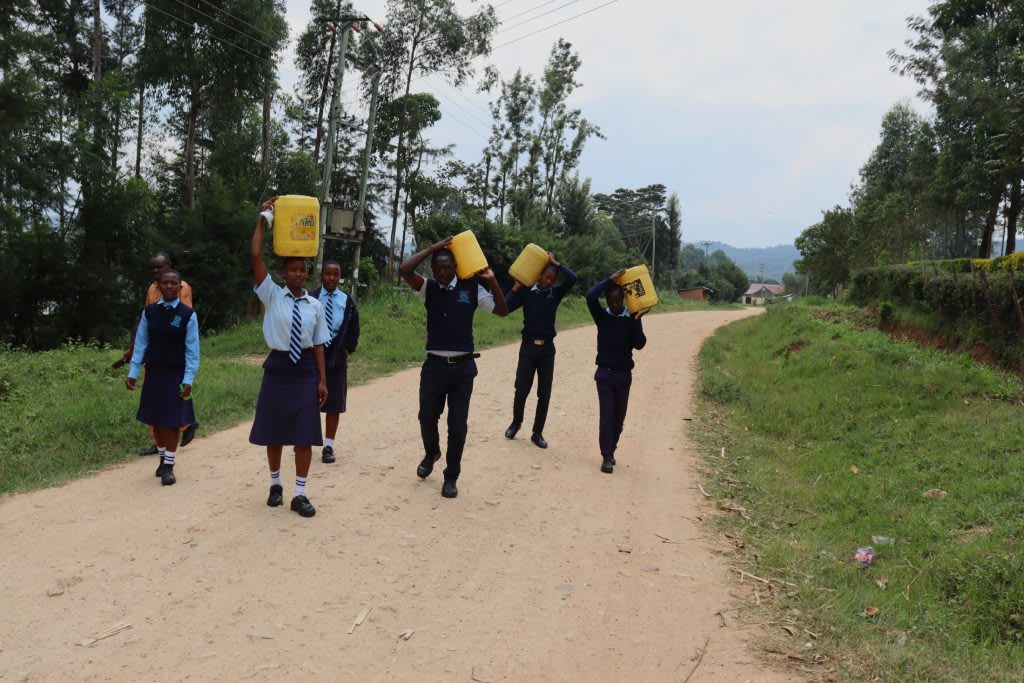
Students walked to collect water last year.
"Last year, we experienced severe water shortage, especially during the dry season when the available water sources dried up. Students used to go to fetch water [from] the stream and [the] protected spring. The water we collected was often contaminated, leading to cases of waterborne diseases such as typhoid and diarrhea," he continued.
Since the Well Installation
Your generous gift last year was more than a simple donation; it was a powerful statement of your commitment to this school community and its future. By supporting the water solution, you made clean water an everyday reality, fostering hope for a brighter future.
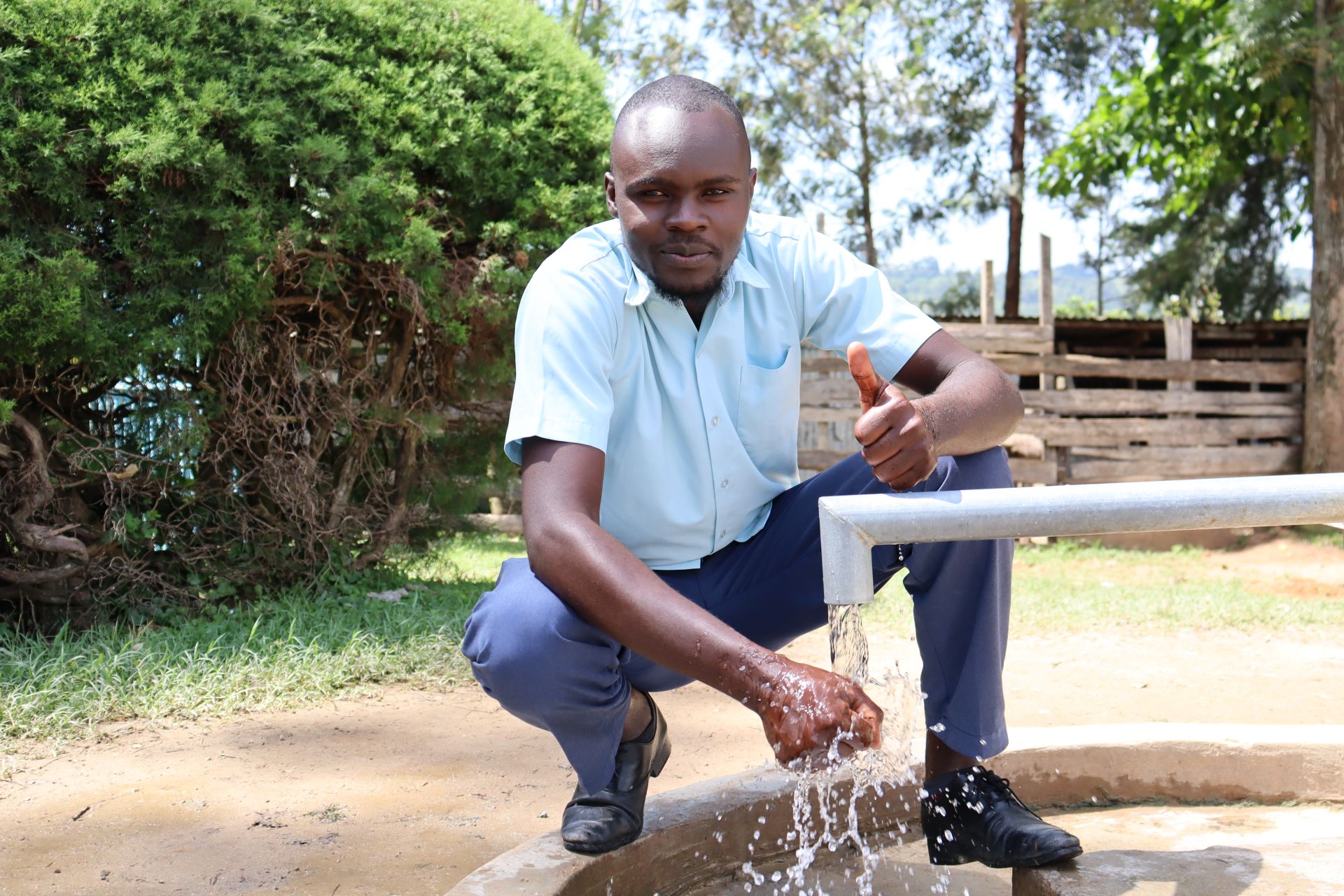
Reliable, clean water lays the groundwork for improved health, education, and economic opportunities, allowing people to thrive. We frequently hear from those we interview that "water is life!"
"Since the project was implemented, my health has improved because cases of water-related illnesses have reduced significantly. I now have more energy and can concentrate better on teaching and other daily activities. Student absenteeism has also reduced greatly, since learners are healthier. This has contributed to improved concentration in class and better academic performance overall," said Mr. Gangu.
The Future is Looking Bright!
A year ago, you made a difference for Mr. Gangu and his school. This is just the first chapter of their story as access to clean water continues to improve their lives!
At The Water Project, we value sustainability and want to ensure that people continue to thrive. We commit to monitoring this project to ensure the water is always flowing and safe to consume. We inspect system hardware, monitor water availability, conduct sanitary inspections, and collect water-quality samples to identify risks. We work with our on-the-ground team to resolve them.
You gave everyone at Stanley Godia Secondary School a crucial tool for achieving their dreams: access to clean water. Together, we can be confident that, with this precious resource, their enthusiasm and courage will help them fulfill their dreams.
"I am most proud of the improved health, reduced absenteeism, and better academic performance among students," said Mr. Gangu.
"The school has made several developments in the past year, made possible by reliable access to clean water. The school has improved hygiene facilities, established small gardening activities, and strengthened sanitation and health clubs that promote proper hygiene practices within the school," he concluded.
See The Water Project in Mr. Gangu's Community »