Project Status


Project Type:  Borehole Well and Hand Pump Adoption / Rehabilitation

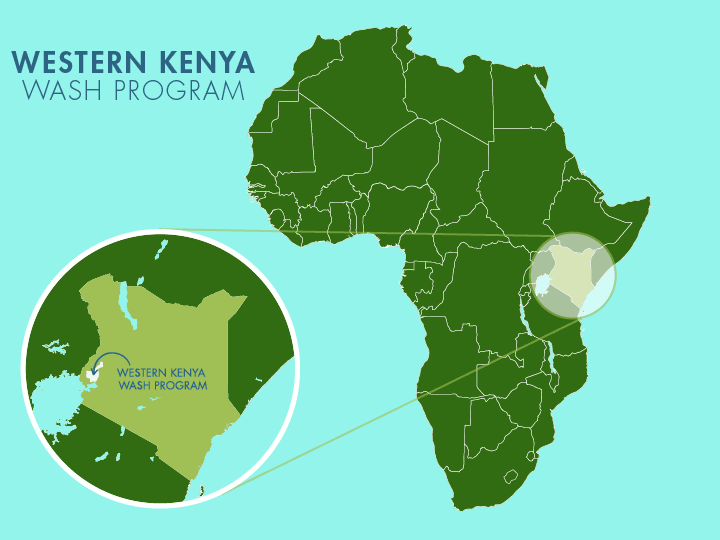
Regional Program: Western Kenya WaSH Program

Impact: 350 Served

Project Phase:  In Service

Functionality Status:  Functional

Project Features


Click icons to learn about each feature.


The 300 community members who call Emusaka Community home rely on a nearby well that was installed in 1984 by another organization. But for community members, collecting water here poses challenges because it has not been properly maintained for several years and frequently breaks down, forcing them to seek water elsewhere.
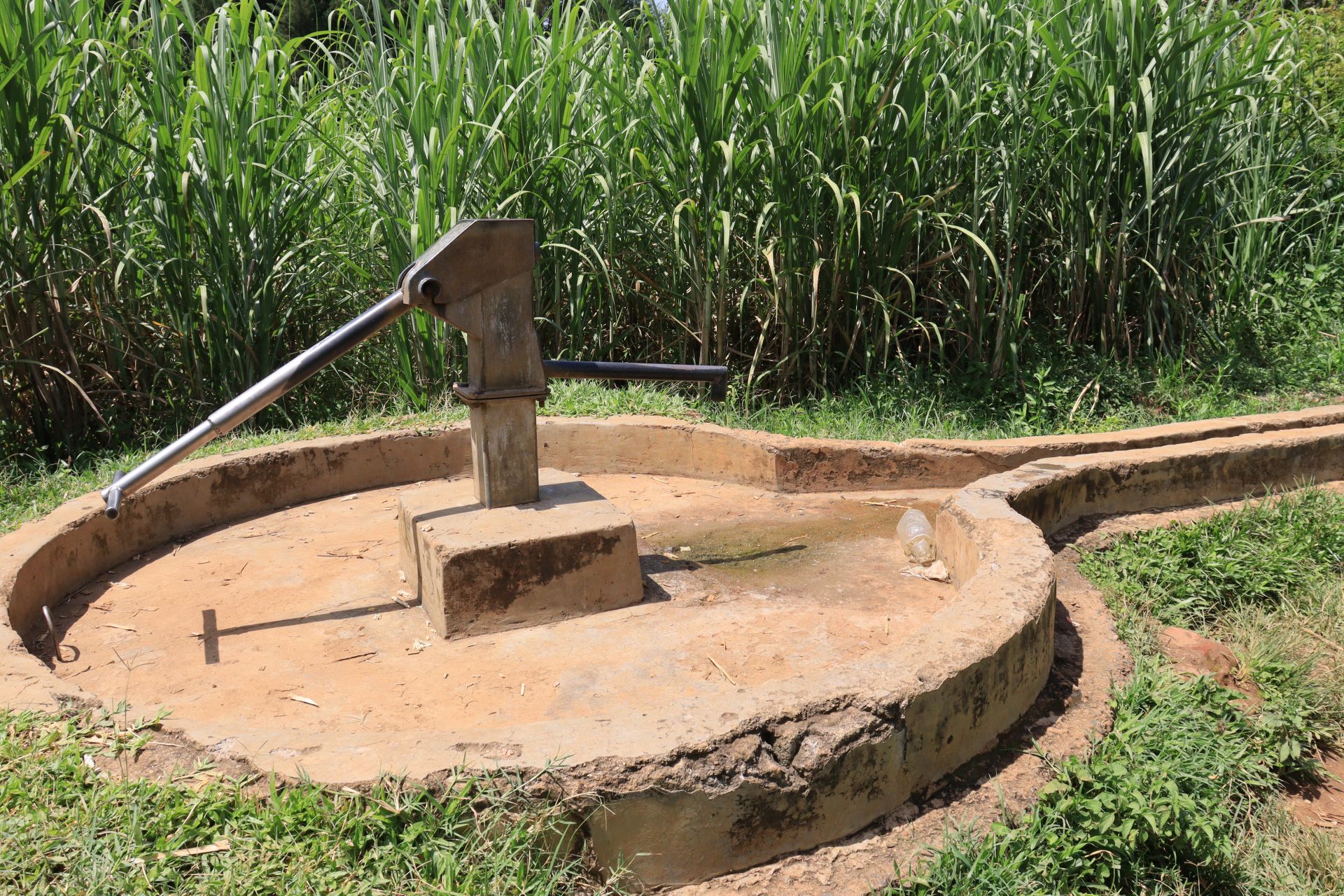
The well in need of adoption.

The heavy responsibility of maintaining the well has weighed on the community. When the well fails, it often remains unused and unrepaired because the resources to fix it are unavailable. It has been a financial burden on the community, where many struggle to survive day to day. It's a constant source of worry for those who need a reliable, safe water supply nearby to make daily progress in their lives.

Their only alternatives when the well is non-functional are a dug well in the community, rainwater, or collecting water from open sources wherever they can find it.

A community member works to collect water from the dug well.

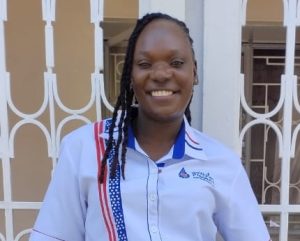
Field Officer Terry Fanice reported what she saw at the dug well: "The area around this hand-dug well is clean; however, there is residue or large particles visible inside the well. The water appears clean, but the water users have reported that sometimes it smells and tastes weird." Consuming the water it provides is risky, as it is likely contaminated for at least part of the year, but people often feel they have no choice.

When people attempt to collect rainwater instead, they understand it is not a long-term solution, as it depends on the rainy season. Sadly, it also poses contamination risks.

"Rainwater is the other source this community uses, and it is usually not clean, despite being seasonal. If used before treating it, people may fall ill," Terry continued.

Using water from open sources costs community members even more.
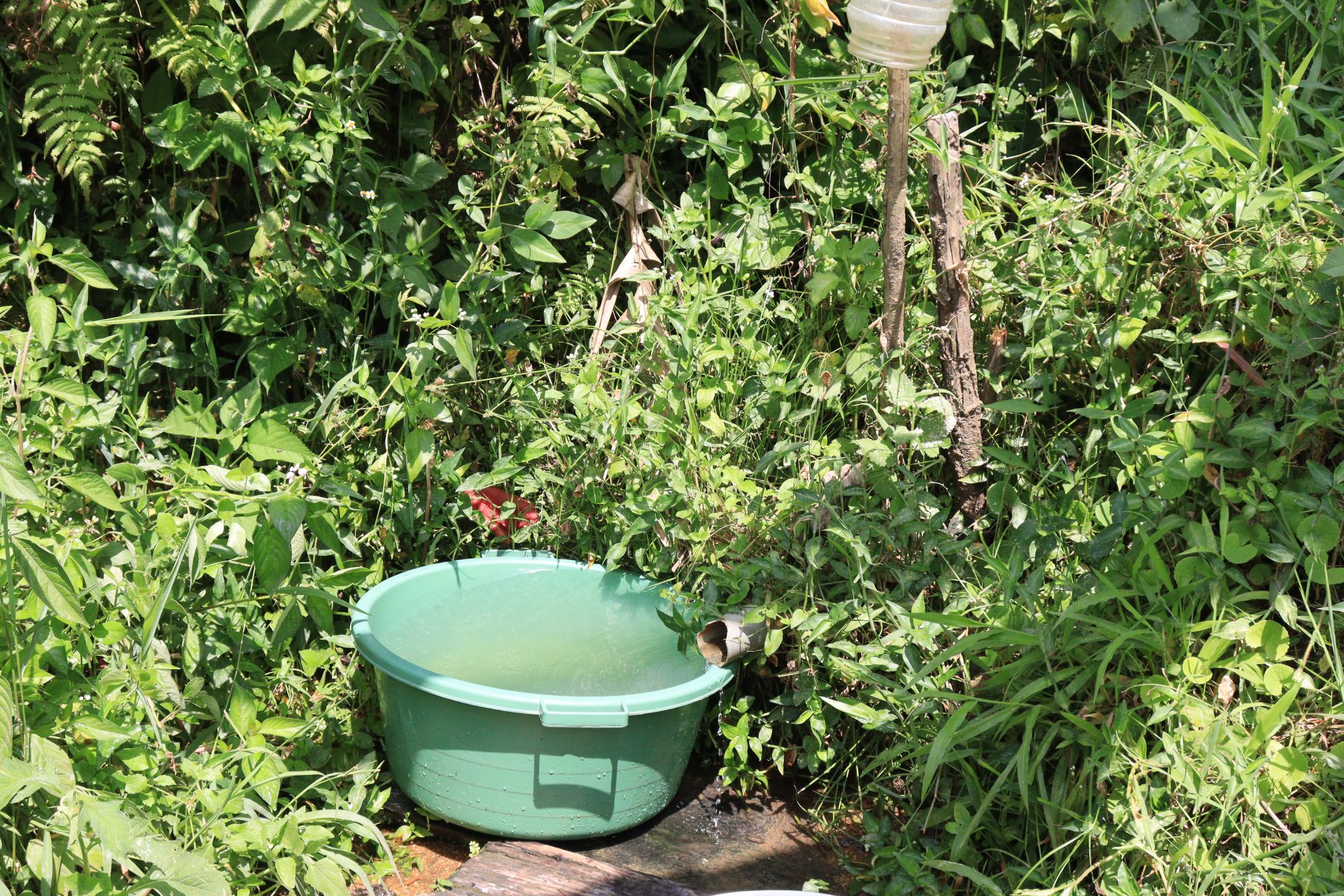
Water collected from open sources.

Regarding water collected from open sources, Terry shared, "Community members are forced to spend quite a large amount of money [to] buy firewood to boil water and to treat water-related illnesses at the hospital. Finally, over four hours per day are lost on water collection, reducing farm income while trapping families in poverty."

It is a disheartening experience that 44-year-old farmer and father Jared Tubei is familiar with.

"As a result of water-related illness, we miss work, our farms remain unattended, and crops get damaged. The cost of treatment is also high, and my children miss school sometimes," he said. "I feel bad, but we have no option but to use those sources when our borehole breaks down, and we do not have the ability to repair it on time."

"As a parent and a farmer, I feel stressed. Can you imagine a situation where you have crops on the farm, but you can't irrigate them, and there is no rain? The situation is difficult because it shows that you will suffer in the future," Mr. Tubei lamented. "When water is not available, it means hunger and malnutrition in this community. No matter how hard we work on our family farms without reliable water, we will still go hungry at the end of the day."

"Life has been so difficult, especially when the rain fails to come. Water is everything; there is nothing one can do without water," he continued.
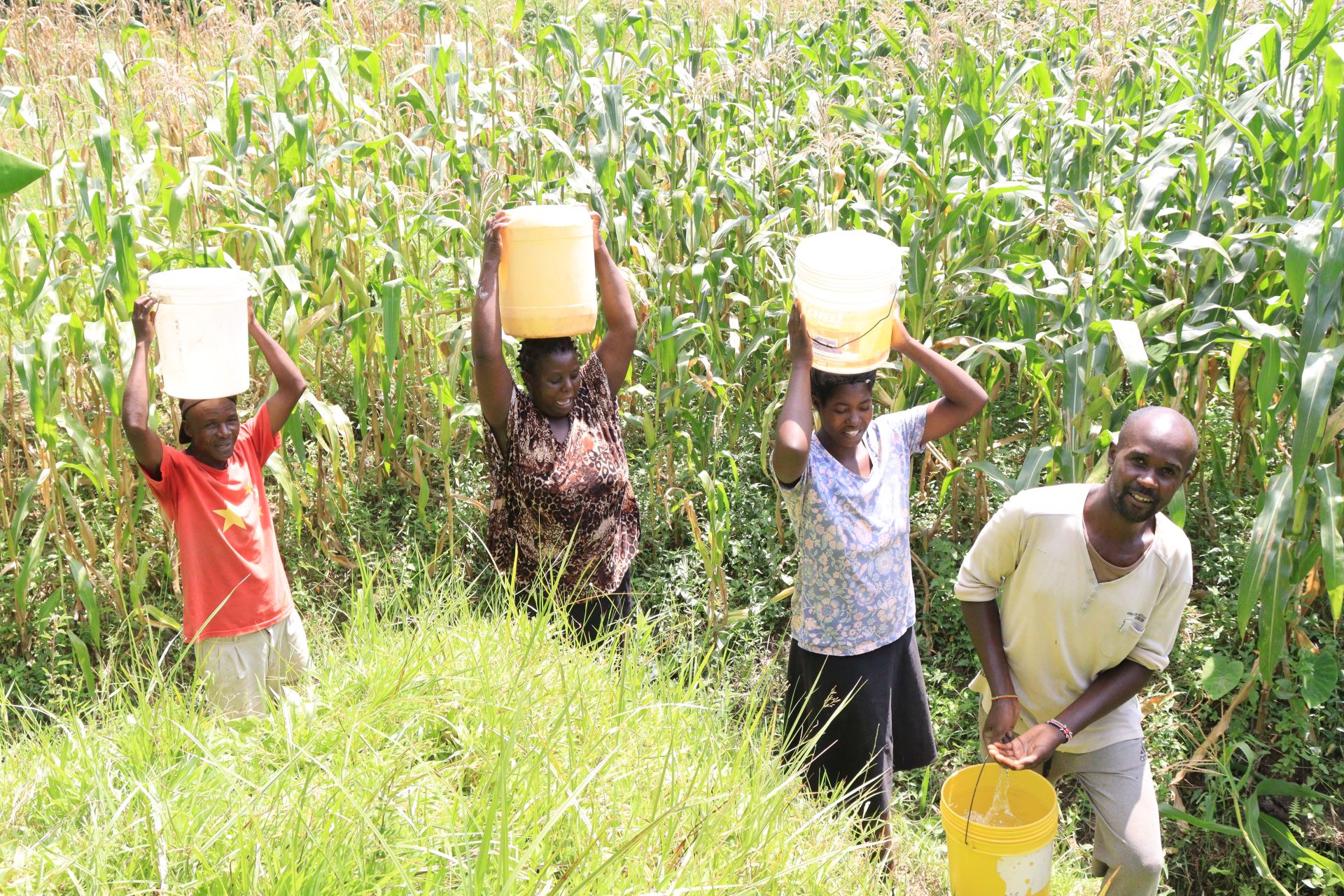
Community members walking to collect water.

During the most recent well breakdown, a month ago, which lasted for two weeks, Mr. Tubei did what he could by diverting money meant for fertilizing his crops to its repair.

"I used money that was set aside for fertilizer, so this season we planted without fertilizers," he recalled.

It is money he can not afford to lose, which has now put his livelihood at risk. Although he is doing all he can to remedy the problem, it is still not enough, as the community needs our help and expertise to repair the well so it can function in the long term. With access to clean, reliable water, stability will hopefully be restored for Jared, his family, and the rest of the community.

Steps Toward a Solution

Our technical experts worked with the local community to identify the most effective solution to their water crisis. Together, they agreed to adopt a well previously drilled by another organization that is no longer actively maintained.

Adopted Well: Ensuring Lasting Reliability
This adoption program protects and strengthens access to clean water by identifying boreholes installed by other organizations and adopting them into The Water Project’s proven monitoring and maintenance systems. This cost-effective approach reduces downtime, prevents waterborne illness, safeguards health and livelihoods, and advances long-term regional water coverage.

Before use, the well will be thoroughly vetted and repaired to meet our established standards. From there, we keep the system safe and dependable through quarterly monitoring and prompt attention to any maintenance needs — minimizing the risk of unexpected breakdowns. Water quality testing is conducted twice a year to ensure the supply remains healthy for the entire community. All of these services are covered by an affordable annual fee, with no additional costs at the time of repairs.

Community Education
Hygiene and sanitation training are integral to our water projects. Training is tailored to each community's specific needs and includes key topics such as proper water handling, improved hygiene practices, disease transmission prevention, and care of the new water point. Safe water and improved hygiene habits foster a healthier future for everyone in the community. Encouraged and supported by the guidance of our team, a water user committee representative of the community's diverse members assumes responsibility for maintaining the water point, often gathering fees to ensure its upkeep.

Project Updates


October, 2026: Emusaka Community Well Complete!

Thanks to your support, the Emusaka Community in Kenya now has something they can count on every single day - clean, reliable water flowing right from their own borehole. This is not just a well. It is confidence. It is health. It is possibility.

Every time a family fills a jerrycan - that's your impact, running through every drop.

Here's what this borehole well adoption means to the people who know it best.

Mr. Tubei at the well.

"The new water point will reduce the long distances we have been walking to collect water, especially during dry periods. It will also reduce the time spent queuing at the few available water sources and help us access safer water for drinking, cooking, and household use," celebrated 44-year-old Jared Tubei, a farmer and the chairperson of the water user committee.

Everyone was excited about the newly adopted well!

How We Keep the Water Flowing

Before a well enters our adoption program, it undergoes rigorous vetting and restoration — because a well worth adopting is one built to last. Every step is designed to ensure that the water flowing from it is safe, the infrastructure is sound, and the community it serves can depend on it for years to come.

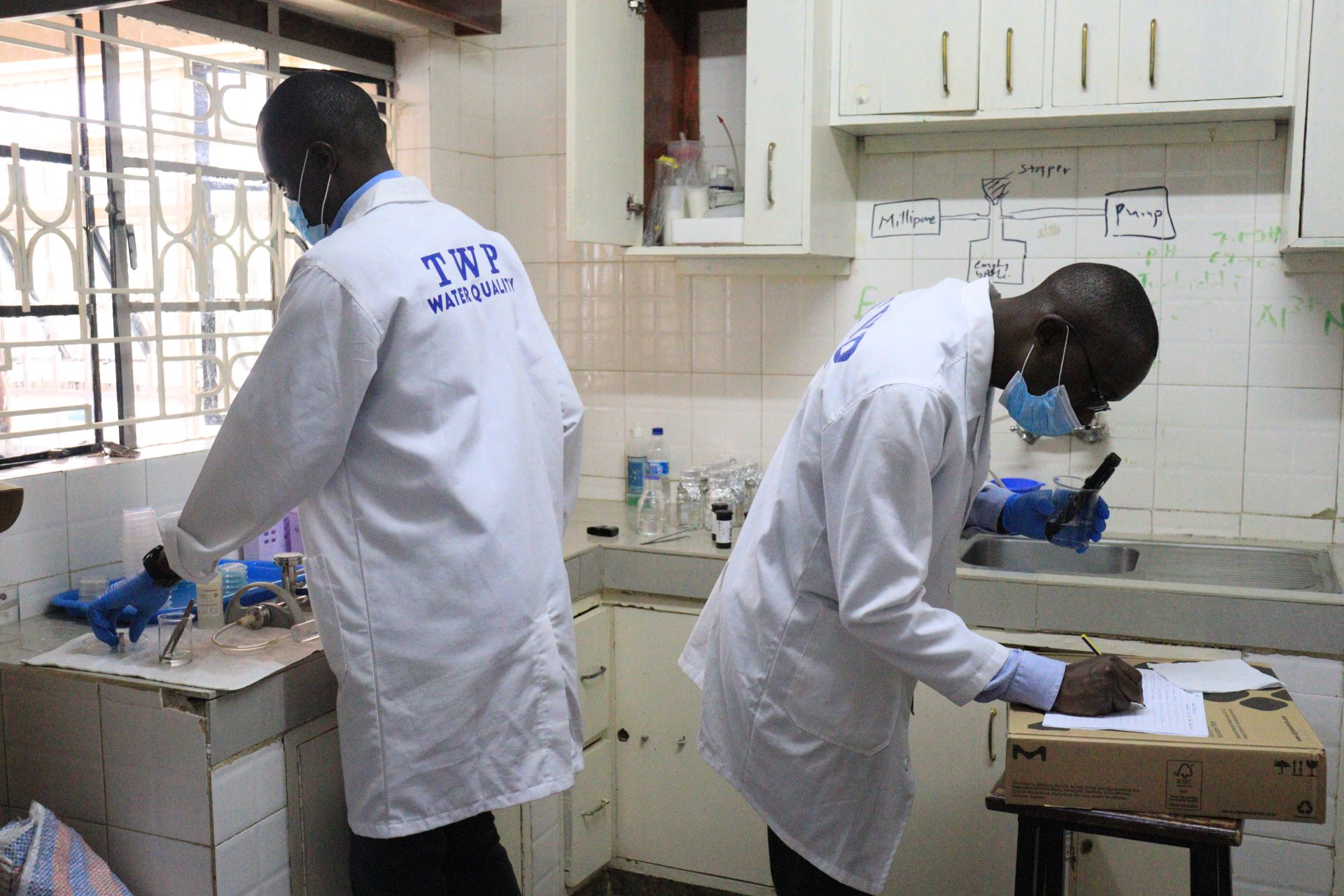
Water quality testing (a representative photo).

First, we ensured the water was safe for drinking. The water was tested at our Regional Service Hub laboratory to confirm compliance with safety standards. If bacteria such as E. coli were found, we shock-chlorinated the well and tested it again two weeks later; only wells with clean results move forward.

Downhole camera inspection (a representative photo).

Next, our team opened the well and conducted a detailed inspection using a downhole camera. This allowed us to see what couldn't be seen from the surface - the true condition of the casing, any structural wear, and whether the well had been compromised over time. It's painstaking work, but it's how we made sure nothing was overlooked.

Flushing the well (a representative photo).

Then, armed with that knowledge, we carried out all the necessary repairs. Whether that meant replacing worn components, addressing mechanical failures, or upgrading equipment, we restored the well to a standard we're confident in — one that reflects our commitment to quality, not just functionality.

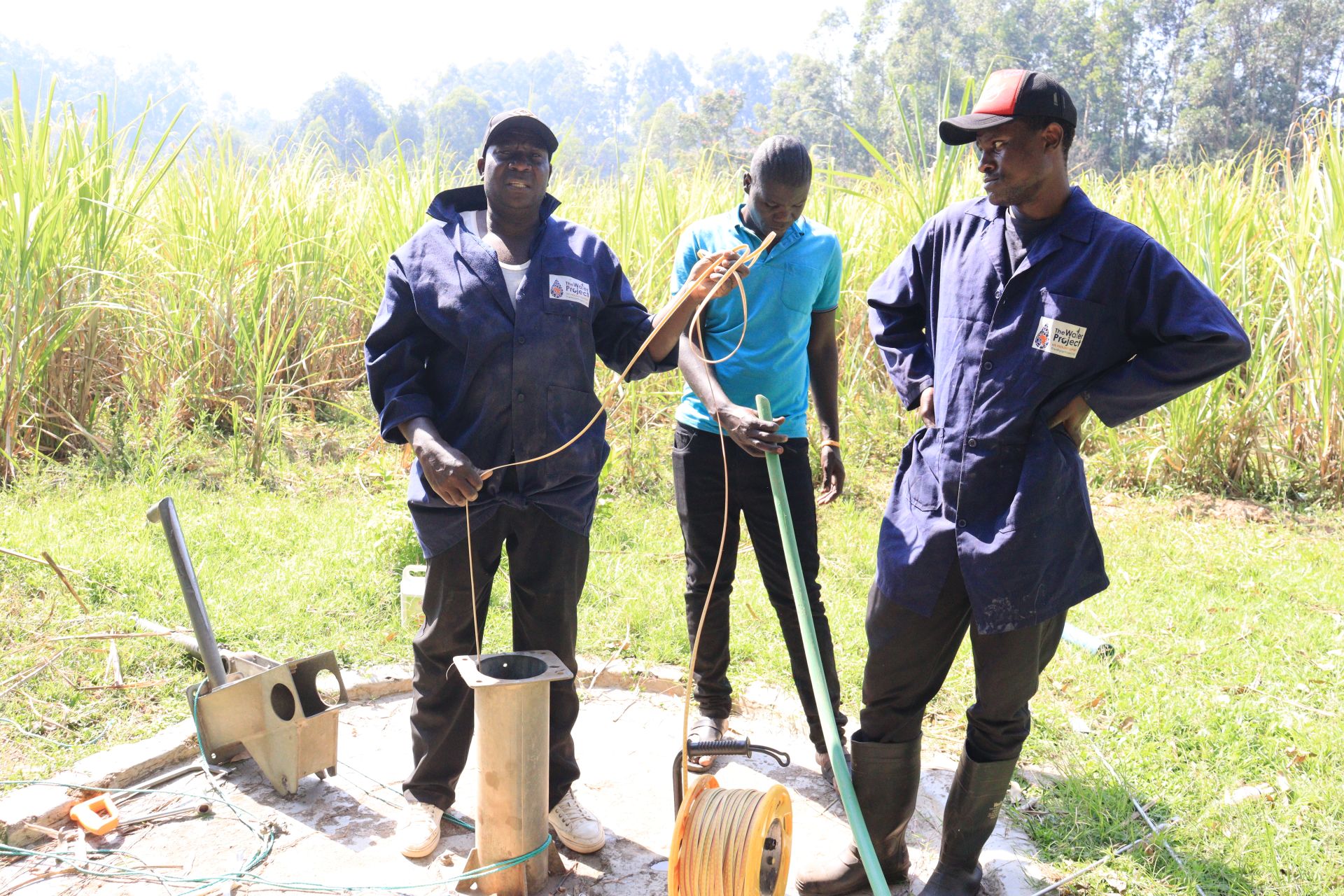
Measuring the static water level of the well (a representative photo).

Once the repairs were finished, the moment everyone had been waiting for finally arrived—the community gathered to use their restored well again.

Happy that water is restored.

Our relationship with the community doesn't end there. The community signed an agreement promising local leadership engagement and shared financial responsibility through an annual maintenance subscription program. These commitments will ensure sustainability through the exceptional monitoring and repair services from our Regional Service Hub!


We will visit four times a year to monitor its condition and conduct biannual water quality testing, ensuring it continues to meet the standard we set at handover. And in between those visits, we remain on call.

Communities know they can reach us whenever a challenge arises that they can't resolve on their own — whether it's a mechanical issue or a change in water quality. No community that has trusted us with their well should ever feel like they're facing a problem alone.

Community Education

We scheduled hygiene and sanitation training, ensuring that the date was convenient for participants. On the day, Field Officer Terry Fanice deployed to the site to lead the event. 21 community members attended the training, including 13 women, three men, and five children.


We discussed personal, oral, and environmental hygiene, emphasizing proper water handling, soap-making, and the ten steps of handwashing. We also highlighted the importance of primary health care and covered the operation and maintenance of the water point, as well as leadership and governance. By the end of the training, each participant had a clear understanding of their role in maintaining clean water and promoting good health within their community.

The community members elected their peers to lead their newly formed water user committee. The water user committee members will encourage good health and hygiene practices in the community.
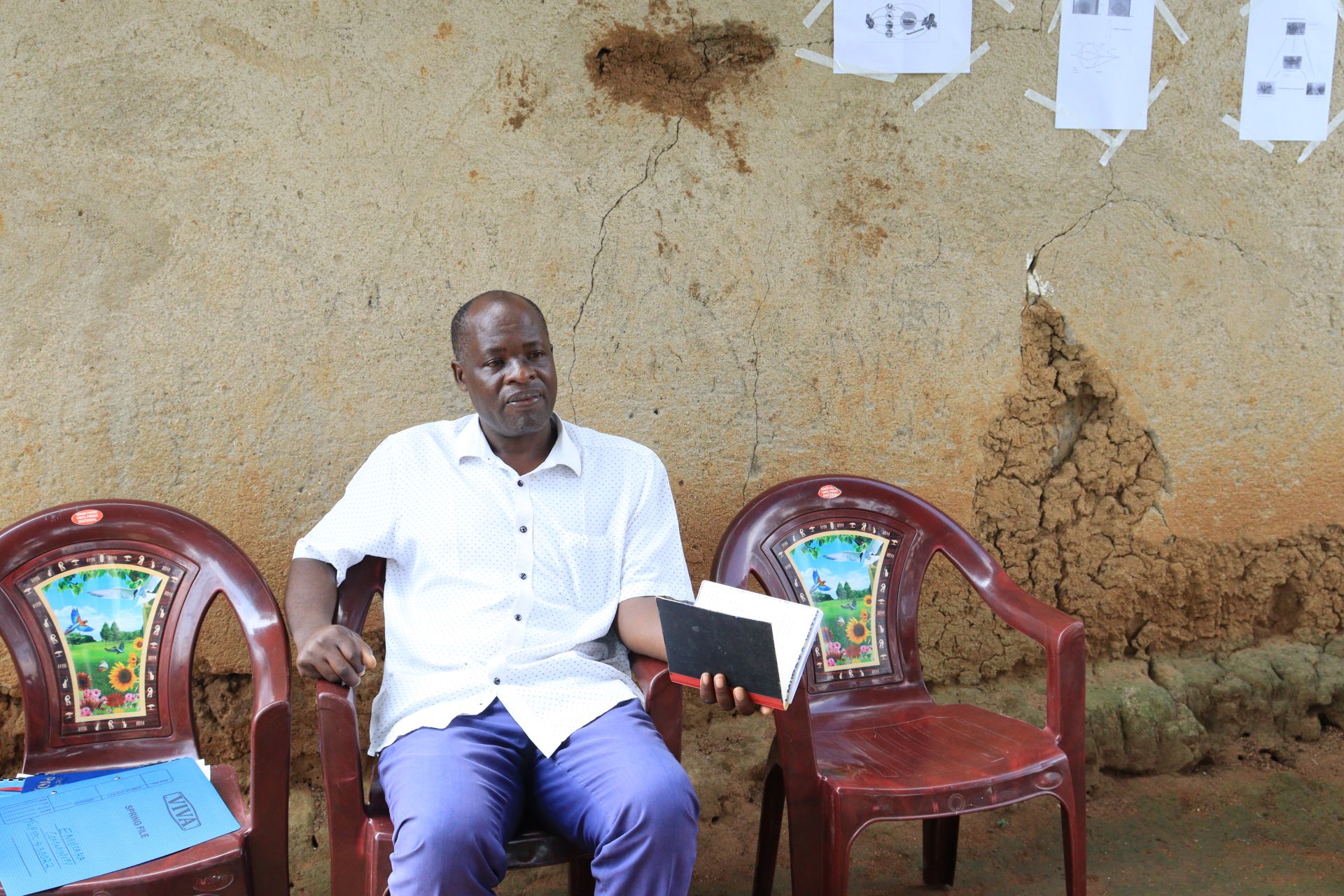
"Participants were open and willing to learn from the beginning. There were no topics they were resistant to, and they actively participated throughout the training. Participants demonstrated strong commitment and enthusiasm throughout the hygiene training. They listened attentively, asked relevant questions, and actively contributed their own experiences. Their willingness to discuss water safety and pump maintenance showed a genuine interest in improving hygiene practices within the community," shared Terry.

"I feel hopeful for this group because they demonstrated a strong willingness to learn and take responsibility for their water point. Their active participation and openness to new information suggest that they can translate the training into better hygiene and water-management practices," she continued.

"Participants enjoyed learning how contamination can move from feces to water, food, hands, flies, and ultimately to the mouth. The training has increased participants’ awareness of how everyday hygiene practices can affect health. They now see the importance of safe water handling, handwashing, and preventing contamination," shared Mr. Tubai, mentioned earlier.

Thank you for making all of this possible!


Update photo


August, 2026: Exciting Progress in Emusaka Community!

We’re thrilled to share that, thanks to your generous support, significant change is coming for Mr. Tubei and the entire Emusaka Community. Construction has begun on the well project, bringing them one step closer to having clean, reliable water.

But that's not all—during construction, we’re also providing vital health training. These sessions equip the community with essential hygiene practices, ensuring that the benefits of clean water extend to lasting health improvements.

We’re so grateful for your role in making this possible. Stay tuned for more updates—soon, we’ll be celebrating the arrival of safe water in the Emusaka Community!


Loading photos...


Project Type

A borehole well reaches clean water stored deep underground. We drill down through soil and rock to groundwater that natural layers have already filtered, then build a platform and fit a handpump so families can draw water up close to home. It is a safe, protected source that replaces long walks to open water, and with your partnership it is cared for long after it is installed.

Learn more about how we install a well here!

Why We Adopt

Across Western Kenya, thousands of wells were drilled years ago by governments, well-meaning groups, or as one-off projects, then left with no one to maintain them. Some still work. Many are one breakdown away from going silent. Experts estimate that at any given moment, roughly one in four handpumps in sub-Saharan Africa is not working.

That is the problem adoption solves.

Instead of drilling a brand new well beside one that already exists, we adopt the well that is already there. We inspect it, test the water, make the repairs it needs, and bring it into the same monitoring and maintenance system that protects every project we build. From that point on, the community is no longer on their own when something breaks.

Why it costs less

Adoption reaches people for a fraction of what a new well costs, because the hardest and most expensive part is already done. The borehole is drilled. The water is there. What has been missing is care. By restoring an existing well instead of starting over beside it, your gift goes further and protects something the community already depends on.

Why it matters for coverage

Our goal in Western Kenya is not a well here and a well there. It is reliable water across an entire region, for everyone, all the time. Every well we adopt is one more source that stays on, and one less community forced back to a spring or stream, or river when a pump fails. Adoption lets us close the gaps between the projects we have already built, so clean water is not just available somewhere nearby but dependable everywhere.

This year

In 2026 we are adopting 20 wells across our Western Kenya focus region. Each one is vetted, repaired, and committed to long-term monitoring, twice-yearly water quality testing, and community training, all covered by an affordable annual fee so that a single breakdown never again decides whether a family drinks safe water.

This well is one of them. Your support keeps it flowing.


Contributors

1 individual donor(s)