 Borehole Well and Hand Pump
 Rehabilitation Project








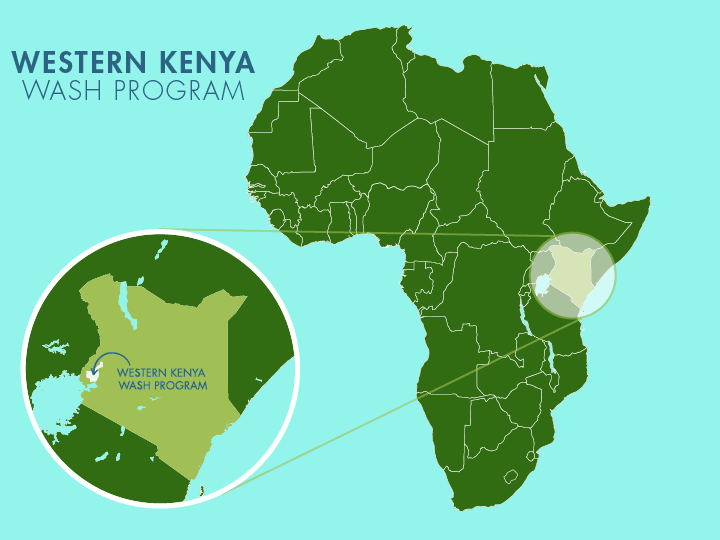
The 300 community members in Shibinga Community rely on a well installed in 1983 by another organization for their daily needs. However, people collecting water here face challenges because the well has not been properly maintained for several years and frequently breaks down - five times just in the last year - forcing them to find water in other, more risky locations.
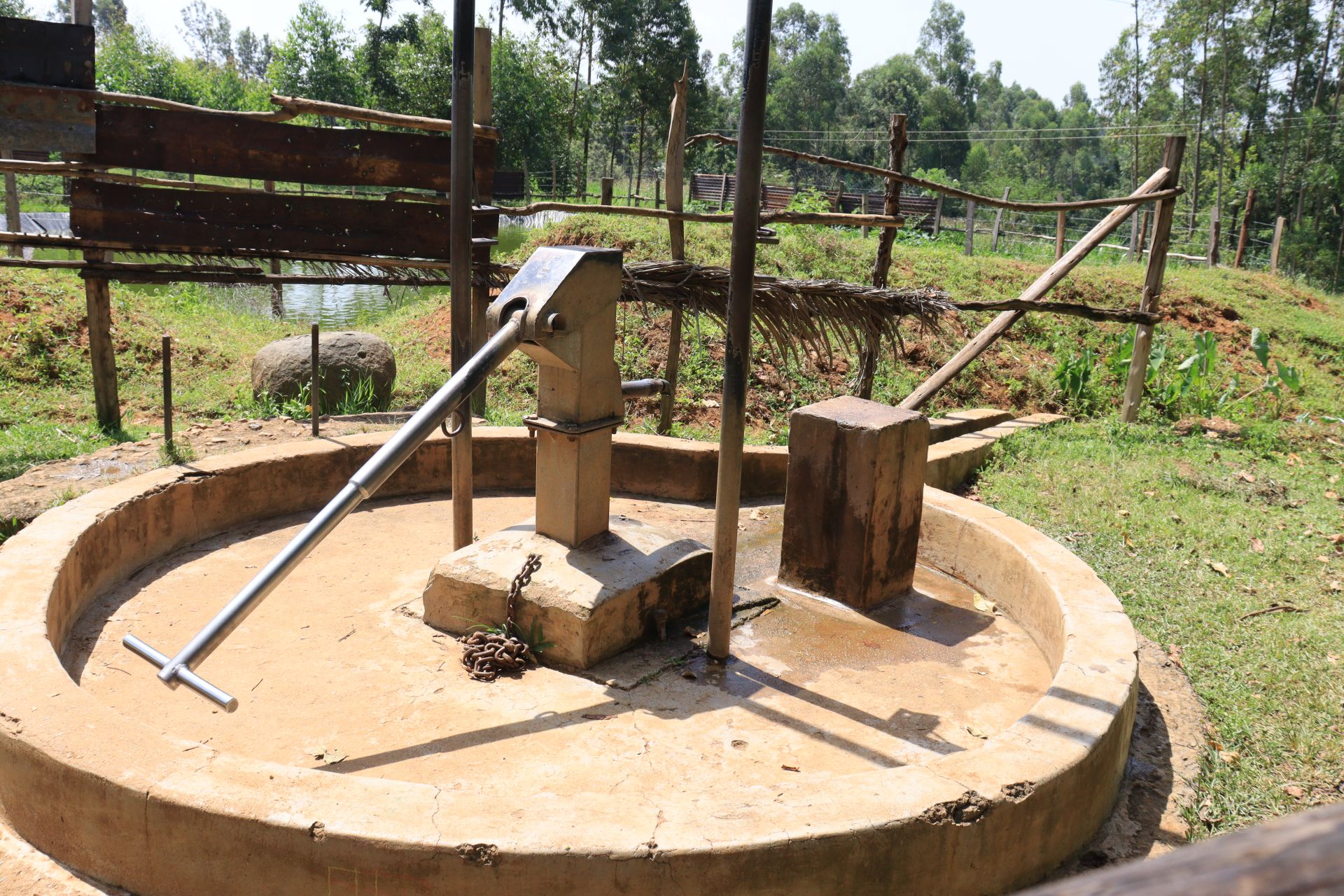
The well in need of adoption.
The heavy responsibility of maintaining the well has weighed on the community. When the well fails, the community does its best to find a solution, but sadly, even after their best efforts, it often sits unused and unrepaired because the resources to fix it are unavailable. It has been a financial burden on the community, where many people struggle to survive day to day. It's a constant source of worry for those who need a reliable, safe water supply nearby to make daily progress in their lives.
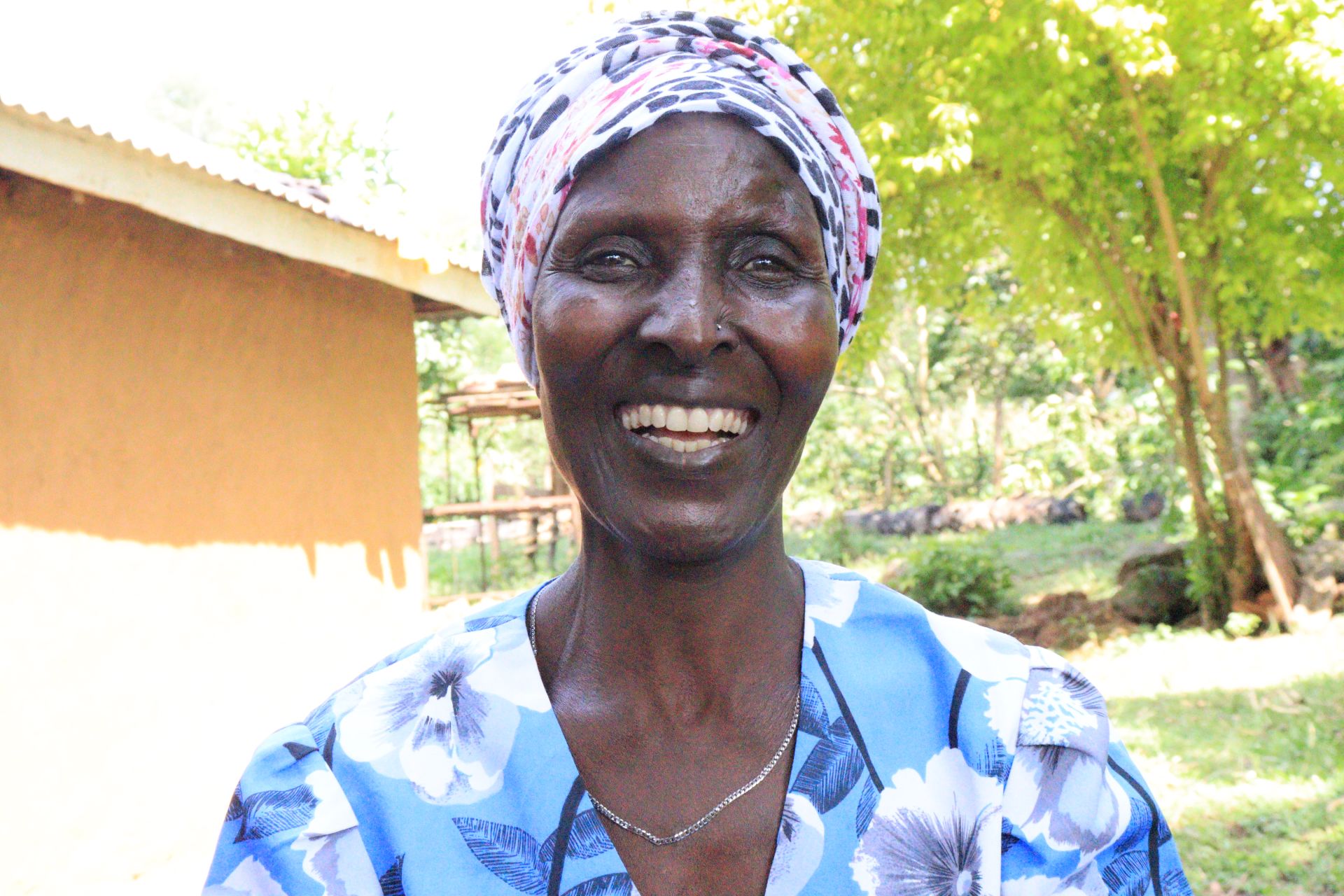
Ms. Angeline Shiroya.
Sixty four-year-old farmer Angeline Shiroya noted the efforts she and others in the community have made to address issues arising from the well's current condition.
"We have contributed money and sourced a local mechanic, but he was not able to solve the borehole issue we called him to address. It cleared our water kitty, yet we had not completed repairing the well," Ms. Shiroya said.
When the well is non-functional, people's other options are to collect rainwater or draw water from a community spring, but neither is a viable long-term solution.

Walking to collect water from the spring.
"The challenge with the spring water is only the distance, but with rainwater, it sometimes causes sickness if not treated well before consuming," Angeline reported.
Angeline says she faces challenges accessing the spring because of her age, as it requires an exhausting hour-long trip through steep, challenging terrain. A trip she simply can't do anymore.
"I developed knee pain while walking a long distance and carrying a heavy jerrycan on my head. As a senior citizen, life has become hard for me. I don't have the strength to go to the spring, and my children come home from school very late. They fear for their lives to go to the spring at night because it is not safe," Angeline said.
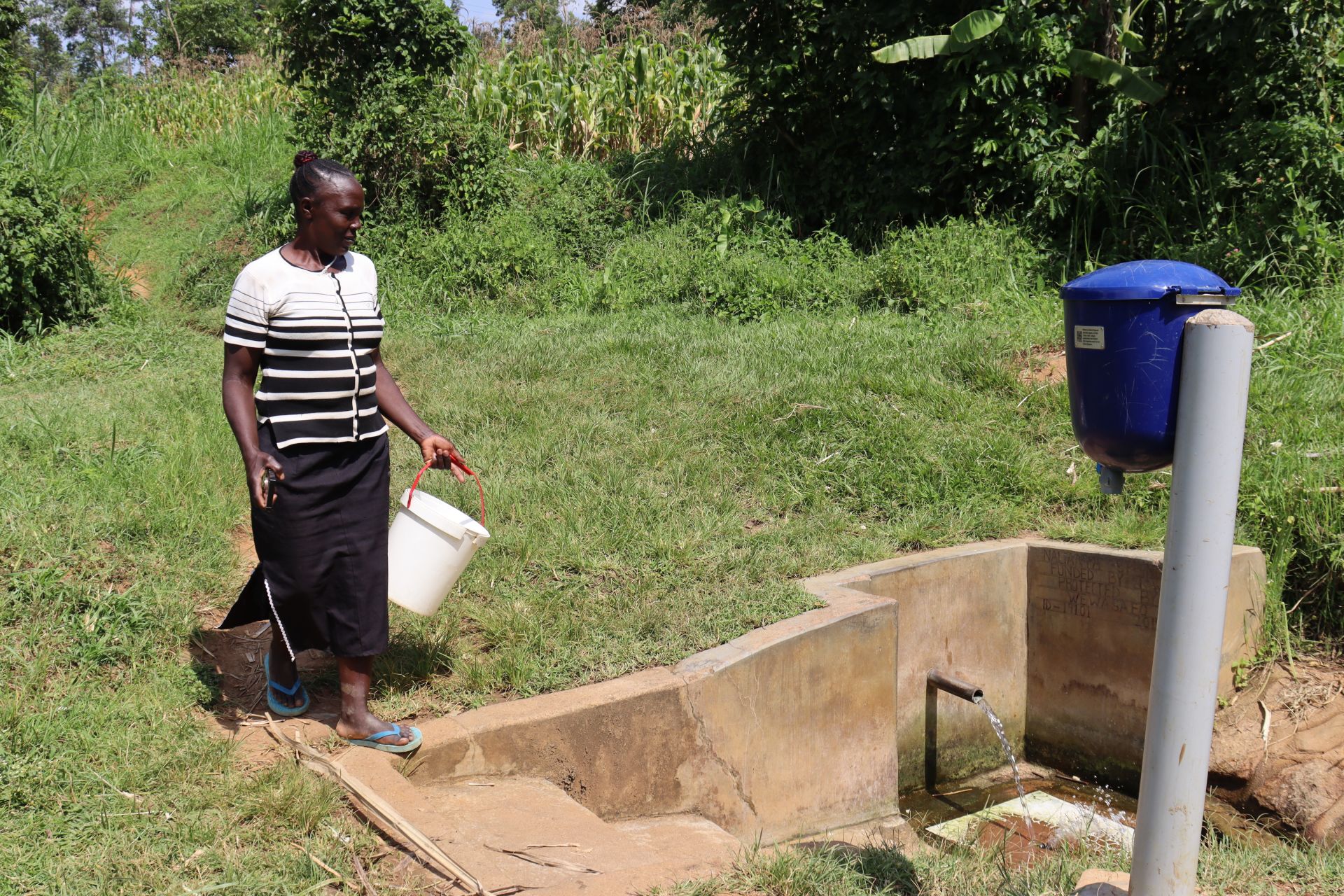
The faraway community spring.
Water impacts every aspect of Angeline's life.
"I get so worried, because sometimes water gets finished in the house, and I am alone in the house, and I need to swallow my medicine. I feel like I might die someday because of skipping my medication due to water," she shared.
Giving Angeline access to reliable water would change her daily life. She would regain some of her autonomy and be reassured that she is safe and can look to the future with confidence.
"Water is important to me because if I have access to good-quality water, I will live long enough to see my grandchildren's children," Angline declared.
Steps Toward a Solution
Our technical experts worked with the local community to identify the most effective solution to their water crisis. Together, they agreed to adopt a well previously drilled by another organization that is no longer actively maintained.
Adopted Well: Ensuring Lasting Reliability
This adoption program protects and strengthens access to clean water by identifying boreholes installed by other organizations and adopting them into The Water Project’s proven monitoring and maintenance systems. This cost-effective approach reduces downtime, prevents waterborne illness, safeguards health and livelihoods, and advances long-term regional water coverage.
Before use, the well will be thoroughly vetted and repaired to meet our established standards. From there, we keep the system safe and dependable through quarterly monitoring and prompt attention to any maintenance needs — minimizing the risk of extended breakdowns. Water quality testing is conducted twice a year to ensure the supply remains healthy for the entire community. All of these services are covered by an affordable annual fee, with no additional costs at the time of repairs.
Community Education
Hygiene and sanitation training are integral to our water projects. Training is tailored to each community's specific needs and includes key topics such as proper water handling, improved hygiene practices, disease transmission prevention, and care of the new water point. Safe water and improved hygiene habits foster a healthier future for everyone in the community. Encouraged and supported by the guidance of our team, a water user committee representative of the community's diverse members assumes responsibility for maintaining the water point, often gathering fees to ensure its upkeep.