The Four-Hour Walk Stealing Beatrice’s Childhood
Thirteen-year-old Beatrice spends an average of four hours every day fetching water for her household — hours she desperately wishes she could spend on schoolwork or simply being a child.
When we asked her why her daily journey takes so long, she explained, “The current water points are located very far away, about three kilometres (1.86 miles) away.”
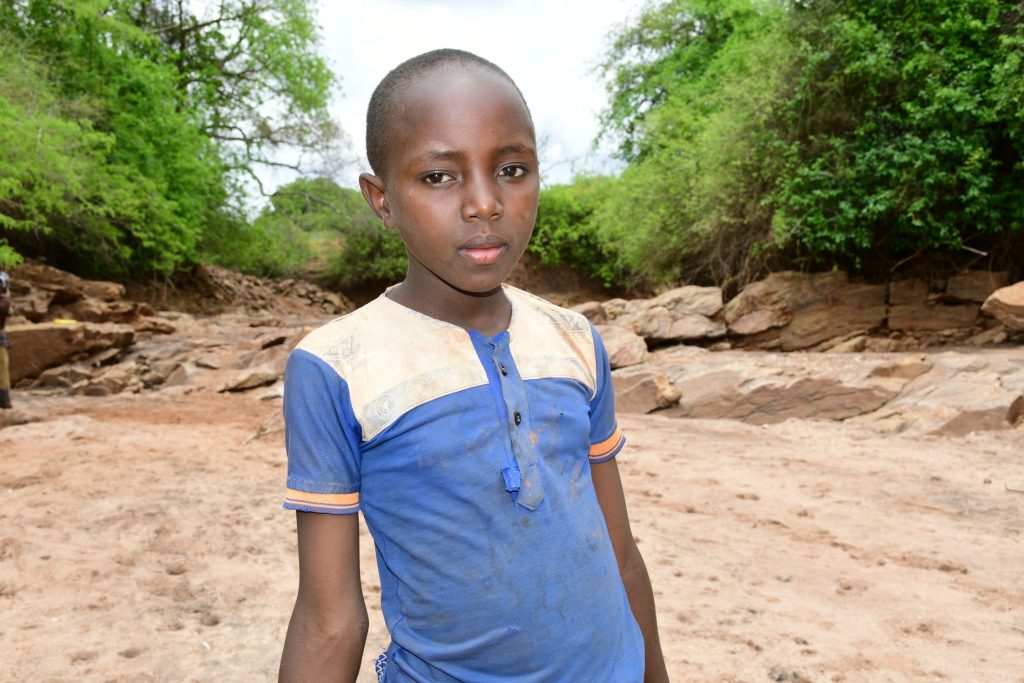
Three kilometers may not sound far. But in Kasyalani village, those kilometers stretch over harsh, uneven land. The path dips and rises sharply, and loose stones slide beneath her feet with every step. Beatrice told us, “Walking over the rocky and steep terrain to access water is risky, and I have hurt myself several times when going to fetch water.”
Field Officer Alex Koech, who visited the community this fall, described just how unforgiving the landscape is. “The area’s dryness and dusty nature make it difficult to navigate, especially during drought periods,” he said. “Dust can cause irritation, and the barren land offers little vegetation or shade, making long journeys to fetch water exhausting and dangerous due to heat exposure. The area is also rocky; the path to the scoop hole or the sand dam is therefore treacherous. Walking over uneven ground or sharp rocks increases the risk of injuries such as cuts, sprains, or falls, especially when carrying heavy water containers.”
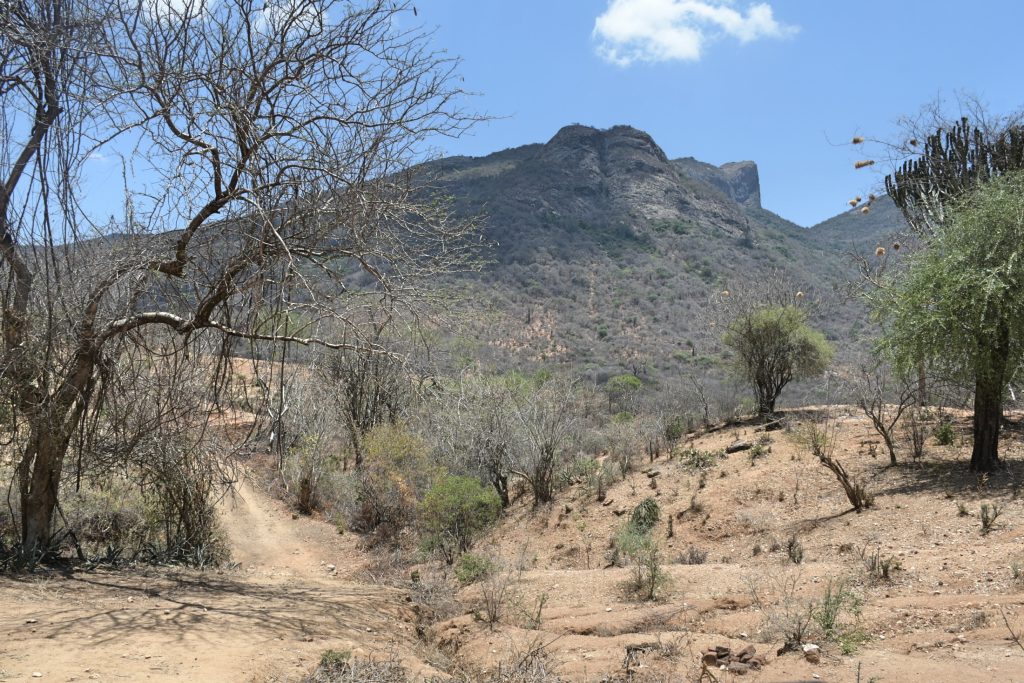
The Long Walk
The hours Beatrice spends walking and waiting give her plenty of time to imagine a different life — one where water is close by, safe to drink, and easy to collect.
Alex explained how much time and energy is lost every day across the village: “Collecting water from distant sources consumes significant time and energy, especially for women and children who are typically responsible for this task. This time could otherwise be spent on productive activities like farming, education, or income-generating work.”
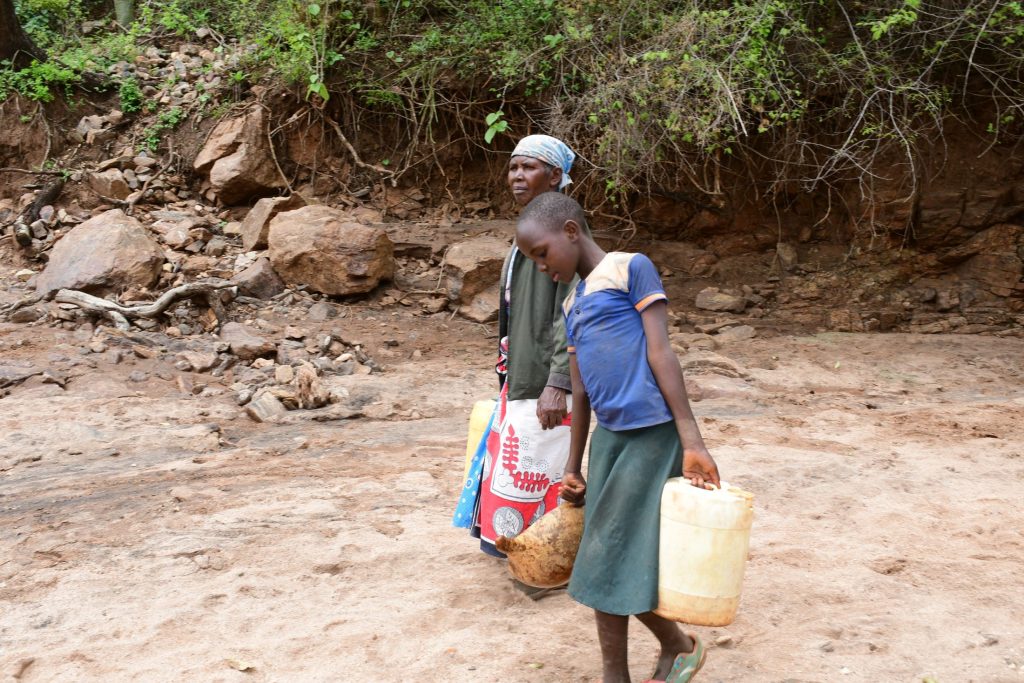
Water scarcity dictates nearly every decision for the 1,500 residents of Kasyalani. Fewer than a quarter can collect water within a thirty-minute round trip. For everyone else — including Beatrice — the walk takes much longer, especially during the worst drought months.
Alex added: “Children, particularly girls, often miss school or arrive late because they are tasked with fetching water. This affects their academic performance and reduces opportunities for long-term personal development.”
The Scarcity of Water
Even after walking for hours, there is no guarantee water will be available when Beatrice arrives.
“We do not have enough water from the current sources because we experience adverse drought in our area,” she shared.
Kasyalani relies on two main water sources — both inadequate. The first is a protected dug well. While cleaner than other options, it often runs low, is overcrowded, and sits far from many households. Reaching it requires navigating dangerous terrain.
The second option is a series of open scoop holes that sit much farther away. Under normal circumstances, the trip takes an hour — but during drought, it can stretch to three. Once there, families queue for another hour just to collect a small amount of salty, unsafe water.
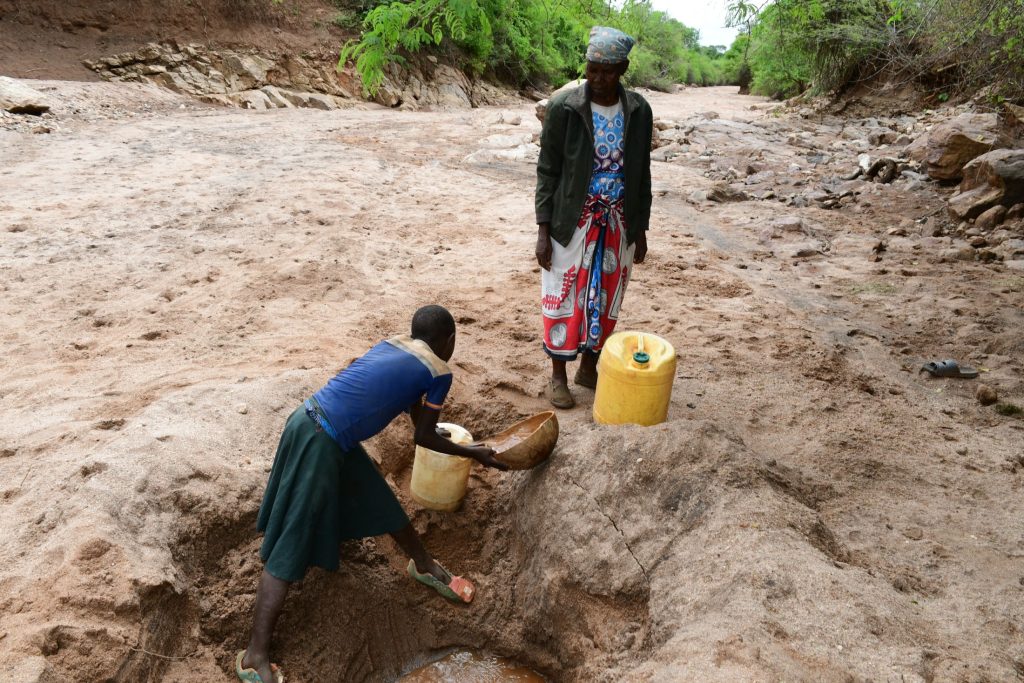
These scoop holes are entirely exposed. Alex told us, “The water is saline with an unpleasant taste and smell.”
The Health Crisis
The water Beatrice and her neighbors work so hard to collect often makes them sick.
Alex explained: “Drinking from the scoop hole, which is exposed to contamination from animals and dirt, has increased the risk of diseases such as diarrhea, typhoid, and cholera. These illnesses are common because water is not properly treated or stored.”
And when drought intensifies, the consequences become even more dangerous.
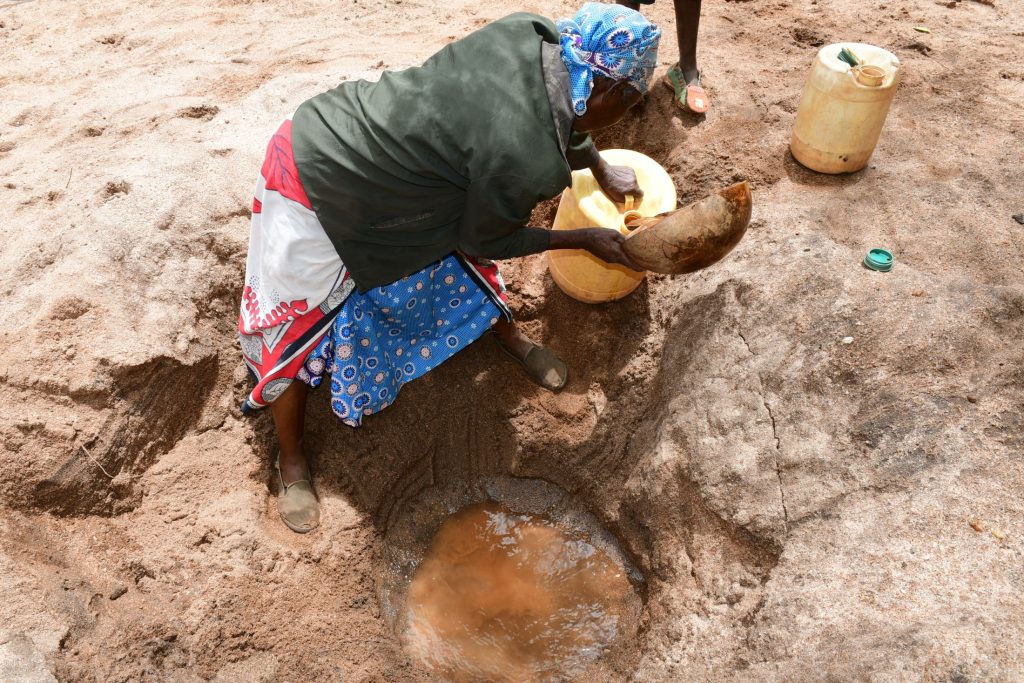
“During periods of extreme water scarcity, when the scoop hole dries up and the sand dam runs low, many community members face dehydration. Long journeys to fetch water combined with limited supply leave people fatigued and prone to heat exhaustion,” Alex said.
Children like Beatrice are particularly vulnerable. “The frequent bouts of illness from unsafe water have weakened the immune systems of those affected, making them more vulnerable to other diseases and health complications, especially in children and the elderly,” he added.
Dreams on Hold
When we asked Beatrice how she would spend her time if she didn’t have to fetch water every day, her answer was simple and heartbreaking: “I would spend my time playing or studying.”
Right now, that isn’t possible.
Fetching water keeps her away from her books and robs her of rest. She told us, “I spend most of my free time when at home fetching water rather than studying or revising what was taught in class.”
Still, she refuses to let go of her dreams. “I want to study hard so that I can be a doctor in future,” she said.
But the emotional weight of the daily journey grows heavier. “I feel bad because I have to walk several kilometers under the burning, arid sun looking for water.”
Beyond Water: A Community in Crisis
The water crisis doesn’t stop at drinking, cooking, or hygiene. It affects food, livestock, income, and the community’s ability to sustain itself.
Alex described the cascading effects: “Water scarcity has reduced the community’s ability to irrigate crops or sustain livestock, which directly impacts food production. This has culminated in food shortages and malnutrition.”
Despite their efforts, the community has received no outside support from local government leaders.
Alex explained how transformational the new sand dam will be: “A sand dam stores water beneath layers of sand, which prevents evaporation and allows for year-round access. This will provide the community with a more consistent and reliable water source, even during dry periods when the scoop hole typically dries up.
“With access to cleaner water, the incidence of waterborne diseases, such as diarrhea, cholera, and typhoid, will reduce.”
For Beatrice, the biggest change is also the simplest. “The new water point will be close to my home, and I will no longer have to walk far looking for water.”
With water nearby, the community plans to expand its tree nursery, grow vegetables, and establish kitchen gardens. As Alex shared, “The community hopes to be the best seller of tree seedlings in the area and has already set up a tree nursery. The water from the implemented project will help in sustaining this project. The community also plans on setting up vegetable farms and kitchen gardens now that they will have enough water nearby.”
For him, the human cost behind these dreams stands out most. “One of the most poignant moments during interactions with water users in the Kasyalani community was hearing from mothers who described the physical toll of walking long distances to fetch water and the anxiety of knowing that the water they collected was often unsafe,” he said. “The stories of children frequently falling ill after drinking contaminated water and how this affected their school attendance and well-being were particularly striking.”
Reclaiming Childhood, Reclaiming Dreams
For 13-year-old Beatrice, a close, reliable water source will return something she has never truly had: time.
Time to study. Time to rest. Time to play.
Time to be a child again.
Soon — with your support — her dream of becoming a doctor can move from possibility to reality. With a water source near her home, those four hours she now spends walking under the blazing sun can be returned to her future.
The people of Kasyalani are ready to build a brighter tomorrow. They just need the water to make it possible.
Home More Like ThisTweet

Jamie Heminway
Jamie is a storyteller by nature. In joining the Water Project, she’s finally found a workplace where that pesky bleeding heart of hers can be put to use (and, less importantly, that BA in English Language & Literature from New England College).