Scaling What Works: The Water Project’s 2026 Program Innovations
Last year, we focused on building foundations. We refined our approach, tested new models, and elevated service quality across every community we serve. Now, as we step into 2026, we’re ready to scale what works.
We’re expanding the innovations that proved successful in 2025 to reach more communities, improve functionality, and create lasting change. Here’s what that looks like on the ground.
Borehole Adoption: Expanding Our Maintenance Reach
In 2024, we piloted a new approach to keep water flowing for communities and schools in Western Kenya. We identified 10 existing boreholes not implemented by The Water Project, boreholes without access to reliable maintenance. We brought these water points into The Water Project’s maintenance and oversight system, essentially ‘adopting’ them to ensure they stayed functional. The results? By the end of 2025, every single one remained operational.
“It’s much cheaper for everyone (community members who depend on water from hand pumps, donors, and service providers) to prevent problems before they occur,” says Spencer Bogle, Vice President of Global Programs. “By expanding affordable services to more communities and schools that depend on hand pumps, we are making water access more reliable, more cost-effective, and safer. This will help us achieve our goal of complete coverage within our Western Kenya regional program much faster.”
In 2026, we’re expanding to 20 additional boreholes. By bringing existing water points into our maintenance system, we can ensure more communities have reliable access to clean water without starting from scratch every time.
Emma Kelly, Western Kenya Program Manager, explains the broader impact: “Here at The Water Project, we know that consistent monitoring and maintenance are key to keep the water flowing for rural communities. Our Regional Service Hub is engaging with communities continuously, often providing maintenance services before breakdowns even occur. This cost-effective approach reduces downtime, prevents waterborne illness, safeguards health and livelihoods, and advances long-term regional water coverage.”
When The Water Project mapped all water sources in Western Kenya, we found 138 boreholes with hand pumps that were partially or fully functional. “Rather than letting these systems fail (or drilling new wells where viable water points already exist), we will proactively preserve these existing sources through the Adoption Program,” Kelly adds. “After engaging the community and agreeing to the terms of service, we will incorporate these hand pumps into our Water Promise program – providing water quality testing, routine monitoring, timely repairs, and hygiene and sanitation training.”
Solar-Powered Piped Water: The Future of Coverage
Since 2022, Southeast Kenya has completed three solar-powered piped water systems. These projects deliver clean water directly to multiple access points, serving entire communities with reliability and minimal environmental impact.
Strategic pre-investment makes the difference. By installing sump tanks early in the process with larger sand dam systems, we enable later upgrades to solar-powered piped water projects. Our teams are capable of identifying the right projects that can support a solar-powered piped system with enough water in the arid region of Southeast Kenya. Ninety-five percent of the projects where a sump tank was installed at construction have been upgraded with piped water. This reduces the distance many people walk to get water, makes the journey much easier, and ensures reliability from the start.
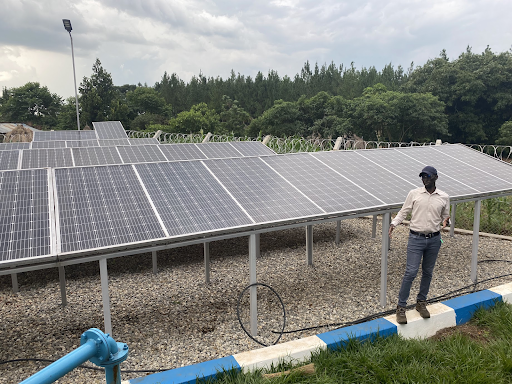
“Our Southeast Kenya program region is semi-arid, which means it is very dry for most of the year,” Bogle explains. “The most common sources of water are beneath dry riverbeds at the bottom of valleys. Solar-powered piped water is a game changer because by piping the water uphill, women and children no longer need to walk up steep paths from the riverbed with heavy water containers to get back home. Additionally, the water can be piped up to 2 kilometers, which means the community can determine the best kiosk location to reach the most people.”
(Pictured: Enock Obwon (The Water Trust WASH Technical Manager) explaining the design of the solar array at Nyakabale – Kibibira Piped Scheme.)
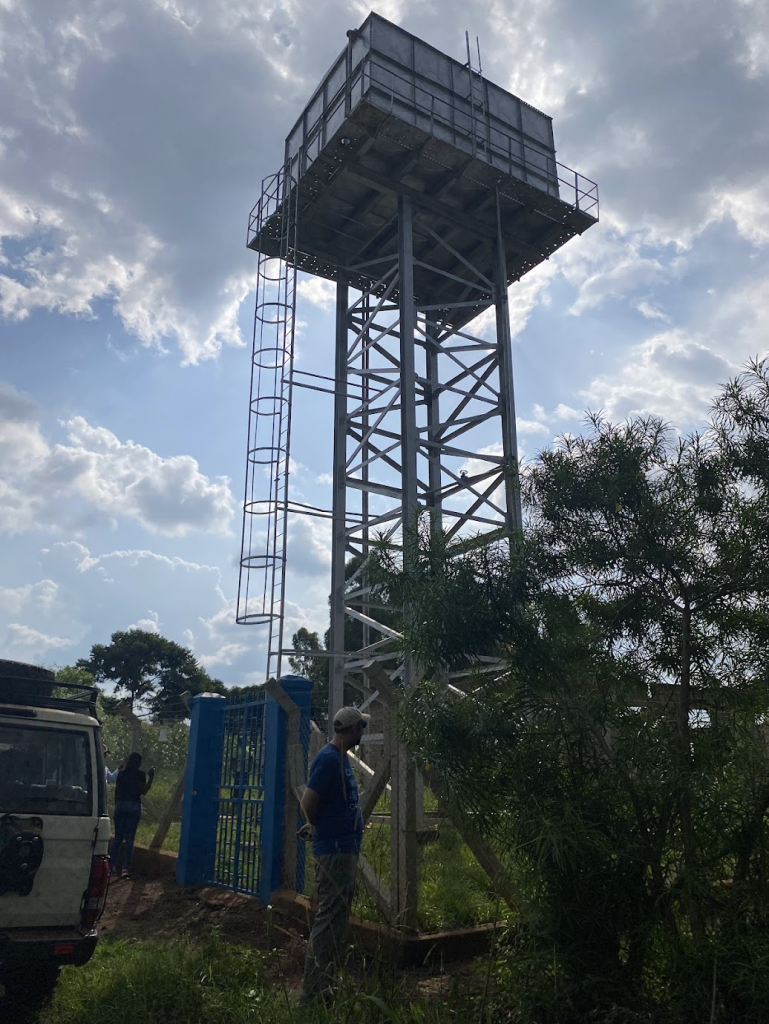
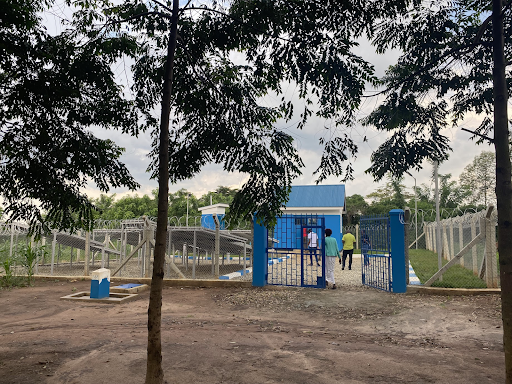
In 2026, we’re exploring similar systems in Uganda, with a focus on schools and healthcare facilities. These projects may take multiple years and some require co-funding partnerships, but the impact is worth it: communities gaining access to water that’s reliable, scalable, and built to last.
Making Every Project Count
Building a well solves an immediate problem. Keeping it functional solves a long-term one. Too many communities across sub-Saharan Africa have experienced the heartbreak of a broken pump and no way to fix it.
In Uganda, we’re changing that story.
In 2025, our team implemented a preventative maintenance protocol that connects Self Help Groups directly with trained hand pump mechanics. Instead of waiting for something to break, communities now have a plan, and the resources, to address small issues before they become big problems.
The results? Significant improvements in uptime and functionality. Water kept flowing. Communities stayed healthy.
“The Uganda team operates under special circumstances, as the handpump mechanics operating in the area are not employed directly by us,” notes Kelly. “Through continuous capacity-building with the local Handpump Mechanics Association, and the creation of a preventive maintenance structure, our team on the ground has improved the repair services available to all handpumps in the area, even beyond those funded by The Water Project.”
In 2026, we’re exploring how to adapt and scale this approach across our other programs, ensuring that every community we serve has the tools and support they need to protect their water for the long haul.
Home More Like ThisTweet