When Water Meets the Silence: Water Scarcity Turns Menstrual Hygiene Into a Difficult Choice
There are some conversations we grow up learning not to have. Menstruation was one of them.
I grew up in Trans Nzoia County, but I attended a boarding high school in Turkana County, a semi-arid region where water was precious. It was there that I got my first period, in Form Three. By then, all the girls in my class had already started menstruating. Quietly, I had begun to wonder if something was wrong with me. Was I abnormal? I could not ask. Menstruation was private, embarrassing, and not something we openly discussed.
When my period finally came, I felt relieved. I was not abnormal after all. But that relief quickly met a reality I had already watched my classmates struggle with: water scarcity. Maintaining hygiene was a big challenge.
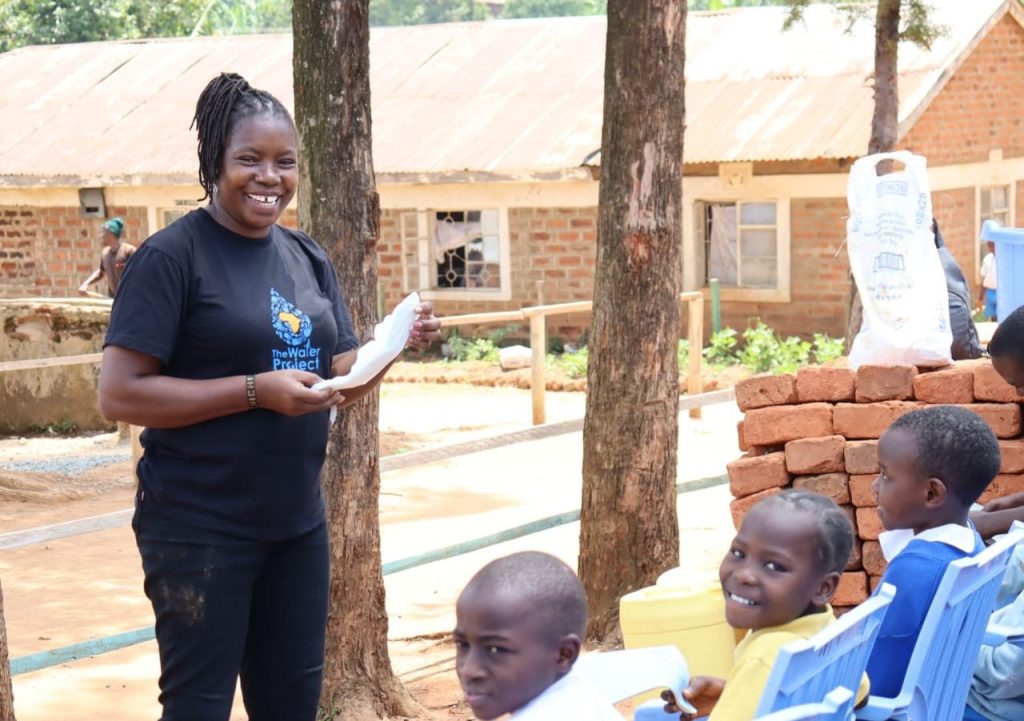
The contradicting choice: hydration or hygiene
In Turkana, every drop of water mattered. We had to make careful choices about how we used the little that was available. Drinking water was essential, but we also needed water for bathing, washing our hands, cleaning ourselves during menstruation, and washing our clothes. I remember how we learned to share water because we knew it was precious. One basin could be shared by more than five girls for bathing. We understood the importance of hygiene, but water scarcity caused us to compromise. Sometimes the choice felt like this: do I use this precious water to drink, or do I use it to maintain my hygiene?
At the time, I did not have the language to describe what we were experiencing. Today, I do. It was a WASH issue. Menstrual hygiene cannot be separated from access to safe and sufficient water.
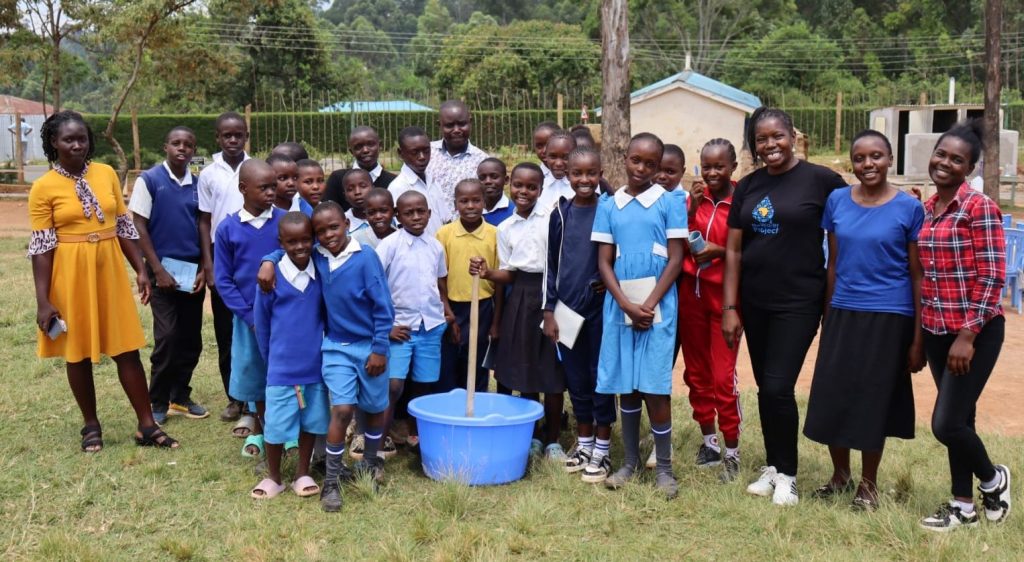
When a pad is not enough
Years later, I joined The Water Project as a Training Manager and Field Officer in Western Kenya. My work has completely changed the way I understand that experience. Through our team’s work, I interact with communities from the very beginning: conducting needs assessments and vetting potential project sites, supporting proposal development, facilitating hygiene and sanitation trainings, and returning for long-term monitoring and evaluation. I have the privilege of being in schools, health centers, and community trainings, facilitating open conversations about hygiene and sanitation, including Menstrual Hygiene Management (MHM).
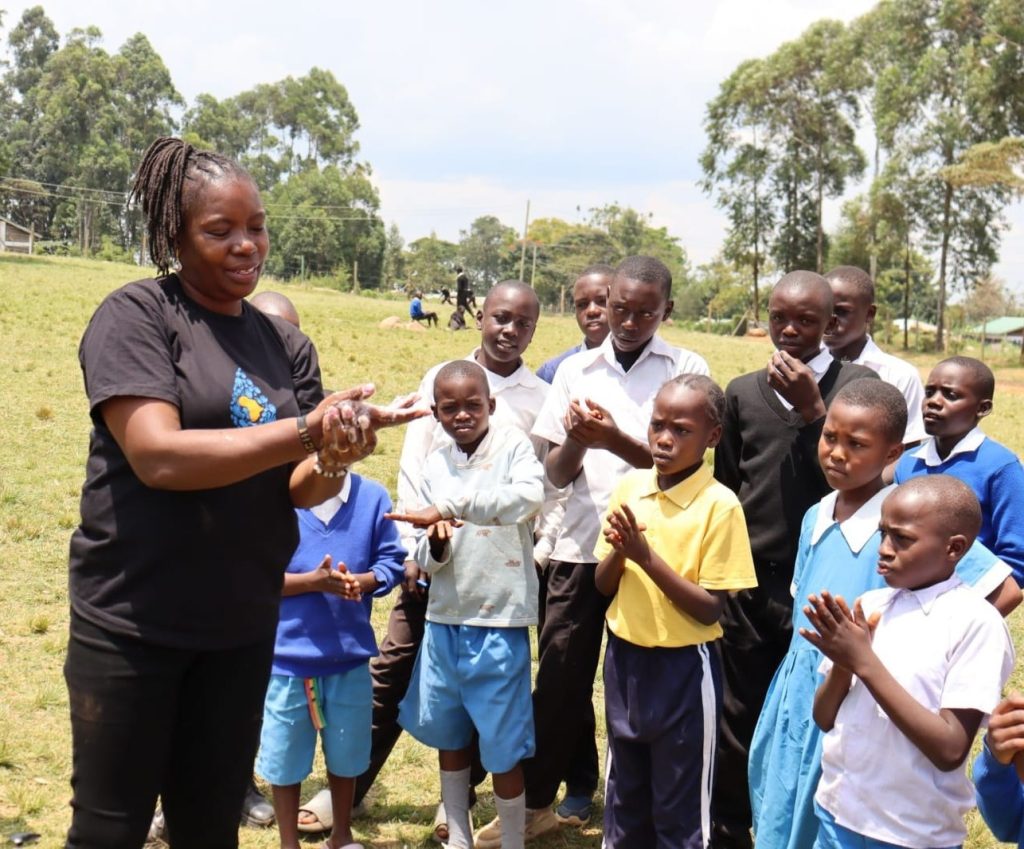
Through this field work, I have come to understand something critical: providing menstrual products is only part of the solution. A girl may have a sanitary pad, but she also needs a safe and private place to change it and manage her period with dignity. She needs clean, running water to wash her hands, and she needs accurate information about Menstrual Hygiene Management.
I often think about a girl whose first period arrives unexpectedly. She wakes up and sees blood. She may be frightened, because nobody has explained what is happening. So she goes to shower, expecting the bleeding to stop, only to discover that it continues. Who will she ask? If menstruation is still treated as a subject that should remain hidden, how will she learn?
This is why we need to talk.
Breaking the silence means including boys
Menstrual hygiene is often treated as a girls’ and women’s issue. But I believe boys should be part of the conversation, because they are classmates, brothers, friends, and future fathers, husbands, teachers, and community leaders.
A boy who understands menstruation is less likely to tease a girl when she stains her uniform. He can respond with empathy instead of embarrassment, and he grows into a man who supports the women and girls around him. Ending menstrual stigma cannot be the responsibility of girls and women alone. The conversation belongs to all of us.
This is why, during the hygiene and sanitation training sessions we conduct through The Water Project, we create safe, inclusive spaces for girls and boys, women and men, to learn and ask questions together. We are not simply teaching biology. We are building community empathy.
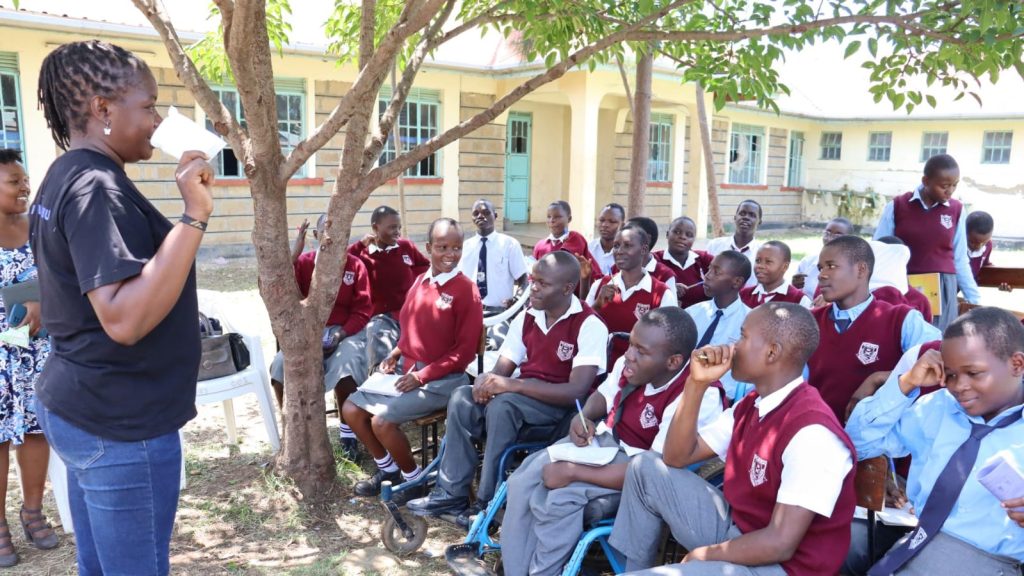
A room that says, “You matter”
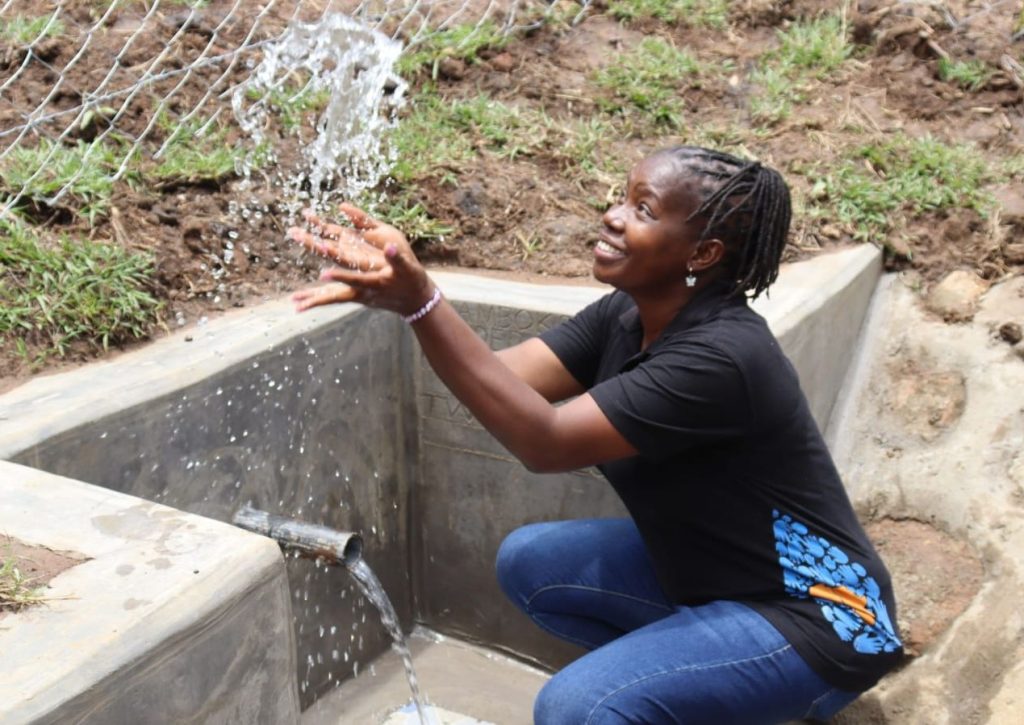
One of the recent developments I am proud of in our work at The Water Project is how our water projects are paired with improved sanitation facilities. Alongside the VIP latrines we construct in learning institutions, we design a dedicated Menstrual Hygiene Management room. It may look like a simple addition to a school, but to a girl who is menstruating, it carries a profound message: her needs were considered, her privacy matters, and she deserves dignity.
I dream of the day when every school will be fully equipped with reliable water and dedicated MHM facilities, so that menstruation never becomes a reason for a girl to stay home. Imagine a girl waking up on the morning of an important examination and discovering that her period has started. Instead of thinking, “I cannot go to school today,” she knows her school has a clean water source, a VIP latrine, and a private MHM room. She gets ready, goes to school, sits for her examination, and continues learning. Her period does not decide her future.
That is the future we are actively building at The Water Project.
From silence to action
When I look back, I am grateful that my period came when I was old enough to learn from my peers and find my way through the experience. But I cannot stop wondering about the frightened girl who has no one to ask, no sanitary product, and no water at her school. She has no private place to change, and she quietly drops out because she menstruates.
We can do better for her.
My own experience began with silence in a boarding school in Turkana County. Today, my role at The Water Project gives me a platform to help break that silence across Western Kenya. My dream is to take this conversation to more people in Kenya and beyond.
Every training session we hold is an opportunity to replace shame with knowledge. Every water source we restore or construct is an opportunity to make hygiene practical. Every WASH intervention is an opportunity to protect human dignity.
I started my menstrual journey as a frightened young girl wondering whether I was abnormal. Today, I stand before communities and schools as the woman I needed back then, helping create the conversations, knowledge, and WASH conditions I once needed myself.
Because no girl should have to face her first period in fear. No girl should have to choose between drinking water and maintaining her dignity. And no girl’s period should ever stand between her and her potential.
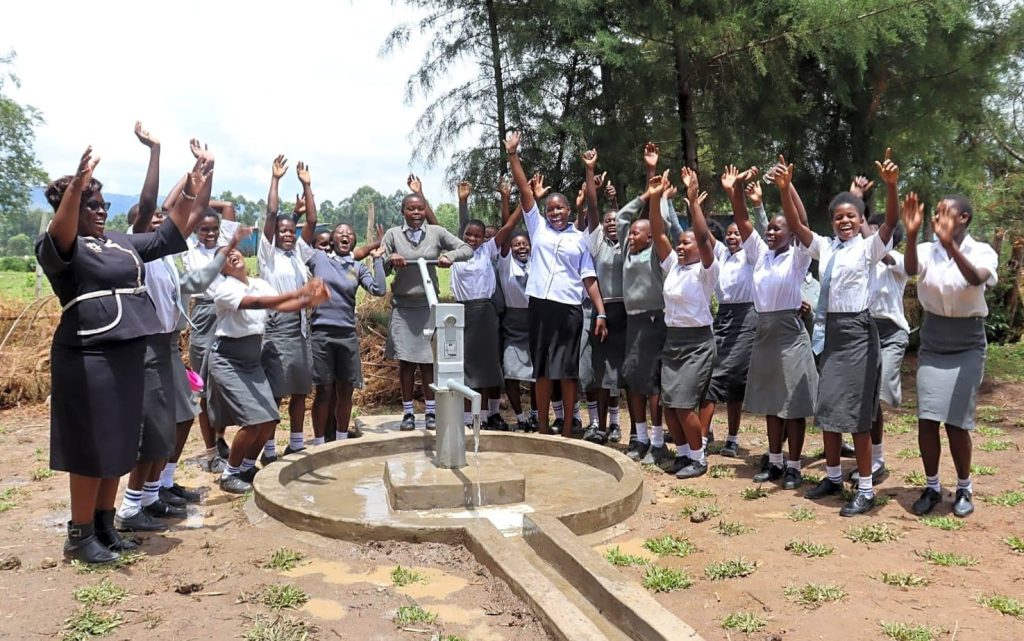
Read about a recent project where menstruation training took place: https://thewaterproject.org/community/projects/kenya/new-borehole-wash-project-410178
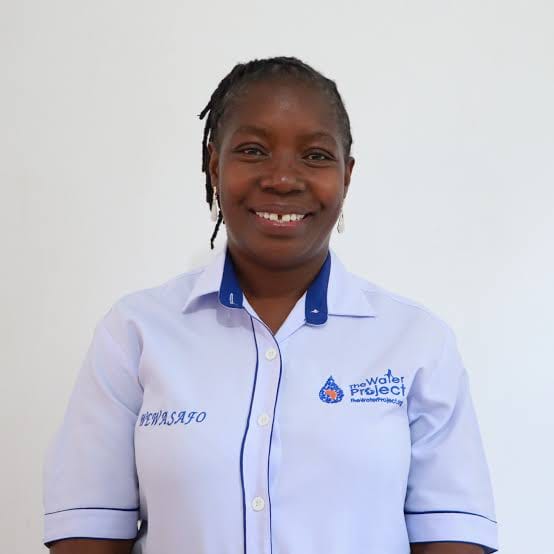
Written by Christine Masinde
Field Officer
The Water Project
Home More Like ThisTweet