
Project Status


Project Type:  Rainwater Catchment

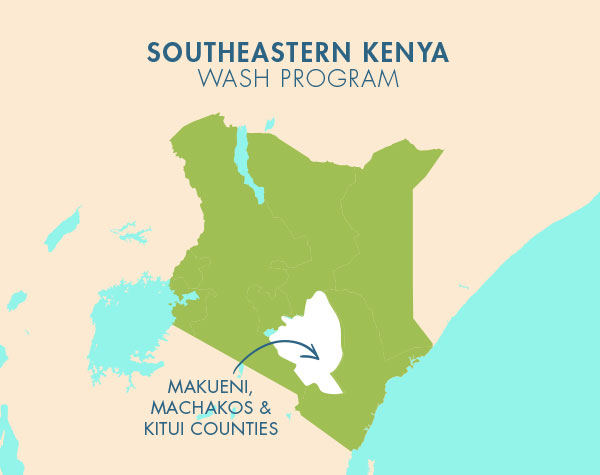
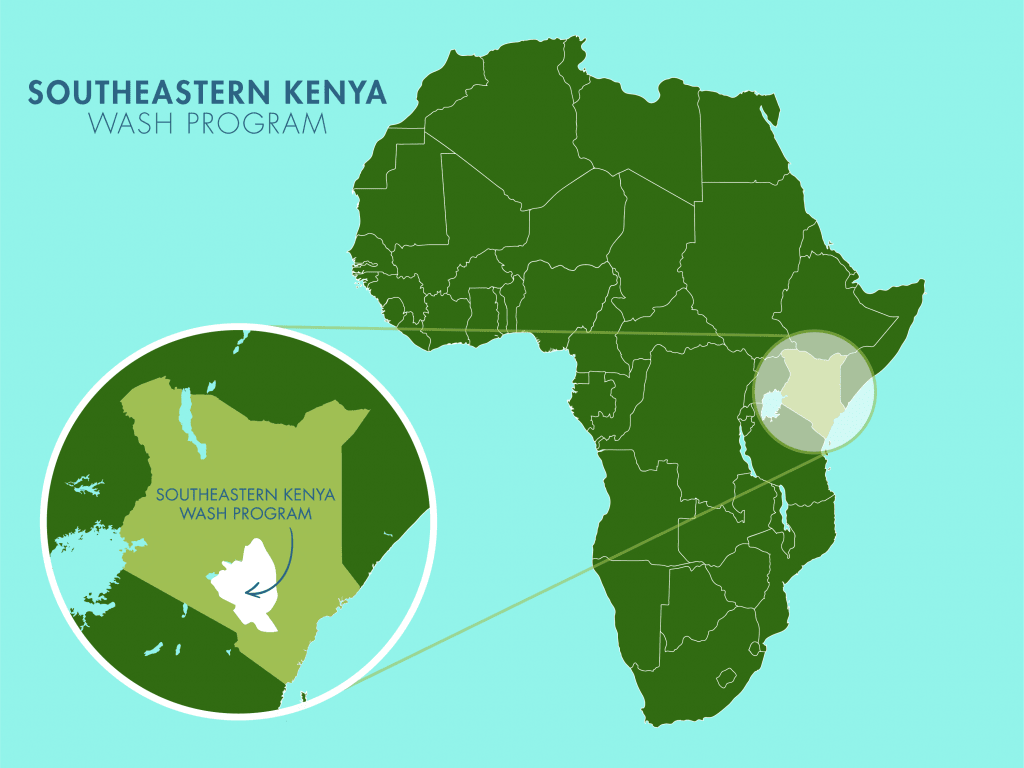
Regional Program: Southeastern Kenya WaSH Program

Impact: 298 Served

Project Phase:  In Service - Feb 2026

Functionality Status:  Functional

Project Features


Click icons to learn about each feature.


The 266 students and 32 AIC Yambyu Girls Secondary School staff go to great lengths to collect water to meet their daily needs. They currently rely on water that collects in small rainwater harvesting tanks but they often run dry. They also have access to a municipal water supply, but it is infrequent and unreliable, leaving them scrounging for enough water to even quench their thirst.

Students in class.

Field Officer Alex Koech said, “Due to the arid climate, the availability of rainwater is inconsistent. Long dry spells mean that the school’s rainwater collection systems are often insufficient to meet daily water needs, leading to frequent water shortages.”

“The municipal water supply is often also unreliable due to infrastructure challenges, leading to delays or intermittent water supply. The school experiences several days without any water supply, disrupting regular activities,” Alex continued.

When the tank runs dry and the municipal water is rationed, the only other option is to pay for a water vendor to haul water to the school. But this is a costly solution for their finances and health, as the water can come from questionable sources.

Depending on a water bowser (water vendor) to transport water to the school is costly, especially considering fuel prices, long distances, and the availability of water tankers in remote regions. This puts a financial strain on the school’s budget, often diverting funds from other essential needs. The school is at the mercy of external sources for a consistent water supply. Disruptions in bowser (water vendor) services or municipal supply shortages due to droughts or infrastructure failures significantly impact daily operations, including cooking, sanitation, and hygiene practices,” shared Alex.

47-year-old Magdalene Mulwa, a teacher at the school, shared her view of the problems that result from their current water crisis.

Teacher Magdalene Mulwa.

“​​The existing water challenges still pose significant problems that affect the day-to-day operations of the school and the overall well-being of students and staff. These problems include insufficient water supply, which disrupts essential daily activities such as cooking, cleaning, laundry, and personal hygiene for students. [Also], constant water shortages cause stress and anxiety for students, who worry about their ability to meet basic hygiene needs or endure uncomfortable living conditions, and students spend most of their time fetching water from nearby sources or waiting in long queues when supplies are limited,” she said.

Boarding students rely exclusively on the school to meet their needs. They can’t bring water from home, so they have no other solution when the school runs out of water. This happens for days at a time, making prioritizing education almost impossible.

“Cooking and meal preparation become difficult without adequate water, leading to irregular meal schedules or reduced food quality. This affects students’ nutrition, which is crucial for their concentration and energy levels. Boarding students who live on the school premises are especially affected since they rely on the school’s water supply for bathing, laundry, and drinking water. The inconvenience of having to queue for long periods to access limited water or dealing with insufficient sanitary conditions is also frustrating and demotivating for students,” Teacher Mulwa continued.

Teachers are at a loss, and students are thirsty and overwhelmed. The AIC Yambyu Girls Secondary School needs a solution. Installing a 104,000-liter rainwater harvesting tank will ensure they can collect enough water during the rainy season to meet their needs year-round.

Students waiting to collect water.

“With sufficient, clean drinking water, students are less likely to experience dehydration, which is known to impair cognitive function. Proper hydration enhances students’ focus, memory, and overall mental alertness, enabling them to concentrate better during lessons and absorb information more effectively. When students have access to clean water for washing, bathing, and maintaining personal hygiene, they are more comfortable, confident, and less distracted by personal discomforts. This contributes to a positive self-image and better engagement in school activities,” teacher Mulwa concluded.

Steps Toward a Solution

Our technical experts worked with the local community to identify the most effective solution to their water crisis. Together, they decided to construct a rainwater harvesting system.

Rainwater Harvesting System
A rainwater collection system consists of gutters that channel rainwater effectively into large holding tanks. Attached to buildings with clean, suitable roofing, these systems are sized according to the population and rainfall patterns. Water can be stored for months, allowing for easy treatment and access. Learn more here!

Handwashing Stations
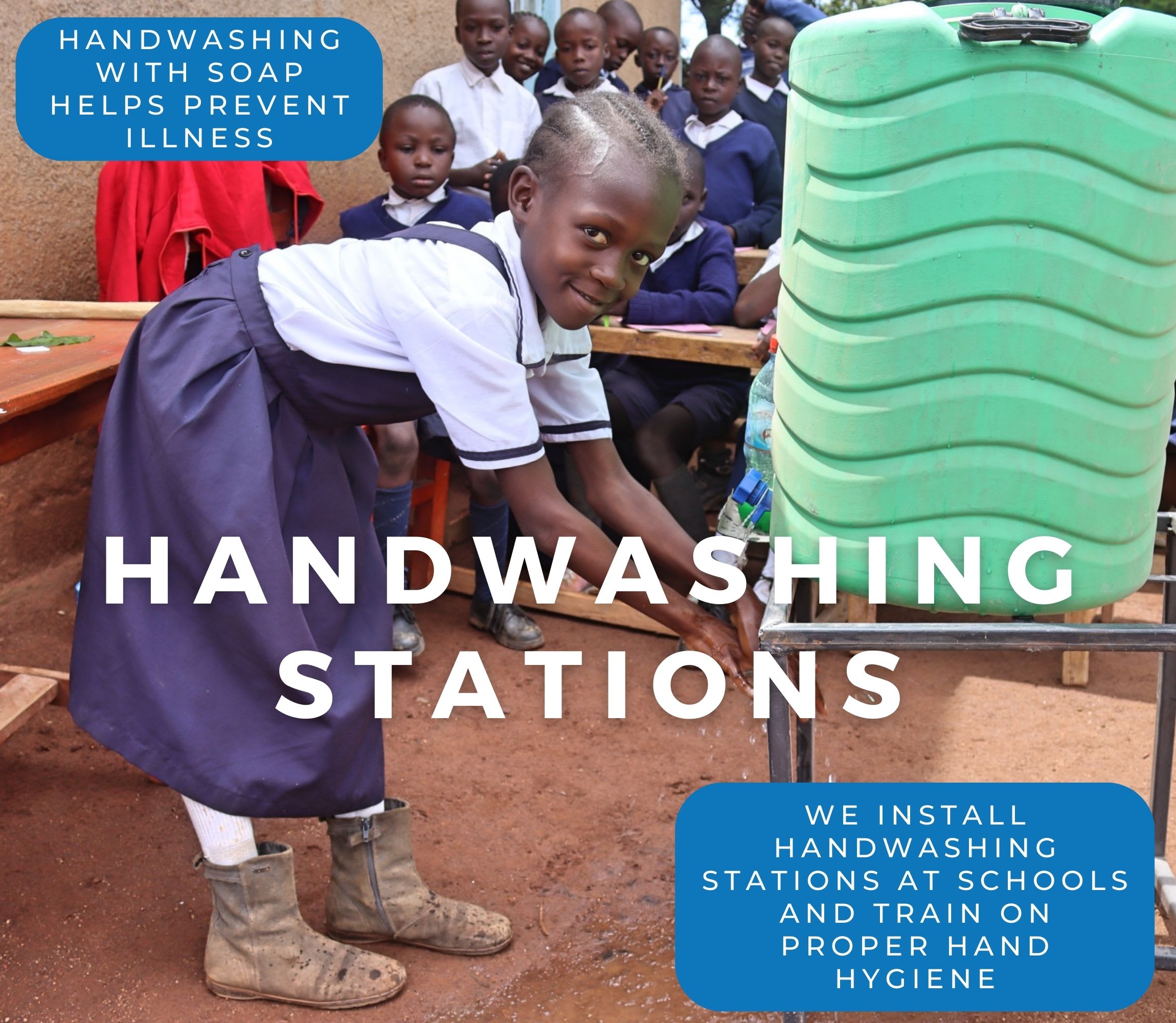
Alongside each water source, we install two gravity-fed handwashing stations, enabling everyone at the school to wash their hands. Handwashing is crucial for preventing water-related illnesses within the school and community. Student “health clubs” maintain the stations, fill them with water, and supply them with soap, which we often teach them how to make.

School Education & Ownership
Hygiene and sanitation training are integral to our water projects. Training is tailored to each school's specific needs and includes key topics such as proper water handling, improved hygiene practices, disease transmission prevention, and care of the new water point.

To ensure a lasting impact, we support forming a student health club composed of elected student representatives and a teacher. These clubs promote hygiene practices schoolwide and keep handwashing stations well-stocked. This student-led model encourages a sense of ownership and responsibility.

Safe water and improved hygiene habits foster a healthier future for the entire school.
Project Updates


February, 2026: AIC Yambyu Girls Secondary School Rainwater Tank Complete!

Your contribution has given access to clean water for the AIC Yambyu Girls Secondary School in Kenya, thanks to the completion of their 104,000-liter rain tank! Additionally, we installed handwashing stations and trained students and staff on sanitation and hygiene practices. Together, these components will unlock the opportunity for these students to thrive!

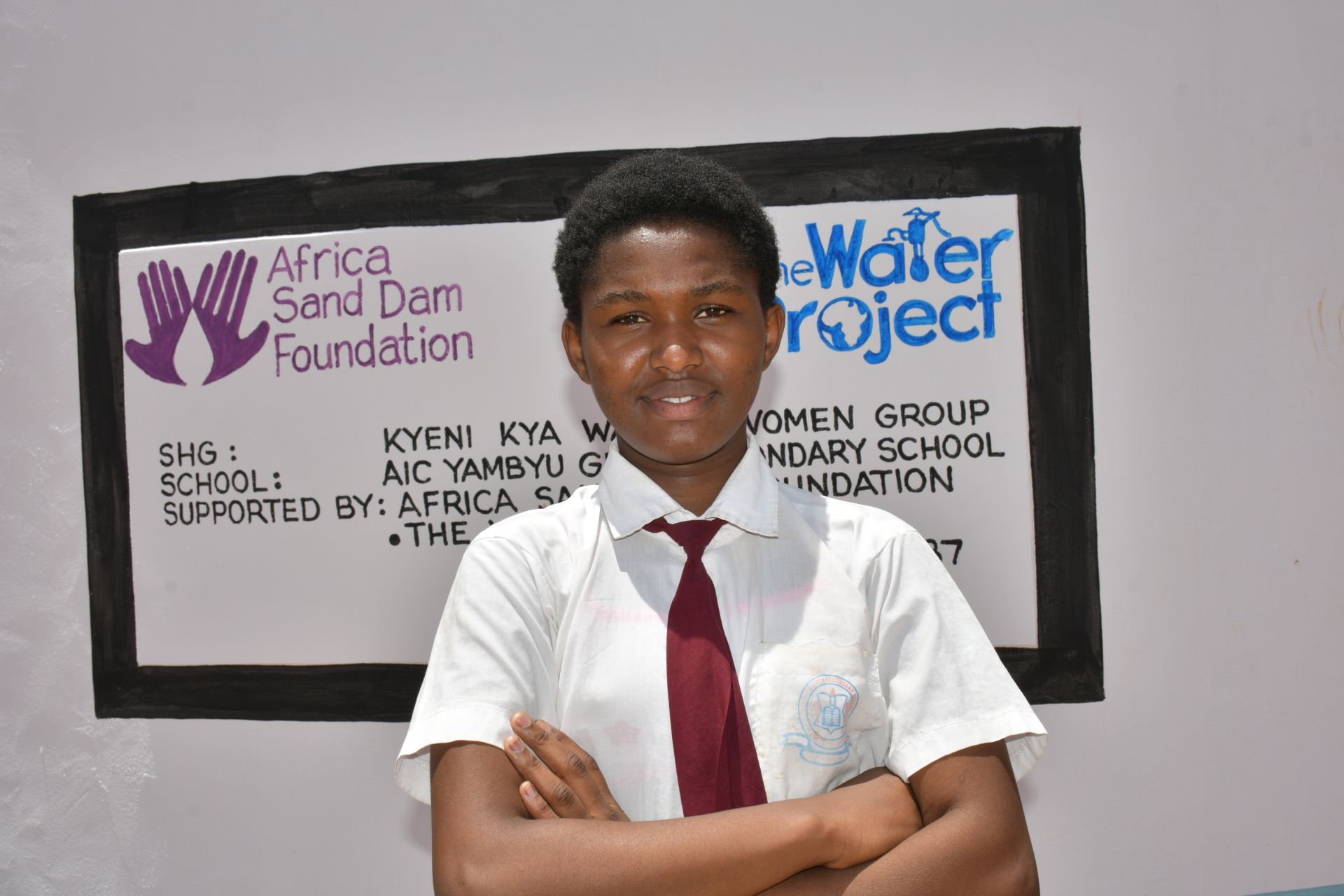
"Reliable water will help me stay healthy, which means fewer sick days and more time in class. It will also make the school environment more comfortable and clean, so I can concentrate better. With enough water, we can also have agriculture projects and practical learning activities, which will help us gain useful skills for the future," said 16-year-old student, Olive.

Olive.

Teachers were just as excited as the students about the new rain tank on campus!

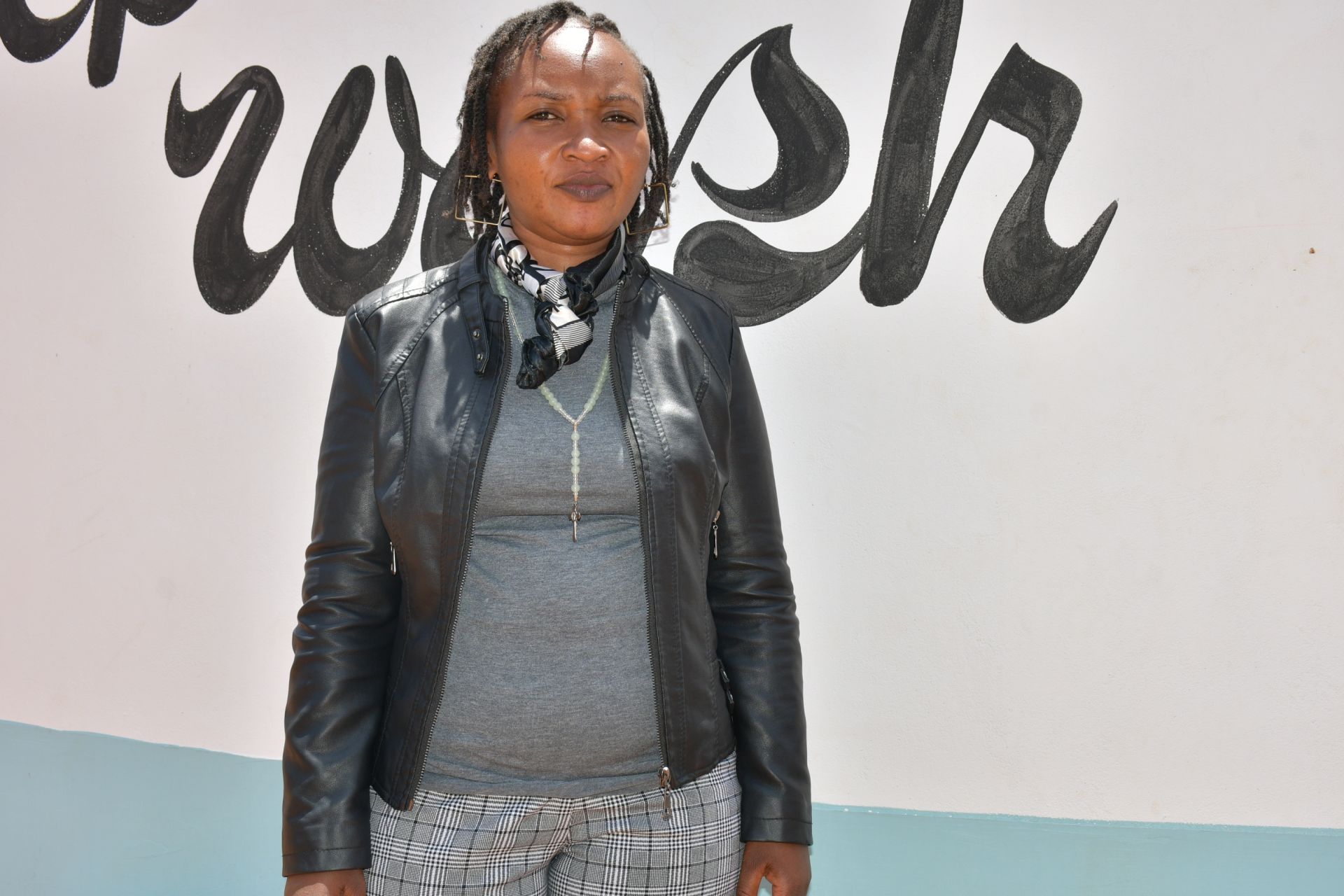
38-year-old teacher Gladys Maina shared her thoughts. "Access to water means our students will spend less time worrying about water shortages and more time focusing on their studies. Proper hydration improves concentration, and better sanitation reduces the spread of diseases, leading to fewer sick days. The impact will be profound. With a reliable water supply, students will no longer have to worry about disruptions due to shortages. Improved sanitation and hygiene will lead to a healthier school community, and students will be more comfortable and focused in class. A stable water source also supports school feeding programs, ensuring students have the nourishment they need to excel academically."

Ms. Maina.

"The school administration and parents are very glad about the project. They mobilized local materials on time and worked closely with the area field officer to ensure they gathered the required quality and quantity of materials," shared Field Officer Alex Koech.

Rain Tank Construction

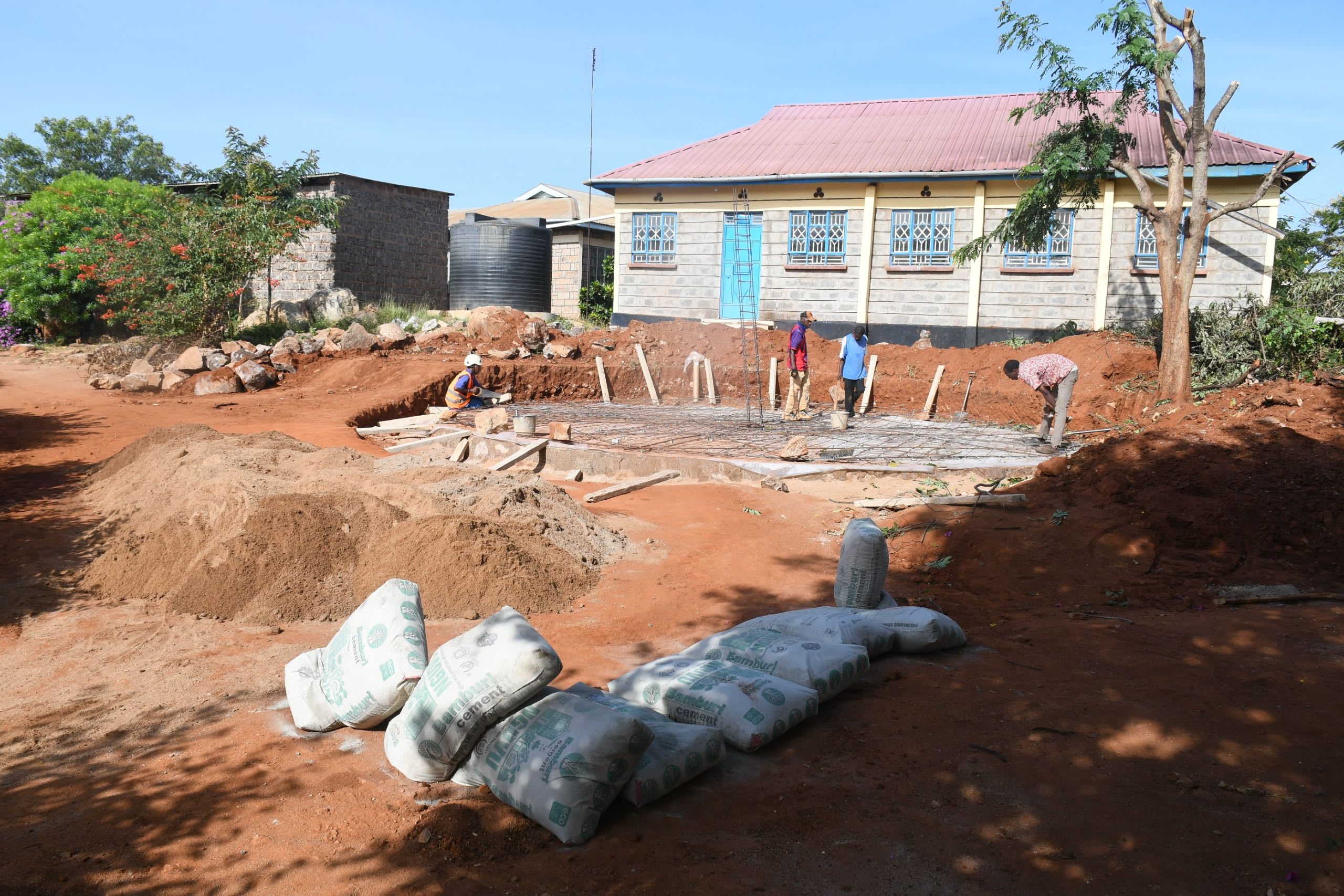
First, we held a meeting with all parents and the school’s headteacher to plan the project. The parents agreed to collect construction materials, such as sand, rocks, and water. We complemented their materials by delivering the expertise, tools, lumber, metal, cement, and a gutter system.

This tank holds a whopping 104,000 liters, as rainfall is rare in Southeastern Kenya. The more water the tank can store during the seasonal rains, the more water will be available for the students throughout the dry months!

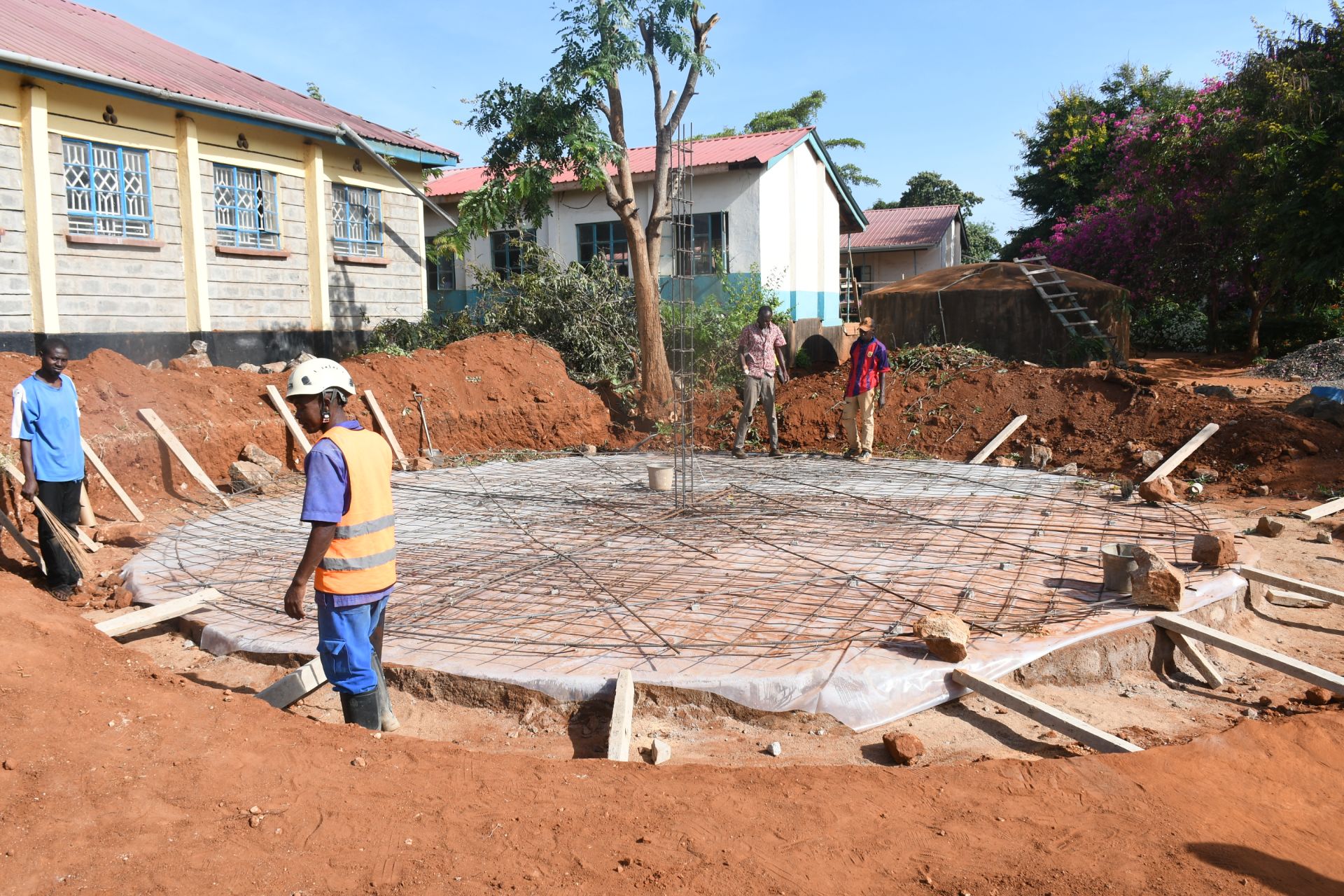
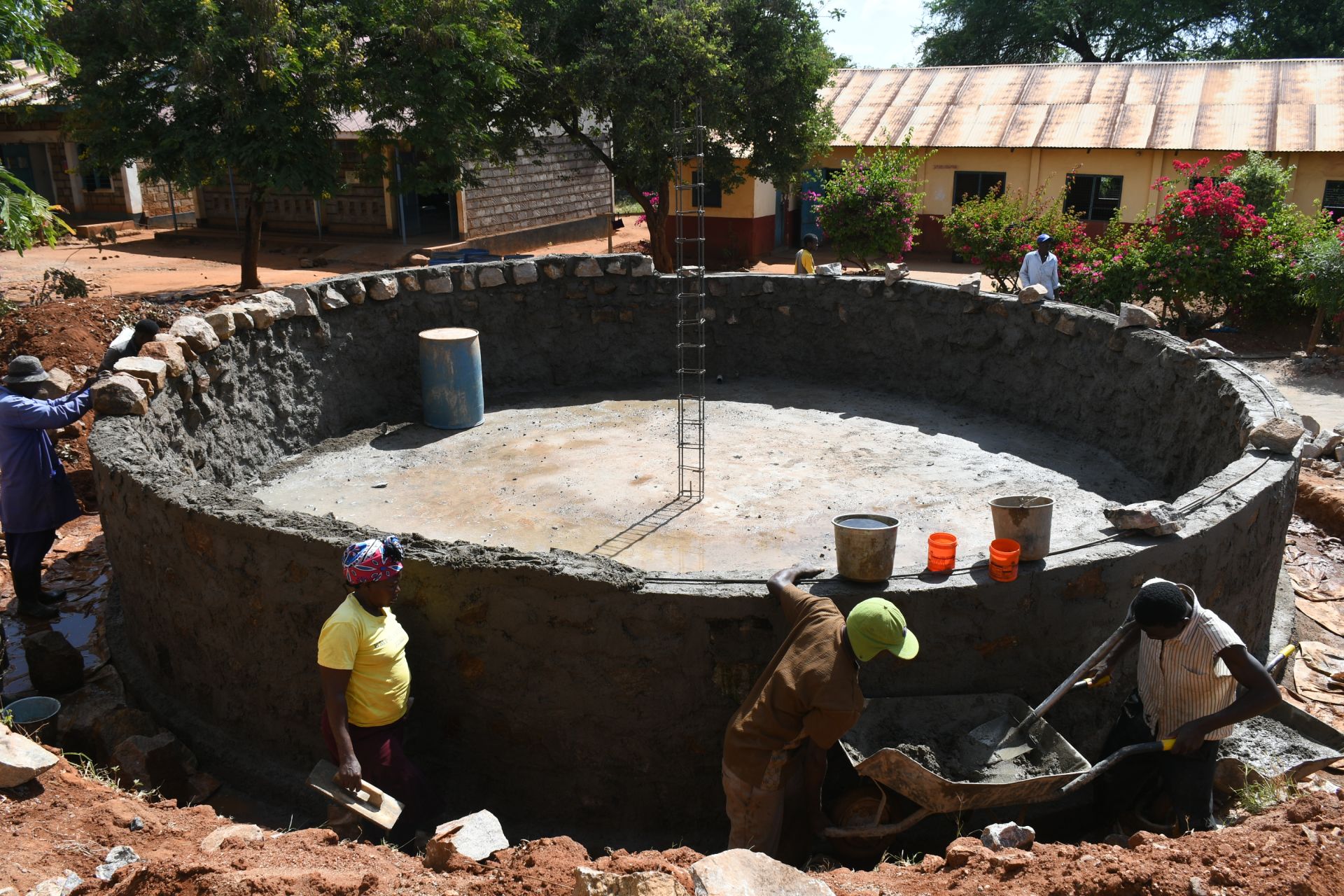
Constructing this large rain tank is much like building a concrete house. First, we leveled the ground for foundation excavation. Next, we laid alternating layers of rocks and mortar up to seven feet high for the tank's outer walls. With such sturdy construction (the walls are three feet thick!), the tank will stand for a long time.

We built a reinforced concrete column in the center of the tank to support the roof and prevent it from collapsing. We plastered the walls inside and out with waterproof cement and installed guttering into the tank. Finally, we installed the roof of the tank, made of iron sheets and timber with vents to allow rainwater into the tank from the gutters.

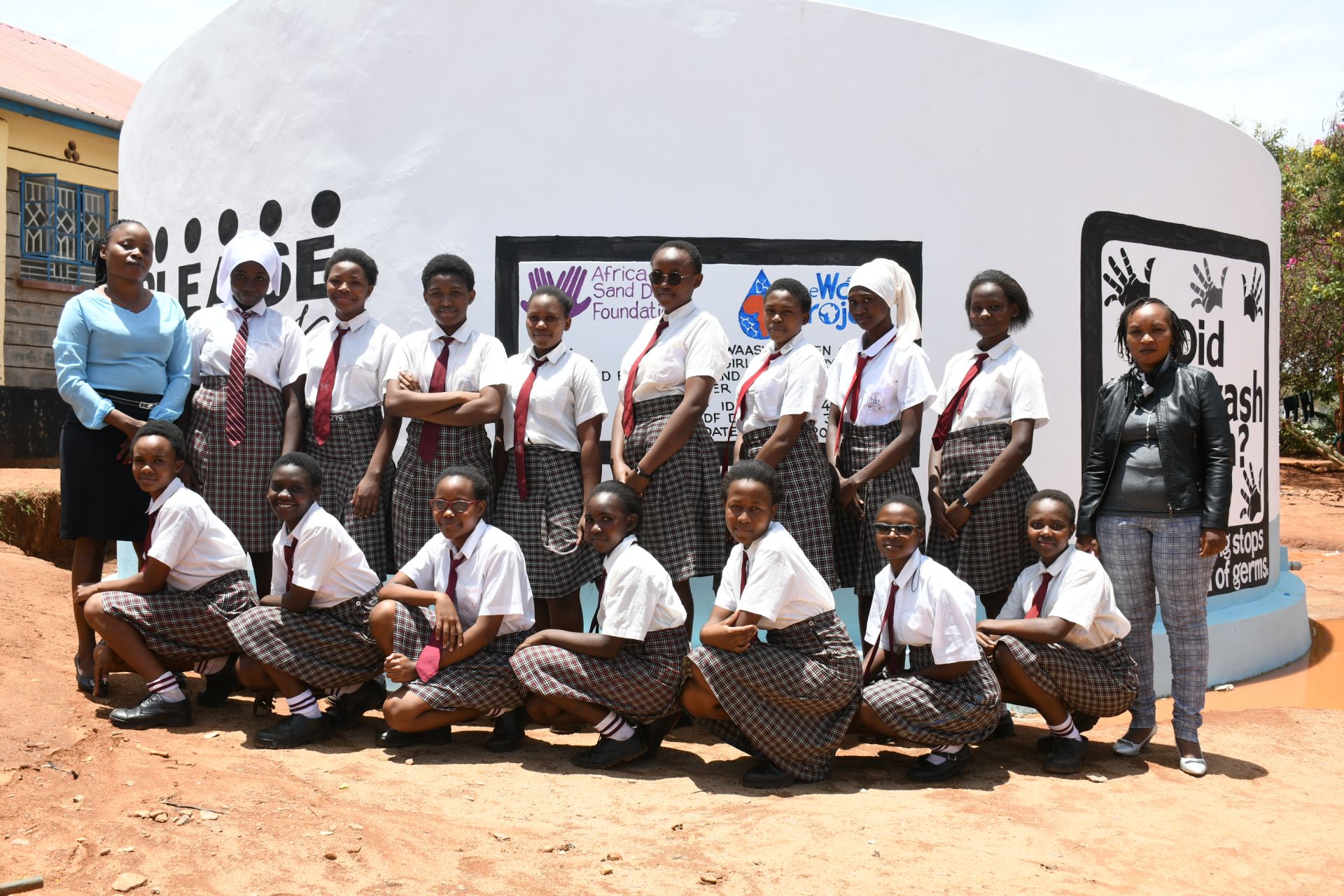
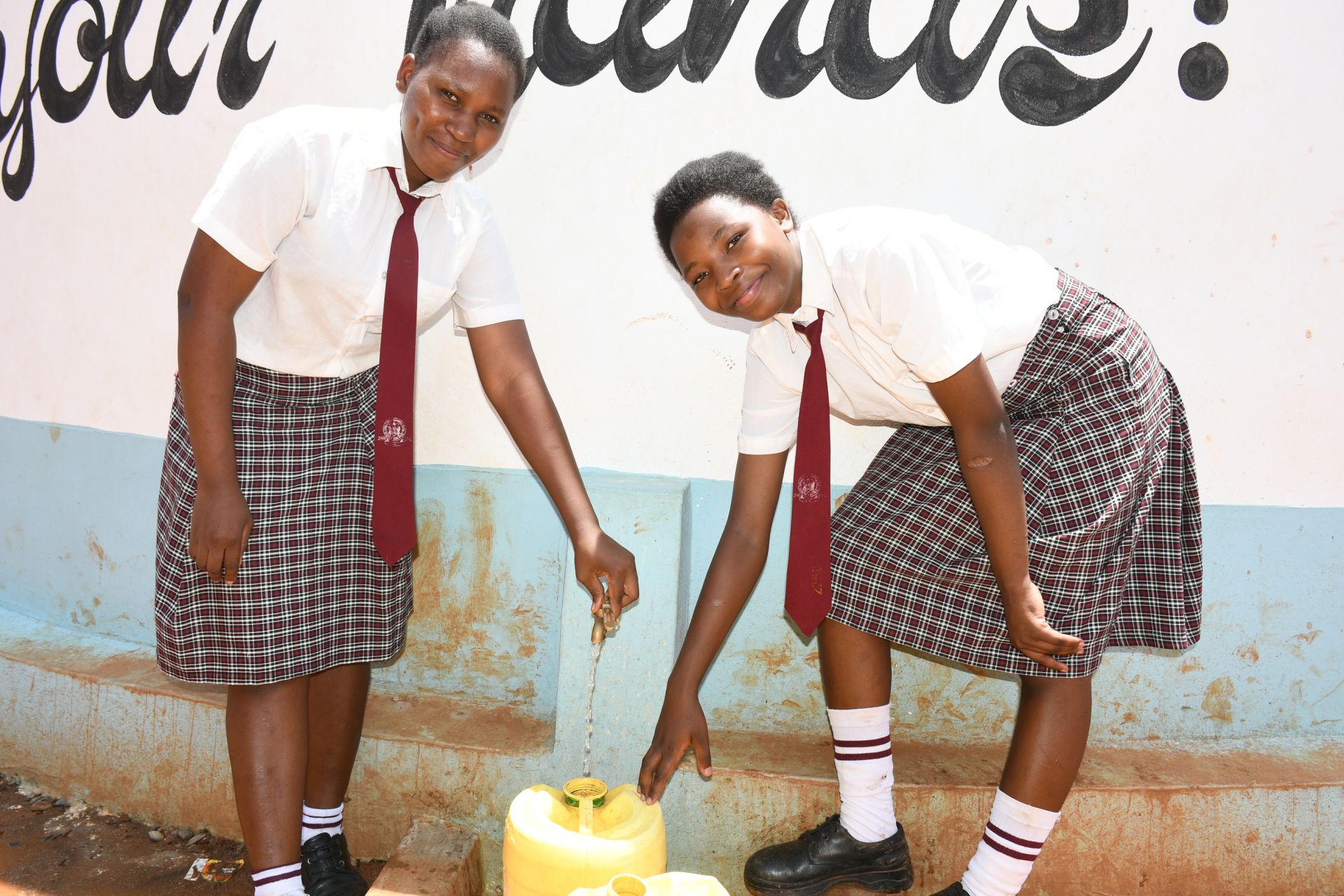
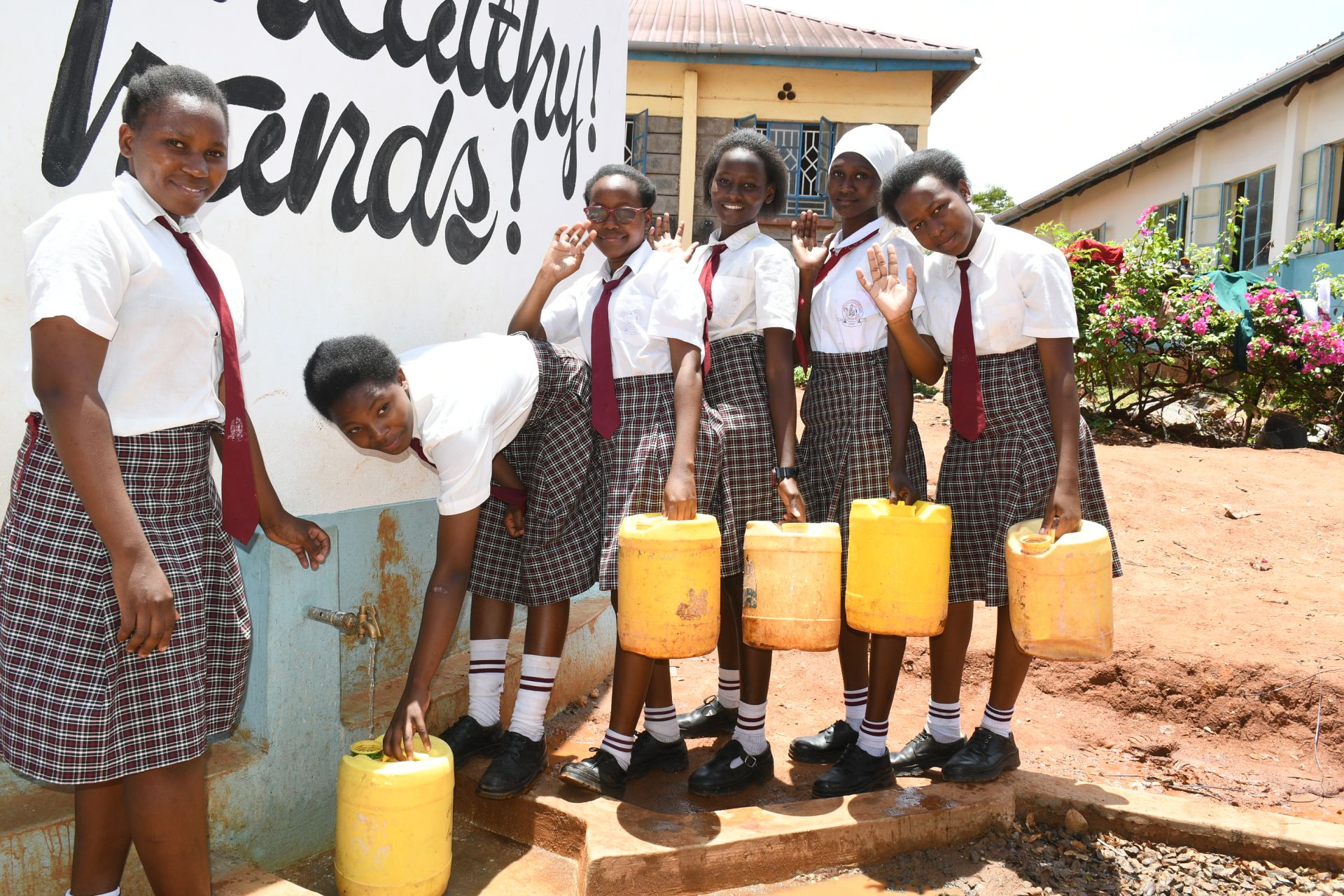
Students and teachers in front of the completed tank.

Handwashing Stations

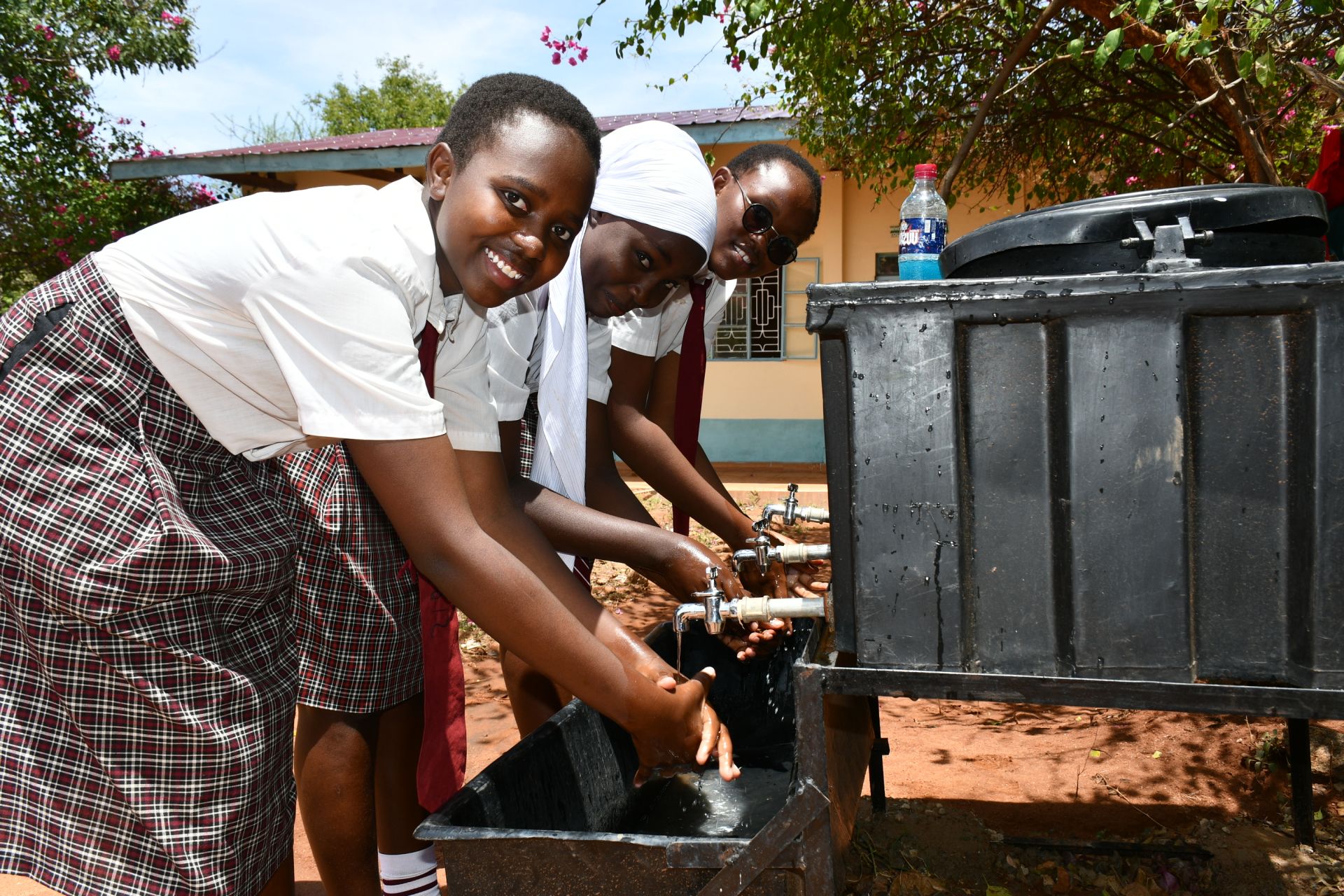
We delivered three new handwashing stations in time for training. Each new station has three taps, allowing nine students to wash their hands simultaneously.

School Education

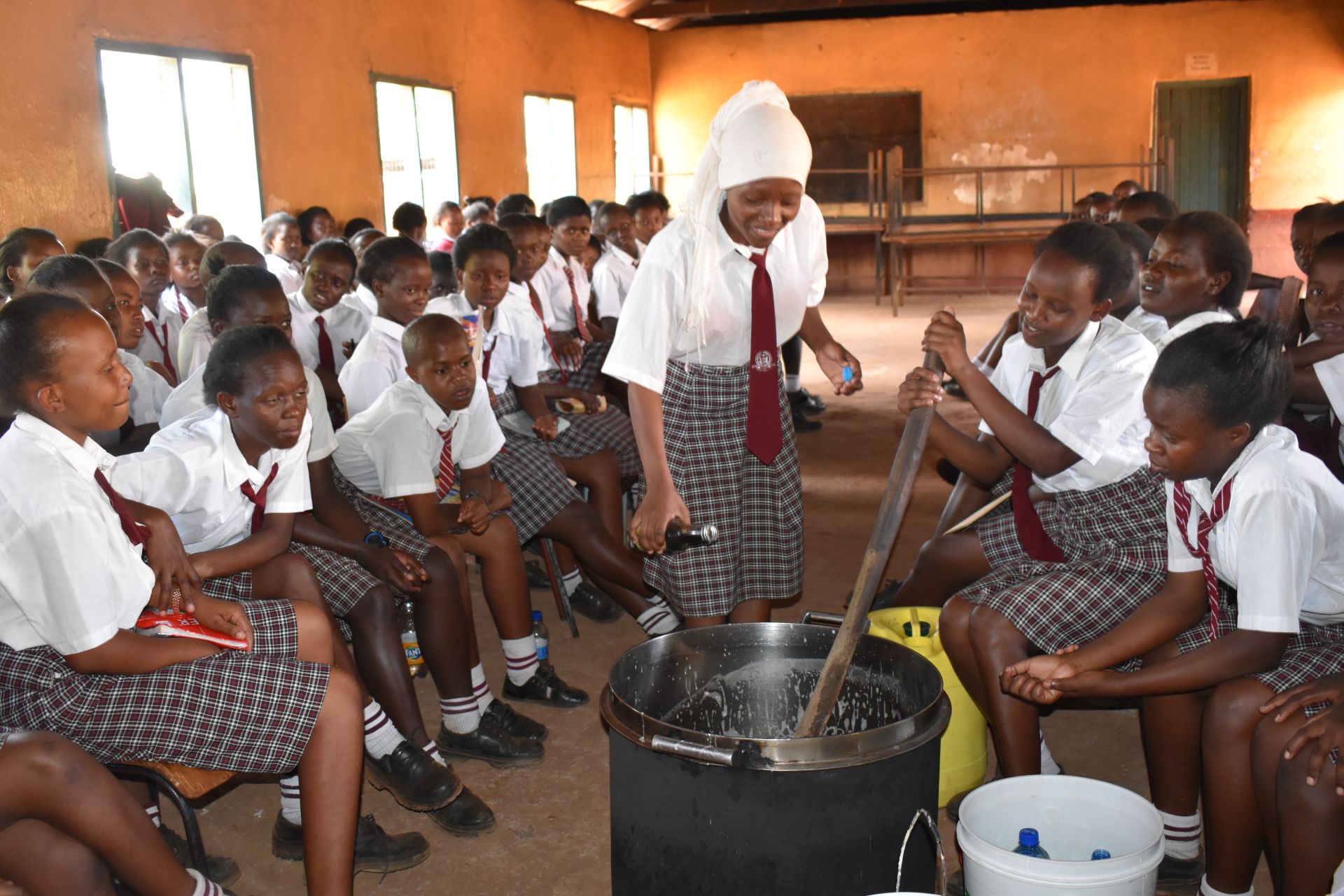
We trained on health, hygiene, and sanitation topics. These included student health club activities, disease prevention, personal hygiene, and handwashing. We also covered topics such as water hygiene, latrine hygiene, and soap-making.

"Students participated well and were active with plenty of questions and energy to break monotony. From the level of participation and interest in learning and with the help of the school teachers in passing the message, it looks like a great improvement in hygiene practices will be witnessed not only in the school but also in the homesteads where these students come from," shared trainer Veronica Matolo.

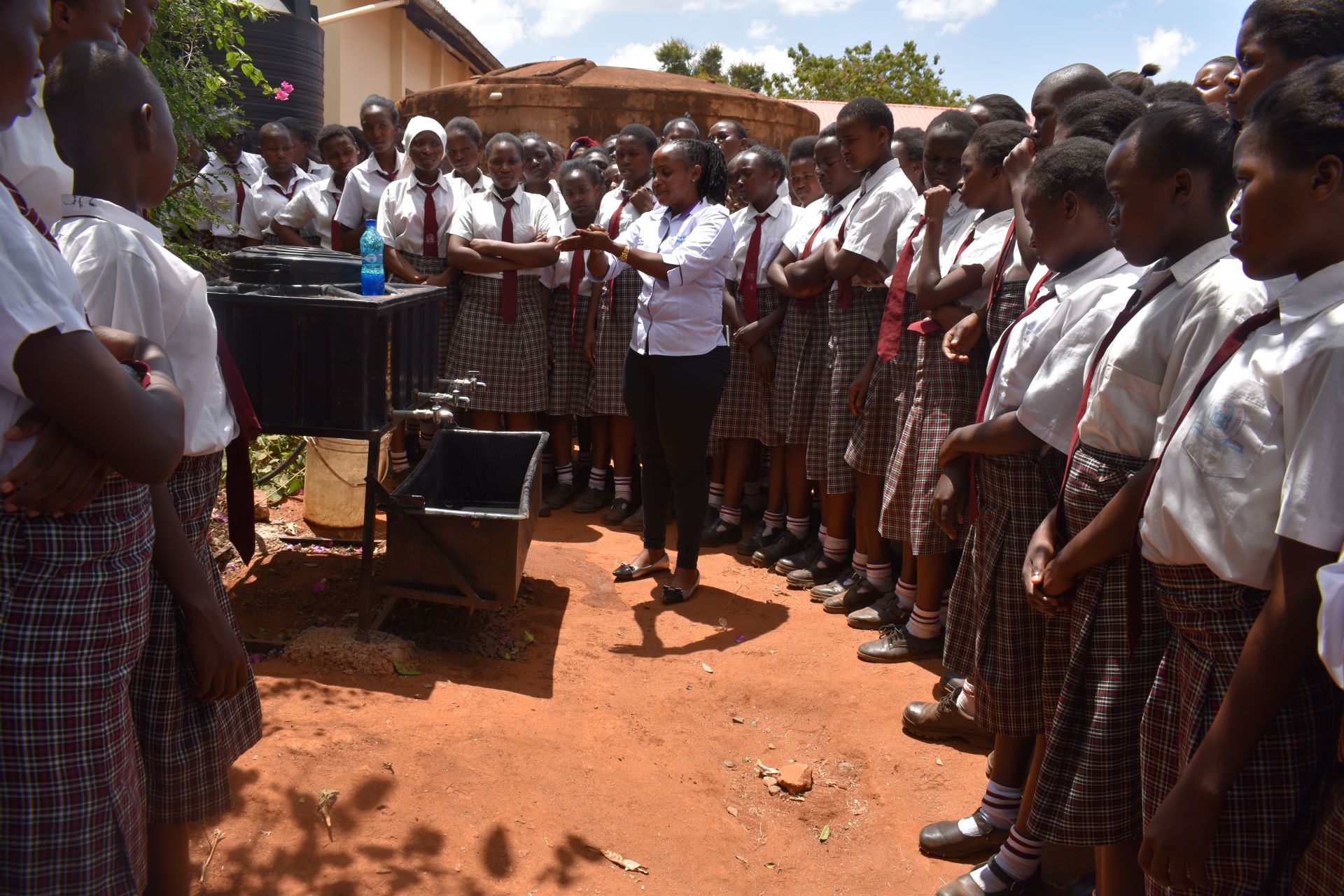
Students learn proper handwashing technique.

"This training will be important and very useful in our lives. It has enlightened us on the importance of hygienic practices. As young women, we have learned that it’s very important to maintain a high level of hygiene to improve our self-esteem. Other hygienic practices will be observed to help in disease prevention," shared the 17-year-old newly elected president of the child healthcare club, Fardose.

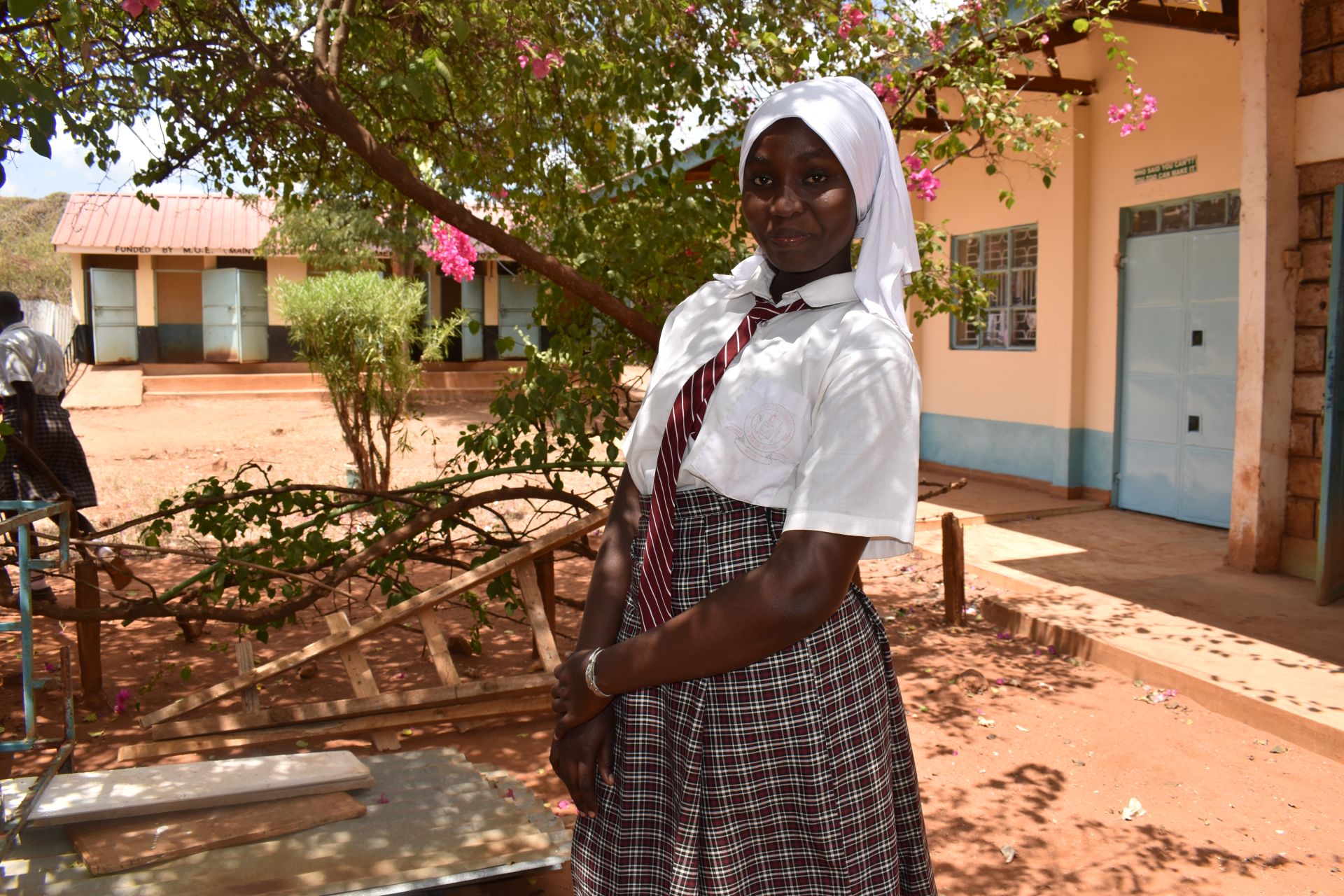
Fardose.

She went on to say, "The topic of menstrual hygiene piqued my interest. It has made us develop [a] special interest in reusable pads. Some of us didn’t have a clue what they were. They are affordable to those of us who are needy and can help us remain in school."

Thank you for making all of this possible!


Update photo


December, 2025: Exciting Progress at AIC Yambyu Girls Secondary School!

We’re thrilled to share that, thanks to your generous support, significant change is coming for teacher Magdalene Mulwa and the entire AIC Yambyu Girls Secondary School. Construction has begun on the rainwater catchment project, bringing them one step closer to having clean, reliable water.

But that's not all—during construction, we’re also providing vital health training. These sessions equip the community with essential hygiene practices, ensuring that the benefits of clean water extend to lasting health improvements.

We’re so grateful for your role in making this possible. Stay tuned for more updates—soon, we’ll be celebrating the arrival of safe water at AIC Yambyu Girls Secondary School!


Project Photos


Project Type

For a rainwater collection system, we build gutters around a building with good, clean roofing to channel rain where we want it. From there, the water falls through a filtered inlet pipe into a high-capacity storage tank, the size of which is based on population and average rainfall patterns. In the tank, water can be stored for months, where it is easily treated and accessed. Learn more here!


Contributors

16 individual donor(s)