
Project Status


Project Type:  Borehole Well and Hand Pump

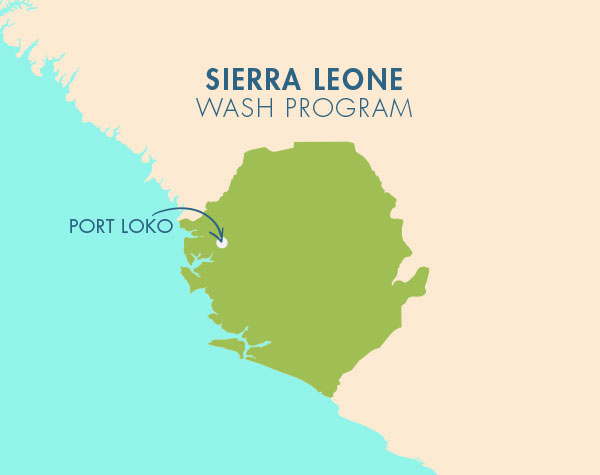
Regional Program: Port Loko, Sierra Leone WaSH Program

Impact: 120 Served

Project Phase:  In Service - Mar 2026

Functionality Status:  Functional

Project Features


Click icons to learn about each feature.


The 120 community members in the Bakolo Junction Community struggle to access sufficient, safe water. They have a dug well that is overcrowded and unreliable during the drought season. When collecting water from the well is impossible or too time-consuming, people must use the local swamp that provides contaminated water.

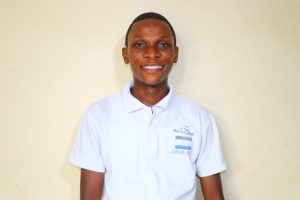
Field Officer Julius Sesay shared, "The well they rely on is located at the upper part of the community. All the other existing houses find it hard to fetch water from this source, looking at the distance. Apart from this, they are faced with the constraints of overcrowding because of the demand for water from community members. This pressure often makes the waterpoint easily break down. Similarly, the waterpoint is seasonal and not pure to drink. The water users complain that water changes in color, making them unable to use it for drinking. This alone makes them suffer."

The distant, unreliable well.

Julius continued, "The swamp, their other source of fetching water, is a distance away from them. This source also has similar characteristics to the main waterpoint. The water easily becomes dirty, and [it has] a salty taste. It makes it difficult for one to use it to drink. There are times when the color of the water even changes. One cannot even launder with the water, let alone use it to cook. This is really a problem for them."

The swamp.

15-year-old Adamsay is familiar with the hardships associated with her community's water crisis.

"I see it as a burden whenever I am asked to fetch water. I must walk all the way down to the swamp to fetch water. It is not easy for me. The distance is far, and at times, the water from the swamp becomes less in quantity. Even to fetch a full gallon of water will be difficult," she shared when asked how she feels.

Adamsay at the swamp.

Adamsay spends time collecting or attempting to collect in the dry season, which could be spent in the classroom. Living in a culture where girls have a more challenging time getting an education, adding a water crisis into the mix creates an even more significant hurdle to overcome.

Not only is their education suffering, but children like Adamsay also feel the effects on their health.

Field Officer Julius said, "Due to [the] long walking distance, some of the children that do not use "kata" will end up having sores in the middle of their head. This even makes them have bald headaches. Since no hair will be in the middle of their head. When we say kata, it means a cloth that children will fold and place on their heads before putting the rubber bucket or jerry can on top of it. The weight of the bucket and walking distance make it unbearable for them."

Adamsay carrying water back home.

"Studies have also shown a connection between the time and distance a person travels to a water source and the health of family members within their household. Even just a 15-minute decrease in traveling time to a water source causes a 41% average reduction in diarrhea prevalence, improved child nutrition, and an 11% reduction in deaths for children under five," says Jamie Heminway, TWP copywriter.

Installing a new well closer to Adamsay will eliminate many of her worries. A borehole well is unlikely to run dry in the dry season and will produce safe water. She will no longer have to spend all her time traveling to and from distant, unsafe waterpoints, but instead can go to school and pursue her dreams!

Steps Toward a Solution

Our technical experts worked with the local community to identify the most effective solution to their water crisis. They decided to drill a borehole well, construct a platform for the well, and attach a hand pump.

Well
Abundant water often lies just beneath our feet. Aquifers—natural underground rivers—flow through layers of sediment and rock, offering a constant supply of safe water. A borehole well is drilled deep into the earth to access this naturally filtered and protected water. We penetrate meters, sometimes even hundreds of meters, of soil, silt, rock, and more to reach the water underground. Once found, we construct a platform for the well and attach a hand pump. The community gains a safe, enclosed water source capable of providing approximately five gallons of water per minute. Learn more here!

Community Education & Ownership
Hygiene and sanitation training are integral to our water projects. Trainingcommunity'sd to each community's specific needs and includes key topics such as proper water handling, improved hygiene practices, disease transmission prevention, and care of the new water point. Safe water and improved hygiene habits foster a healthier future for everyone in the community. Encouraged and supported by the guidance of our team, a water user committee rcommunity'sve of the community's diverse members assumes responsibility for maintaining the water point, often gathering fees to ensure its upkeep.
Project Updates


March, 2026: Bakolo Junction Community Well Complete!

We are excited to share that your donation provided a safe, reliable well at Bakolo Junction Community. As a result, community members no longer rely on unsafe water to meet their daily needs. We conducted hygiene and sanitation training, which focused on healthy practices such as handwashing and using latrines.

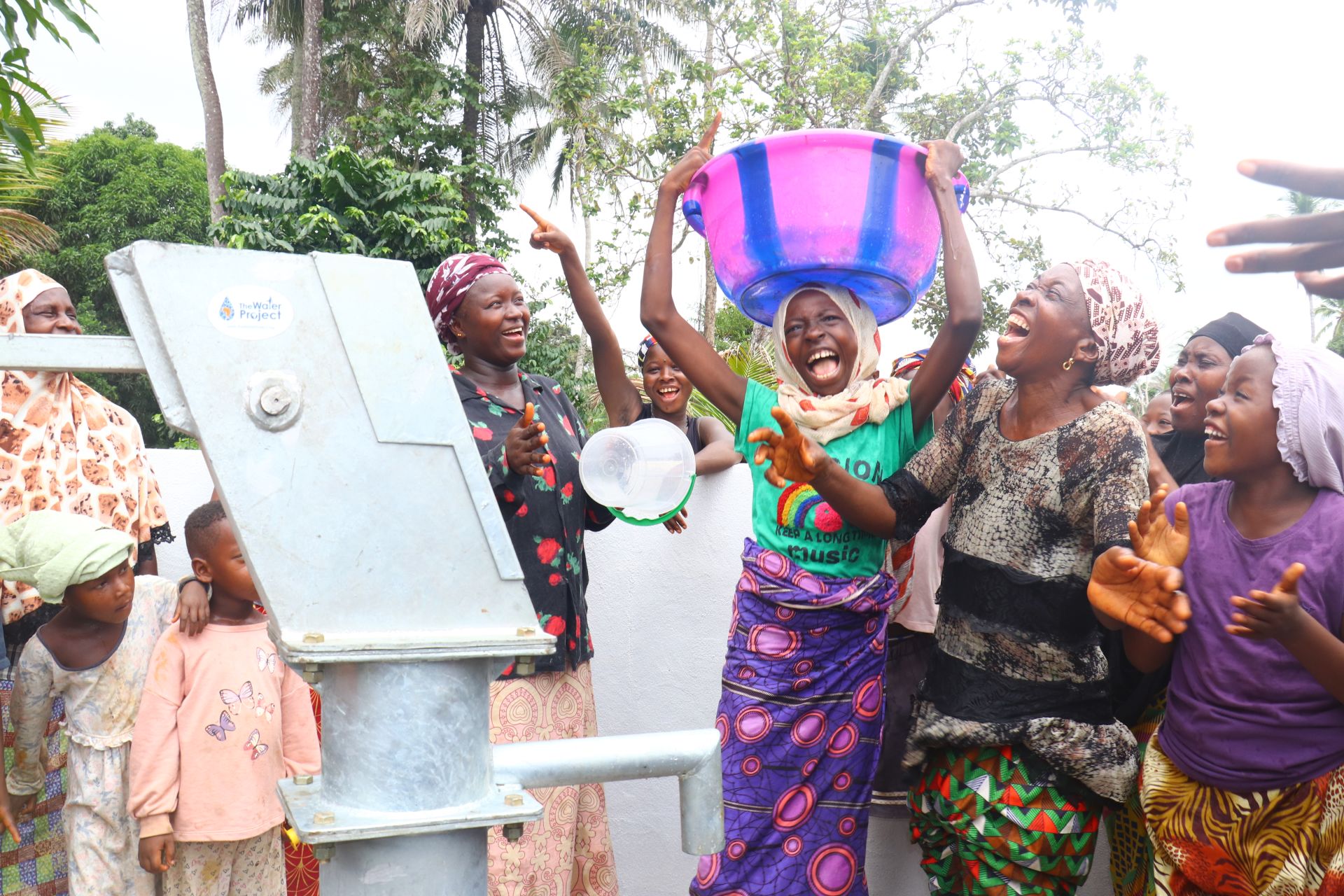
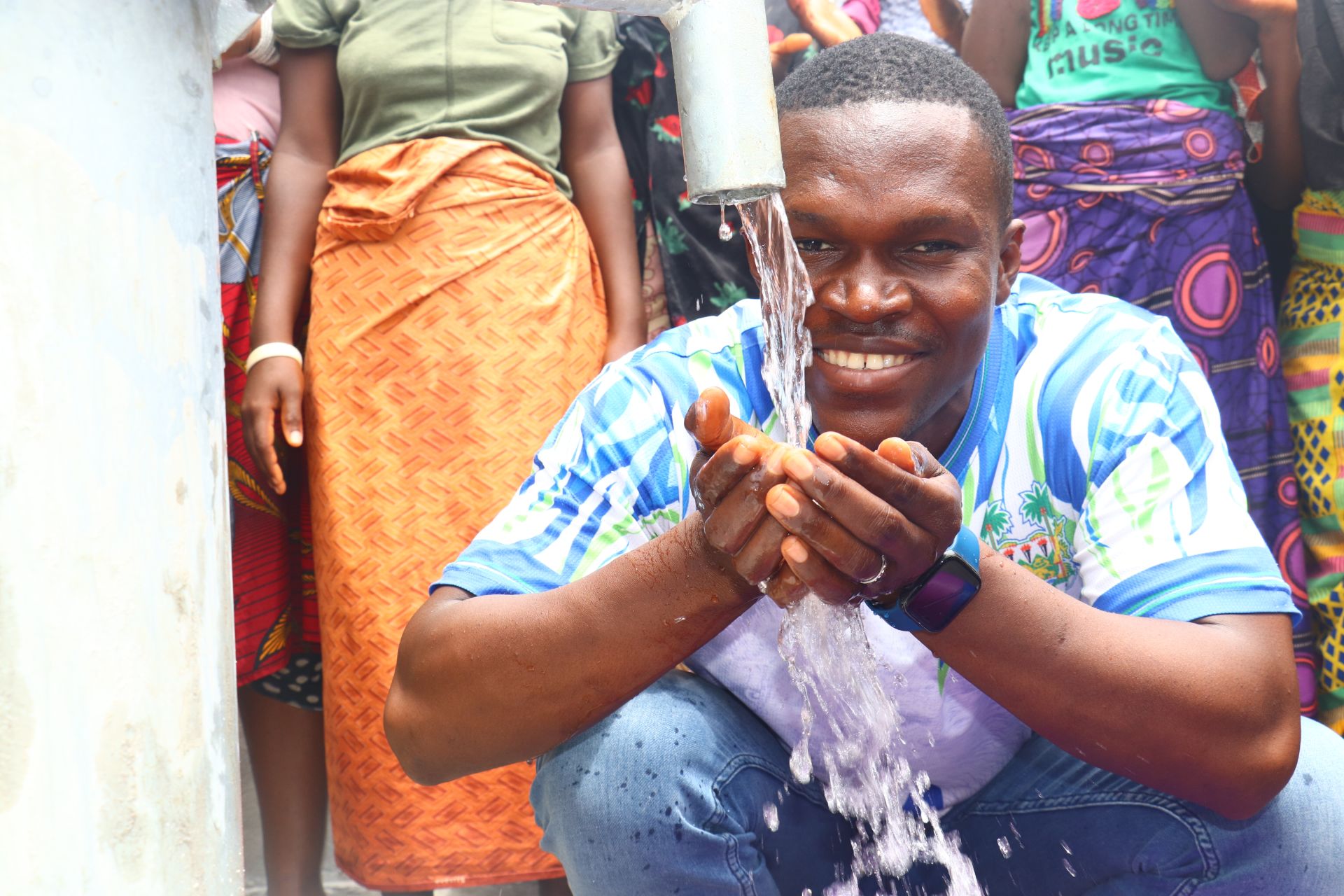
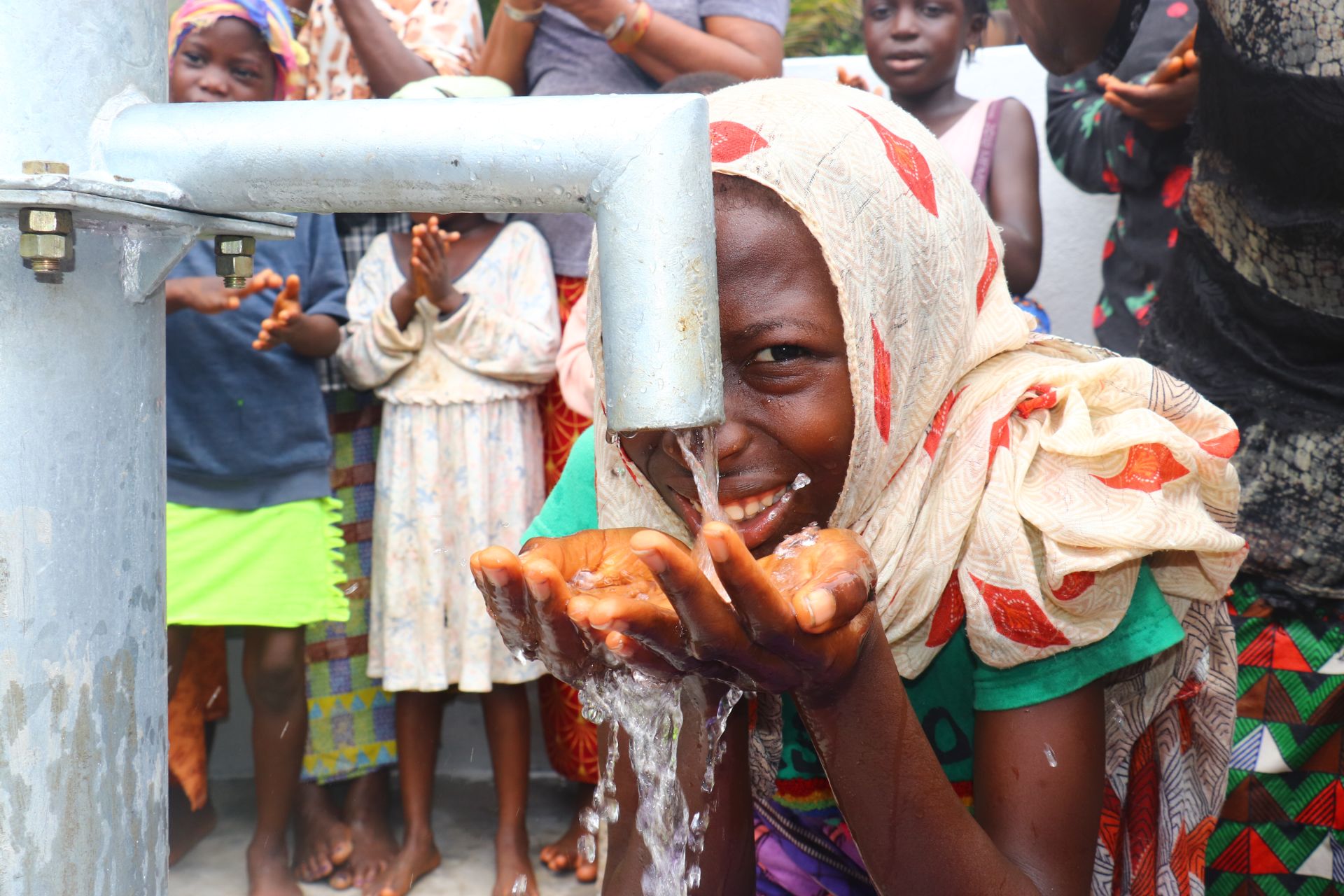
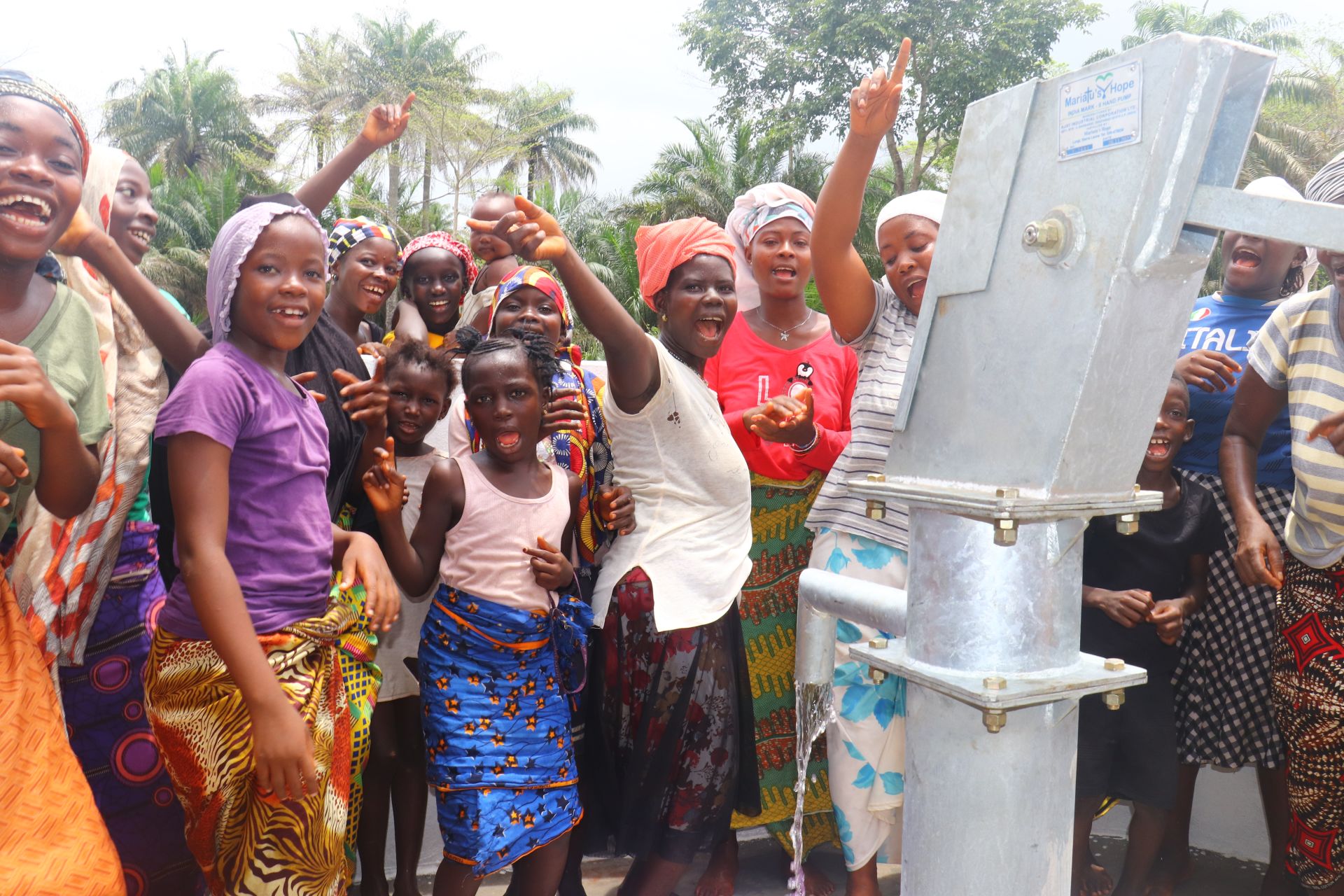
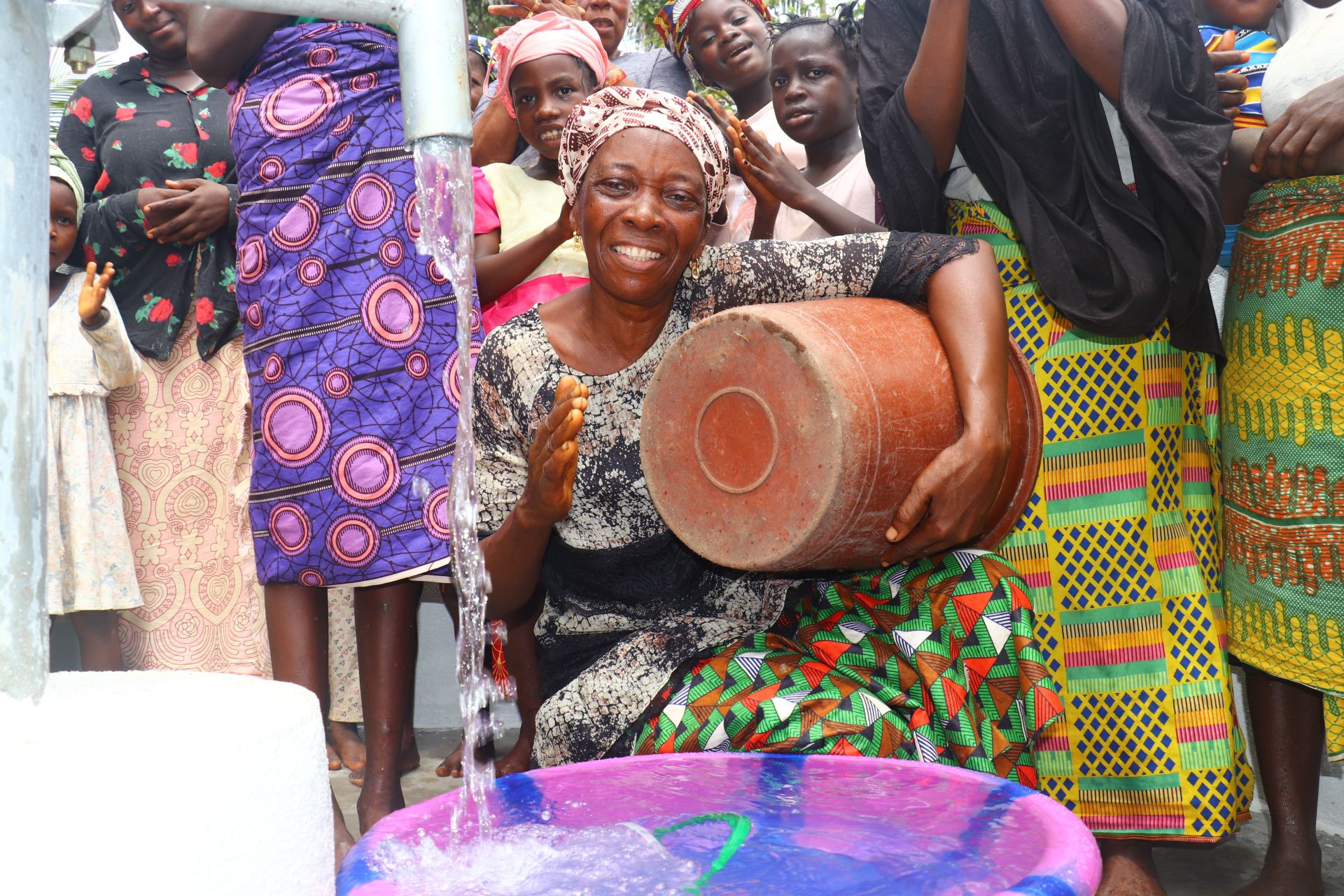
The community's joy couldn't be contained! Clean water is flowing!

Regina Thomas, 58, has a family to care for and a trading business. She has spent most of her life living through a water crisis beyond her control.

"I have seen the worst moments of the water crisis in this community, especially during the dry season. It was extremely difficult to fetch enough water. I often could not cook, wash clothes, or even drink sufficient water. But all that is no more. With the new water well, I can now fetch water at any time to carry out my domestic responsibilities. One of my biggest challenges was late cooking. The water shortage forced me to fetch water only after returning from trading, which delayed food preparation for my family. Luckily, that challenge is now a thing of the past. I finally have clean water near my home!" Regina declared.

Ms. Regina Thomas celebrating the new well.

She continued, "The new well near our house will save my children from trekking to the bush to fetch water, as it is now at an easy distance from our house. Going to the bush to fetch water exposed them to snake bites, injuries, and lateness (to school). With this new water well, they can get water easily and safely at any time without exposing themselves to those risks. This implies that they will spend less time getting water and more time in school, which I think will result in improved academic performance."

13-year-old Adamsay has high hopes for how this new well will change her future!

Adamsay (green shirt) joyfully celebrates the new well!

"Having water at home is good for me since I no longer must go searching for it. I utilize that time to assist [my] mom in preparing food, taking my bath, and studying my schoolwork. This water well helps me in preparing ahead of time for school; therefore, I can focus more on school and work towards getting good grades. The water from this well is clean and safe to drink. I no longer must drink water from the bush, which can make me sick. When I fall sick, I miss school, and that affects my performance in exams. I thank God for this new water well. It will significantly change my life," celebrated Adamsay.

After construction was complete, we held a dedication ceremony to officially give responsibility for the well to the water users. Several local dignitaries attended the ceremony, including representatives from the Ministry of Water Resources. Each official gave a short speech thanking those who contributed to this water project and reminding everyone to care for it. Then, Regina and Adamsay made statements on their community's behalf. The ceremony concluded with celebration, singing, and dancing.

Osman Fofanah from the Ministry of Water Resources came to celebrate, too!

New Well

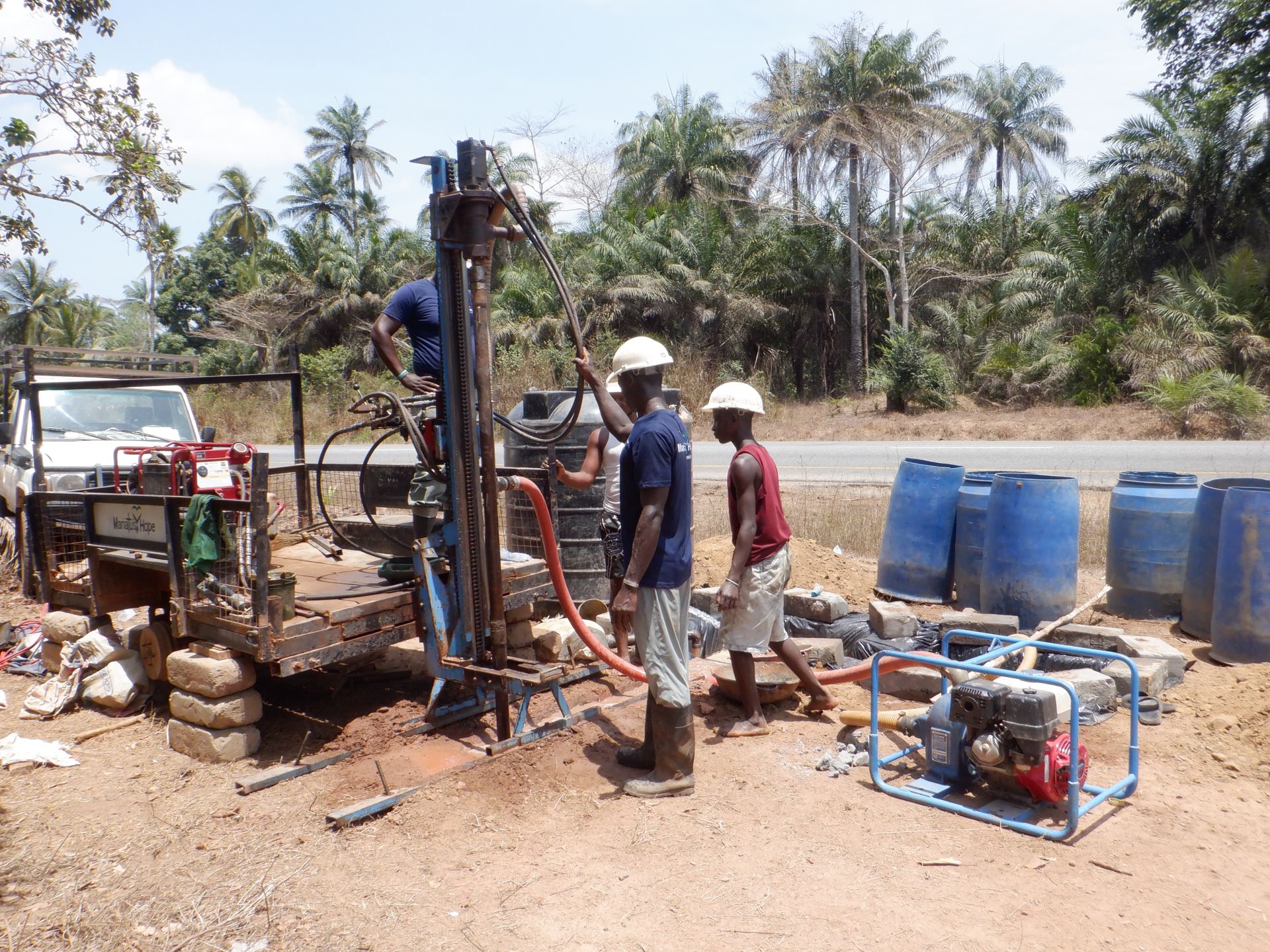
The community provided space for the drill team to store their belongings and meals for the duration of their stay. We were ready to begin drilling!

Drilling begins!

We drilled until we reached a final depth of 27 meters. The team did a soil test, bailed the well, and flushed it, clearing any debris generated by the drilling process. This well has a static water level of 14 meters. Finally, we tested the water flow to ensure the well would provide clean water with minimal effort at the pump.

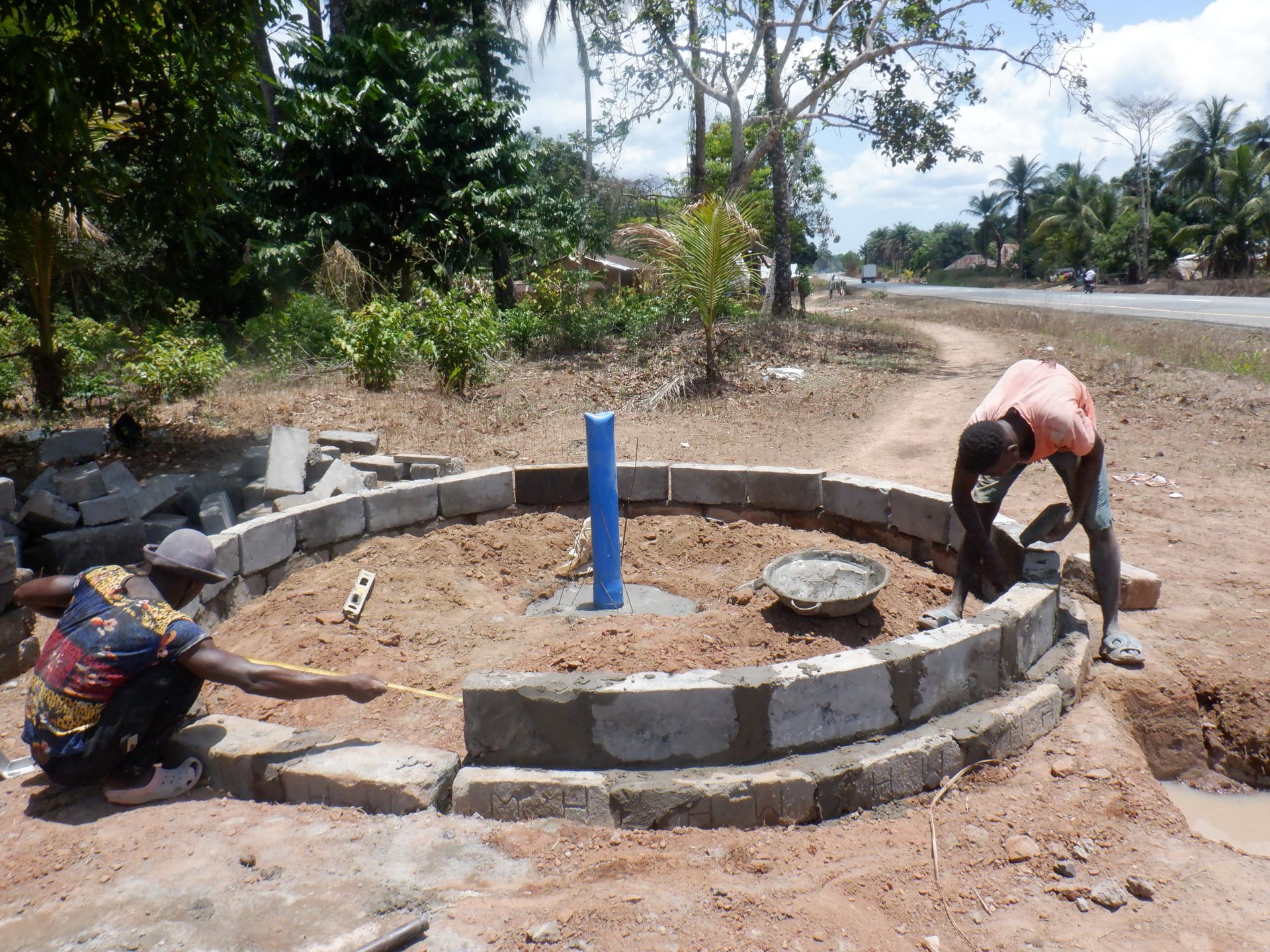
Constructing the pad.

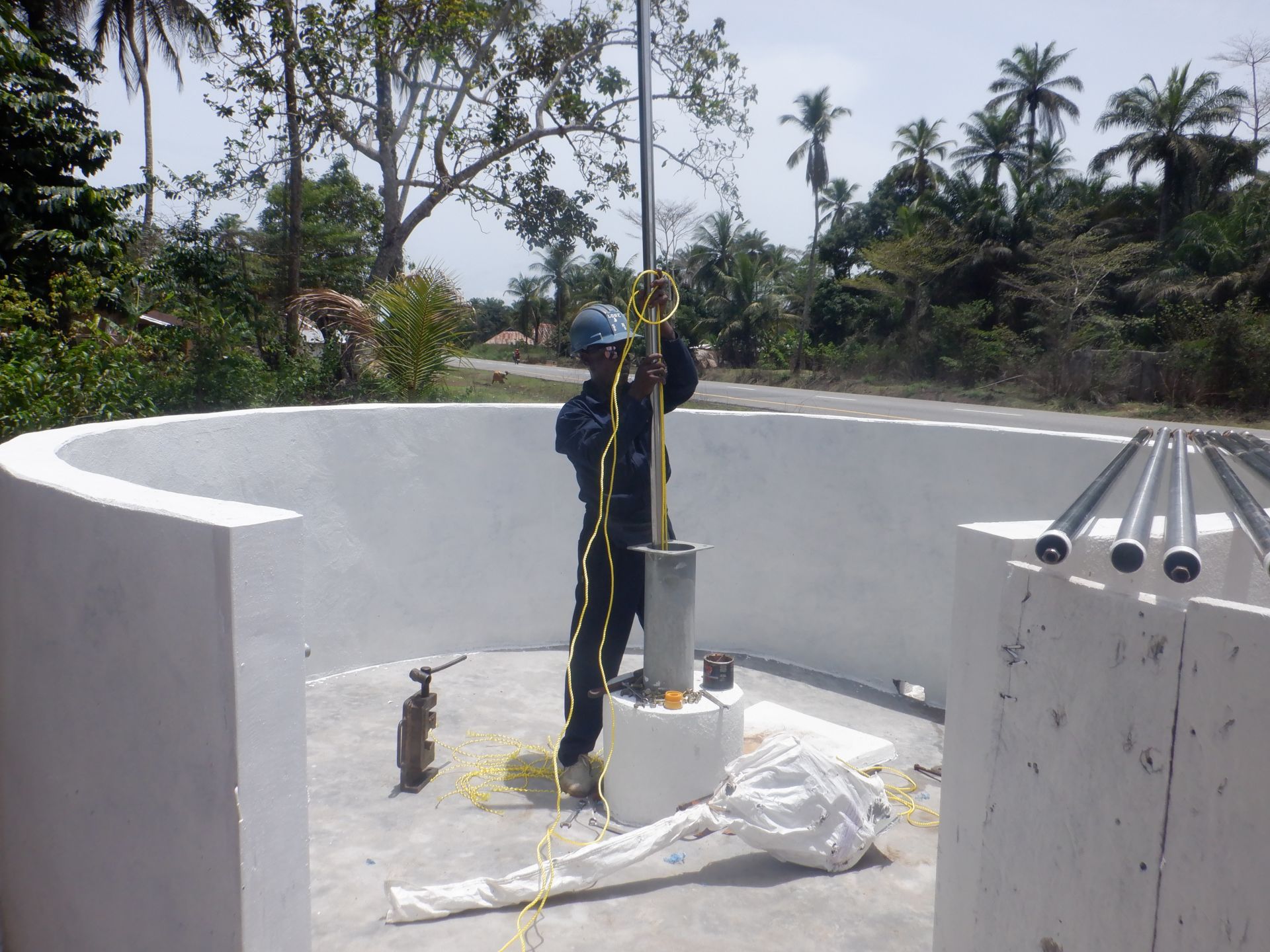
As the project neared completion, we built a cement platform, walls, and a drainage system around the well to seal it from surface-level contaminants. The drainage system helps to redirect spilled water to help avoid standing water at the well, which is unhygienic and a breeding ground for disease-carrying mosquitoes.

Finally, we installed the pump and conducted a water quality test. The results showed the water was fit for drinking!

Community Education

Before conducting any hygiene training, we collaborated with the local water user committee to understand the community’s challenges. We identified households without handwashing stations. With this information, community members worked together to improve hygiene and sanitation at home before the training.

We invited a nurse from the local clinic to explain some topics and raise awareness of Sierra Leone's free vaccinations for children under five. Nurse Fatmata Sesay was instrumental in reinforcing each lesson.

Nurse Fatmata Sesay leads a hygiene session.

We scheduled a time when members from each household using the waterpoint could attend a three-day hygiene and sanitation training and dispatched our teams to hold the meeting.

We taught the participants about proper handwashing, personal and menstrual hygiene, and healthy habits such as using latrines and maintaining a balanced diet. We discussed how disease transmission and water hygiene are crucial to community health. We emphasized the importance of maintaining and caring for the well pump and the cost recovery system.

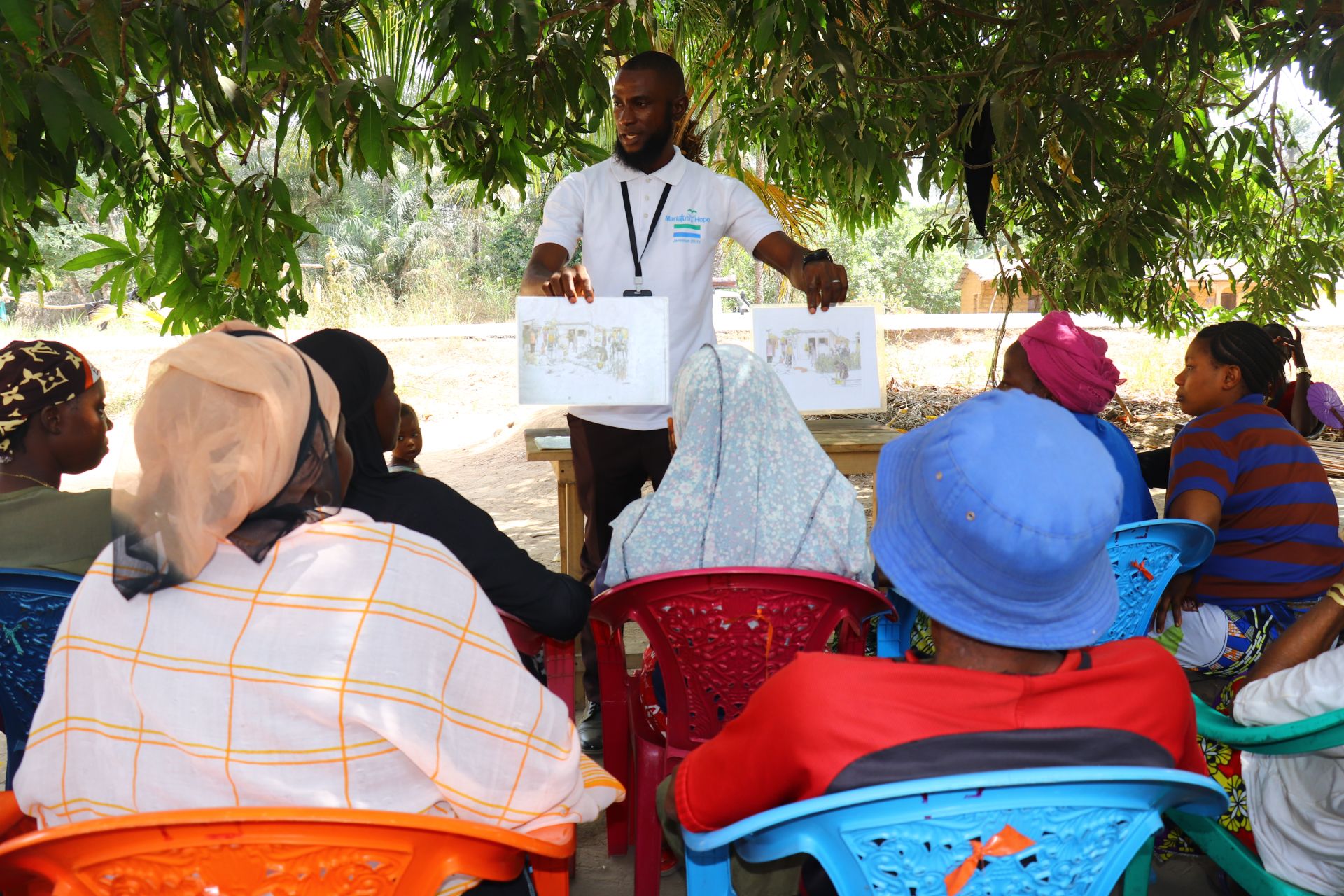
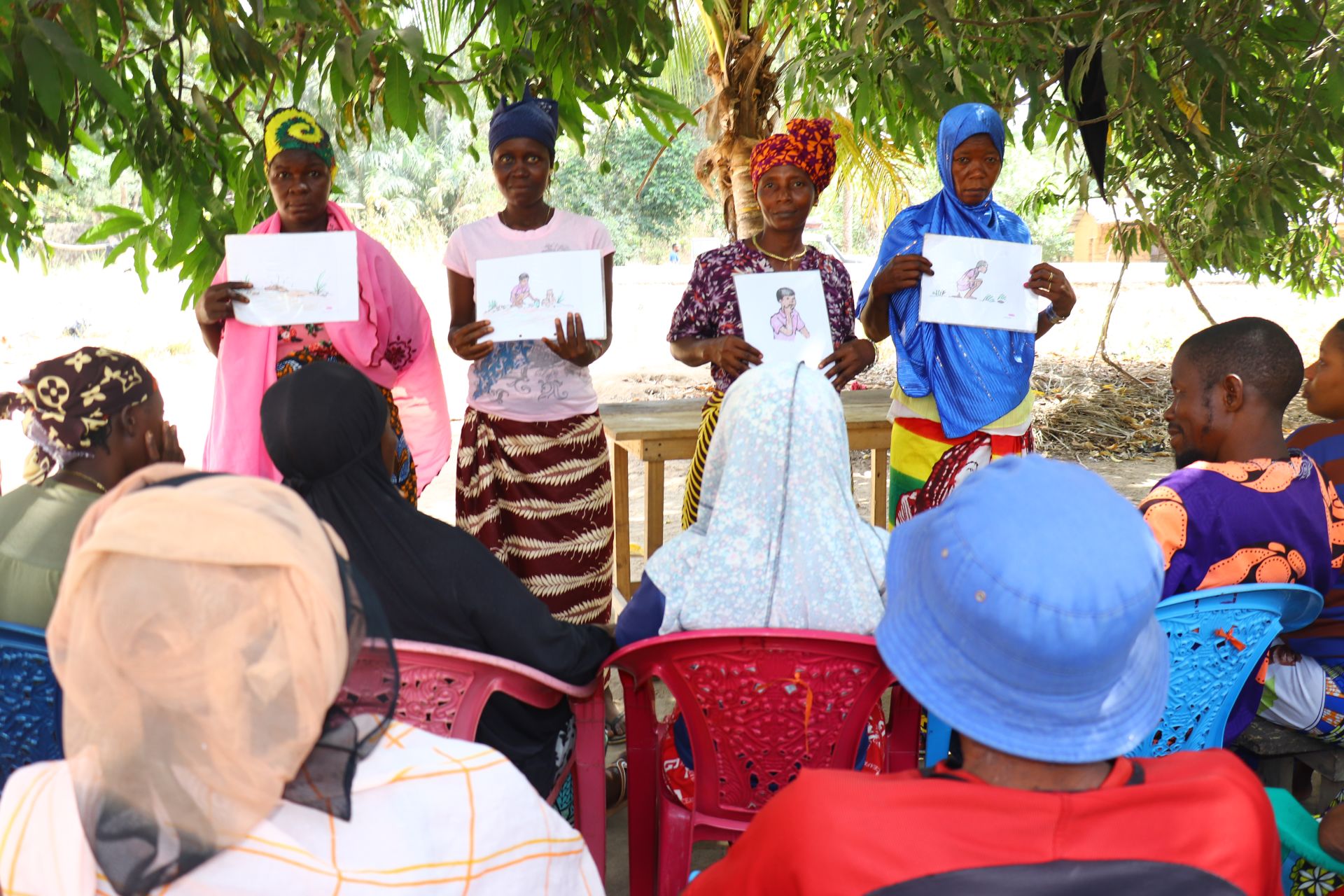
Field Officer Phillip James Allieu described the topic that gained the most attention throughout the training. "The presentation on the topic of healthy/unhealthy community was the most engaging session of the training. It sparked deep discussions among participants, encouraging them to reflect on their own community’s condition. The facilitator used images of both healthy/unhealthy communities, prompting participants to identify which one resembled their own. This approach inspired critical thinking, as they carefully analyzed the images before making their decision."

He continued, "Initially, many participants pointed at the unhealthy community, but a sense of hesitation and murmuring followed. Some were confused, while others quietly discussed among themselves. Eventually, they acknowledged that their community shared some similarities with the unhealthy community depicted in the image. However, they also believed that their community was in a somewhat better state. As the discussion progressed, participants gained a clearer understanding of the topic. They began identifying specific features of an unhealthy community that were also present in their own. They recognized key consequences of living in such conditions, including the spread of diseases, which could strain the limited financial resources of families."

Showing the differences between a healthy versus unhealthy community.

"They also emphasized that untreated illnesses could lead to death if not promptly addressed at a health center. Another major concern they raised was water contamination, which could result in widespread sickness if consumed. By the end of the session, participants proposed practical recommendations to improve their community’s hygiene and prevent it from becoming unhealthy. These included clearing overgrown grass, digging garbage pits, constructing and properly using latrines, maintaining cleanliness in and around their homes, and draining stagnant water to prevent mosquito breeding," Phillip concluded.

Disease transmission session.

Regina Thomas, previously quoted, is the Vice Chairperson of the Water User Committee. She shared her experience in the training sessions.

"The training has been incredibly impactful," she said.

"Before attending, my hygiene practices were not the best, but now I have gained valuable knowledge about proper hygiene. I was unaware of how easily diseases could be transmitted through unclean hands. One of the most amazing lessons was learning about the construction of a tippy tap. This simple yet effective solution will save me from spending money on buying a handwashing bucket while still ensuring proper hygiene. I am now committed to promoting better sanitation in my community. I will not allow any of my neighbors to let their children practice open defecation, as this will help reduce the spread of diseases. This training has equipped me with the knowledge to keep my community healthy and prevent disease outbreaks. Moving forward, I will ensure my environment remains clean and free from all sources of water contamination," she concluded.

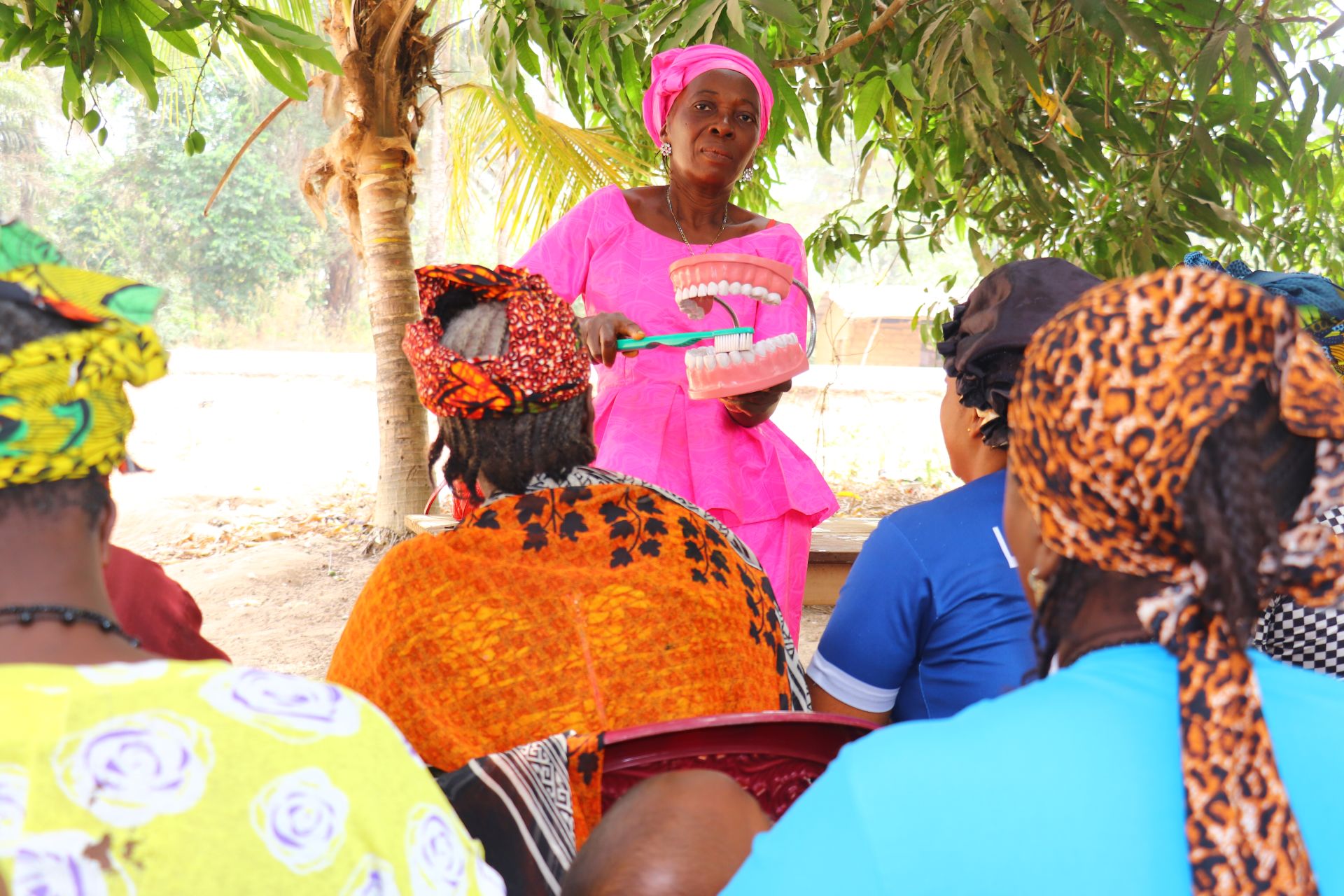
Ms. Regina Thomas helps lead the dental hygiene session.

Thank you for making all of this possible!


Update photo


January, 2026: Exciting Progress in Bakolo Junction Community, Thanks to You

We’re thrilled to share that, thanks to your generous support, significant change is coming for Adamsay and the entire Bakolo Junction Community. Construction has begun on the new borehole well project, bringing them one step closer to having clean, reliable water.

But that's not all—during construction, we’re also providing vital health training. These sessions equip the community with essential hygiene practices, ensuring that the benefits of clean water extend to lasting health improvements.

We’re so grateful for your role in making this possible. Stay tuned for more updates—soon, we’ll be celebrating the arrival of safe water in the Bakolo Junction Community!


Update photo


Project Photos


Project Type

Abundant water is often right under our feet! Beneath the Earth’s surface, rivers called aquifers flow through layers of sediment and rock, providing a constant supply of safe water. For borehole wells, we drill deep into the earth, allowing us to access this water which is naturally filtered and protected from sources of contamination at the surface level. First, we decide where to drill by surveying the area and determining where aquifers are likely to sit. To reach the underground water, our drill rigs plunge through meters (sometimes even hundreds of meters!) of soil, silt, rock, and more. Once the drill finds water, we build a well platform and attach a hand pump. If all goes as planned, the community is left with a safe, closed water source providing around five gallons of water per minute! Learn more here!


Contributors

Selah Covenant Church
146 individual donor(s)