Project Status


Project Type:  Borehole Well and Hand Pump

Regional Program: Western Uganda WaSH Program

Impact: 300 Served

Project Phase:  In Service - Mar 2026

Functionality Status:  Functional

Project Features


Click icons to learn about each feature.


The 300 community members of Rwempisi struggle to find and collect sufficient, clean water to meet their daily needs. Hours of people's time is stolen walking to and from their primary water source, a dysfunctional spring. The task leaves residents like Cosmas Buniko, a 29-year-old farmer, exhausted without the energy or time to farm, which is how he provides for his family. This region relies on agriculture for survival, so water is needed not only for drinking, cooking, and personal hygiene but also, as importantly, to grow food and produce income.

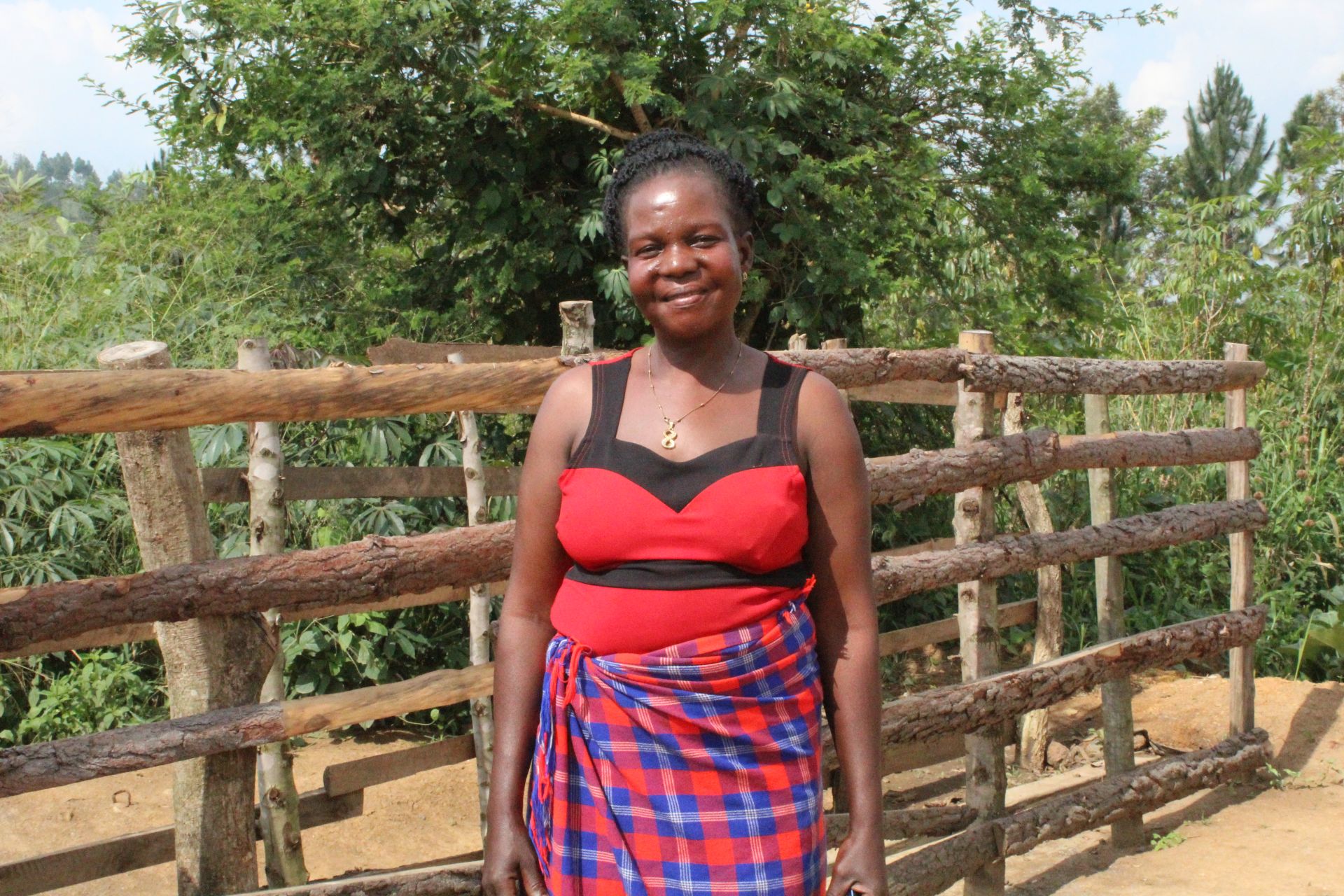
Cosmas.

The headwall of the spring was destroyed when a tree fell on it, yet without another alternative water source, the people in Rwempisi have made due by inserting an improvised collection pipe into the bank. Collecting water is a slow and tedious process.

Not only is it time-consuming to collect water here, but drinking it can have dangerous consequences. When the spring construction was compromised, so was the water quality. Consuming it causes people to regularly suffer from waterborne illnesses that steal their health, energy, and financial resources.

"I am very concerned because the water is very dirty and when it rains, even the spring box gets filled with water [and] floods. I fell sick with typhoid and only discovered the diagnosis after visiting the hospital. The doctor indicated that the illness might have been caused by the consumption of contaminated water," shared Cosmas.

"When I contracted typhoid, I was unable to engage in other tasks due to its severity. Lacking energy, I remained at home until I recovered, impacting my daily routine. It poses significant dangers and financial burdens because each time I fall ill, it results in substantial expenses," continued Cosmas.

Cosmas desires to provide water for his family, yet the current water situation limits his ability to maintain his health, making it nearly impossible. He and his community need a reliable, safe water source to quickly obtain water so they can focus on improving their daily lives.

"The installation of the new waterpoint will alleviate waterborne diseases for both me and my family members. Additionally, it will ensure the safety of using clean water for cooking, thereby enhancing [our] overall health, particularly for my wife," Cosmas concluded.

Steps Toward a Solution

Our technical experts worked with the local community to identify the most effective solution to their water crisis. They decided to drill a borehole well, construct a platform for the well, and attach a hand pump.

Well
Abundant water often lies just beneath our feet. Aquifers—natural underground rivers—flow through layers of sediment and rock, offering a constant supply of safe water. A borehole well is drilled deep into the earth to access this naturally filtered and protected water. We penetrate meters, sometimes even hundreds of meters, of soil, silt, rock, and more to reach the water underground. Once found, we construct a platform for the well and attach a hand pump. The community gains a safe, enclosed water source capable of providing approximately five gallons of water per minute. Learn more here!

Community Education & Ownership
Hygiene and sanitation training are integral to our water projects. Training is tailored to each community's specific needs and includes key topics such as proper water handling, improved hygiene practices, disease transmission prevention, and care of the new water point. Safe water and improved hygiene habits foster a healthier future for everyone in the community. Encouraged and supported by the guidance of our team, a water user committee representative of the community's diverse members assumes responsibility for maintaining the water point, often gathering fees to ensure its upkeep.

A Community-Wide Approach
In Uganda, we use a Community-Led Total Sanitation (CLTS) approach, which involves several meetings where community members evaluate their own hygiene and sanitation practices to encourage lasting change. During these sessions, natural leaders emerge, motivating the community to recognize and change unhealthy behaviors that affect everyone.

Communities then commit to ending open defecation before we install the water project. Every household builds and uses a latrine to prevent disease and improve hygiene and sanitation alongside their new water source. To support this effort, a Community Development Officer (CDO) is assigned. The CDO encourages each household to set up handwashing stations, animal pens, garbage pits, and dish-drying racks. These additions are crucial in preventing the spread of common diseases.
Project Updates


March, 2026: Rwempisi Community Well Complete!

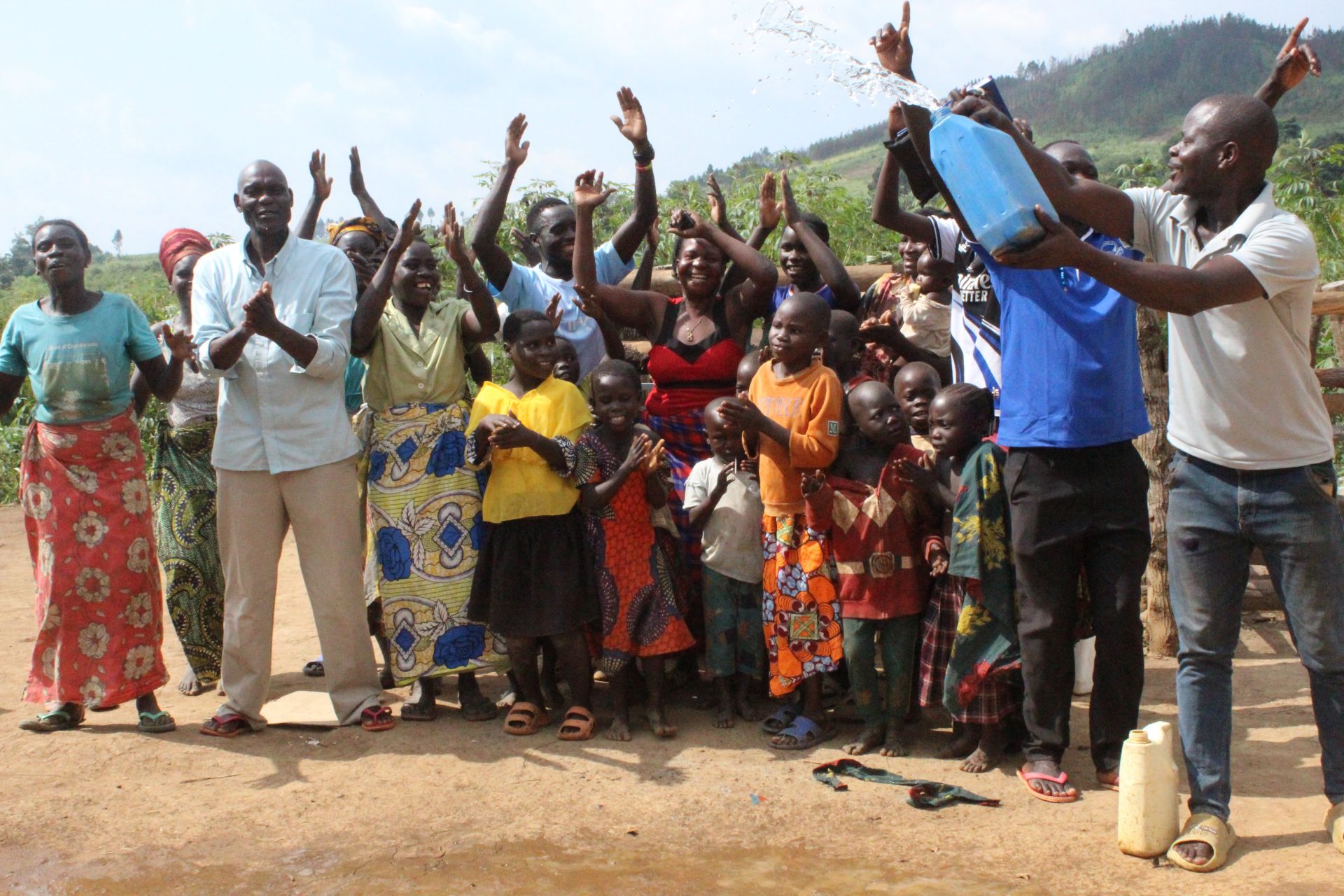
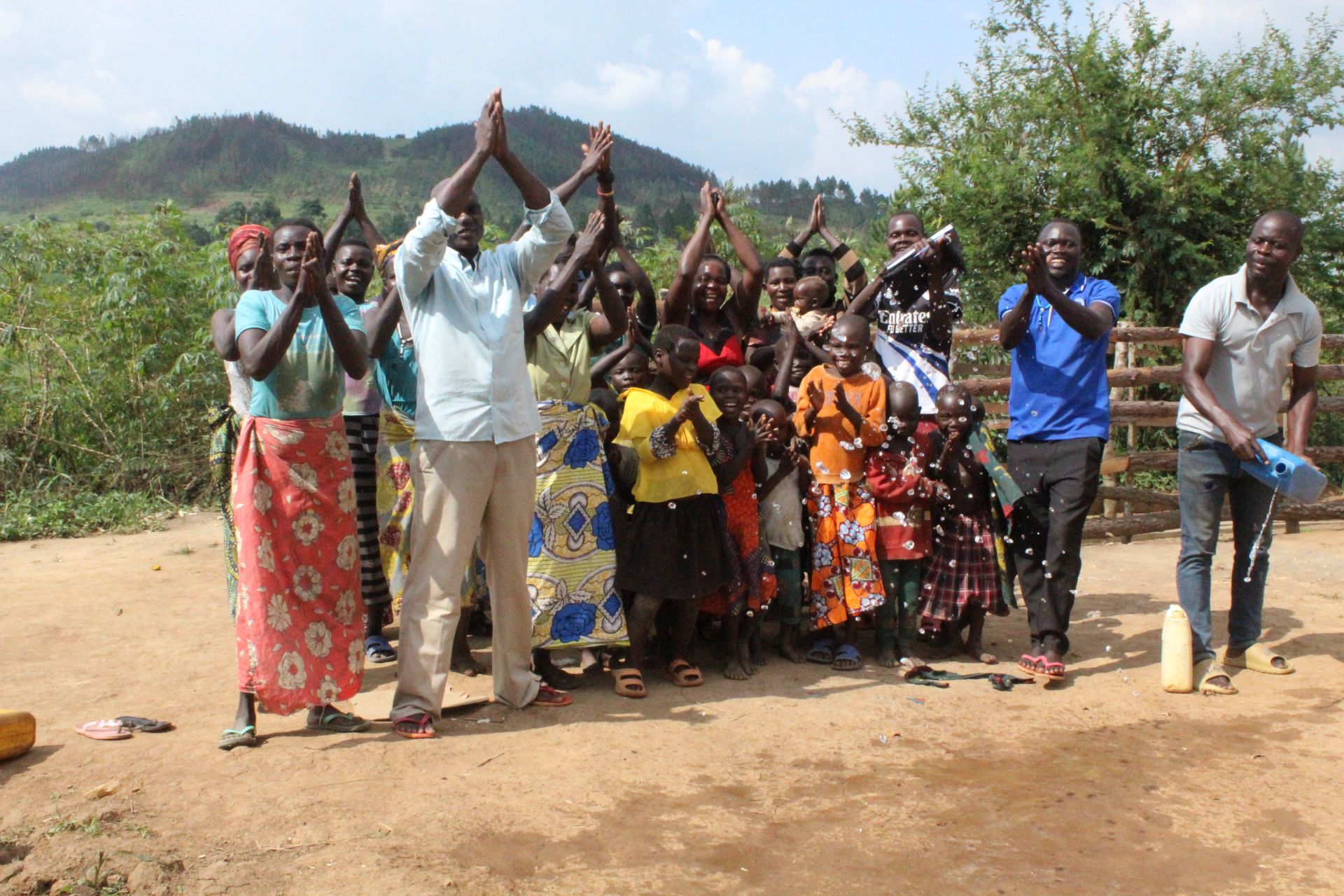
We are excited to share that your donation contributed to a safe, reliable well at Rwempisi, Uganda. The borehole well is now providing community members with safe water! Additionally, we hosted a training where community members worked together to make a development action plan. As a result, families are working to build new sanitation and hygiene facilities, and habits that will enable a healthier life.

"We no longer struggle through steep slopes and risky sugarcane plantations where we feared snake bites. We now have clean water nearby, no more wasting hours at a slow-flowing source or fighting crowds for muddy water during the rainy season," shared 60-year-old Jane Gilamiya.

Ms. Jane Gilamiya.

"Now that I don’t have to spend money buying water, I can invest in better utensils like plates, saucepans, and flasks for my restaurant. This will help my business grow, and I’ll be able to take on bigger opportunities, like supplying food for trainings," she continued.

Well Construction

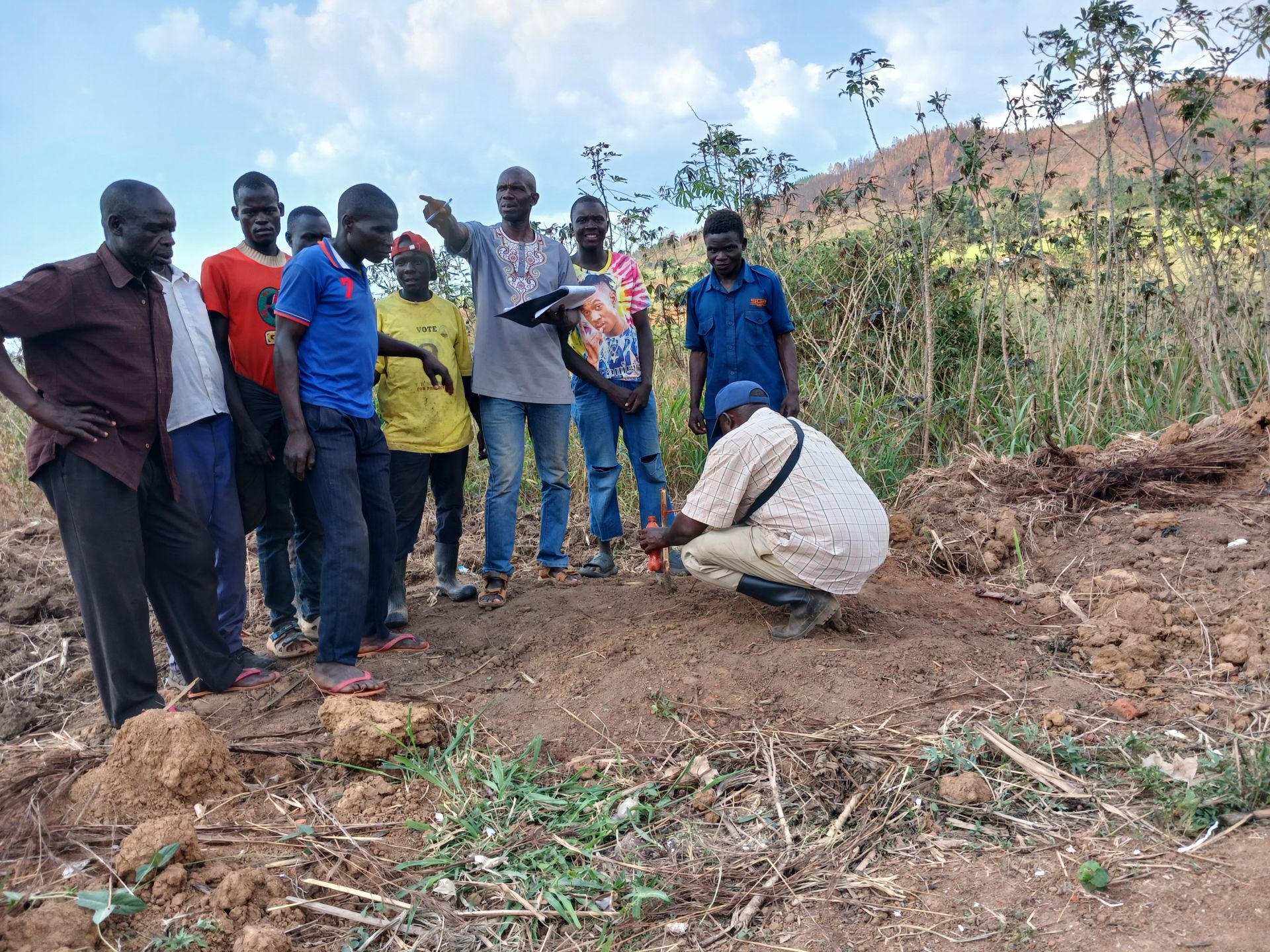
We worked with the community to determine the best possible site to drill the new well. We confirmed the site's eligibility by conducting a hydrogeological survey, which proves that there is sufficient groundwater to support the well before drilling begins.

The hydrologist assesses the site before starting drilling.

Several households volunteered to host our team of drilling technicians, giving them a place to sleep and food to eat throughout their work. Many community members came to the work site each day to watch the drilling and see the well come to life.

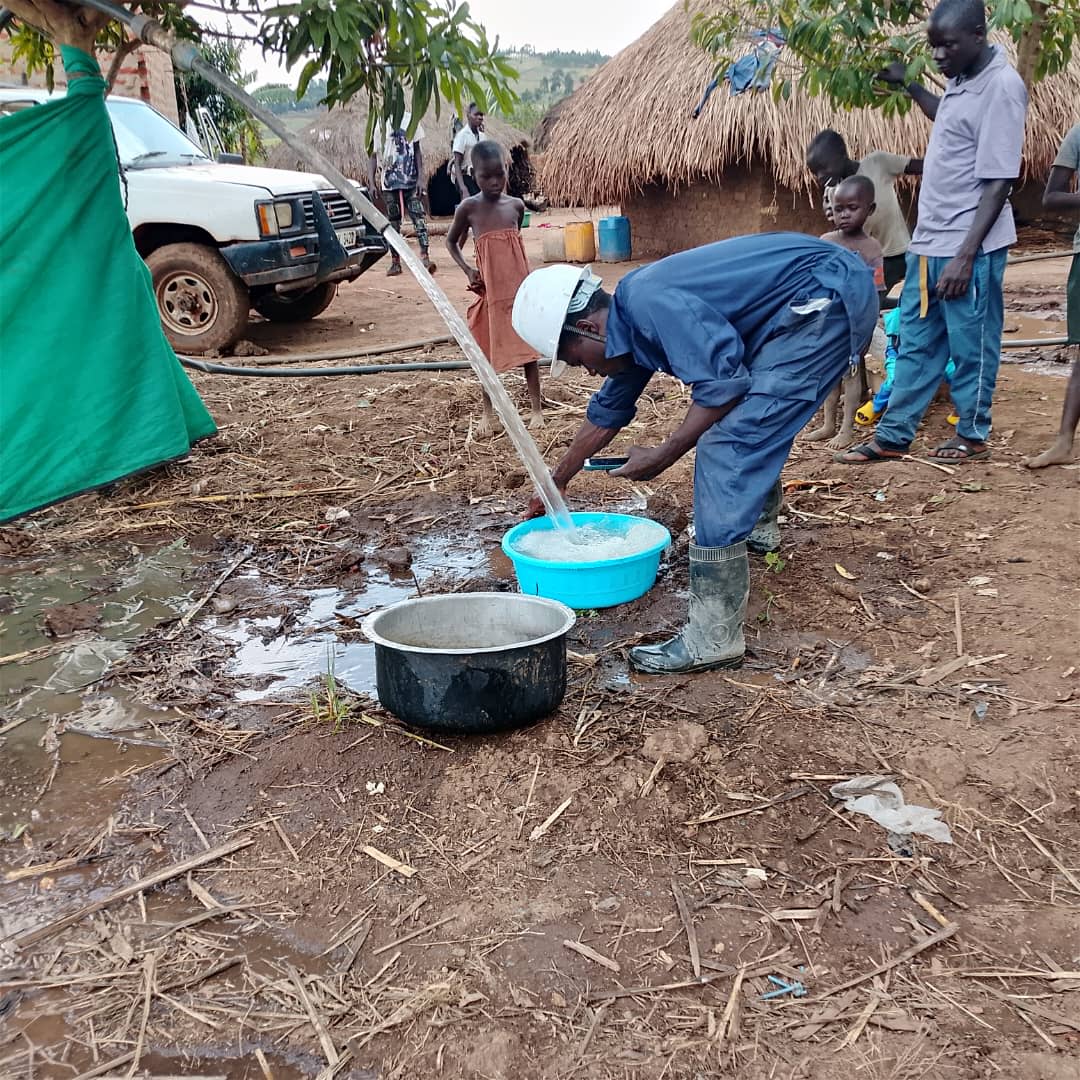
Testing the water yield.

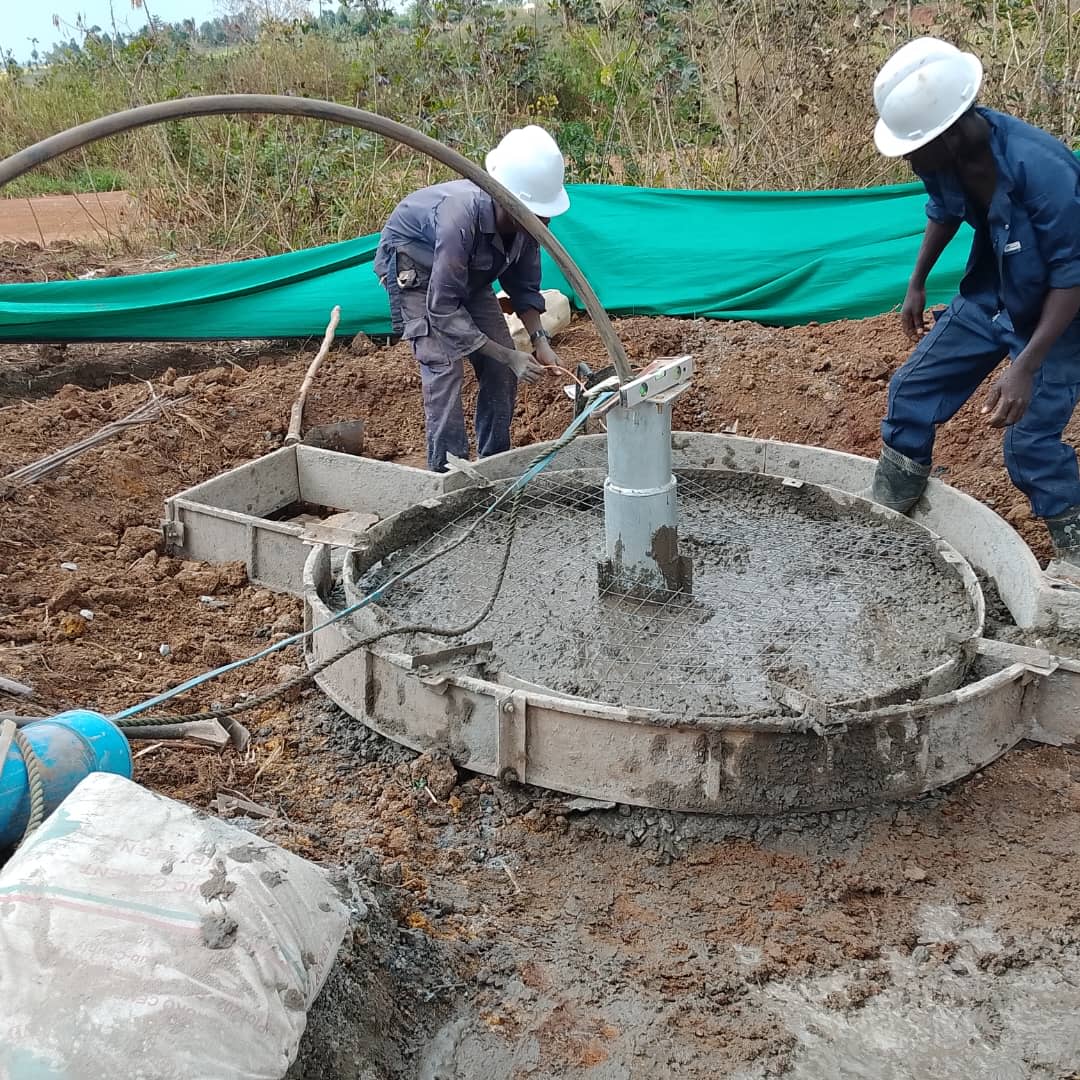
When it came time to build the cement well pad, community members collected fine sand and water to mix the cement. After the cement platform dried, we installed a stainless steel Consallen pump, which is now flowing with clean, safe water!

Installing the well pad and the pump.

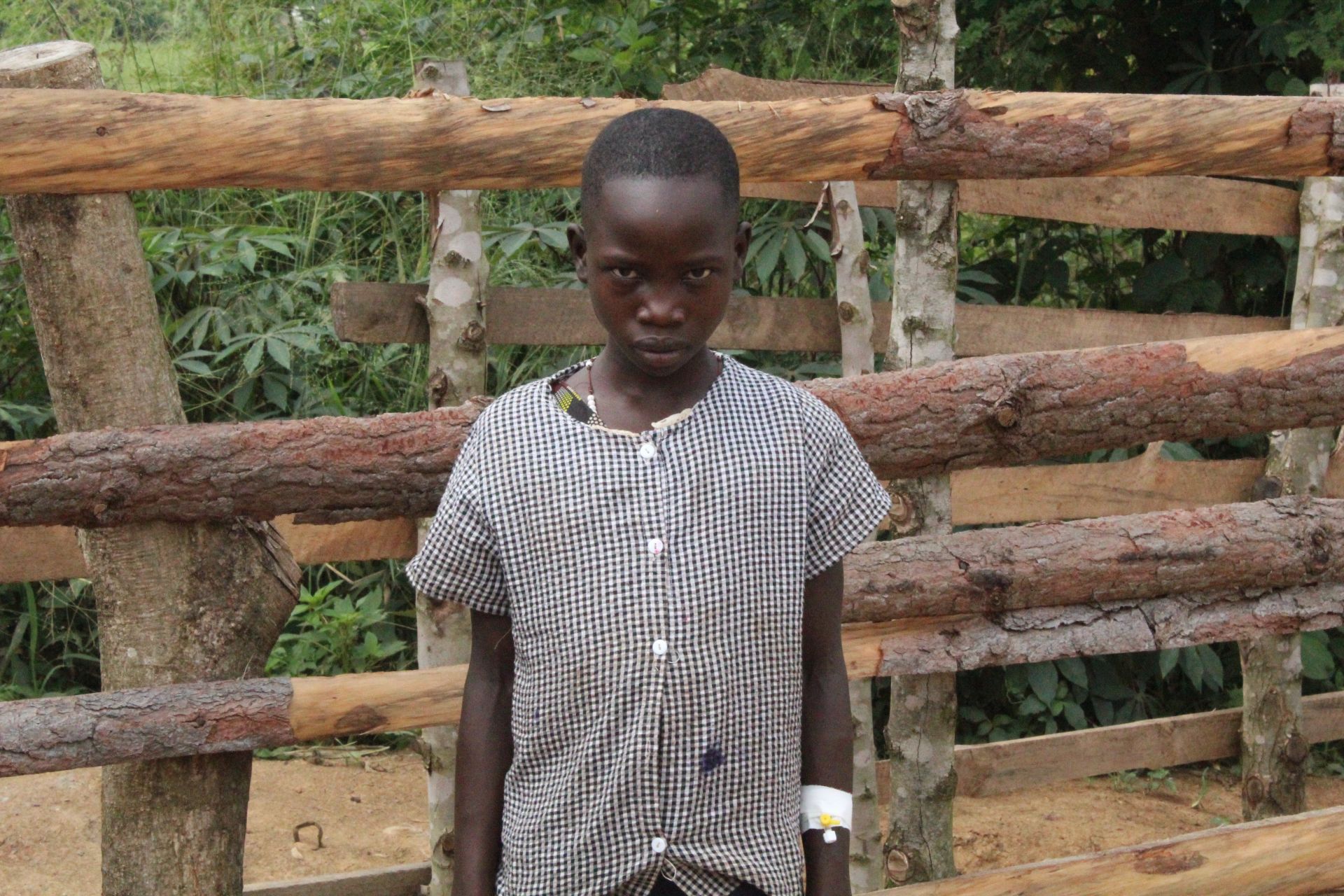
"This new water point will make my parents happy because they won’t worry about me being bitten by snakes, falling and breaking jerrycans, or coming back home late from long queues," said 11-year-old Mary.

Mary.

"Reliable water will help me stay clean and wear a neat uniform, so I won’t miss classes or be sent back home for being dirty."

Community Education

The self-help group associated with the project was set up and began training in advance of selecting this project.

The first training session focused on financial planning. We mobilized the community through a series of meetings that sensitized them on the importance and purpose of saving. This included meetings dedicated to creating a community profile, where participants map the physical environment and stakeholders in their own community. We also ran a participatory vulnerability capacity assessment exercise. In this session, community members mapped out their shared risks and opportunities, including the water point breaking down.

Participants learning. A representative photo from a similar Self-Help Group training in Uganda.

We worked with the community to establish a Village Savings and Loan Association (VSLA) and a water user committee. The VSLA members will all contribute to two different savings accounts: one which can be used to give each other small loans throughout the year, and another that will fund maintenance and repairs at the new well. The group also agreed on a social fund that will provide grants to fellow group members and help them with weddings, funeral expenses or catastrophes such as fire damage. Our teams will provide follow-up training and continuous coaching to support the management of the VSLA.

Participant engagement is key. A representative photo from a similar Self-Help Group training in Uganda.

We conducted training on hygiene and sanitation at the personal, household, community, and environmental levels. In collaboration with the community facilitator and local leaders, we trained households on critical hygiene and sanitation facilities. These include latrines, dish racks, refuse pits, handwashing facilities, and bathing shelters. Our teams monitor these facilities’ construction while helping the community learn how to best use and care for them.

Finally, we led an additional training for local artisans to teach them how to fabricate and sell locally used and accepted sanitation products that allow for more hygienic and accessible latrines.

We will continue to support the community in their sanitation and hygiene progress through monitoring visits. In addition, we will offer follow-up assistance and refresher training to ensure community members follow through in building their new facilities and developing new habits.

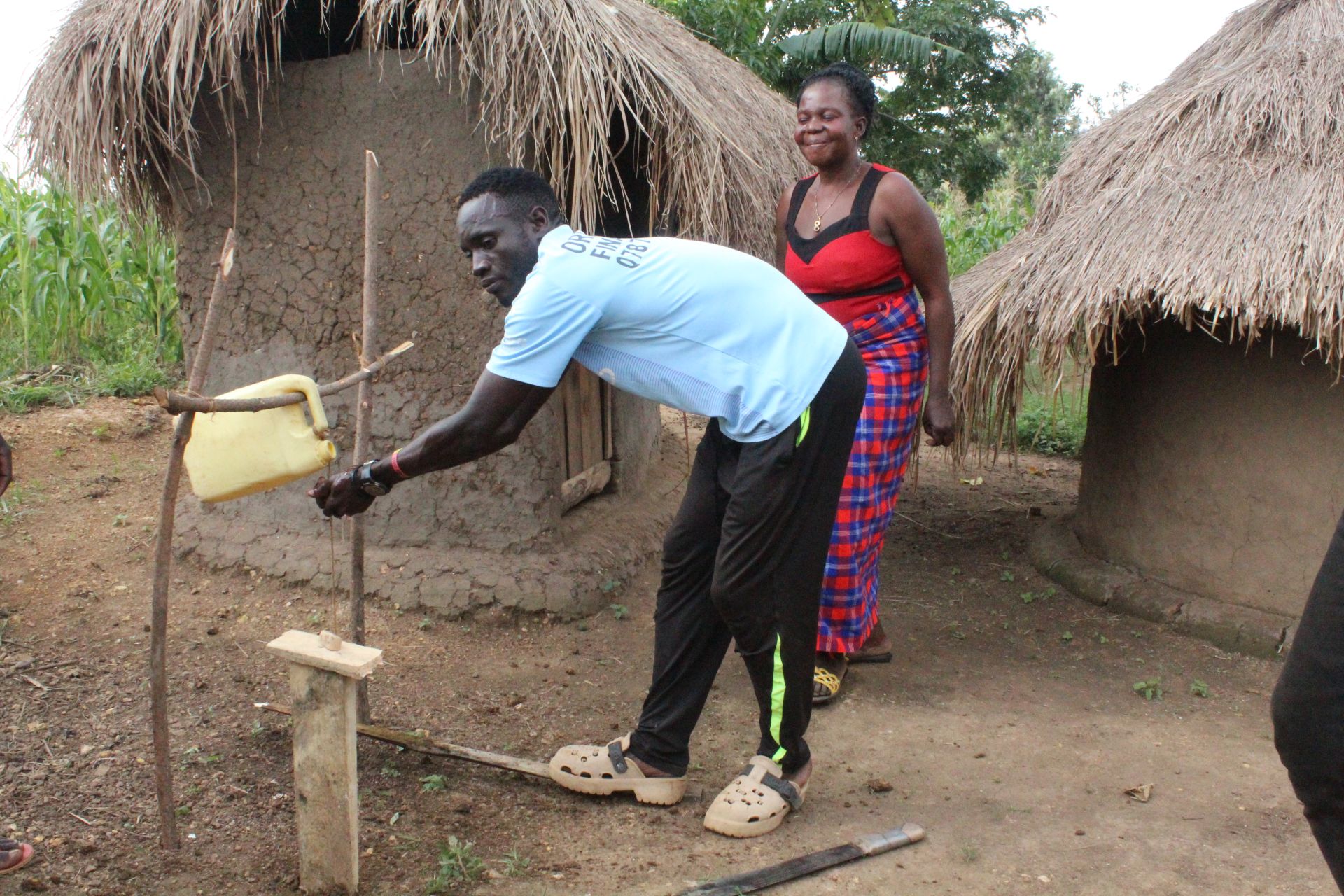
Using a tippy tap handwashing station.

Field Officer Sarah Katusiime was excited by how engaged the community was during the training.

"I feel hopeful for this group because the Water User Committees have been trained to manage the water point, and the community has also joined and been trained in our Self-Help Group approach for operation and maintenance. This shows strong local ownership and sustainability," she said.

Thank you for making all of this possible!


Update photo


January, 2026: Exciting Progress in Rwempisi Community!

We’re thrilled to share that, thanks to your generous support, significant change is coming for Cosmas and the entire Rwempisi Community. Construction has begun on the well project, bringing them one step closer to having clean, reliable water.

But that's not all—during construction, we’re also providing vital health training. These sessions equip the community with essential hygiene practices, ensuring that the benefits of clean water extend to lasting health improvements.

We’re so grateful for your role in making this possible. Stay tuned for more updates—soon, we’ll be celebrating the arrival of safe water in the Rwempisi Community!


Project Photos


Project Type

Abundant water is often right under our feet! Beneath the Earth’s surface, rivers called aquifers flow through layers of sediment and rock, providing a constant supply of safe water. For borehole wells, we drill deep into the earth, allowing us to access this water which is naturally filtered and protected from sources of contamination at the surface level. First, we decide where to drill by surveying the area and determining where aquifers are likely to sit. To reach the underground water, our drill rigs plunge through meters (sometimes even hundreds of meters!) of soil, silt, rock, and more. Once the drill finds water, we build a well platform and attach a hand pump. If all goes as planned, the community is left with a safe, closed water source providing around five gallons of water per minute! Learn more here!


Contributors

20 individual donor(s)