 Borehole Well and Hand Pump
 Rehabilitation Project







In 2013, we installed a rainwater tank at Matsakha Primary School - it was a positive step forward, but it is no longer offers a long-term solution. Over a decade later, the school population has grown to 500 students and 30 educators, and the rains are unpredictable. The tank runs dry, and when it does, children pay the price.
With no other option, students must make a 30-minute round trip to collect surface water from a nearby stream. It's unclean, unreliable, and time-consuming for children who should be in class.

Jade.
Thirteen-year-old Jade makes the exhausting trip regularly.
"The distance is long, and also the jerricans can be heavy, especially when I'm hungry," said Jade.

Students walk to collect water from the stream.
"I feel sad because my time is usually wasted, and sometimes I report late for my lessons. I can't concentrate in class due to fatigue after fetching water," Jade said. "Sometimes I feel sleepy due to fatigue."
Not surprisingly, spending so much time outside the classroom is negatively affecting Jade and her classmates.
"I miss classes, and sometimes the teacher doesn't get time to redo the topic. When exams are set on such a topic, I flop terribly," she lamented.
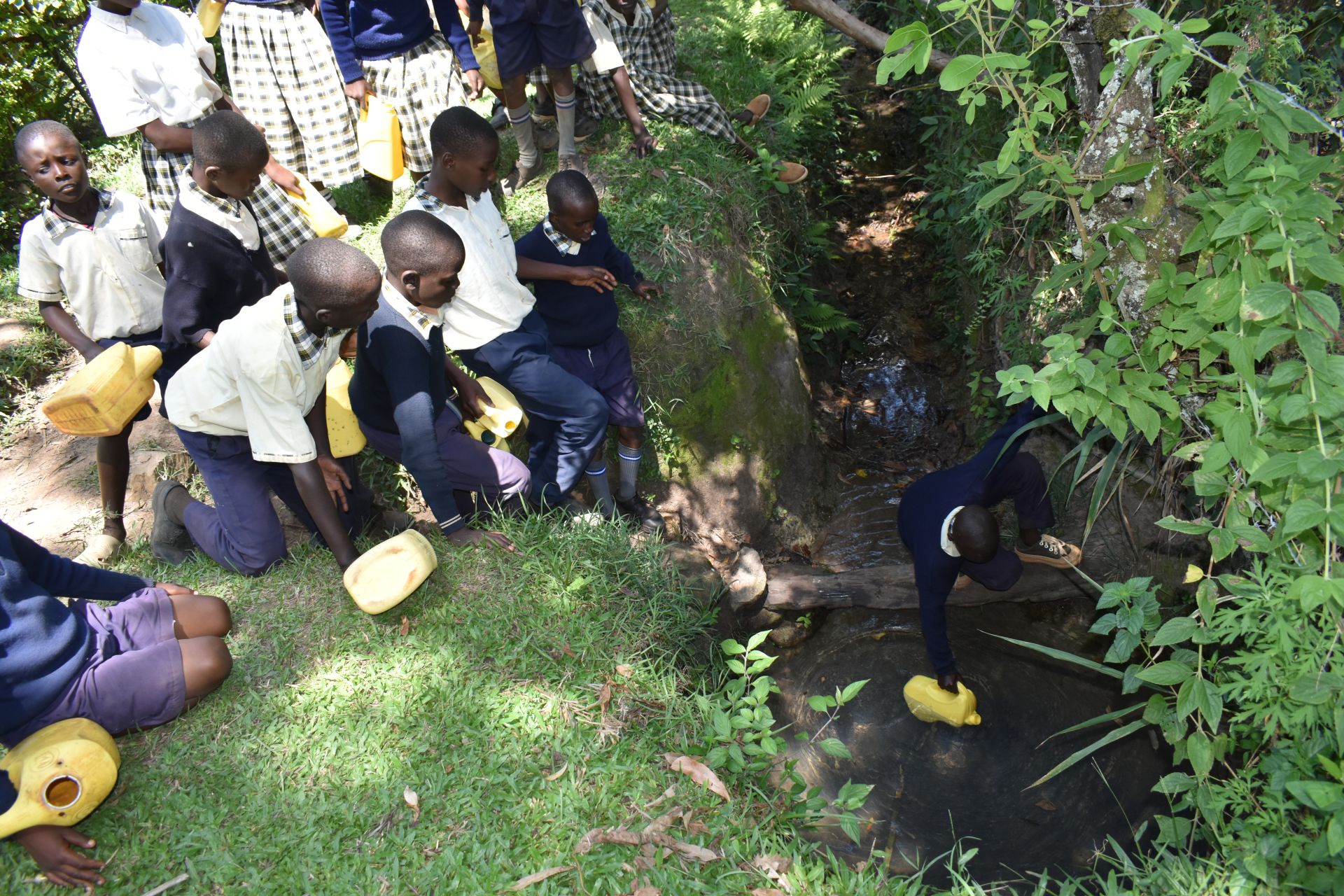
Students wait for a turn to collect water from the stream.
Jade isn't describing an inconvenience; she's describing a cycle that's quietly robbing her of her education.
We asked Jade what she would do if she didn't have to spend all her time collecting water.
She said, "I would convert this time into study time. I would form a discussion group with my fellow students and tackle subjects that give me a hard time."
She continued, "Sometimes I would just play with my friends."

That's it; study and play. The simplest things childhood should offer, and the very things a water crisis is taking from her every single day.
Jade is a child, and she should not have to waste her time and energy each day collecting water; instead, she should have time to learn and play with her friends.
Steps Toward a Solution
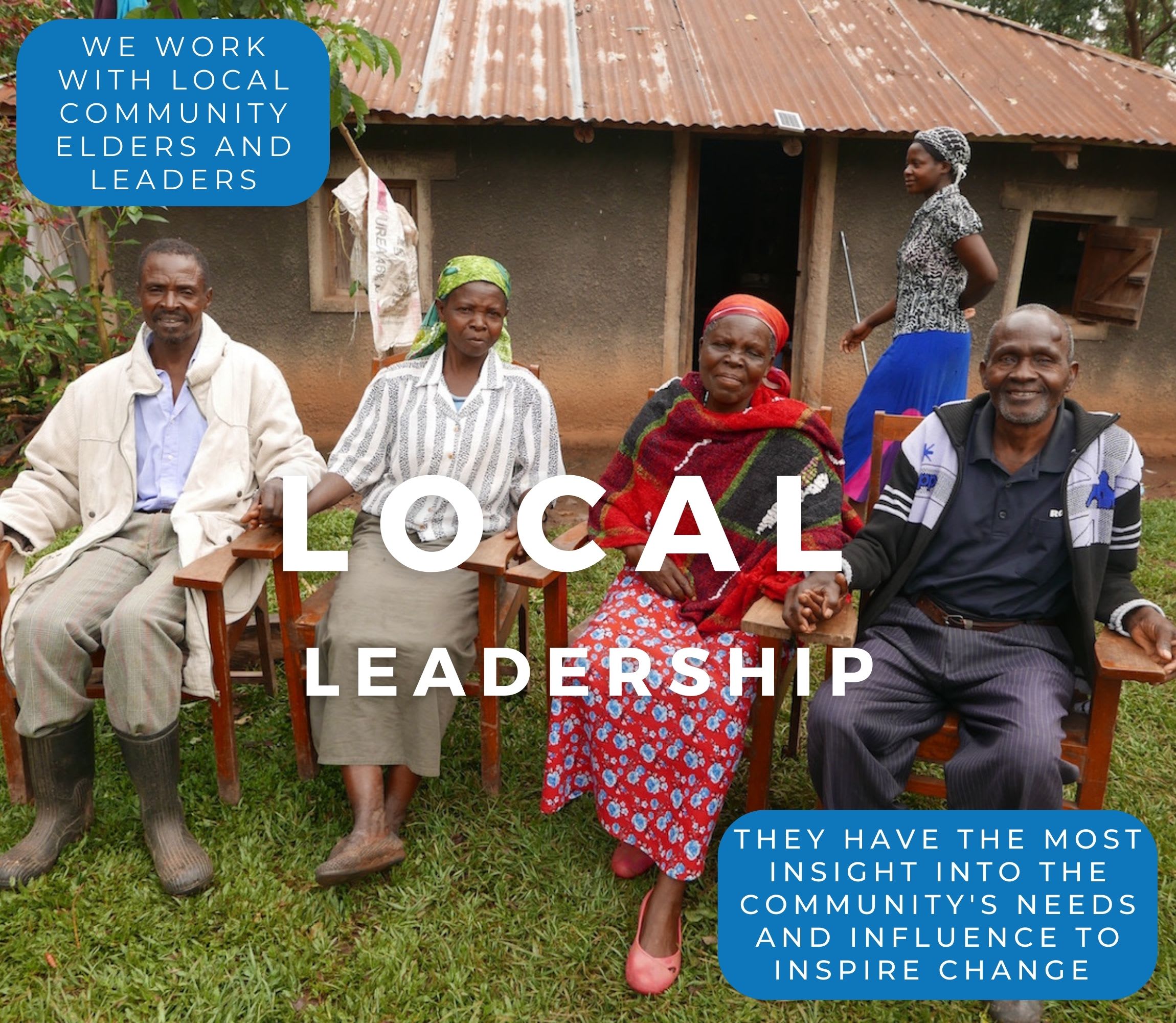
Returning to a community where we previously implemented a water project is not just a matter of maintenance; it stays true to our commitment to sustainability. Our technical experts worked with the local community to identify their current needs and decided to drill a well.
Reinvestment
While the original project provided critical access to safe water, things like changing environmental conditions, population growth, and infrastructure wear have put that access at risk. Reinvesting now ensures that progress is not lost and that the school continues to thrive with reliable, clean water. We are committed to supporting lasting, reliable solutions that honor the trust placed in us by the people who depend on this essential resource every day.
Once this plan is implemented, the school will once again have access to safe drinking water in quality and quantity.
School Education & Ownership
Hygiene and sanitation training are integral to our water projects. Since this school has previously received hygiene training, we will conduct a refresher tailored to this school's specific needs and the new students in attendance.
We will check on the previously established student health club, composed of elected student representatives and a teacher. These clubs promote hygiene practices schoolwide and keep handwashing stations well-stocked. This student-led model encourages a sense of ownership and responsibility.
Safe water and improved hygiene habits foster a healthier future for everyone in the school and the surrounding community.