 Protected Dug Well
 Rehabilitation Project











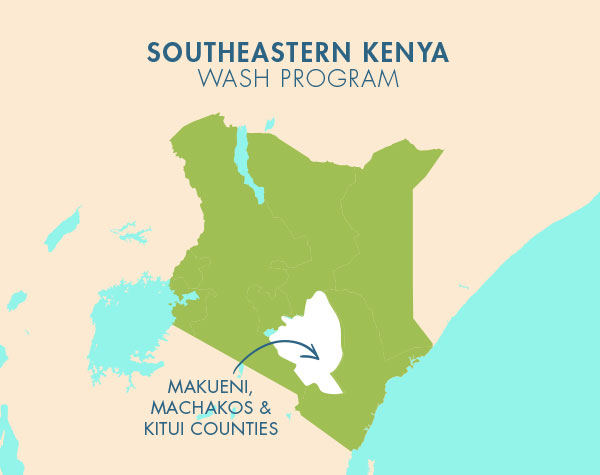
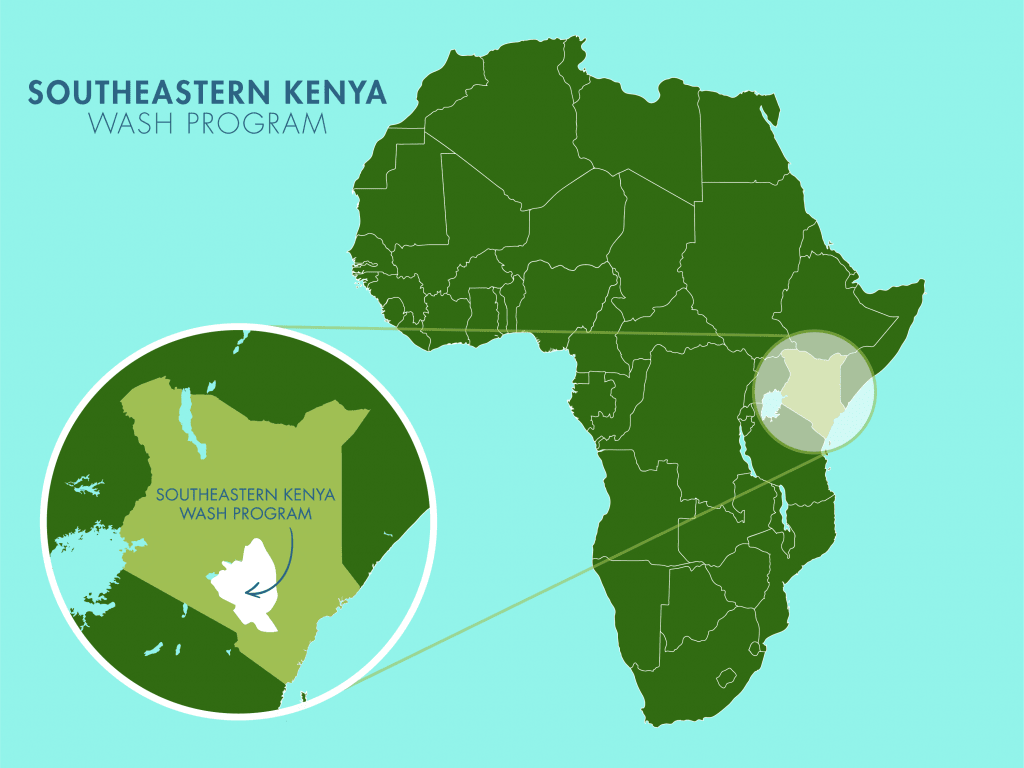
Sixty-five-year-old Syombua Katwe is a farmer in Katuva Community, and for as long as she can remember, getting water has meant a long, punishing walk. The scoop hole her family depends on sits across terrain that is unkind in almost every direction — steep slopes and stretches of bare, dusty, rocky ground that force her to carry heavy containers over pathways where a slip can mean injury.
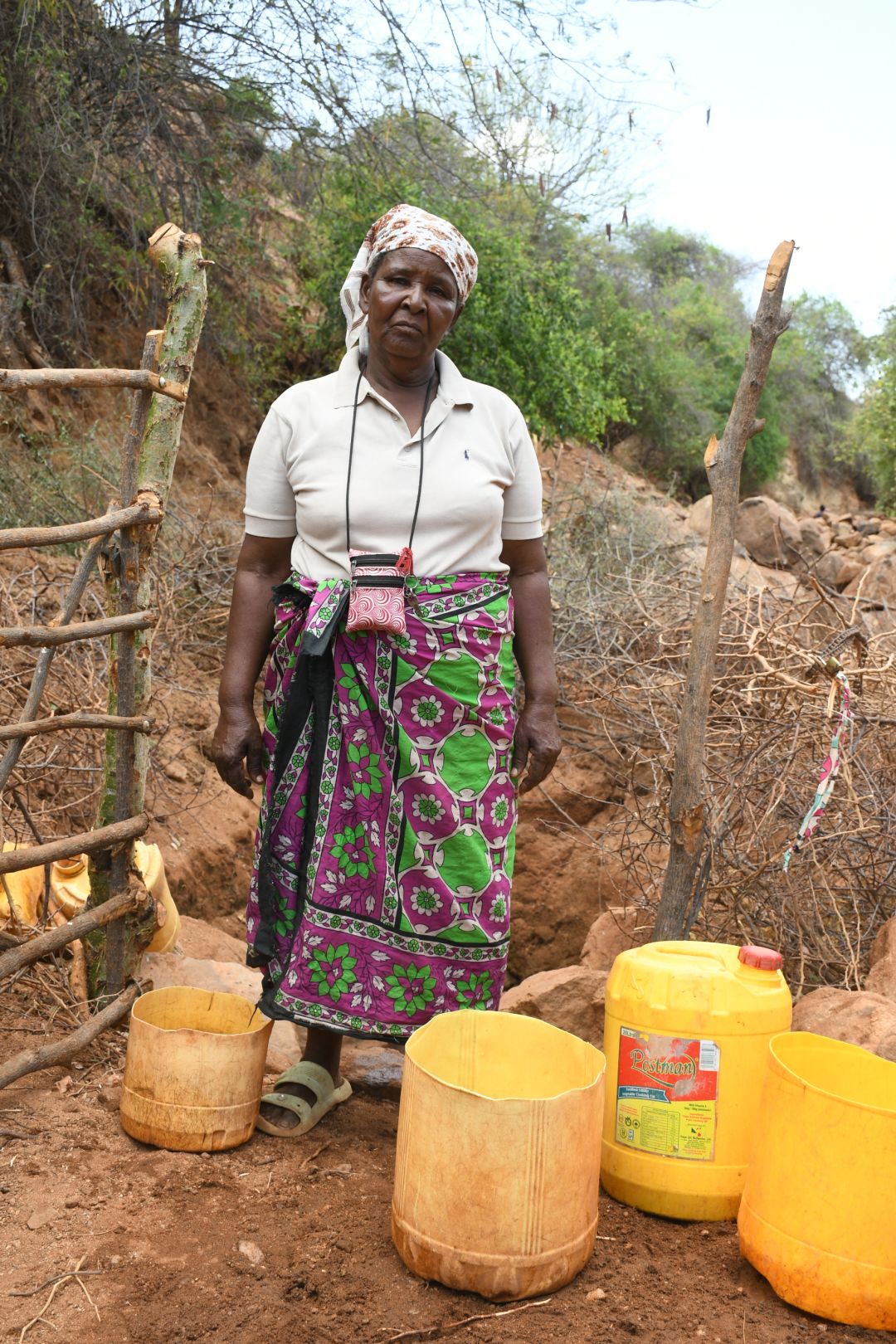
"I am concerned because the scoop hole is located far from my home, and I have to walk long distances across rocky, dusty terrain while carrying heavy containers of water," she said. "Since I do not have a donkey to help transport water, I carry it myself, which has contributed to persistent back pain."
The round trip takes roughly three hours, and even then, long queues at the water point mean she can only manage the journey once or twice a day. "We can only fetch water once or twice a day because of the long queues at the water point and the long distances involved when trying to fetch water," she explained.
The water waiting for her at the end of that walk offers little relief. Though the scoop hole is fenced with thorns, animal waste is visible around it, and dust and waste seep easily into the water below, leaving it saline, brownish, and foul-smelling — and, most days, unsafe to drink.
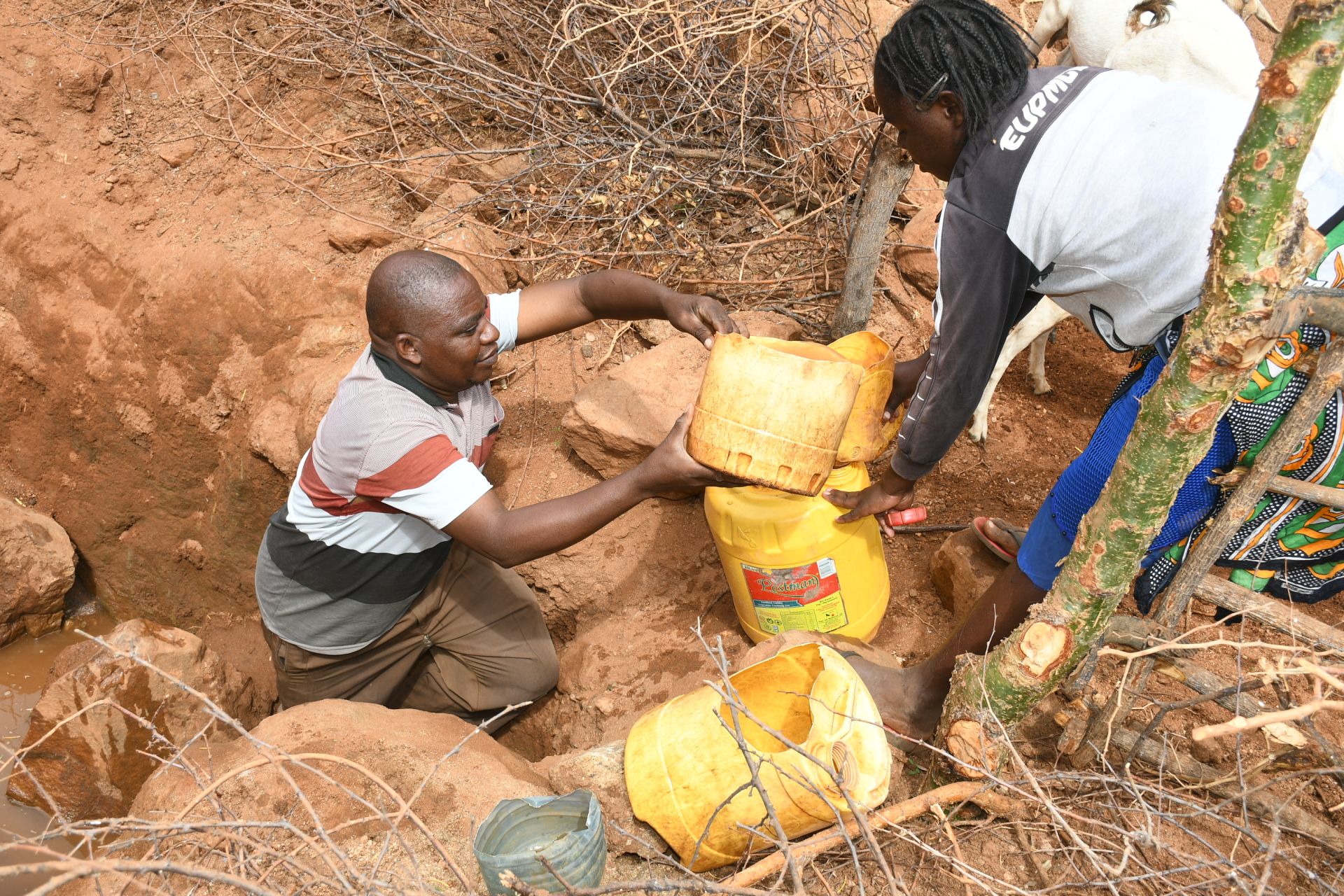
Community member must stand IN the scoop hole to reach the contaminated water.
"Recently, I suffered from severe stomach pains and diarrhea after drinking water from the scoop hole. The water looked dirty, but we had no other source to depend on. I became very weak and could not carry out my daily chores or work on my farm," Syombua said. "On another occasion, a member of my family was diagnosed with typhoid, and the illness caused a lot of worry and hardship because we had to look for money for treatment. These experiences are painful because we know the water is unsafe, but we have no alternative source."
Treating that illness comes at a real cost to her. "The cost of consultation, medication, and transport takes a significant portion of our income," she said. "Since most of us depend on small-scale farming in an area frequently affected by drought, raising money for treatment is often difficult and leaves less money for food, farming, and other household needs."
And the toll isn't only financial. "When I become sick, I am unable to work on my farm or carry out household responsibilities. This reduces my productivity and affects my family's food supply and income," she added. "It is very discouraging and worrying to drink water knowing that it may make me or my family sick. Water is supposed to sustain life, yet the only source available to us often exposes us to diseases and discomfort."
Syombua is far from alone in this. She is one of 502 people who rely on the same scoop hole, along with an estimated 157 more from a neighboring community who share the source.
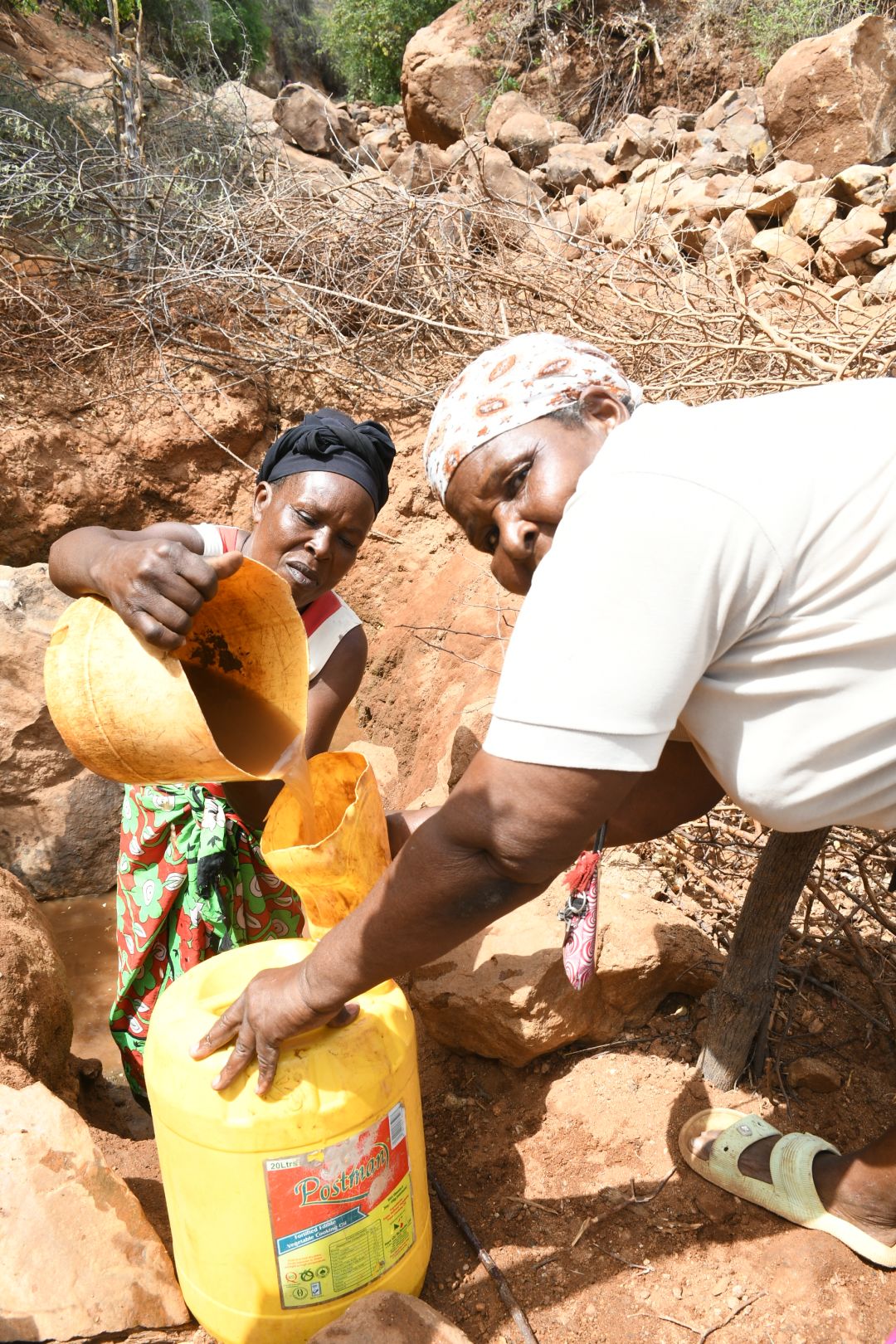
The hours lost to the walk — often more than three a day — eat into farming, income, and family time that Syombua feels the absence of keenly. "If I did not spend several hours each day fetching water, I would dedicate more time to farming and tending to my crops," she said. "I would also participate more actively in community activities and spend more time with my family. At my age, the long walks to collect water are exhausting, and having water closer to home would allow me to use my energy on more productive and meaningful activities."
"A new water point would provide cleaner and safer water, reducing the risk of diseases such as typhoid, amoeba, diarrhea, and other waterborne infections," she said. "It would also reduce the distance we travel to fetch water, lowering the risk of injuries, exhaustion, and chronic pain caused by carrying heavy loads. My family would enjoy better health, improved hygiene, and greater peace of mind knowing that safe water is readily available."
It would also free up time and energy for the things Syombua wants for her community — helping it reach and maintain Open Defecation Free status, expanding vegetable farming, and growing a tree nursery to support ongoing planting and conservation.
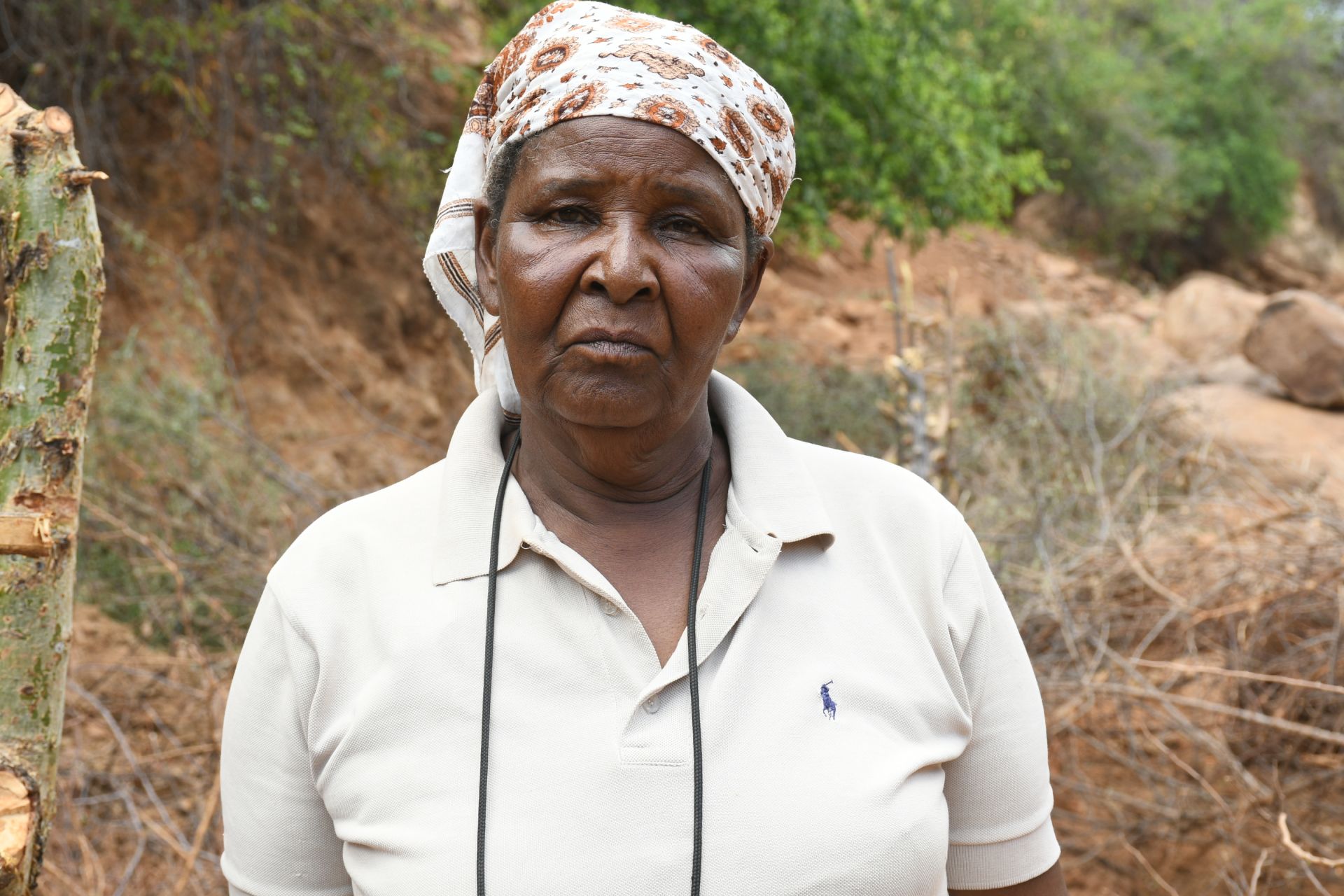
For her, the reason for all of it comes back to something simple. "To me, water truly is life because it is essential for everything I do," she said. "My family needs water for drinking, cooking, cleaning, sanitation, and maintaining good health. Water is also important for farming, growing food, and caring for livestock. Without reliable access to safe water, it becomes difficult to stay healthy, produce enough food, and live with dignity. Having sufficient water would improve our health, livelihoods, and overall quality of life."
Solving the water crisis in this community will require a multifaceted system that will work together to create a sustainable water source that will serve this community for years to come.
Steps Toward a Solution
Our technical experts worked with the local community to identify the most effective solution to their water crisis. Together, they decided to construct a protected dug well and sand dam.
Protected Dug Well Near A Sand Dam
Once a sand dam is installed and has time to mature by gathering sand and silt, groundwater increases significantly in the entire area surrounding the project. This provides a reliable source of groundwater that wasn’t possible before. As a result, wells can be constructed to take advantage of the water stored and filtered in the collected sand.
During the construction of the protected dug well, we will build a platform for the well and attach a hand pump. The community will gain a safe, enclosed water source capable of providing approximately five gallons of water per minute.
This protected dug well will be connected to a sand dam to obtain water.
Community Education & Ownership
Hygiene and sanitation training are integral to our water projects. Training is tailored to each community's specific needs and includes key topics such as proper water handling, improved hygiene practices, disease transmission prevention, and care of the new water point. Safe water and improved hygiene habits foster a healthier future for everyone in the community.
Encouraged and supported by our team's guidance, the community elects a water user committee representative of its diverse members. This committee assumes responsibility for maintaining the water point, organizing community efforts, and gathering fees to ensure its upkeep.