 Protected Dug Well
 Rehabilitation Project









The 450 community members who call the Syokithusa Community home must walk several kilometers along steep, rocky, dusty roads to collect water essential for their survival. Each time they need water, it is a grueling three-hour trip, most often taken by women, children, and the elderly, leaving them physically exhausted. One trip a day is all most can manage, which means there is a persistent water crisis that forces daily rationing.
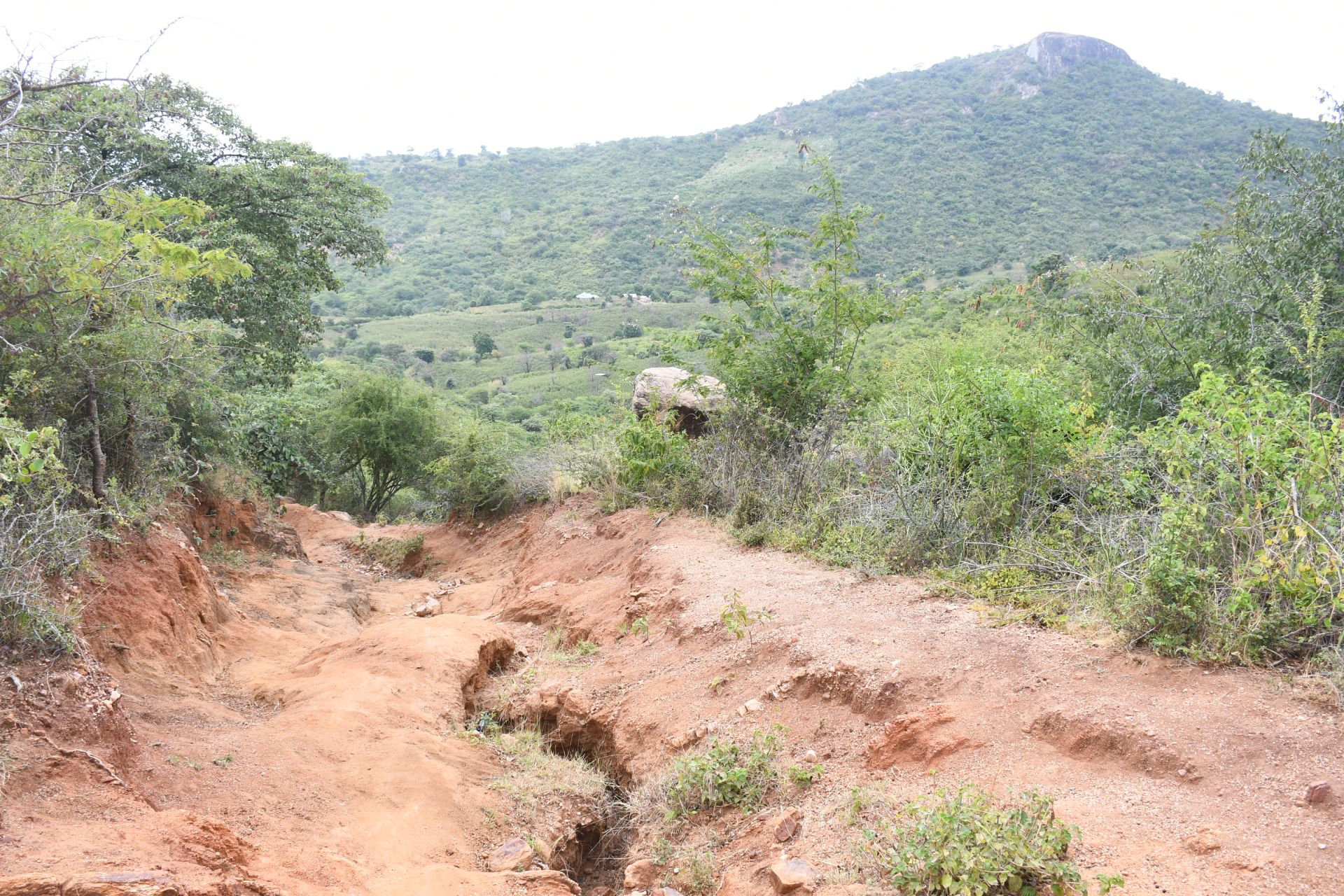
Field Officer Alex Koech described the hardship. "The long distances to the scoop holes and the slow recharge rate during dry periods result in lengthy queues, forcing households to spend several hours each day collecting water. This reduces the time available for farming, income-generating activities, childcare, education, and community development initiatives. Because water is scarce, households prioritize drinking and cooking, leaving insufficient water for hygiene, sanitation, livestock, and small-scale food production."
Their water sources - scoop holes dug in dry river beds produce water that is brown and unpleasant in taste and smell. But without an alternative, people must resort to consuming the water even though it puts their health at risk.
16-year-old John wants to be a doctor someday, but with the daily pressure of collecting water, which consumes most of his time, he has little time or energy left to devote to his studies.
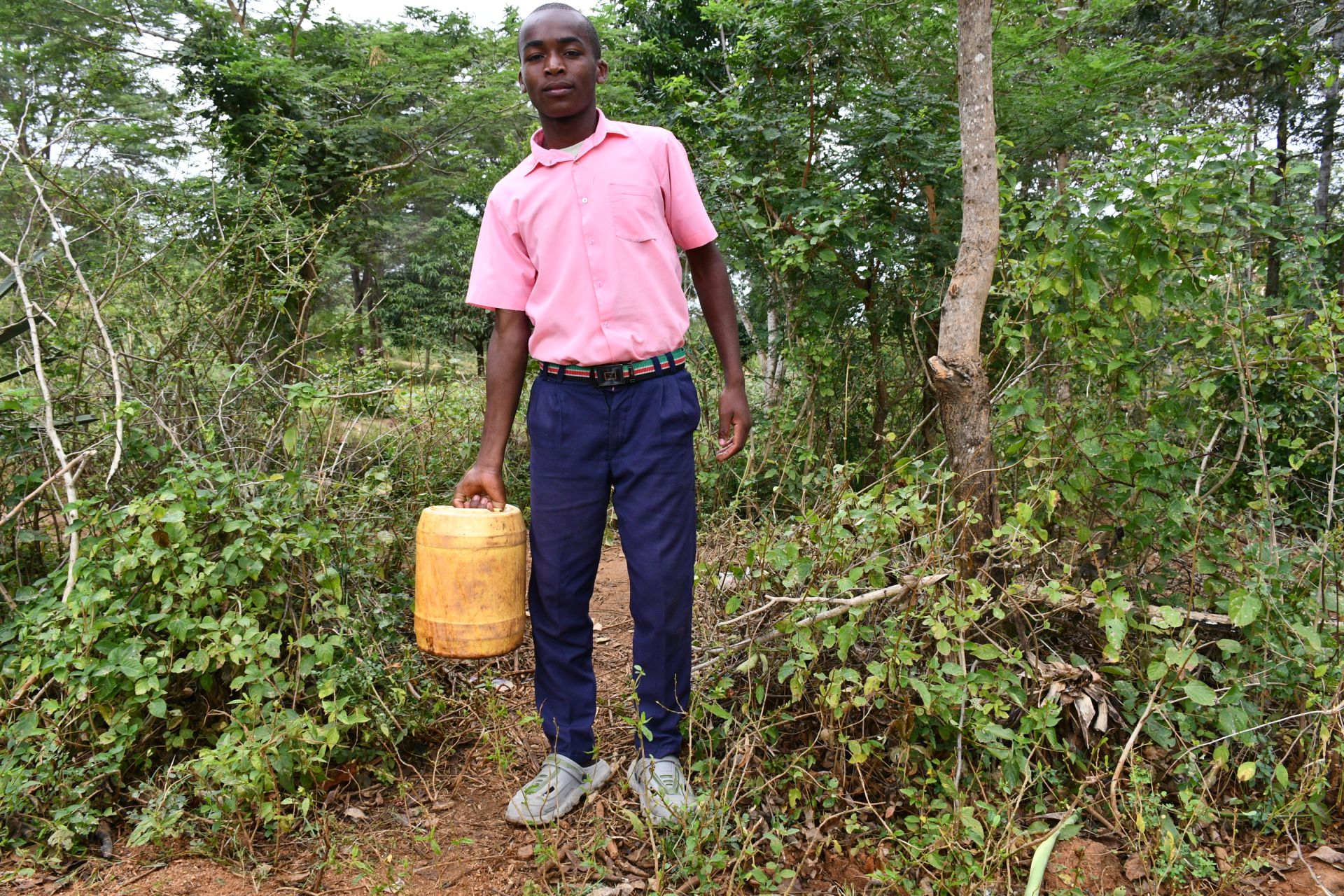
John.
"Fetching water takes a long time because the scoop holes are several kilometers from our home, and I have to walk across steep, rocky hills to reach them. During the dry season, the scoop holes recharge very slowly, so many people queue for hours waiting for enough water to collect. By the time I return home, I am usually very tired," John said.
"I usually fetch water in the evenings, on weekends, and during school holidays. After carrying heavy jerrycans over long distances, I am often too tired to study or complete my homework. This affects the amount of time I can spend revising for exams and makes it harder to perform as well as I would like in school.

The water source.
"If I didn't have to spend so much time fetching water, I would use that time to study, complete my homework, and prepare for my exams. I also enjoy playing football with my friends, but I rarely have enough free time. Having water nearby would allow me to focus more on my education and work towards my dream of becoming a doctor.
John longs to have a brighter future, but without a nearby, reliable water source, that dream seems impossible.

John collecting water.
"I understand that water is essential for my family, so I always go when I am asked. However, I often feel tired and discouraged because I know it will take several hours, and I will have less time to study or rest. I hope that one day we will have a reliable water source nearby so that children like me can spend more time learning and preparing for a better future," John said.
"My dream is to become a doctor so that I can help people in my community live healthier lives," John said. "I know I need to work hard in school to achieve that goal, and I believe that having reliable water nearby will give me more time and energy to concentrate on my studies.
Solving the water crisis in this community will require a multifaceted system that will work together to create a sustainable water source that will serve this community for years to come.
Steps Toward a Solution
Our technical experts worked with the local community to identify the most effective solution to their water crisis. Together, they decided to construct a protected dug well and sand dam.
Protected Dug Well Near A Sand Dam
Once a sand dam is installed and has time to mature by gathering sand and silt, groundwater increases significantly in the entire area surrounding the project. This provides a reliable source of groundwater that wasn’t possible before. As a result, wells can be constructed to take advantage of the water stored and filtered in the collected sand.
During the construction of the protected dug well, we will build a platform for the well and attach a hand pump. The community will gain a safe, enclosed water source capable of providing approximately five gallons of water per minute.
This protected dug well will be connected to a sand dam to obtain water.
Community Education & Ownership
Hygiene and sanitation training are integral to our water projects. Training is tailored to each community's specific needs and includes key topics such as proper water handling, improved hygiene practices, disease transmission prevention, and care of the new water point. Safe water and improved hygiene habits foster a healthier future for everyone in the community.
Encouraged and supported by our team's guidance, the community elects a water user committee representative of its diverse members. This committee assumes responsibility for maintaining the water point, organizing community efforts, and gathering fees to ensure its upkeep.