 Protected Dug Well
 Rehabilitation Project

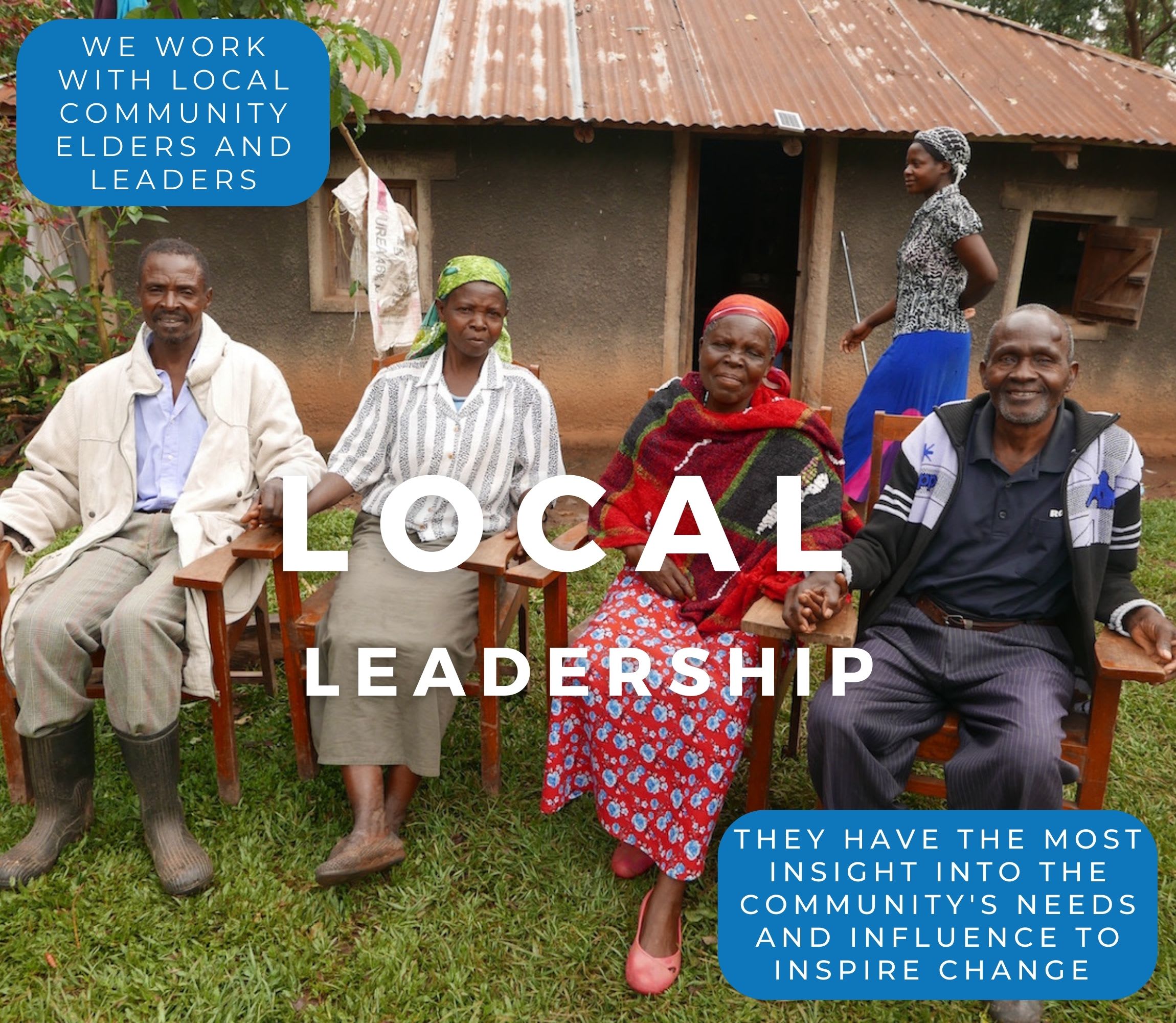










The 250 community members who live in the Kavililo Community struggle to collect enough water to meet their daily needs. They must walk to faraway water sources, trying to find enough water to survive.
Their primary water source, a dug well, is a two-hour trip away, and the next choice, an open earth dam, is a three-hour trip.
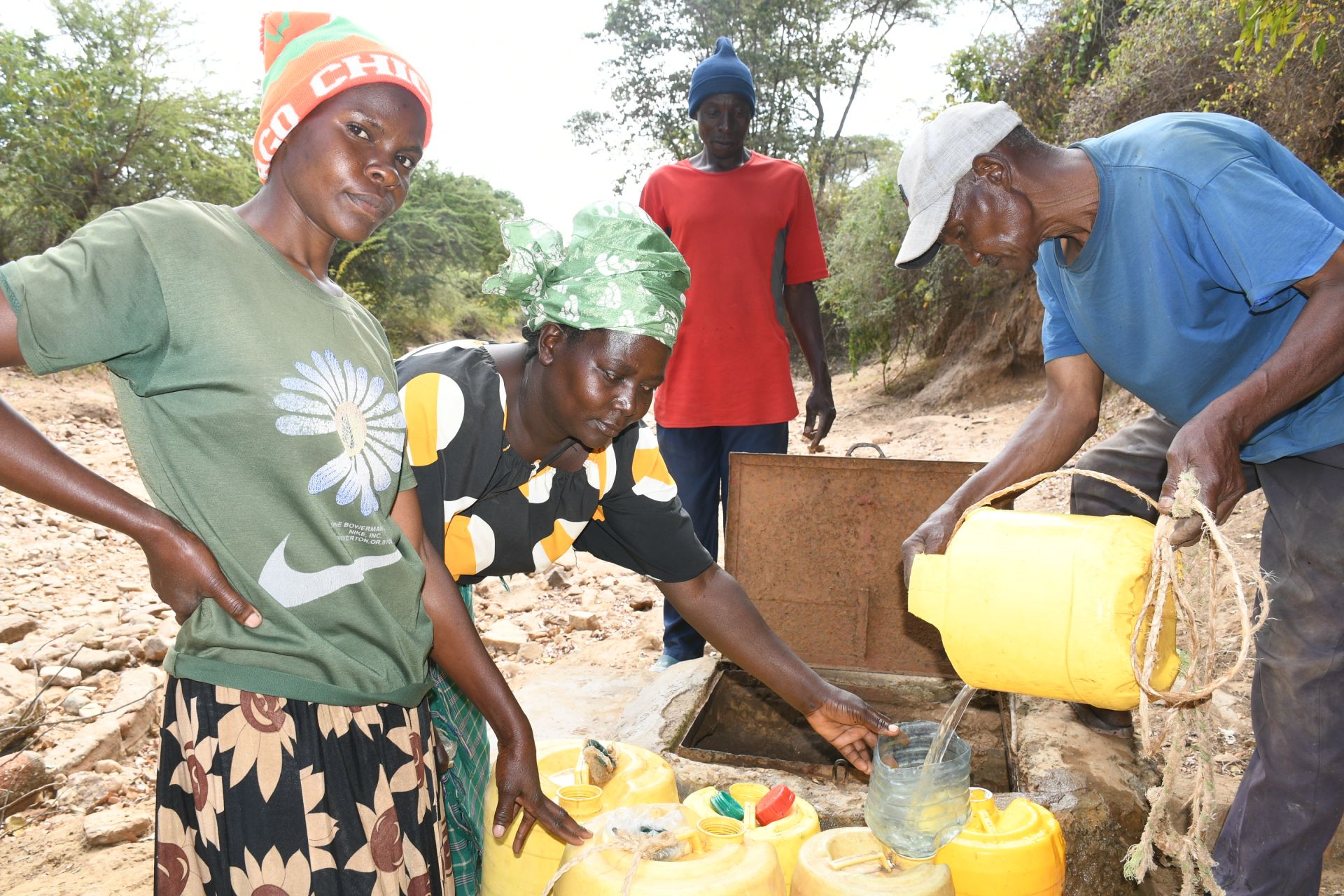
People collecting water from the faraway dug well.
Field Officer Alex Cheruiyot described the community's plight. "During periods when the dug wells have little or no water, residents may spend up to four hours fetching water from the earth dam. Because of this burden, households can generally make only two water-fetching trips a day and must ration the water they bring home, prioritizing drinking and cooking over handwashing, cleaning, and other hygiene needs. The time spent fetching water reduces the time available for farming, household activities, and other livelihood opportunities."
When people do not have the time or energy to make the lengthy, demanding trips, they resort to paying for others to collect water for them, but only if they can afford it. Some do not have that luxury or must make huge sacrifices for it to happen.
Sixteen-year-old Monica is familiar with the daily hardship of having to collect water so far away.
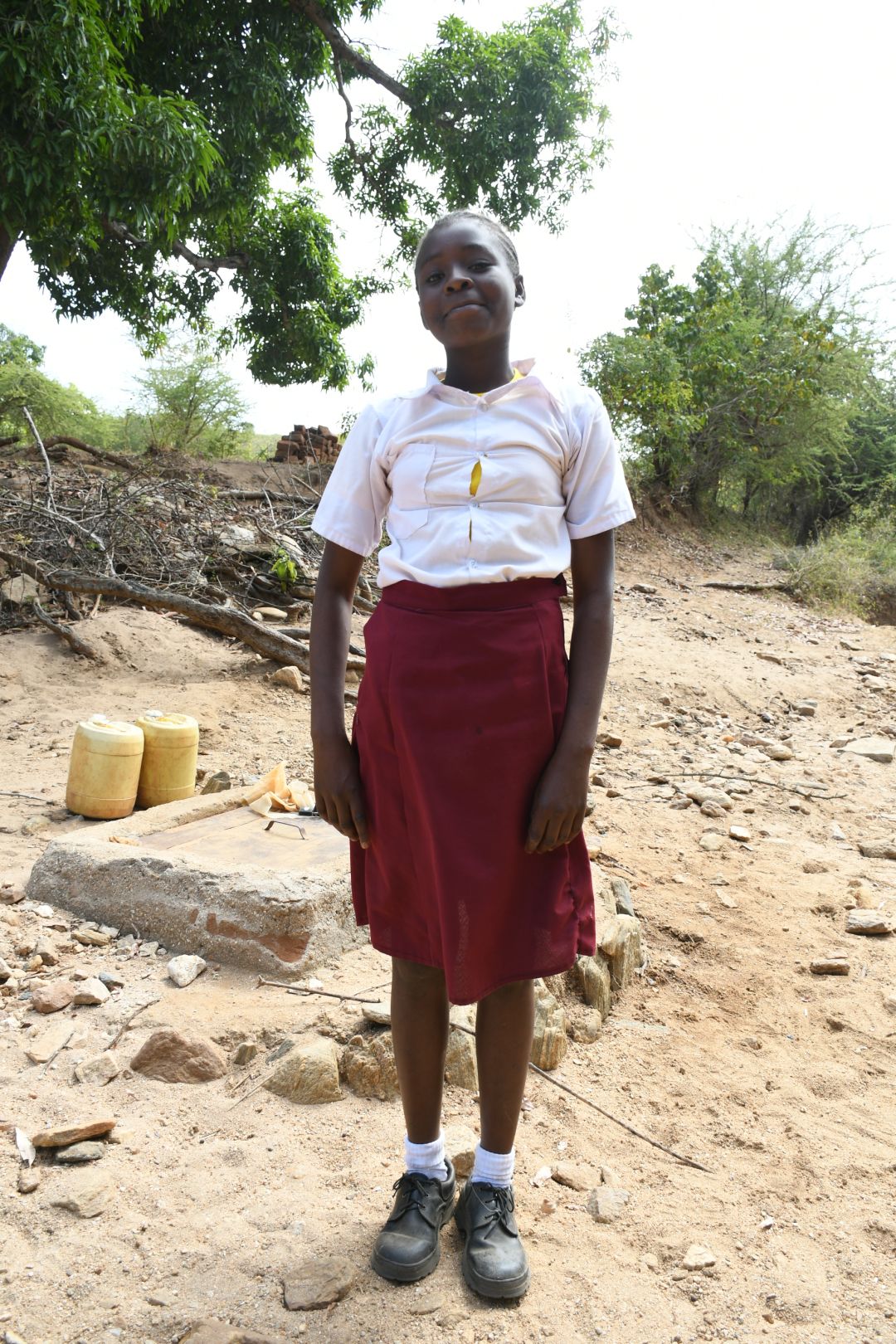
Monica.
"The main problem is the distance and the difficult terrain. We walk for about two hours to the dug wells, and the roads and paths are steep, rocky, and dusty. During drought, when the wells have little water, we have to go to the earth dam, which can take about four hours. Carrying heavy jerrycans over the hills also makes the journey exhausting," said Monica.
"I feel tired and sometimes frustrated, especially when I know how far we have to walk and how difficult the journey can be. I wish I could use that time to study, rest, or do something that brings me closer to my dream of becoming a teacher," she lamented.

Monica collects water.
"When I spend hours fetching water after school, I have less time and energy to study and do homework. Sometimes I reach home tired and cannot study as effectively as I would like. I worry that if this continues, it could affect my exam performance and make it harder to achieve my dreams," she continued.
"I hope to become a teacher. I want to complete my education, perform well in my exams, and eventually help other children learn. I know I have to work hard to achieve this, which is why having enough time to study is very important to me," Monica wisely shared.
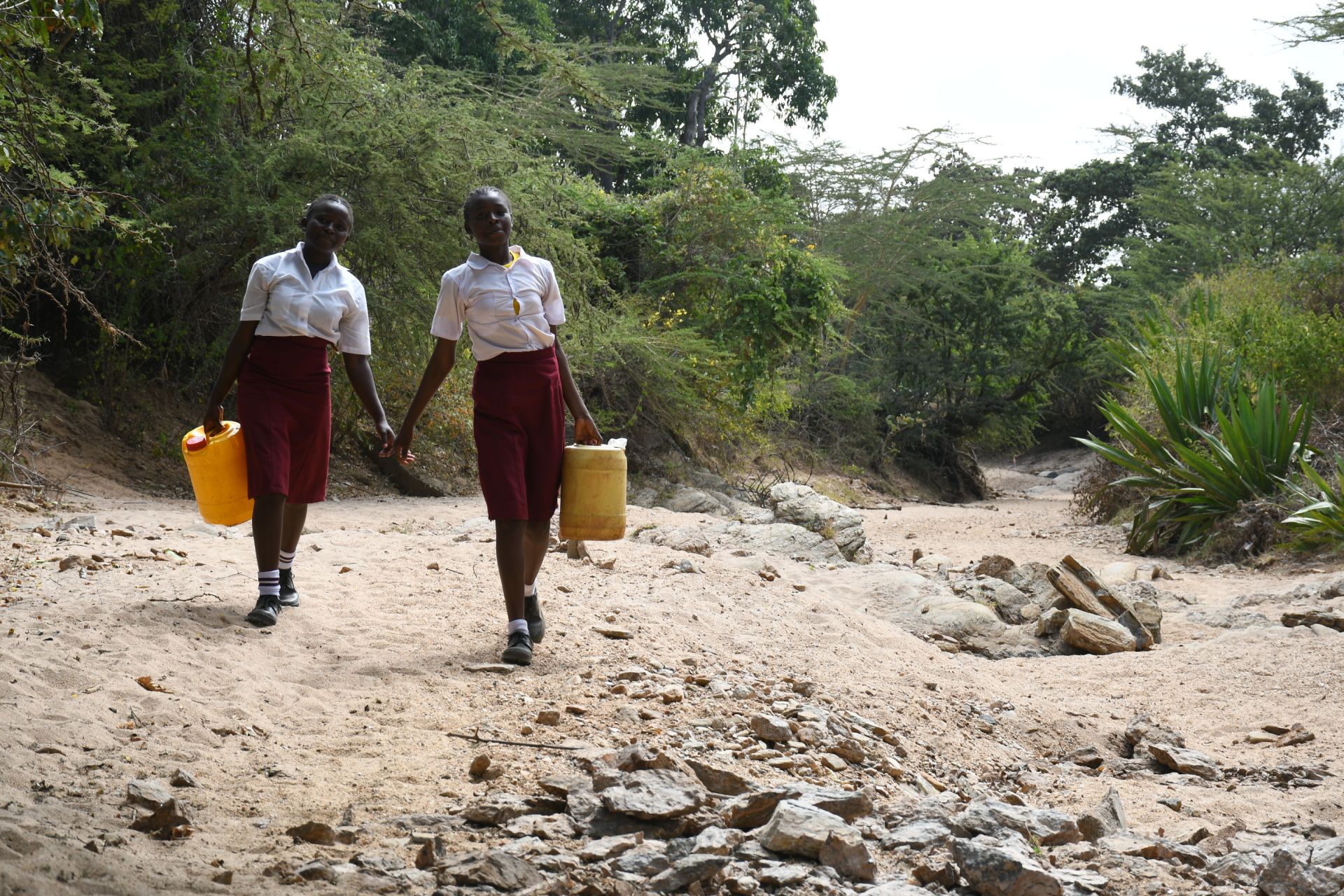
Carrying water home.
Monica needs a nearby water source that will give her the freedom to study and build a brighter future, not just for herself but so she can help others.
Solving the water crisis in this community will require a multifaceted system that will work together to create a sustainable water source that will serve this community for years to come.
Steps Toward a Solution
Our technical experts worked with the local community to identify the most effective solution to their water crisis. Together, they decided to construct a protected dug well and sand dam.
Protected Dug Well Near A Sand Dam
Once a sand dam is installed and has time to mature by gathering sand and silt, groundwater increases significantly in the entire area surrounding the project. This provides a reliable source of groundwater that wasn’t possible before. As a result, wells can be constructed to take advantage of the water stored and filtered in the collected sand.
During the construction of the protected dug well, we will build a platform for the well and attach a hand pump. The community will gain a safe, enclosed water source capable of providing approximately five gallons of water per minute.
This protected dug well will be connected to a sand dam to obtain water.
Community Education & Ownership
Hygiene and sanitation training are integral to our water projects. Training is tailored to each community's specific needs and includes key topics such as proper water handling, improved hygiene practices, disease transmission prevention, and care of the new water point. Safe water and improved hygiene habits foster a healthier future for everyone in the community.
Encouraged and supported by our team's guidance, the community elects a water user committee representative of its diverse members. This committee assumes responsibility for maintaining the water point, organizing community efforts, and gathering fees to ensure its upkeep.