
Project Status


Project Type:  Protected Spring

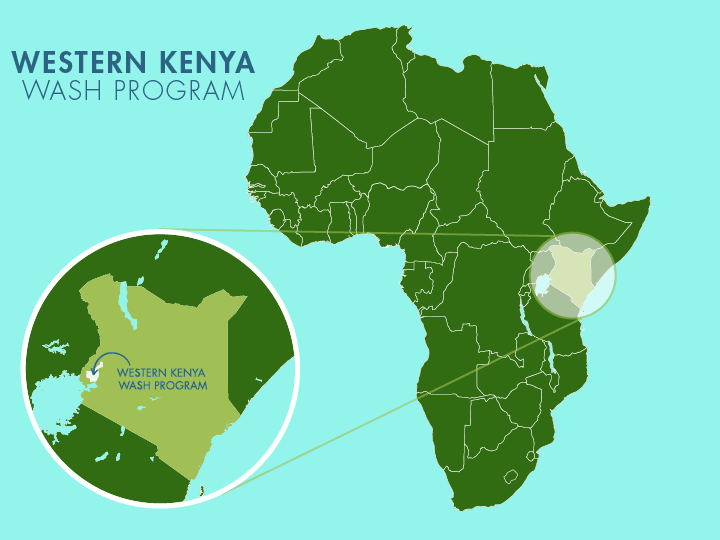
Regional Program: Western Kenya WaSH Program

Impact: 800 Served

Project Phase:  In Service - Jan 2026

Functionality Status:  Functional

Project Features


Click icons to learn about each feature.


The Shivotio Community's 800 residents struggle to access sufficient water as their broken-down water source, Kambongo Spring, is extremely overcrowded. The intense wait times leave the community unity as broken as their water source.

Community members crowd the waterpoint.

Field Officer Lillian Achieng' described the state of the spring. She said, "The waterpoint is in [a] terrible state. The place is muddy, and no concrete is visible at the drawing point. The flooding water at the drawing point worsens the situation; users have to step [into] the water. The spring box has been tampered with by stepping on [it], causing the water to divert."

The dilapidated spring.

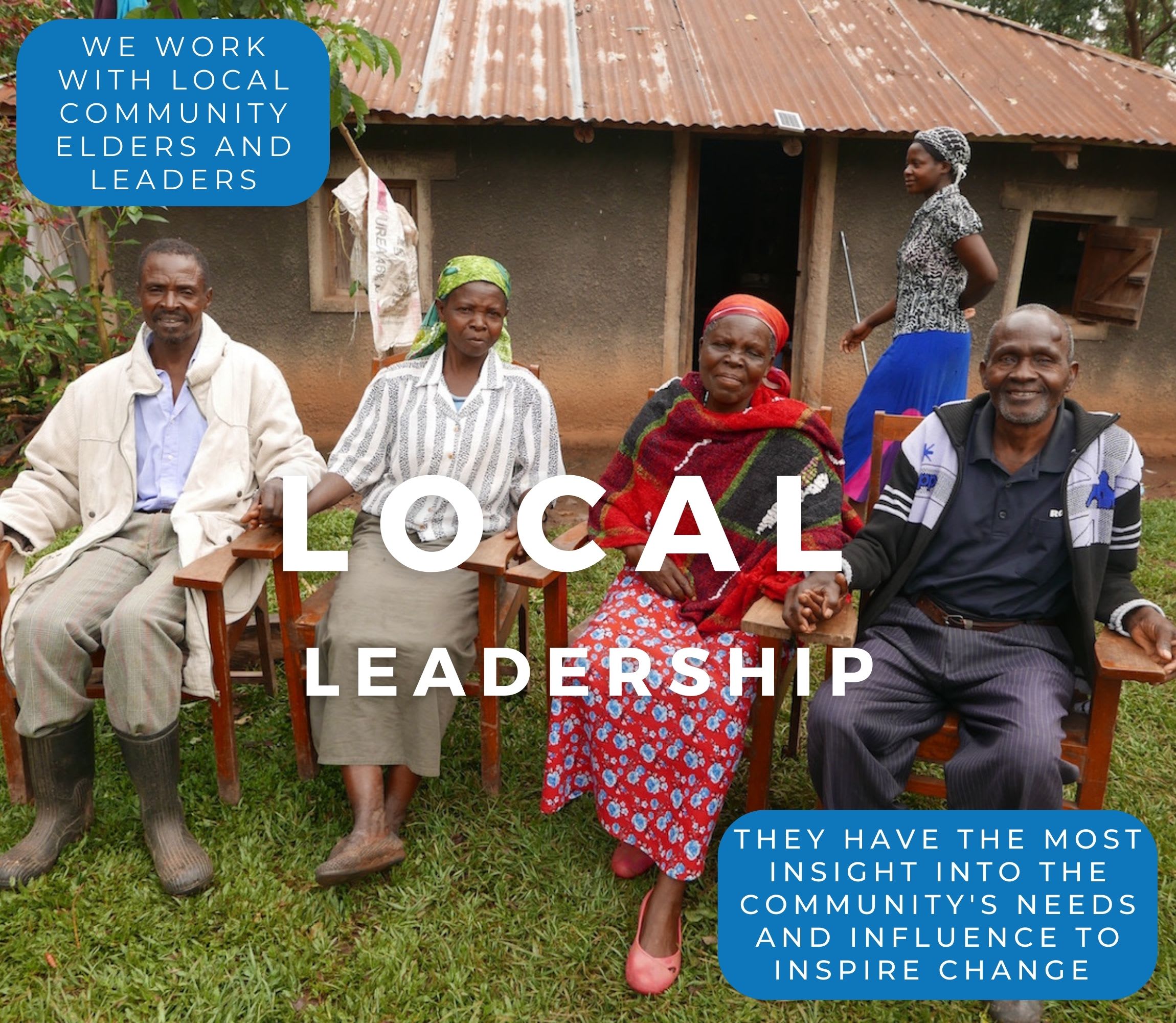
In Western Kenya, community is everything. People rely on each other and need and support one another. So when there is discord, it not only causes conflict but also breaks down the ecosystem that holds everything in place and helps them thrive.

"Fights have been witnessed at this waterpoint. Our interviewee, Rose, attests to having thrown away a water user's jerrycans who had attempted to go before her. This was during the dry season, and the spring was overcrowded. Bad blood has been created due to [these] fights, causing the village elders to intervene to restore peace," continued Lillian.

These aren't petty disagreements because someone wanted to go first. Every moment spent waiting to collect water is time not spent on livelihoods and education. Every second wasted collecting water from the spring steals from their ability to improve their lives. People are tired and hungry and need water to function.

Rose in the spring.

50-year-old Rose Ayieta feels the tension acutely. She shared, "My children have had encounters with fellow children at the waterpoint. Adults have undermined them, pushed them back at the queue, and made them draw water after them, despite having arrived at the spring ahead of them."

Children playing.

But it's not just her children's safety that worries Rose. She fears for their health every day. The water they sacrifice so much for makes them sick often. This means expensive hospital trips and medications that they can't afford. It's the hardest place for a parent to be.

"My daughter had an excruciating headache, stomachache, nausea and chills. At first, I thought it was Malaria, so I took her to our nearby health center. Being a government institution, tests were done freely, and the results were negative. I took her back home, hoping that she would get better, not knowing [what] she was suffering from. Unfortunately, as I was still planning how to find more medical attention for her, the doctors went [on] strike country-wide," she shared.

"Rendered helpless, and my daughter's health deteriorating, I had no option but to run to the private hospital for help. The doctor suggested a test for typhoid. The test was [going] to cost me 600 Kenyan shillings. I had to ask for help from my relatives because I didn't have the money. The results came out positive. Trouble had not ended. The doctor prescribed medication that would cost another 700 Kenyan shillings. I am lucky that my daughter is well now, but it pained me so much to spend what I couldn't afford," Rose bravely continued.

"A lot of my farm work had to be postponed when I was running up and down to attend to my sick daughter. Weeds outgrew my plants, resulting in [a] poor harvest," she continued.

"Nothing hurts a mother more than seeing her very own suffer in pain caused by diseases. The fear of another one falling sick is always with me. I live a worried woman for the sake of my family."

Rose has big dreams of what she would do if she didn't have to spend so much time collecting water and worrying. She said, "Being a farmer, I would spend much of my time at the farm and also spare some to sell my produce at the market. When I am not on the farm, I would get ample time to spend with my children. They never get enough of me because I am ever engaged."

Rose dreams of clean water so her family can be safe and well provided for every day. She wants time to spend with her children, knowing they need as much from her emotionally as physically. Easy access to safe water would give Rose the tools needed to achieve her goals. She has the motivation; now she needs the means.

Steps Toward a Solution

Our technical experts worked with the local community to identify the most effective solution to their water crisis. They decided to safeguard the existing flowing spring.

Spring Protection
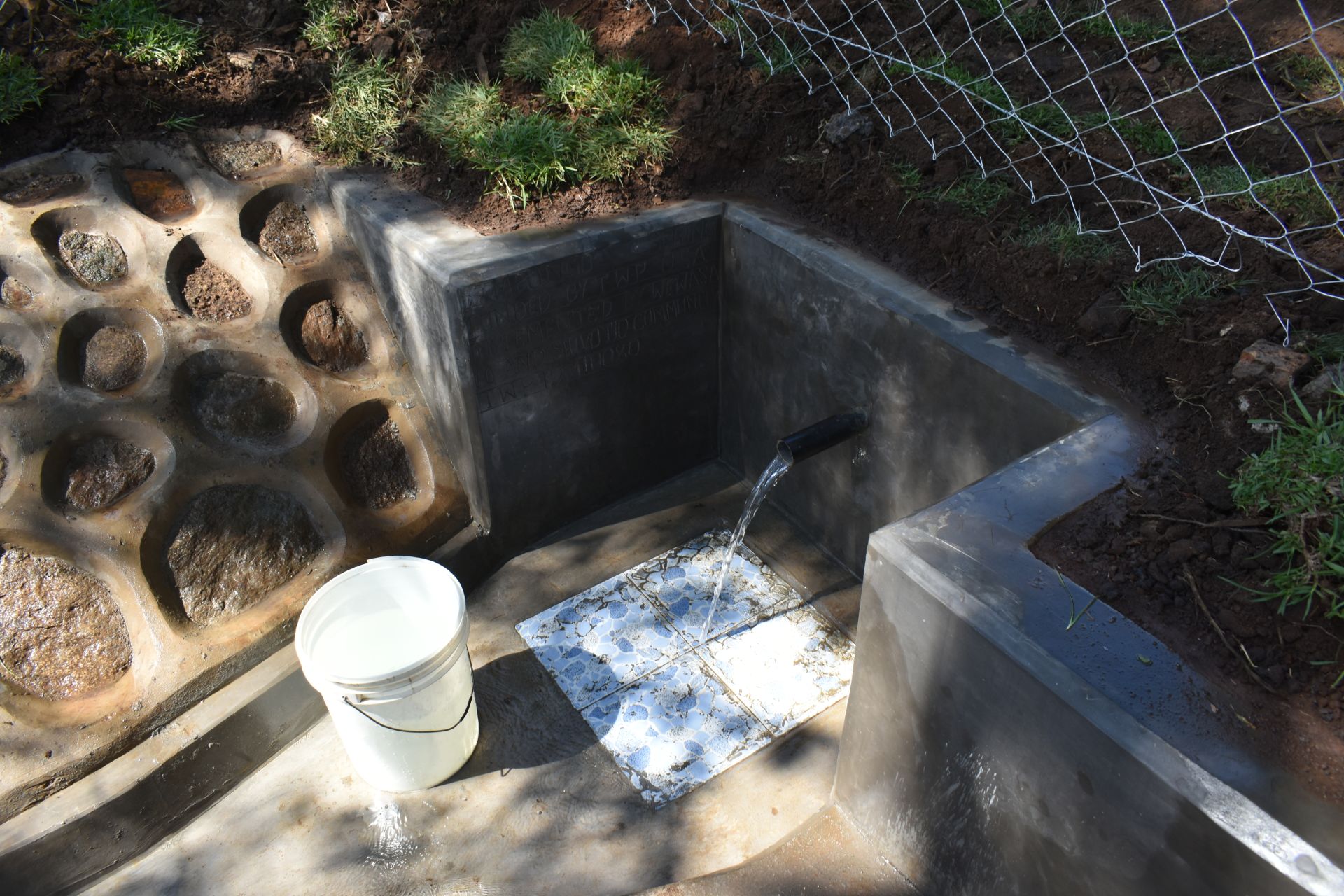
Springs are natural water sources that originate from deep underground. As water travels through various layers of the earth, it undergoes a natural filtration process, making it cleaner and safer to drink. To protect these spring sources from contamination, we construct a waterproof cement structure around layers of clay, stone, and soil. This design channels the spring water through a discharge pipe, facilitating easier, faster, and cleaner water collection.

Chlorine Dispenser
As an extra measure towards water quality safety, uniquely engineered chlorine dispensers are installed at all of our spring protection projects so community members can treat their water with pre-measured doses of chlorine. The chlorine treats any residual contamination and stays active for two to three days, ensuring water stays safe to use even when stored at home. Chlorine delivery and maintenance of the dispensers are part of our ongoing community support.

Community Education & Ownership
Hygiene and sanitation training are integral to our water projects. Training is tailored to each community's specific needs and includes key topics such as proper water handling, improved hygiene practices, disease transmission prevention, and care of the new water point. Safe water and improved hygiene habits foster a healthier future for everyone in the community. Encouraged and supported by the guidance of our team, a water user committee representative of the community's diverse members assumes responsibility for maintaining the water point, often gathering fees to ensure its upkeep.
Project Updates


December, 2025: Shivotio Community Spring Protection Complete!

Your contribution has made access to clean water for the Shivotio Community possible!

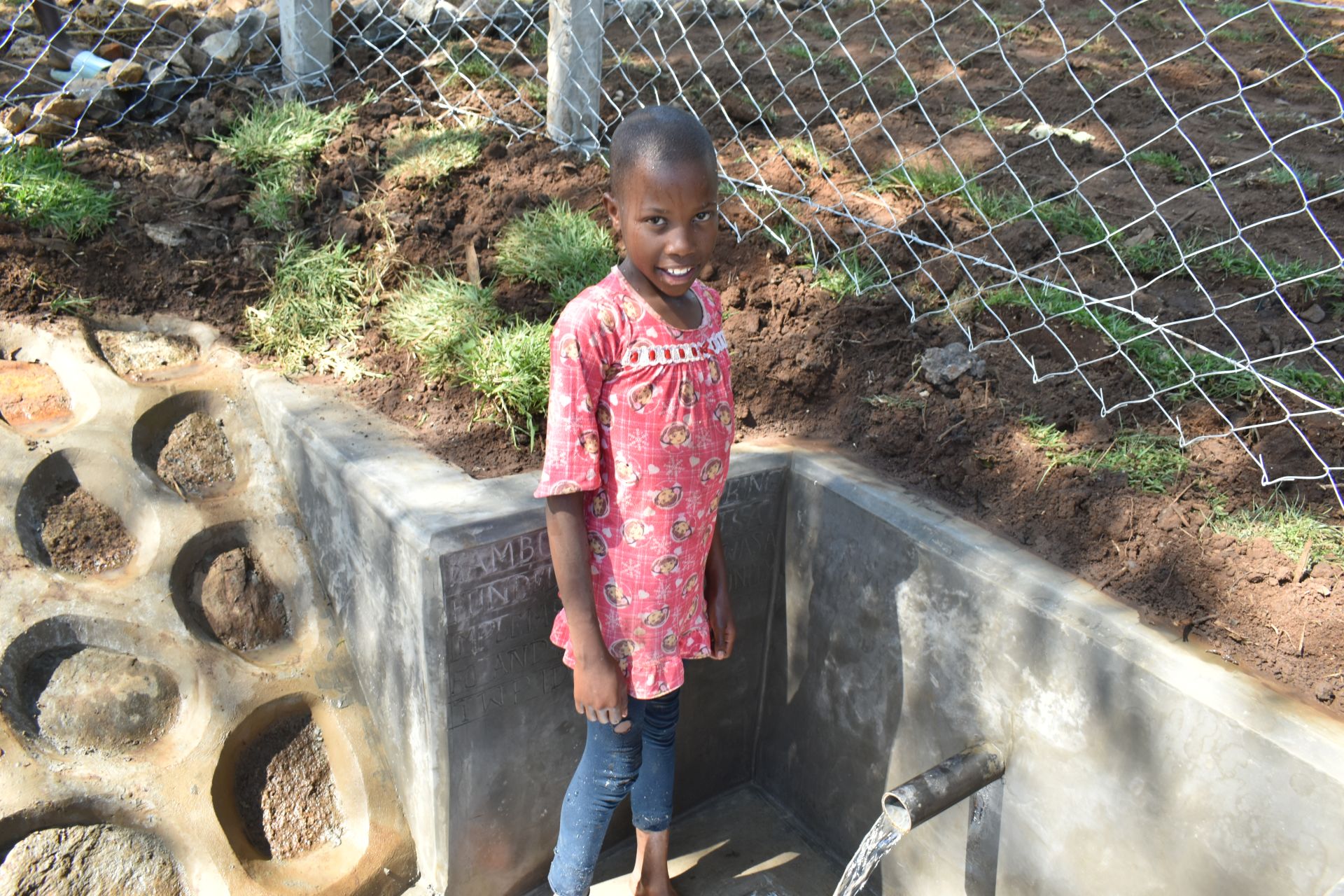
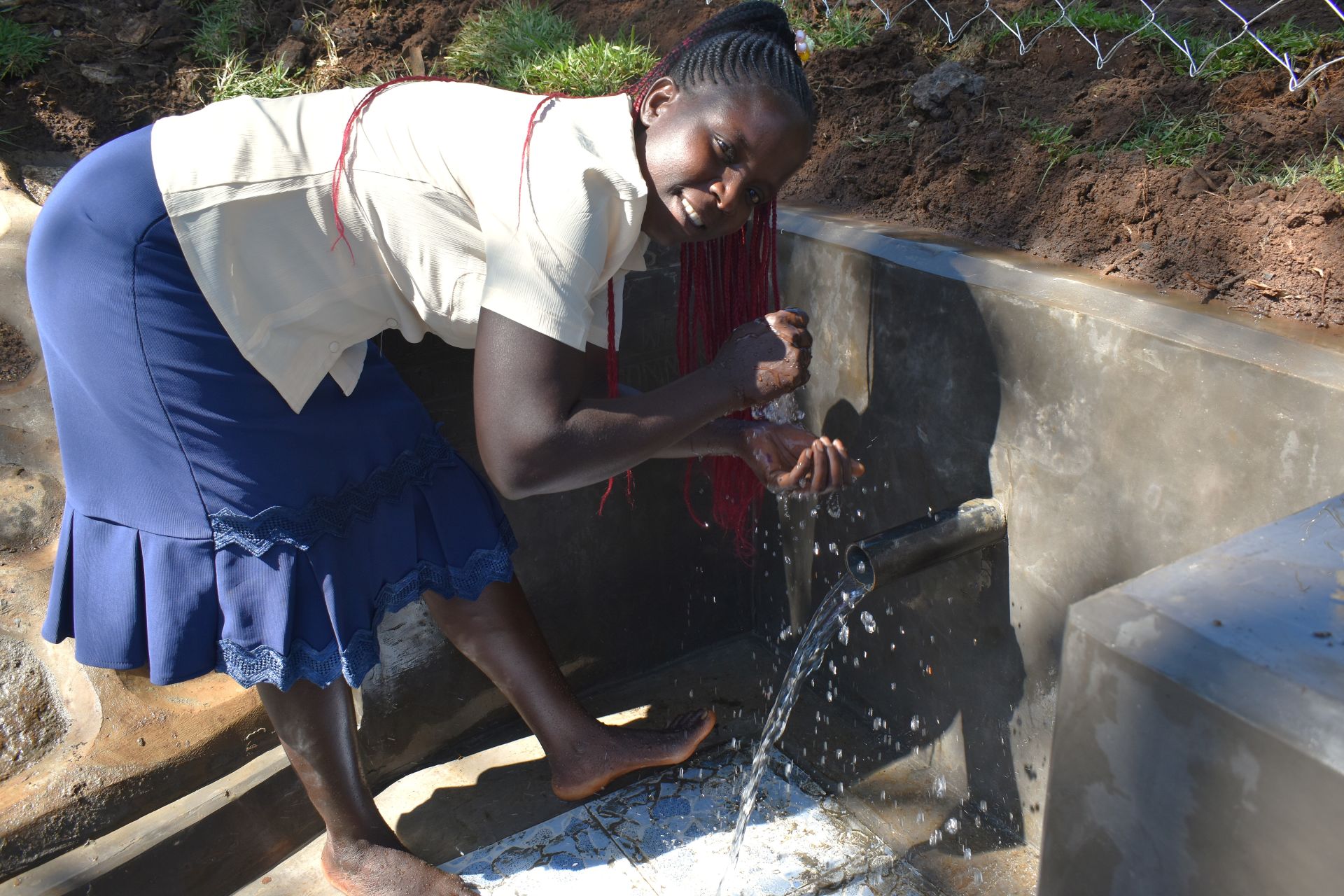
We transformed their spring into a flowing source of naturally filtered water. A chlorine dispenser is installed to provide added protection, and we trained the community on improved sanitation and hygiene practices. Together, these components will unlock the opportunity for community members to thrive!

"I strongly believe now that my dream of seeing my children through with their education will come true. My aim of keeping the cows was for them to multiply so that I can sell them to generate school fees for my children. With clean water, my animals will grow [to be] healthy, and I will accomplish this. My children's dreams of becoming meaningful people in the future will come true when they get an education," said 37-year-old farmer and father Enock Keyari.

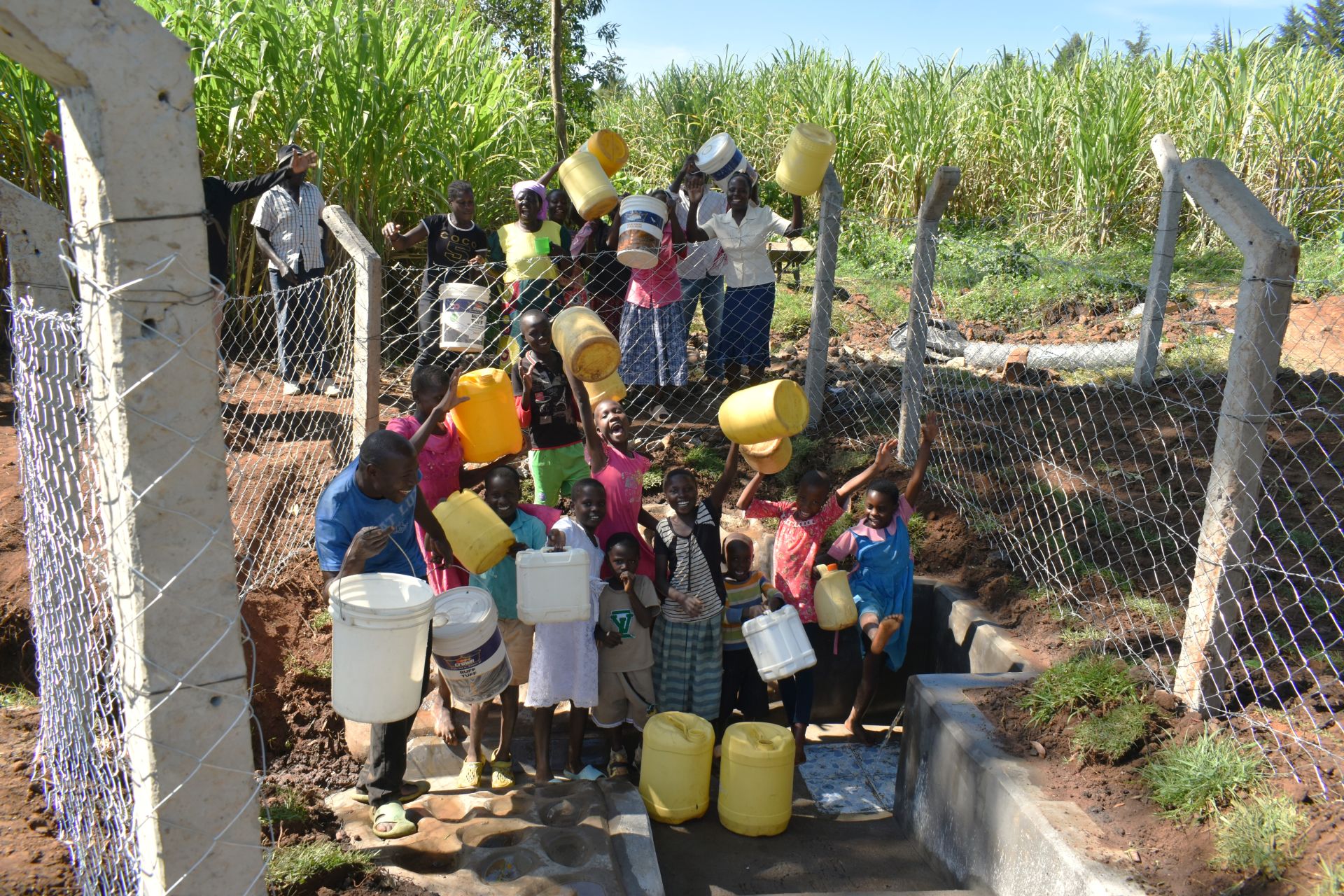
Children were just as excited as adults about clean water access!

"I'll be able to fetch water faster than before. This will give me plenty [of] time to play with my friends and also help my parents with other home chores," shared 10-year-old Mitchelle. "I will be a relaxed learner while at school. I'll be at peace at school (which already has a borehole done by The Water Project), knowing that I'm fetching water from a well-protected spring when I'm back at home. The thought of coming to a dirty, muddy waterpoint used to make my mind wander while at school, to [the] point that I could often lose concentration in class. Now I'll be fully concentrated on my studies."

Preparing for Spring Protection

Community members worked together to source all locally available construction materials for the spring. These included bricks, sand, stones, and fencing poles. Because people have to carry most items by hand, the material-collection process can take anywhere from a few weeks to months.

When the community was ready, we delivered the remaining construction materials, including cement, plastic tarps, and hardware. Then our construction artisan and field officers deployed to the spring to begin work.

Protecting the Spring: A Step-by-Step Process

First, we excavated the spring area. This includes digging a drainage channel below the spring and several runoff diversion channels above and around the spring to help divert surface contaminants away.

To ensure community members could still access water throughout the construction process, we also dug temporary channels around the construction site to allow water to continue to flow. Excavation created space for setting the spring's foundation.

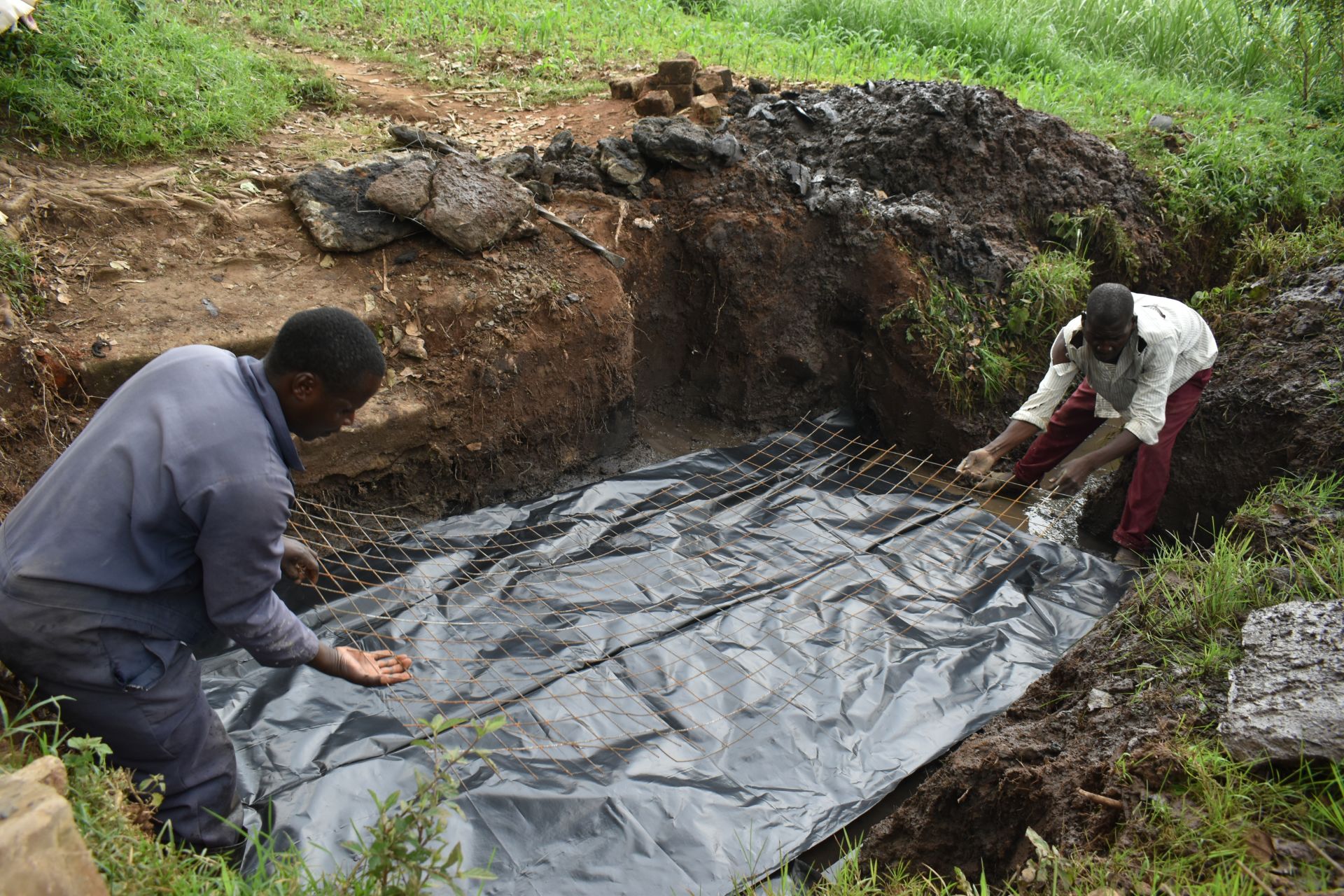
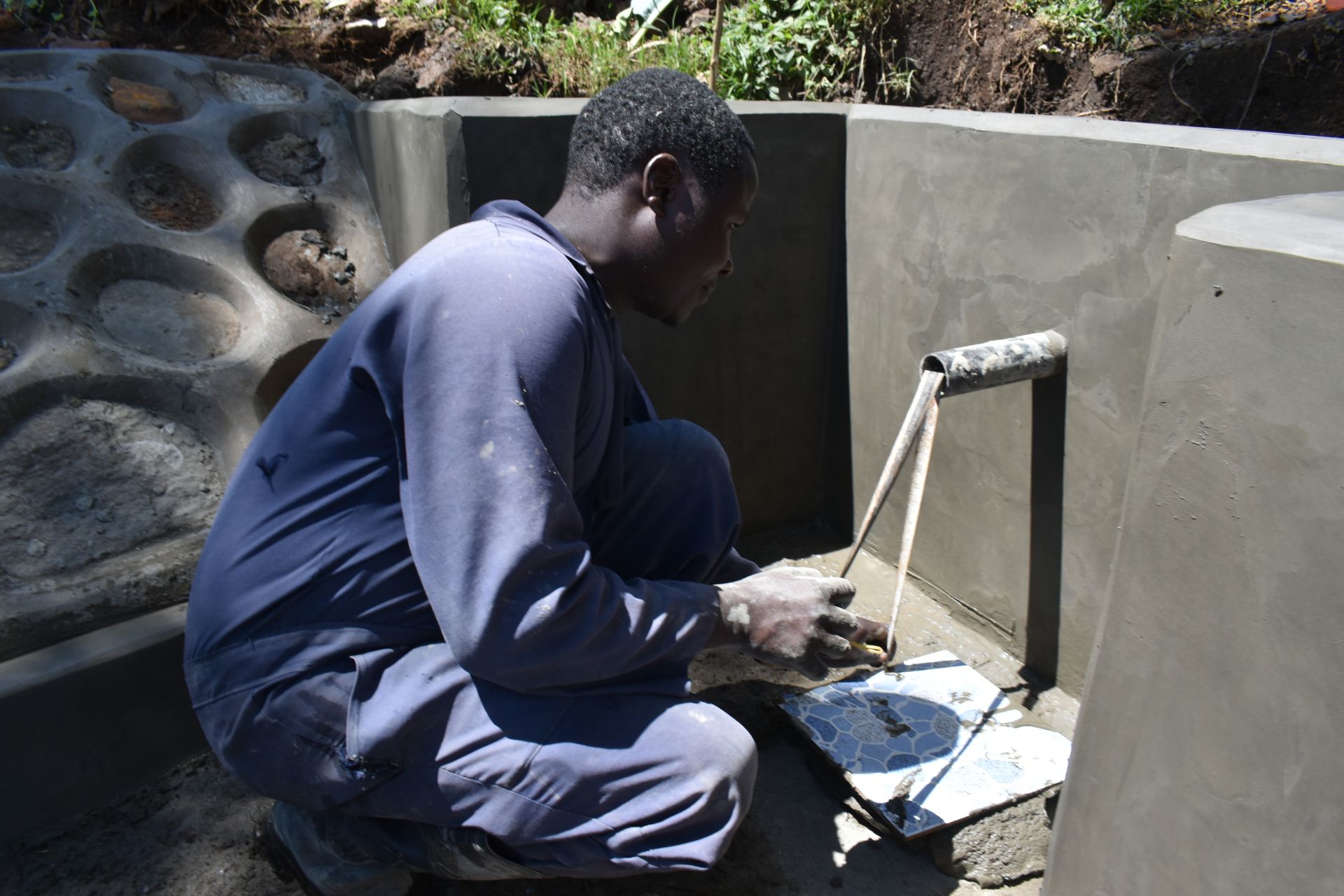
After establishing the base, made of thick plastic, wire, concrete, and waterproof cement, we started brickwork to build the spring walls and stairs. Once the walls were tall enough, we began one of the most crucial steps: setting the discharge pipe. The discharge pipe needs to be positioned low enough so the water level never rises above the spring's eye, yet high enough to allow room for the average collection container (20-liters) to sit beneath the pipe without making contact, to prevent cross-contamination.

If we place the pipe too high, back pressure could force water to emerge elsewhere. Too low, and community members would not be able to access the water easily.

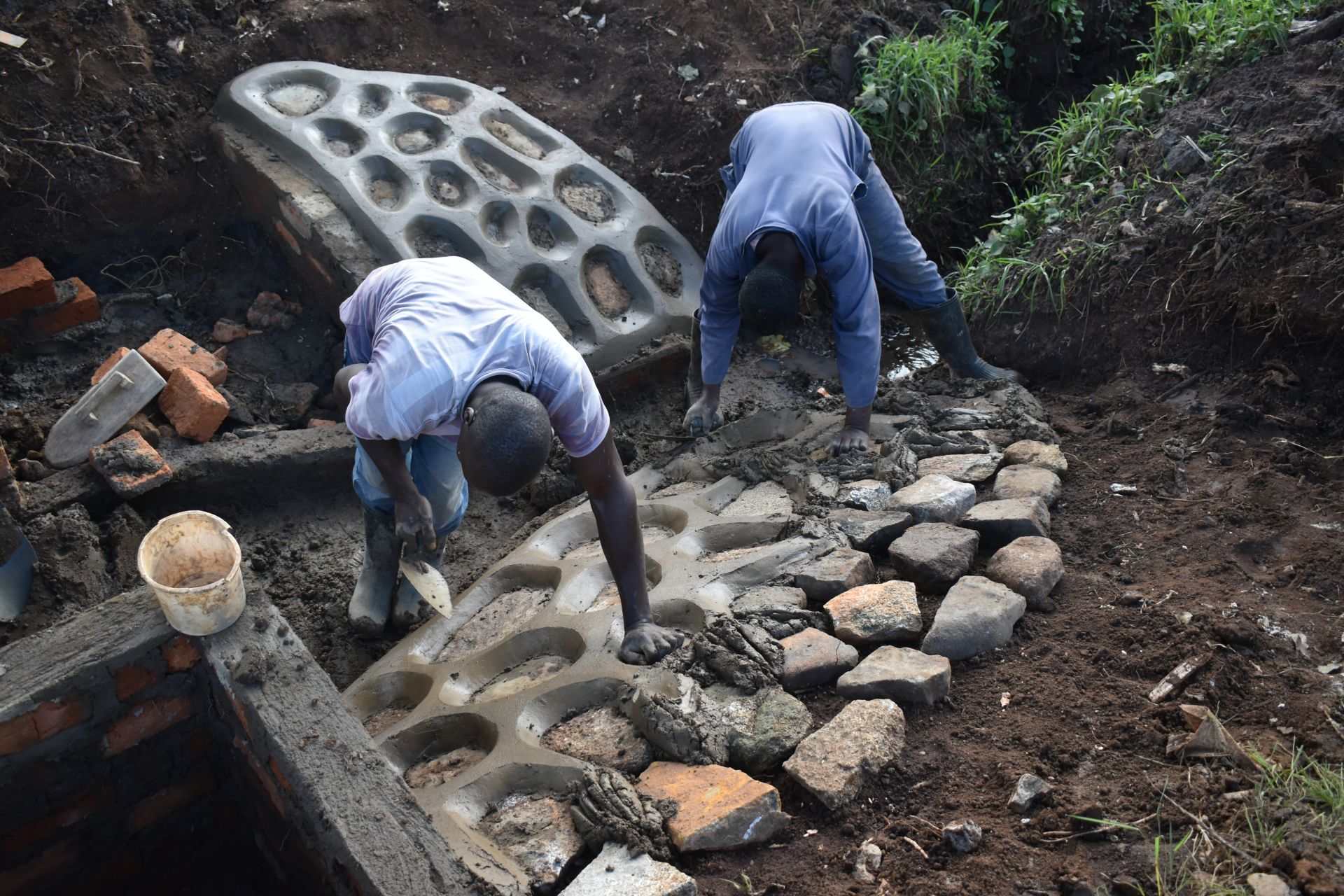
In coordination with the walls and stairs, we cemented stones on both sides of the spring's drainage channel. These stones discourage people and animals from standing in that area, which could cause soil erosion and a clogged drainage area.

We then cemented and plastered the spring walls. These finishing layers reinforce the brickwork and prevent water in the reservoir from seeping through. In turn, enough pressure builds to push water out through the discharge pipe.

As the walls cured, we finished the stairs and installed tiles beneath the discharge pipe. The tiles protect the concrete from the falling water's erosive force.

We redirected the temporary diversion channels back into the reservoir box and closed all other exits to force water through only the discharge pipe. We filled the reservoir area with the large, clean stones, arranging them in layers like a well-fitting puzzle. We covered the rocks with thick plastic and piled enough dirt on top to compensate for future settling.

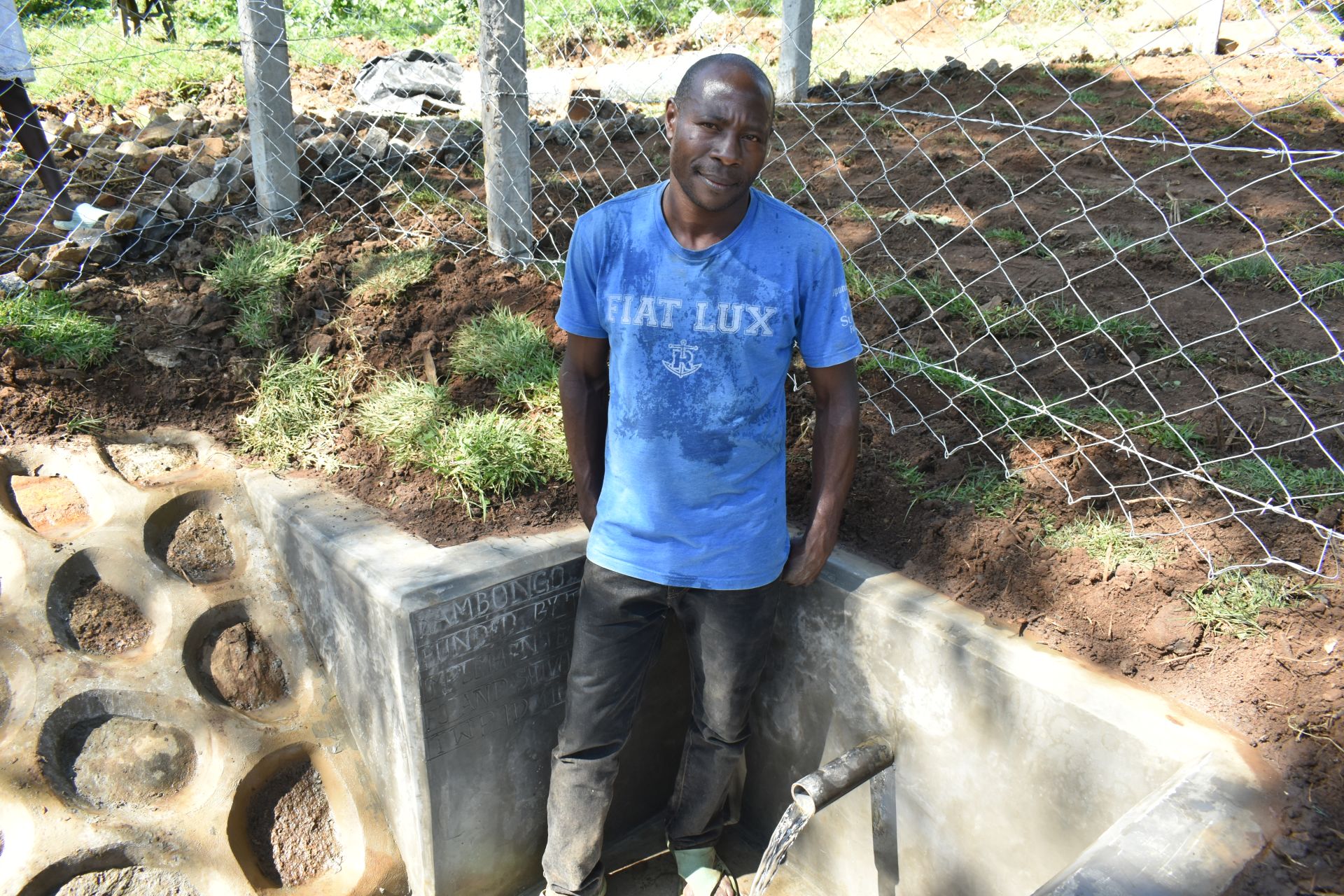
Community members transplanted grass to help prevent erosion, and the collection area was fenced. The fence prevents people or animals from walking in the area above the spring, as compaction of this area can potentially compromise water quality.

The construction process took about two weeks of work and patience. As soon as the spring was ready, people received permission from their local field officers to fetch water.

We officially gave ownership of the waterpoint to the Shivotio Community.

Happiness and thanksgiving flowed in all directions!

Training on Health, Hygiene, and More

Together with the community, we found their preferred date for training. When the day arrived, facilitators Lillian and Daniel deployed to the site to lead the event. 20 people attended the training, including 12 women and 8 men.

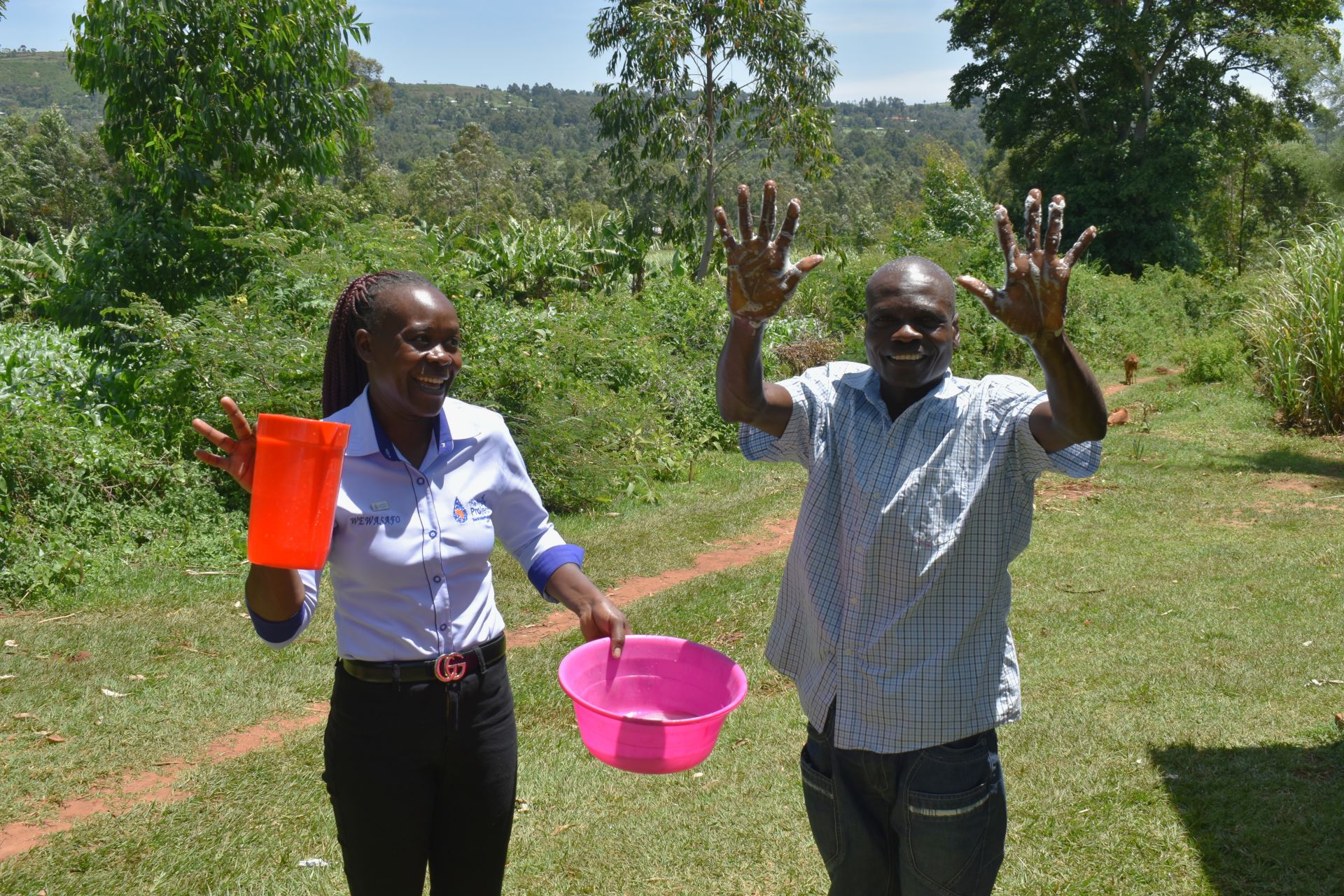
We discussed personal, oral, and environmental hygiene, emphasizing proper water handling, soap-making, and the ten steps of handwashing. We also highlighted the importance of primary health care and covered the operation and maintenance of the water point, as well as leadership and governance. By the end of the training, each participant had a clear understanding of their role in maintaining clean water and promoting good health within their community.

We held an election for the newly formed water user committee who will oversee the maintenance of the spring. We brainstormed income-generating activities and encouraged them to start a group savings account for future minor repairs to the spring.

Field Officer Lillian Achieng' said, "At first, it [was] only the women who were enthusiastic about the training. They came, and we began the training. We were amazed when some elderly men of the community and some young men joined us. This made the training more interesting because some questions were well answered by men. Men proved that they also knew matters concerning domestic hygiene because when women thought they could not tell how many days [of] drinking water [should] be in a storage container, the men shocked them by answering correctly."

Forty-four-year-old Everlyne Muhati shared her experience. "The most interesting topic for me was personal hygiene, where the trainer handled the dental care subtopic. I am a victim of sensitive teeth and dental cavities. From this training, I have learned that I have been brushing my teeth at the wrong moments and also with the wrong motions. I have been rough on my gums, and I have been using the wrong toothpaste and toothbrush. From this training, I believe my teeth will no longer be sensitive, and I'll be able to take foods of all temperatures."

Thank you for making all of this possible!


November, 2025: Exciting Progress in Shivotio Community!

We’re thrilled to share that, thanks to your generous support, significant change is coming for Rose and the entire Shivotio Community. Construction has begun on the spring project, bringing them one step closer to having clean, reliable water.

But that's not all—during construction, we’re also providing vital health training. These sessions equip the community with essential hygiene practices, ensuring that the benefits of clean water extend to lasting health improvements.

We’re so grateful for your role in making this possible. Stay tuned for more updates—soon, we’ll be celebrating the arrival of safe water in Shivotio!


Project Photos


Project Type

Springs are water sources that come from deep underground, where the water is filtered through natural layers until it is clean enough to drink. Once the water pushes through the surface of the Earth, however, outside elements like waste and runoff can contaminate the water quickly. We protect spring sources from contamination with a simple waterproof cement structure surrounding layers of clay, stone, and soil. This construction channels the spring’s water through a discharge pipe, making water collection easier, faster, and cleaner. Each spring protection also includes a chlorine dispenser at the waterpoint so community members can be assured that the water they are drinking is entirely safe. Learn more here!


Contributors

5 individual donor(s)