
Project Status


Project Type:  Protected Spring

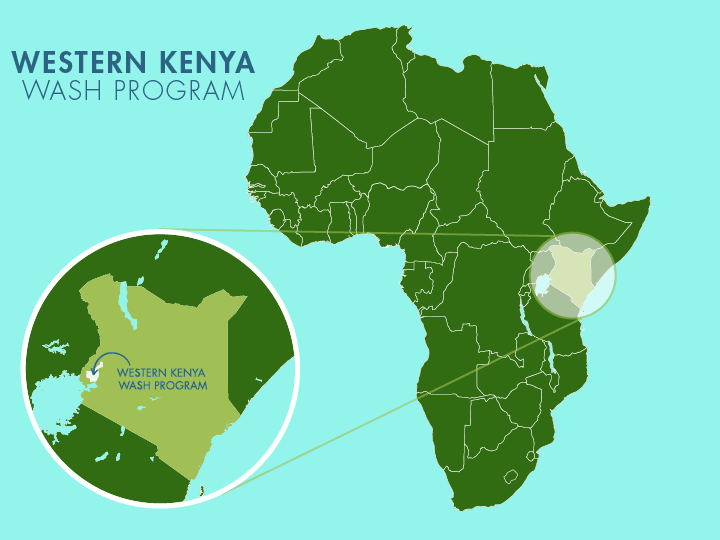
Regional Program: Western Kenya WaSH Program

Impact: 294 Served

Project Phase:  In Service - Jan 2026

Functionality Status:  Functional

Project Features


Click icons to learn about each feature.


The 294 community members of Kipchele have made an effort to solve their water crisis by partially protecting David Musumi Spring. However, without expertise, significant issues with the structure threaten the quality of the water. Many people have reported stomach problems and diarrhea, especially during the rainy season when the area floods.

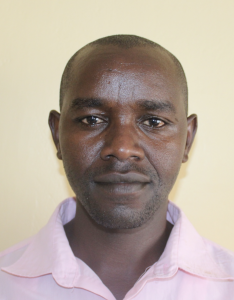
Sixty-five-year-old farmer David Musimi is familiar with the challenges that come from consuming the contaminated water.

David.

"Sometime early this year, I felt unwell and could not do my normal duties as usual. My whole body was [in] pain, and [I] needed medication. During my visit to the hospital, I was told to pay for typhoid treatment to deal with my condition, which was not easy because of [the] financial implications. The treatment cost me 2,000 KSH ($15), which could be used for family basic needs and other bills [instead]," said David.

The money David spends treating waterborne illnesses is stealing resources that are critical for his family's success. As a farmer, if he can't work, he is unable to provide for his family. If he doesn't tend his crop, it will die. His time is precious to both his and his family's survival.

"When [I] am sick, I really miss so many things. First of all, being a breadwinner for my family, I get no income, which means there is no food for the family because I must work to eat. If fetching water is not the task at hand, I dedicate my time to working on my farm, increasing farm produce, and earning a living."

David tending his crops.

The unprotected water source not only causes David to struggle to provide for his family, but it also threatens his morale.

"I feel so embarrassed and humiliated when I see my family members suffering just for drinking water that harms life. When you lack water, everything will collapse. No food, and you die. Water, to me, is all I need to live," shared David.

David and his community need support so they no longer have to struggle with water-related illnesses that steal their health and resources. Protecting their spring will give them the tools they need to thrive. With clean water access, David won't have to watch his family and his farm suffer anymore.

Steps Toward a Solution

Our technical experts worked with the local community to identify the most effective solution to their water crisis. They decided to safeguard the existing flowing spring.

Spring Protection
Springs are natural water sources that originate from deep underground. As water travels through various layers of the earth, it undergoes a natural filtration process, making it cleaner and safer to drink. To protect these spring sources from contamination, we construct a waterproof cement structure around layers of clay, stone, and soil. This design channels the spring water through a discharge pipe, facilitating easier, faster, and cleaner water collection.

Chlorine Dispenser
As an extra measure towards water quality safety, uniquely engineered chlorine dispensers are installed at all of our spring protection projects so community members can treat their water with pre-measured doses of chlorine. The chlorine treats any residual contamination and stays active for two to three days, ensuring water stays safe to use even when stored at home. Chlorine delivery and maintenance of the dispensers are part of our ongoing community support.

Community Education & Ownership
Hygiene and sanitation training are integral to our water projects. Training is tailored to each community's specific needs and includes key topics such as proper water handling, improved hygiene practices, disease transmission prevention, and care of the new water point. Safe water and improved hygiene habits foster a healthier future for everyone in the community. Encouraged and supported by the guidance of our team, a water user committee representative of the community's diverse members assumes responsibility for maintaining the water point, often gathering fees to ensure its upkeep.

Project Updates


January, 2026: Kipchele Community Spring Protection Complete!

Your contribution has made access to clean water for the Kipchele Community possible!

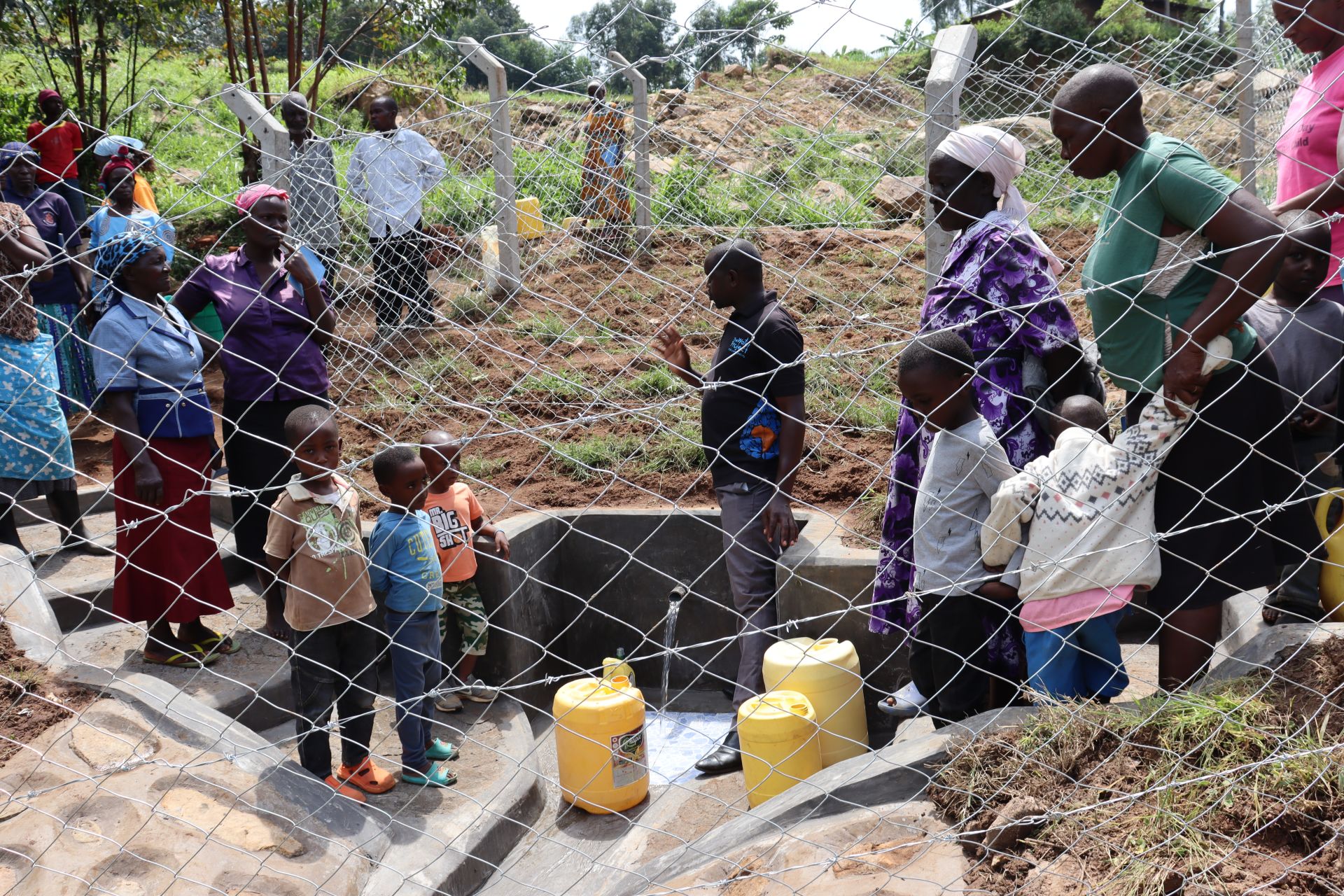
We transformed their spring into a flowing source of naturally filtered water. A chlorine dispenser is installed to provide added protection, and we trained the community on improved sanitation and hygiene practices. Together, these components will unlock the opportunity for community members to thrive!

Community members celebrate their newly protected spring!

"Access to safe water from this spring will play a key role in realizing the future dreams and hopes of my children, in that they will have improved health, which will translate to a good life, hence working hard in their studies in school," shared 29-year-old Winfresher Sido.

Winfresher celebrating clean water!

Children were just as excited as adults about clean water access!

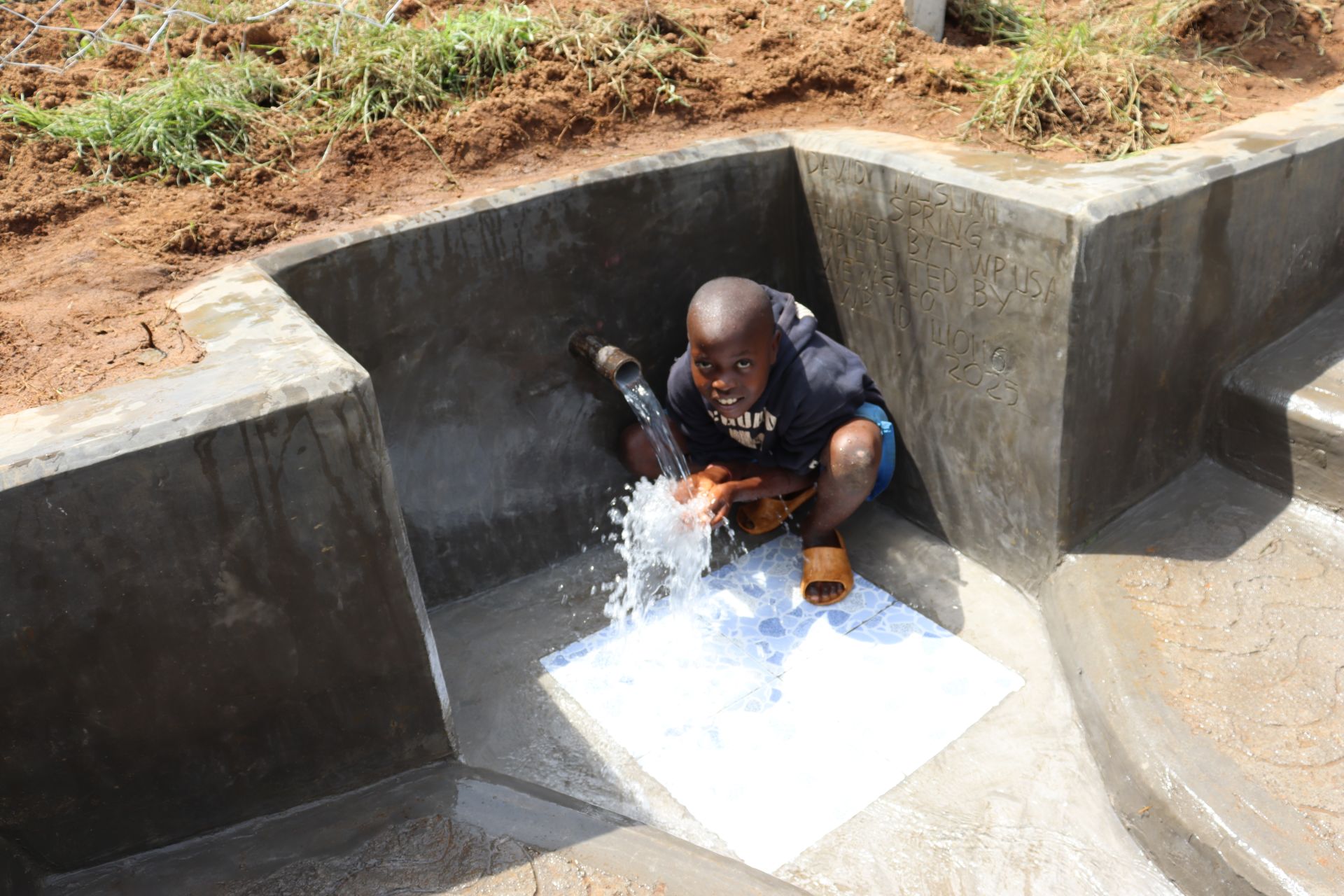
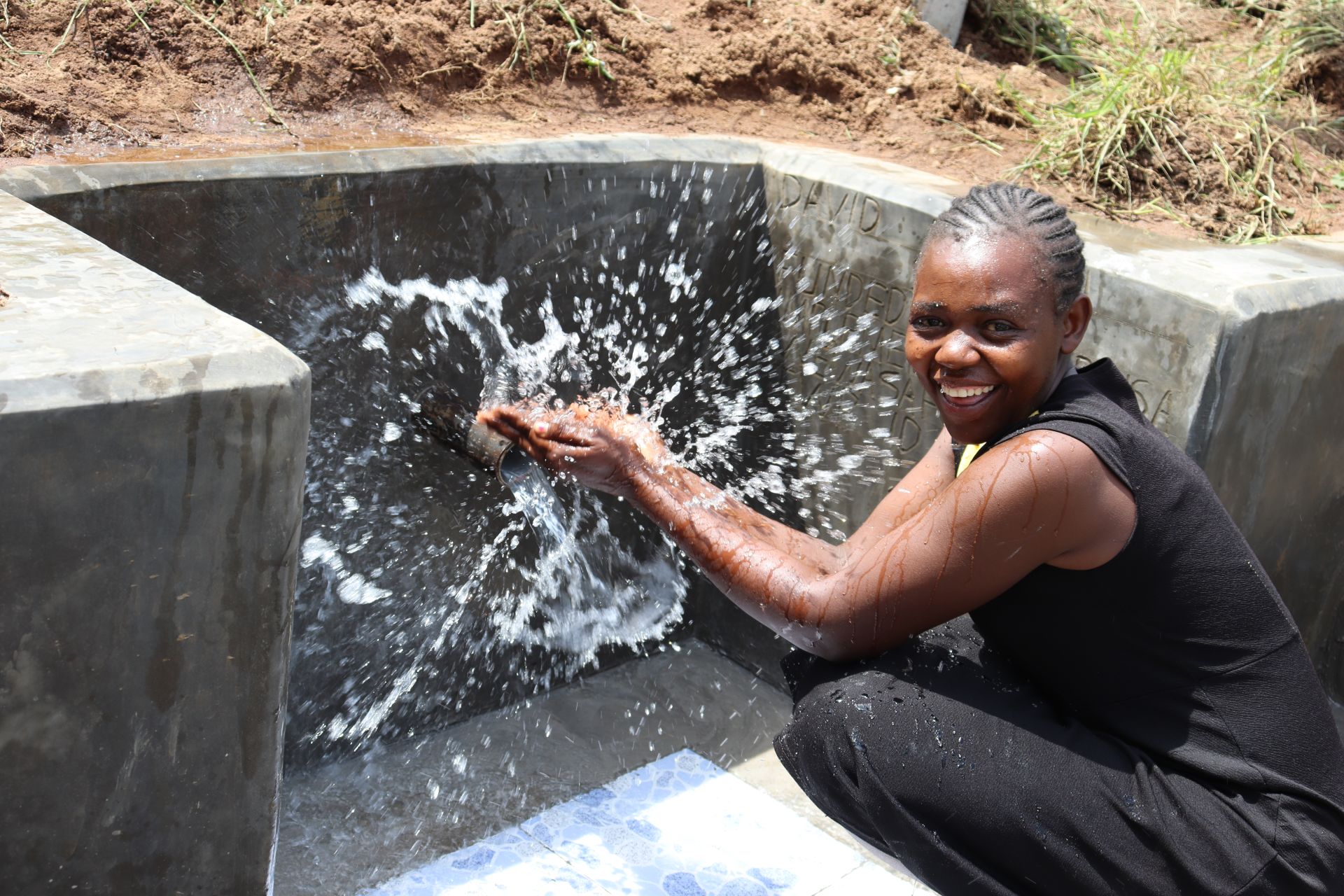
"With safe water from this new water point, there shall be no more blame game between my parents and our teachers on what has led to students from my village being absent from school, whenever they fall sick. Now that we have a rainwater harvesting tank in our school and a protected spring in our village, we will use safe water at home and at school," described 12-year-old Bravin.

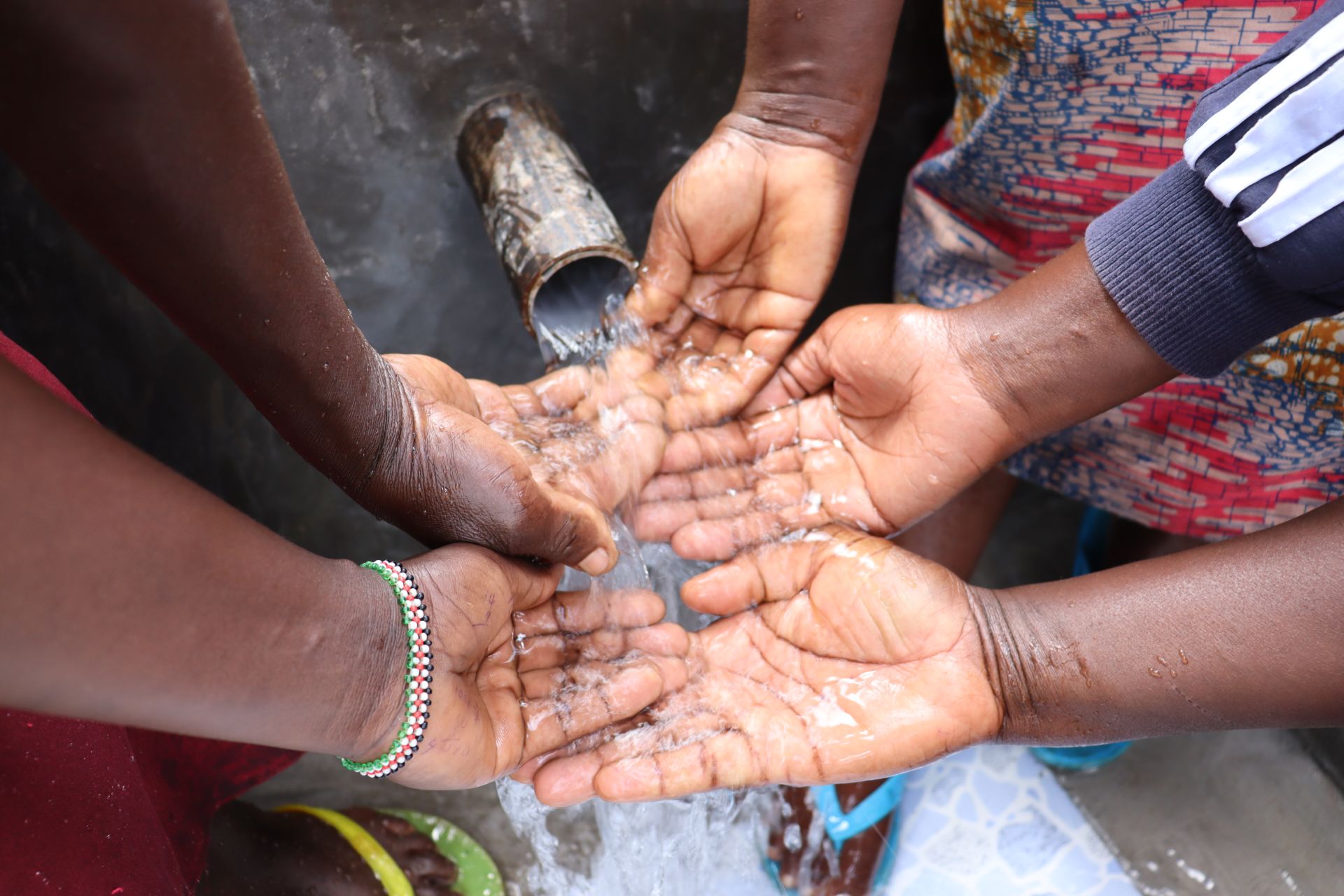
Bravin splashing clean water.

Preparing for Spring Protection

Community members worked together to source all locally available construction materials for the spring. These included bricks, sand, stones, and fencing poles. Because people have to carry most items by hand, the material-collection process can take anywhere from a few weeks to months.

When the community was ready, we delivered the remaining construction materials, including cement, plastic tarps, and hardware. Then our construction artisan and field officers deployed to the spring to begin work.

Protecting the Spring: A Step-by-Step Process

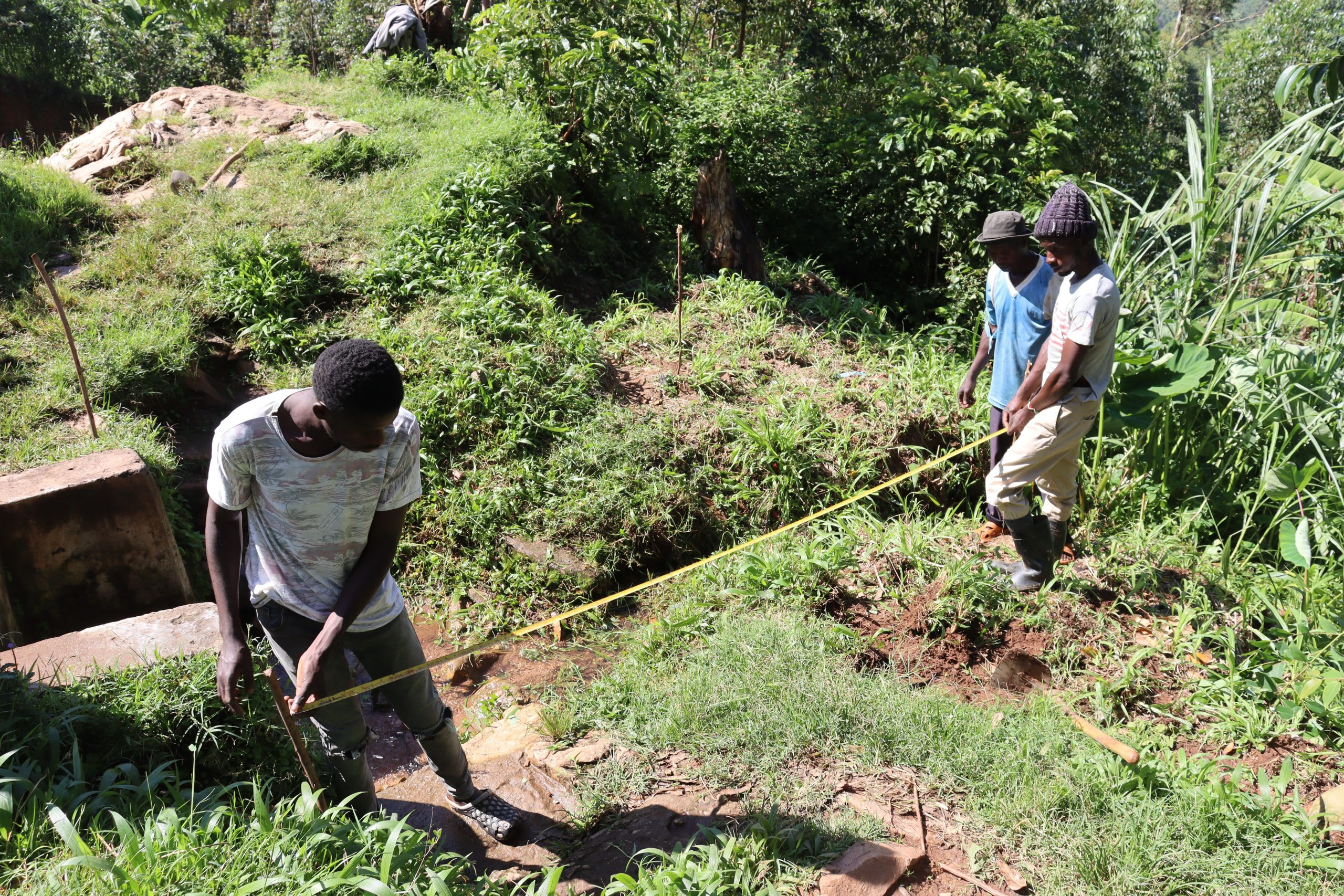
First, we excavated the spring area. This includes digging a drainage channel below the spring and several runoff diversion channels above and around the spring to help divert surface contaminants away.

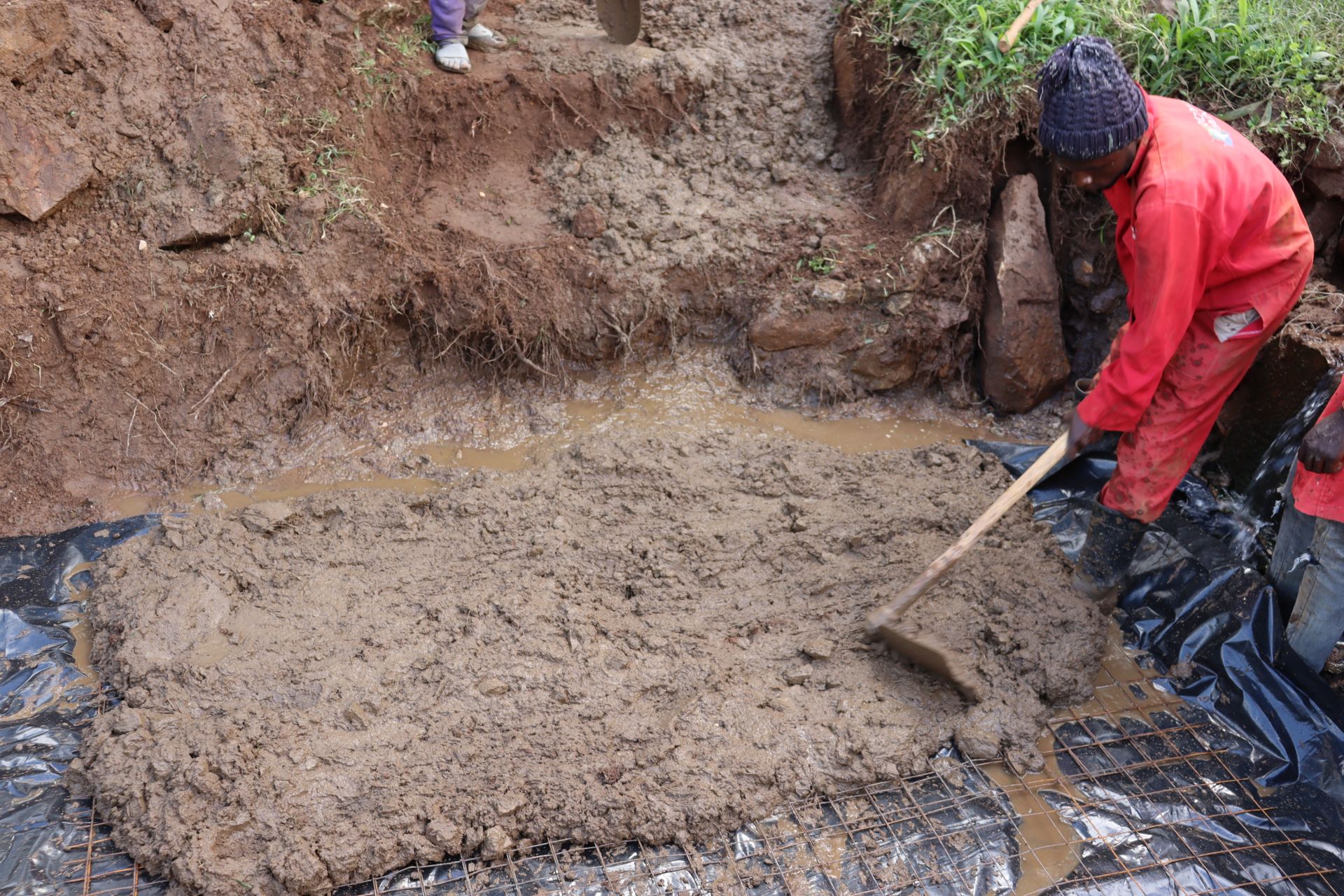
Establishing the foundation.

To ensure community members could still access water throughout the construction process, we also dug temporary channels around the construction site to allow water to continue to flow. Excavation created space for setting the spring's foundation.

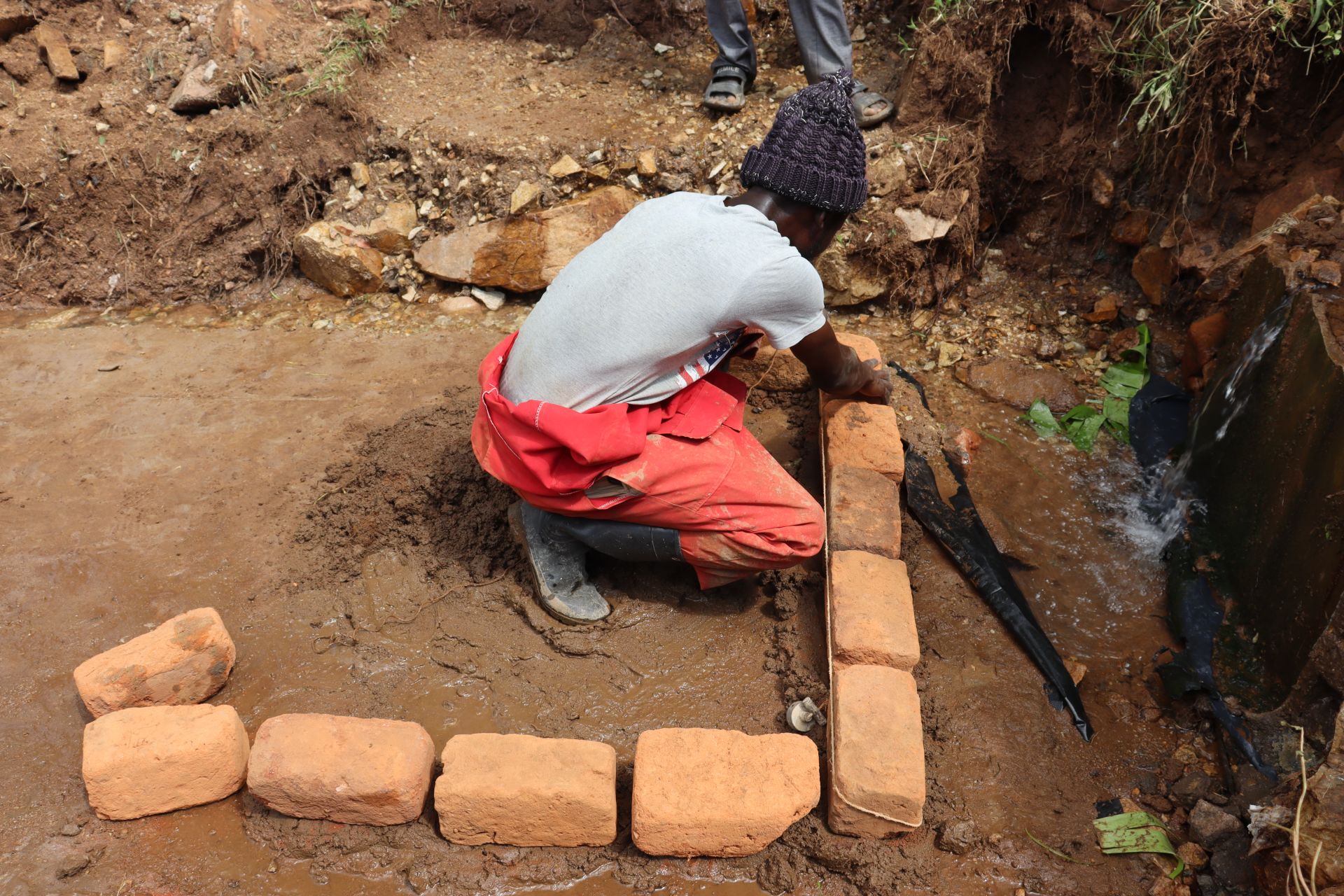
Beginning brickwork to build up the spring walls.

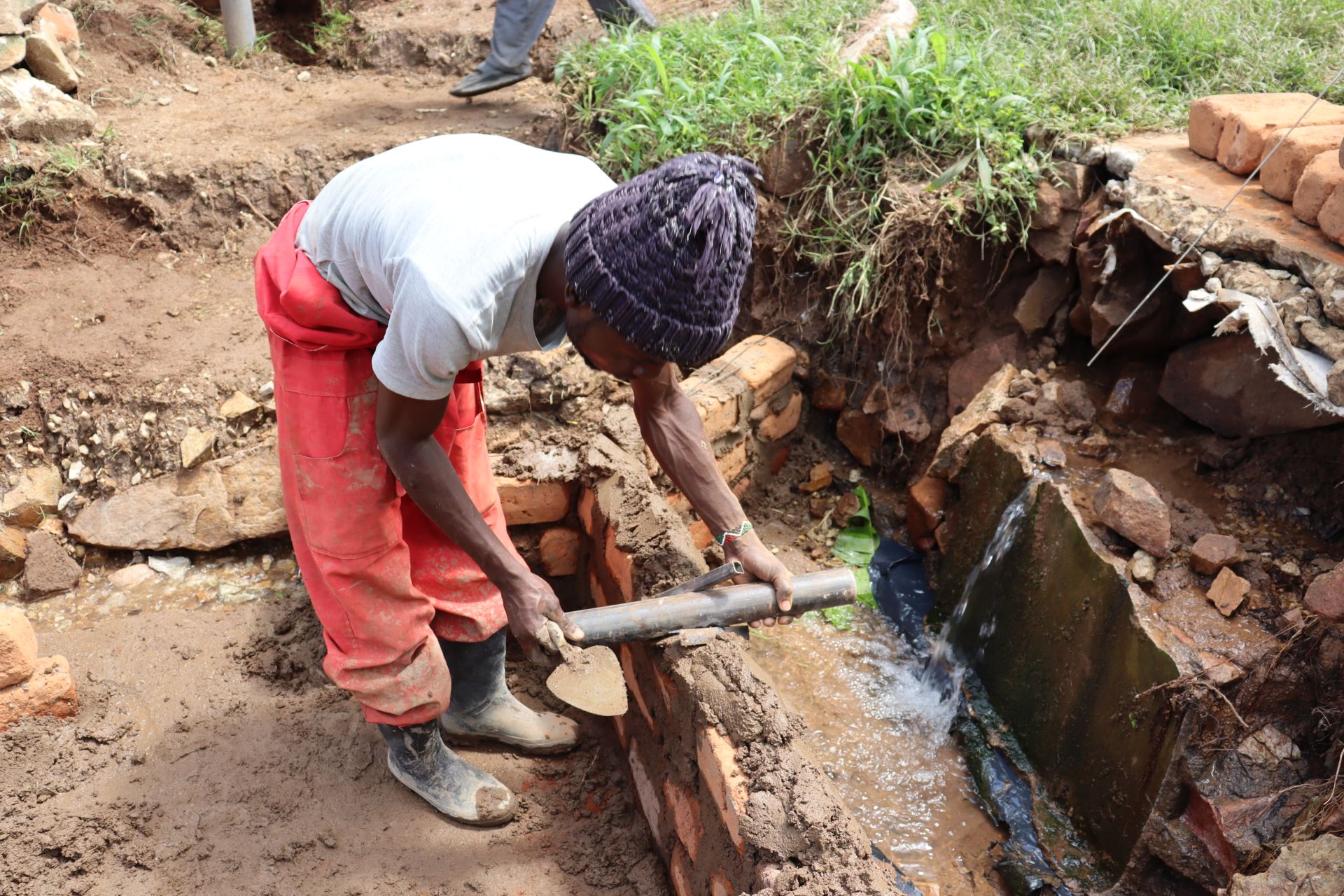
After establishing the base, made of thick plastic, wire, concrete, and waterproof cement, we started brickwork to build the spring walls and stairs. Once the walls were tall enough, we began one of the most crucial steps: setting the discharge pipe. The discharge pipe needs to be positioned low enough so the water level never rises above the spring's eye, yet high enough to allow room for the average collection container (20-liters) to sit beneath the pipe without making contact, to prevent cross-contamination.

Setting the discharge pipe to properly capture the spring's eye.

If we place the pipe too high, back pressure could force water to emerge elsewhere. Too low, and community members would not be able to access the water easily.

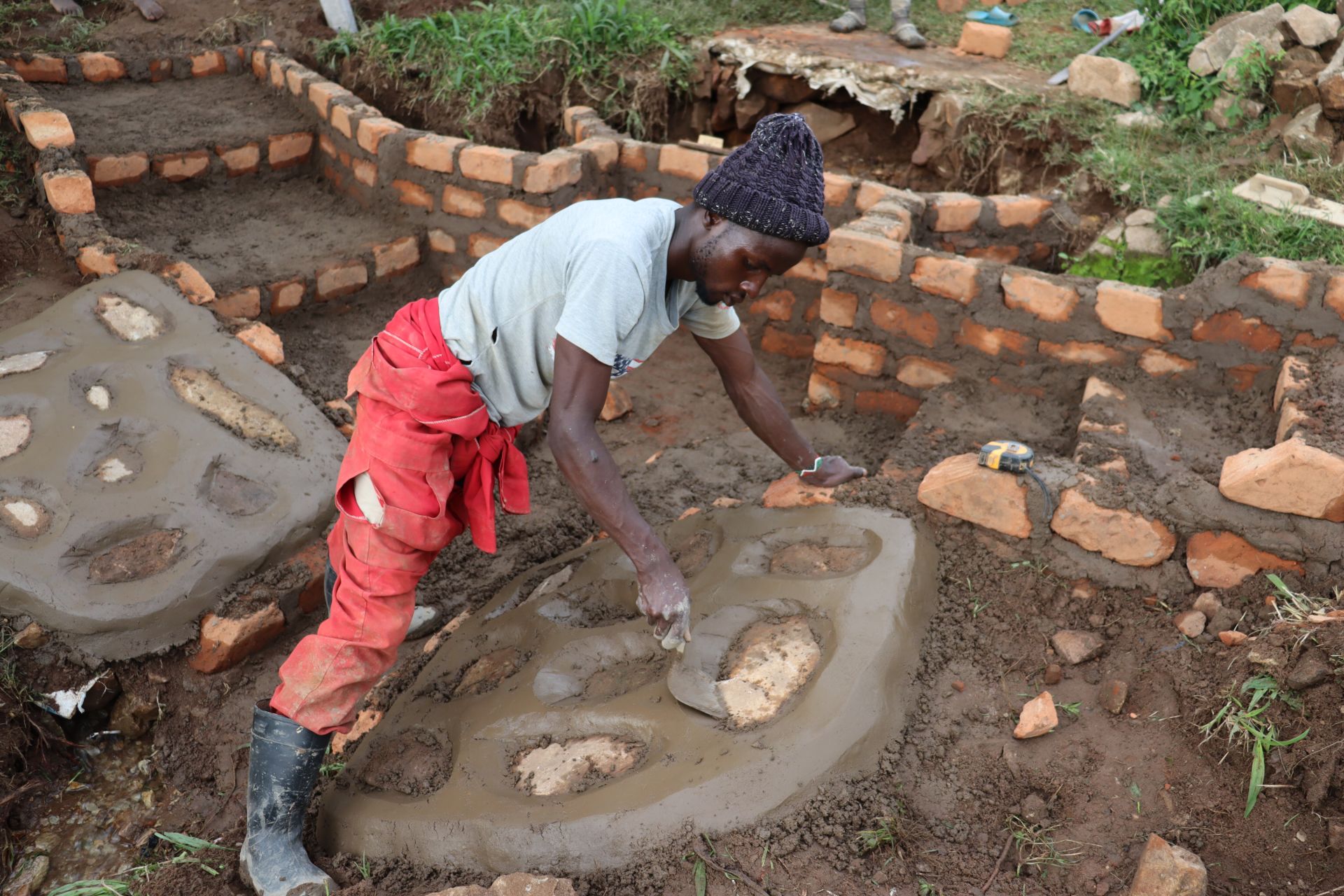
Cementing stones along the sides to prevent erosion.

In coordination with the walls and stairs, we cemented stones on both sides of the spring's drainage channel. These stones discourage people and animals from standing in that area, which could cause soil erosion and a clogged drainage area.

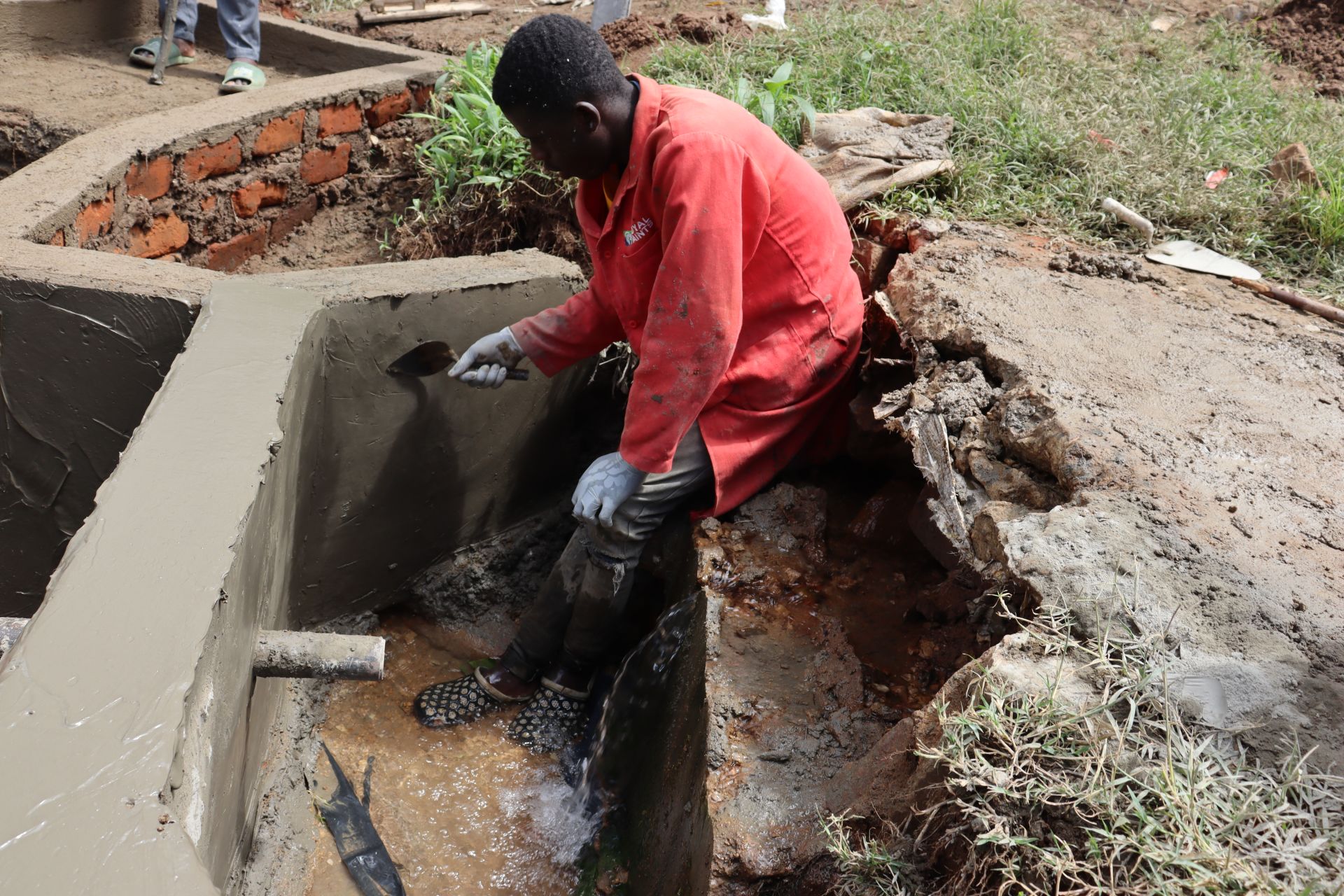
Plastering the spring walls.

We then cemented and plastered the spring walls. These finishing layers reinforce the brickwork and prevent water in the reservoir from seeping through. In turn, enough pressure builds to push water out through the discharge pipe.

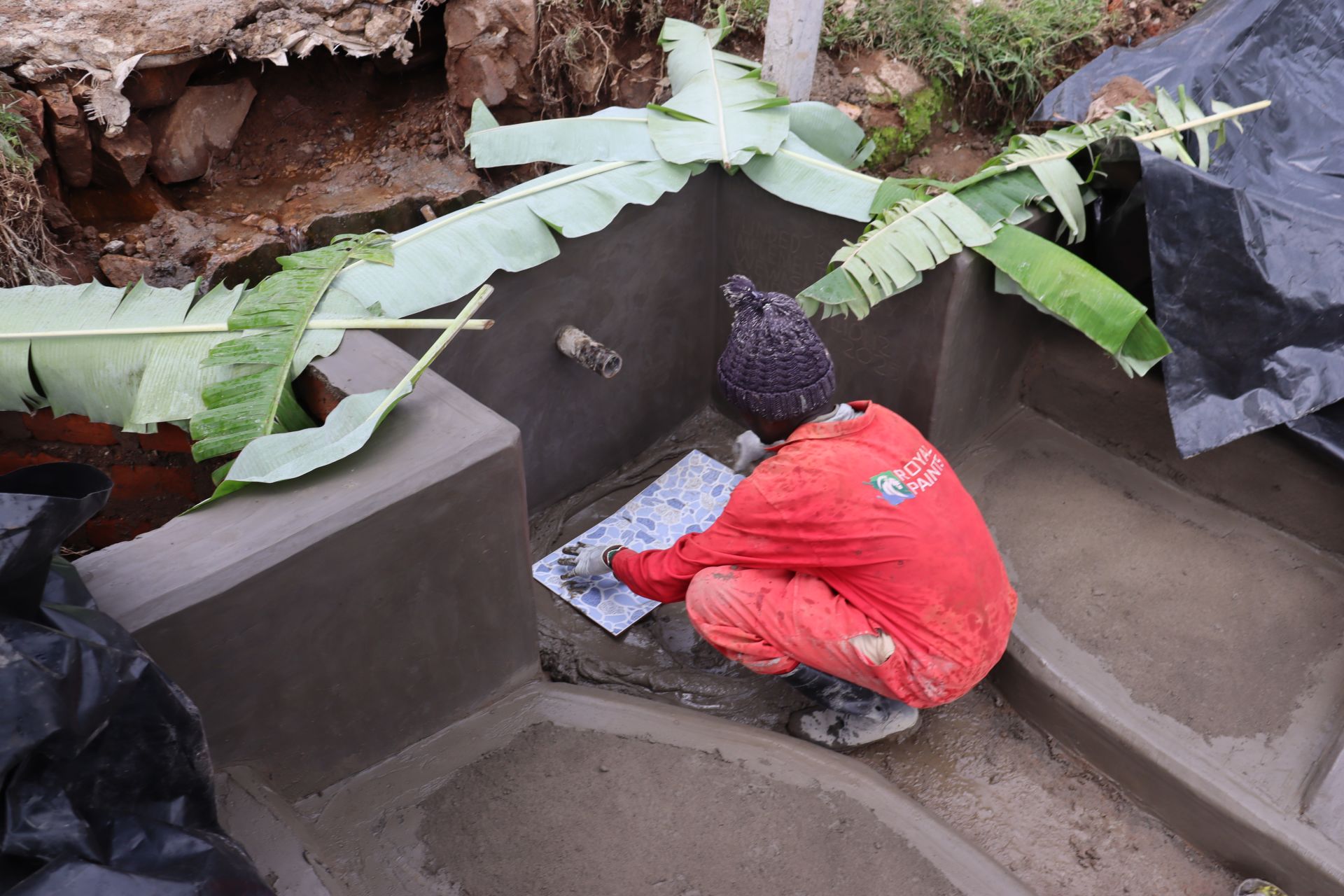
Setting tiles beneath the discharge pipe to prevent erosion.

As the walls cured, we finished the stairs and installed tiles beneath the discharge pipe. The tiles protect the concrete from the falling water's erosive force.

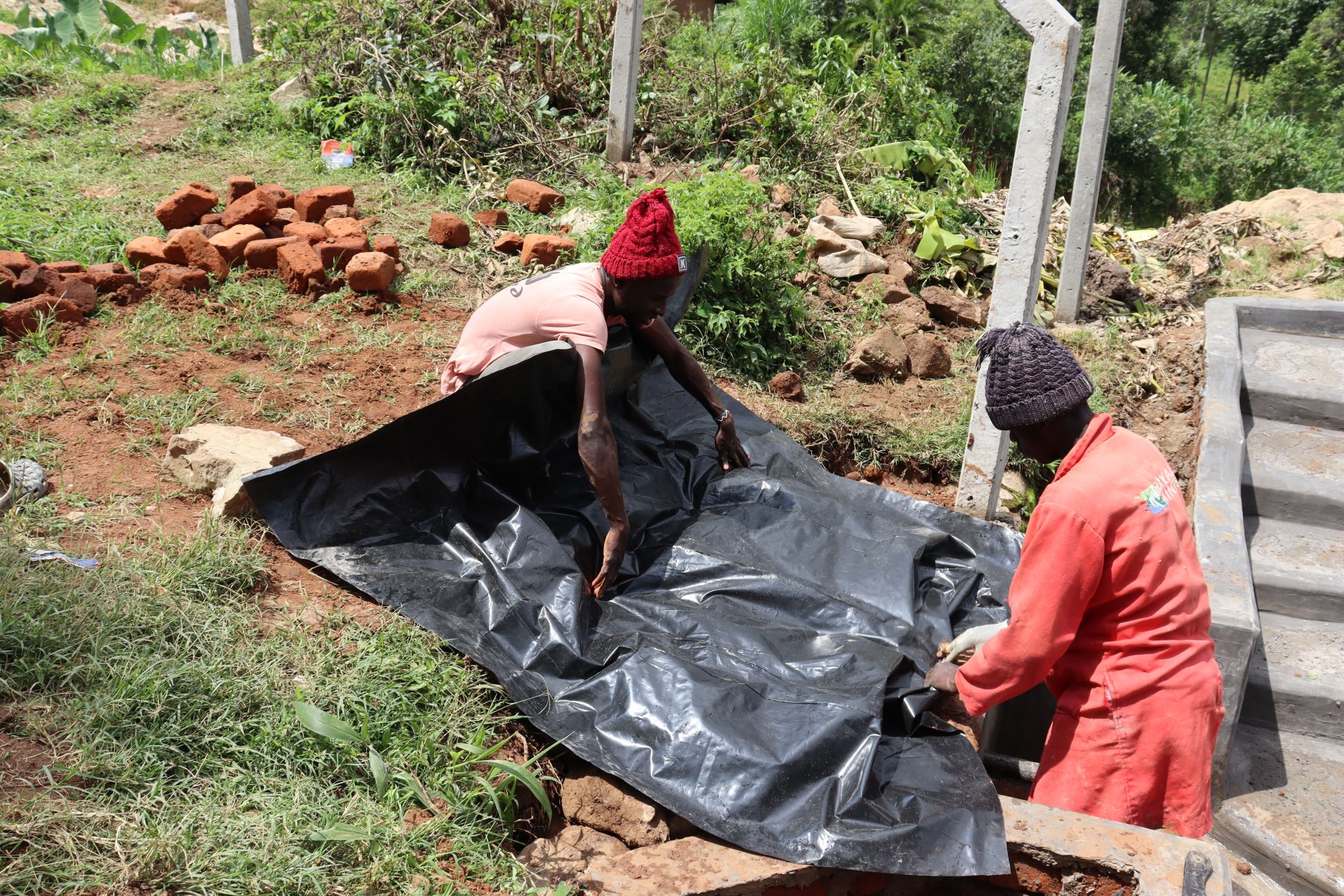
Backfilling the spring to prevent contamination.

We redirected the temporary diversion channels back into the reservoir box and closed all other exits to force water through only the discharge pipe. We filled the reservoir area with the large, clean stones, arranging them in layers like a well-fitting puzzle. We covered the rocks with thick plastic and piled enough dirt on top to compensate for future settling.

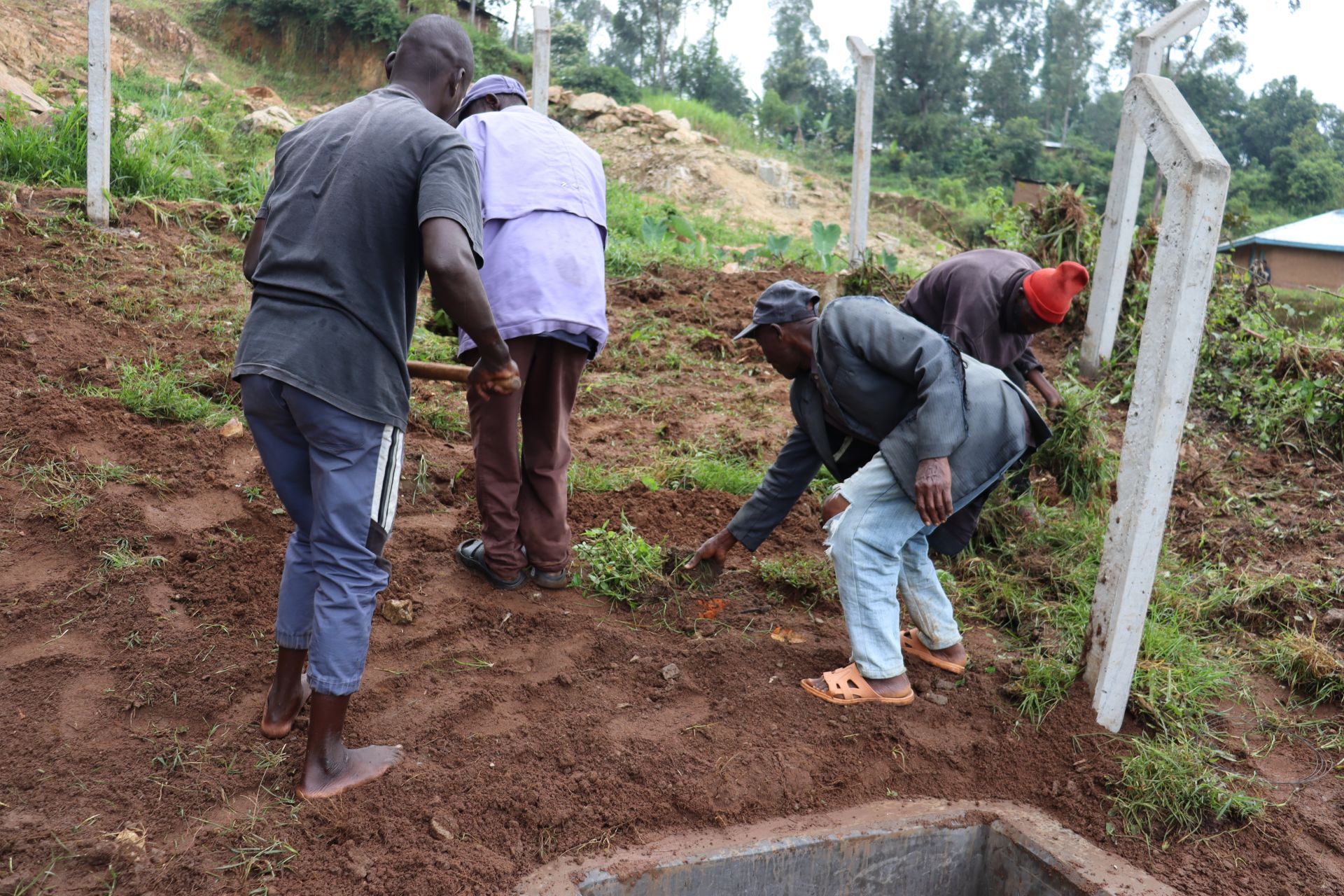
Community members transplanted grass to help prevent erosion, and the collection area was fenced. The fence prevents people or animals from walking in the area above the spring, as compaction of this area can potentially compromise water quality.

Planting grass above the spring also helps prevent erosion.

The construction process took about two weeks of work and patience. As soon as the spring was ready, people received permission from their local field officers to fetch water.

We officially transferred ownership of the waterpoint to the Kipchele Community.

Happiness and thanksgiving flowed in all directions!

Training on Health, Hygiene, and More

Together with the community, we determined their preferred training date. When the day arrived, facilitators Wilson Kipchoge and Gladys Chepkorir deployed to the site to lead the event. Twenty-four people attended the training, including eighteen women and six men.

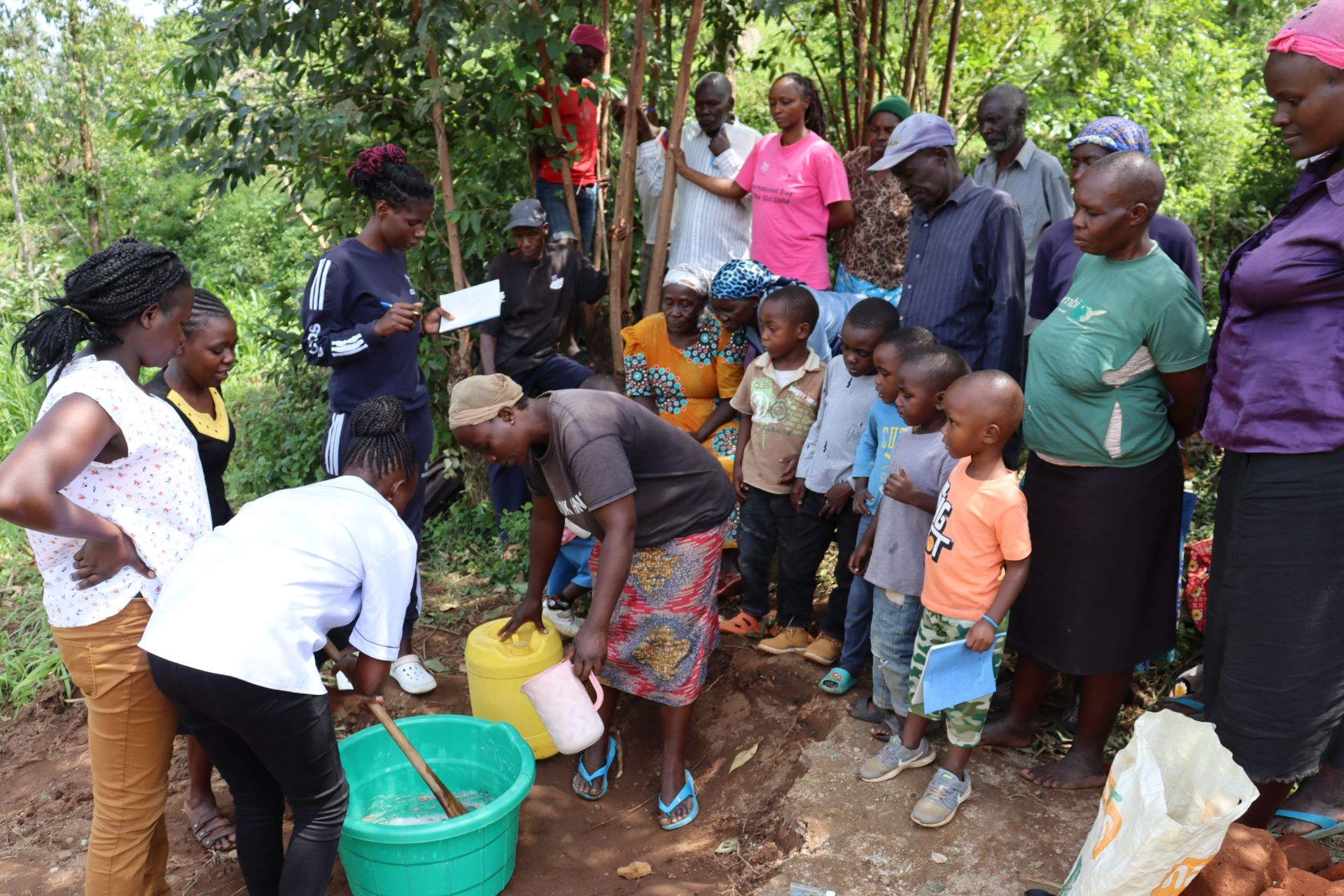
Soapmaking training.

We discussed personal, oral, and environmental hygiene, emphasizing proper water handling, soap-making, and the ten steps of handwashing. We also highlighted the importance of primary health care and covered the operation and maintenance of the water point, as well as leadership and governance. By the end of the training, each participant had a clear understanding of their role in maintaining clean water and promoting good health within their community.

Spring maintenance training.

We held an election for the newly formed water user committee, which will oversee the maintenance of the spring. We brainstormed income-generating activities and encouraged them to start a group savings account for future minor repairs to the spring.

Wilson Kipchoge shared, "Participants were so engaging and lively throughout the training session, as was evident by the way they answered questions, and their asking pertinent issues touching on the sustainability and security of their spring. A blend of both need and appreciation of what was done to them could pop up during the training, thus confirming that indeed, the training was also important to them."

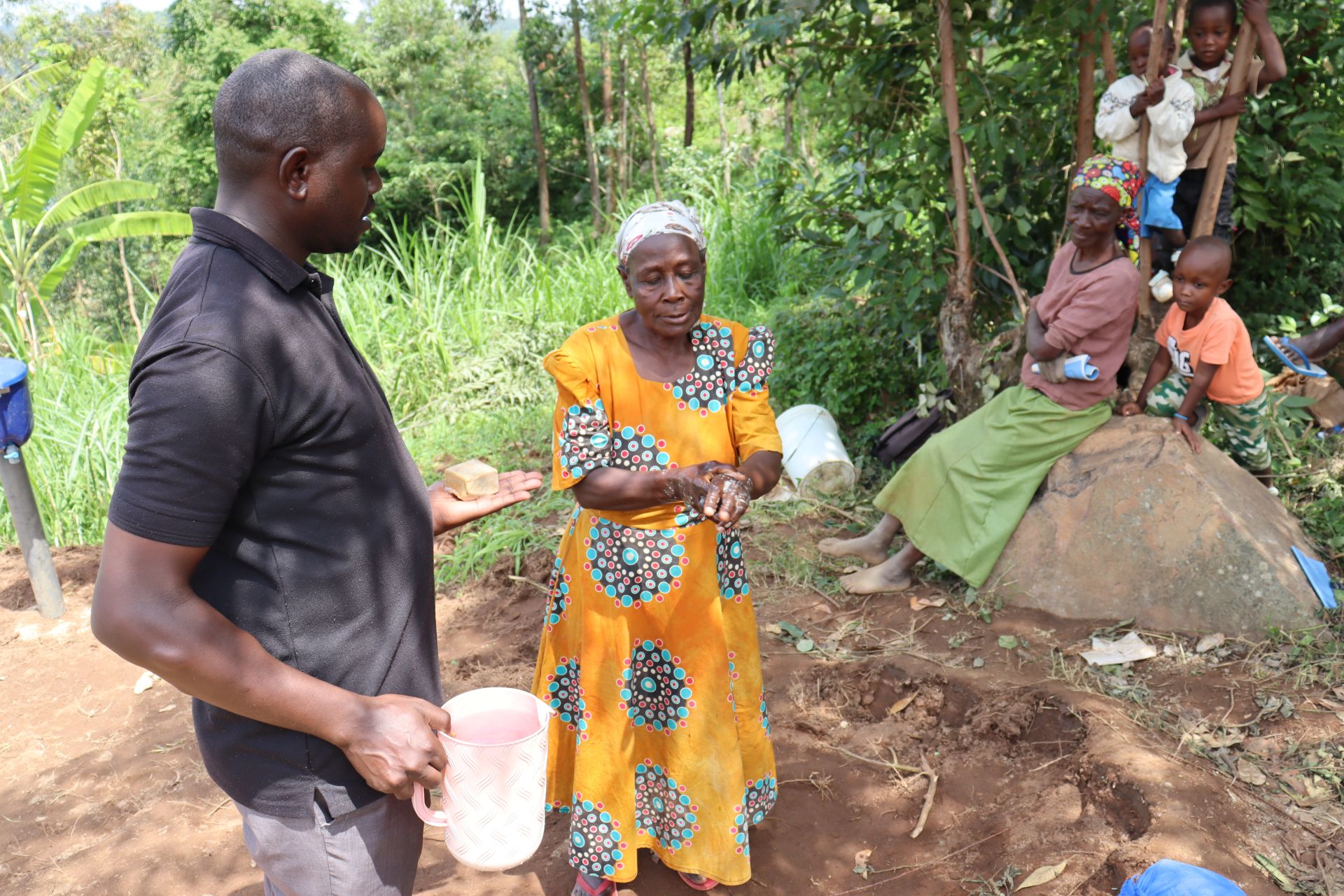
Miriam participates in the handwash training.

Sixty-eight-year-old Miriam Amiani felt the training was challenging in the best possible way. "Though I am old, I remember how I was given an opportunity to showcase how to wash hands with soap and running water. You challenged my way of thinking, and also how I have been doing things for over six decades. It is important to wash hands with soap and running water because we touch many harmful substances every day."

Thank you for making all of this possible!


November, 2025: Exciting Progress in Kipchele Community!

We’re thrilled to share that, thanks to your generous support, significant change is coming for David Musimi and the entire Kipchele Community. Construction has begun on the spring protection project, bringing them one step closer to having clean, reliable water.

But that's not all—during construction, we’re also providing vital health training. These sessions equip the community with essential hygiene practices, ensuring that the benefits of clean water extend to lasting health improvements.

We’re so grateful for your role in making this possible. Stay tuned for more updates—soon, we’ll be celebrating the arrival of safe water in the Kipchele Community!


Project Photos


Project Type

Springs are water sources that come from deep underground, where the water is filtered through natural layers until it is clean enough to drink. Once the water pushes through the surface of the Earth, however, outside elements like waste and runoff can contaminate the water quickly. We protect spring sources from contamination with a simple waterproof cement structure surrounding layers of clay, stone, and soil. This construction channels the spring’s water through a discharge pipe, making water collection easier, faster, and cleaner. Each spring protection also includes a chlorine dispenser at the waterpoint so community members can be assured that the water they are drinking is entirely safe. Learn more here!


Contributors

18 individual donor(s)