 Protected Spring

 Rehabilitation Project











Alfred Luguki is a 72-year-old farmer in Givogi Community and one of the 175 residents who rely on the spring. “I am a peasant farmer,” he said. He spends his days weeding, planting vegetables, and harvesting produce to sell at the market. Lately, though, water has been taking up much of his time and money.
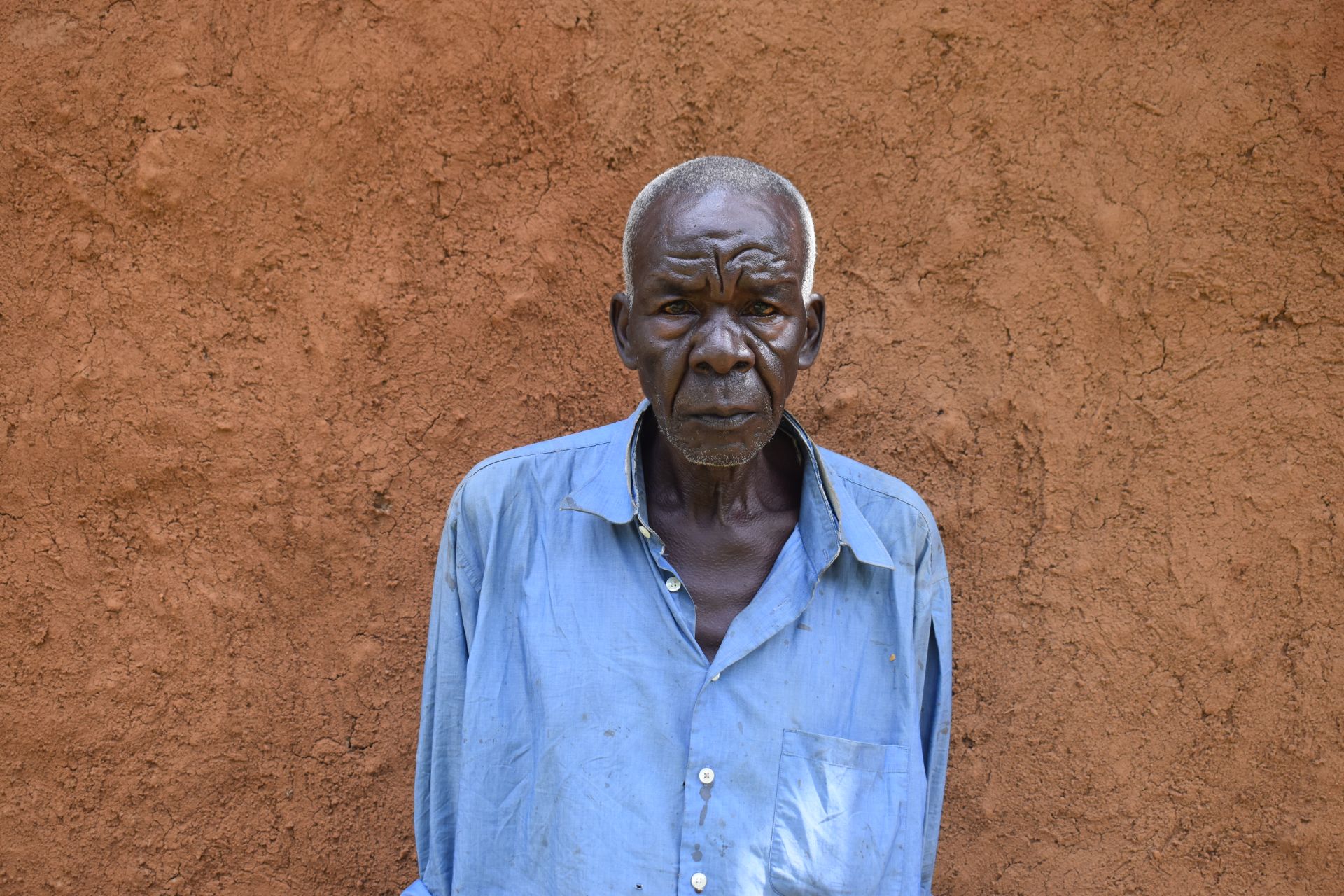
Alfred Luguki.
They rely mainly on a spring that is badly worn. The headwall has broken down so much that the construction stones are exposed. Sand gets into the water, and much of the flow leaks away before it reaches the discharge pipe. The drainage is blocked, so stagnant water pools right where people stand to fill their containers. Only about half the community can make the round trip in under 30 minutes. The hilly paths turn slippery and dangerous in the rainy season.
“The breakdown of this water point has made life very difficult,” Alfred said. “Accessing water now takes much longer than usual because of water seepage through worn-out structure.”
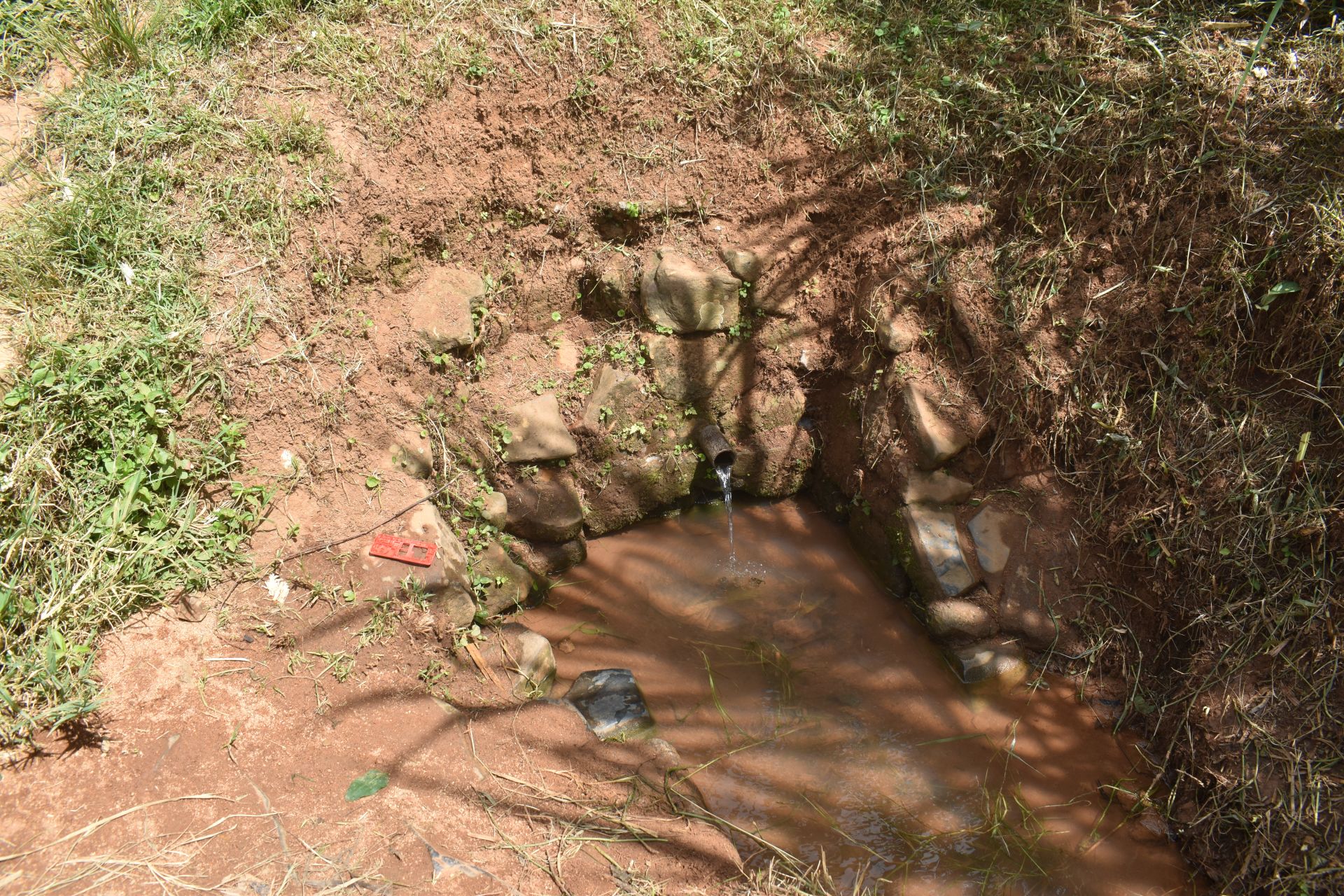
The spring in need of repair.
Some families collect rainwater from their rooftops to save trips. But the iron sheets are corroded, and the gutters are full of leaves, so the water tastes rusty and smoky. It can’t replace the spring.
The highest cost has been to people’s health. Not long ago, Alfred’s grandson fell ill after drinking from the spring.
“He initially complained of [a] severe headache, which was soon followed by extreme coldness. At times, he would complain of feeling very cold even while sweating,” Alfred recalled. “The experience was very disappointing because even after being given painkillers, he did not get any relief untill he was taken a private hospital for proper medication and treatment.”
The family couldn’t cover the bill alone.
“Treating my grandson required us to pull resources together because the cost of treatment was overwhelming for our family. The money I had earned from selling my farm produce was entirely spent on his treatment.”
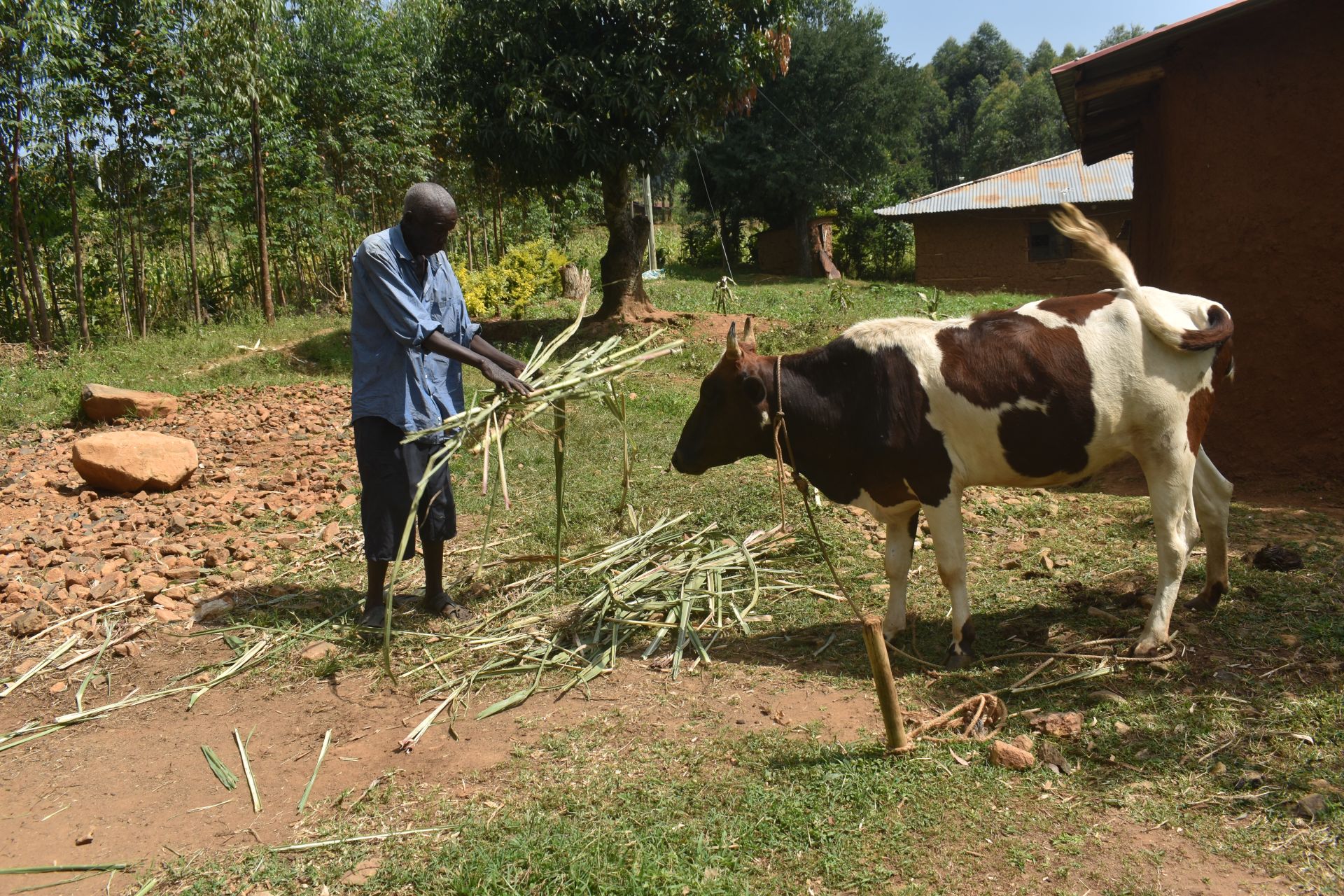
Alfred cares for his livestock and crops to earn money.
Alfred said many of his neighbors are in the same position. “For people living from hand [to] mouth, it becomes very difficult to meet their daily expenses due [to] the high cost of treatment and loss of income.”
The community has tried to keep the spring working. They cut down old eucalyptus trees that were draining their yield during dry spells, and they patch leaks whenever they appear.
“In many instances, community members have been opening the spring box to seal areas where a lot of water seeps through. At one point, they applied clay to the worn-out joints of rocks used in the construction in an attempt to redirect water through the discharge pipe.”
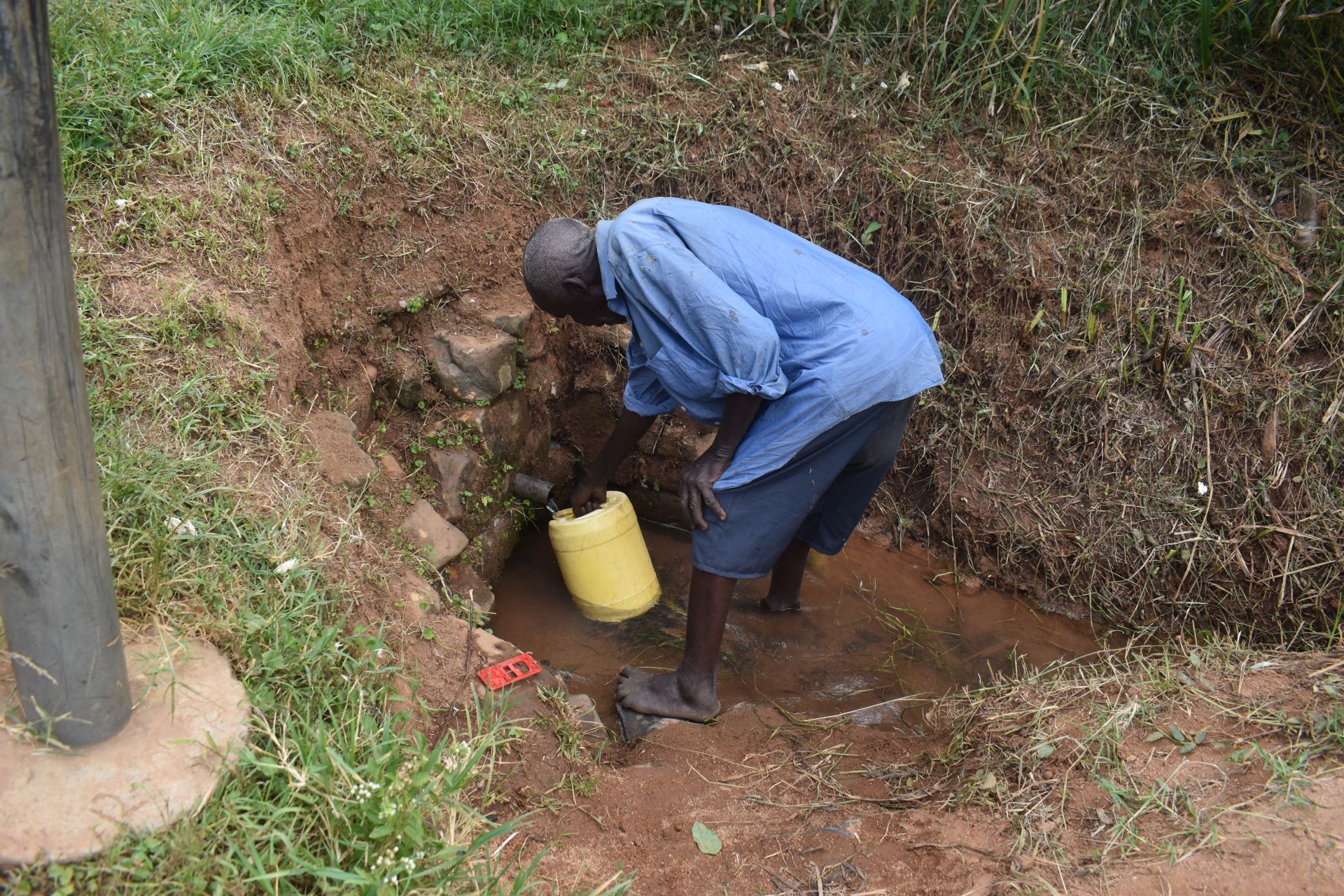
Those repairs never last. Properly protecting the spring will prevent leaks, keep out contamination, and ensure Givogi has a steady supply of safe water.
Alfred knows exactly what the change would mean for his family. “Community members will save resources that can instead be used for constructive development rather than spending money on treating water-borne diseases. My grandchildren will also have enough time to concentrate on their education because the current challenges will have been addressed.”
Steps Toward a Solution
Our technical experts worked with the local community to identify the most effective solution to their water crisis. They decided to safeguard the existing flowing spring.
Spring Protection
Springs are natural water sources that originate from deep underground. As water travels through various layers of the earth, it undergoes a natural filtration process, making it cleaner and safer to drink. To protect these spring sources from contamination, we construct a waterproof cement structure around layers of clay, stone, and soil. This design channels the spring water through a discharge pipe, facilitating easier, faster, and cleaner water collection.
Chlorine Dispenser
As an extra measure towards water quality safety, uniquely engineered chlorine dispensers are installed at all of our spring protection projects so community members can treat their water with pre-measured doses of chlorine. The chlorine treats any possible contamination and stays active for two to three days, ensuring water stays safe to use even when stored at home. Chlorine delivery and maintenance of the dispensers are part of our ongoing community support.
Community Education & Ownership
Hygiene and sanitation training are integral to our water projects. Training is tailored to each community's specific needs and includes key topics such as proper water handling, improved hygiene practices, disease transmission prevention, and care of the new water point. Safe water and improved hygiene habits foster a healthier future for everyone in the community.
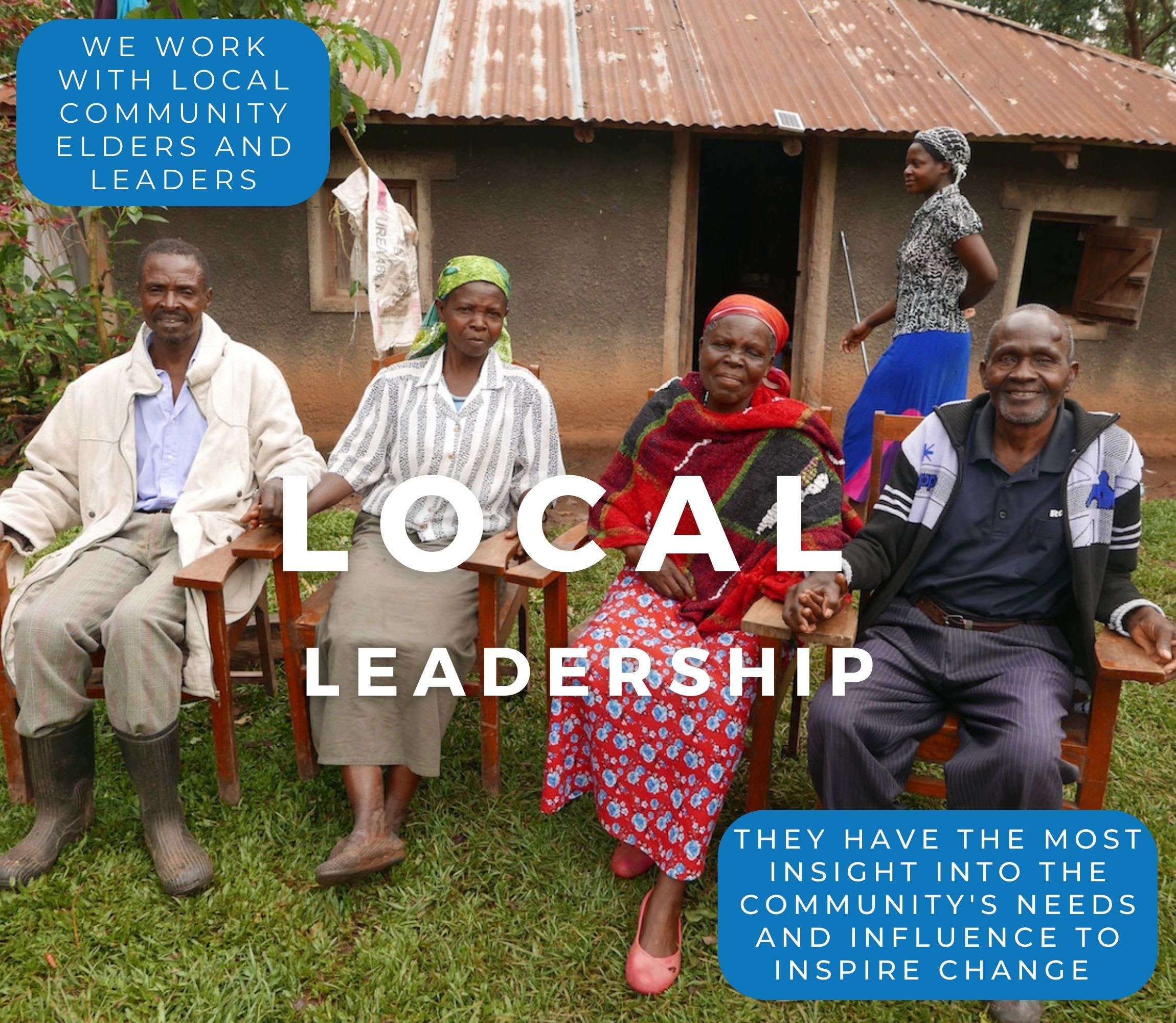
Encouraged and supported by our team's guidance, the community elects a water user committee representative of its diverse members. This committee assumes responsibility for maintaining the water point, organizing community efforts, and gathering fees to ensure its upkeep.