 Protected Spring
 Rehabilitation Project









The Shilalunga Community of 168 people has struggled to find safe water for a very long time. Their main source is an unprotected, dirty, overcrowded spring. Community members have to stand in muddy water just to fill their containers. There is a second option, a nearby borehole, but it sits on private property and is only open at certain times, so people can't always count on it.
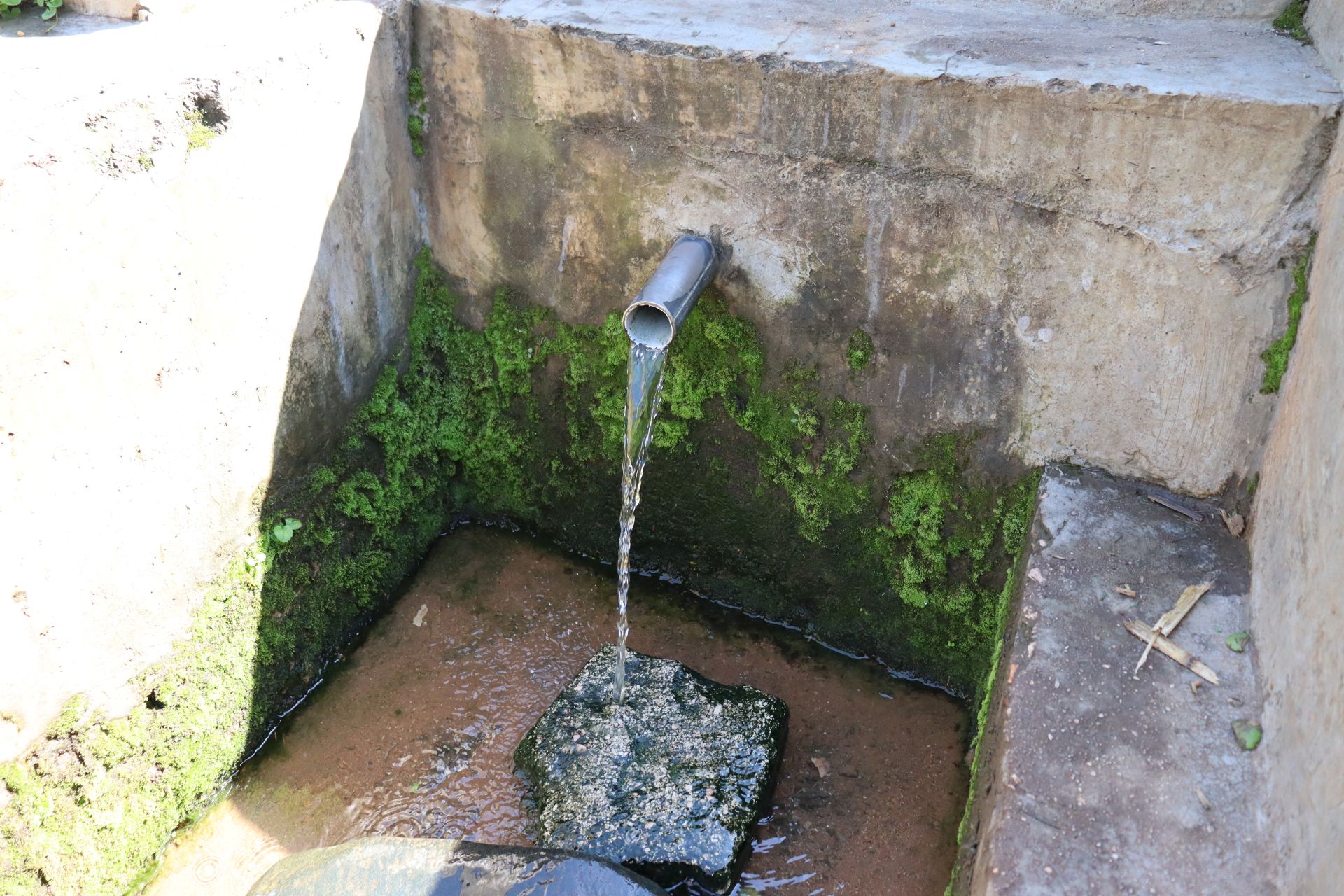
Getting water takes up a huge part of the day. A typical trip takes over an hour. When the dry season hits, and water runs low, competition for the little water there is increases, and relationships between neighbors are strained. The dirty water is also making people sick — the community has reported cases of typhoid, diarrhea, and amoeba infections.
Josephine Indimuli is a 51-year-old mother, farmer, and businesswoman who feels the stress of having to consume dirty water and give it to her family.
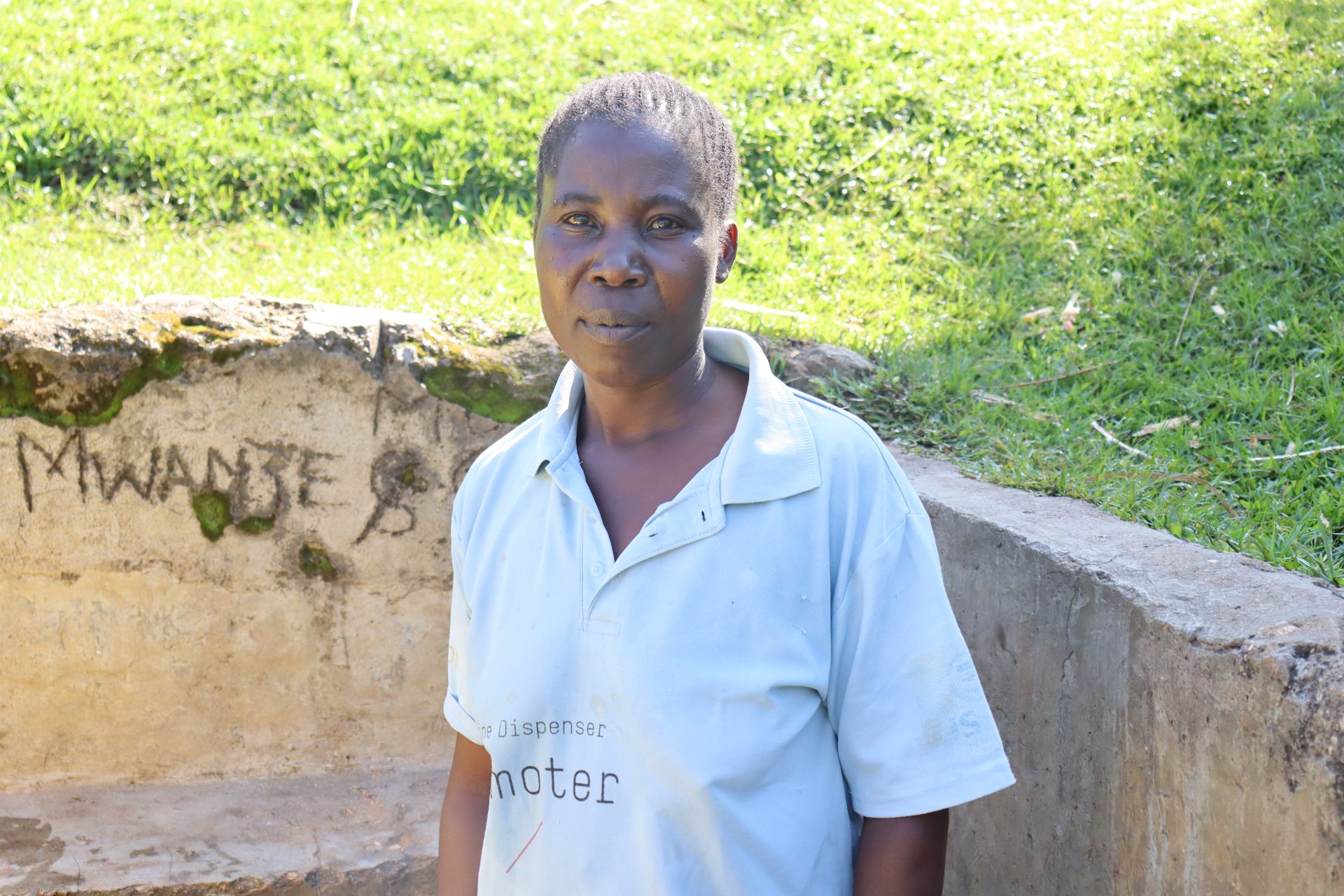
Josephine Indimuli.
"It is really bad and sad that we have to drink this water, as much as we know the consequences of drinking contaminated water, but because we have no option, we have to drink it," she lamented.
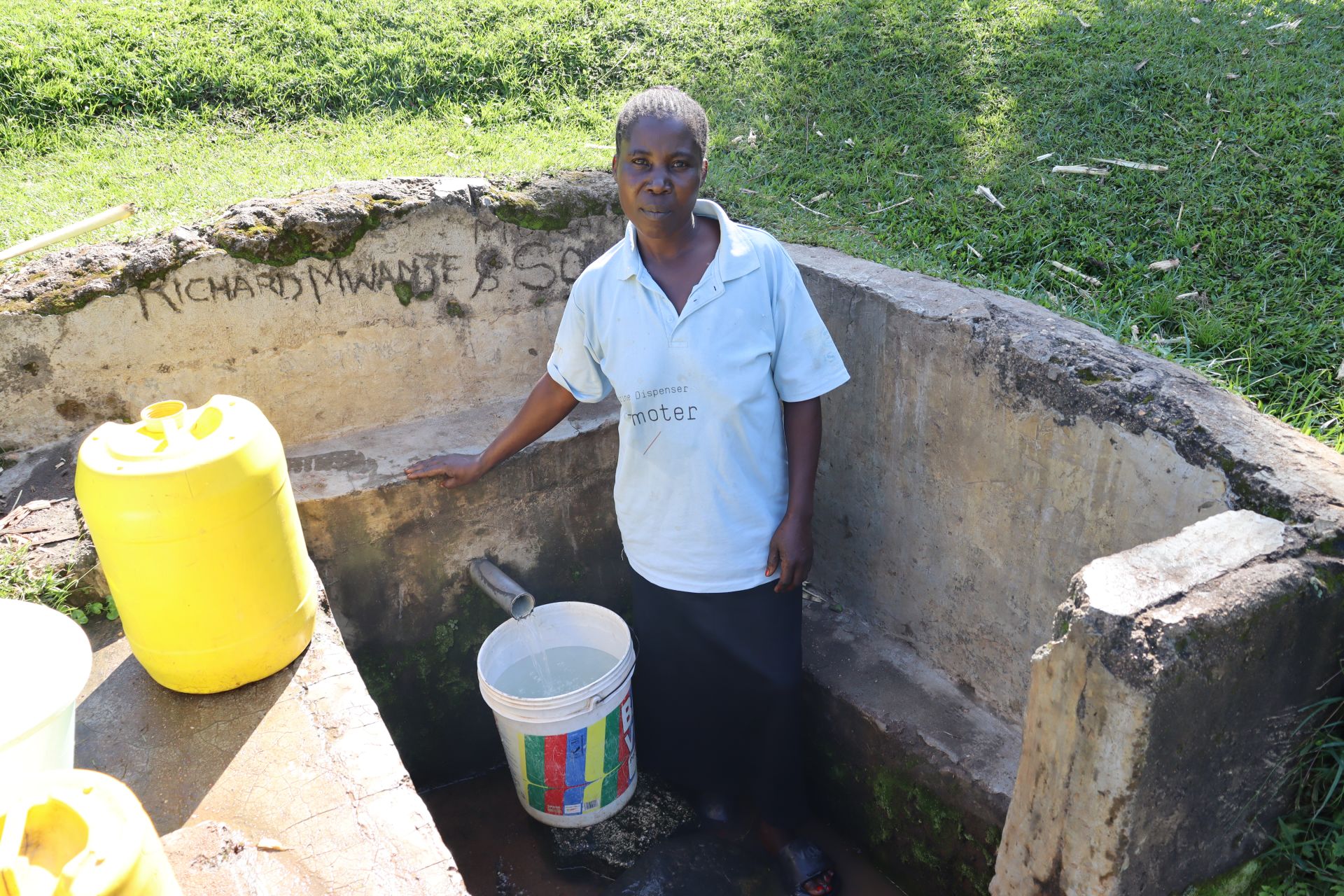
"My young daughter started complaining of having stomach upset. The situation changed very fast when she started having very bad diarrhea. I tried every home remedy intervention that I could manage, but things got out of hand very fast. We rushed to [the] hospital very fast and had to be taken for emergency care where she was attended to. We stayed a few days in [the] hospital."
Inevitably, when someone drinks contaminated water, they risk their health, but that is not the only problem they face, as illness has a domino effect.
When Josephine or her family feels unwell, they also miss out on critical daily activities and making progress in life. For a woman who helps provide for her family by farming, the cost can be high, with lasting consequences.
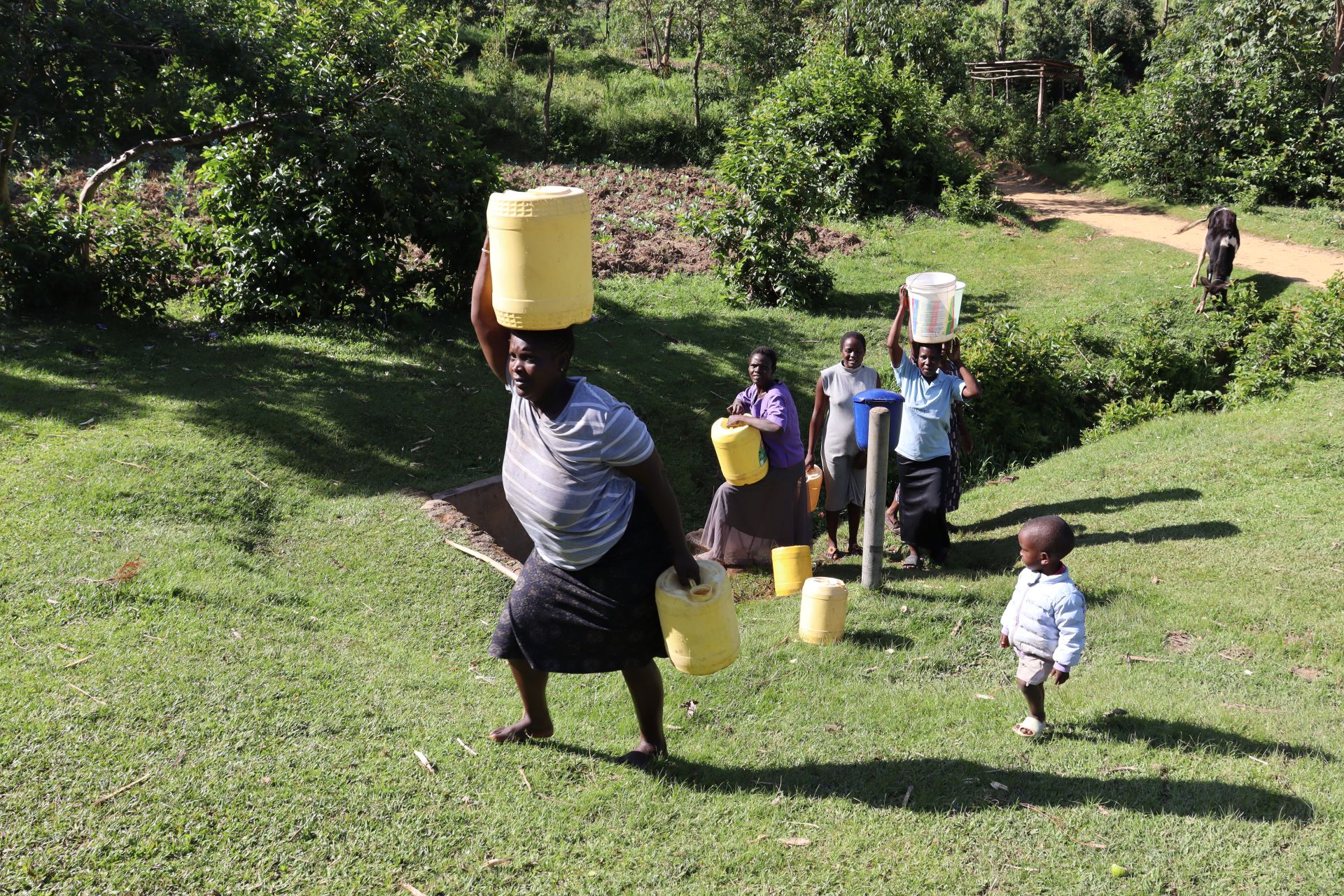
Josephine and other community members carry water home.
"If I am unwell, that means that day or days, I will have to miss work until I am well enough to work again," said Josephine. "If it is my family, I have to hold off my work for some hours or even the whole day sometimes [for] days if they are admitted until they get better. This makes me lose [out] on getting money."
Clean water is critical to survival, and without it, all of life stalls.
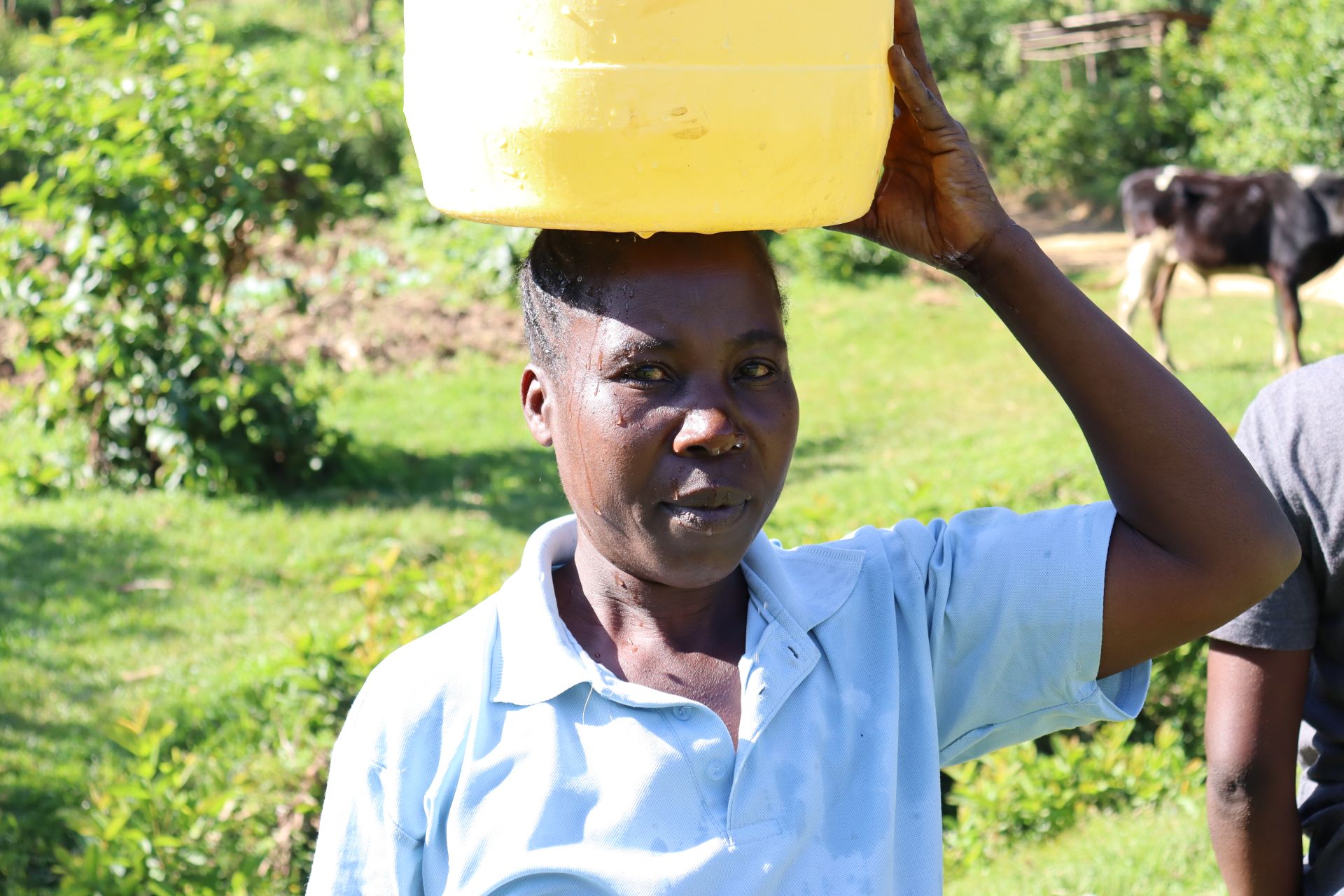
"Water is everything to my family and me. It is where everything starts and falls. It is the first thing I start using in the morning when washing my face, and at night, [it is the] the last thing when showering. We use it for cleaning, cooking, giving the animals, and so much more," Josephine declared.
The importance of accessible, safe water for Josephine's family cannot be overstated.
Steps Toward a Solution
Our technical experts worked with the local community to identify the most effective solution to their water crisis. They decided to safeguard the existing flowing spring.
Spring Protection
Springs are natural water sources that originate from deep underground. As water travels through various layers of the earth, it undergoes a natural filtration process, making it cleaner and safer to drink. To protect these spring sources from contamination, we construct a waterproof cement structure around layers of clay, stone, and soil. This design channels the spring water through a discharge pipe, facilitating easier, faster, and cleaner water collection.
Chlorine Dispenser
As an extra measure towards water quality safety, uniquely engineered chlorine dispensers are installed at all of our spring protection projects so community members can treat their water with pre-measured doses of chlorine. The chlorine treats any possible contamination and stays active for two to three days, ensuring water stays safe to use even when stored at home. Chlorine delivery and maintenance of the dispensers are part of our ongoing community support.
Community Education & Ownership
Hygiene and sanitation training are integral to our water projects. Training is tailored to each community's specific needs and includes key topics such as proper water handling, improved hygiene practices, disease transmission prevention, and care of the new water point. Safe water and improved hygiene habits foster a healthier future for everyone in the community.
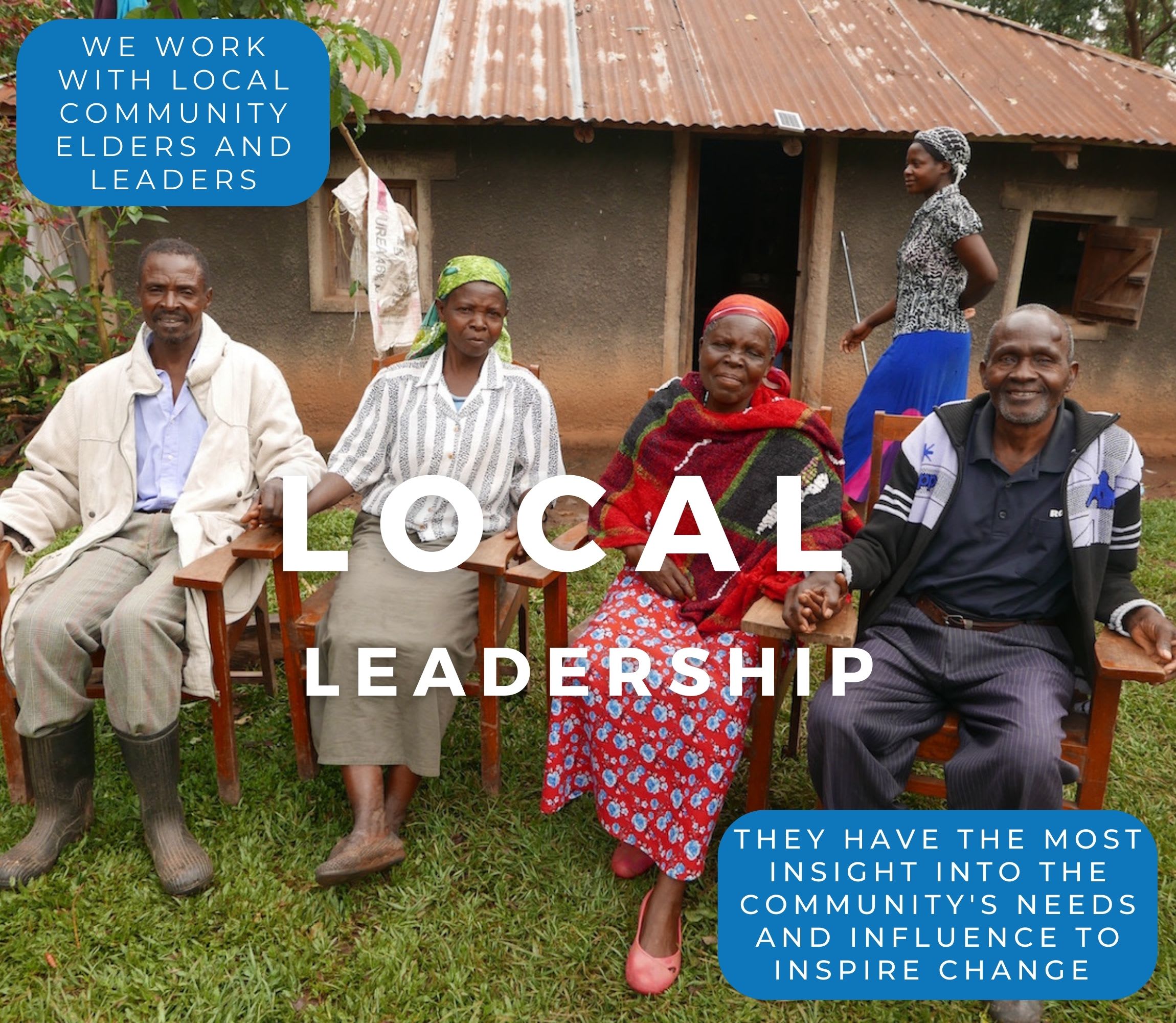
Encouraged and supported by our team's guidance, the community elects a water user committee representative of its diverse members. This committee assumes responsibility for maintaining the water point, organizing community efforts, and gathering fees to ensure its upkeep.