 Protected Spring
 Rehabilitation Project











In the hills of Kapsegeli, a community in Hamisi, Vihiga County, eleven-year-old Ryan spends up to two hours a day fetching water for his family.

Ryan.
The community's spring sits partway down a steep, rocky hillside, and the footpath leading to it turns muddy and slippery whenever it rains. Reaching the water is only the first part of the challenge - Kapsegeli's spring is shared by the whole community and by pupils from the nearby Kapsegeli K.A.G. Primary School, so when the school's own rainwater tank runs dry, the crowd at the spring grows fast.
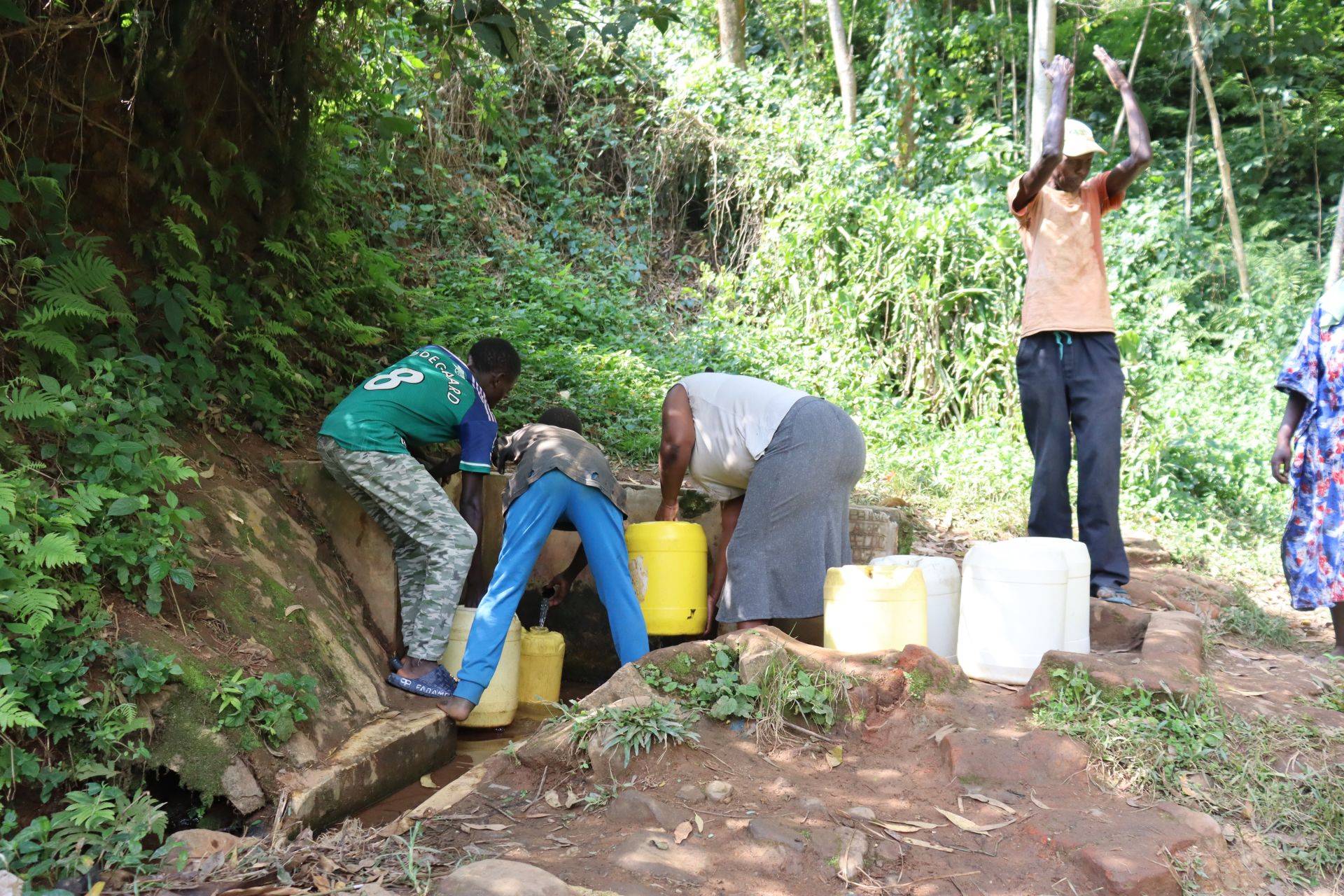
Community members crowd around the spring, trying not to slip.
"The spring has many people," Ryan explained. "Kapsegeli Primary gets its water from this spring. When the pupils are sent for water, they overcrowd here. The spring serves many households; other people come with many jerricans to collect water, making [the] fetching of water take longer."
Years of heavy use have worn the spring down. Its protective box is eroded, the stairs leading to the water severely damaged, and the stone pitching crumbled away. With no working drainage channel, surface runoff carries soil straight into the spring whenever it rains, clouding the water and turning the already steep path into a hazard.

The worn out spring in need of repair.
Ryan feels this decline every time he goes to fetch water. "Our spring is deteriorating day by day," he said. "It has worn out every part of it. It is no longer safe for small children to fetch water due to [the] risk of getting hurt or injured."
The long wait at the spring shapes his day in other ways, too. Taking turns isn't always straightforward. Ryan said adults will sometimes come ahead of the children in line. "Older people, especially mothers, would come to fetch water quickly without following the queue with excuses of leaving small babies at home. Other older [people] would assume children like to play, so they would cut through the queues."
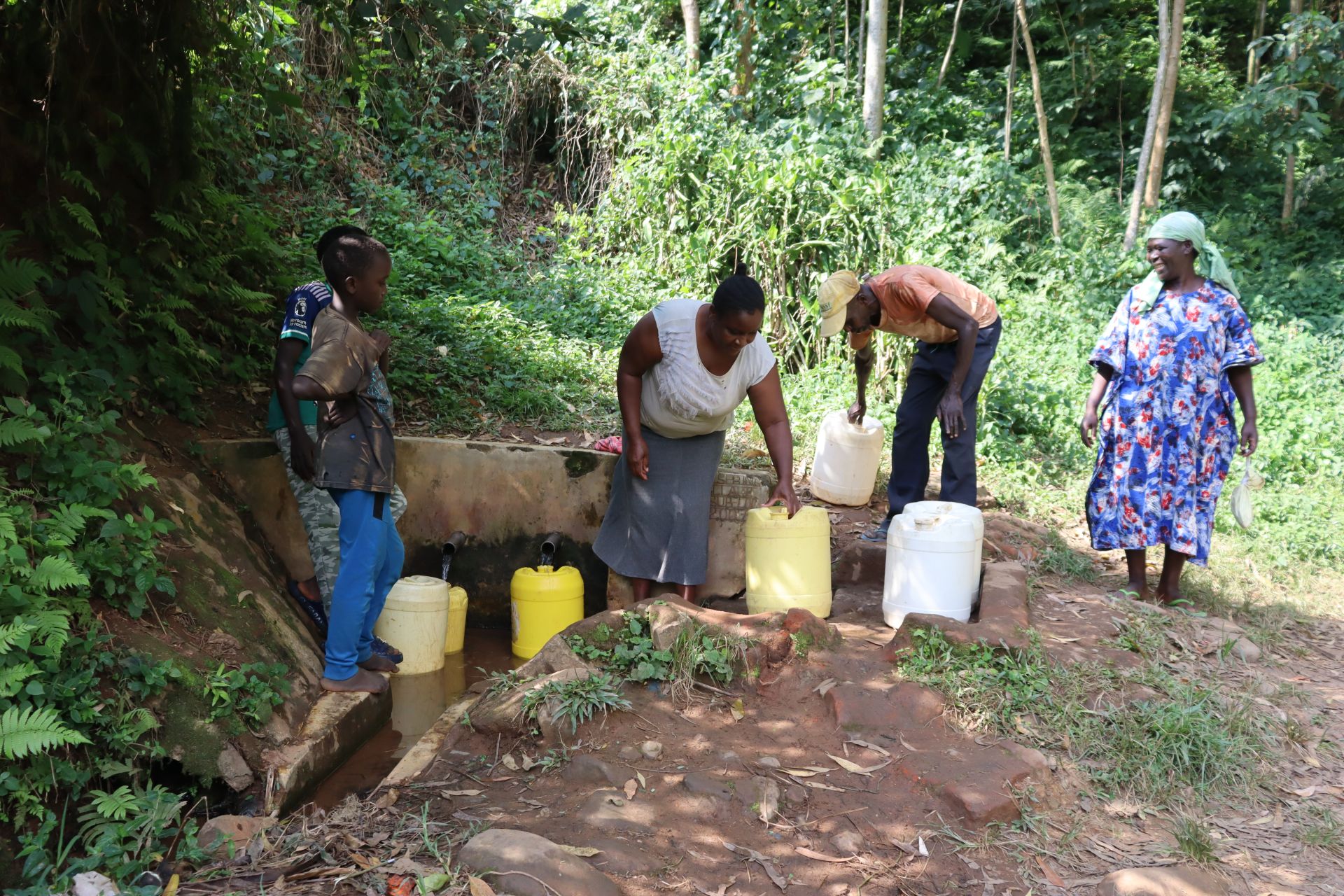
Ryan waits for his turn.
During the dry season, that wait pulls Ryan out of the classroom entirely. "In school, we have a huge tank that stores rainwater. When it is dry, we rush here at the spring, missing some lessons on the timetable," he said.
Even so, Ryan doesn't resent the responsibility so much as worry about the younger children who come to the spring alongside him. "I like being used to help, especially with logistics. I have no problem coming to fetch water, but I am always concerned about small children who also come to fetch water with us."
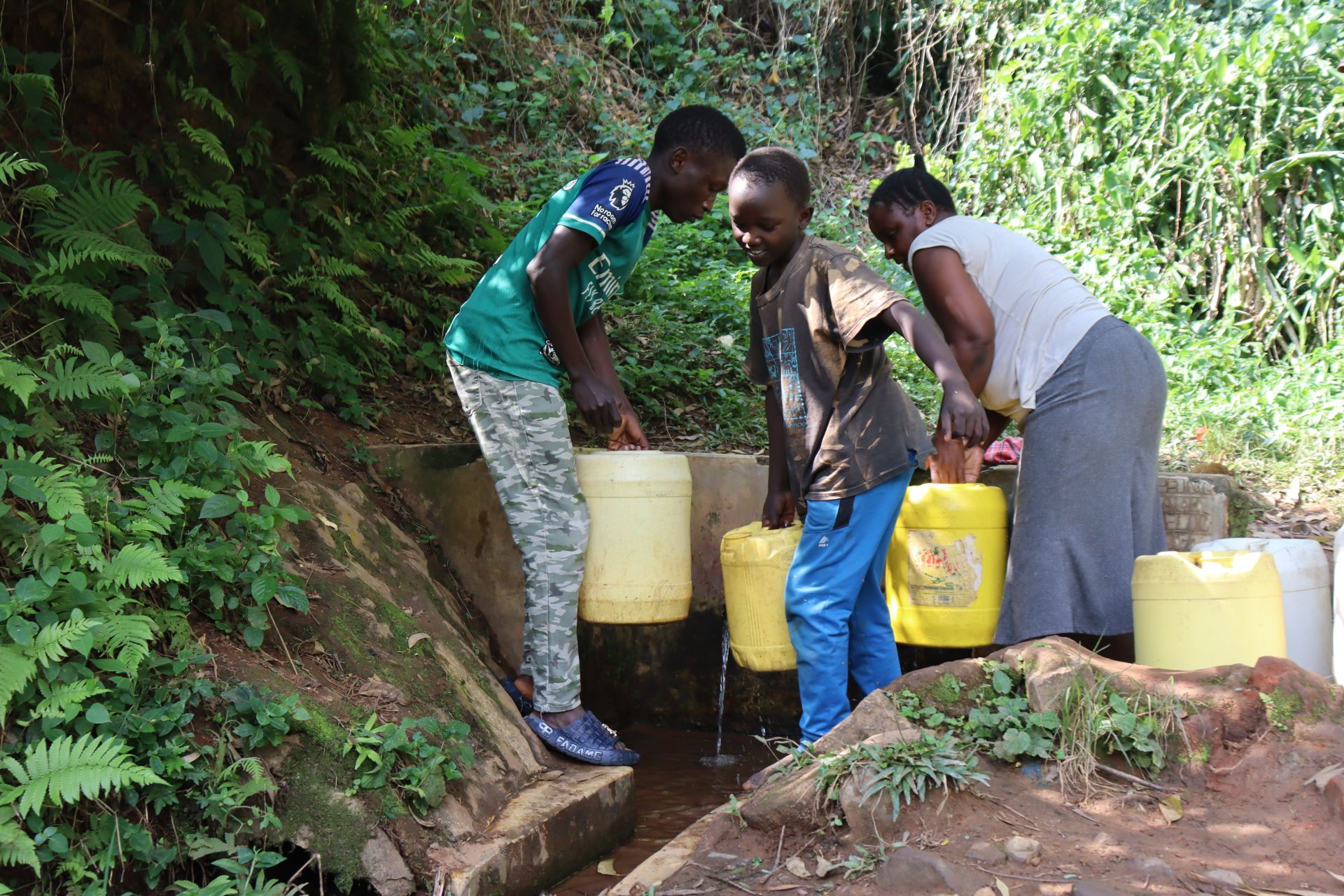
Ryan (front) starts hauling his full jerrycan home.
Asked what he'd do with the time he currently spends fetching water, Ryan didn't hesitate: "I will use that time to play, do assignments, and help my parents with simple home chores like cleaning utensils and feeding our goats." Someday, he hopes to become a teacher.
The proposed project would protect Kapsegeli's spring by rebuilding the stairs and walls, restoring proper drainage, and clearing the site so that surface water no longer reaches the source. For Ryan, that would mean an end to a daily risk he already knows too well. "[Protecting] the spring will make fetching water faster, easier, and safer," he said. "The damaged parts will look good, accessible stairs to prevent injuries, and safer for small children, also."
Steps Toward a Solution
Our technical experts worked with the local community to identify the most effective solution to their water crisis. They decided to safeguard the existing flowing spring.
Spring Protection
Springs are natural water sources that originate from deep underground. As water travels through various layers of the earth, it undergoes a natural filtration process, making it cleaner and safer to drink. To protect these spring sources from contamination, we construct a waterproof cement structure around layers of clay, stone, and soil. This design channels the spring water through a discharge pipe, facilitating easier, faster, and cleaner water collection.
Chlorine Dispenser
As an extra measure towards water quality safety, uniquely engineered chlorine dispensers are installed at all of our spring protection projects so community members can treat their water with pre-measured doses of chlorine. The chlorine treats any possible contamination and stays active for two to three days, ensuring water stays safe to use even when stored at home. Chlorine delivery and maintenance of the dispensers are part of our ongoing community support.
Community Education & Ownership
Hygiene and sanitation training are integral to our water projects. Training is tailored to each community's specific needs and includes key topics such as proper water handling, improved hygiene practices, disease transmission prevention, and care of the new water point. Safe water and improved hygiene habits foster a healthier future for everyone in the community.
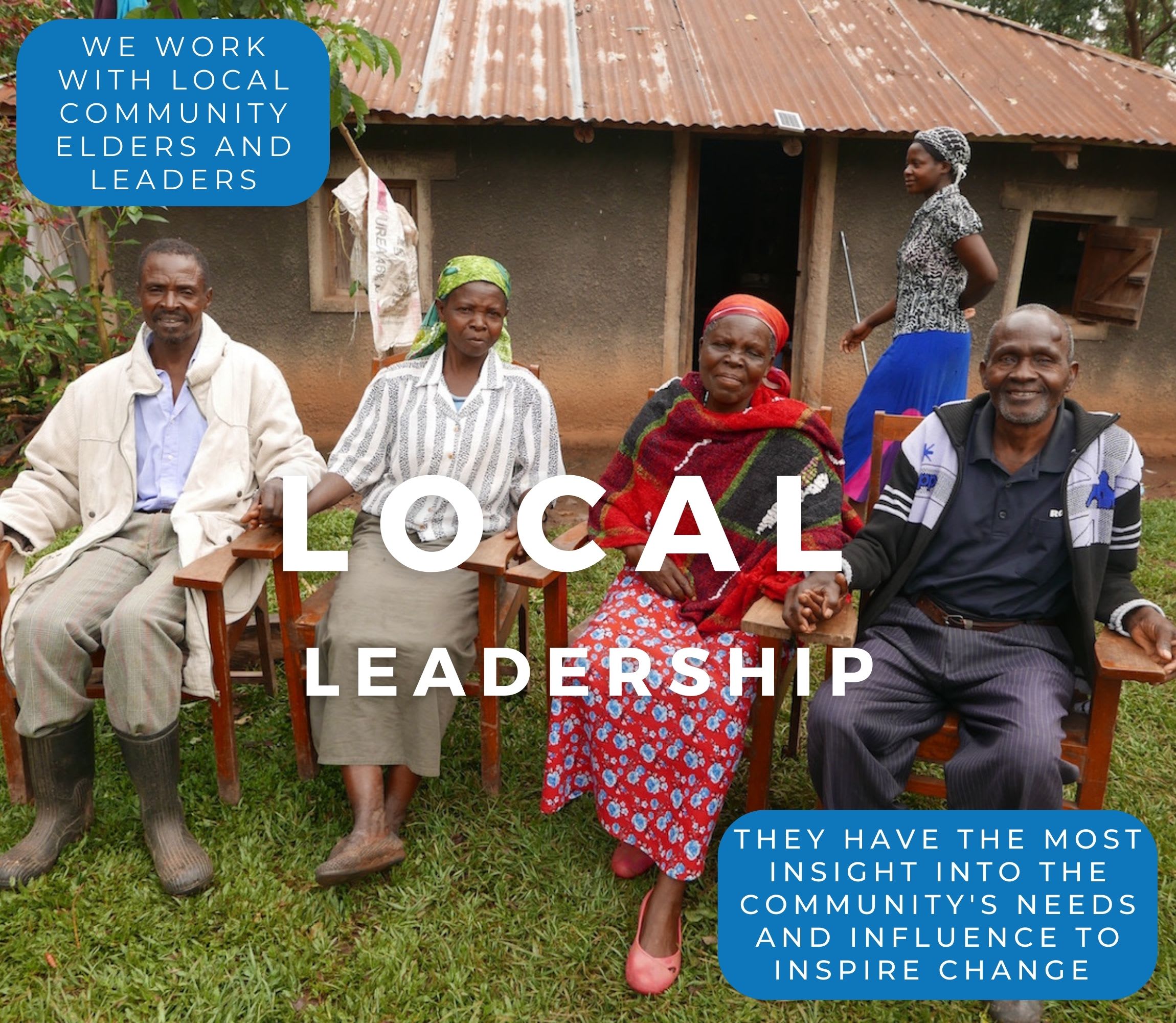
Encouraged and supported by our team's guidance, the community elects a water user committee representative of its diverse members. This committee assumes responsibility for maintaining the water point, organizing community efforts, and gathering fees to ensure its upkeep.