 Protected Spring

 Rehabilitation Project









Lukala is home to 280 people, and most of them get their water from the Cosmas Mutuli Spring at the bottom of a steep, muddy slope. People from a nearby place of worship, a neighboring community, and the local market also use it. Twelve-year-old Sharlene is one of the people who walks down that slope for water.
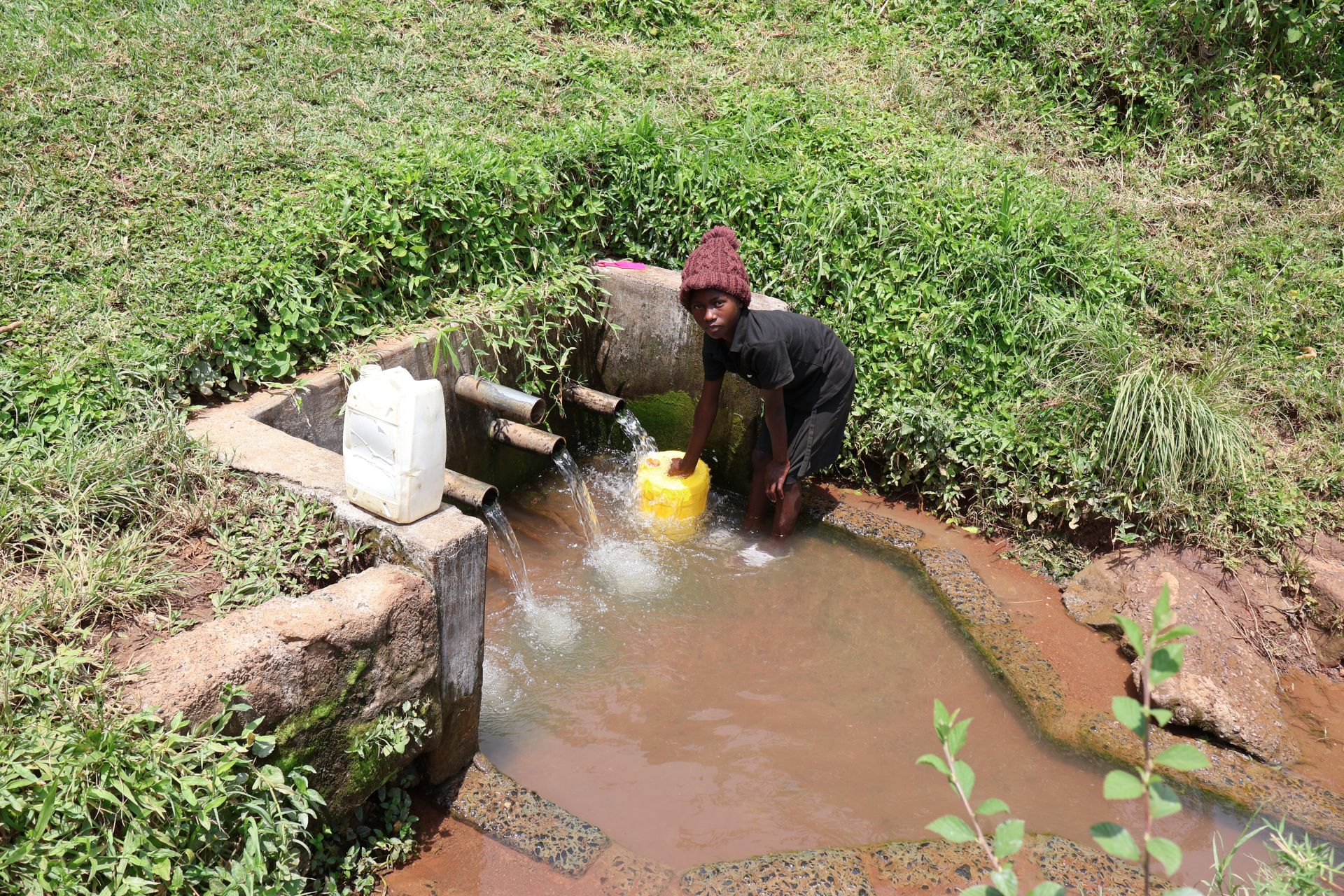
Sharlene at the spring in need of repair.
“It takes a long time because the path is steep and muddy, so I have to walk slowly and be careful. Sometimes I would rather be playing with my friends, but fetching water takes that time away. I don’t really like going to the water point because the journey is tiring and the path is difficult.”
The spring sits among farm plots on uneven ground. Its drainage is blocked, so water pools around it and the ground gets slippery, especially in the rainy season. People carrying heavy containers struggle to keep their balance.
“I worry about slipping and falling because the path to the spring is steep, muddy and especially slippery after rain. I also need to be careful when carrying a full jerrycan.”
The spring structure is also in disrepair. Because of the blocked drainage, rainwater and surface runoff can flow toward the spring and mix with it. After rain, the water turns slightly cloudy and can taste a little earthy. No one has reported getting sick so far, but the spring is open to contamination.
There is a protected spring nearby that is fenced, clean, and in good condition. It’s far enough away, though, that a typical trip there takes about 20 minutes and can stretch to 40. For many families, the closer, damaged spring is the realistic choice.
“Life has become harder since the water point broke down. I spend more time fetching water and the steep, muddy path makes it difficult and tiring to reach the spring. Sometimes I get home late and have less time for playing and doing my schoolwork.”
That lost time follows Sharlene into the classroom.
“Yes. Sometimes fetching water takes a lot of time, so I may arrive late at school or have less time to do my homework and study. Also, sometimes I feel tired in class which can affect how well I prepare for my exams.”
“I don’t really like being sent to fetch water because of the poor terrain which makes me tired. Sometimes I feel worried that I might slip and fall, especially when it rains. I would rather use that time to play or do my schoolwork.”
Sharlene is clear about where she wants to go.
“I want to do well in school and become a teacher when I grow up because I enjoy helping other children learn. I also want to have a good job so I can support my parents and make them proud of me. I feel happy when I think about having a better future for myself and my family.”
She also knows how she’d use the time she gets back.
“If I did not have to spend so much time fetching water, I would have more time to play with my friends, do my schoolwork and rest.”
The community knows the spring needs repairs, but it doesn’t have the skills, technical support, or money to rebuild it or put in steps. So people have kept using it as it is. They want a better water point, and they want to improve sanitation and hygiene across the area.
The planned work will rebuild the spring, add steps down the slope, fence the area, and dig a cut-off drain to send runoff away from the water. The project will also include training on water, sanitation, and hygiene, plus menstrual hygiene management.
“The new water point will have proper steps and better drainage, so I will not have to walk on the slippery, muddy path. I will also have a safer and cleaner place to collect water which will reduce the chances of getting dirty or drinking contaminated water. I will feel safer when fetching water especially during the rainy season.”
With safe steps and clean water close to home, Sharlene can get to school on time, finish her homework, and still have time to be a kid.
Steps Toward a Solution
Our technical experts worked with the local community to identify the most effective solution to their water crisis. They decided to safeguard the existing flowing spring.
Spring Protection
Springs are natural water sources that originate from deep underground. As water travels through various layers of the earth, it undergoes a natural filtration process, making it cleaner and safer to drink. To protect these spring sources from contamination, we construct a waterproof cement structure around layers of clay, stone, and soil. This design channels the spring water through a discharge pipe, facilitating easier, faster, and cleaner water collection.
Chlorine Dispenser
As an extra measure towards water quality safety, uniquely engineered chlorine dispensers are installed at all of our spring protection projects so community members can treat their water with pre-measured doses of chlorine. The chlorine treats any possible contamination and stays active for two to three days, ensuring water stays safe to use even when stored at home. Chlorine delivery and maintenance of the dispensers are part of our ongoing community support.
Community Education & Ownership
Hygiene and sanitation training are integral to our water projects. Training is tailored to each community's specific needs and includes key topics such as proper water handling, improved hygiene practices, disease transmission prevention, and care of the new water point. Safe water and improved hygiene habits foster a healthier future for everyone in the community.
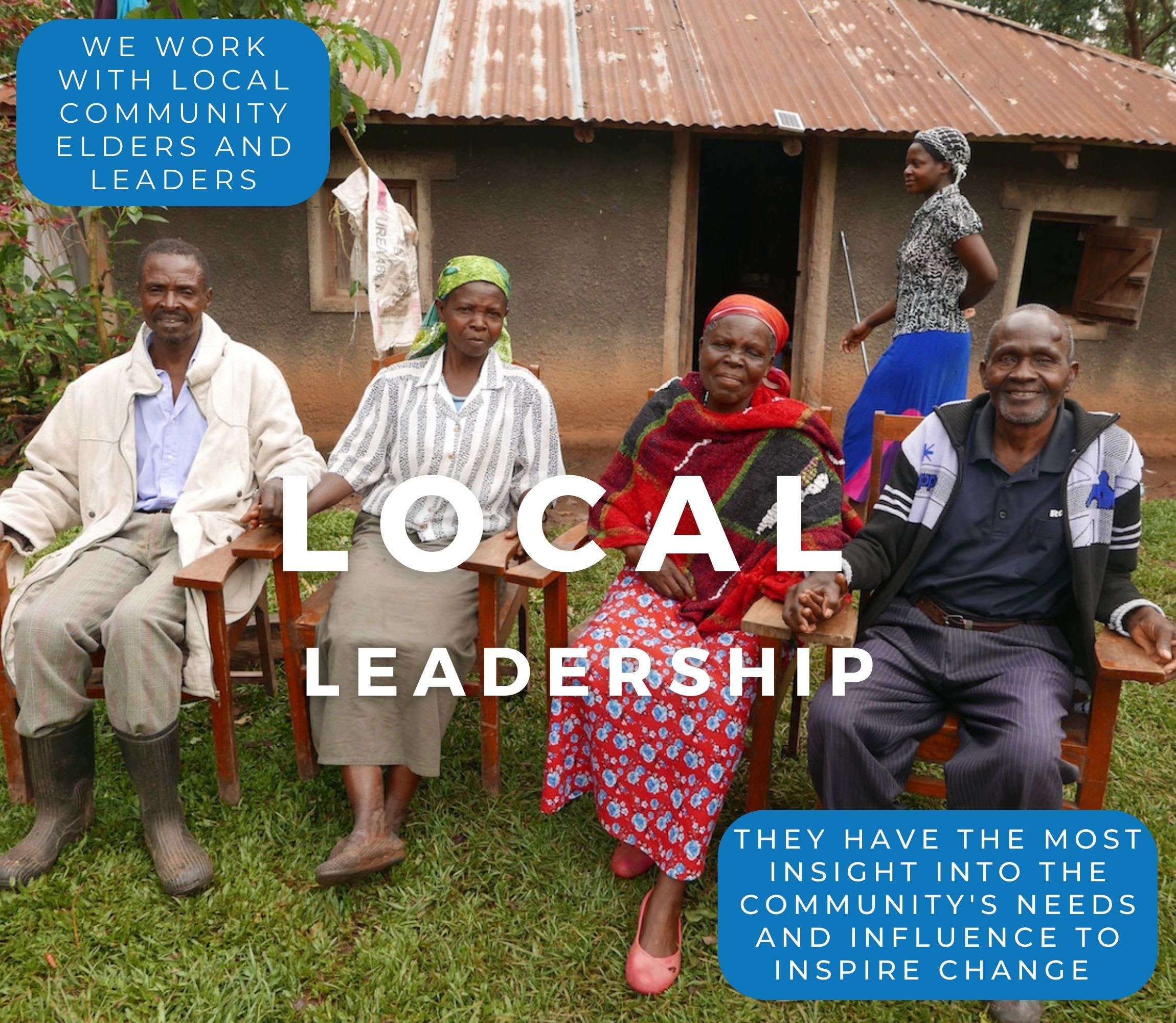
Encouraged and supported by our team's guidance, the community elects a water user committee representative of its diverse members. This committee assumes responsibility for maintaining the water point, organizing community efforts, and gathering fees to ensure its upkeep.