 Protected Spring

 Rehabilitation Project









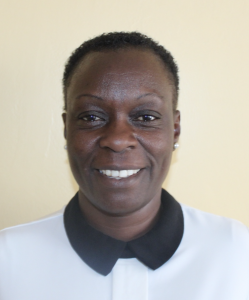

Seventeen-year-old Monica lives in the Fuvale Community, where 280 people rely on Masamba Nanjendo Spring, which is in disrepair, for their water. The water crisis can get in the way of her plans, but not her dreams. “When all goes well with me, I want to go to university and be a teacher to give back to my community," Monica declared.
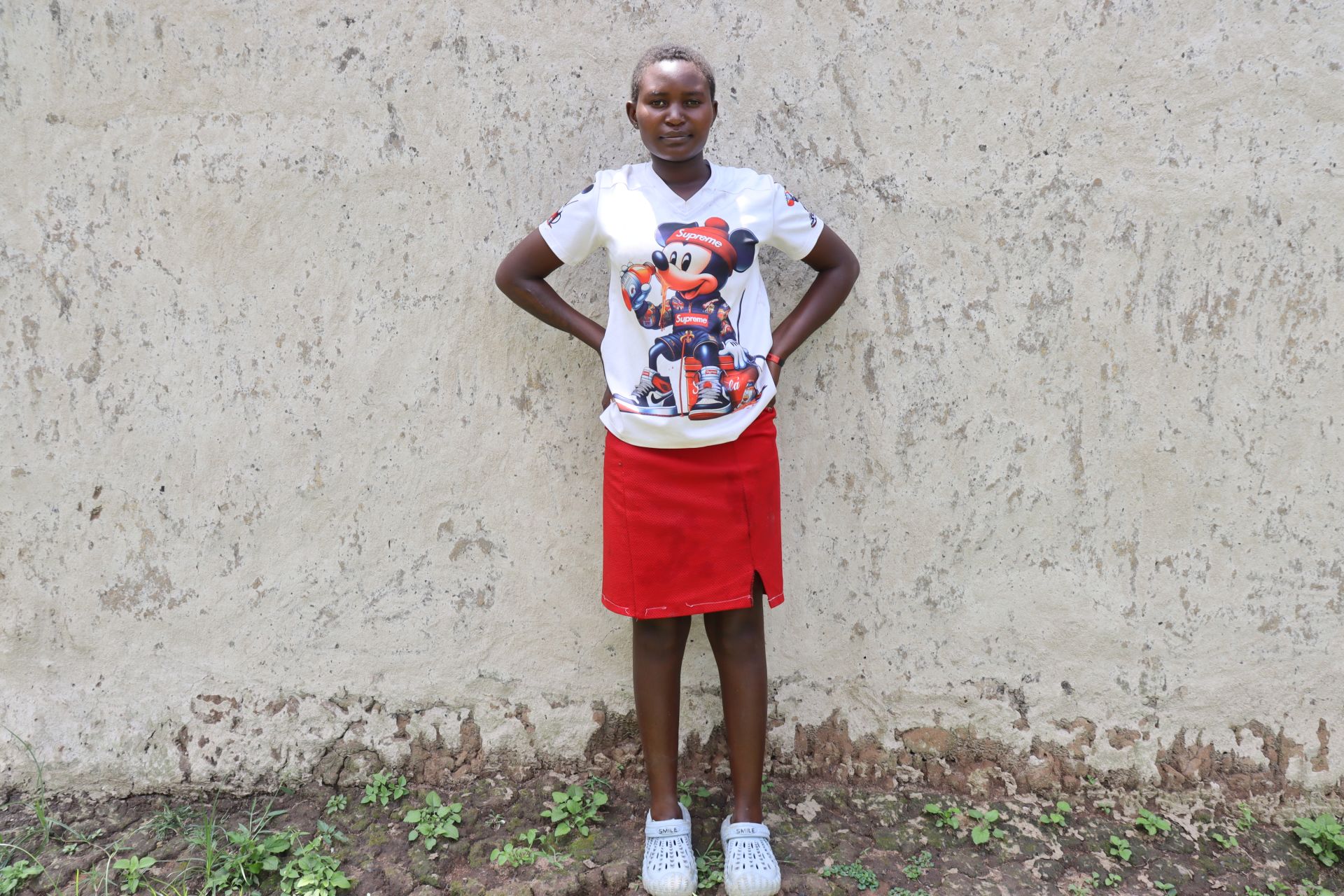
Monica.
It has been three years since Fuvale had a safe, reliable water source, and every day Monica balances her schoolwork against the trip to the spring.
When school ends, her second job of collecting water begins. “Fetching water takes too long because of queuing; by the time I come back home after school, I find many people at the spring,” she said. It costs her about 30 minutes each day, and she feels it before she even leaves school.
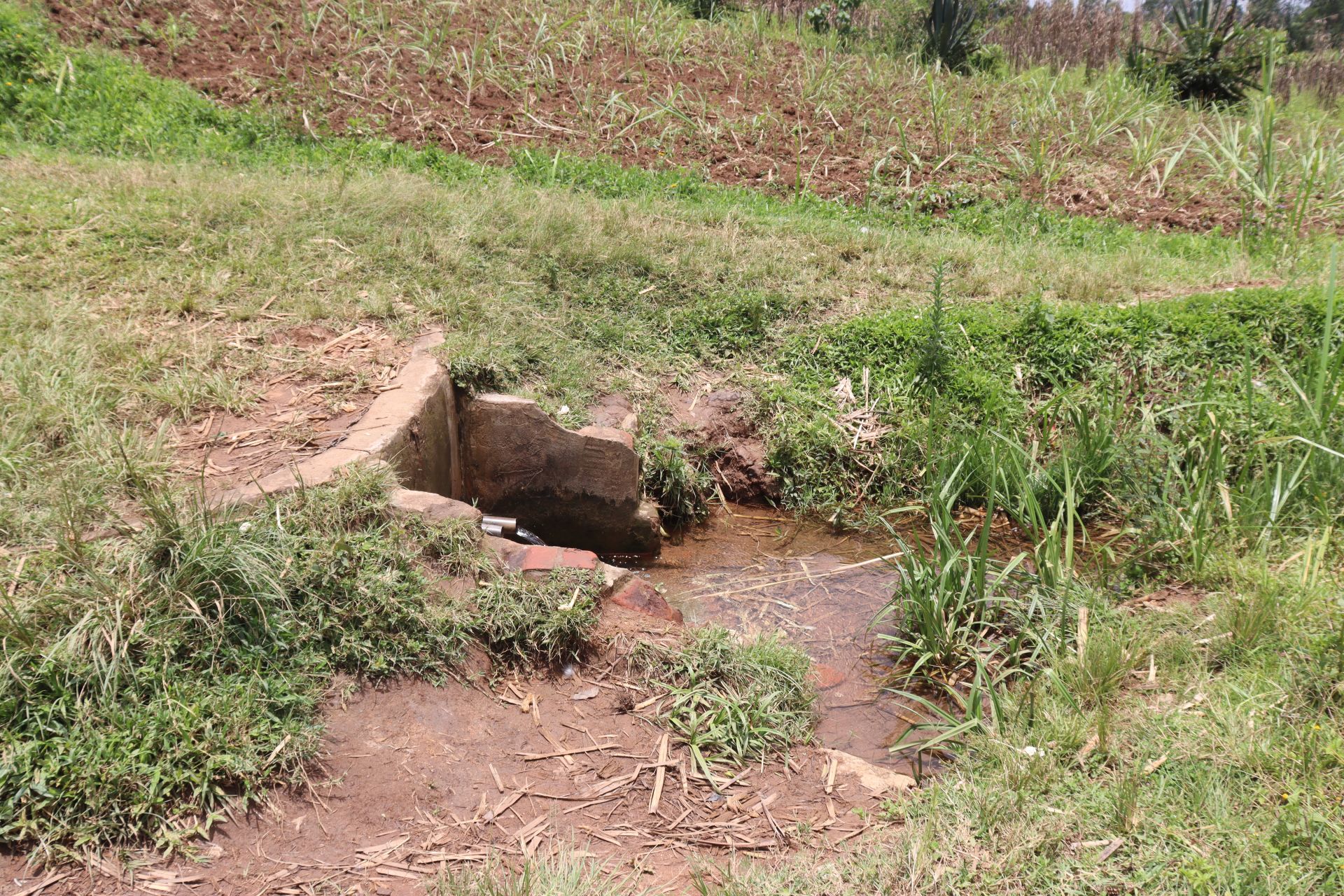
The broken-down spring.
“When it comes time to go back home, I feel tired because I know I will be sent to fetch water, which I feel bad [about]," Monica lamented.
Still, Monica goes, because her family is counting on her. On weekends, neighbors crowd the spring from morning until evening, and some come to wash their clothes there. As one of the youngest in line, Monica is often pushed aside. Even then, she is thinking of her mother at home.
"Mostly during weekends when many people assemble at the spring to fetch water. As a child, I will be pushed behind the old people to take water first. Little did they know that even my mum is waiting [for] water at home.”
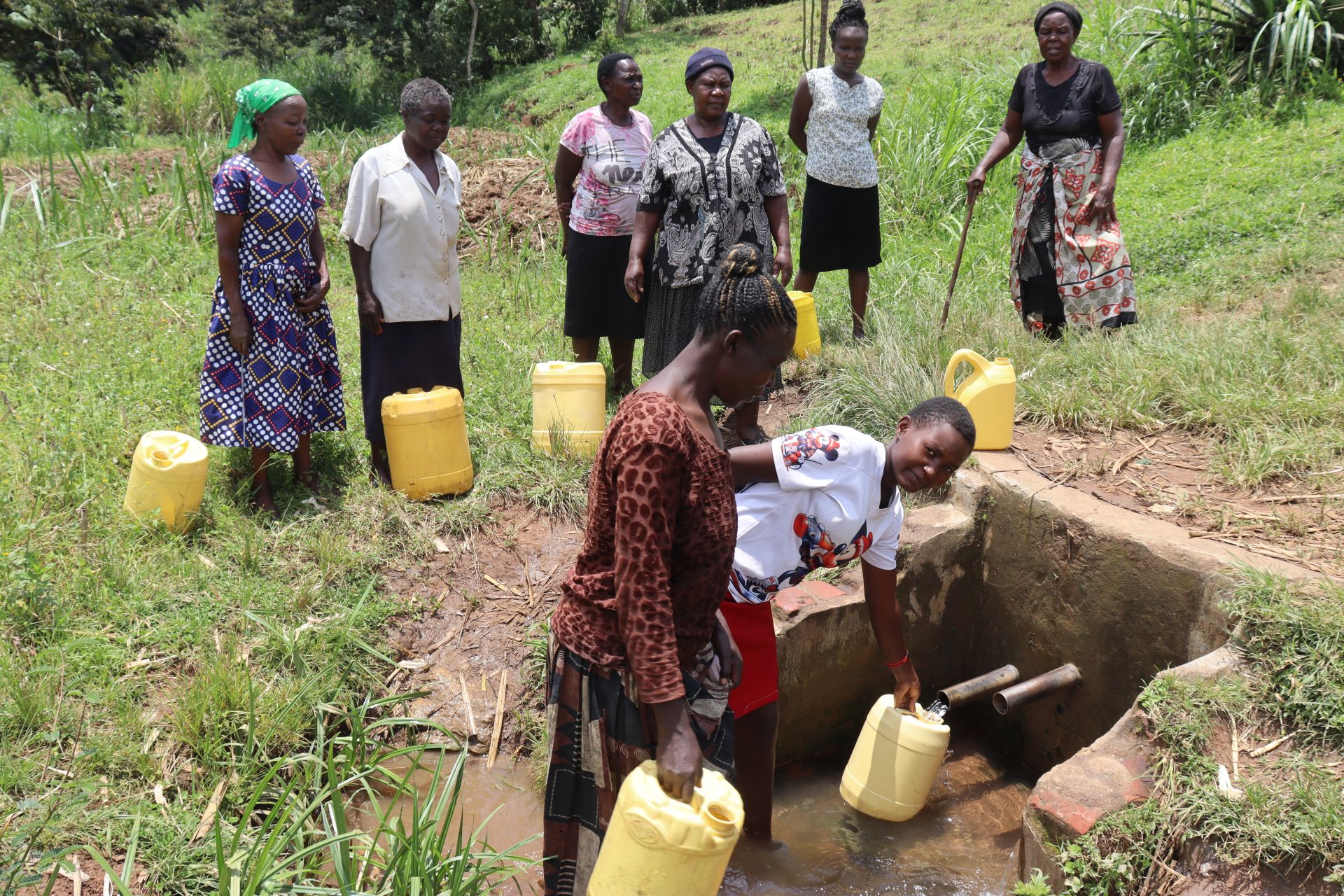
Monica collects water at the busy spring.
“When there is [a] long queue, [I] have been pushed back several [times] with old people to wait, which I feel so bad in my heart," she said.
Reaching the water takes care and balance. The spring sits on steep ground that turns slippery in the rain. Because the spring is broken, Monica has to wade into the water to fill her container.
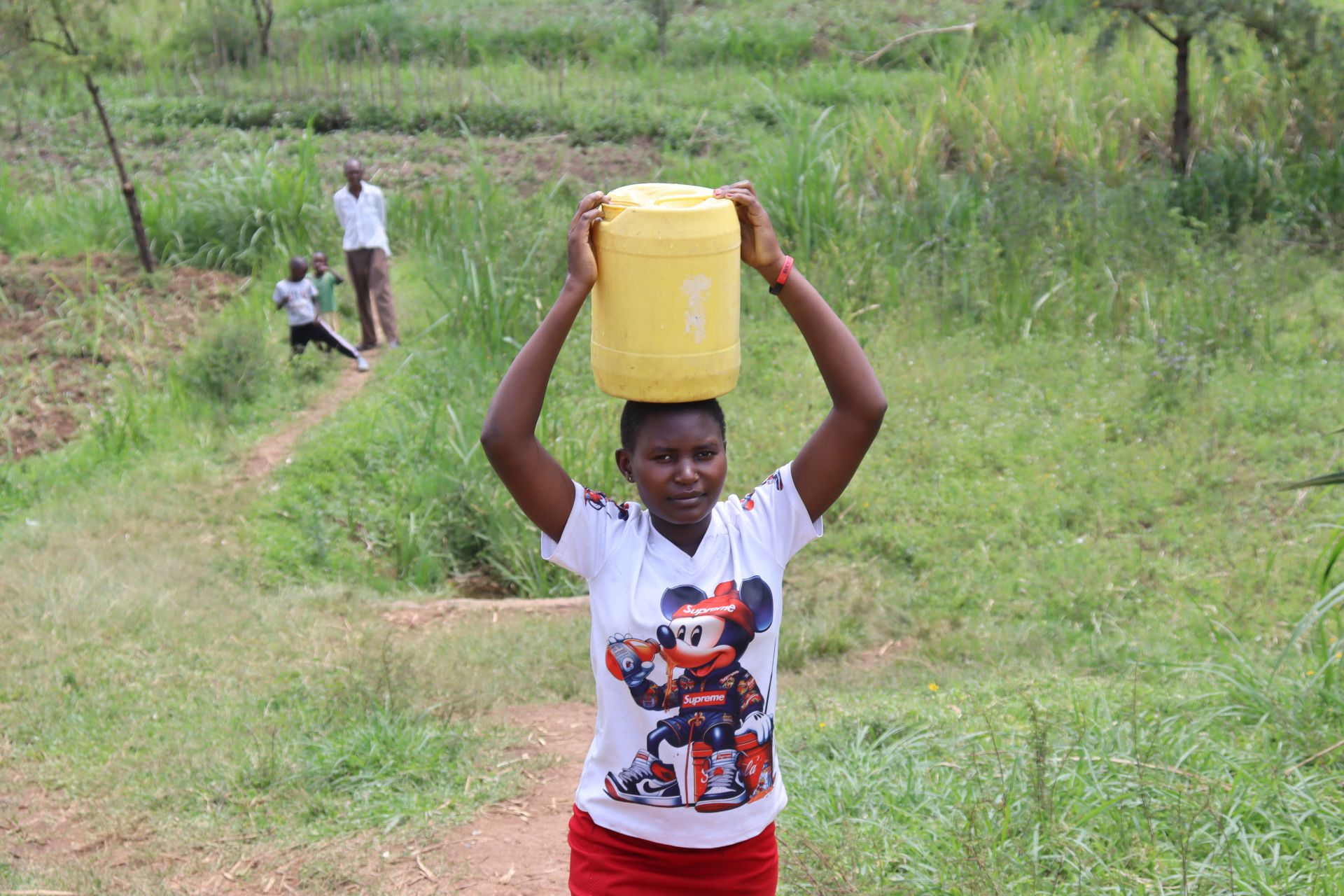
Monica hauls a heavy jerrycan back up the hill from the spring.
“Life has been difficult since the water point broke because it is not easy to access the water point," Monica said. "[There are] no stairs to use to access the water point.”
After all that effort, the water still isn’t safe. After heavy rain, dirty runoff gets into the broken spring, and silt turns the water a different color. Community members say they get stomachaches after drinking it. Rainwater helps when it rains, but it is seasonal and starts to smell after a couple of days.
Monica knows what this is costing her, and she says it plainly. “Because I waste a lot of time queuing for water, which makes me do my homework late, and sometimes I don’t finish my homework in time, which affects my academic performance at school.”
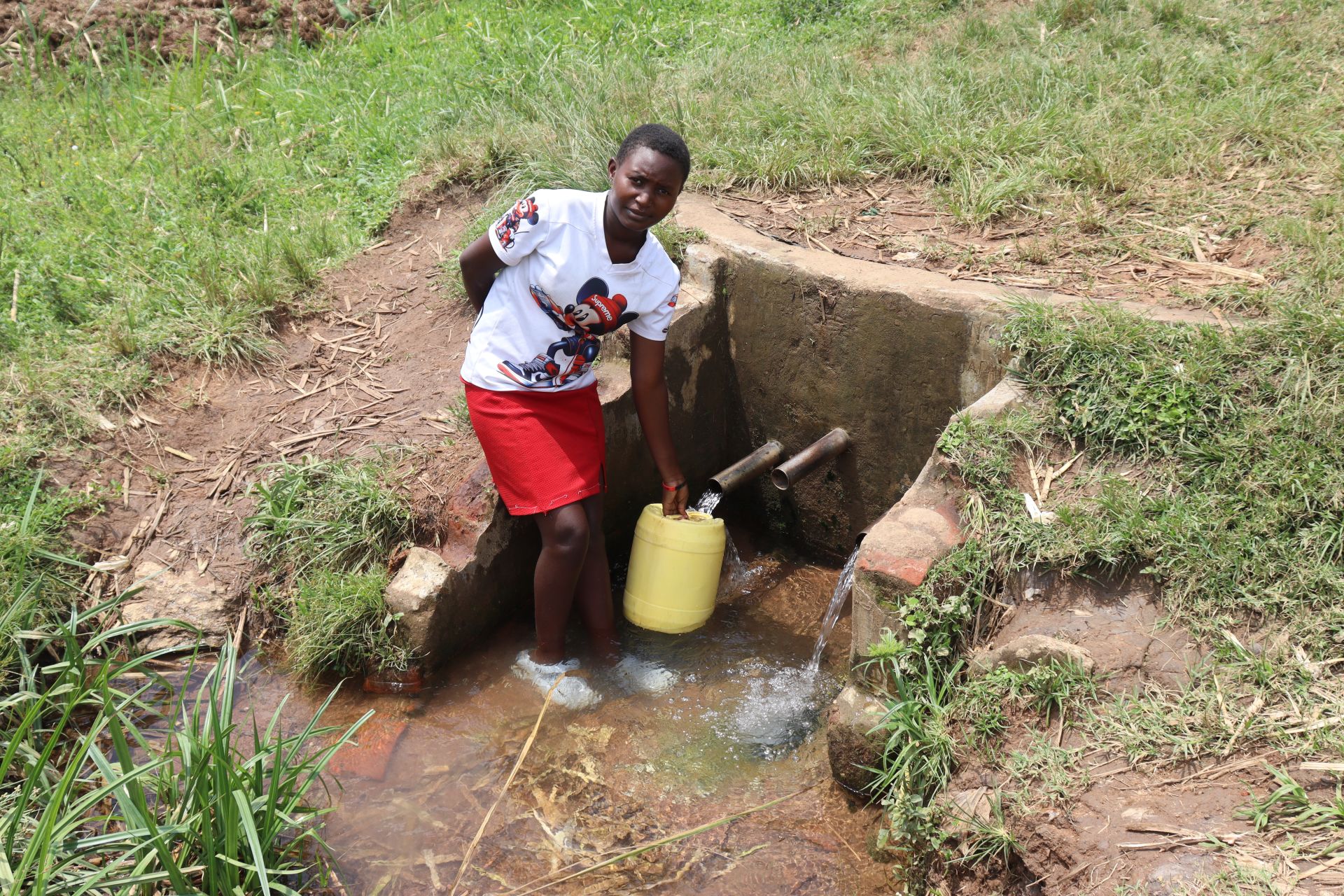
A protected spring will provide Monica with a safe, reliable water source close to home, and hygiene training will teach her family and neighbors how to treat and handle their water.
Monica already has a plan for the time she gets back, and she has listed what comes first: “I will utilize the time very well. I will do my schoolwork on time. I will use the time to help my mother with domestic work, then lastly I will play with my friends.”
Steps Toward a Solution
Our technical experts worked with the local community to identify the most effective solution to their water crisis. They decided to safeguard the existing flowing spring.
Spring Protection
Springs are natural water sources that originate from deep underground. As water travels through various layers of the earth, it undergoes a natural filtration process, making it cleaner and safer to drink. To protect these spring sources from contamination, we construct a waterproof cement structure around layers of clay, stone, and soil. This design channels the spring water through a discharge pipe, facilitating easier, faster, and cleaner water collection.
Chlorine Dispenser
As an extra measure towards water quality safety, uniquely engineered chlorine dispensers are installed at all of our spring protection projects so community members can treat their water with pre-measured doses of chlorine. The chlorine treats any possible contamination and stays active for two to three days, ensuring water stays safe to use even when stored at home. Chlorine delivery and maintenance of the dispensers are part of our ongoing community support.
Community Education & Ownership
Hygiene and sanitation training are integral to our water projects. Training is tailored to each community's specific needs and includes key topics such as proper water handling, improved hygiene practices, disease transmission prevention, and care of the new water point. Safe water and improved hygiene habits foster a healthier future for everyone in the community.
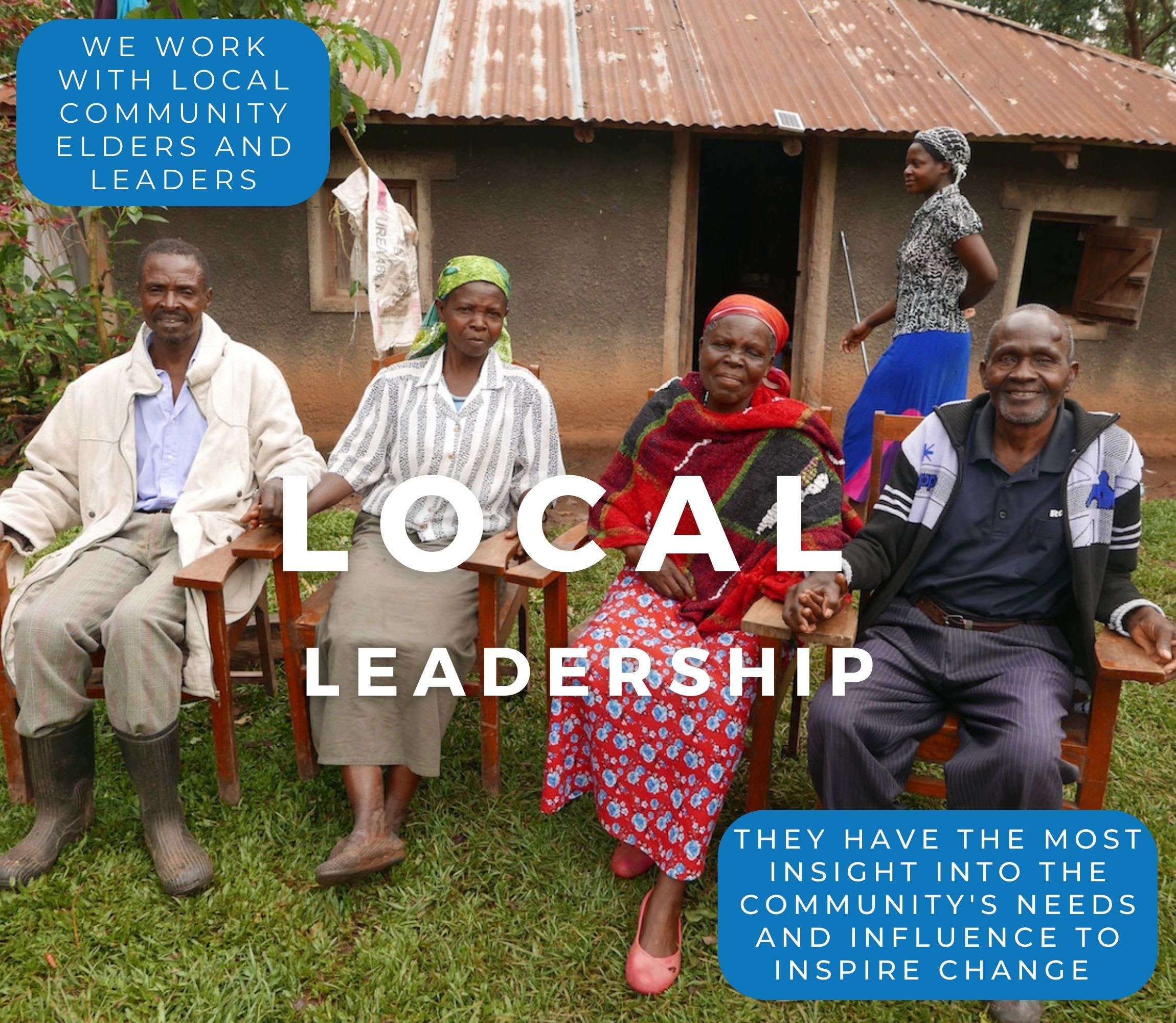
Encouraged and supported by our team's guidance, the community elects a water user committee representative of its diverse members. This committee assumes responsibility for maintaining the water point, organizing community efforts, and gathering fees to ensure its upkeep.