
Project Status


Project Type:  Protected Spring

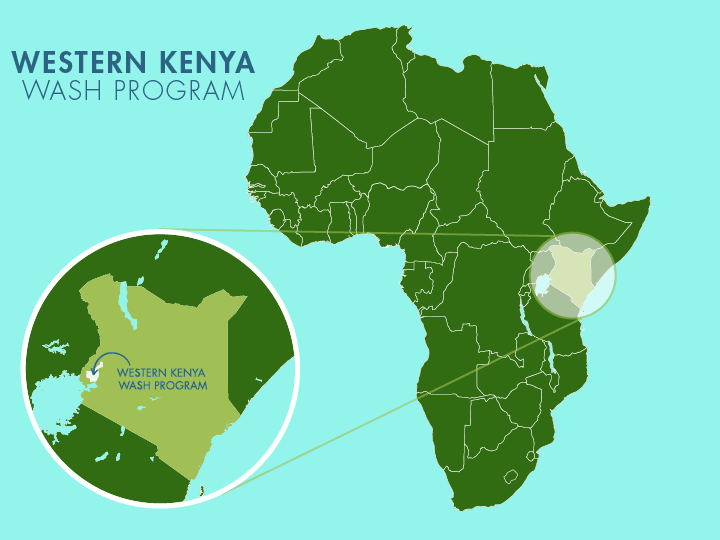
Regional Program: Western Kenya WaSH Program

Impact: 350 Served

Project Phase:  In Service - Apr 2026

Functionality Status:  Functional

Project Features


Click icons to learn about each feature.


The 350 residents of the Bumini Community struggle to access reliable water safely. Every time they go to collect water from their partially protected water source, Lukoba Spring, they fear for their health and safety. One death has already been caused by water-related illness.

Field Officer Mercy Wamalwa shared, "They have reported that they have experienced death, which is just related to the consumption of this water, and it has even been recorded in the nearby healthcare facility because the water point is open for contamination."

Mercy paints a difficult picture. The water is open to contamination and actively makes people sick. Every moment spent sick steals time from other crucial life-improving activities and reduces already struggling incomes.

Eight-year-old Brandon feels this pain quite literally.

"For the past year, I have been diagnosed having typhoid five times, and this has been due [to] the water that I consume. I have to miss class because of sickness because during that time, when [I] am sick, [I] am always weak, [I can't] walk for a long distance. My concentration is also affected, thus lowering my academic progress," he shared.

Brandon.

Brandon's mom works hard to provide for her family, and every illness they endure takes more from their income. Brandon notices.

He shared, "Since the waterpoint broke down, my mum's life changed because we were frequently visiting the hospital, which took all [the] amount she had saved from her small business, thus making her not swiftly move on with our life."

Unfortunately, the water crisis affects more than just their health. It challenges their safety and disrupts community unity.

"[I] am always pushed [to the] back of the queue because [I] am just a kid. Adults have been unkind to me because they normally take advantage of me because [I] am just a kid, and [they] dismiss me for fetching water," Brandon bravely shared.

Community members wait while Brandon tries to collect water.

Because the spring is in disrepair, the flow isn't as fast as it could be. That, paired with the treacherous terrain around it, causes long wait times, which increases the unrest between community members. Everyone has important things to do and things to accomplish to care for their families, which makes tensions run high when no one is able to get to those crucial tasks.

"It's because of long queues that make me take [a] long [time], and sometimes it's because of quarrels that normally take place at the waterpoint, which makes me afraid of my safety, thus making me delay fetching water," he continued.

The Bumini Community deserves the opportunity to come together, live healthy lives, and make better futures for themselves. Brandon has been sick for much of his young life and will thrive with access to clean water.

"Fetching water has really impacted my time at school because of the time [I] spend fetching water. If I could have directed that time to my studies, I could be registering [a] good performance," said Brandon.

"My plan for [the] future is that I should study smart so that in the future I can become a doctor so that I can treat children who are really affected by taking unsafe water," dreamed Brandon.

Steps Toward a Solution

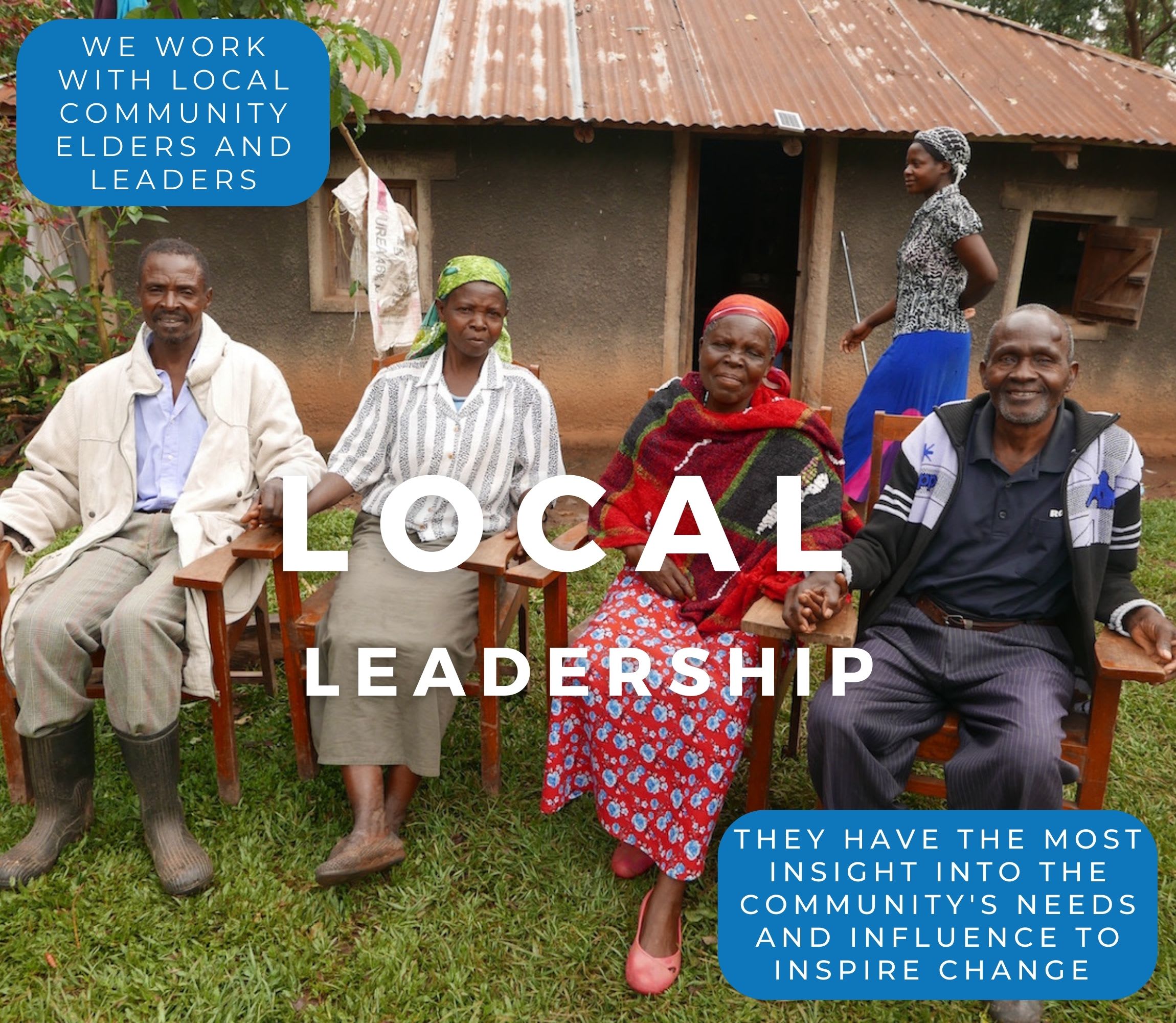
Our technical experts worked with the local community to identify the most effective solution to their water crisis. They decided to safeguard the existing flowing spring.

Spring Protection
Springs are natural water sources that originate from deep underground. As water travels through various layers of the earth, it undergoes a natural filtration process, making it cleaner and safer to drink. To protect these spring sources from contamination, we construct a waterproof cement structure around layers of clay, stone, and soil. This design channels the spring water through a discharge pipe, facilitating easier, faster, and cleaner water collection.

Chlorine Dispenser
As an extra measure towards water quality safety, uniquely engineered chlorine dispensers are installed at all of our spring protection projects so community members can treat their water with pre-measured doses of chlorine. The chlorine treats any residual contamination and stays active for two to three days, ensuring water stays safe to use even when stored at home. Chlorine delivery and maintenance of the dispensers are part of our ongoing community support.

Community Education & Ownership
Hygiene and sanitation training are integral to our water projects. Training is tailored to each community's specific needs and includes key topics such as proper water handling, improved hygiene practices, disease transmission prevention, and care of the new water point. Safe water and improved hygiene habits foster a healthier future for everyone in the community. Encouraged and supported by the guidance of our team, a water user committee representative of the community's diverse members assumes responsibility for maintaining the water point, often gathering fees to ensure its upkeep.

Project Updates


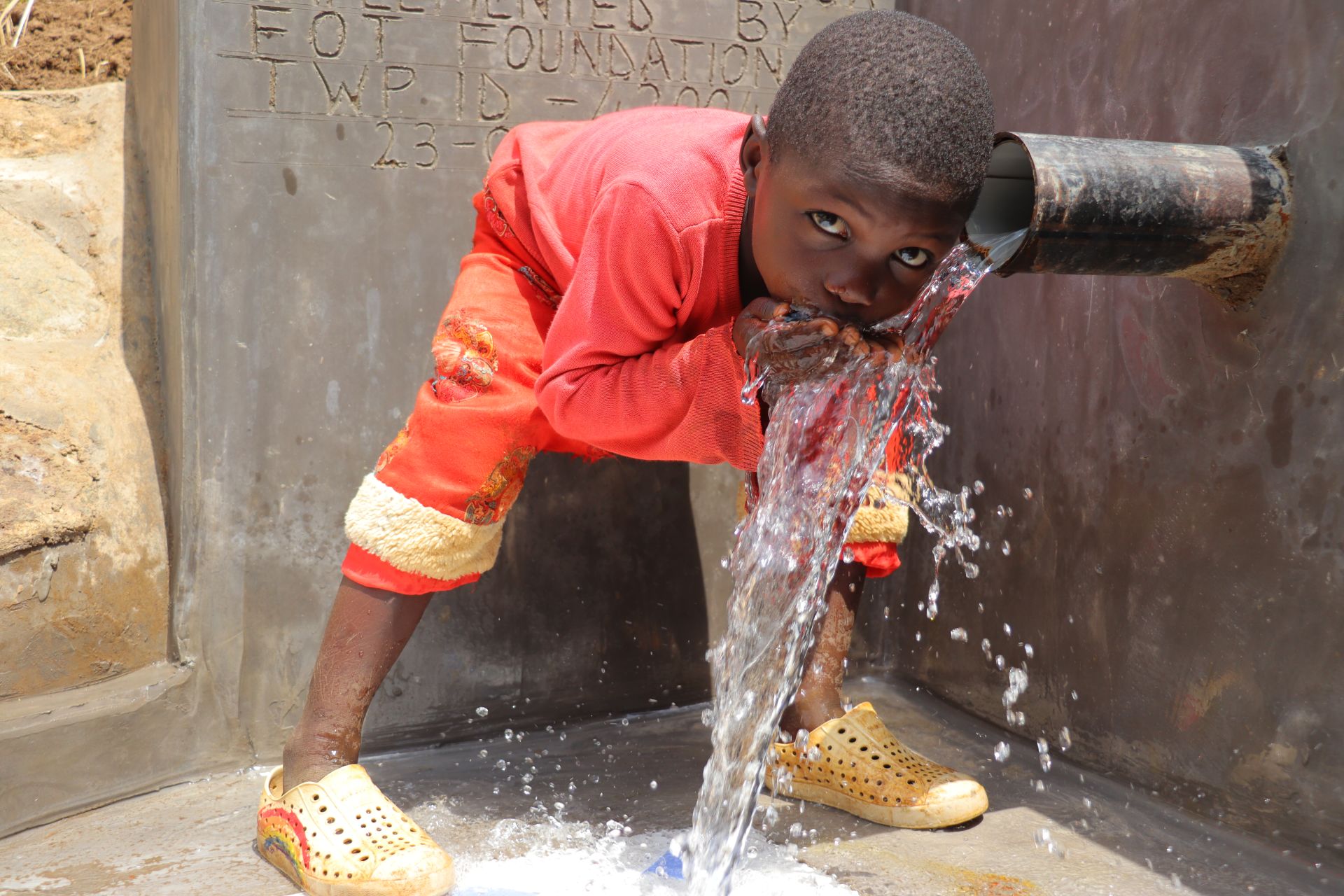
April, 2026: Bumini Community Spring Protection Complete!

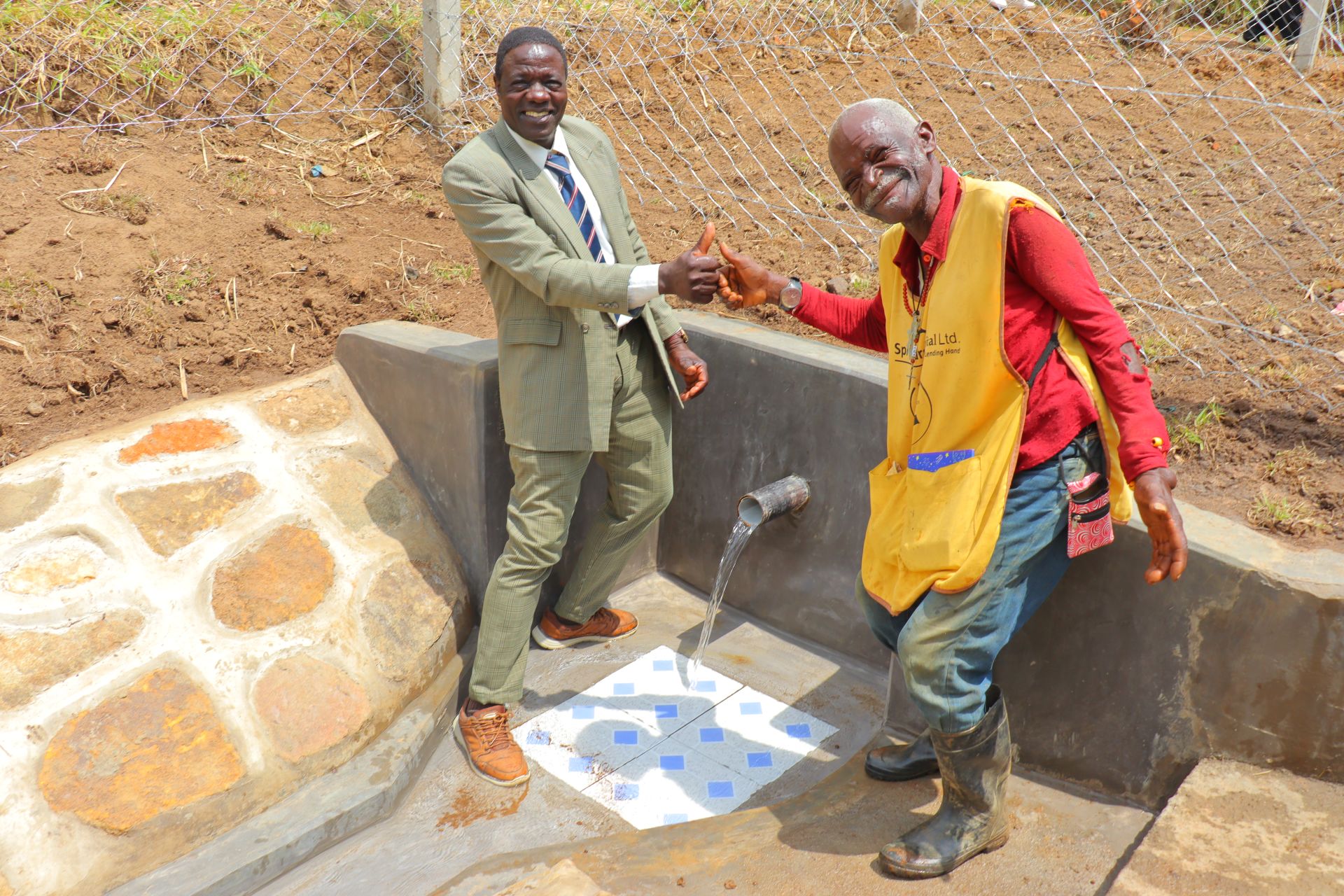
Your contribution has made access to clean water for the Bumini Community possible!

We transformed their spring into a flowing source of naturally filtered water. A chlorine dispenser is installed to provide added protection, and we trained the community on improved sanitation and hygiene practices. Together, these components will unlock the opportunity for community members to thrive!

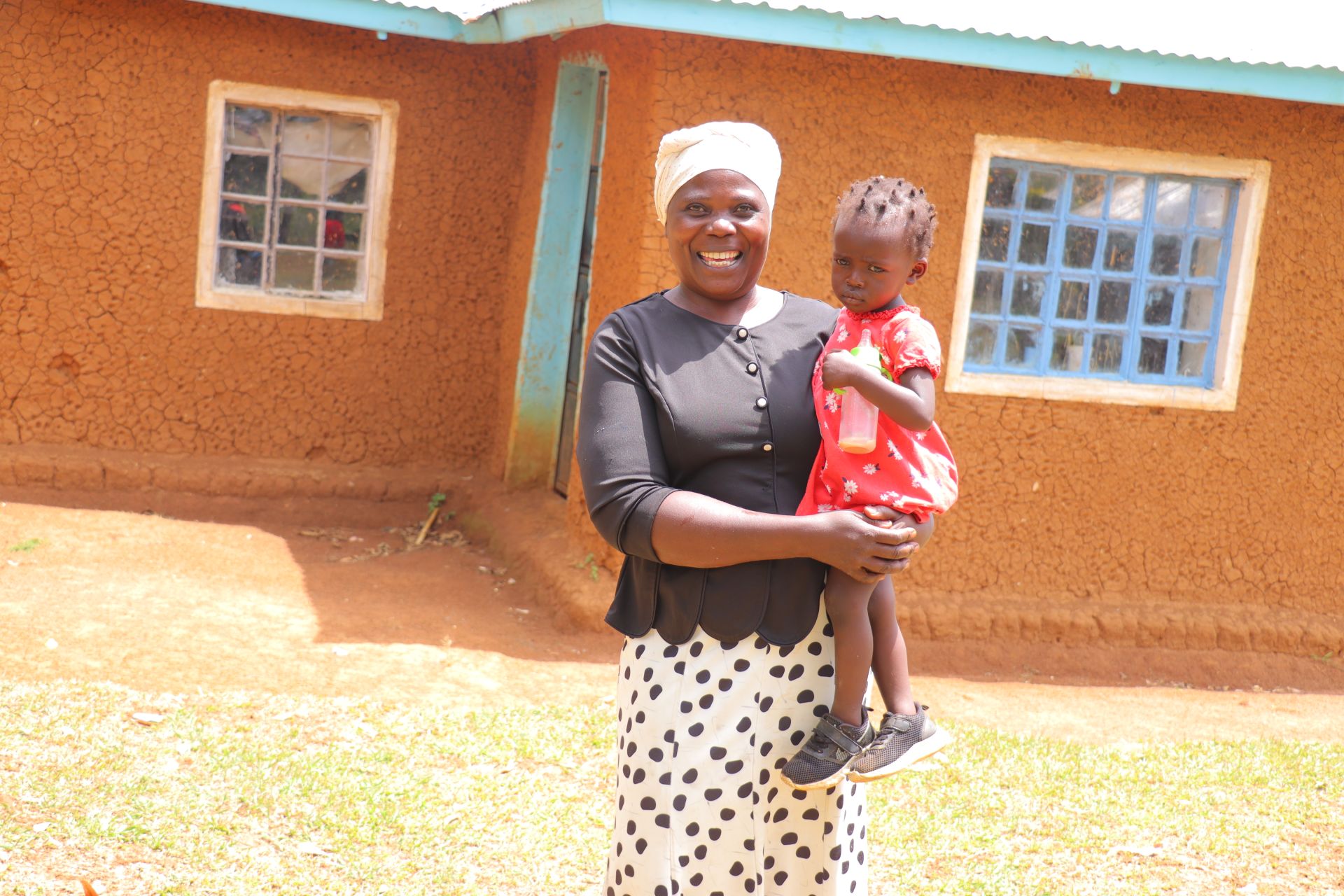
"The new water point will help me generate income because I will be able to use the water for farming, growing vegetables, and keeping livestock. This will increase food production and allow me to sell the surplus, which will improve my family's income. It will also save time and money that was previously used on medications," said Melinda Mulesi, a 27-year-old farmer.

Children were just as excited as adults about clean water access!

"Reliable water will improve my learning at school. My teachers will have time with me because I will be in school at the right time and with good health," 7-year-old Annsilly said.

Preparing for Spring Protection

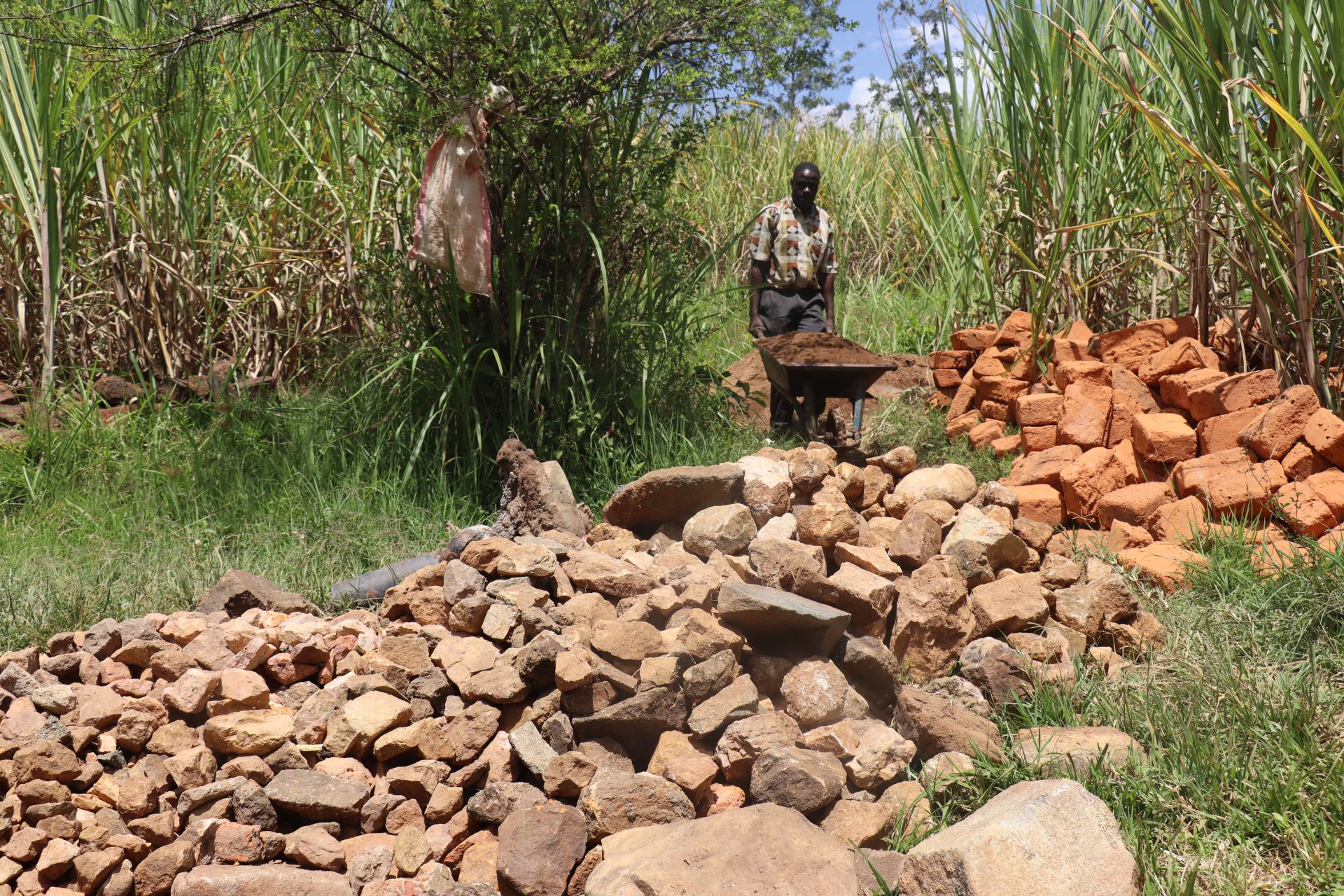
Community members worked together to source all locally available construction materials for the spring. These included bricks, sand, stones, and fencing poles. Because people have to carry most items by hand, the material-collection process can take anywhere from a few weeks to months.

When the community was ready, we delivered the remaining construction materials, including cement, plastic tarps, and hardware. Then our construction artisan and field officers deployed to the spring to begin work.

Protecting the Spring: A Step-by-Step Process

First, we excavated the spring area. This includes digging a drainage channel below the spring and several runoff diversion channels above and around the spring to help divert surface contaminants away.

To ensure community members could still access water throughout the construction process, we also dug temporary channels around the construction site to allow water to continue to flow. Excavation created space for setting the spring's foundation.

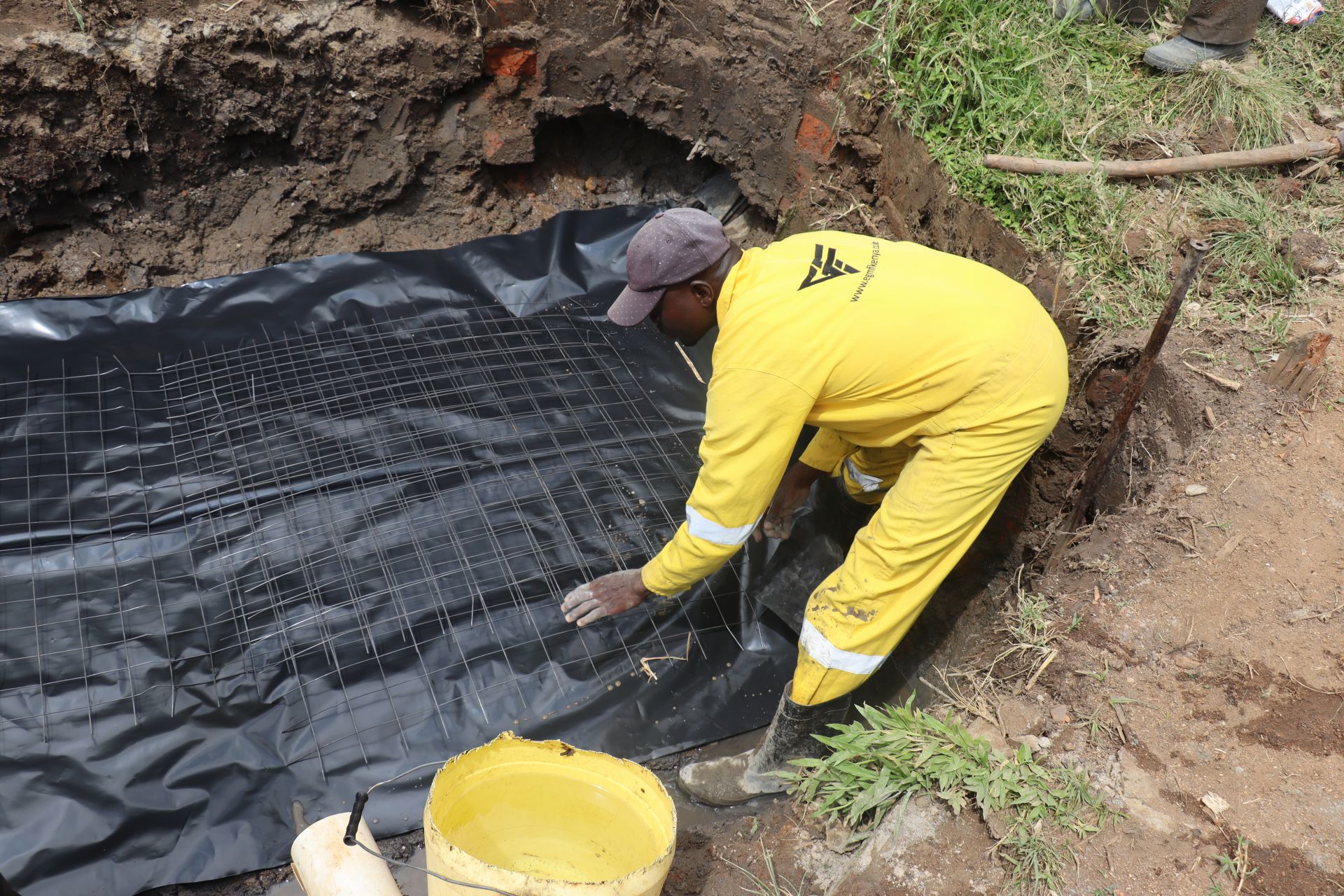
Laying the foundation.

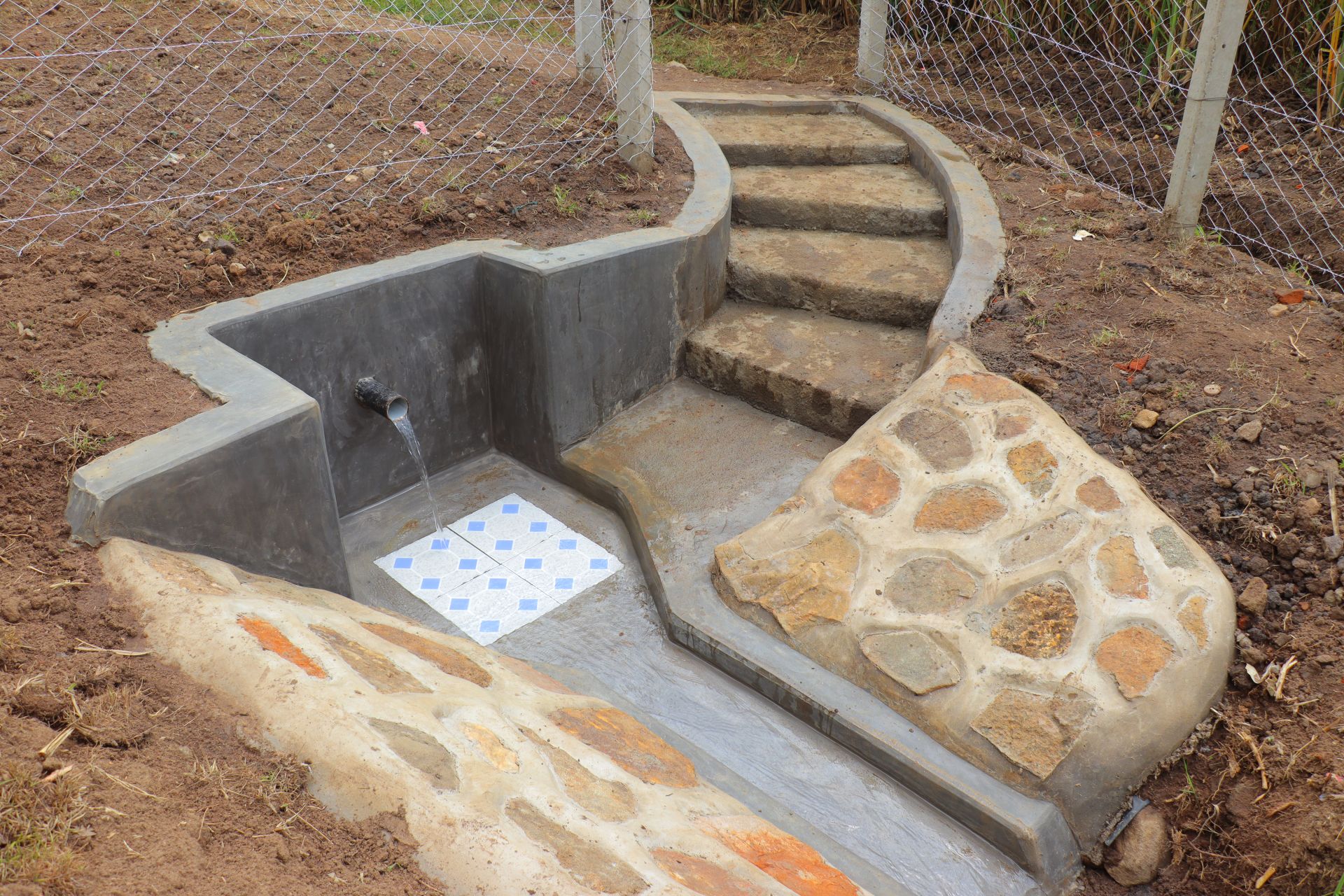
After establishing the base, made of thick plastic, wire, concrete and waterproof cement, we started brickwork to build the spring walls and stairs. Once the walls were tall enough, we began one of the most crucial steps: setting the discharge pipe. The discharge pipe needs to be positioned low enough so the water level never rises above the spring's eye, yet high enough to allow room for the average collection container (20-liters) to sit beneath the pipe without making contact, to prevent cross-contamination.

If we place the pipe too high, back pressure could force water to emerge elsewhere. Too low, and community members would not be able to access the water easily.

Setting the discharge pipe.

In coordination with the walls and stairs, we cemented stones on both sides of the spring's drainage channel. These stones discourage people and animals from standing in that area, which could cause soil erosion and a clogged drainage area.

We then cemented and plastered the spring walls. These finishing layers reinforce the brickwork and prevent water in the reservoir from seeping through. In turn, enough pressure builds to push water out through the discharge pipe.

As the walls cured, we finished the stairs and installed tiles beneath the discharge pipe. The tiles protect the concrete from the falling water's erosive force.

We redirected the temporary diversion channels back into the reservoir box and closed all other exits to force water through only the discharge pipe. We filled the reservoir area with the large, clean stones arranging them in layers like a well-fitting puzzle. We covered the rocks with thick plastic and piled enough dirt on top to compensate for future settling.

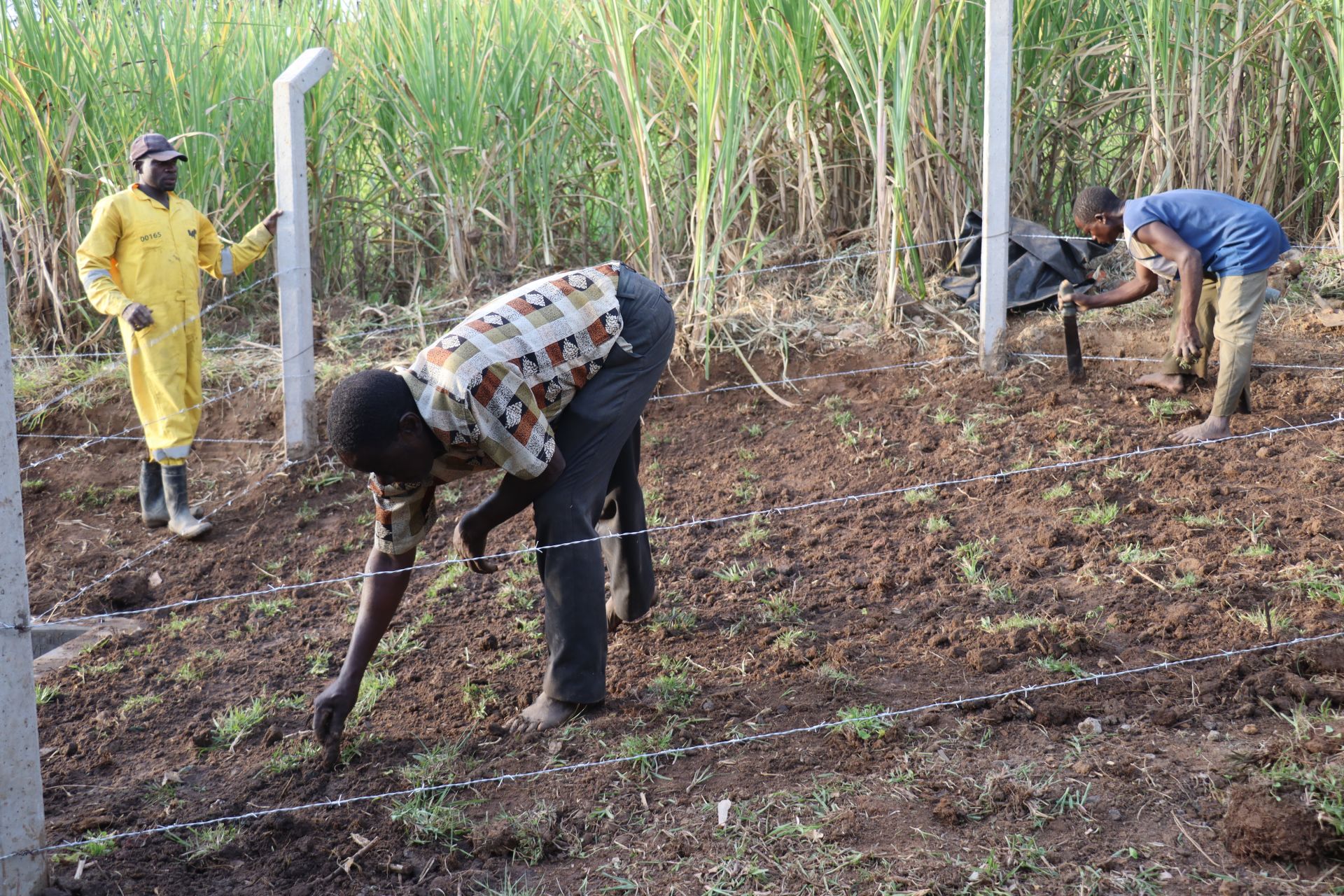
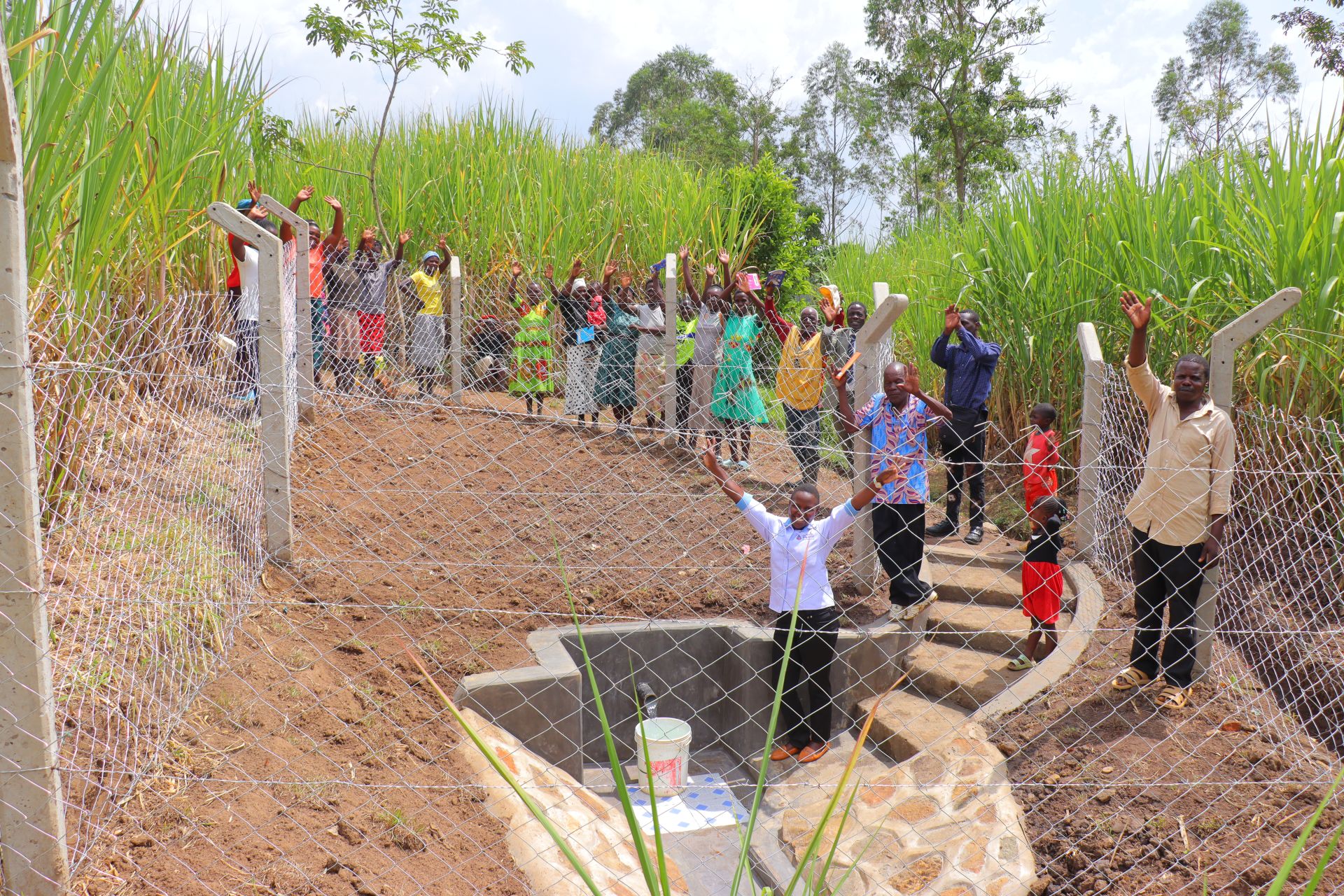
Community members transplanted grass to help prevent erosion and the collection area was fenced. The fence prevents people or animals from walking in the area above the spring, as compaction of this area can potentially compromise water quality.

The construction process took about two weeks of work and patience. As soon as the spring was ready, people received permission from their local field officers to fetch water.

We officially transferred ownership of the waterpoint to the Mumasaka Community. Happiness and thanksgiving flowed in all directions!

Training on Health, Hygiene, and More

Together with the community, we determined their preferred training date. When the day arrived, facilitators Adelaide Nasimiyu, Joy Ongeri, Elvine Atsieno, Joyce Naliaka, and David Muthama deployed to the site to lead the event. 26 people attended the training, including 21 women and five men.

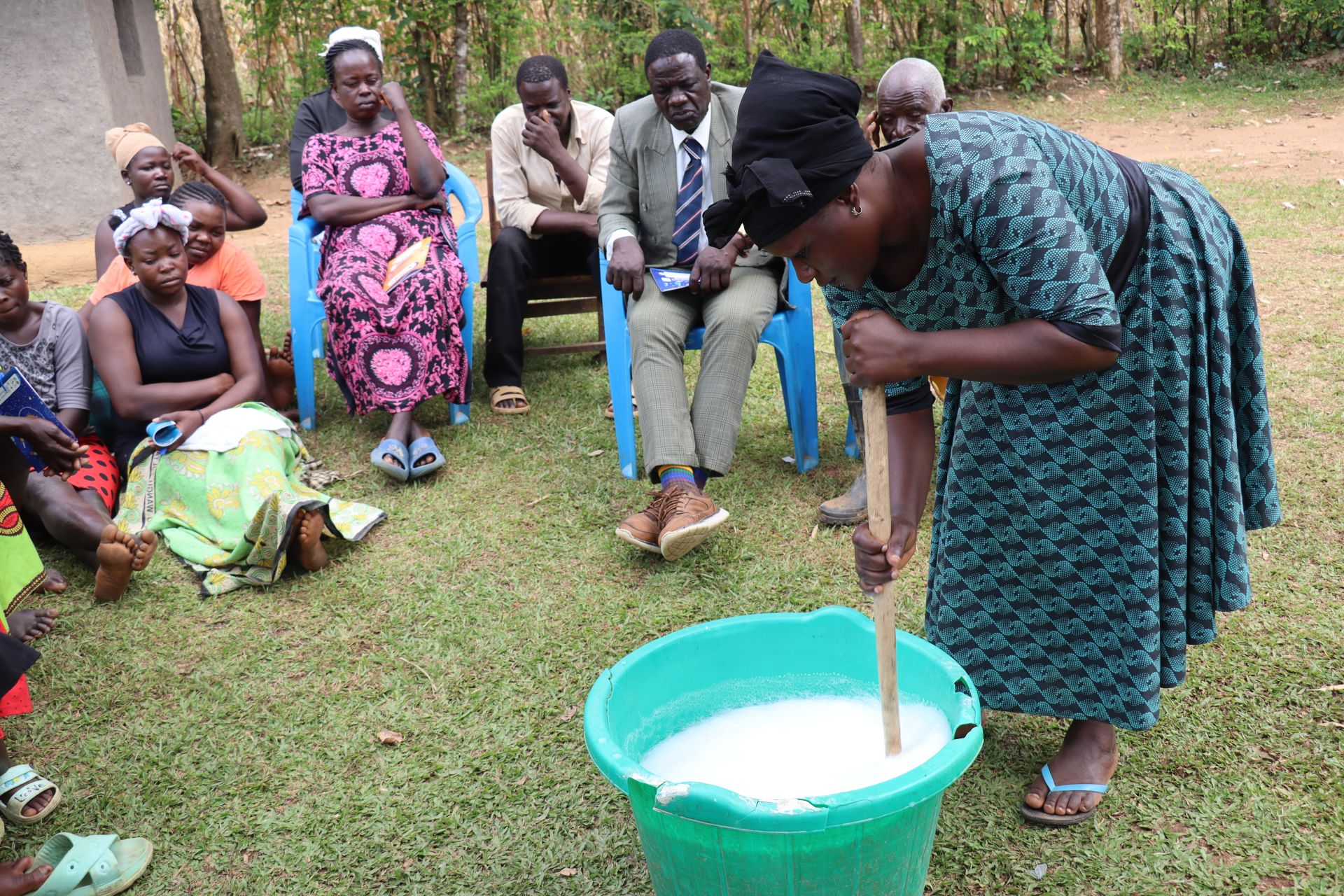
We discussed personal, oral, and environmental hygiene, emphasizing proper water handling, soap-making, and the ten steps of handwashing. We also highlighted the importance of primary health care and covered the operation and maintenance of the water point, as well as leadership and governance. By the end of the training, each participant had a clear understanding of their role in maintaining clean water and promoting good health within their community.

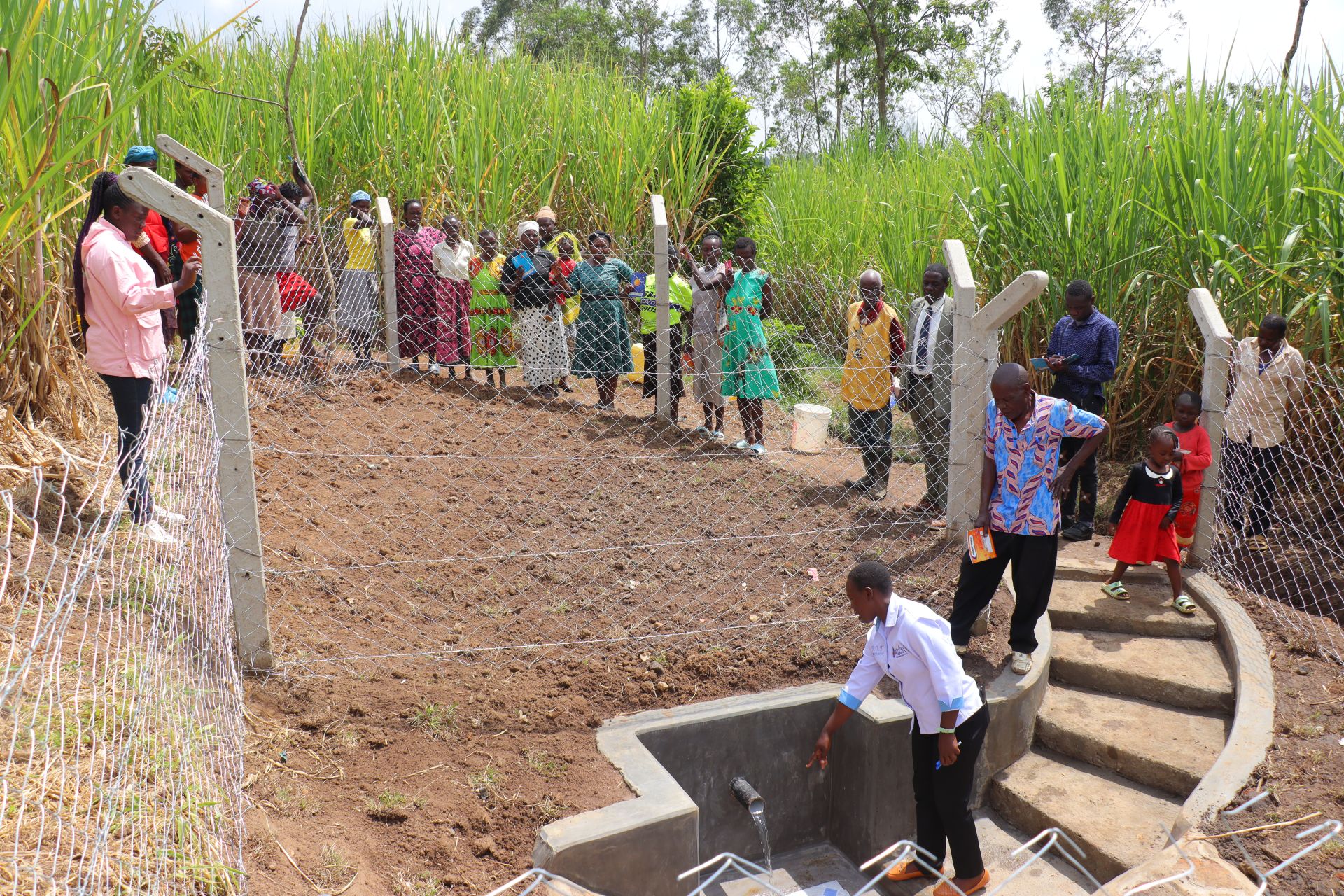
A session to learn how to care for the spring.

We held an election for the newly formed water user committee, which will oversee the maintenance of the spring. We brainstormed income-generating activities and encouraged them to start a group savings account for future minor repairs to the spring.

Soapmaking session.

"The topic that prompted most discussion among participants was personal hygiene. Participants were highly engaged when talking about how everyday habits like hand washing [and] nail trimming directly impact their well-being. The most memorable discussion centered on handwashing before meals. Participants shared stories of how neglecting this habit led to stomach illnesses in their families, and this led to a prolonged discussion," shared Field Officer Mercy Wamalwa.

Ms. Wesonga.

"The most interesting topic covered in the hygiene training was proper hand washing and safe water handling. Learning the ten handwashing steps, how germs spread, and how to store and treat water safely was very informative. It helped me understand how simple daily habits can prevent diseases and improve the health of community members," said participant Zubeida Wesonga.

Thank you for making all of this possible!


Update photo


March, 2026: Exciting Progress in Bumini Community!

We’re thrilled to share that, thanks to your generous support, significant change is coming for Brandon and the entire Bumini Community. Construction has begun on the spring protection project, bringing them one step closer to having clean, reliable water.

But that's not all—during construction, we’re also providing vital health training. These sessions equip the community with essential hygiene practices, ensuring that the benefits of clean water extend to lasting health improvements.

We’re so grateful for your role in making this possible. Stay tuned for more updates—soon, we’ll be celebrating the arrival of safe water in the Bumini Community!


Loading photos...


Project Type

Springs are water sources that come from deep underground, where the water is filtered through natural layers until it is clean enough to drink. Once the water pushes through the surface of the Earth, however, outside elements like waste and runoff can contaminate the water quickly. We protect spring sources from contamination with a simple waterproof cement structure surrounding layers of clay, stone, and soil. This construction channels the spring’s water through a discharge pipe, making water collection easier, faster, and cleaner. Each spring protection also includes a chlorine dispenser at the waterpoint so community members can be assured that the water they are drinking is entirely safe. Learn more here!


Contributors

21 individual donor(s)