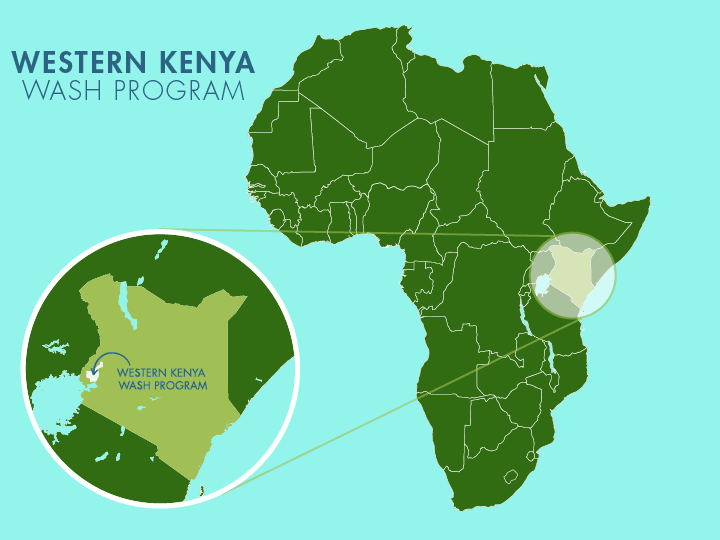

Project Status


Project Type:  Protected Spring

Regional Program: Western Kenya WaSH Program

Impact: 280 Served

Project Phase:  In Service - Jun 2026

Functionality Status:  Functional

Project Features


Click icons to learn about each feature.


The 280 residents of the Lunyiko Community struggle to access clean, sufficient water. Their naturally flowing water source, Etemesi Spring is contaminated, dangerous to access, and causes strife within the community.

The spring.

"The waterpoint is in the middle of a bush with dangerous terrain, looking pathetic. The water from the source tastes weird with a very bad smell, making it unsuitable for consumption. A closer look shows that its color is greenish and cloudy, adding to the fear they already have in regard to the safety of the water," described Field Officer Joyce Naliaka.

Susan Okumu, 55, a farmer and mother, is well acquainted with the fear related to the water from their spring.

Susan Okuma.

"As we speak right now, my daughter is down, battling diarrhea caused by drinking water from the source. It hasn't been easy for me since I have to leave everything on hold so that I can attend to her," said Susan.

"I tried over-the-counter medication, but it didn't work. I decided to take her to a dispensary five kilometers (three miles) away, which took all the income I had on me. Treating waterborne diseases is very expensive. This really strains my finances. I have also missed several opportunities on account of attending to waterborne diseases that have reduced my productivity," said Susan.

Susan carrying water.

"I'm worried because the water, being contaminated, poses risks that could one day cost our lives. Knowing that the water we consume harms my family's health takes a toll on my mental health, creating significant sress and anxiety," she continued.

Fearing for her children's lives is an everyday affair for Susan, but she has no other options. Sickness isn't the only downfall of this waterpoint. The spring's state means low discharge and long lines, which create contention within the community and cause quarrels.

Community members waiting to collect water.

"I have experienced harassment several times while waiting for water due to the long queues that are always witnessed during morning hours and in the evening, thus creating chaos and causing commotion. Sometimes, I feel frustrated and leave without fetching water. Quarreling has continuously led to a tense and unfriendly environment amongst us and also led to conflicts within the household," she added.

Protecting the Lunyiko Community Spring gives Susan a chance to experience a day without fear. Her children will be able to go to school uninterrupted, and her income won't be drained by constant crises related to waterborne diseases.

"A new waterpoint will bring peace, knowing there will be no more quarrels, and also, the area around the waterpoint will be safe for everyone to fetch water. I would use that time to participate in development activities to improve my life and that of other community members," concluded Susan.

Steps Toward a Solution

Our technical experts worked with the local community to identify the most effective solution to their water crisis. They decided to safeguard the existing flowing spring.

Spring Protection
Springs are natural water sources that originate from deep underground. As water travels through various layers of the earth, it undergoes a natural filtration process, making it cleaner and safer to drink. To protect these spring sources from contamination, we construct a waterproof cement structure around layers of clay, stone, and soil. This design channels the spring water through a discharge pipe, facilitating easier, faster, and cleaner water collection.

Chlorine Dispenser
As an extra measure towards water quality safety, uniquely engineered chlorine dispensers are installed at all of our spring protection projects so community members can treat their water with pre-measured doses of chlorine. The chlorine treats any residual contamination and stays active for two to three days, ensuring water stays safe to use even when stored at home. Chlorine delivery and maintenance of the dispensers are part of our ongoing community support.

Community Education & Ownership
Hygiene and sanitation training are integral to our water projects. Training is tailored to each community's specific needs and includes key topics such as proper water handling, improved hygiene practices, disease transmission prevention, and care of the new water point. Safe water and improved hygiene habits foster a healthier future for everyone in the community. Encouraged and supported by the guidance of our team, a water user committee representative of the community's diverse members assumes responsibility for maintaining the water point, often gathering fees to ensure its upkeep.
Project Updates


June, 2026: Lunyiko Community Spring Protection Complete!

Your contribution has made access to clean water for the Lunyiko Community possible!

We transformed their spring into a flowing source of naturally filtered water. A chlorine dispenser is installed to provide added protection, and we trained the community on improved sanitation and hygiene practices. Together, these components will unlock the opportunity for community members to thrive!

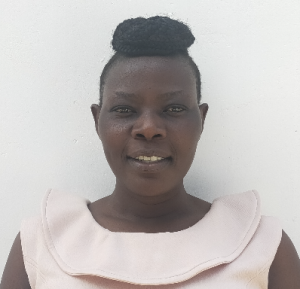
Ms. Okumu.

"I will be able to have ample time to attend to my chores at home. For my children who are students, they will be able to have extra time to do their homework and be able to [do] some revision, thus their academic performance will improve," said 56-year-old farmer Susan Okumu.

Children were just as excited as adults about clean water access!

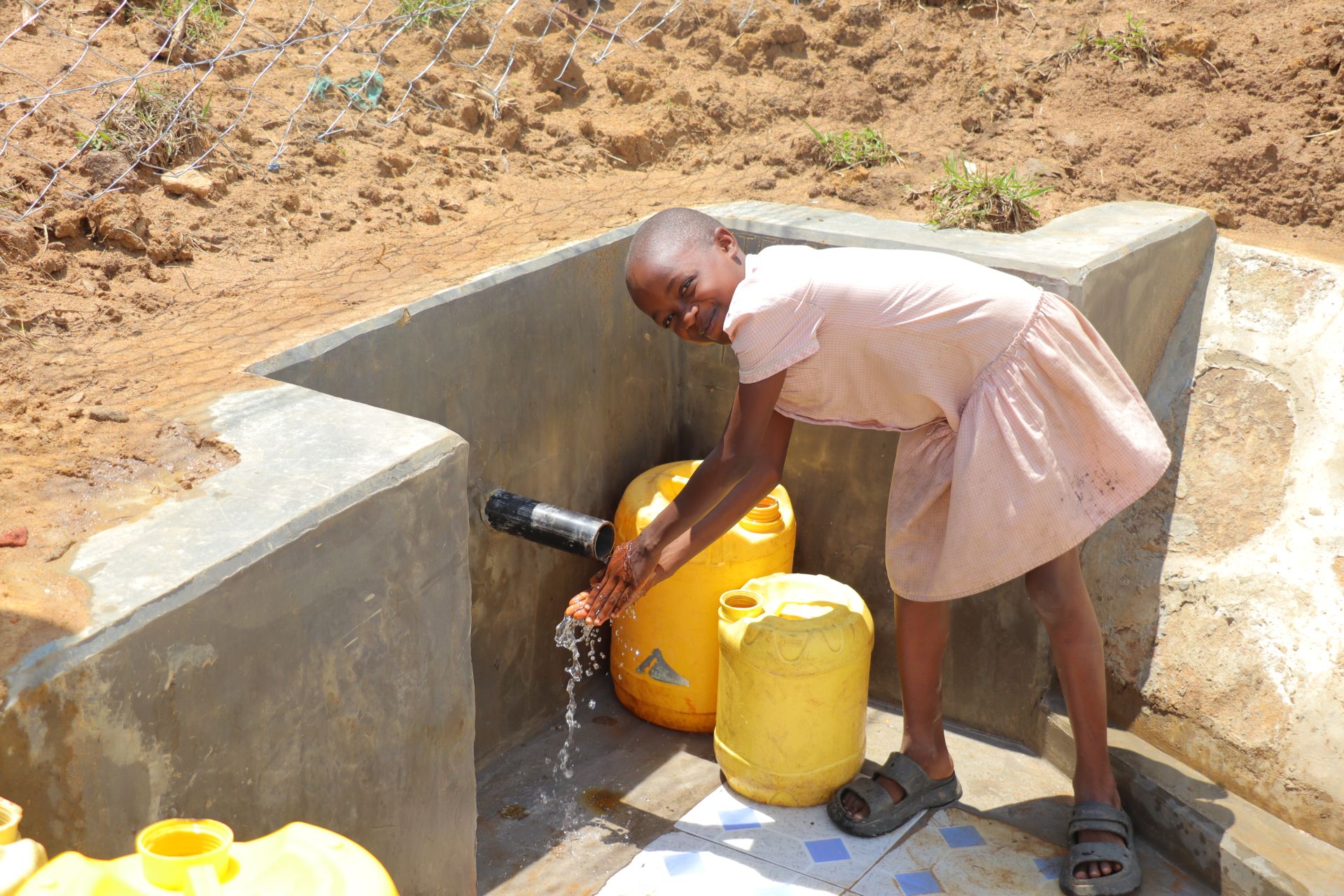
Winnie at the protected spring.

"It will improve things for me because of [the] ease of accessibility. There will be no falling and being injured, and I will be able to have extra time to go and play with my friends, thus strengthening our bond," said 11-year-old Winnie.

Preparing for Spring Protection

Community members worked together to source all locally available construction materials for the spring. These included bricks, sand, stones, and fencing poles. Because people have to carry most items by hand, the material-collection process can take anywhere from a few weeks to months.

When the community was ready, we delivered the remaining construction materials, including cement, plastic tarps, and hardware. Then our construction artisan and field officers deployed to the spring to begin work.

Protecting the Spring: A Step-by-Step Process

First, we excavated the spring area. This includes digging a drainage channel below the spring and several runoff diversion channels above and around the spring to help divert surface contaminants away.

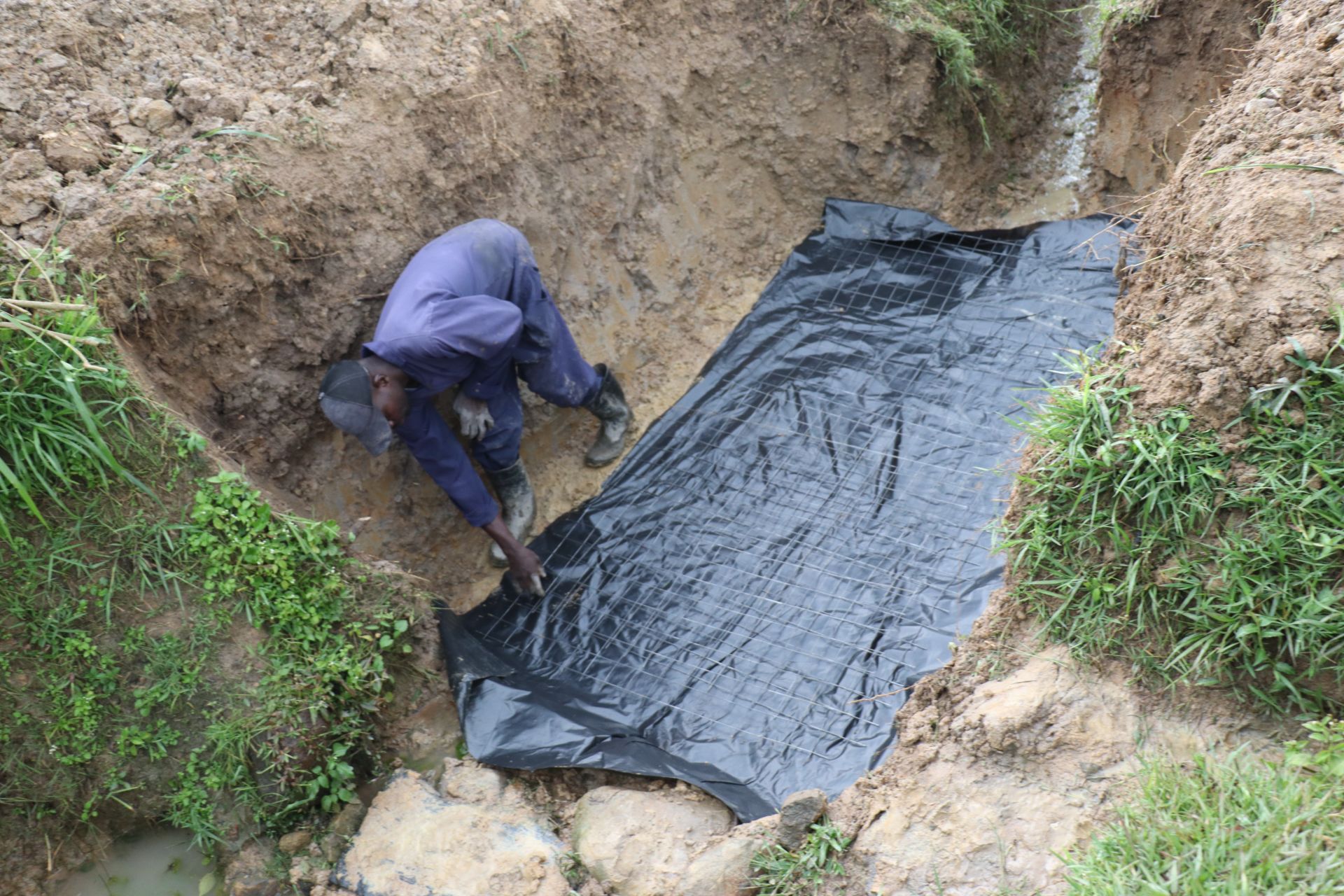
To ensure community members could still access water throughout the construction process, we also dug temporary channels around the construction site to allow water to continue to flow. Excavation created space for setting the spring's foundation.

Setting the foundation.

After establishing the base, made of thick plastic, wire, concrete and waterproof cement, we started brickwork to build the spring walls and stairs. Once the walls were tall enough, we began one of the most crucial steps: setting the discharge pipe. The discharge pipe needs to be positioned low enough so the water level never rises above the spring's eye, yet high enough to allow room for the average collection container (20-liters) to sit beneath the pipe without making contact, to prevent cross-contamination.

If we place the pipe too high, back pressure could force water to emerge elsewhere. Too low, and community members would not be able to access the water easily.

Setting the discharge pipe and cementing the walls.

In coordination with the walls and stairs, we cemented stones on both sides of the spring's drainage channel. These stones discourage people and animals from standing in that area, which could cause soil erosion and a clogged drainage area.

We then cemented and plastered the spring walls. These finishing layers reinforce the brickwork and prevent water in the reservoir from seeping through. In turn, enough pressure builds to push water out through the discharge pipe.

Layering rock behind the spring box.

As the walls cured, we finished the stairs and installed tiles beneath the discharge pipe. The tiles protect the concrete from the falling water's erosive force.

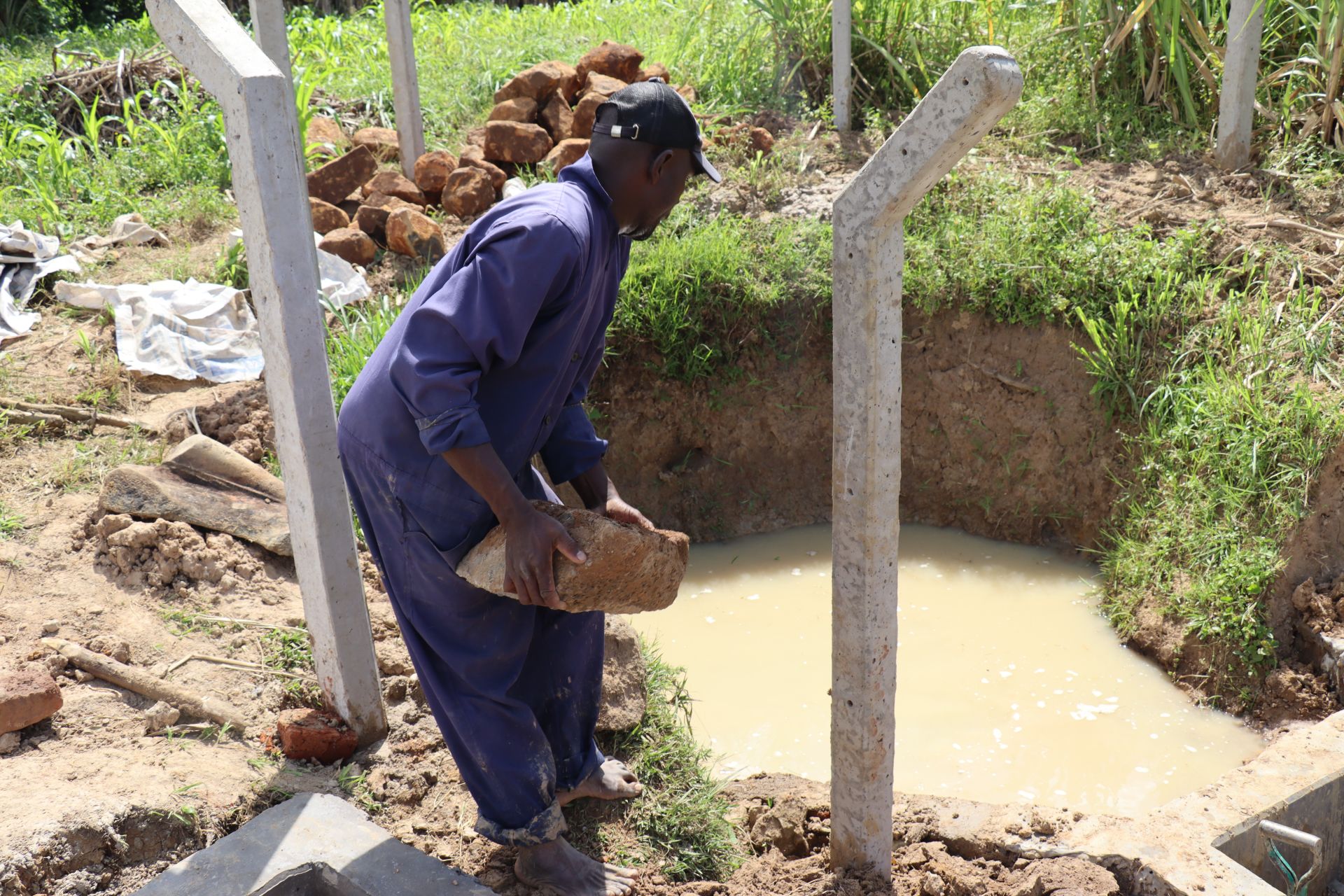
We redirected the temporary diversion channels back into the reservoir box and closed all other exits to force water through only the discharge pipe. We filled the reservoir area with the large, clean stones arranging them in layers like a well-fitting puzzle. We covered the rocks with thick plastic and piled enough dirt on top to compensate for future settling.

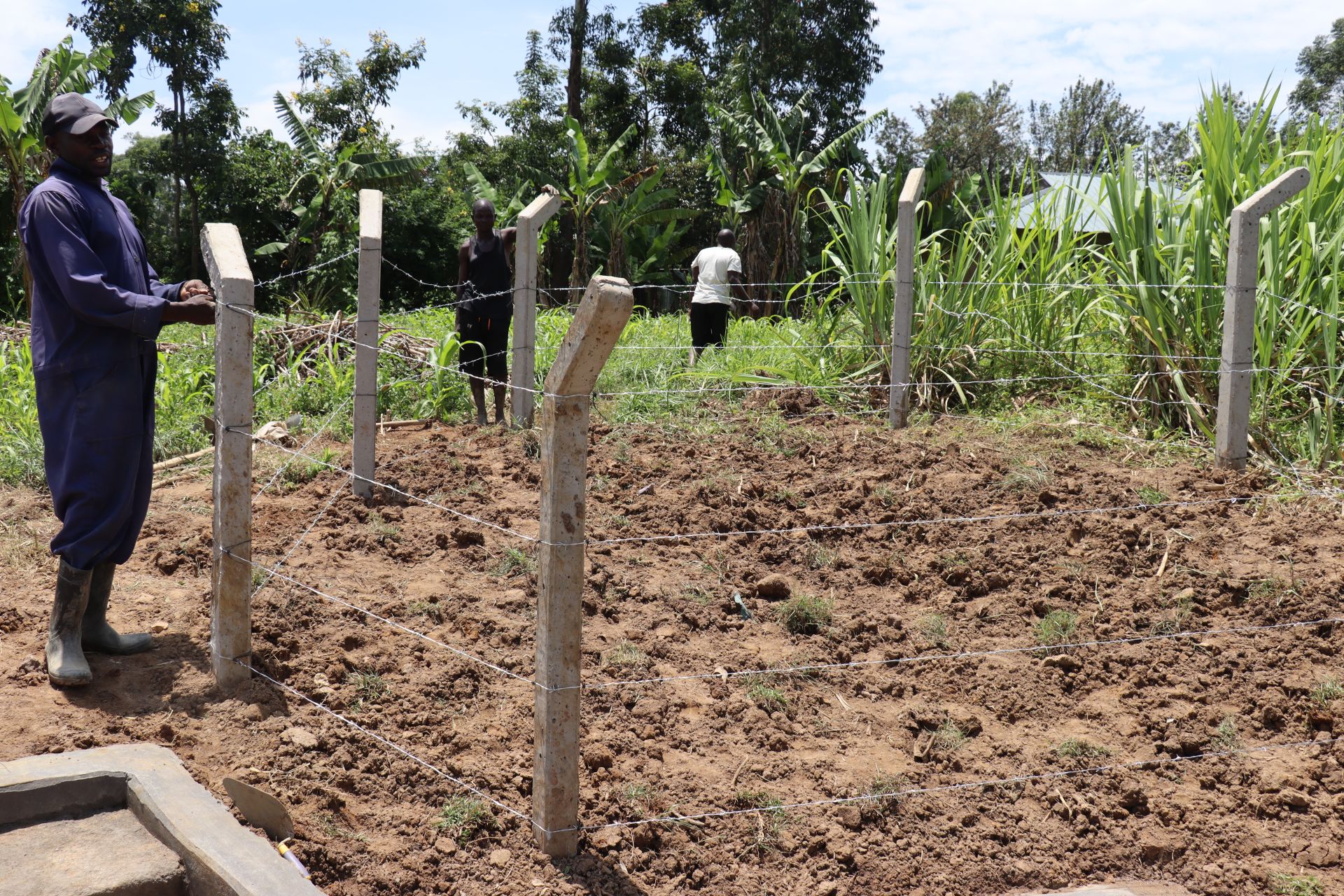
Installing fencing.

Community members transplanted grass to help prevent erosion and the collection area was fenced. The fence prevents people or animals from walking in the area above the spring, as compaction of this area can potentially compromise water quality.

The construction process took about two weeks of work and patience. As soon as the spring was ready, people received permission from their local field officers to fetch water.

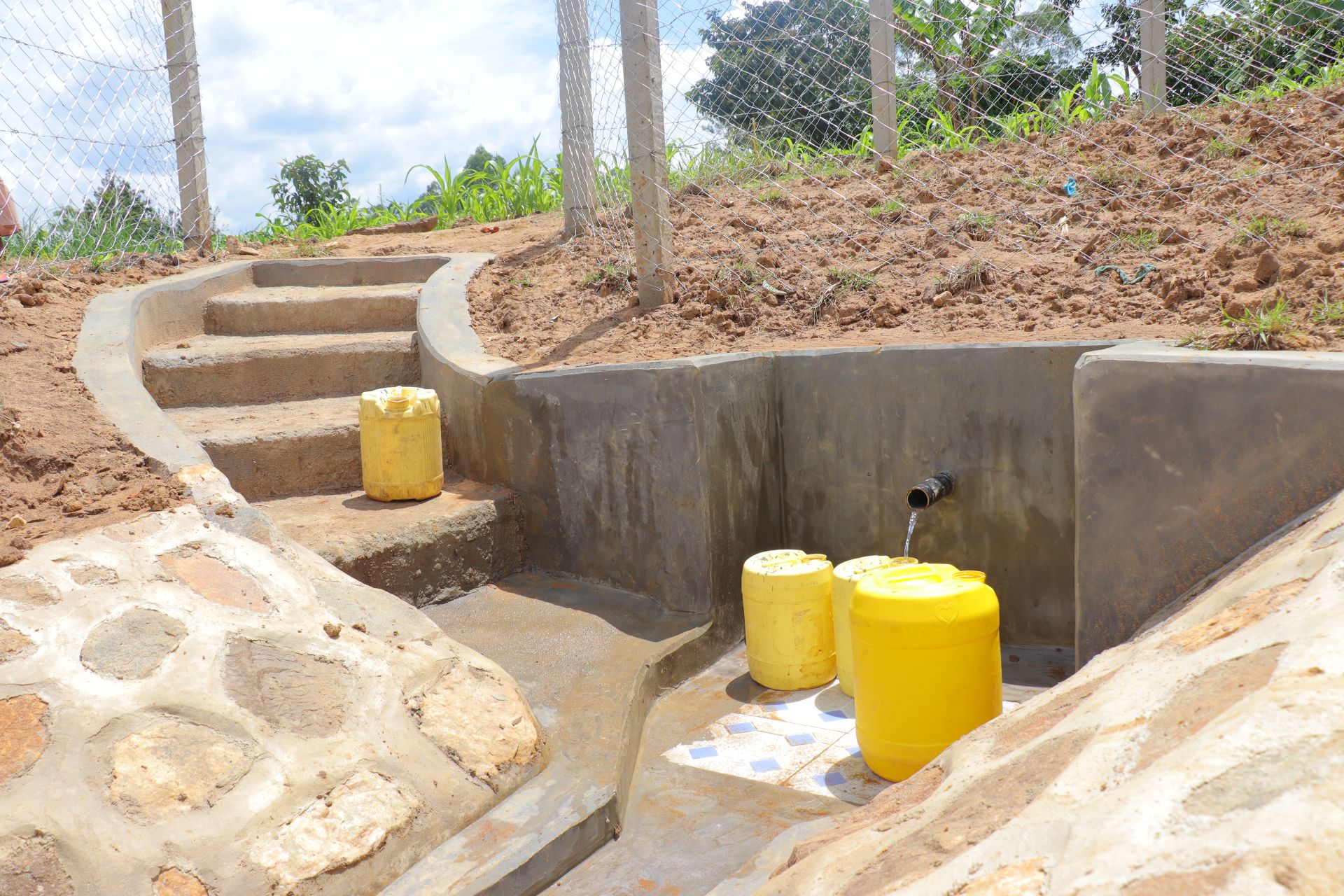
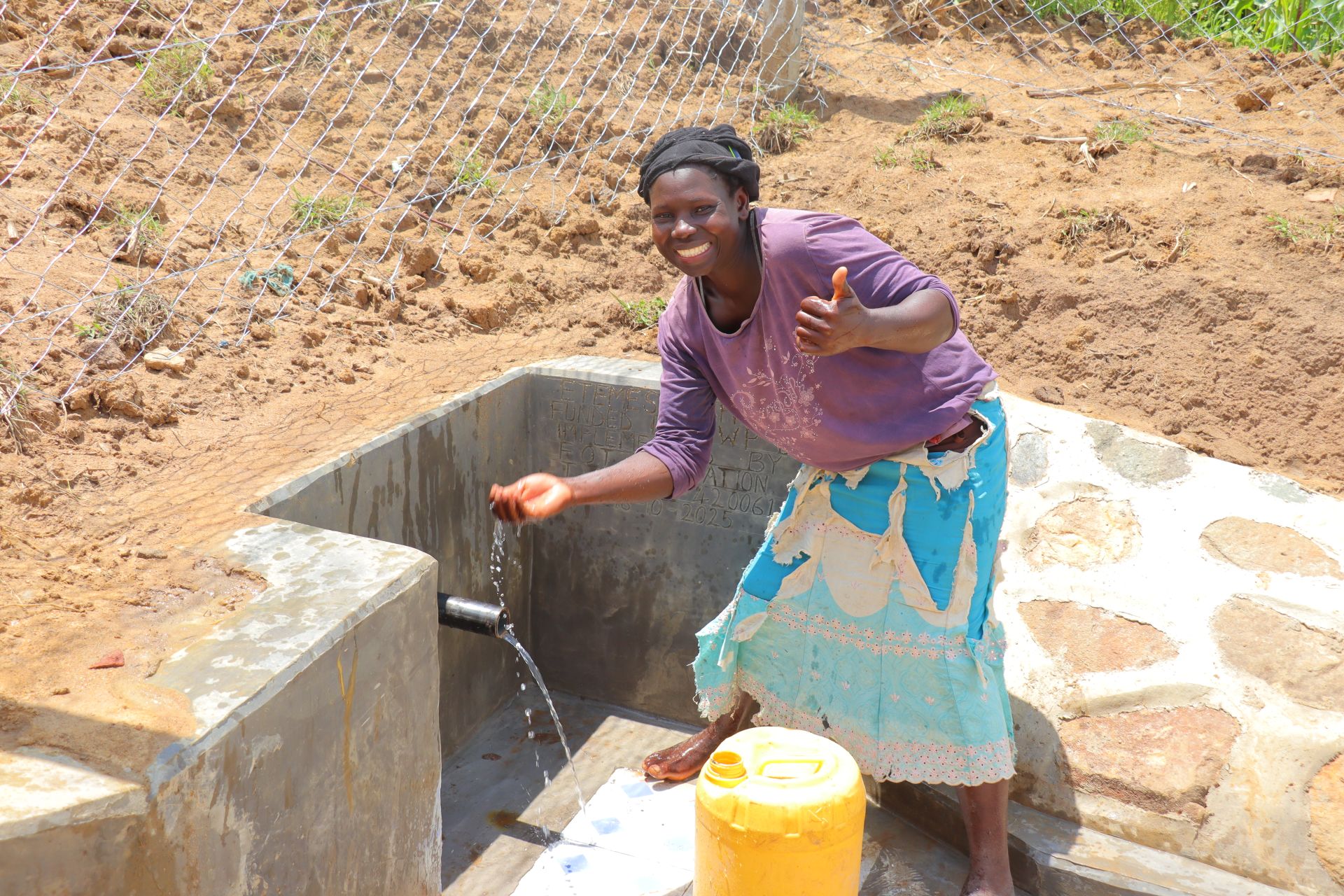
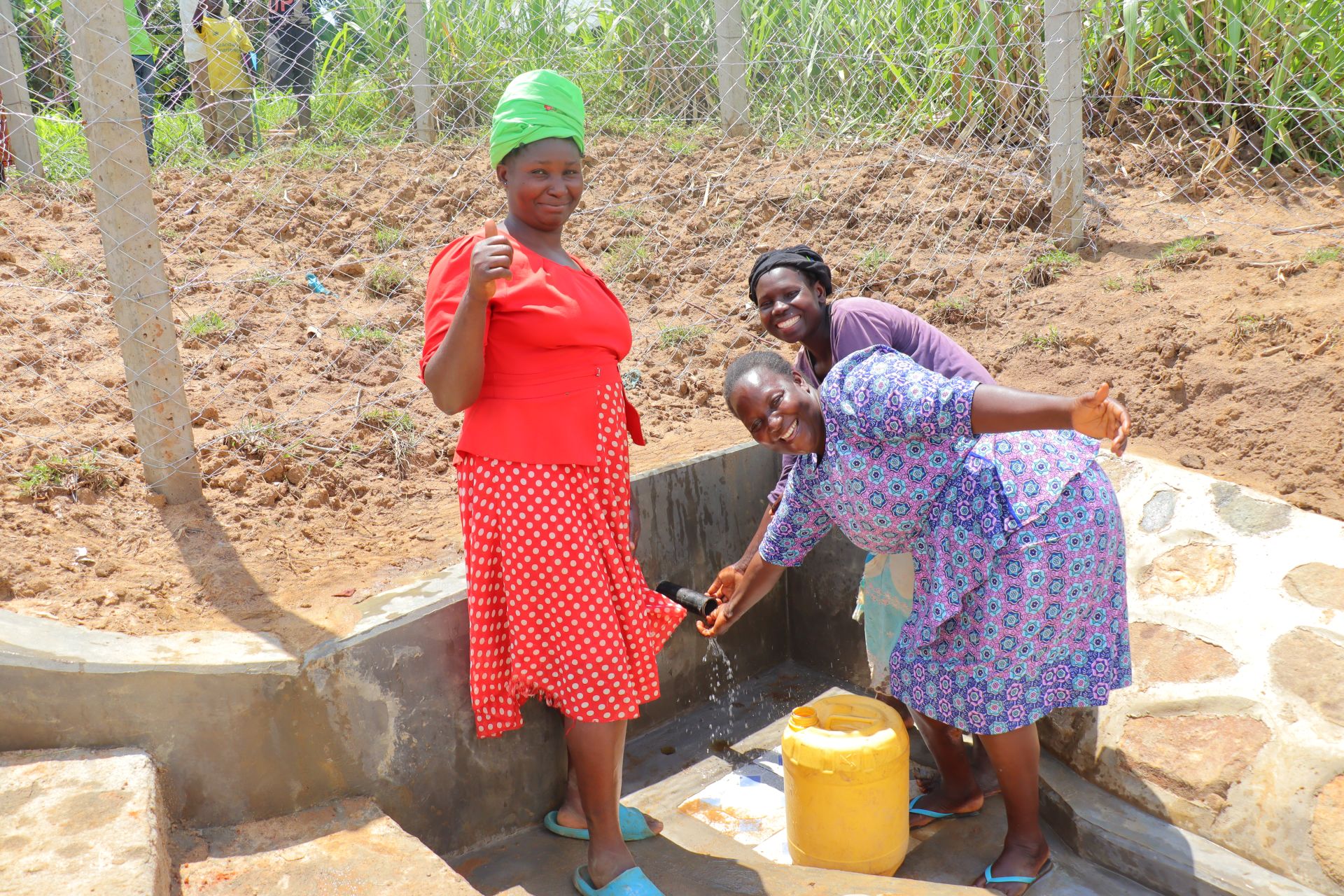
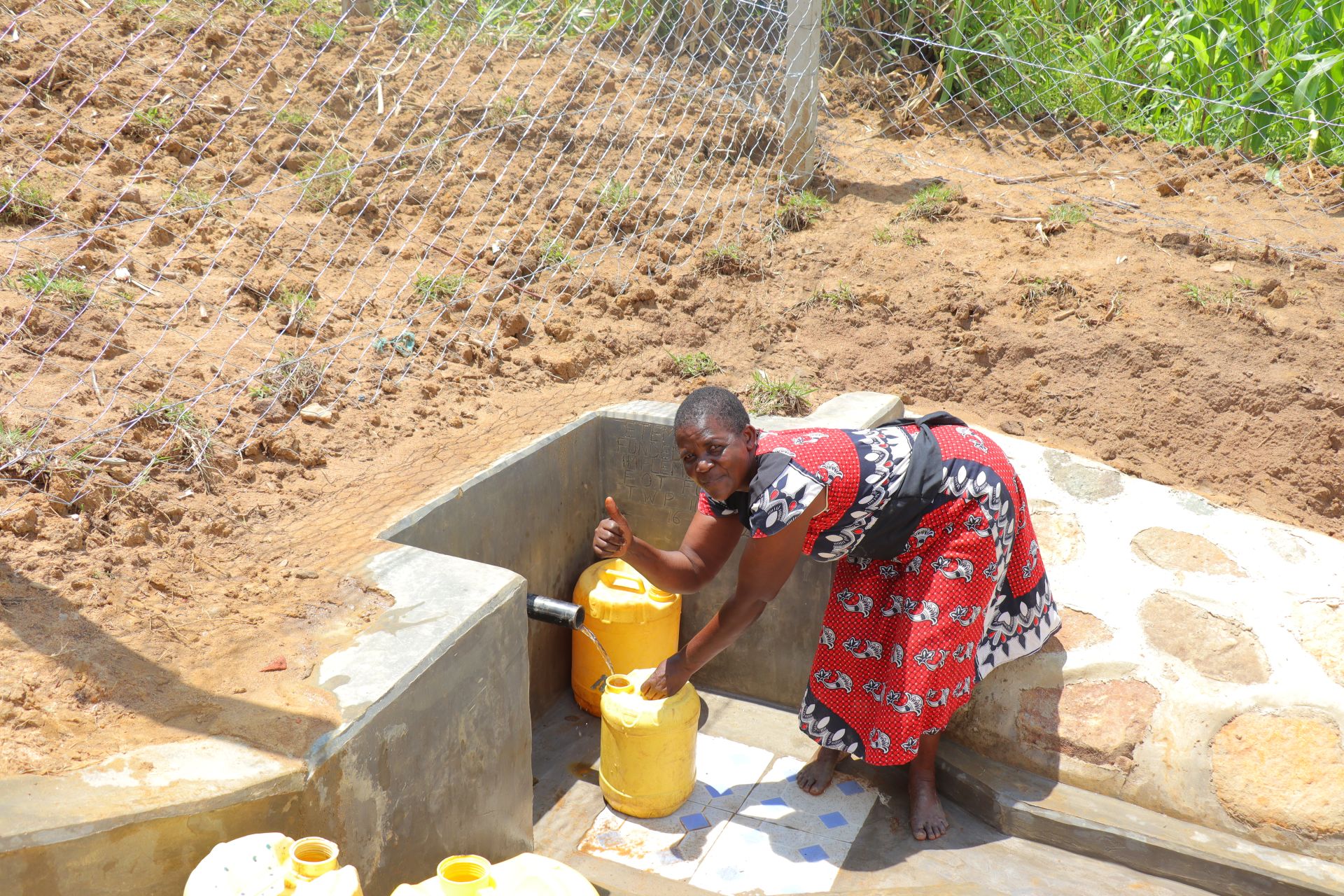
The protected spring has clean water flowing.

We officially transferred ownership of the waterpoint to the Lunyiko Community. Happiness and thanksgiving flowed in all directions!

Training on Health, Hygiene, and More

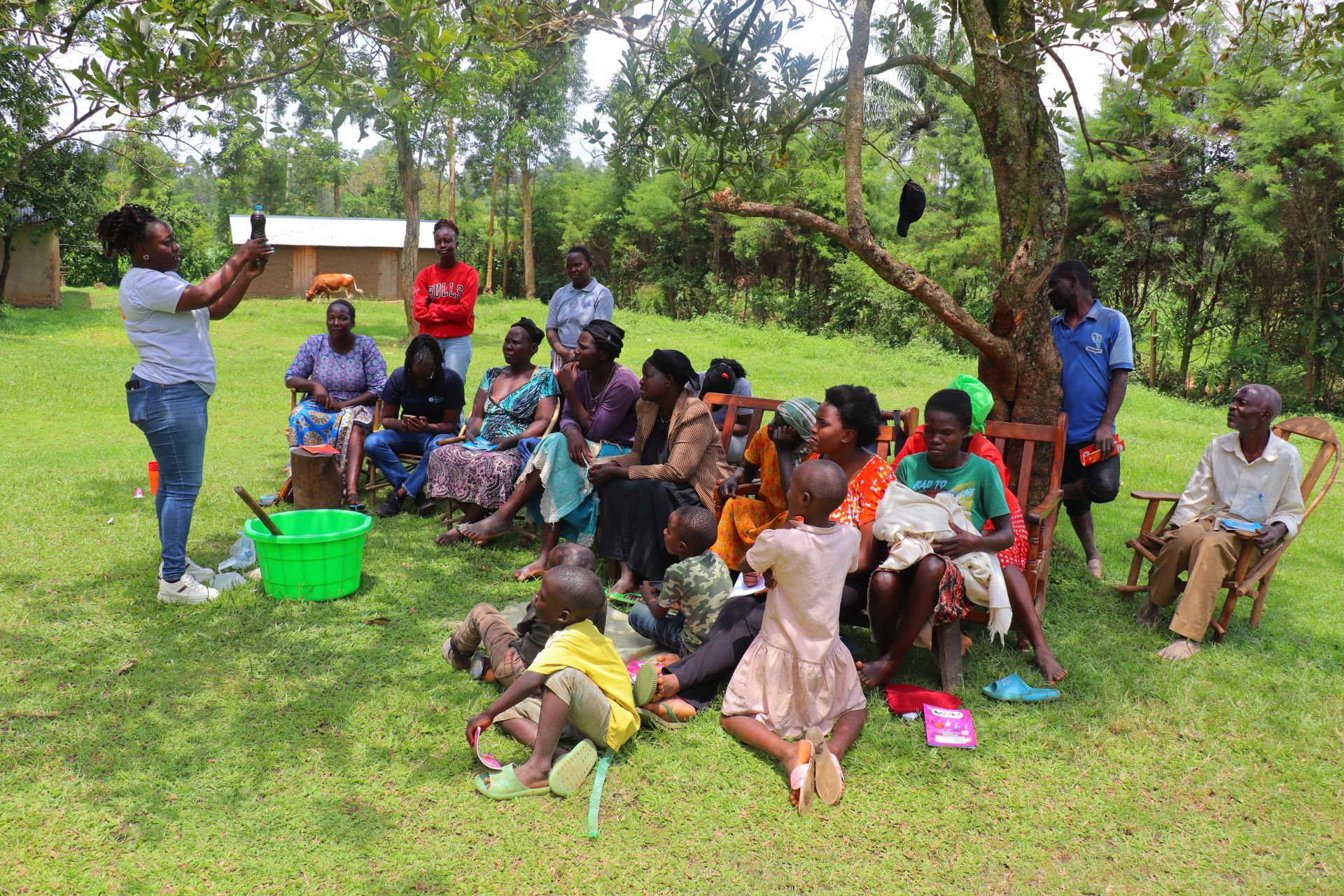
Together with the community, we determined their preferred training date. When the day arrived, facilitators Mercy Wamalwa, Mercy Mulinge, Joy Ongeri, and Adelaide Nasimiyu deployed to the site to lead the event. 18 people attended the training, including 12 women and six men.

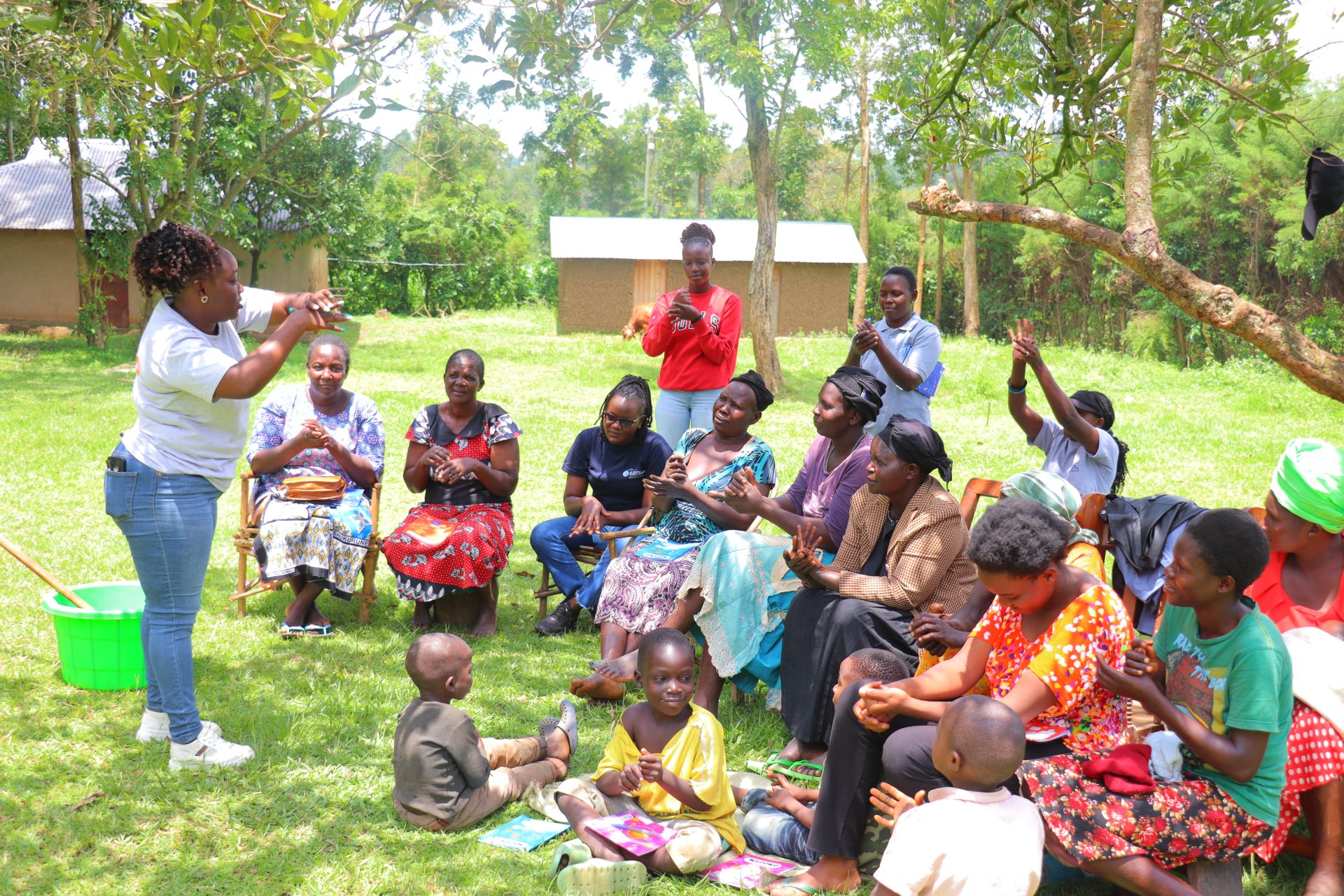
Handwashing session.

We discussed personal, oral, and environmental hygiene, emphasizing proper water handling, soap-making, and the ten steps of handwashing. We also highlighted the importance of primary health care and covered the operation and maintenance of the water point, as well as leadership and governance. By the end of the training, each participant had a clear understanding of their role in maintaining clean water and promoting good health within their community.

We held an election for the newly formed water user committee, which will oversee the maintenance of the spring. We brainstormed income-generating activities and encouraged them to start a group savings account for future minor repairs to the spring.

Soapmaking session.

Field Officer Mercy Wamalwa shared, "Participants in the hygiene training showed strong commitment through their active participation, consistent attendance, and high completion rates. Their enthusiasm was evident in their positive body language, voluntary contributions to discussions, and expressed value for the training, indicating a genuine interest in improving hygiene practices in their lives."

Ms. Mayende.

Forty-nine-year-old farmer Josephine Mayende shared the most memorable part of the training for her. "The most interesting topic covered in hygiene training was how to handle water with a lot of care. It was interesting because we were taught that we should be cleaning our water storage containers after every three days, and also before going to fetch water."

Thank you for making all of this possible!


Update photo


May, 2026: Exciting Progress in the Lunyiko Community!

We’re thrilled to share that, thanks to your generous support, significant change is coming for Susan Okumu and the entire Lunyiko Community. Construction has begun on the spring protection project, bringing them one step closer to having clean, reliable water.

But that's not all—during construction, we’re also providing vital health training. These sessions equip the community with essential hygiene practices, ensuring that the benefits of clean water extend to lasting health improvements.

We’re so grateful for your role in making this possible. Stay tuned for more updates—soon, we’ll be celebrating the arrival of safe water in the Lunyiko Community!


Project Photos


Project Type

Springs are water sources that come from deep underground, where the water is filtered through natural layers until it is clean enough to drink. Once the water pushes through the surface of the Earth, however, outside elements like waste and runoff can contaminate the water quickly. We protect spring sources from contamination with a simple waterproof cement structure surrounding layers of clay, stone, and soil. This construction channels the spring’s water through a discharge pipe, making water collection easier, faster, and cleaner. Each spring protection also includes a chlorine dispenser at the waterpoint so community members can be assured that the water they are drinking is entirely safe. Learn more here!


Contributors

Project Sponsor - Concord-Carlisle Catholic Collaborative