 Borehole Well and Hand Pump
 Rehabilitation Project







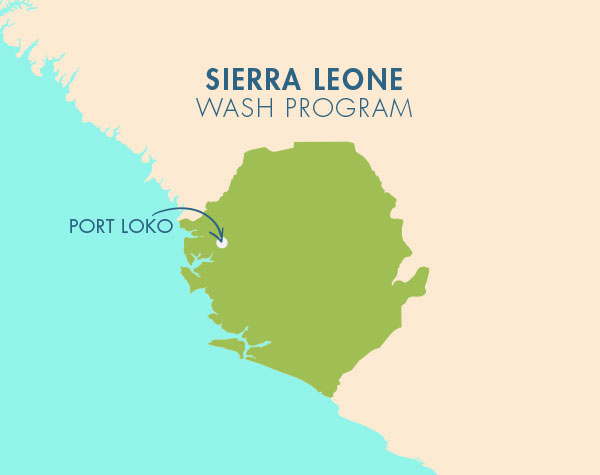
Harvest Heritage School has two available water sources, but neither of them can safely and reliably meet the needs of its 160 students and 6 staff members.
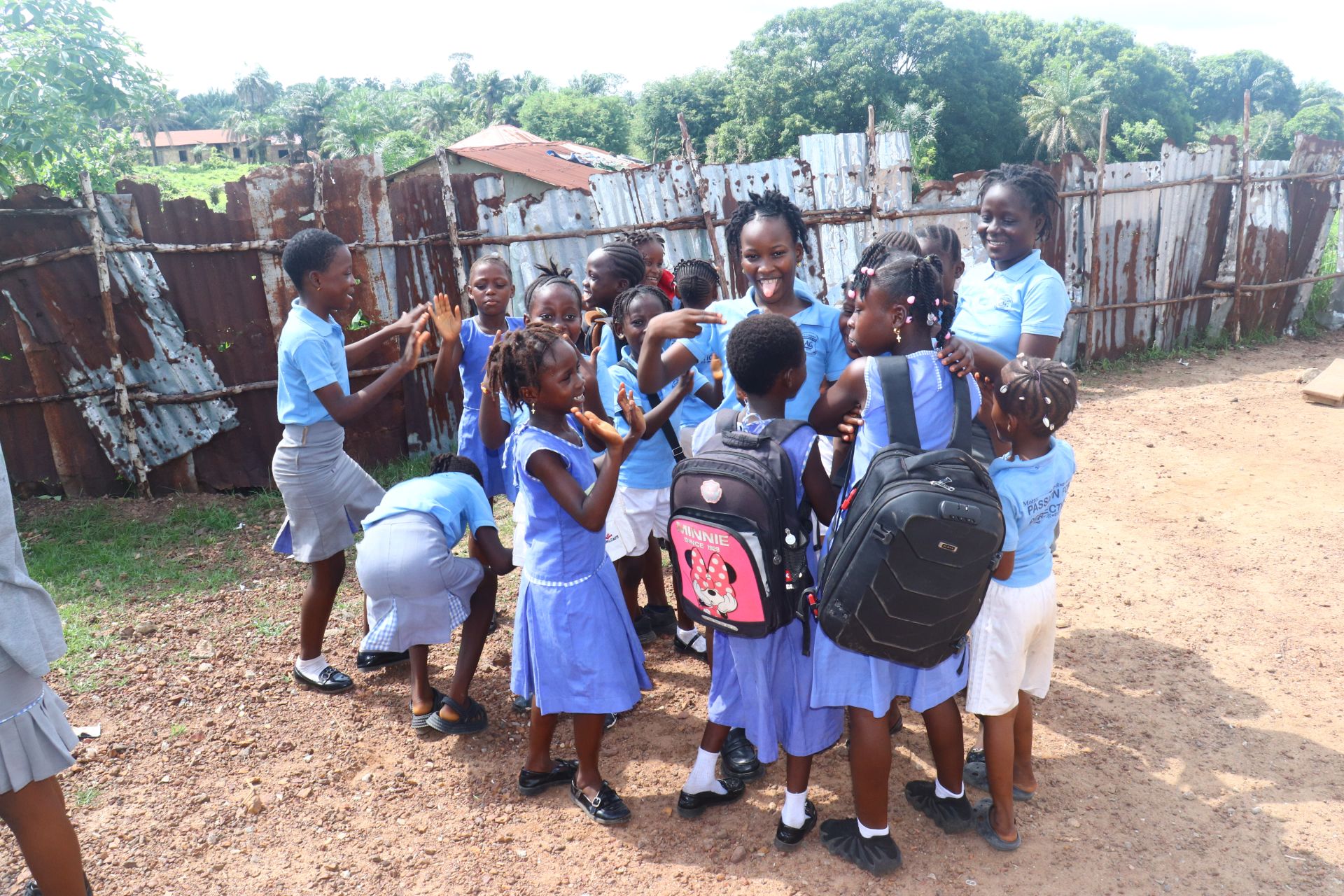
"Presently, the school has no water well on its premises. They are fetching water from an open well that is outside the school compound. This well is [a] distance away from them, and it is hard to fetch water from it since the well is open," said Field Officer Julius Sesay, describing the water situation.
"Apart from that, the water from the well is prone to contamination since it is an open well. The other constraint they face is that the well is seasonal," Julius continued.
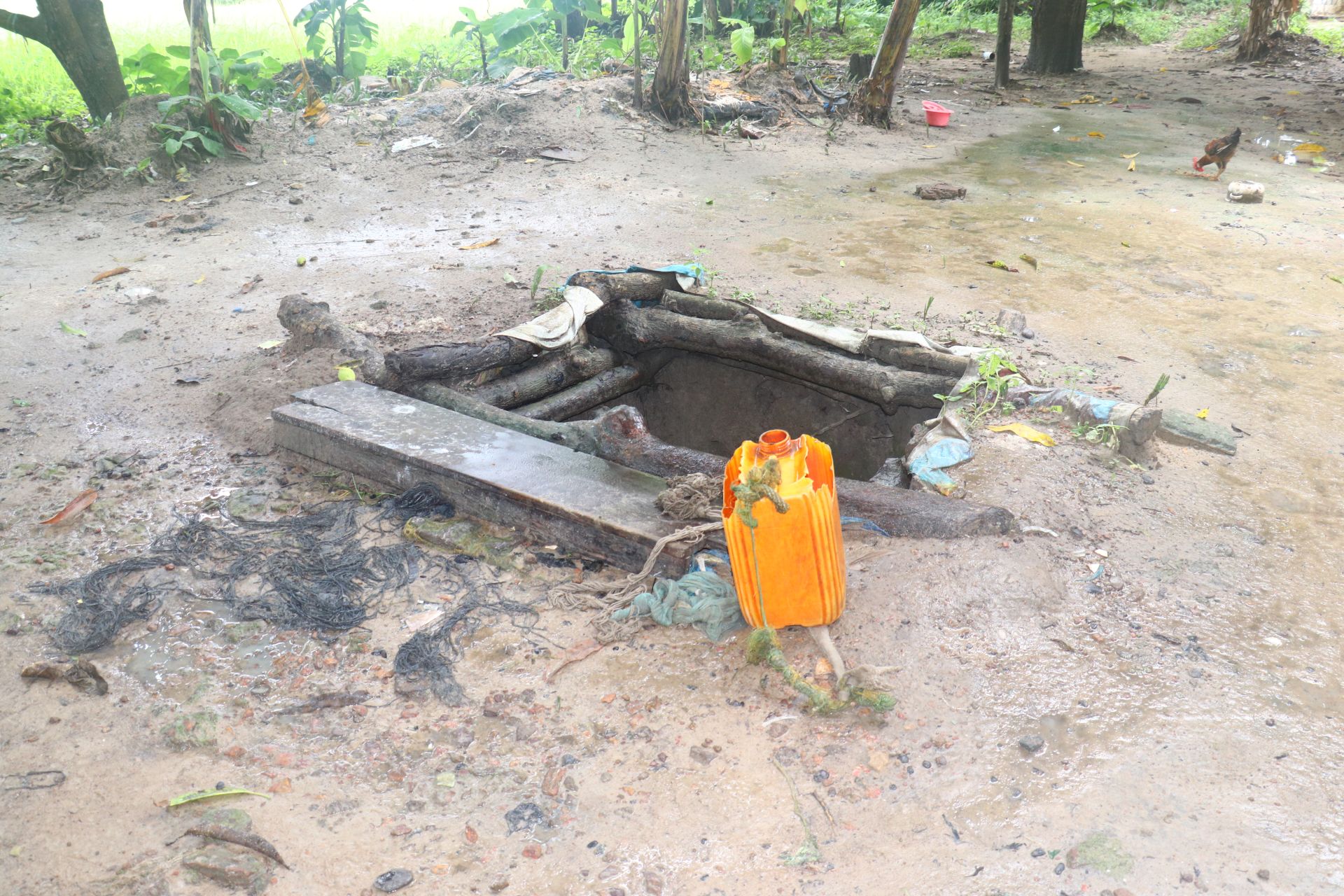
The unprotected well.
Both water sources, two unprotected dug wells, are seasonal, overcrowded, and contaminated. Those who use the water sources frequently complain of water-borne illnesses, such as diarrhea, vomiting, and typhoid.
Twelve-year-old Sento shared how the water crisis at her school is impacting her and her education.
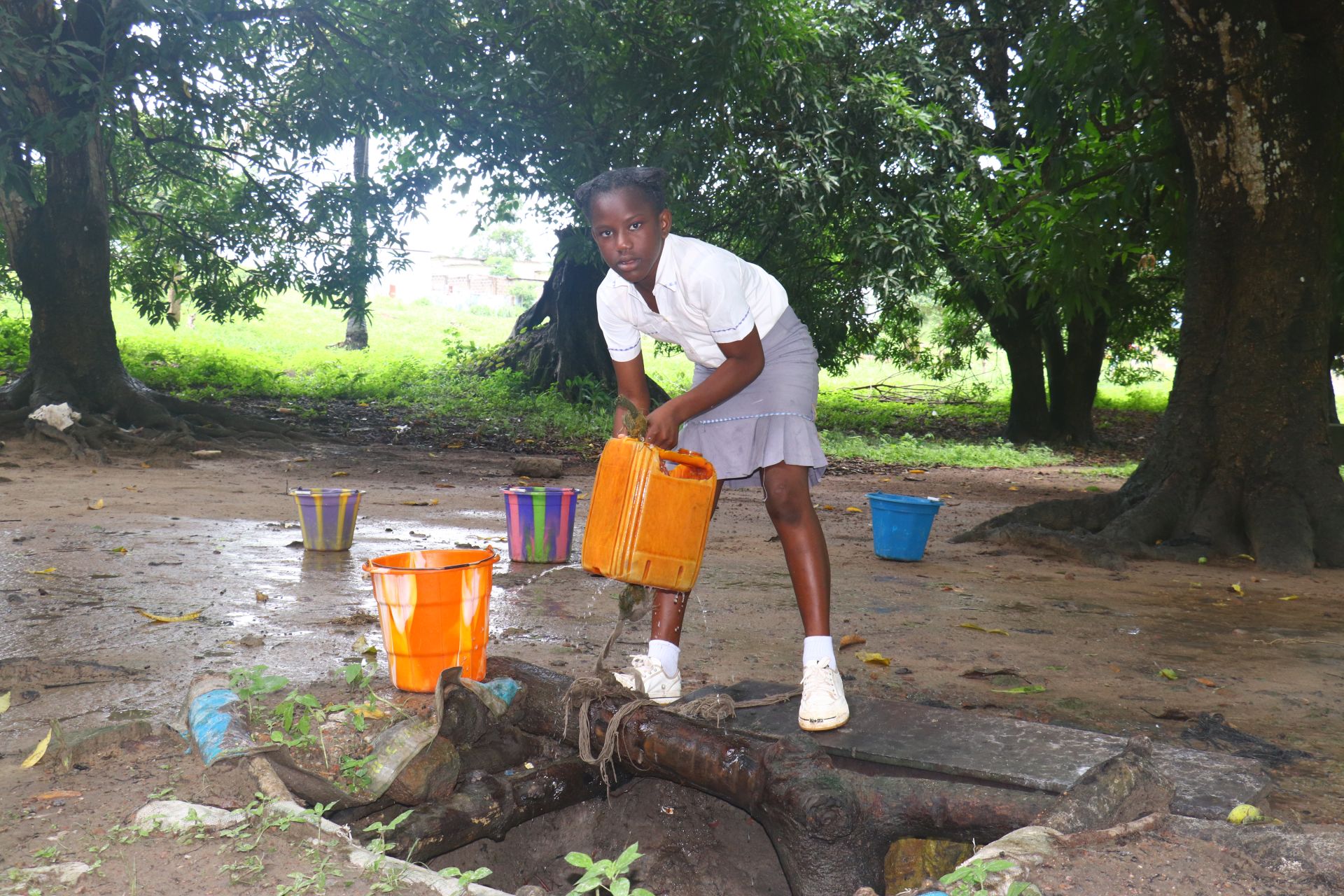
Sento prepares to collect water from one of the unprotected wells.
"I feel discouraged each time I am sent to fetch water. I always think of the constraints involved [in] fetching water outside of the school grounds. It is time-consuming, considering the walking distances and the issues faced when fetching water from these open wells," she said.
"I spend time fetching water during school hours. This is not easy at all since I will miss some important lessons. This has even affected my performance in class. There was a time when one of our teachers conducted a test, but I was not around. I went out to fetch water, [and] by the time I returned, they were already through with the test. I only had limited time to complete the test, and this affected my performance," she lamented.
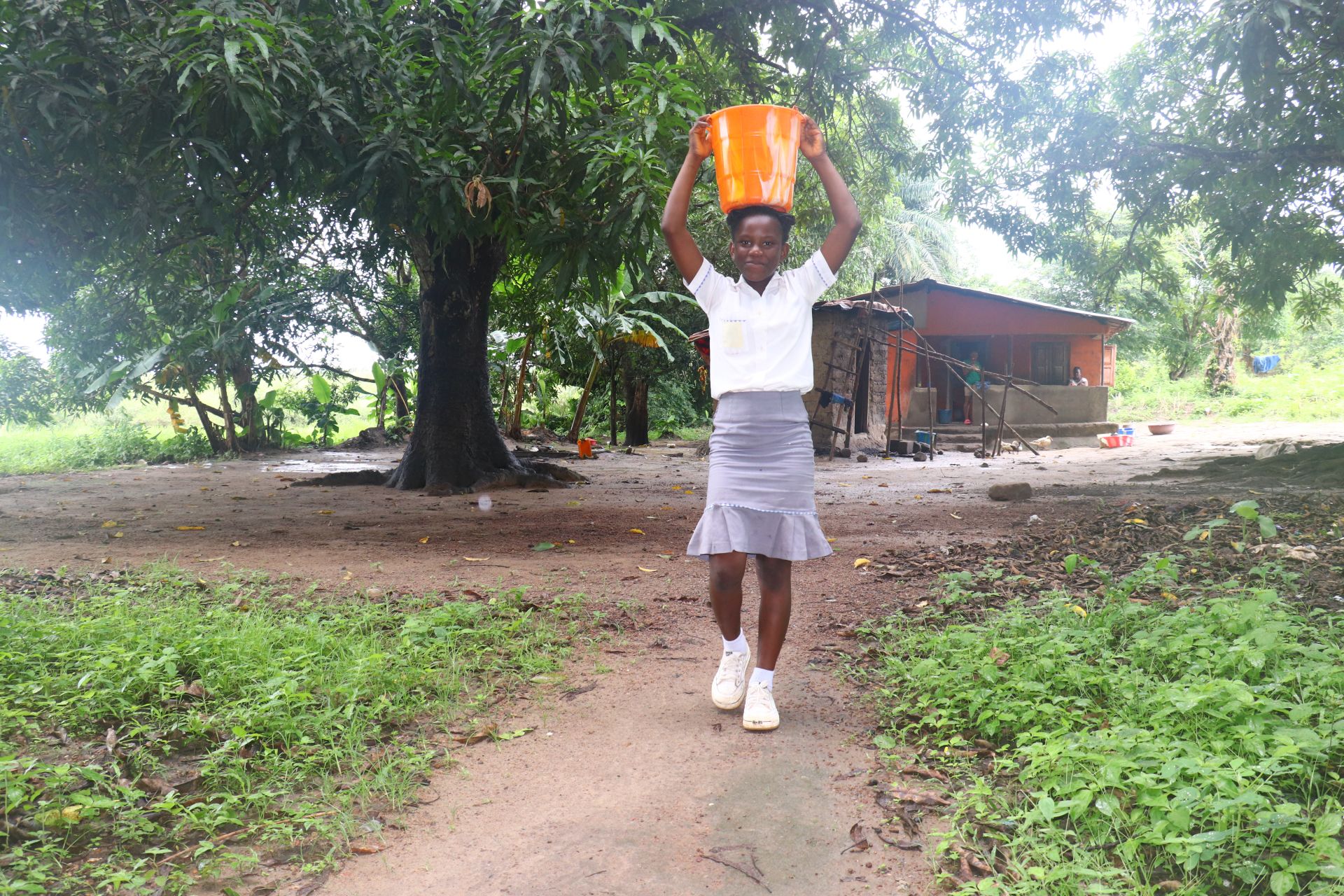
Sento dreams of having water at her school so she can regain the time and energy she wastes each day collecting water, and focus on school instead. She wants to be a teacher in the future, but until she has reliable, accessible water, it will be very difficult for her to achieve her goal.
Steps Toward a Solution
Schools without reliable, on-premises water access often rely on students to fetch and carry water, leading to rationing and uncertainty about water quality. The water is typically poured into a communal storage tank and used by the entire school. With children carrying water from all different sources, it is also impossible for teachers and staff to know exactly where the water comes from and how safe it is to drink.
A new water point will be located on-premises at the school to ensure accessibility, reliability, and safety for students, teachers, and staff while meeting our school coverage goals. Having water available at the school allows children to drink, wash hands, and use sanitation facilities without leaving school grounds, preventing disruptions to lessons and reducing safety risks. A dedicated source increases water availability, reduces reliance on stored water, minimizes rationing, and ensures confidence in the safety of the water. This means staff and students are healthier, and their lessons aren’t disrupted, contributing to a better education!
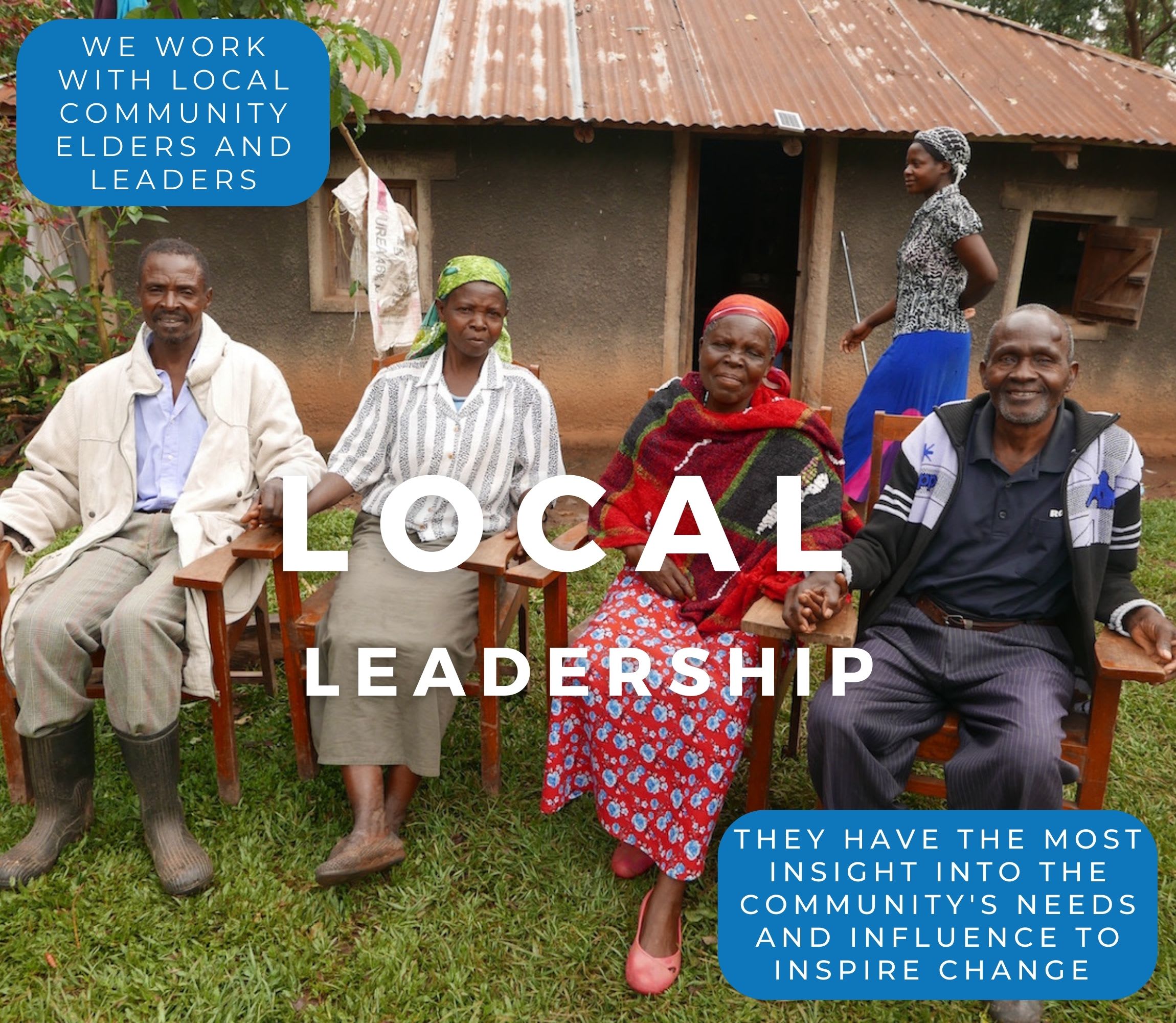
Our technical experts worked with the school leadership and local community to identify the most effective solution to their water crisis. They decided to drill a borehole well, construct a platform for the well, and attach a hand pump.
Well
Abundant water often lies just beneath our feet. Aquifers—natural underground rivers—flow through layers of sediment and rock, offering a constant supply of safe water. A borehole well is drilled deep into the earth to access this naturally filtered and protected water. We penetrate meters, sometimes even hundreds of meters, of soil, silt, rock, and more to reach the water underground. Once found, we construct a platform for the well and attach a hand pump. The community gains a safe, enclosed water source capable of providing approximately five gallons of water per minute. Learn more here!
School Education & Ownership
Hygiene and sanitation training are integral to our water projects. Training is tailored to each school's specific needs and includes key topics such as proper water handling, improved hygiene practices, disease transmission prevention, and care of the new water point.
To ensure a lasting impact, we support forming a student health club composed of elected student representatives and a teacher. These clubs promote hygiene practices schoolwide and keep handwashing stations well-stocked. This student-led model encourages a sense of ownership and responsibility.
Safe water and improved hygiene habits foster a healthier future for everyone in the school and the surrounding community.