
Project Status


Project Type:  Borehole Well and Hand Pump

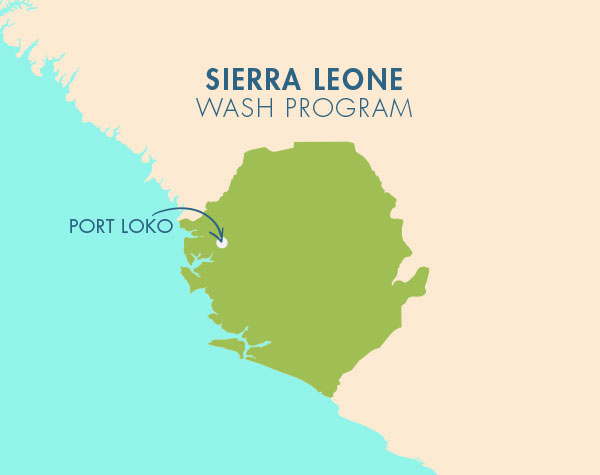
Regional Program: Port Loko, Sierra Leone WaSH Program

Impact: 150 Served

Project Phase:  In Service - Apr 2026

Functionality Status:  Functional

Project Features


Click icons to learn about each feature.


In the Makanoh Community, there are 150 residents who struggle to access sufficient water. Their well runs dry for several months a year, leaving them no option but to collect swamp water to meet their daily needs.

The swamp.

Field Officer Phillip James Allieu described the situation: "The community members have [a] water crisis on a daily basis. The reason [for the] water crisis is the seasonality of the main water source, [a] protected dug well with [a] hand pump, and the frequent pump breakdowns on the well. These are the two major reasons [for] the shortage in water in this community, especially during the dry season."

He continued: "Consequently, the water crisis also affects the daily activities of most families. The three main affected areas are cooking, bathing, and laundering. Most family members will find it particularly challenging to use water to do these tasks since the main water source of [the] protected dug well with the hand pump gets dry. This really deprives them [of] fetching enough water."

The well to rehabilitate.

The swamp also presents problems.

"The major challenge of fetching water from the swamp is the long distance and the overcrowding that is also the cause of filthy water from the swamp well. This prevents them from doing more than two roundtrips [for] water from the swamp," Field Officer Allieu continued.

The water crisis touches everyone. Thirteen-year-old Salamatu bears the burden every day.

Salamatu carrying water home.

"I fetch water to my house in the morning before school. After I have fetched water for domestic use in the morning, I also fetch water to bathe before going to school. The water well is not always providing enough water. The well gets overcrowded when the people from other villages come to fetch water from our water well," she shared.

Collecting water from the swamp.

"It is also not easy for me to fetch water from the swamp because of the long distance. Sometimes, I had to bathe at the swamp and carry water before I could dress to go to school. When the water well is not in use, it would be exceedingly difficult to fetch clean drinking water from the swamp. There would be people waiting to fetch water, and the water becomes filthy easily. I carry my dirty clothes to the swamp to launder after school. I had to go with my friends because I cannot go there alone. The swamp area is not safe because there are snakes in the area," shared Salamatu.

Rehabilitating the well will give Salamatu and her community the reliable water source they need that won't steal their time or peace. When their well is fully functional all year round, they won't have to rely on swamp water anymore.

Salamatu.

"The water well is the best to fetch water, [but] only if it is working well. It is near to my house, and I can easily fetch enough water to my house from this well," Salamatu concluded.

Steps Toward a Solution

Our technical experts worked with the local community to identify the most effective solution to their water crisis. They decided to drill a borehole well, construct a platform for the well, and attach a hand pump.

Well
Abundant water often lies just beneath our feet. Aquifers—natural underground rivers—flow through layers of sediment and rock, offering a constant supply of safe water. A borehole well is drilled deep into the earth to access this naturally filtered and protected water. We penetrate meters, sometimes even hundreds of meters, of soil, silt, rock, and more to reach the water underground. Once found, we construct a platform for the well and attach a hand pump. The community gains a safe, enclosed water source capable of providing approximately five gallons of water per minute. Learn more here!

Community Education & Ownership
Hygiene and sanitation training are integral to our water projects. Training is tailored to each community's specific needs and includes key topics such as proper water handling, improved hygiene practices, disease transmission prevention, and care of the new water point. Safe water and improved hygiene habits foster a healthier future for everyone in the community. Encouraged and supported by the guidance of our team, a water user committee representative of the community's diverse members assumes responsibility for maintaining the water point, often gathering fees to ensure its upkeep.
Project Updates


April, 2026: Makankoh Community Well Complete!

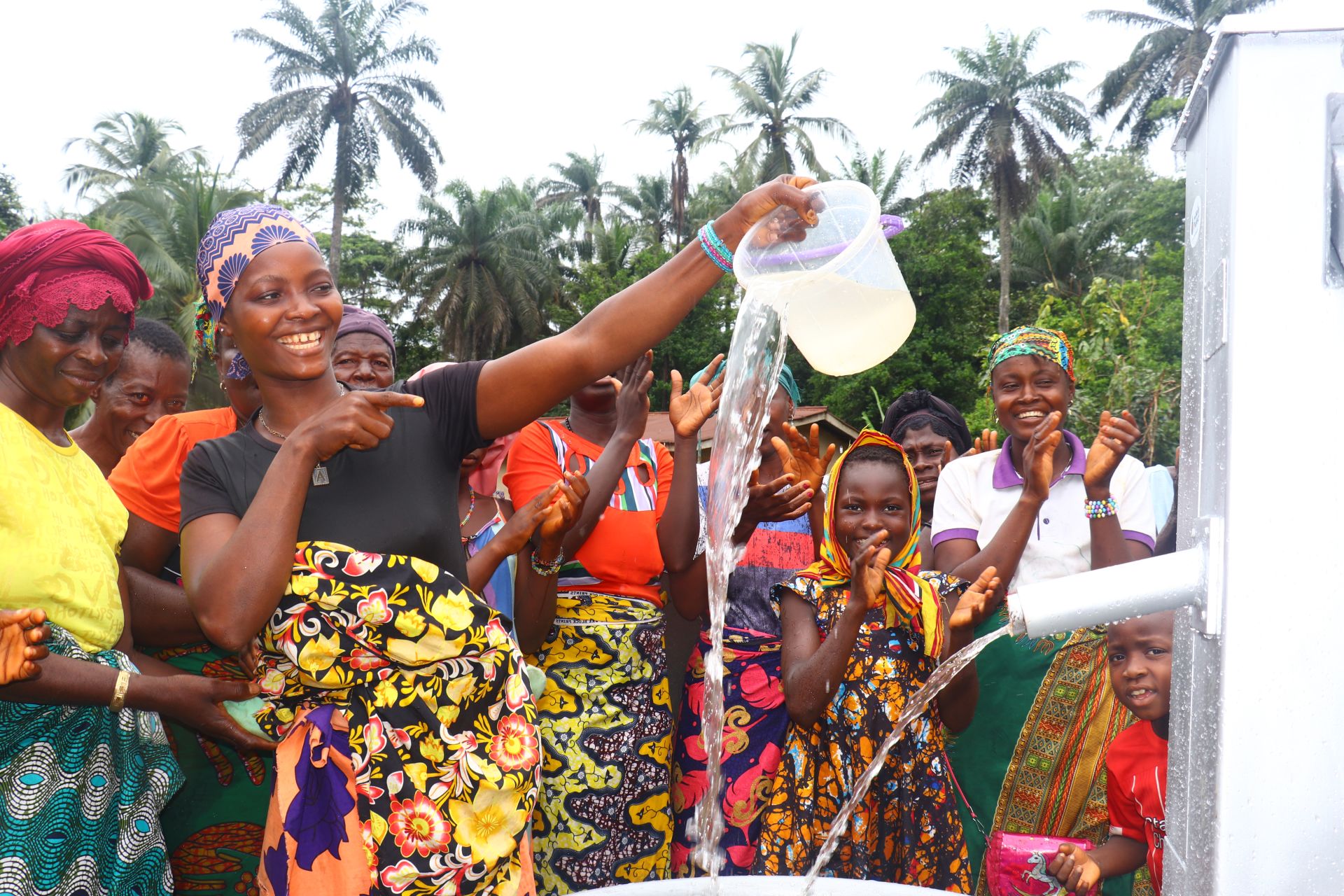
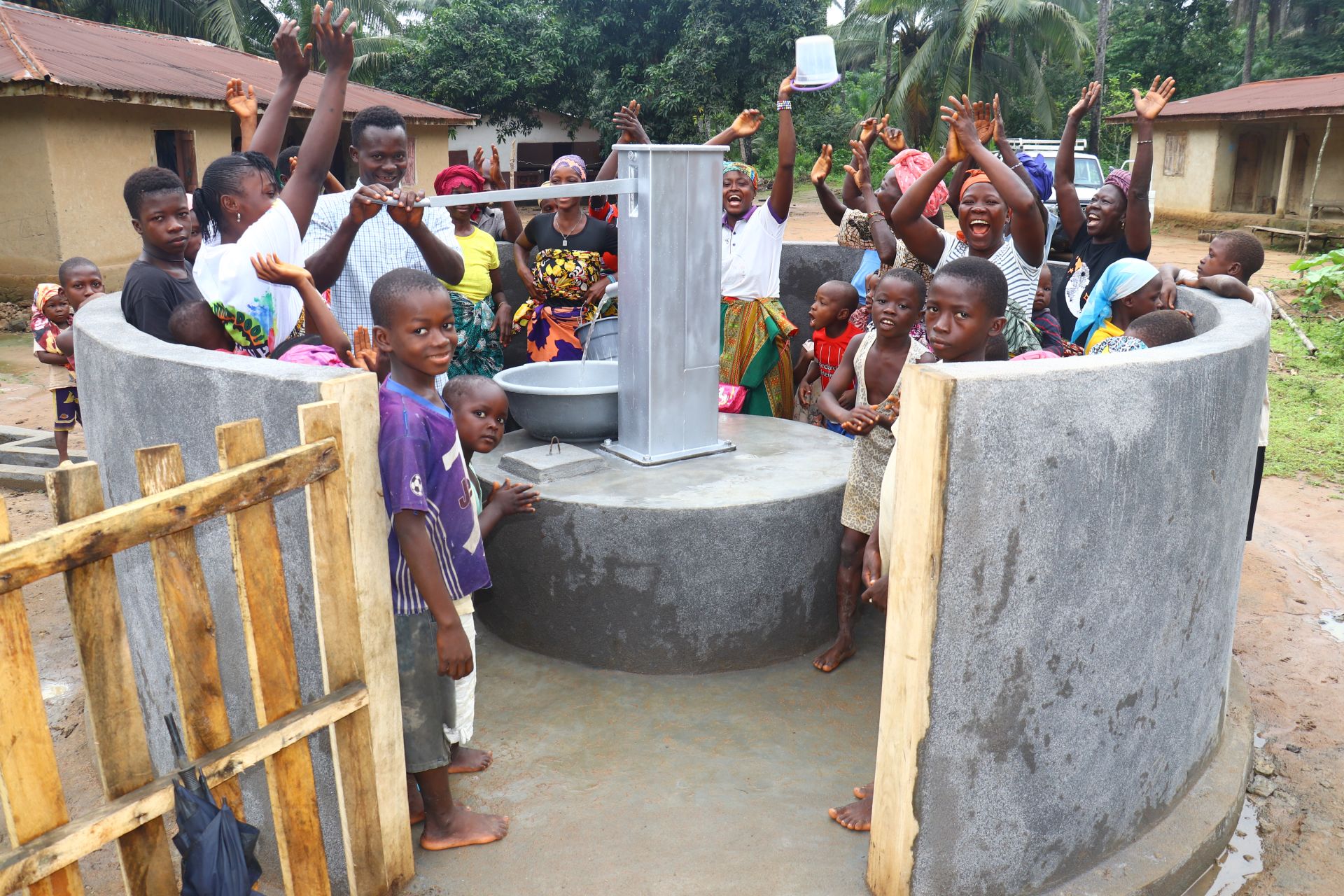
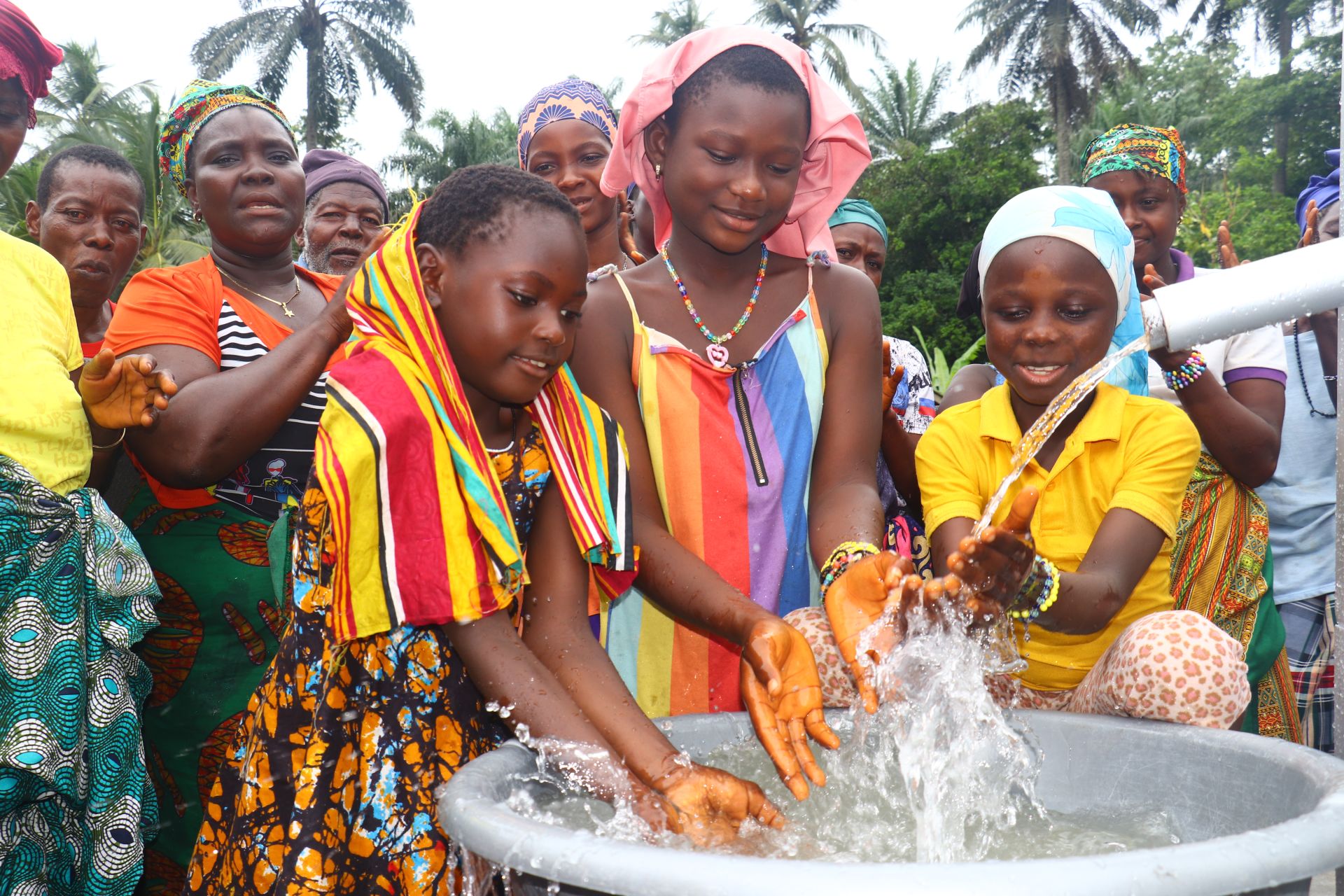
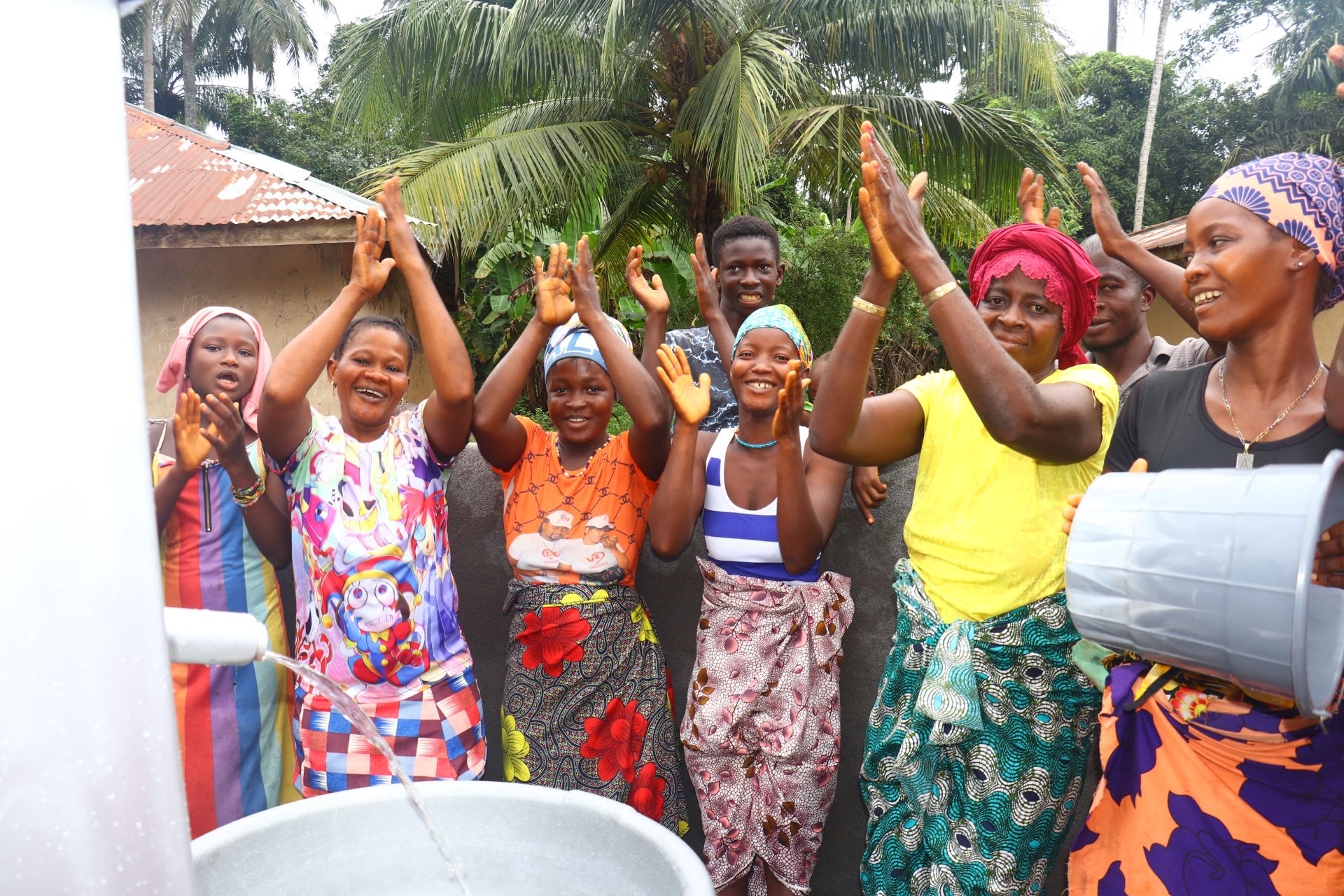
We are excited to share that your donation provided a safe, reliable well in the Makankoh Community. As a result, community members no longer rely on unsafe water to meet their daily needs. We also conducted hygiene and sanitation training focused on healthy practices, such as handwashing and using latrines.

Thirty-year-old farmer Mariatu Conteh shared her excitement. "I want to thank the donors for providing this water well in my community. This will help me solve problems I often faced accessing water before, like no more walking long distances to fetch water, I have enough water to fetch, and I have safe drinking water. I will not contract water-related diseases like diarrhea, cholera, etc."

Mariatu Conteh celebrating clean water.

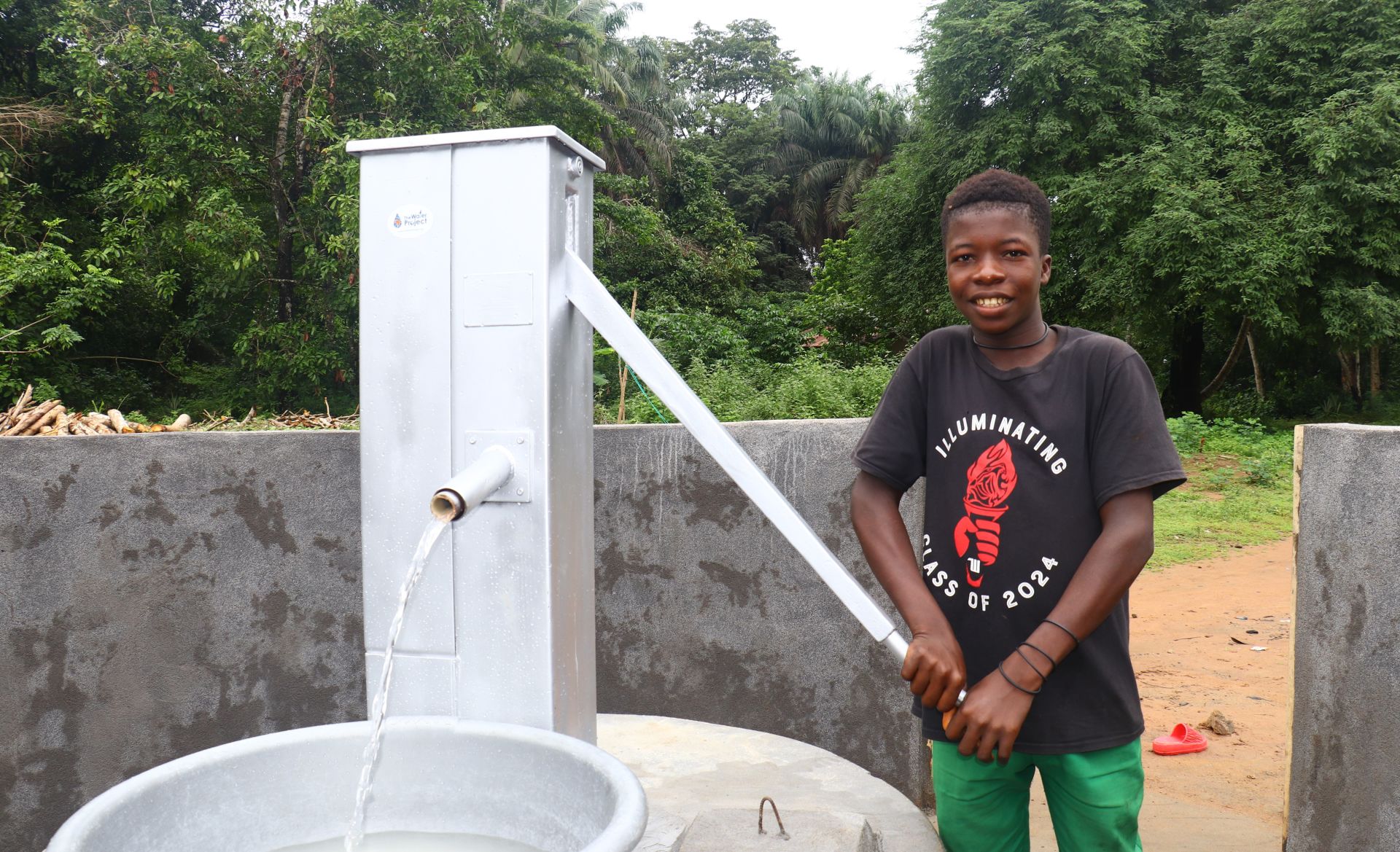
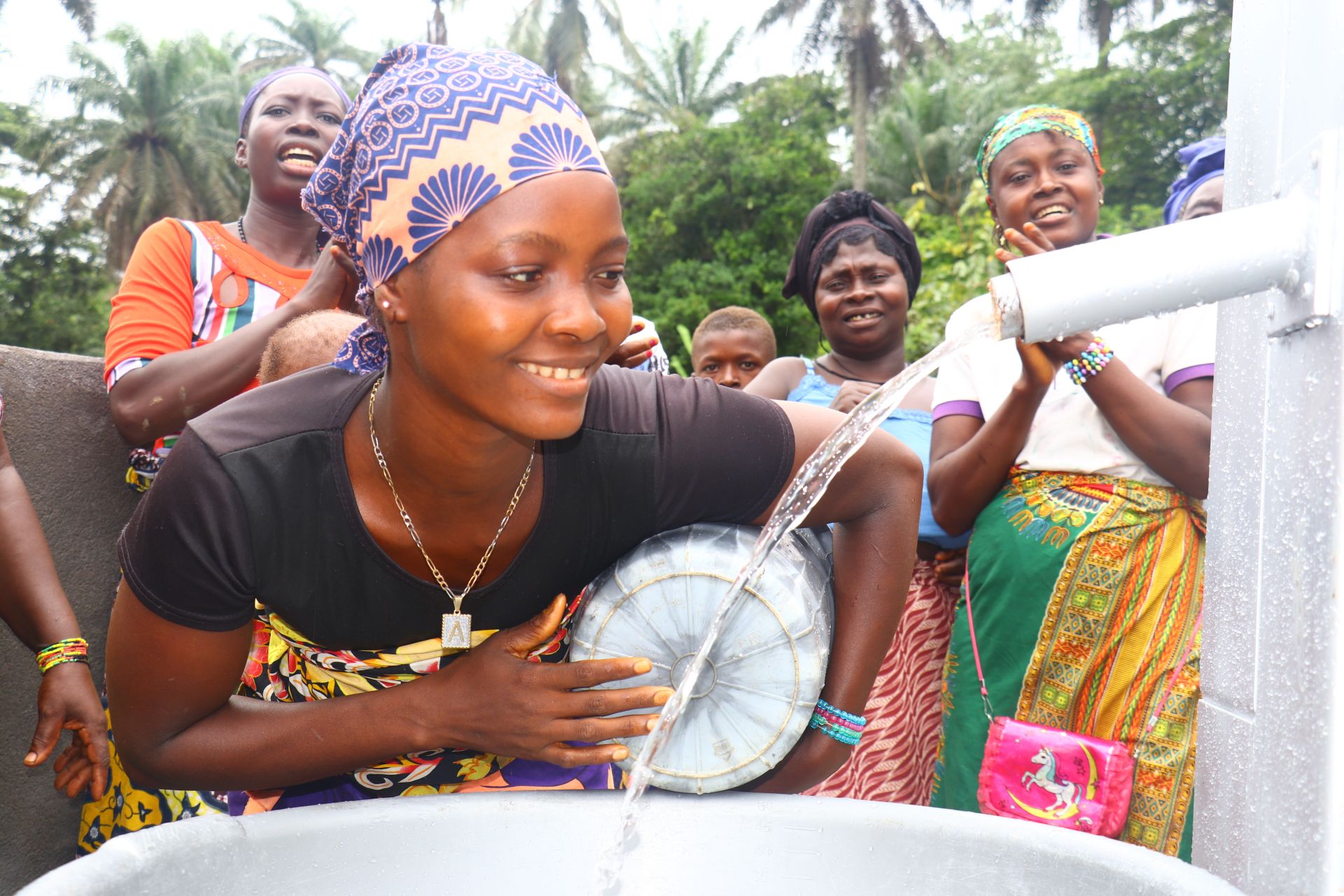
"I am glad today for this water well. I will fetch enough water for home, and my mother will cook the food for us quickly. My mother and father will go to the farm and have safe water to drink," said Ibrahim, 13.

Ibrahim collects clean water.

"I want to thank you for renewing this water in my community. This will help me to focus on learning at school. The burden of fetching water at home has reduced. I will go to school on time and have enough time to study, [and] also do my homework," Ibrahim continued.

After construction was complete, we held a dedication ceremony to officially give responsibility of the well to the community members. Several local dignitaries attended the ceremony, including representatives from the Ministry of Water Resources and the Port Loko Council District. Each official gave a short speech thanking everyone who contributed to the rehabilitation of the water project and encouraging everyone to take good care of it. Then, Mariatu and Ibrahim made statements on their community's behalf. The ceremony concluded with celebration, singing, and dancing.

Clean Water Restored

The community provided space for the team to store their belongings and meals for the duration of their stay. The following day, the work began!

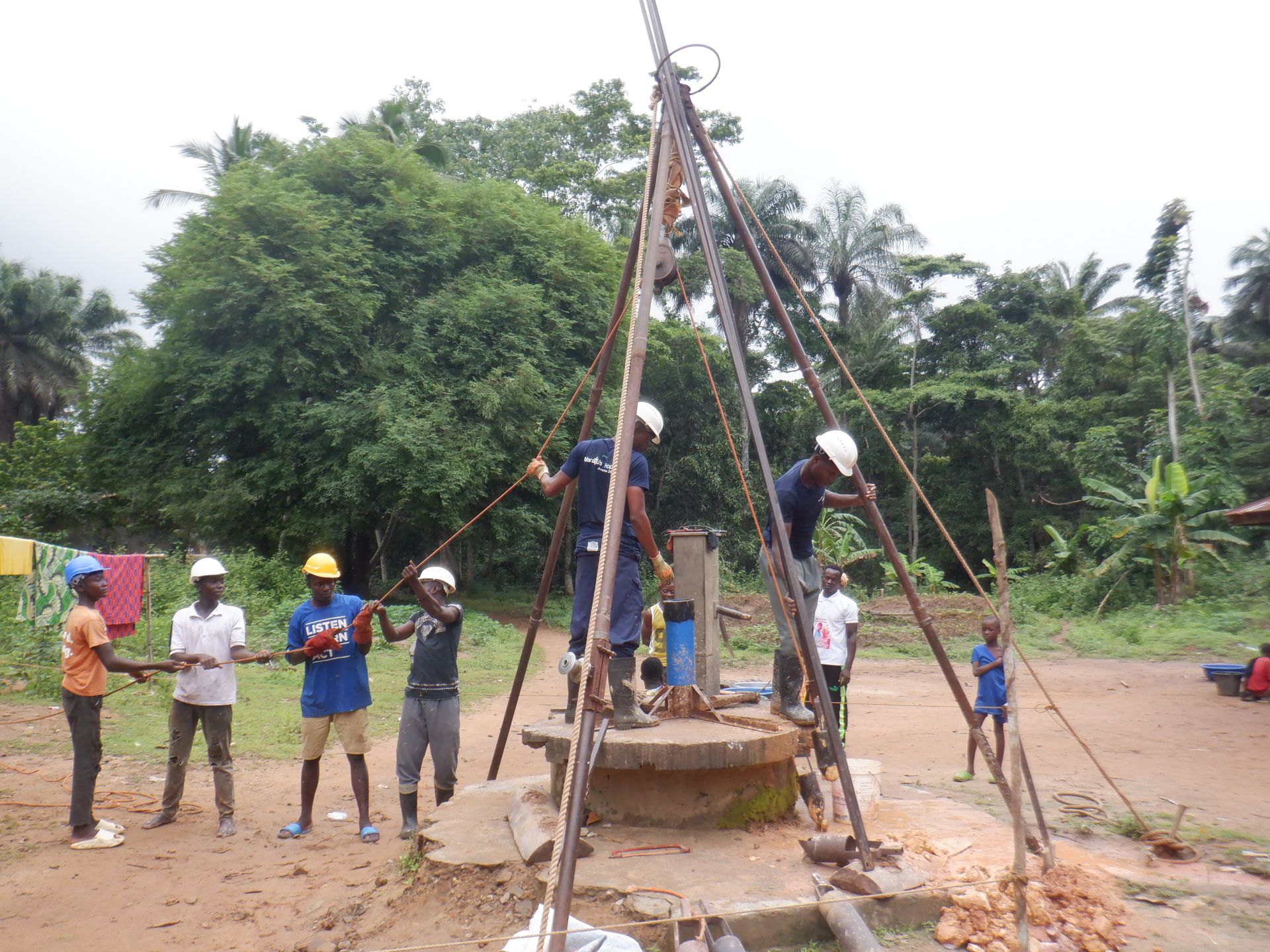
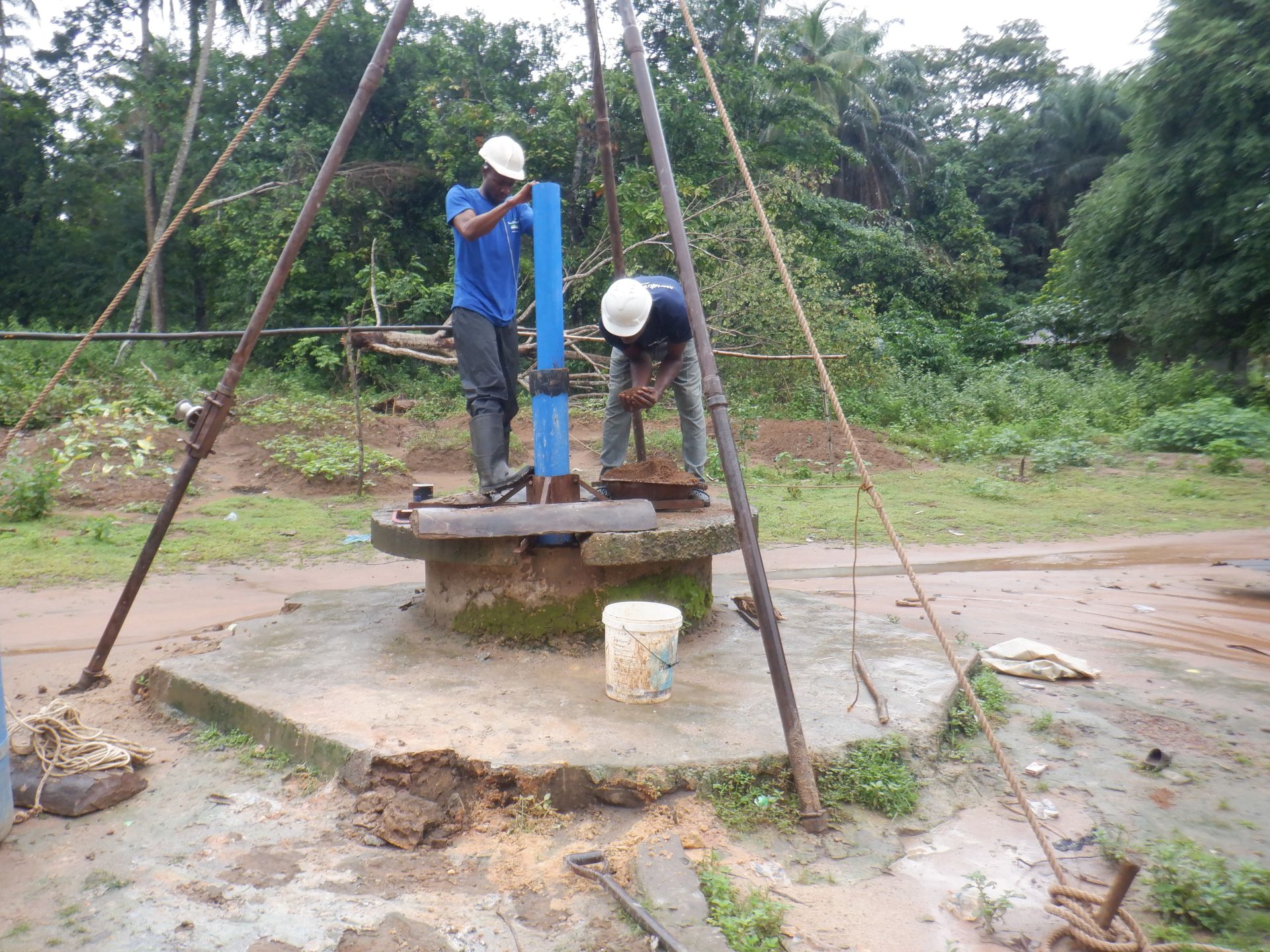
First, we raised the tripod, the structure we use to hold and maneuver each drilling tool. Next, we measured the hand-dug well's original depth and socketed the pipes to install a casing.

Finally, we started to drill! We reached a final depth of 16 meters with water at 6.9 meters. The team installed the cylinder as far below the water table as possible so that the community has reliable access throughout the year.

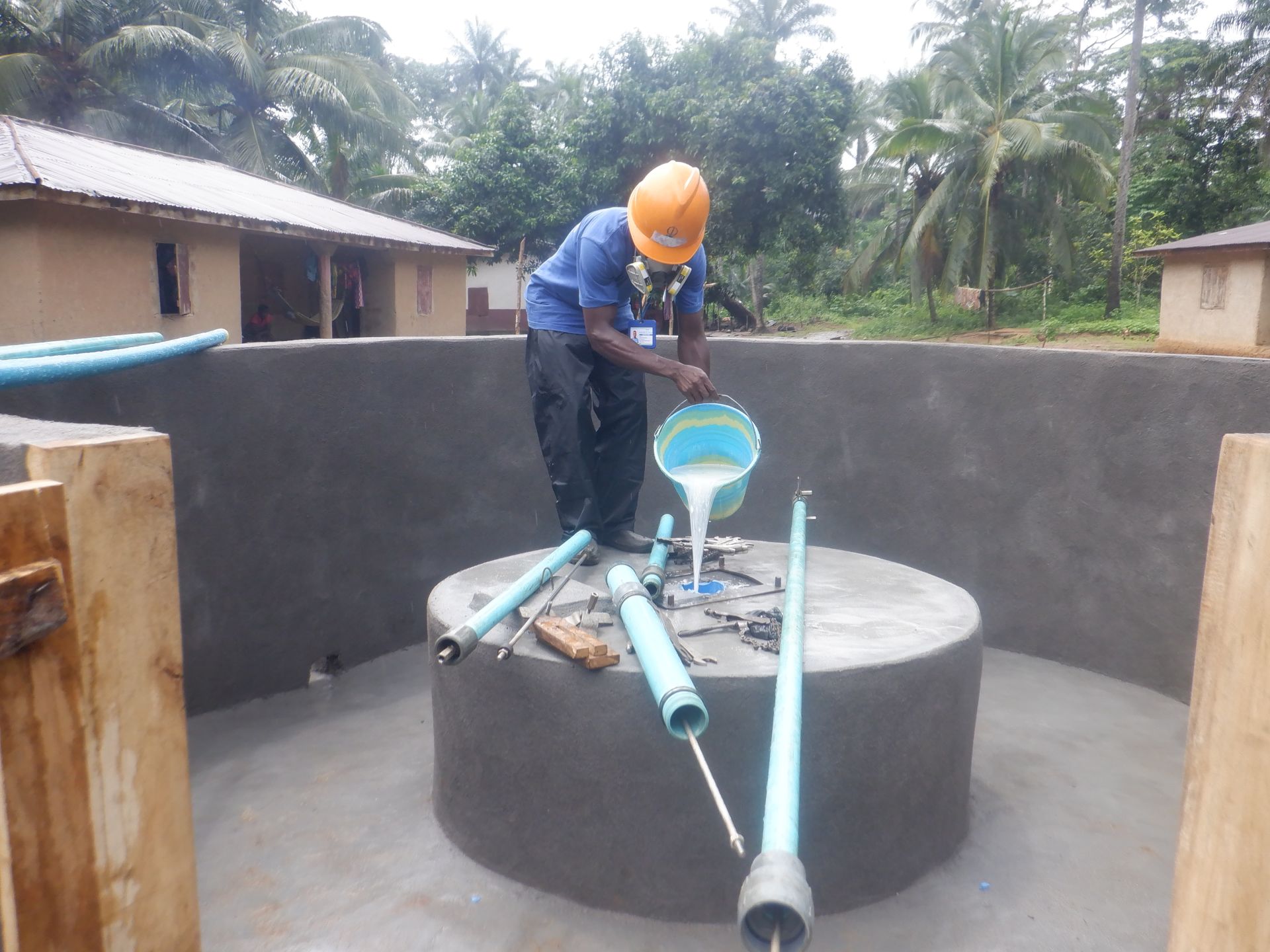
With drilling complete, we installed screening and a filter pack to keep out debris when the water is pumped.

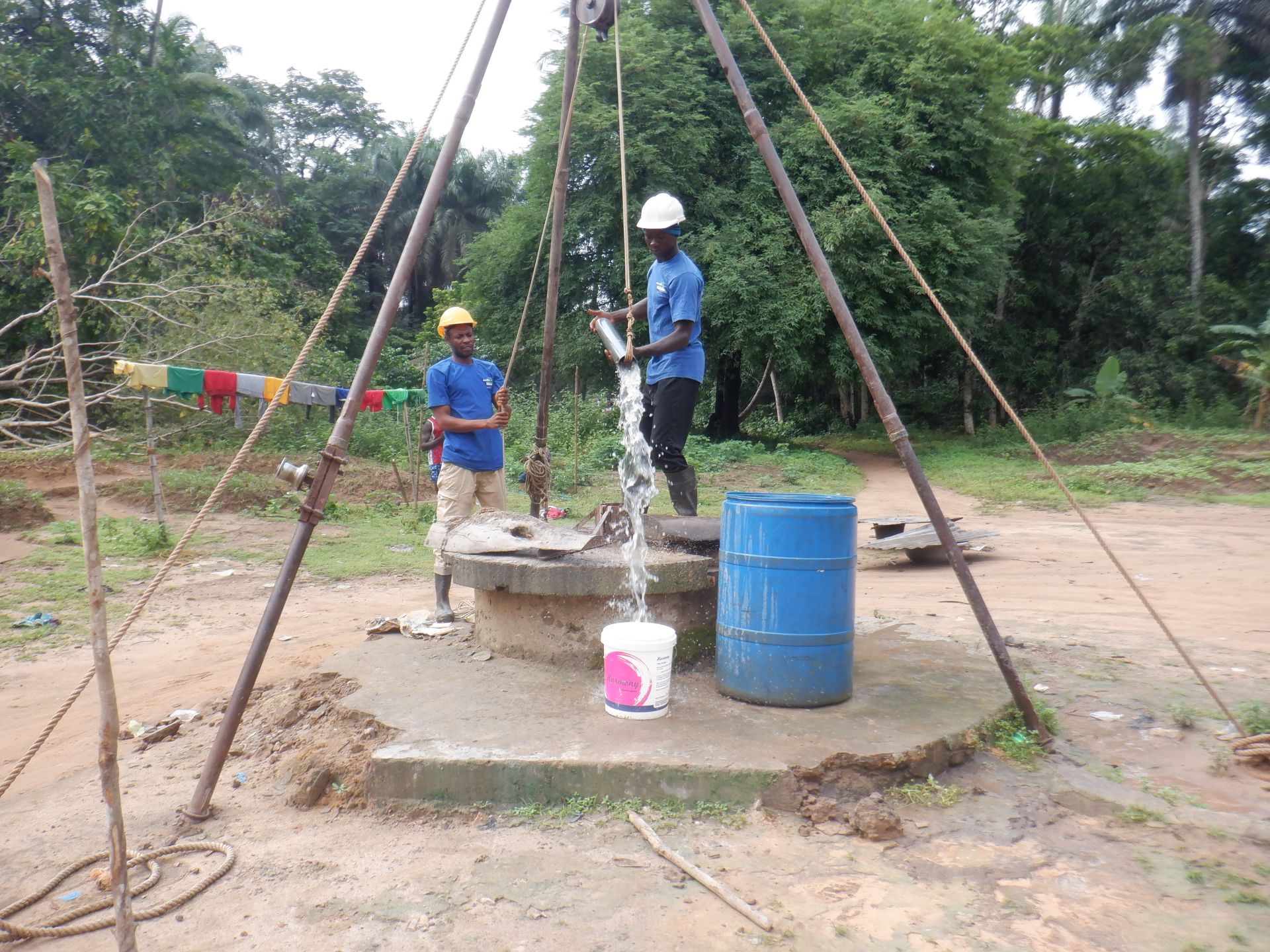
Next, we bailed the well and flushed it, clearing any debris generated by the drilling process. Lastly, we tested the water flow to ensure the well would provide clean water with minimal effort at the pump.

As the project neared completion, we built a new cement platform, walls, and drainage system around the well to seal it off from surface-level contaminants. The drainage system helps to redirect spilled water to help avoid standing water at the well, which is unhygienic and a breeding ground for disease-carrying mosquitoes.

At last, we installed the pump and conducted a water quality test. The results showed that this was clean water fit for drinking!

Community Education

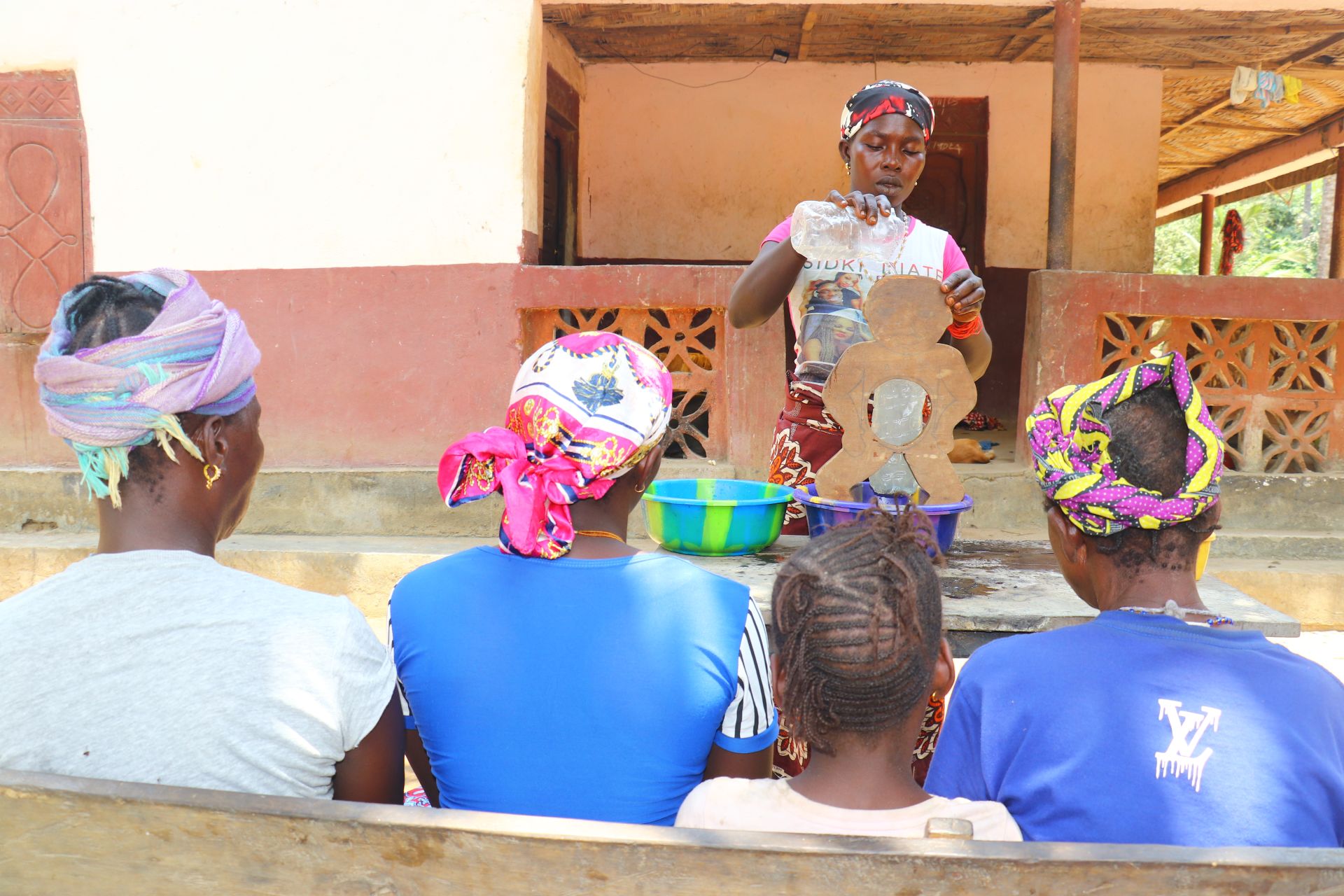
Before conducting any hygiene training, we collaborated with the local water user committee to understand the community’s challenges and lack of sanitation facilities. We identified households without handwashing stations or ones that may need to repair their latrines. With this information, community members worked together to improve hygiene and sanitation at home before the training.

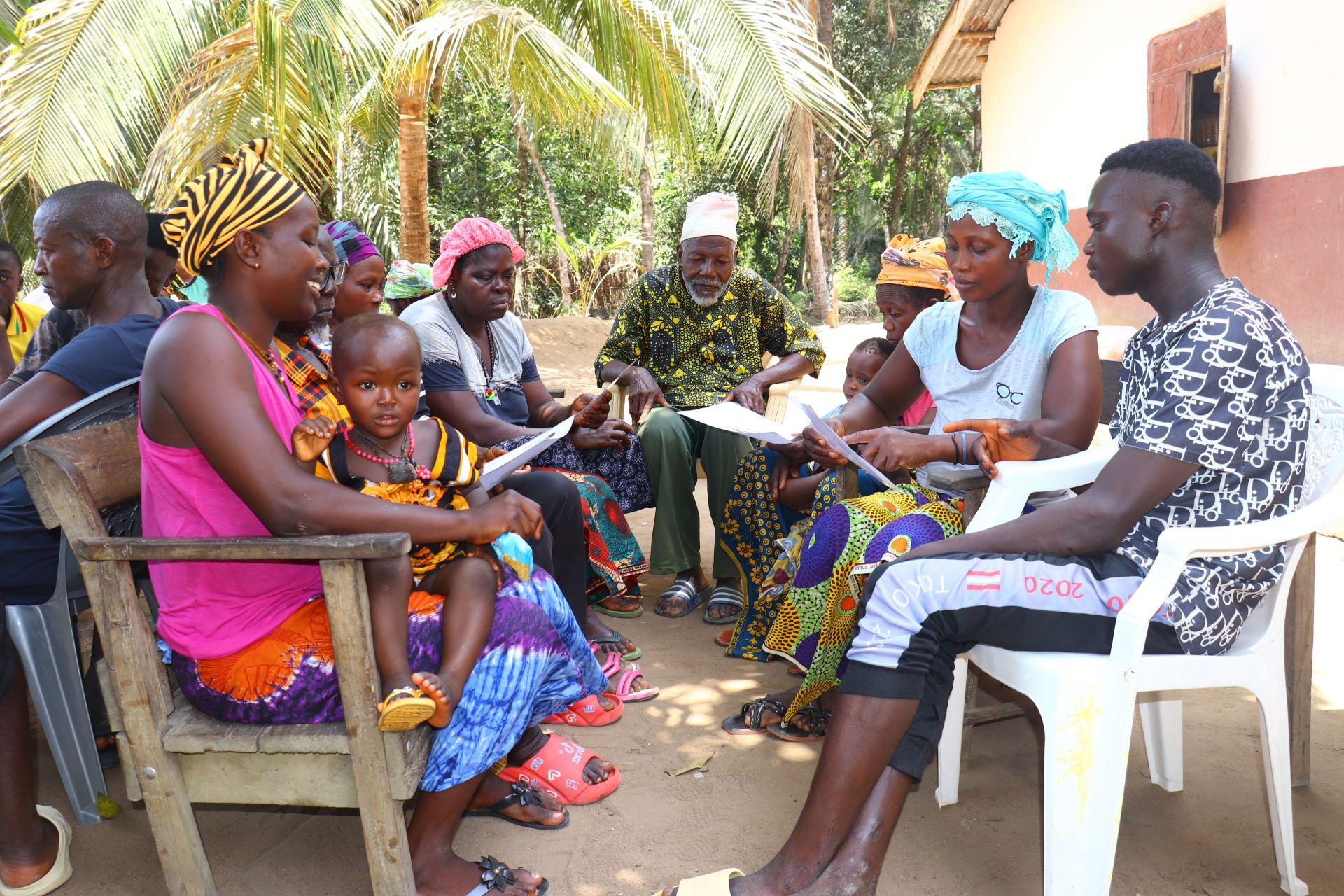
"Attendance for the three-day hygiene and sanitation training that was held in the Makankoh community was more than expected. The community members showed great dedication by attending regularly for the three days," shared Field Officer Alie Kamara.

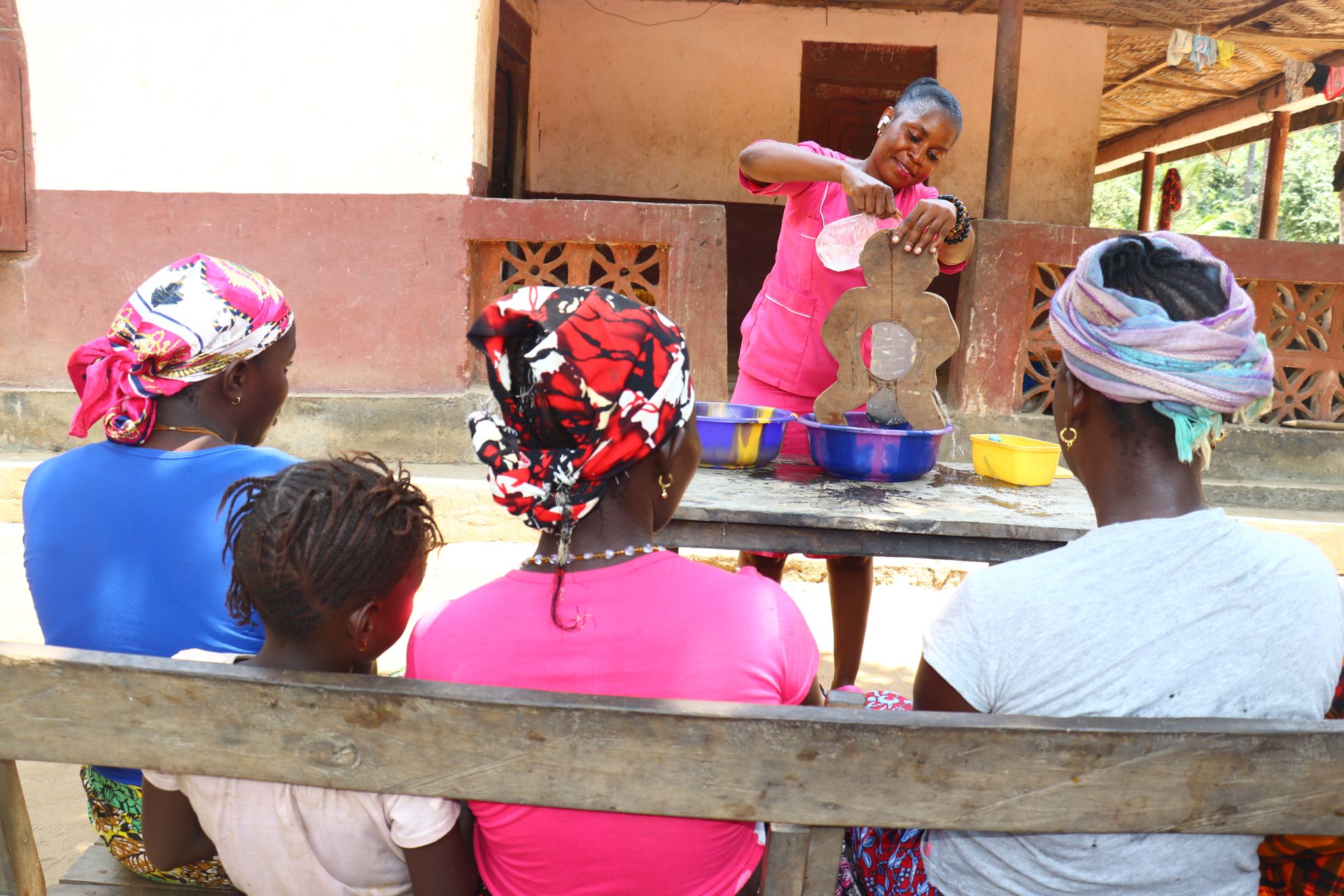
We also invited a nurse from the local clinic to help explain some topics and spread awareness about Sierra Leone's free vaccinations for children under five. Nurse Isatu Bangura was instrumental in reinforcing each lesson.

Nurse Bangura explains the importance of drinking clean water.

After this preparatory period, we scheduled a time when members from each household using the water point could attend a three-day hygiene and sanitation training.

We taught about proper handwashing, personal and menstrual hygiene, and healthy habits such as using latrines and maintaining a balanced diet. We discussed how disease transmission and water hygiene are crucial to community health. We emphasized the importance of maintaining and caring for the well pump and the cost recovery system.

Adamsay Sesay participates in the training session.

"The exercise of handwashing was the most interesting thing for me in the training. I did not know how to construct a tippy tap before today. I have learned that it is simple to construct using easily accessible, affordable materials. I am honestly grateful for this efficient training. I am confident now, that I am able to share everything I have learned with others, most importantly, how to construct a tippy tap. I believe that handwashing and tippy taps are two of the most important things I learned in the training. The tippy tap will help us practice proper handwashing on a regular and efficient basis," said 39-year-old Adamsay Sesay, who was appointed the new Chairperson of the Water User Committee.

Thank you for making all of this possible!


Update photo


February, 2026: Exciting Progress in Makankoh Community!

We’re thrilled to share that, thanks to your generous support, significant change is coming for Salamatu and the entire Makankoh Community. Construction has begun on the well rehabilitation project, bringing them one step closer to having clean, reliable water.

But that's not all—during construction, we’re also providing vital health training. These sessions equip the community with essential hygiene practices, ensuring that the benefits of clean water extend to lasting health improvements.

We’re so grateful for your role in making this possible. Stay tuned for more updates—soon, we’ll be celebrating the arrival of safe water in the Makankoh Community!


Project Photos


Project Type

Abundant water is often right under our feet! Beneath the Earth’s surface, rivers called aquifers flow through layers of sediment and rock, providing a constant supply of safe water. For borehole wells, we drill deep into the earth, allowing us to access this water which is naturally filtered and protected from sources of contamination at the surface level. First, we decide where to drill by surveying the area and determining where aquifers are likely to sit. To reach the underground water, our drill rigs plunge through meters (sometimes even hundreds of meters!) of soil, silt, rock, and more. Once the drill finds water, we build a well platform and attach a hand pump. If all goes as planned, the community is left with a safe, closed water source providing around five gallons of water per minute! Learn more here!


Contributors

Data Abstract Solutions, Inc.
57 individual donor(s)