 Borehole Well and Hand Pump
 Rehabilitation Project








In the Kihole Kisingo Community, home to 250 residents, childhood should be filled with school, play, and possibility. For 11-year-old Jordan, however, many of his waking hours are consumed by a task that no child should have to shoulder alone: fetching water. Every single day, Jordan spends two hours making the long journey to and from his community's only water source — a protected dug well situated more than 30 minutes away by foot, along roads that are hilly and treacherous, especially when the rains come.
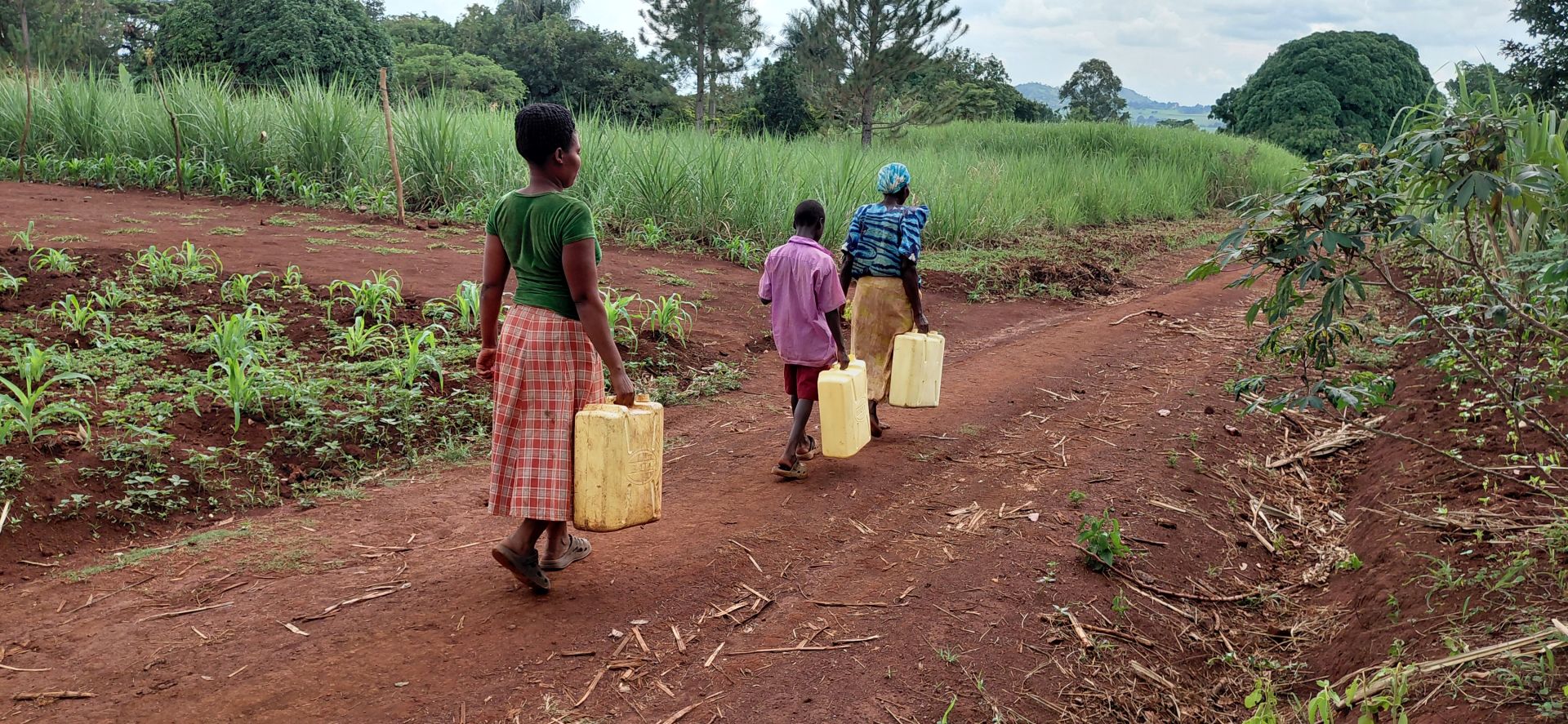
Jordan (middle) makes his way to the distant well.
"I feel bad," Jordan says simply, when asked how it feels to be sent for water, "because I am always worried about facing long lines and carrying heavy jerrycans across difficult terrain." It is a burden that weighs on him not just physically, but emotionally — the dread of what awaits him at the well before he has even left his front door.
The journey itself is only part of the ordeal. When Jordan finally arrives at the water point, the waiting begins. Long queues stretch ahead of him, and adults — impatient and equally desperate — frequently push him to the back of the line. "Not at all," he says, when asked if anyone has been unkind to him, before quietly acknowledging the reality: "everyone is eager to collect water, and sometimes, they even push me out of the line." For a child of 11, standing his ground among frustrated adults on a crowded, overcrowded hillside is no small thing. "Yes," he admits to being pushed back, "especially adults, who are often very impatient — their impatience makes waiting even more difficult."

Jordan hauls his heavy jerrycan home.
By the time Jordan returns home, the school day has already demanded more than he has left to give. Homework goes unfinished. Punishments follow. "It affects my school time," he explains, "because I sometimes don't have enough time to do my homework — as a result, I get punished at school." For a boy who dreams of one day becoming a teacher — deeply inspired, he says, by the dedication of his own teachers — these lost hours carry a weight far beyond the jerrycan in his hands.
Jordan knows exactly what he would do if the water burden were lifted from him. "I would use that time to catch up on my reading." It is a quiet answer that speaks volumes about who Jordan is: a child with focus, with ambition, and with a future that deserves to be protected.
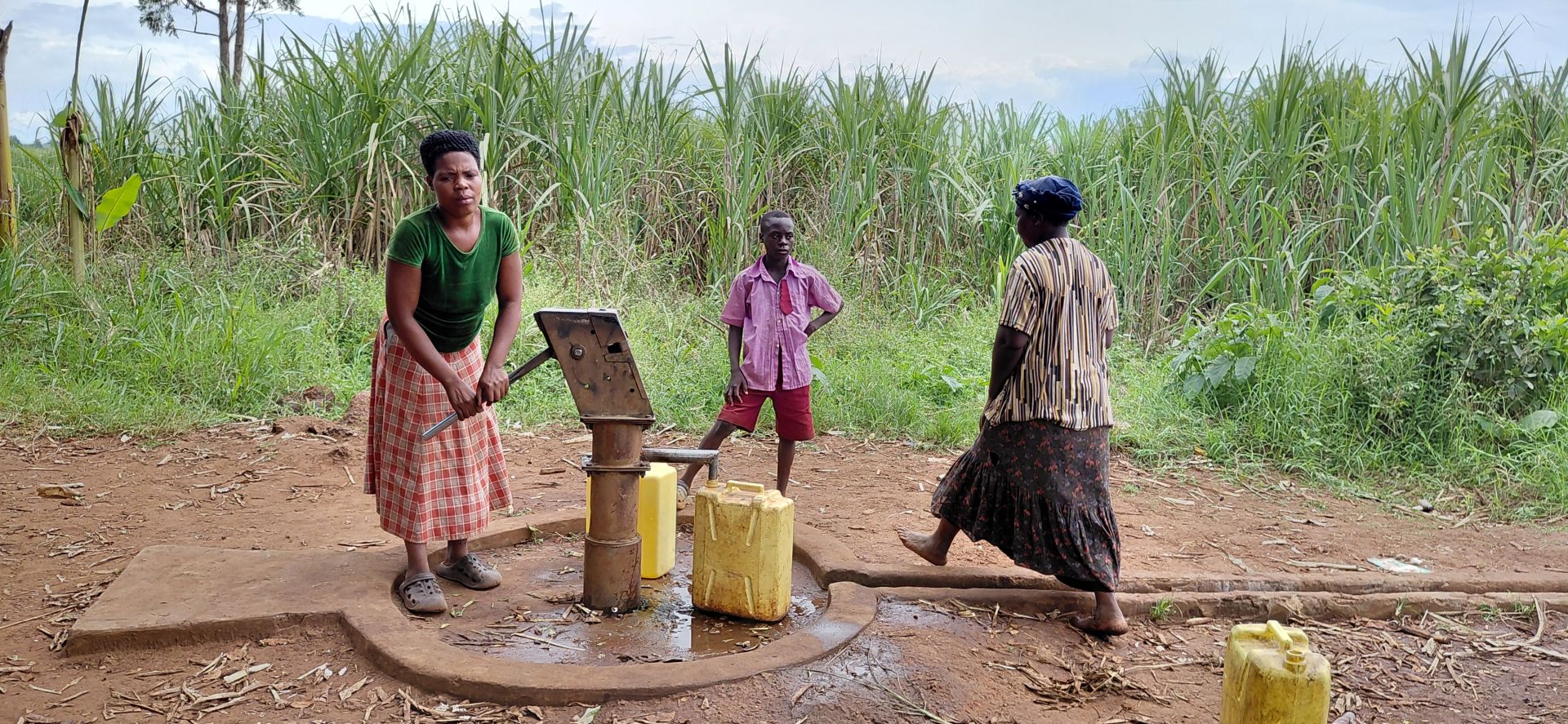
Jordan waits his turn to collect water after a long walk.
The Kihole Kisingo Community has gone without a safe, reliable water source for 20 years. A new water point would dramatically shorten Jordan's daily journey, easing the physical toll on his young body and giving back the hours that are rightfully his. It would mean that Jordan could arrive at school on time, finish his homework, and move one step closer to the classroom where he hopes to one day stand — not as a student receiving punishment, but as the teacher he is determined to become.
Steps Toward a Solution
Our technical experts worked with the local community to identify the most effective solution to their water crisis. They decided to drill a borehole well, construct a platform for the well, and attach a hand pump.
Well
Abundant water often lies just beneath our feet. Aquifers—natural underground rivers—flow through layers of sediment and rock, offering a constant supply of safe water. A borehole well is drilled deep into the earth to access this naturally filtered and protected water. We penetrate meters, sometimes even hundreds of meters, of soil, silt, rock, and more to reach the water underground. Once found, we construct a platform for the well and attach a hand pump. The community gains a safe, enclosed water source capable of providing approximately five gallons of water per minute. Learn more here!
Community Education & Ownership
Hygiene and sanitation training are integral to our water projects. Training is tailored to each community's specific needs and includes key topics such as proper water handling, improved hygiene practices, disease transmission prevention, and care of the new water point. Safe water and improved hygiene habits foster a healthier future for everyone in the community.
A Community-Wide Approach
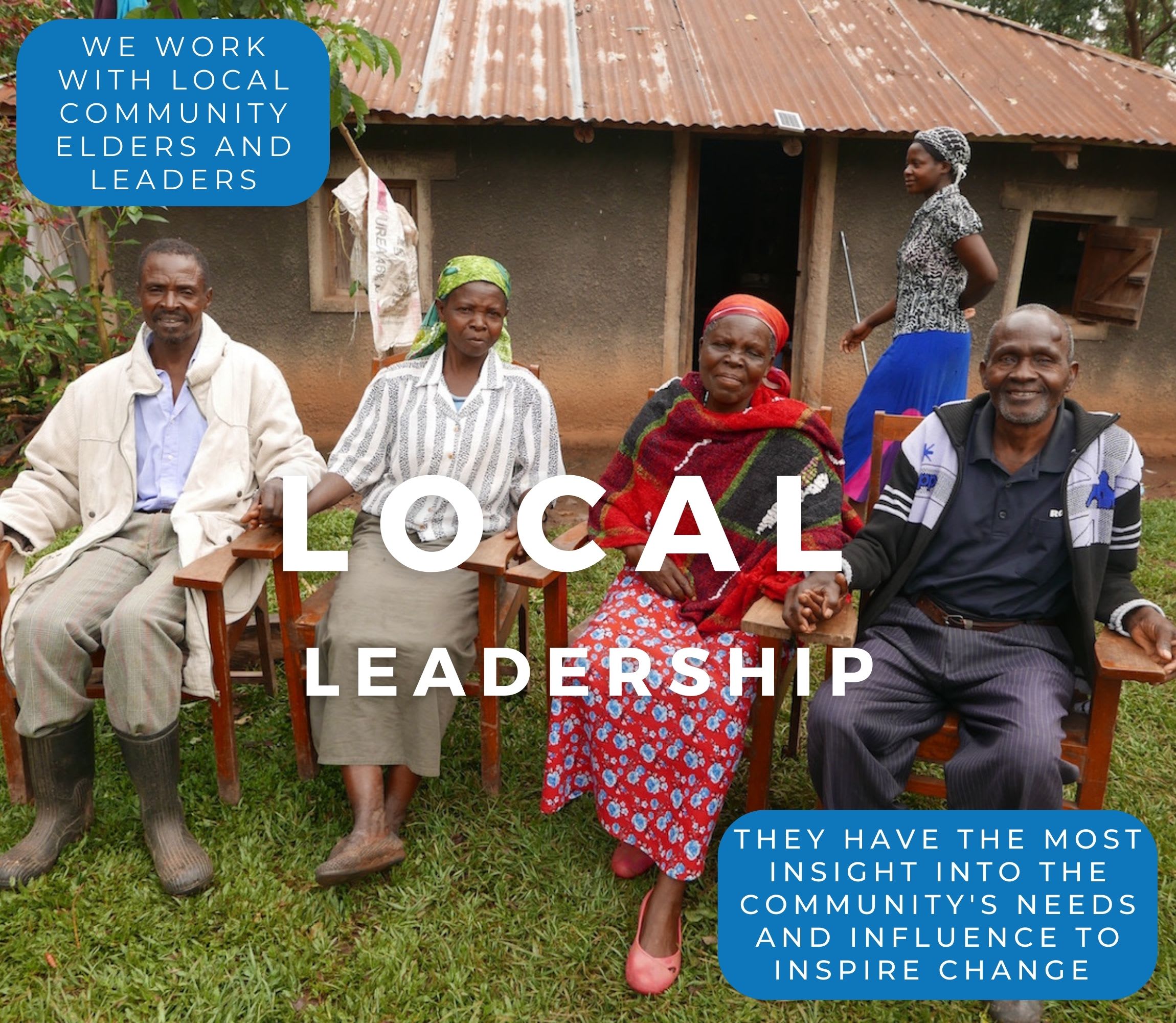
In Uganda, we use a Community-Led Total Sanitation (CLTS) approach, which involves several meetings where community members evaluate their own hygiene and sanitation practices to encourage lasting change. During these sessions, natural leaders emerge, motivating the community to recognize and change unhealthy behaviors that affect everyone.
Communities then commit to ending open defecation before we install the water project. Every household builds a latrine to prevent disease and improve hygiene and sanitation in anticipation of their new water source. To support this effort, a Community Development Officer (CDO) is assigned. The CDO encourages each household to set up handwashing stations, animal pens, garbage pits, and dish-drying racks. These additions are crucial in preventing the spread of common diseases.