
Project Status


Project Type:  Sand Dam

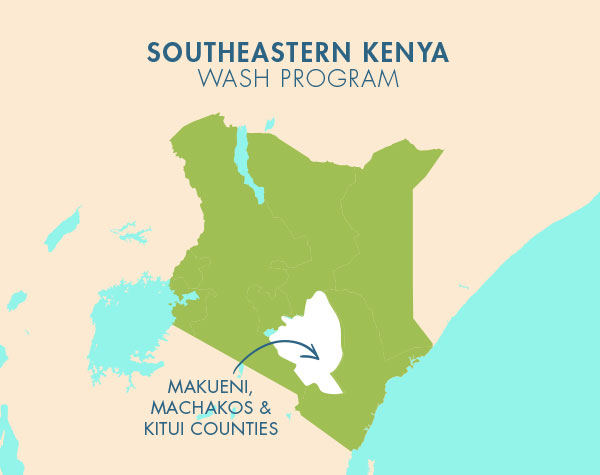
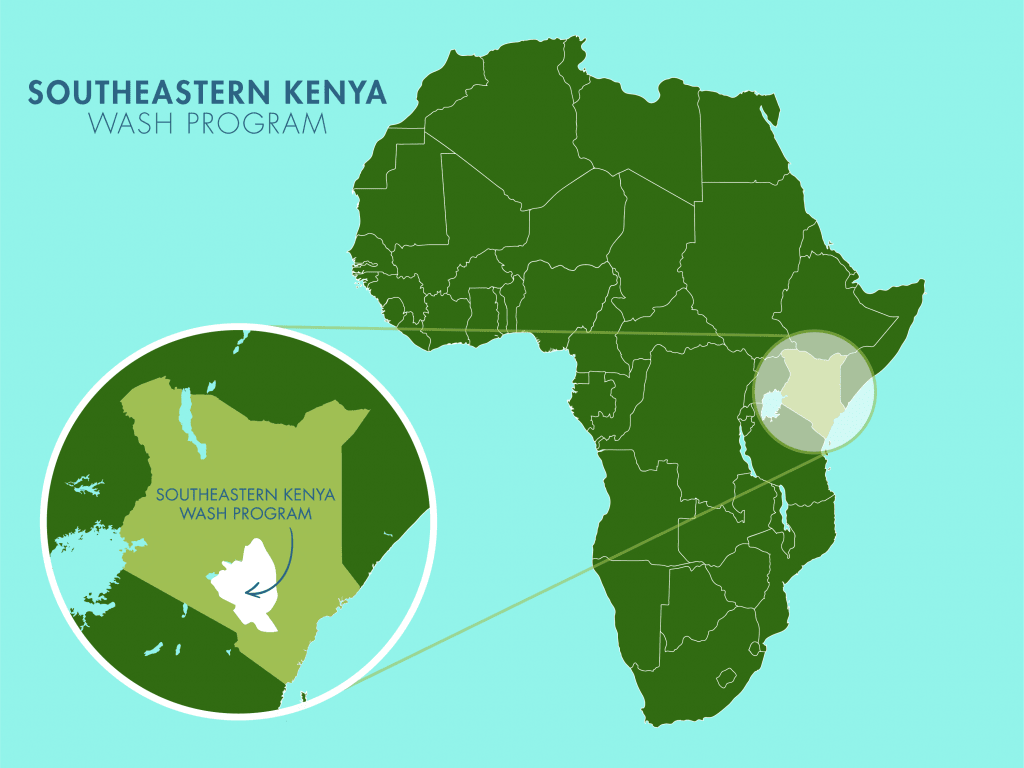
Regional Program: Southeastern Kenya WaSH Program

Impact: 300 Served

Project Phase:  In Service - Jan 2026

Functionality Status:  Functional

Project Features


Click icons to learn about each feature.


It takes the 1,200 community members living in the Mwandalwa Community an average of two hours to collect water from the closest dug well where they can find safe water. This is not a feasible solution for most in the community, so the majority of people choose to collect water from a scoop hole dug into a riverbed, which takes forty minutes on average instead.

As you can imagine, the scoop hole presents multiple challenges, primarily contamination. It's an open-source shared by everyone and animals, a risky combination that leaves their health hanging in the balance.

People and animals share the same water source.

"The scoop hole is not protected and is easily contaminated through animal and human activity. The water is not clear with a saline taste and foul odor. Due to drinking water from contaminated sources like scoop holes, the residents often contract infections like typhoid, amoeba, and dysentery," shared Field Officer Alex Koech.

Contaminated water is not the only issue. It is also a time-consuming, labor-intensive task that steals people's energy and leaves them little time for other important things in their daily lives.

Children waiting for a turn to collect water at the scoop hole.

"Women have to wake up as early as 5 am to fetch water and return home in the afternoon. This consumes most of their time and energy; thus, [they] cannot fully participate in household chores, hygiene, herding livestock, or preparing their lands. The school-going children also spend [most] of their evenings and weekends fetching water for the family, which has negatively impacted their academic performance in school," Alex continued.

"Water is life because we need it for cooking, drinking, and irrigating our crops," said 74-year-old farmer Jemima Mbete Kitele, who is acutely familiar with what it is like to live yearning for water.

Jemima scoops water to take home.

"We can only make two trips or less per day because of the steep terrain and long distance from the waterpoint," said Jemima, describing how having access to limited water has impacted her daily life.

"During last year in the drought period, the water in scoop holes reduced. We had to suffer for several months without a nearby source of clean water."

Jemima desperately needs a clean water source she can rely on. She also needs that resource to be nearby so she can quickly collect water and return to other vital tasks in her day, like caring for her crops, her home, and her family.

Solving the water crisis in this community will require a multifaceted system that will work together to create a sustainable water source that will serve this community for years to come.

Steps Toward a Solution

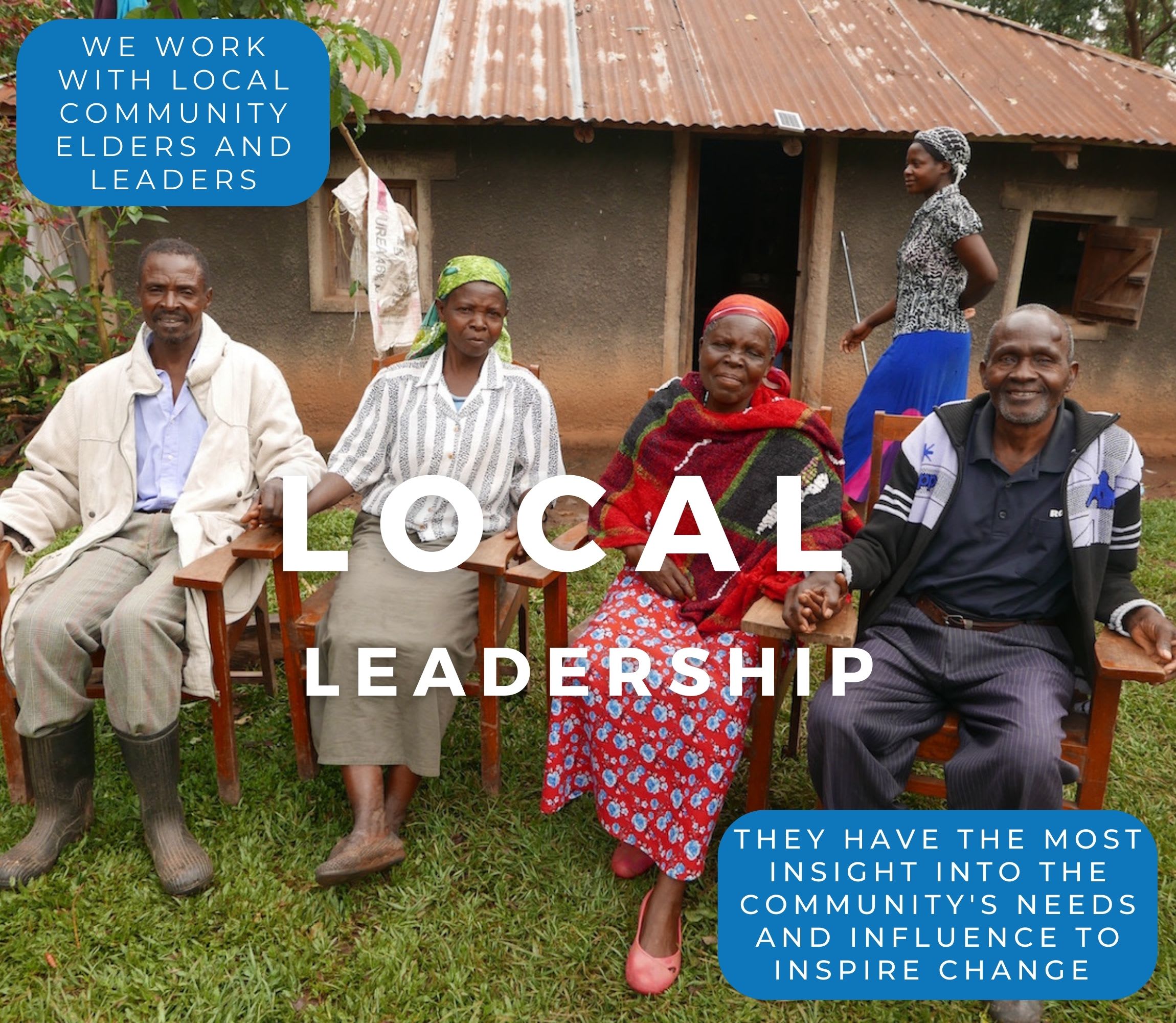
Our technical experts worked with the local community to identify the most effective solution to their water crisis. Together, they decided to construct a sand dam and a protected dug well.

Sand Dam
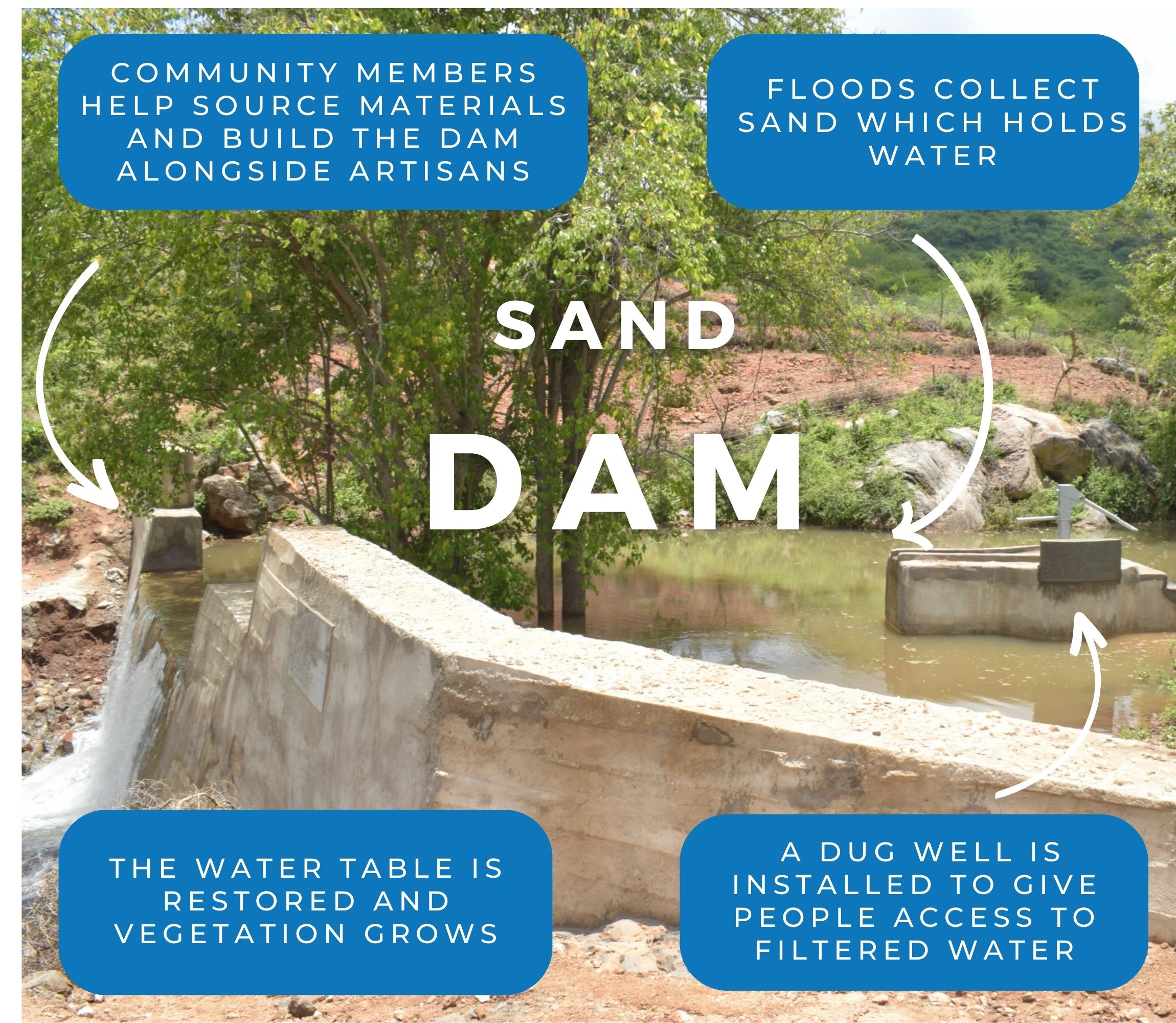
Sand dams are sought-after, climate-smart, and lasting water solutions, providing hope and resilience to communities in arid Southeastern Kenya. Think of them like giant sandboxes constructed in seasonal rivers that would typically quickly dry up after the rainy season. Instead of holding water like traditional dams, they collect sand and silt.

When infrequent rains do come, these dams catch a percentage of the river's flow, letting most of the water continue downstream to other communities. But here's the magic: the sand they collect acts like a natural filter, holding onto water long after the river's gone dry. Then, wells are constructed nearby, creating a reliable water source even during the driest times.

And the benefits don't stop there! In communities impacted by climate change, sand dams replenish groundwater and prevent soil erosion. Even during severe droughts, the consistent water supply from these sand dams allows farmers to thrive, giving way for enough food not only for their families but also to sell in local markets.

The most remarkable aspect of sand dams is how they involve the local community every step of the way, giving them a sense of ownership and pride in solving their own water shortage and managing their own water resources.

This sand dam will be connected to a protected dug well to make the water more accessible.

What Makes This Project Unique
In sand dams with an adequate supply, a submersible pump can be installed to tap into the underground water and pipe it into public piped water kiosks. These kiosks expand the reach of this water infrastructure, allowing more people to access clean, reliable water closer to home. The size and location of this sand dam give us hope that it will hold a lot of water when it matures - possibly even enough to pipe water to the community in the future. In anticipation of that, we are installing some extra infrastructure that would enable the future development of solar-powered water kiosks.

Community Education & Ownership
Hygiene and sanitation training are integral to our water projects. Training is tailored to each community's specific needs and includes key topics such as proper water handling, improved hygiene practices, disease transmission prevention, and care of the new water point. Safe water and improved hygiene habits foster a healthier future for everyone in the community. Encouraged and supported by the guidance of our team, a water user committee representative of the community's diverse members assumes responsibility for maintaining the water point, often gathering fees to ensure its upkeep.
Project Updates


January, 2026: Mwandalwa Community Sand Dam Complete!

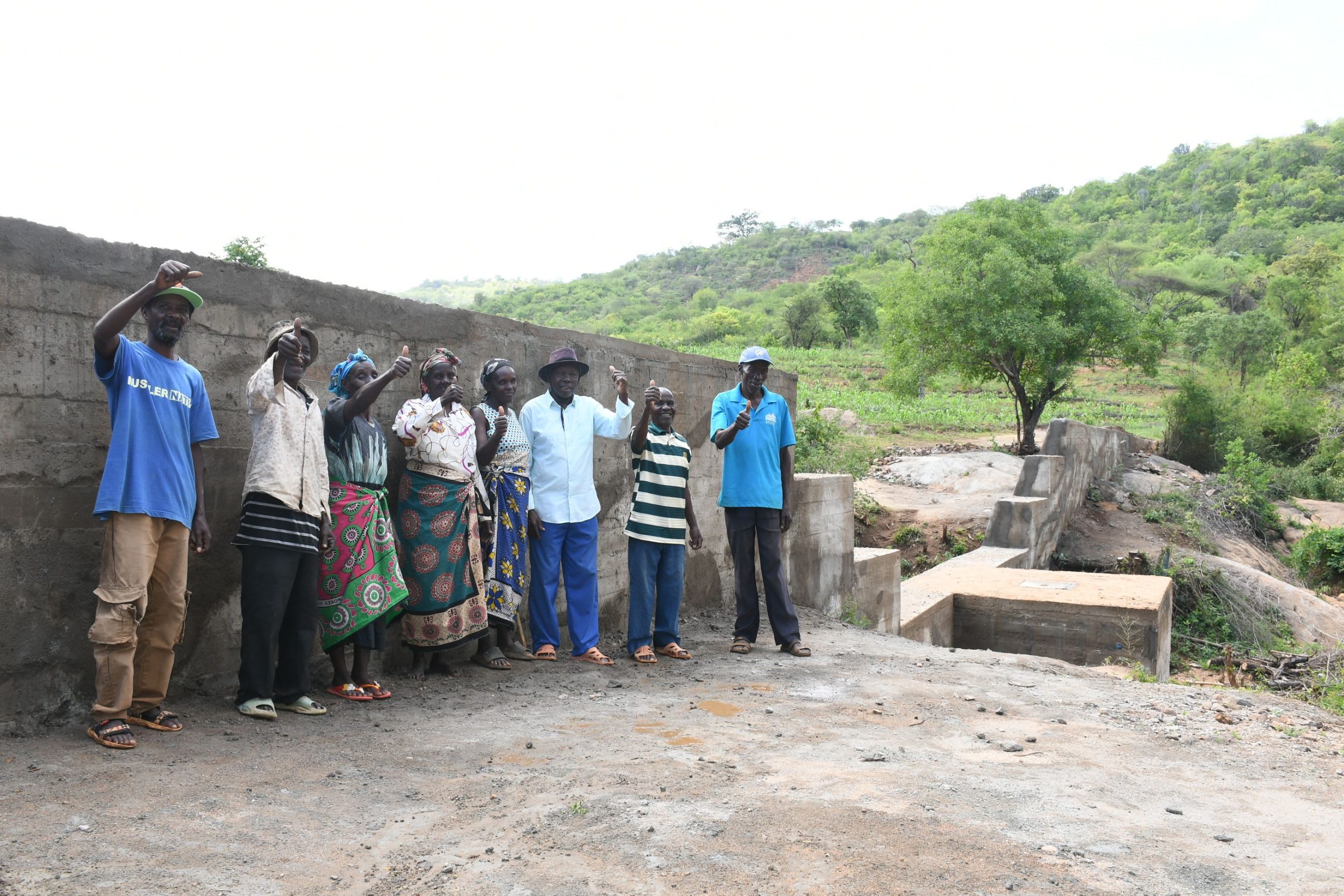
Mwandalwa, Kenya now has access to a new water source thanks to your donation! We constructed a sand dam on the riverbed, which will raise the water table and allow the water to naturally filter over time. We also built a new protected dug well with a hand pump adjacent to the sand dam, providing the community with a safer method to draw the drinking water supplied by the dam.

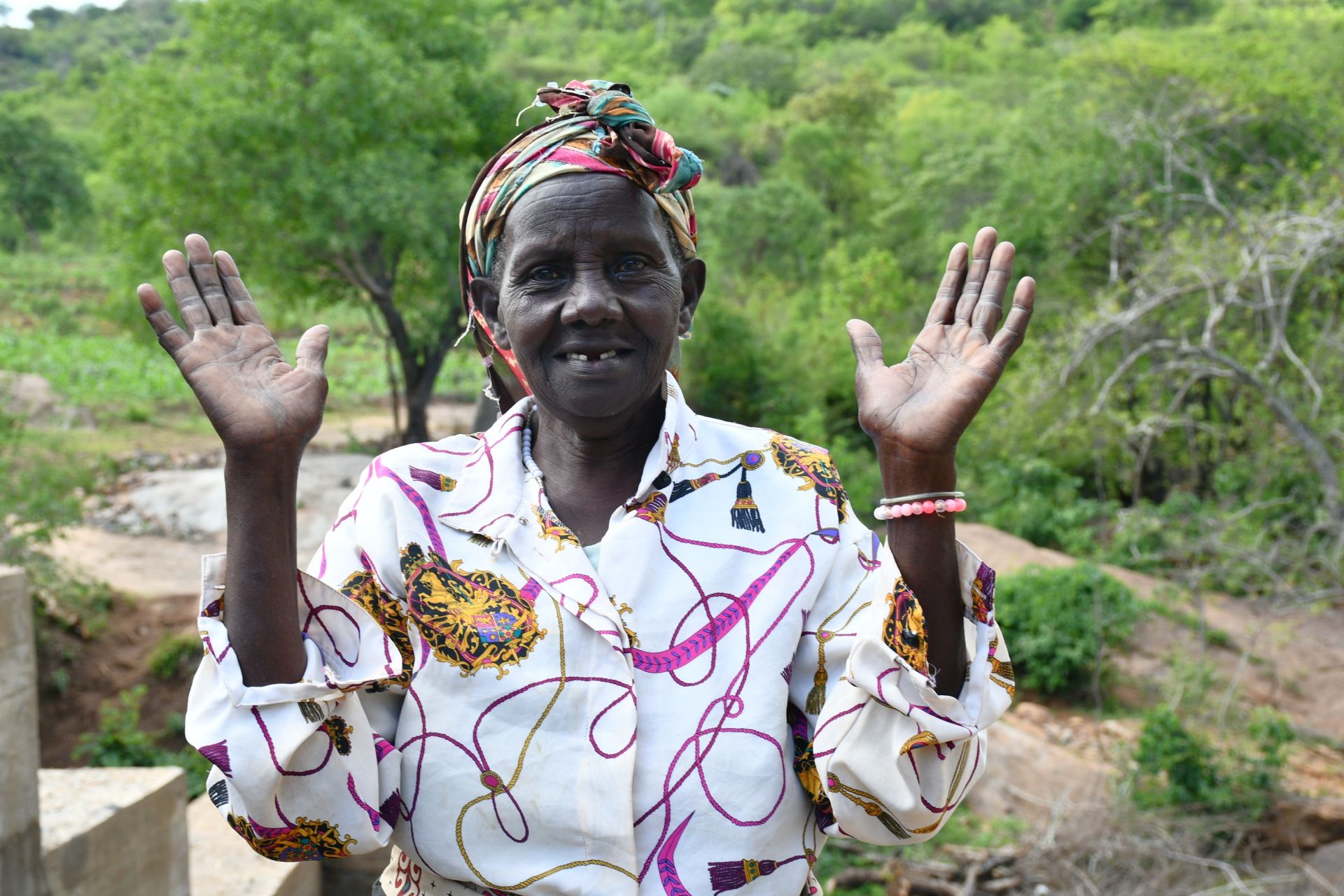
"For many years, fetching water has been one of the hardest parts of my daily life. I have had to wake up very early, walk several kilometers over steep and uneven terrain, and spend hours in long queues just to get a small amount of water that was not always clean. This left me very tired and with little strength to do other household work. I hope this new waterpoint will end that daily struggle by giving us enough clean and reliable water nearby. It will protect us from sickness caused by unsafe water from the scoop holes and allow me to use my time and energy on other important responsibilities at home," shared 65-year-old Lenah Kavivyu.

"When water is close and dependable, life becomes more manageable. My grandchildren will no longer spend their evenings, weekends, or early mornings fetching water. Instead, they can concentrate on their schoolwork, rest properly, and attend school more consistently. This will give them a better chance to perform well in class and pursue their dreams, whether that is further education or meaningful employment in the future. For me, having water nearby also gives peace of mind, knowing that the next generation has a fairer opportunity to succeed," she continued.

Sand Dam Construction

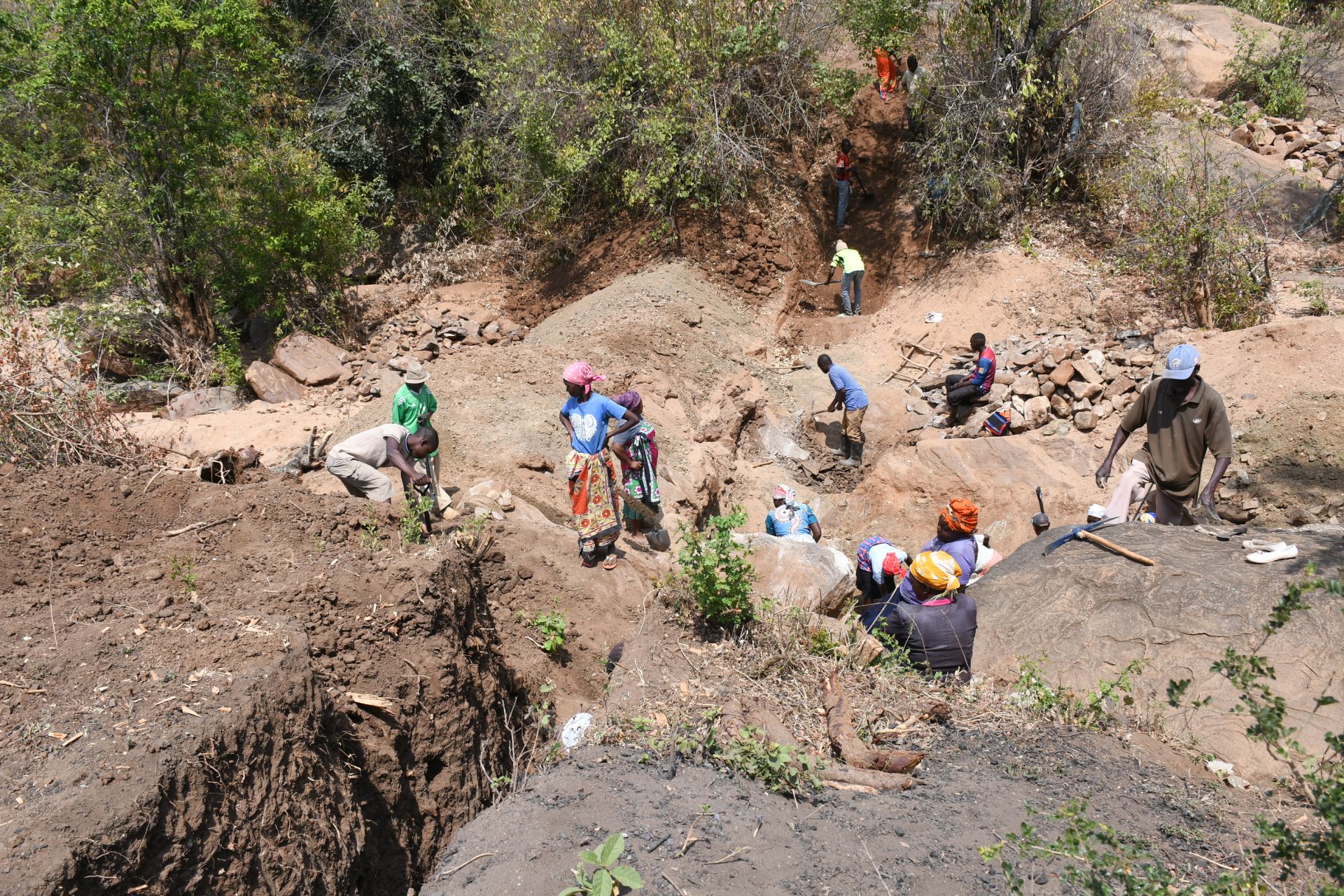
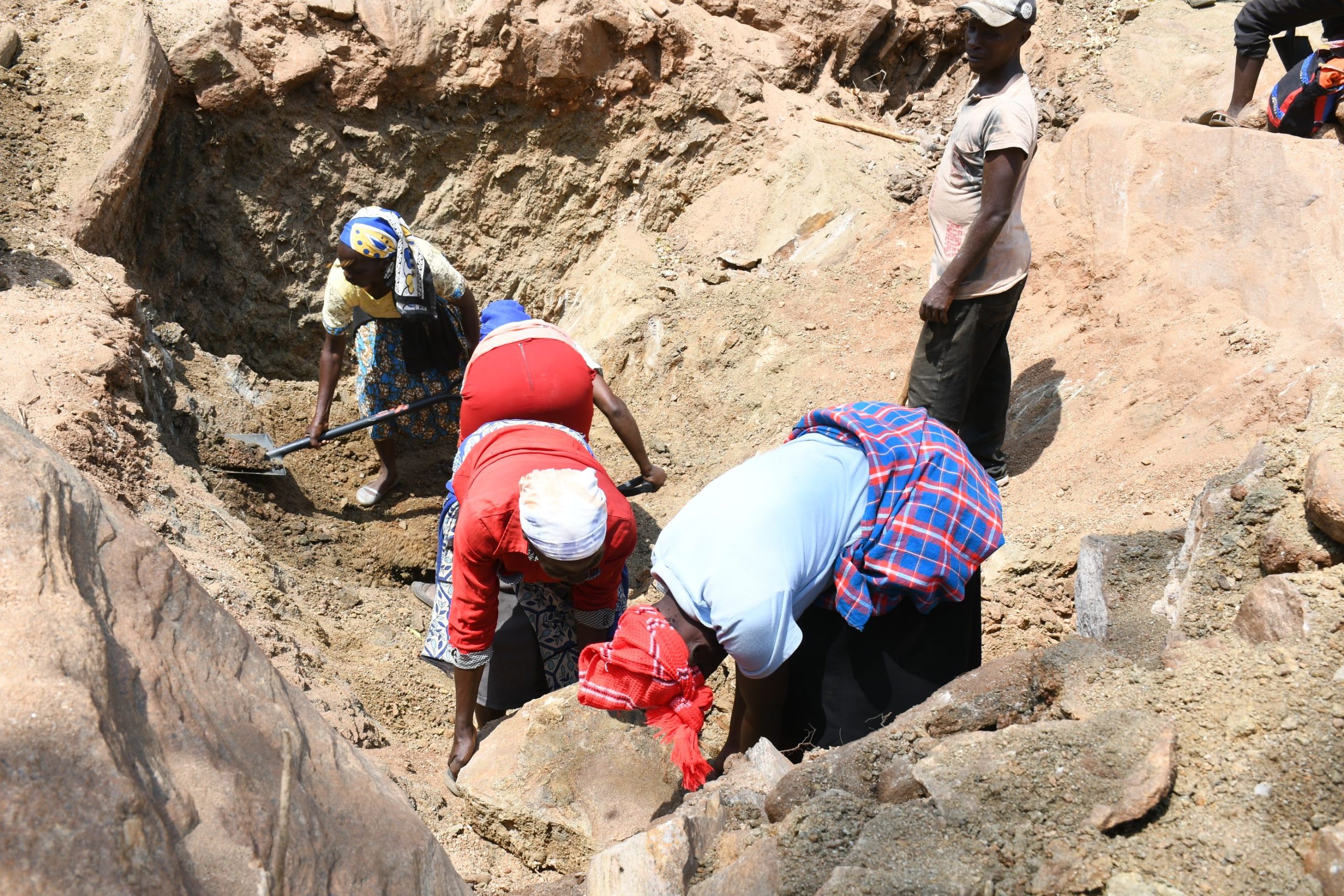
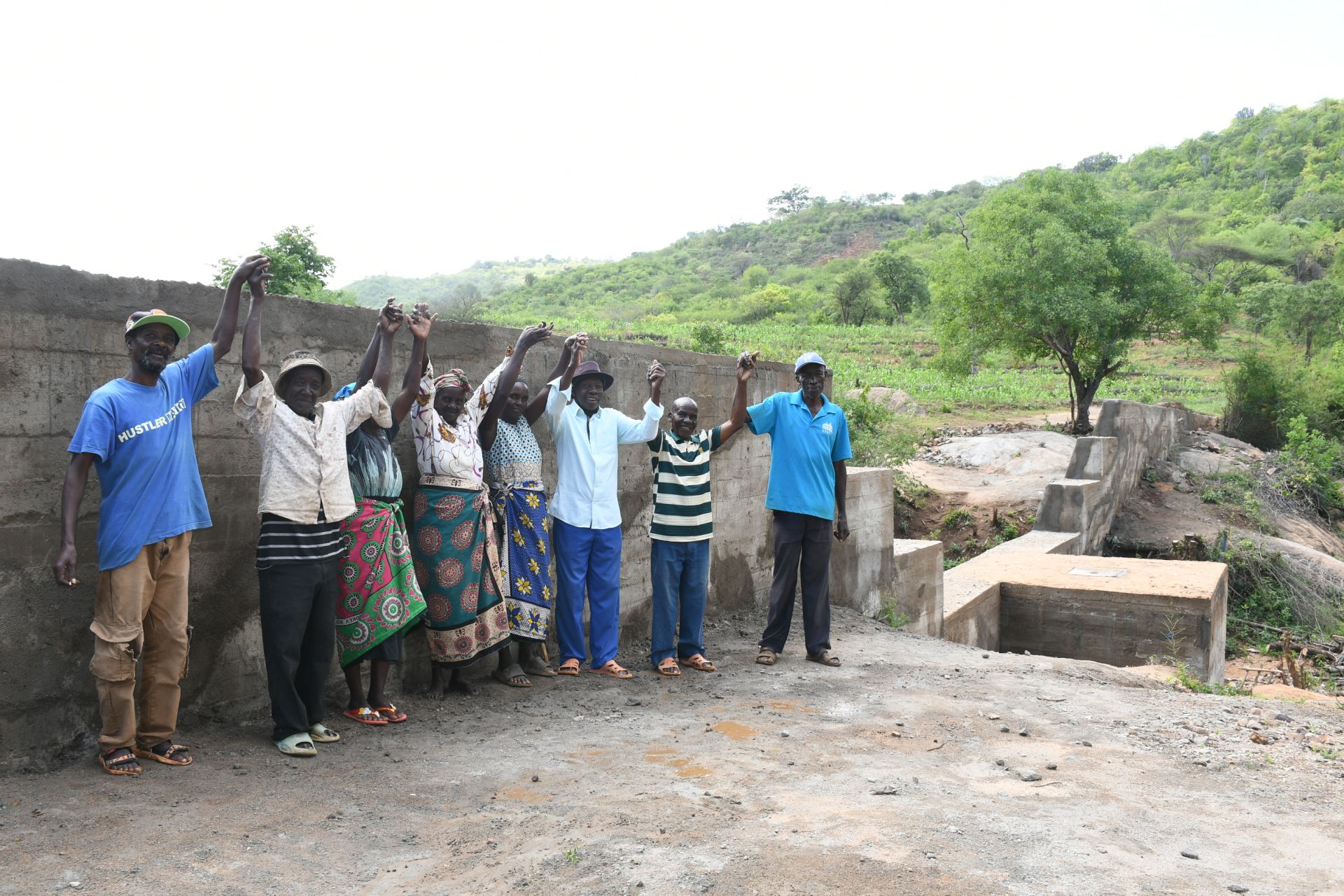
The members of the Self-Help Group collected all the local materials, such as rocks and sand, required to complete the dam. The collection of raw materials takes longer than the actual construction, lasting up to four months for a large sand dam. The group also dedicated a tremendous amount of time to supporting our artisans through physical labor throughout the project.

"The community was happy to implement this project because it would improve water accessibility even during the drought season. As such, they began mobilizing the required quantity and quality of stones, ballast, and sand, as advised by the area field officer and the dam coordinator. Although most of the members are elderly, they still came every day to work to provide unskilled labor during construction," said Field Officer Alex Koech.

First, our team developed the siting and technical designs, which were then presented to the Water Resources Management Authority. We then sent a survey to the National Environment Management Authority for approval before beginning construction.
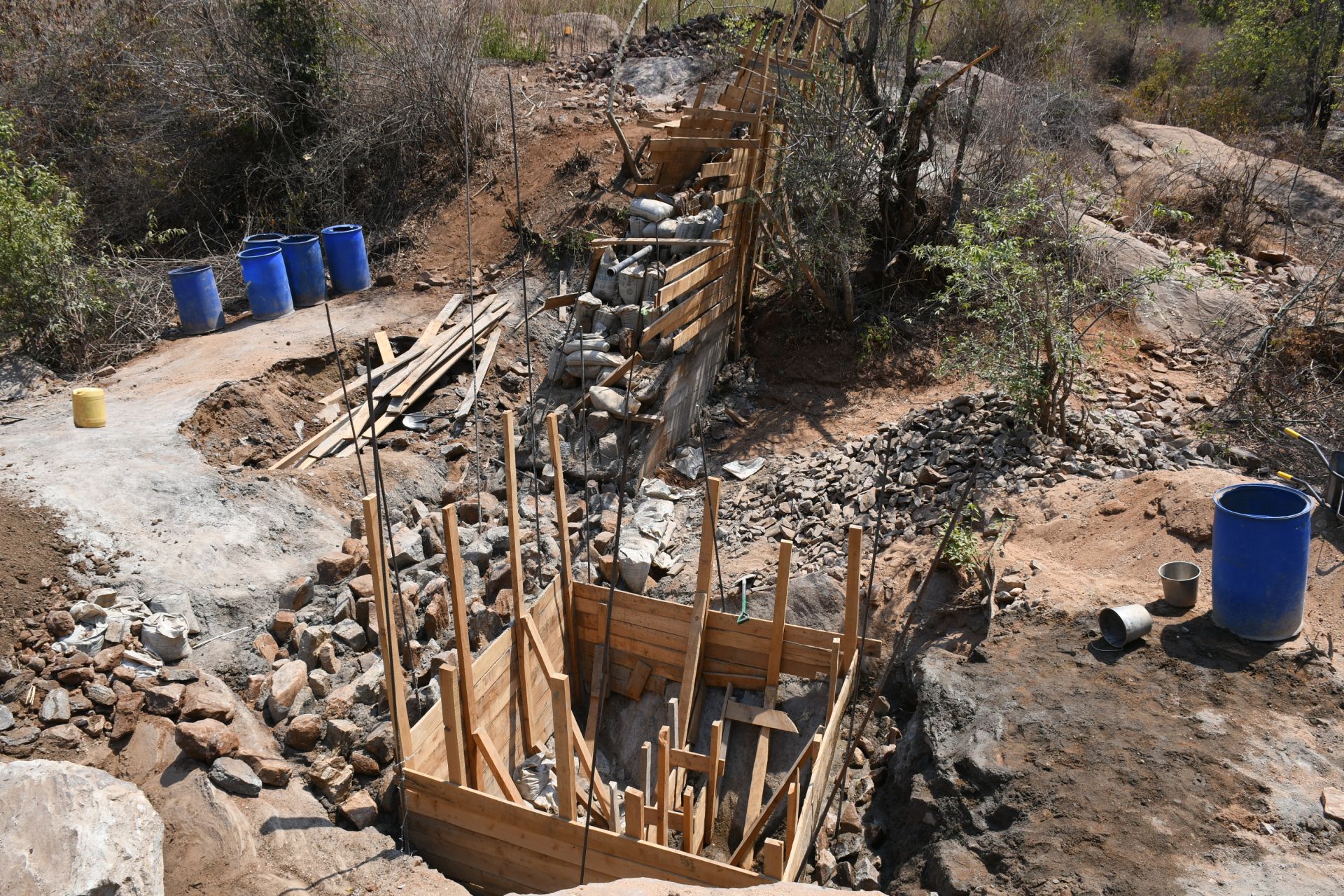
Once the plans were approved, we established a firm base for the sand dam wall. Usually, this requires the community to dig all the way down to the bedrock beneath the river channel. In the absence of good bedrock, we excavate to a depth at which the ground is compact enough to stop seepage.

Next, we heaped mortar (a mixture of sand, cement, and water) into the foundation, followed by the addition of rocks. We then used barbed wire and rebar to reinforce the mixture.

Once the foundation was complete, we built a timber skeleton to hold the structure above ground level. We repeated the process until reaching a sufficient height, width, and length.

Finally, we dismantled the vertical timber beams and left the dam to cure. This dam measures 76 meters long and 3 meters high and took 1384 bags of cement.

When the rains come, sand and silt will be carried down the dry riverbed and build up behind the dam wall. This reservoir of sand acts as a giant natural filter, allowing rainwater to seep into the ground and raise the water table. With this water, the surrounding landscape will become lush and fertile, and the well will provide the community with drinking water. It could take up to three years of rain for this sand dam to reach its maximum capacity, because in this region, it sometimes only rains once a year!

Community Education

Our trainer collaborated with the field staff and community members to identify areas where the community could improve.

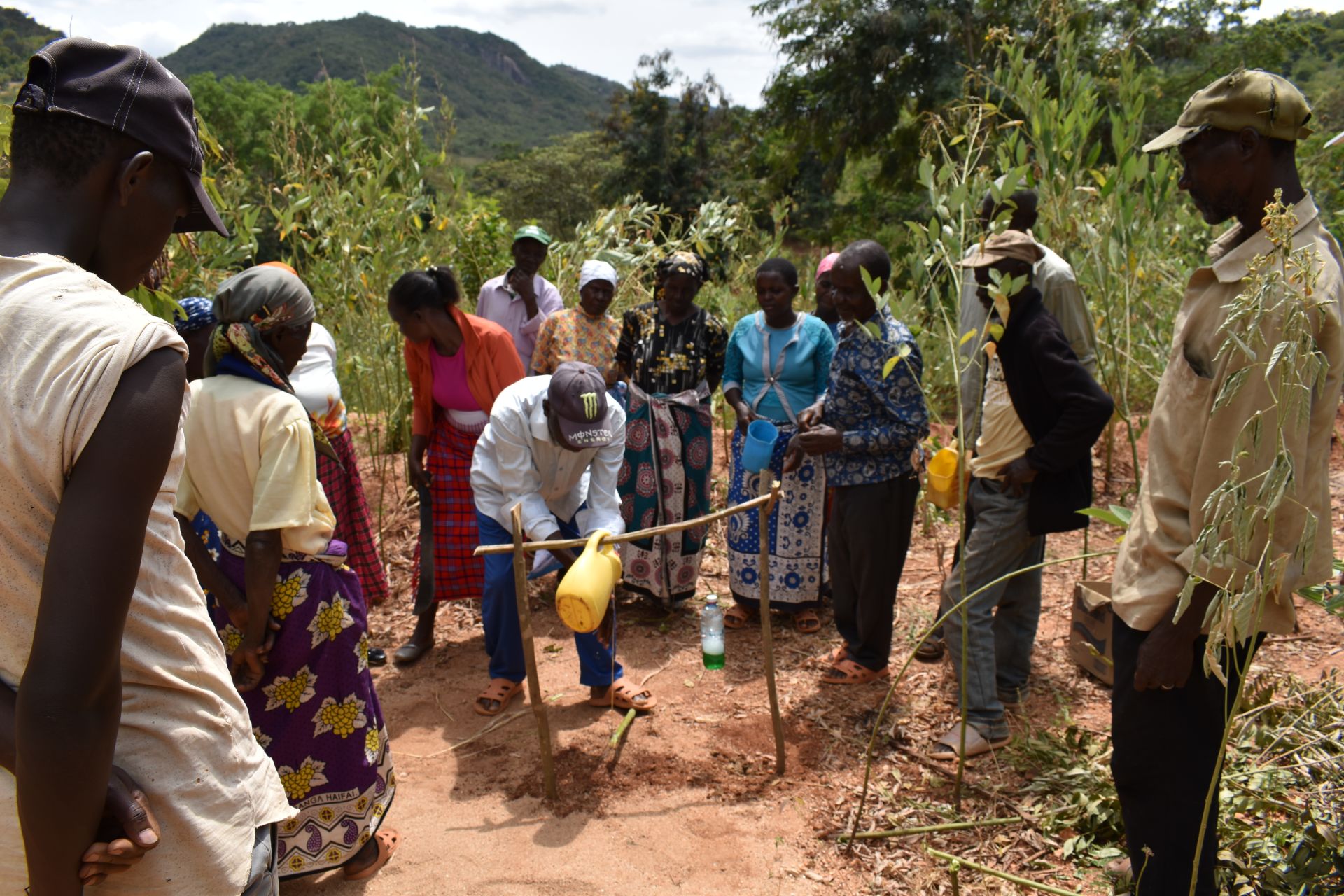
We trained the group on various skills, including bookkeeping, financial management, project management, group dynamics, and governance. We conducted hygiene and sanitation training to teach skills such as soap and detergent making and to improve habits, including handwashing.

We covered health issues in the community, including both good and bad hygiene habits, as well as disease prevention. Finally, we covered both natural resource management and the operation and maintenance of the sand dam.

"The most interesting topic for me was soapmaking, together with the three-pile sorting method. These topics stood out because they were very practical and directly connected to our daily lives, both in terms of improving hygiene and supporting our livelihoods. This topic interested me because it reminded me that hygiene is not only about cleanliness but also about responsibility and sustainability. Through soapmaking, I learned that something simple, which we had previously taken lightly, can actually help us generate income and meet family needs if done seriously," said 76-year-old Daniel Musyimi.

Daniel.

"The three-pile sorting helped me clearly understand which behaviours we should stop, which ones we should continue, and which new practices we need to adopt to protect our health. It made me realize that some good habits had been forgotten over time due to ignorance, yet they are very important in preventing diseases," Daniel continued.

"This training has really changed how I think about hygiene in our community. It reminded me that good hygiene is a shared responsibility and that small daily practices, such as proper handwashing, waste management, and sanitation infrastructure, can greatly reduce diseases. I now see the importance of encouraging my family and community members to practice what we were taught, not just for cleanliness but for better health and reduced medical expenses," he concluded.

Thank you for making all of this possible!


December, 2025: Exciting Progress in Mwandalwa Community!

We’re thrilled to share that, thanks to your generous support, significant change is coming for Jemima Mbete Kitele and the entire Mwandalwa Community. Construction has begun on the sand dam project, bringing them one step closer to having clean, reliable water.

But that's not all—during construction, we’re also providing vital health training. These sessions equip the community with essential hygiene practices, ensuring that the benefits of clean water extend to lasting health improvements.

We’re so grateful for your role in making this possible. Stay tuned for more updates—soon, we’ll be celebrating the arrival of safe water in Mwandalwa Community!


Project Photos


Project Type

Sand dams are huge, impressive structures built into the riverbeds of seasonal rivers (rivers that disappear every year during dry seasons). Instead of holding back a reservoir of water like a traditional dam would, sand dams accumulate a reservoir of silt and sand. Once the rain comes, the sand will capture 1-3% of the river’s flow, allowing most of the water to pass over. Then, we construct shallow wells on the riverbank to provide water even when the river has dried up, thanks to new groundwater reserves. Learn more here!


Contributors

13 individual donor(s)