 Sand Dam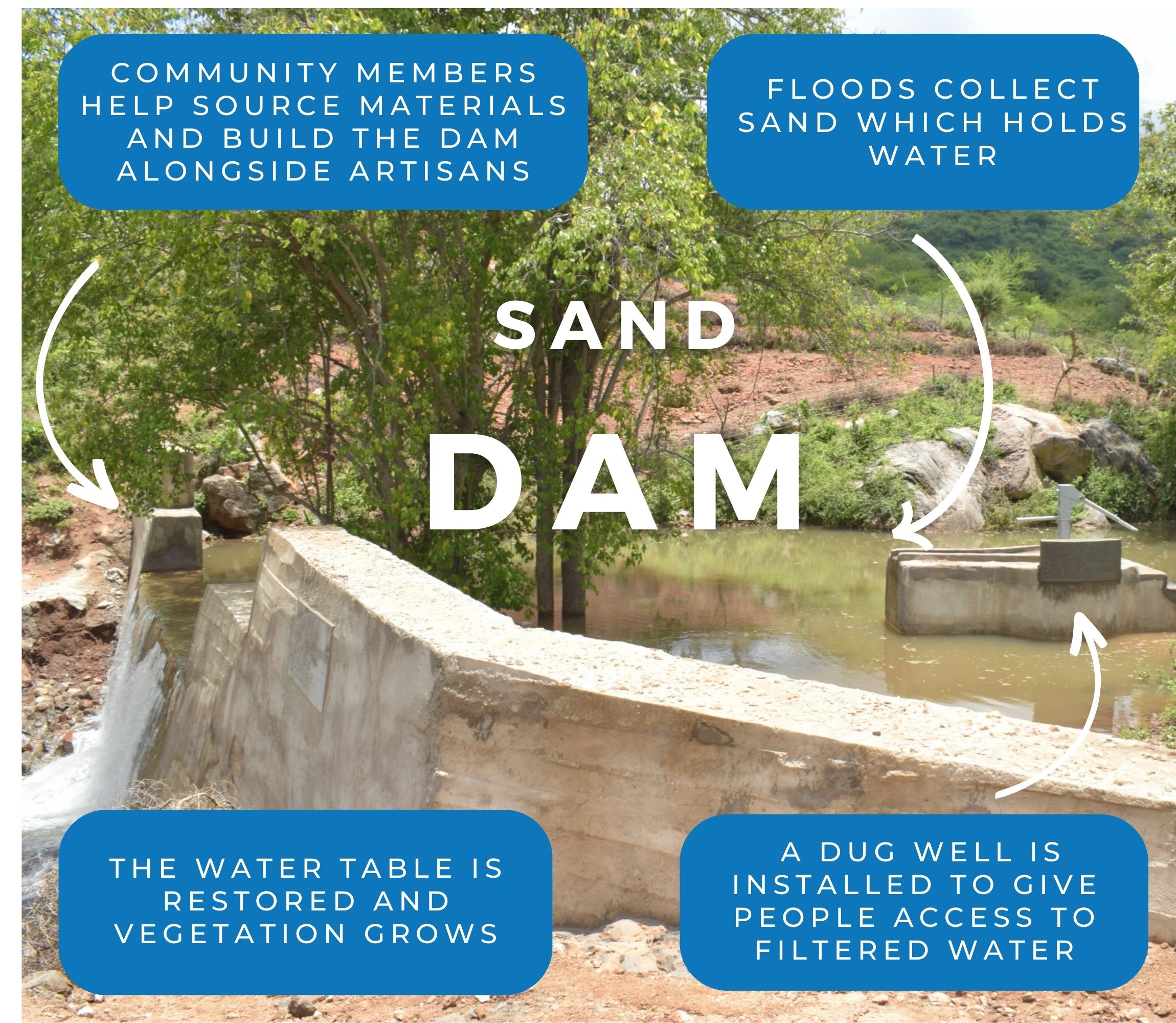
 Rehabilitation Project











The community of Kasyalani has 1,500 residents who lack access to nearby, safe water sources. Community members can collect water from a scoop hole in a local dry river bed or a protected dug well attached to a sand dam in another community. Still, both sources are too far away for people to access sufficient water to meet their daily needs quickly.
"The area’s dryness and dusty nature make it difficult to navigate, especially during drought periods. Dust can cause irritation, and the barren land offers little vegetation or shade, making long journeys to fetch water exhausting and dangerous due to heat exposure. The area is also rocky; the path to the scoop hole or the sand dam is, therefore, treacherous. Walking over uneven ground or sharp rocks increases the risk of injuries such as cuts, sprains, or falls, especially when carrying heavy water containers," shared Field Officer Alex Koech.

A community member collects water from a scoop hole.
The protected well is people's best option as the water is safe to consume, but it is overcrowded and can not provide enough water to address the acute water crisis. As people wait their turn to collect water, they lose valuable time, so people often resort to scoop holes that are less crowded even though their water quality is questionable.
"Drinking from the scoop hole, which is exposed to contamination from animals and dirt, has increased the risk of diseases such as diarrhea, typhoid, and cholera. These illnesses are common because water is not properly treated or stored," Alex continued.

Community members wait to collect water.
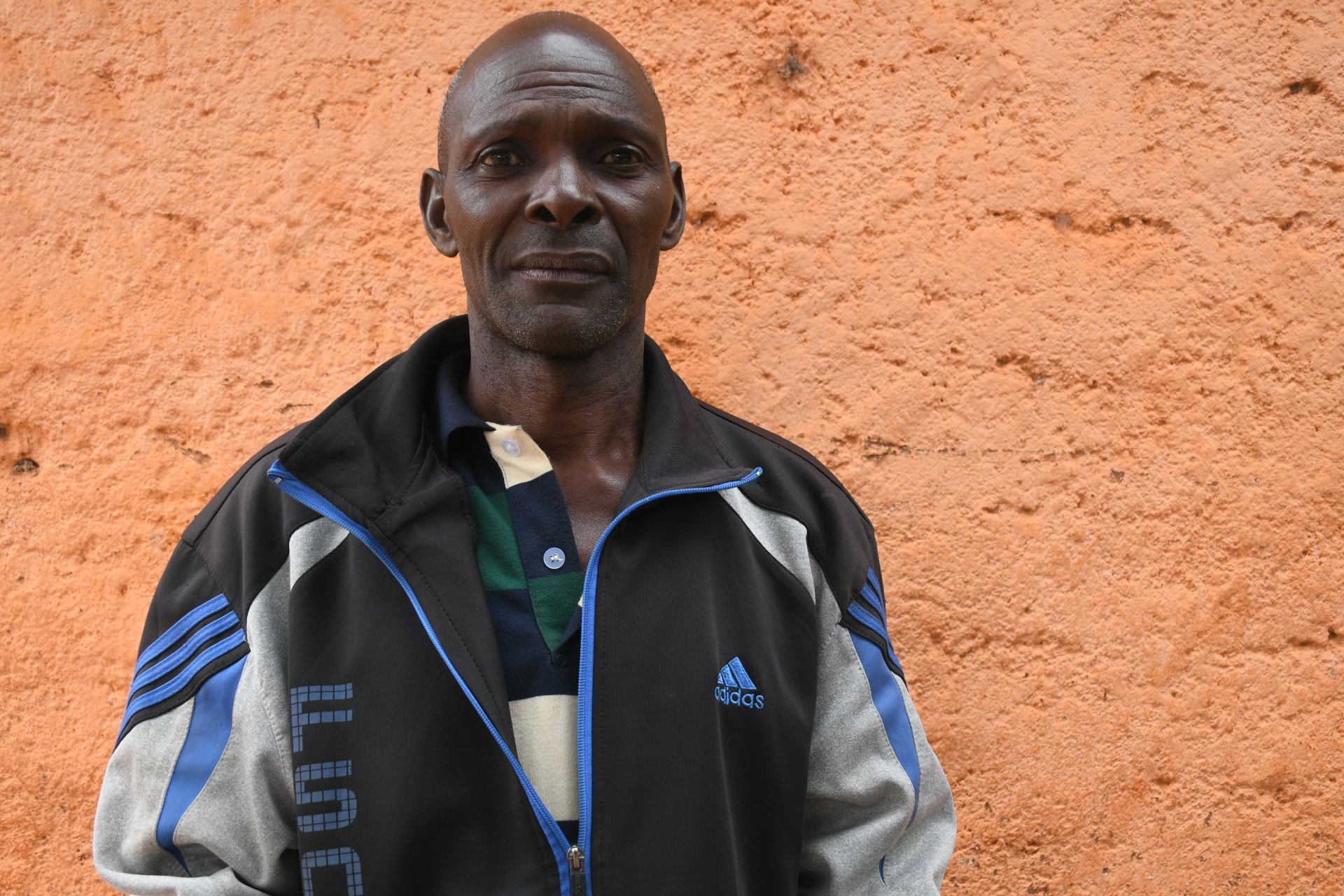
36-year-old farmer Janet Mawia contends with the water crisis daily as she attempts to collect enough water for herself and her family.

Janet Muwia.
"Water is important to me because, without water, I cannot prepare food [for] my children. My goats and livestock also require water for drinking every day. Water is crucial for growing crops and improving hygiene in our community," said Ms. Mawia.
"We can only fetch water once [or] twice daily because the waterpoints are not close to my home. We experience long periods of drought throughout the year. When water becomes scarce in our area, multiple households depend on the same water source (mostly the sand dam), leading to overcrowding and potential conflicts. This creates a stressful and unsafe environment for the women and children in our area," Ms. Mawia continued.
Field Officer Alex described how the proposed sand dam would help Janet and her community.
"The proposed sand dam water project for the Kasyalani community will significantly address many of the challenges related to water scarcity and its broader impacts. A sand dam stores water beneath layers of sand, which prevents evaporation and allows for year-round access. This will provide the community with a more consistent and reliable water source, even during dry periods when the scoop hole typically dries up. With access to cleaner water, the incidence of waterborne diseases, such as diarrhea, cholera, and typhoid, will [be] reduced," Alex said.

Ms. Muwia carrying water.
"A sufficient and reliable water source will reduce competition and conflicts that arise when water is scarce. This will create a more peaceful and cooperative community environment, especially for my children and myself, because we are often responsible for fetching water," said Ms. Mawia with anticipation.
Solving the water crisis in this community will require a multifaceted system that will work together to create a sustainable water source that will serve this community for years to come.
Steps Toward a Solution
Our technical experts worked with the local community to identify the most effective solution to their water crisis. Together, they decided to construct a sand dam and dug well.
Sand Dam
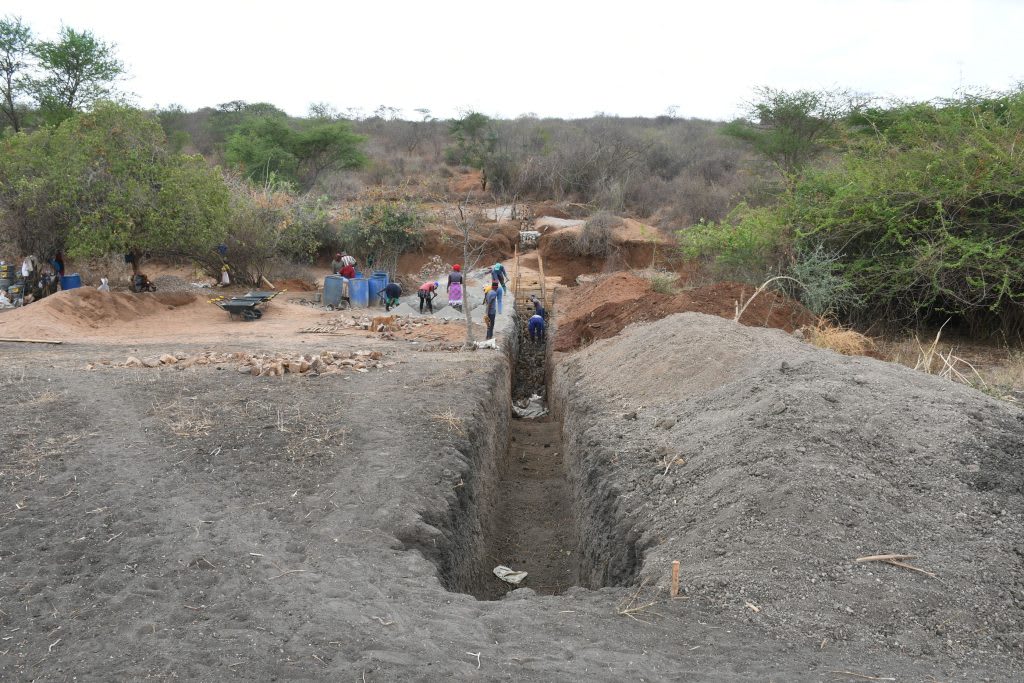
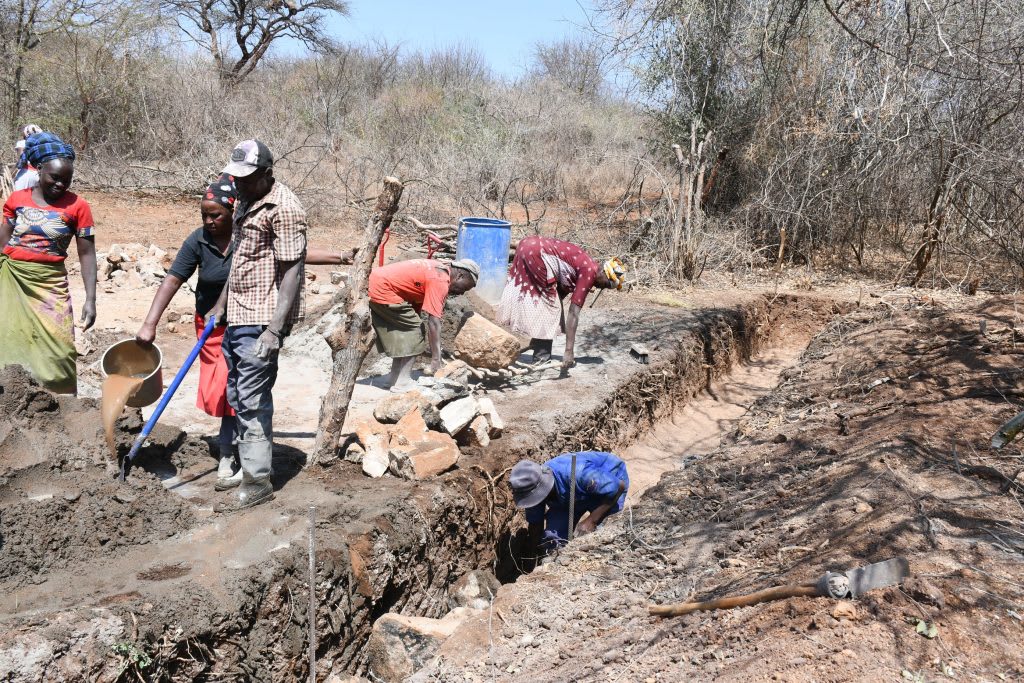
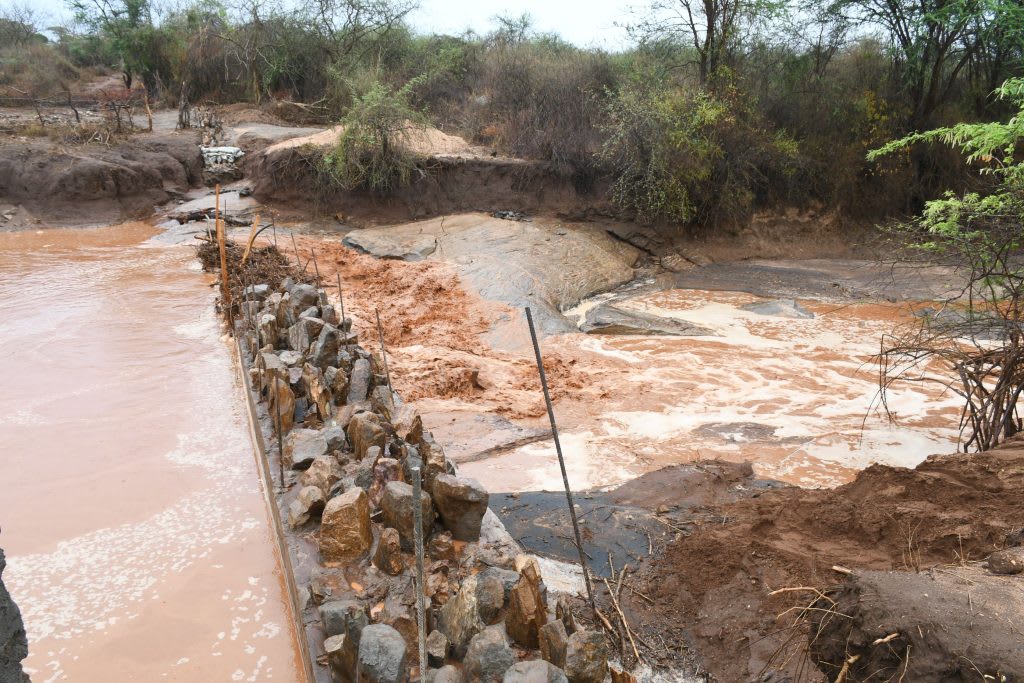
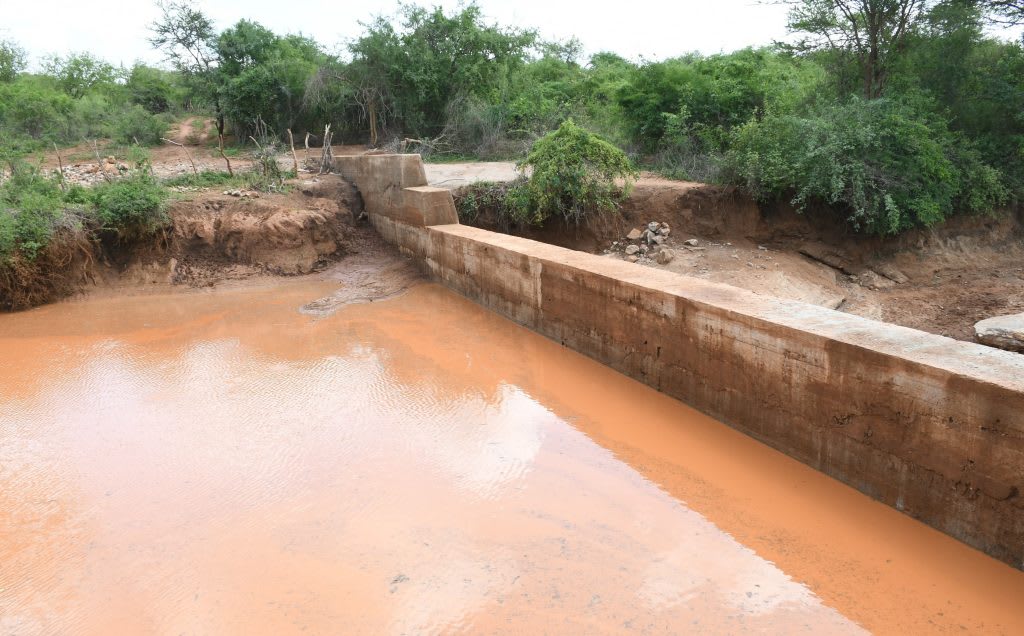
Sand dams are sought-after, climate-smart, and lasting water solutions providing hope and resilience to communities in arid Southeastern Kenya. Think of them like giant sandboxes constructed in seasonal rivers that would typically quickly dry up after the rainy season. Instead of holding water like traditional dams, they collect sand and silt.
When infrequent rains do come, these dams catch a percentage of the river's flow, letting most of the water continue downstream to other communities. But here's the magic: the sand they collect acts like a natural filter, holding onto water long after the river's gone dry. Then, wells are constructed nearby, creating a reliable water source even during the driest times.
And the benefits don't stop there! In communities impacted by climate change, sand dams replenish groundwater and prevent soil erosion. Even during severe droughts, the consistent water supply from these sand dams allows farmers to thrive, giving way for enough food not only for their families but also to sell in local markets.
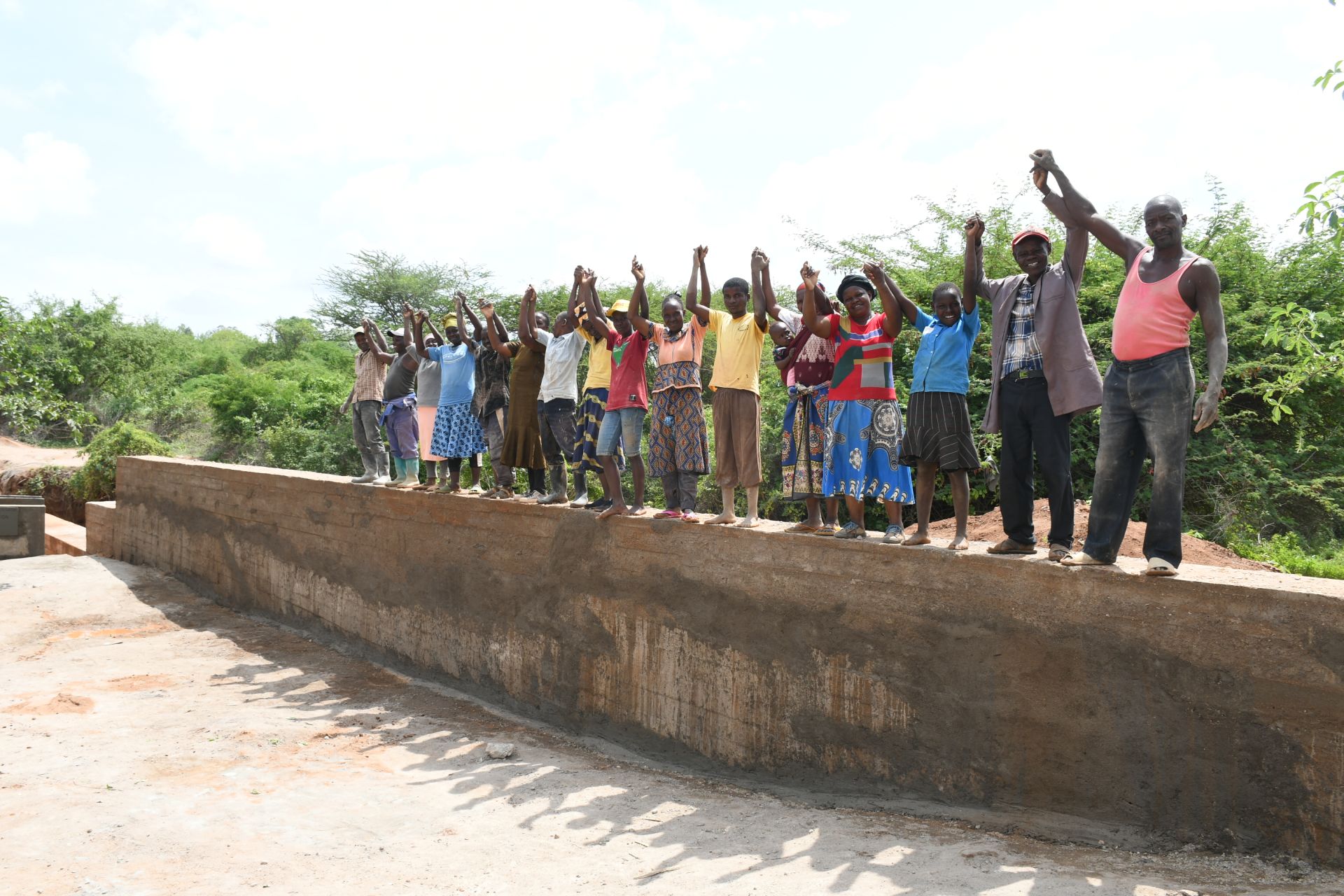
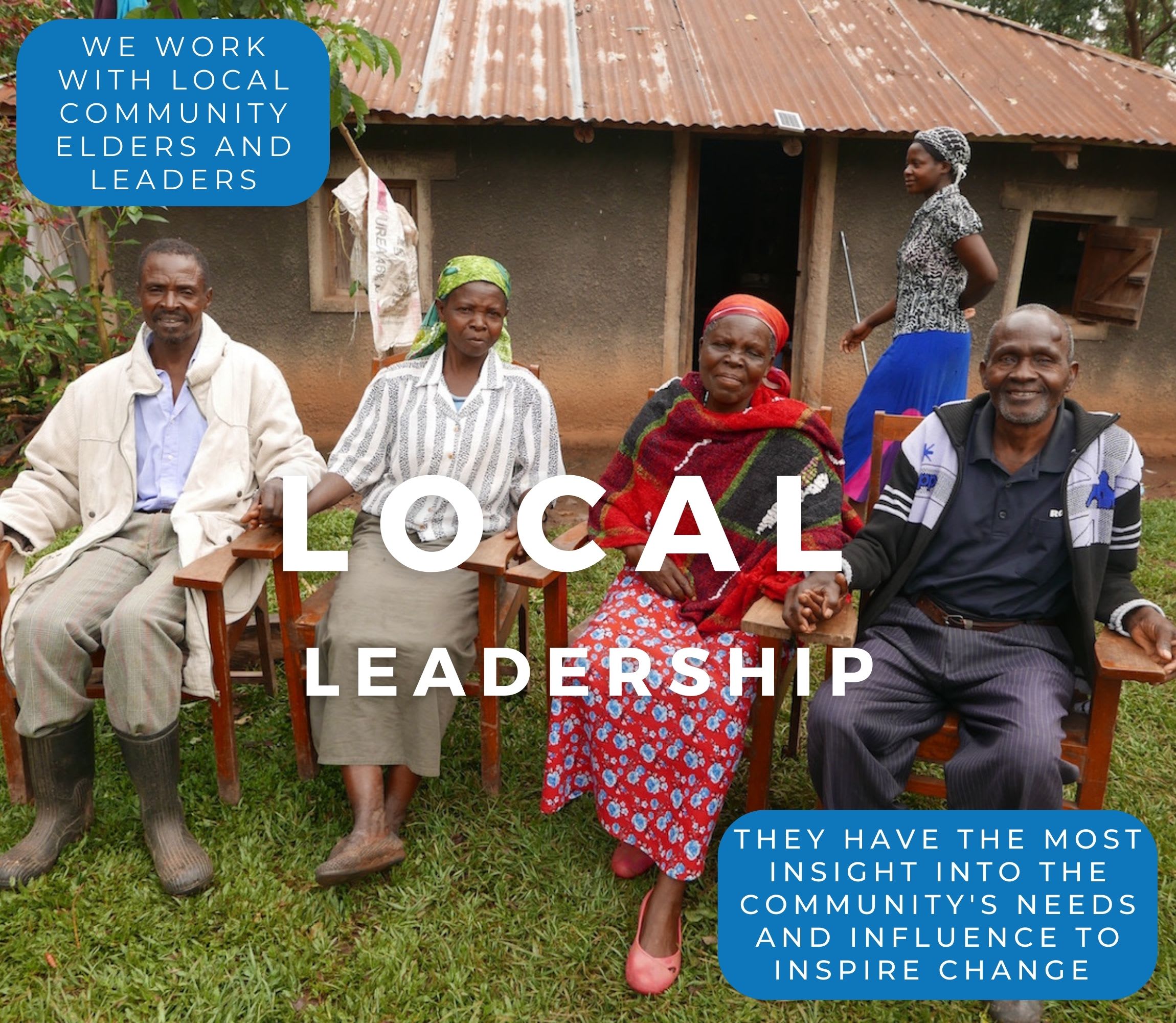
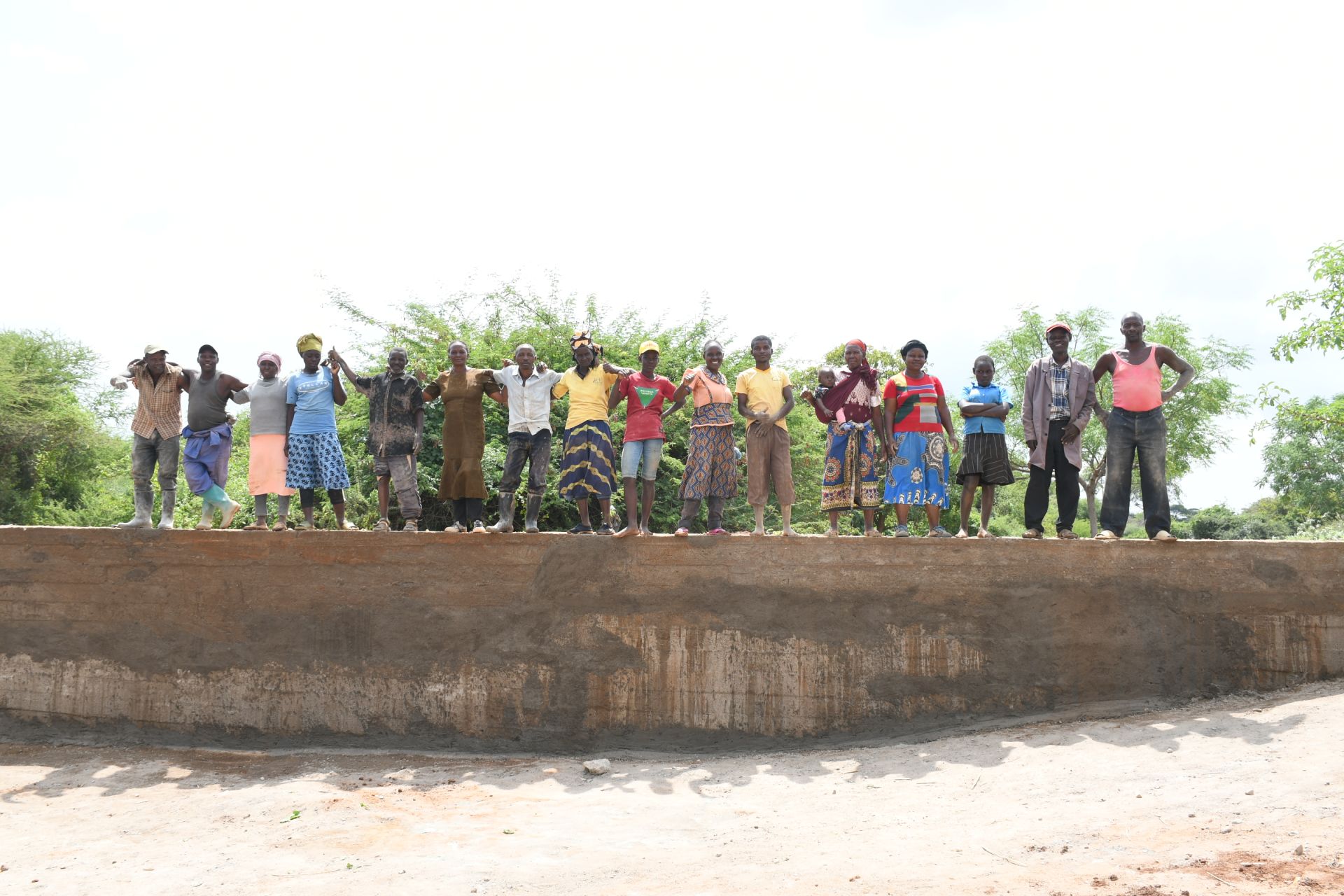
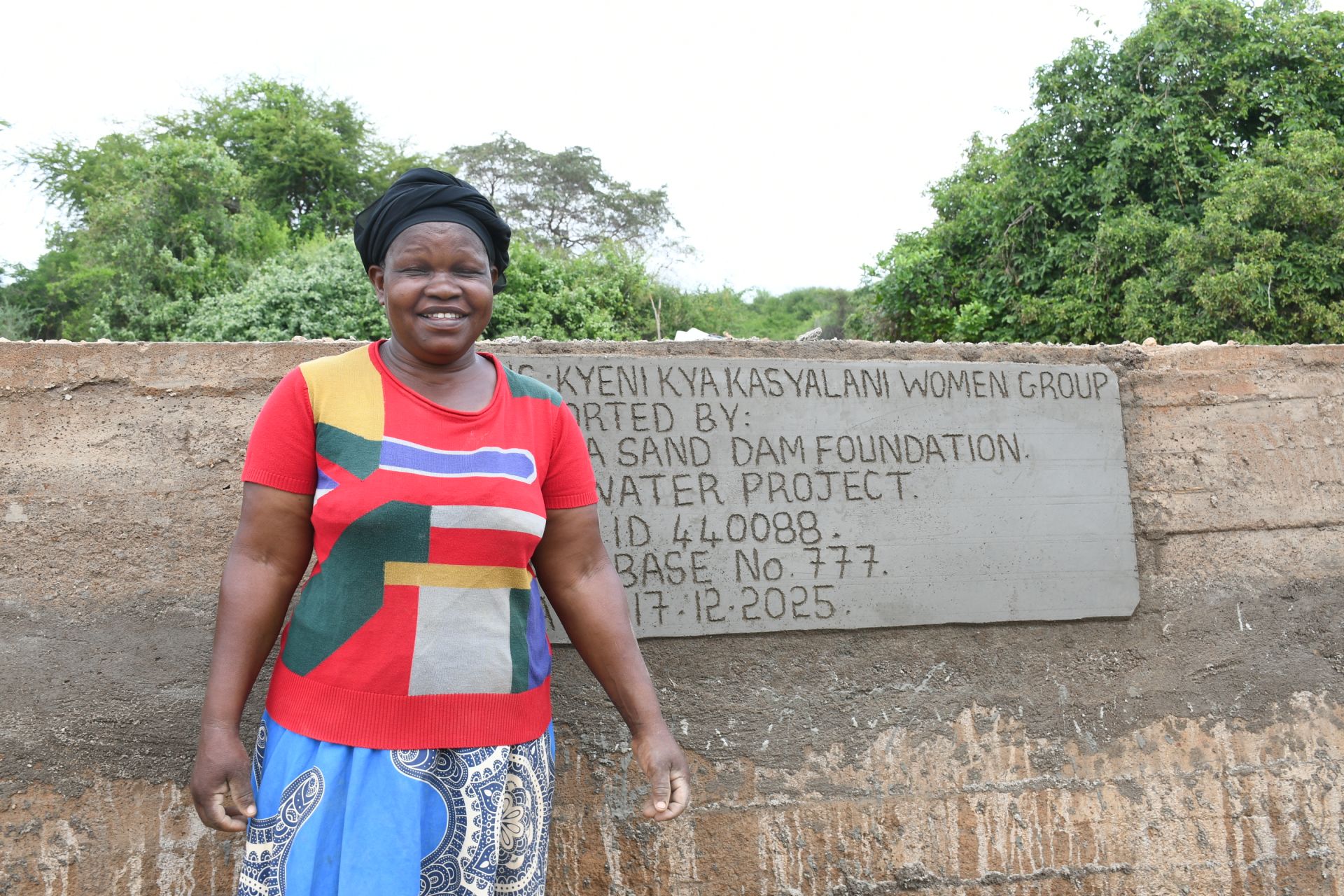
The most remarkable aspect of sand dams is how they involve the local community every step of the way, giving them a sense of ownership and pride in solving their own water shortage and managing their own water resources.
This sand dam will be connected to a dug well to make the water more accessible.
Community Education & Ownership
Hygiene and sanitation training are integral to our water projects. Training is tailored to each community's specific needs and includes key topics such as proper water handling, improved hygiene practices, disease transmission prevention, and care of the new water point. Safe water and improved hygiene habits foster a healthier future for everyone in the community. Encouraged and supported by the guidance of our team, a water user committee representative of the community's diverse members assumes responsibility for maintaining the water point, often gathering fees to ensure its upkeep.
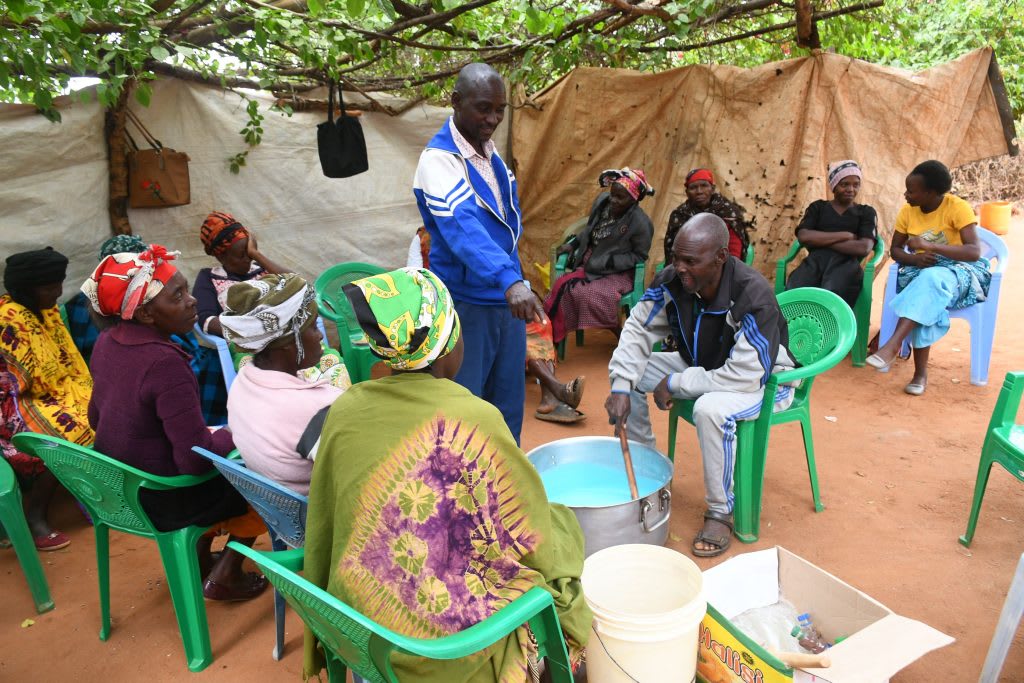
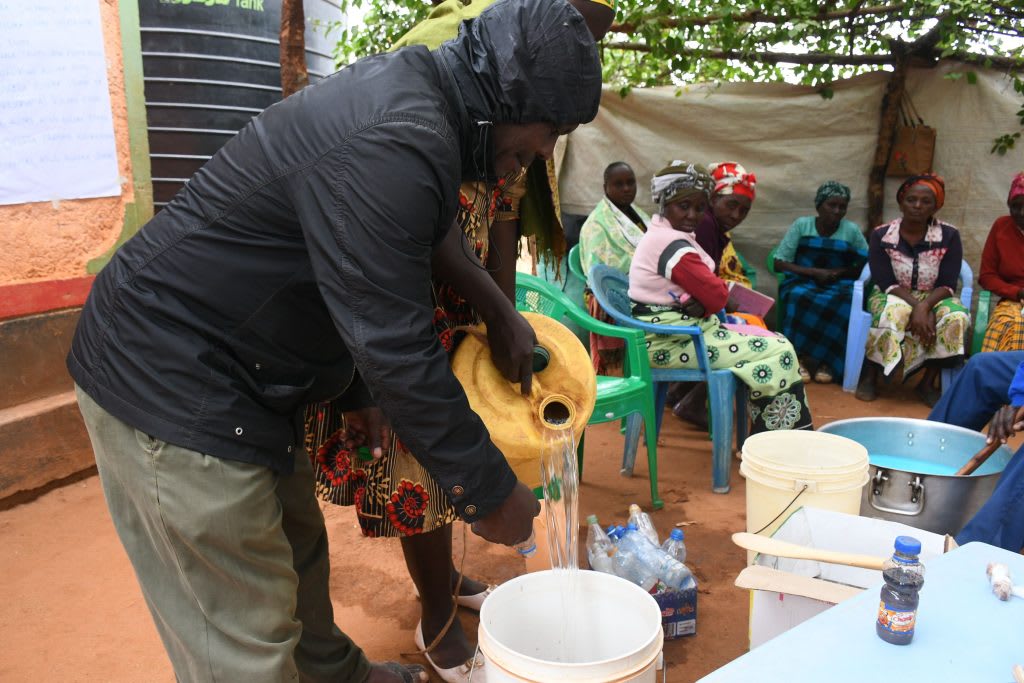 We covered health problems in the community, including good and bad hygiene habits, as well as the prevention of disease. Finally, we covered both natural resource management and the operation and maintenance of the sand dam.