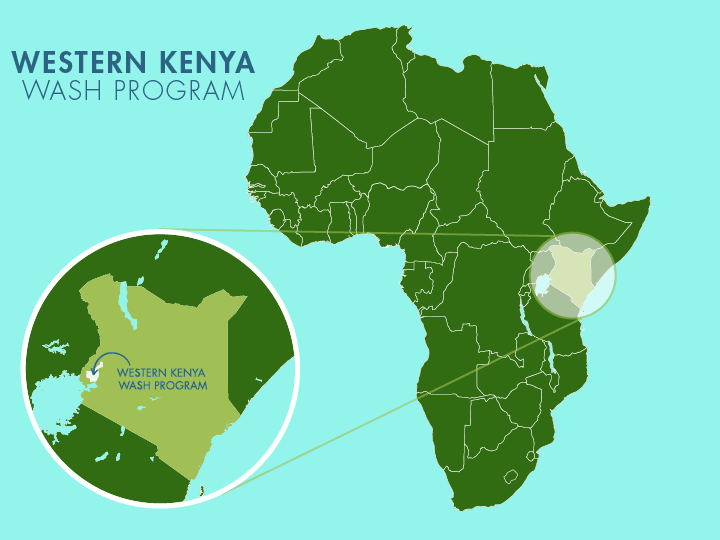
 Borehole Well and Hand Pump


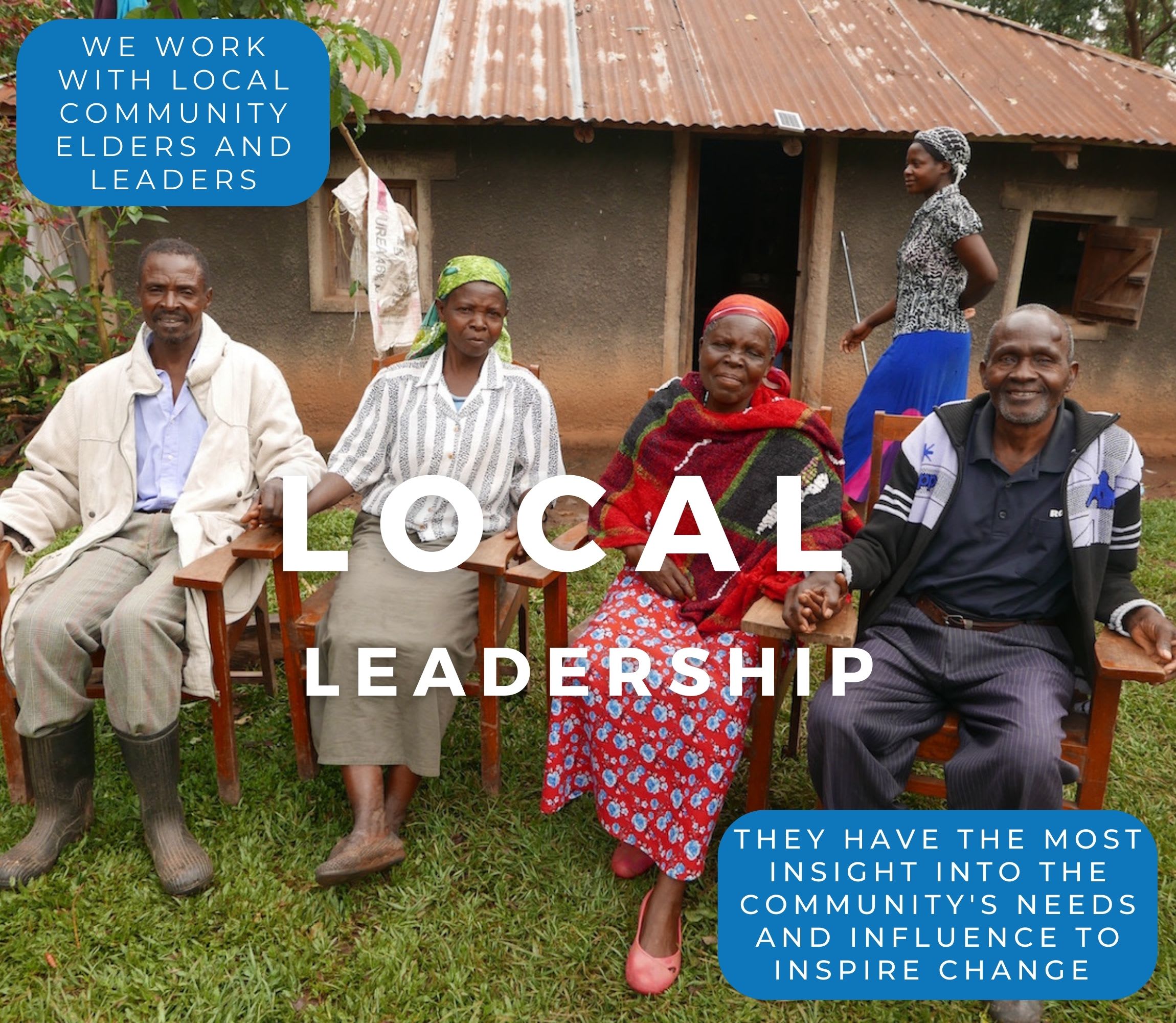








The 276 community members in the area surrounding Chesero Market, a community gathering area where people buy and sell goods, rely on a well installed in 1989. However, the well has not been properly maintained and frequently breaks down. The last time it broke down, there was no water for six months.
The responsibility of maintaining the well has weighed on the community, and when it fails, it often sits unused and unrepaired because the resources to fix it are unavailable.

The well needs attention to ensure it is reliable for the community.
"This community, through its leader, came to the Regional Service Hub (The Water Project's local office) in Western Kenya to request help with their borehole, which had broken down for over six months, and they didn't know where to go for help," reported Field Officer Terry Fanice.
It is a heavy burden for the community to bear, especially when they do their best to find a solution. Without knowing where to get the spare parts and without reliable pump mechanics, it's impossible. More than once, they have called on someone to fix it, only to have their money stolen and the pump left inoperable. It's disheartening.

Mr. Victor Salamba.
Victor Salamba, 37, is acutely aware of the many trickling ill effects of living without safe water.
Victor is a food vendor. When there is no safe water, he can't prepare food. He fears using contaminated water for his business because he could face serious consequences if someone were to become ill. Most recently, the community well was nonfunctional for six months. Victor was out of work, and it had a devastating financial impact on his family.
"Life has been hard. I had to temporarily close my business because if I feed people food prepared under unhygienic conditions, I risk being imprisoned if anything happens to them," Victor said.
Six months is a horribly long time to know you can't collect safe water or provide an income for your family.
"It was very difficult because I had been out of work for six months. As we speak, my children are not able to go to school due to a lack of tuition fees. This makes me sad because we are victims of circumstances," he recalled.
When the well is nonfunctional, people generally collect water from a distant, overcrowded community spring. It can take up to two hours for a person to reach the spring, wait in line, and return with water. It is time-consuming, not to mention physically exhausting.
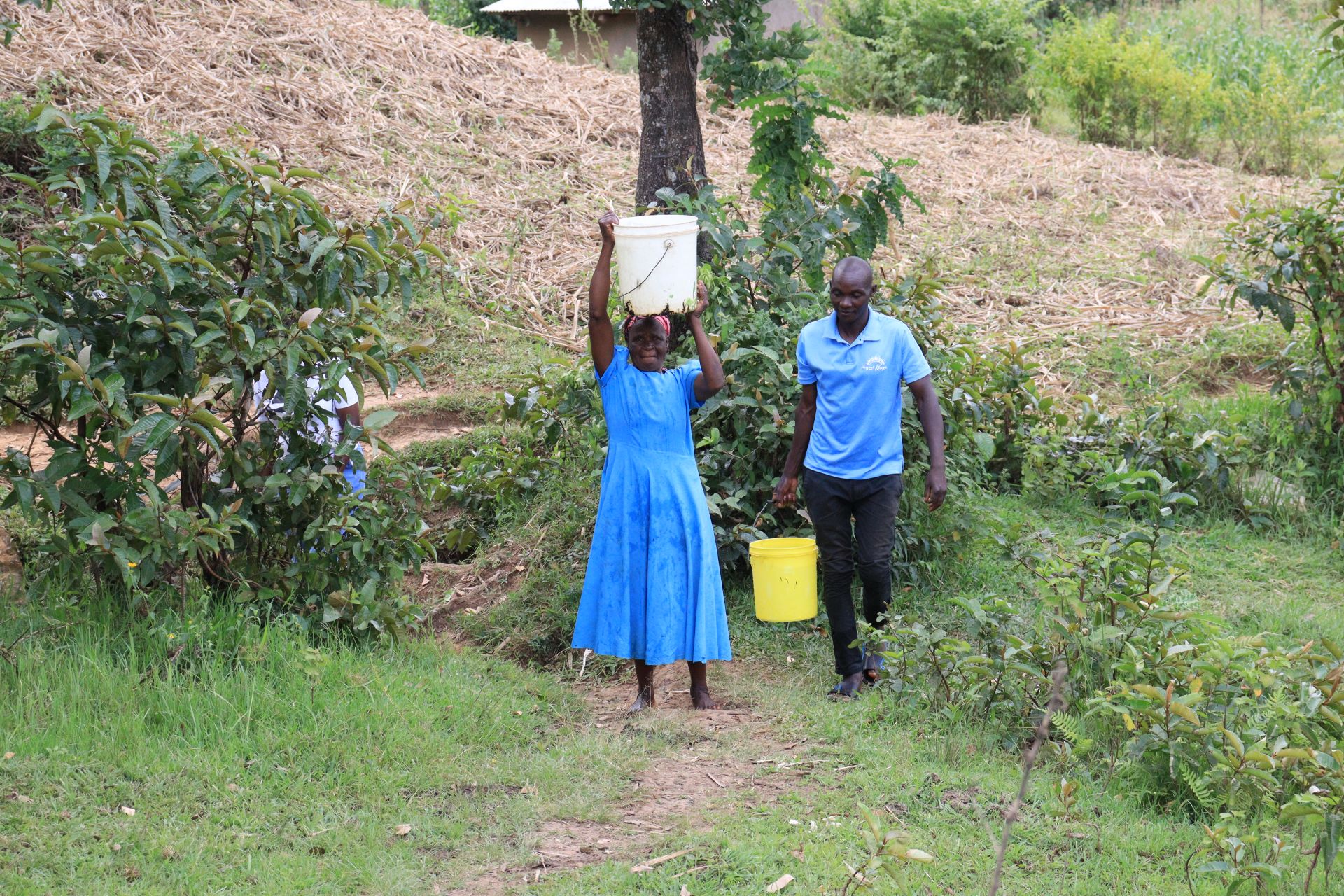
"They suffer from carrying heavy jerricans from the water point to their homes. They suffer from chest pain, joint pains, headaches," Terry said.
Victor shared an experience he had from consuming the questionable spring water that people work so hard to collect.
"I once fell sick from drinking water from the spring because our borehole had broken down. It was agonizing. When I was sick, I was treated at the nearby hospital. The treatment was quite expensive since I don't have any insurance coverage. I paid out of pocket," he recalled.
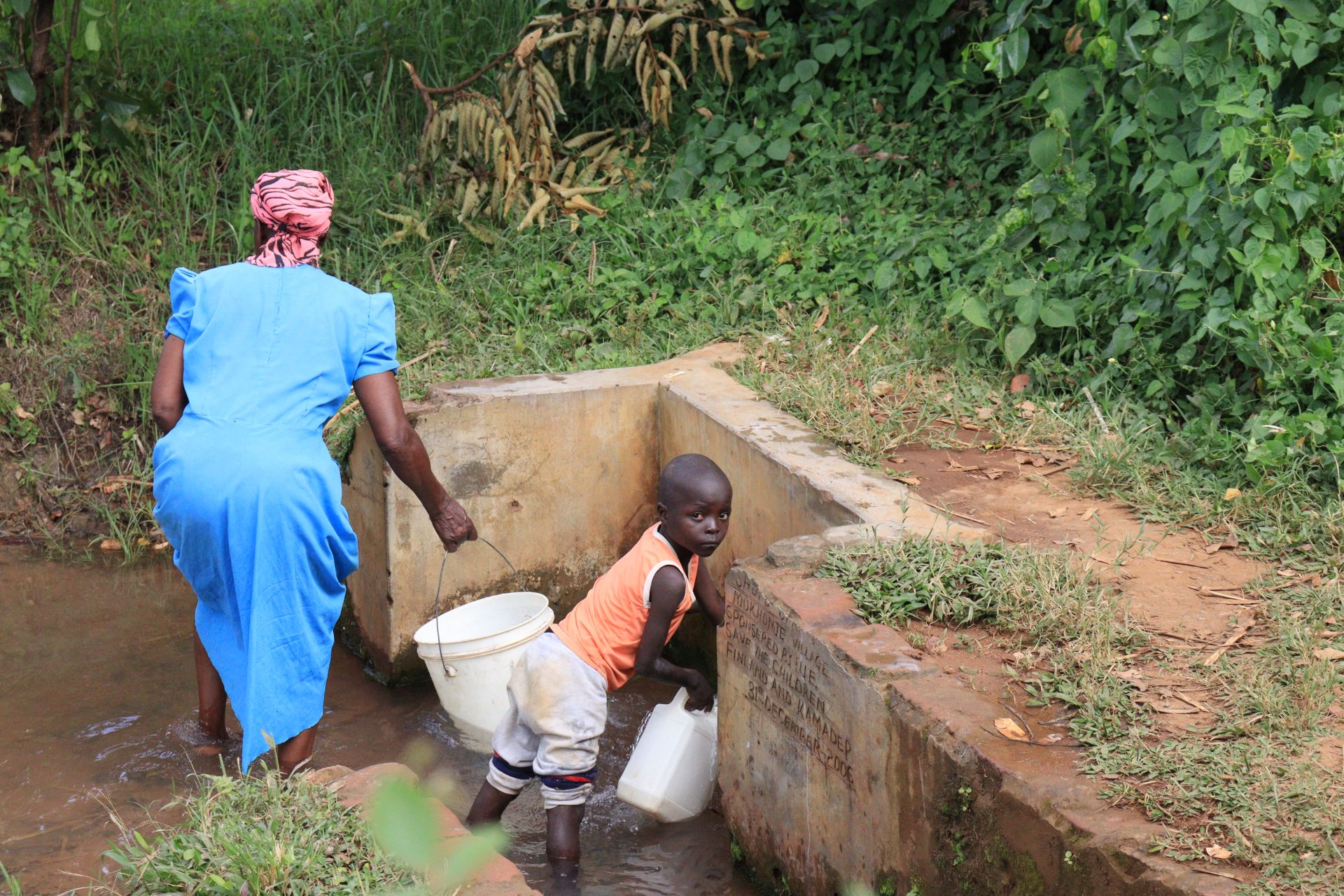
Collecting water at the spring.
"I know drinking water from the stream or an unprotected spring is not safe, but in instances where our borehole broke down, we have no choice because that is the only source at the moment," he lamented.
We asked Victor if he could imagine what it would be like to know that the borehole will provide consistent, safe water, even when there is an issue.
He said, "I would put more effort into my business. I can even expand it and open a branch in another community since I will have time. Safety is key in the food industry. I need clean and safe water for me to be issued a license to operate. We need to ensure the quality of food we sell to people by using safe and clean water. Water is my employer. If it is not available, I can't be in business."
He concluded: "To me safe and clean water means an income. It would mean I will be back in business, my children will go back to school, and I will be able to provide food and other necessities for my children."
Having access to reliable, clean water could change the trajectory of Victor's entire family. Our hope is to make this dream a reality soon.
Steps Toward a Solution
Our technical experts worked with the local community to identify the most effective solution to their water crisis. Together, they agreed to adopt a well previously drilled by another organization that is no longer actively maintained.
Adopted Well: Ensuring Lasting Reliability
This adoption program protects and strengthens access to clean water by identifying boreholes installed by other organizations and adopting them into The Water Project’s proven monitoring and maintenance systems. This cost-effective approach reduces downtime, prevents waterborne illness, safeguards health and livelihoods, and advances long-term regional water coverage.
Before use, the well will be thoroughly vetted and repaired to meet our established standards. From there, we keep the system safe and dependable through quarterly monitoring and prompt attention to any maintenance needs — minimizing the risk of unexpected breakdowns. Water quality testing is conducted twice a year to ensure the supply remains healthy for the entire community. All of these services are covered by an affordable annual fee, with no additional costs at the time of repairs.
Community Education
Hygiene and sanitation training are integral to our water projects. Training is tailored to each community's specific needs and includes key topics such as proper water handling, improved hygiene practices, disease transmission prevention, and care of the new water point. Safe water and improved hygiene habits foster a healthier future for everyone in the community. Encouraged and supported by the guidance of our team, a water user committee representative of the community's diverse members assumes responsibility for maintaining the water point, often gathering fees to ensure its upkeep.