 Protected Spring
 Rehabilitation Project









Nestled within the Mavusi Community, home to 196 people, life revolves around the land. For 42-year-old Janet Makuto, a farmer and grandmother, every day begins and ends with the earth beneath her hands — tending onions, kales, sweet potatoes, and bananas that feed her family and sustain her livelihood. But before Janet can tend to a single crop, before she can cook a meal or wash a dish, she must first face one of her day's greatest obstacles: finding water.
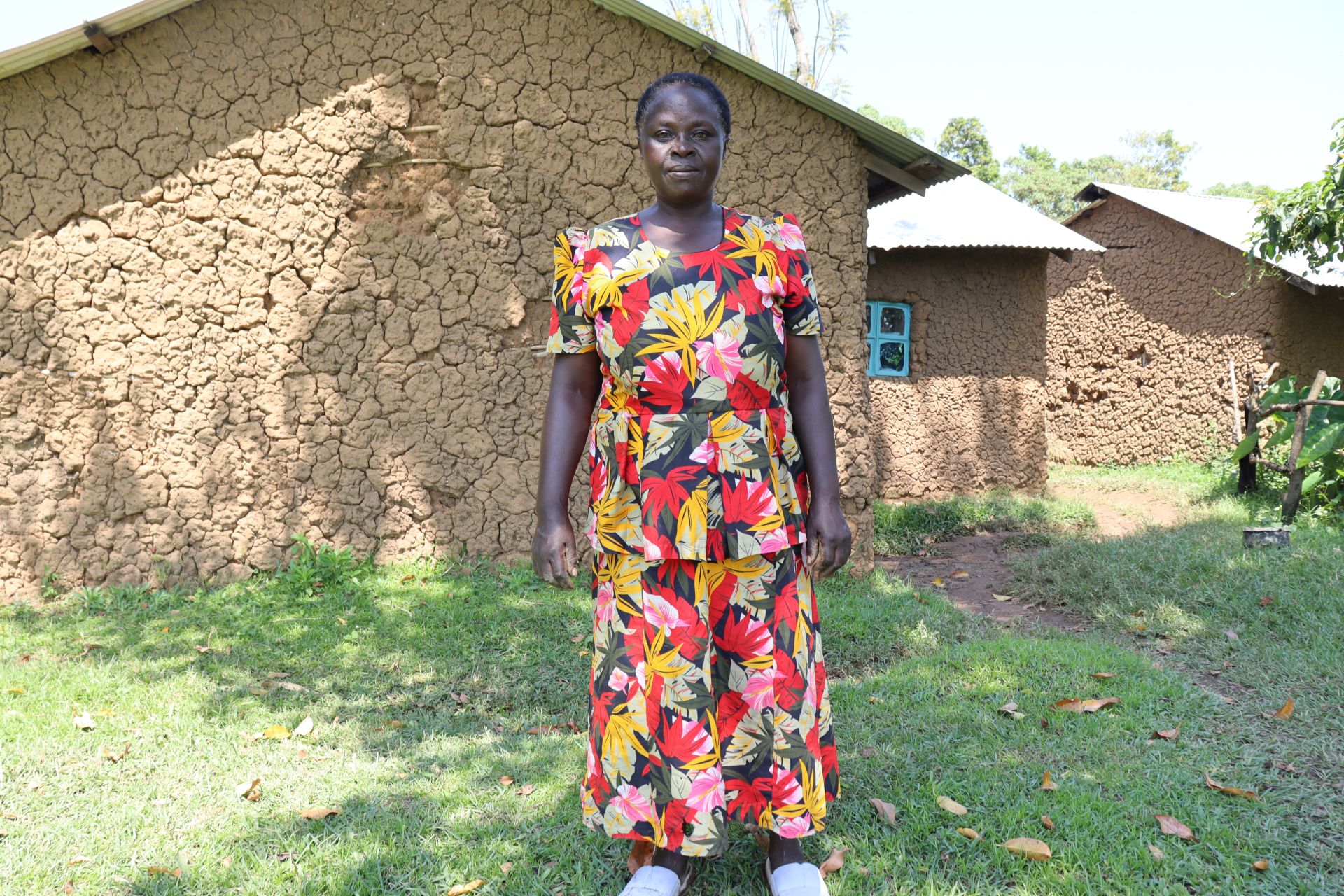
Janet Makuto.
Janet's community relies on two partially protected springs. The walk to her main source takes 20 minutes each way, and once she arrives, the real waiting begins. On a normal day, Janet stands in line for 45 minutes. The water point itself is unkempt — overgrown with brush, its drainage blocked, its staircases broken and slippery. One misstep on that damaged path could mean a serious fall. And when the rains come, runoff clouds the spring entirely, forcing families to wait for the water to settle before they dare collect it.
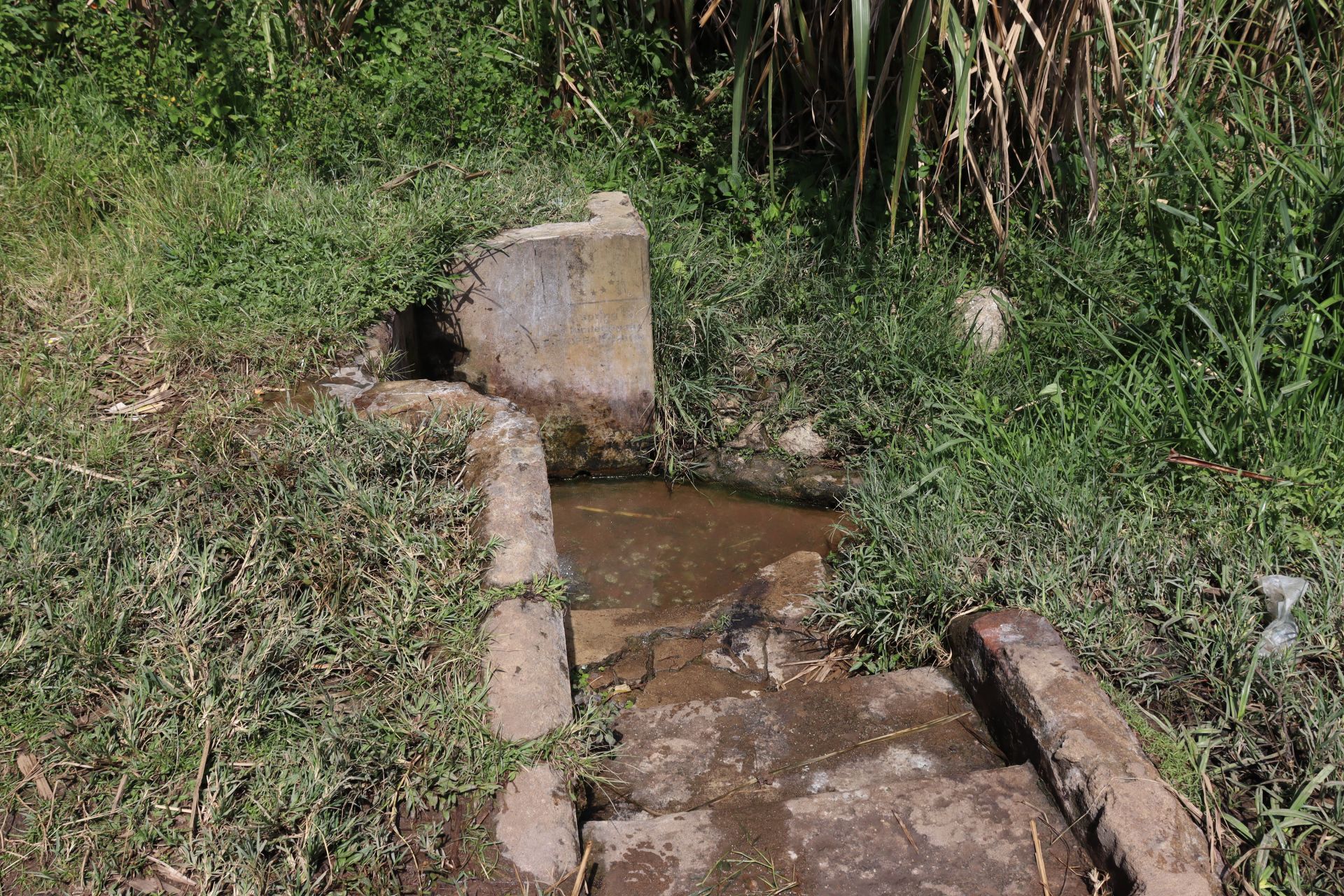
The dilapidated spring in need of repair.
The queues bring more than just lost time. Janet remembers the longest wait she ever endured — a full hour — not because the spring ran dry, but because a fight broke out between two women over misplaced jerricans. Janet stepped in to mediate, sacrificing what little time she had. Conflict at the water point is common enough that it has quietly seeped into the fabric of community relationships. When her grandchildren come home from fetching water — late, and in tears — she knows why. They've been pushed to the back of the line or drawn into quarrels with other children. And the ripple effects reach even her farm sales: neighbors who are angered by a dispute may simply stop buying her produce.
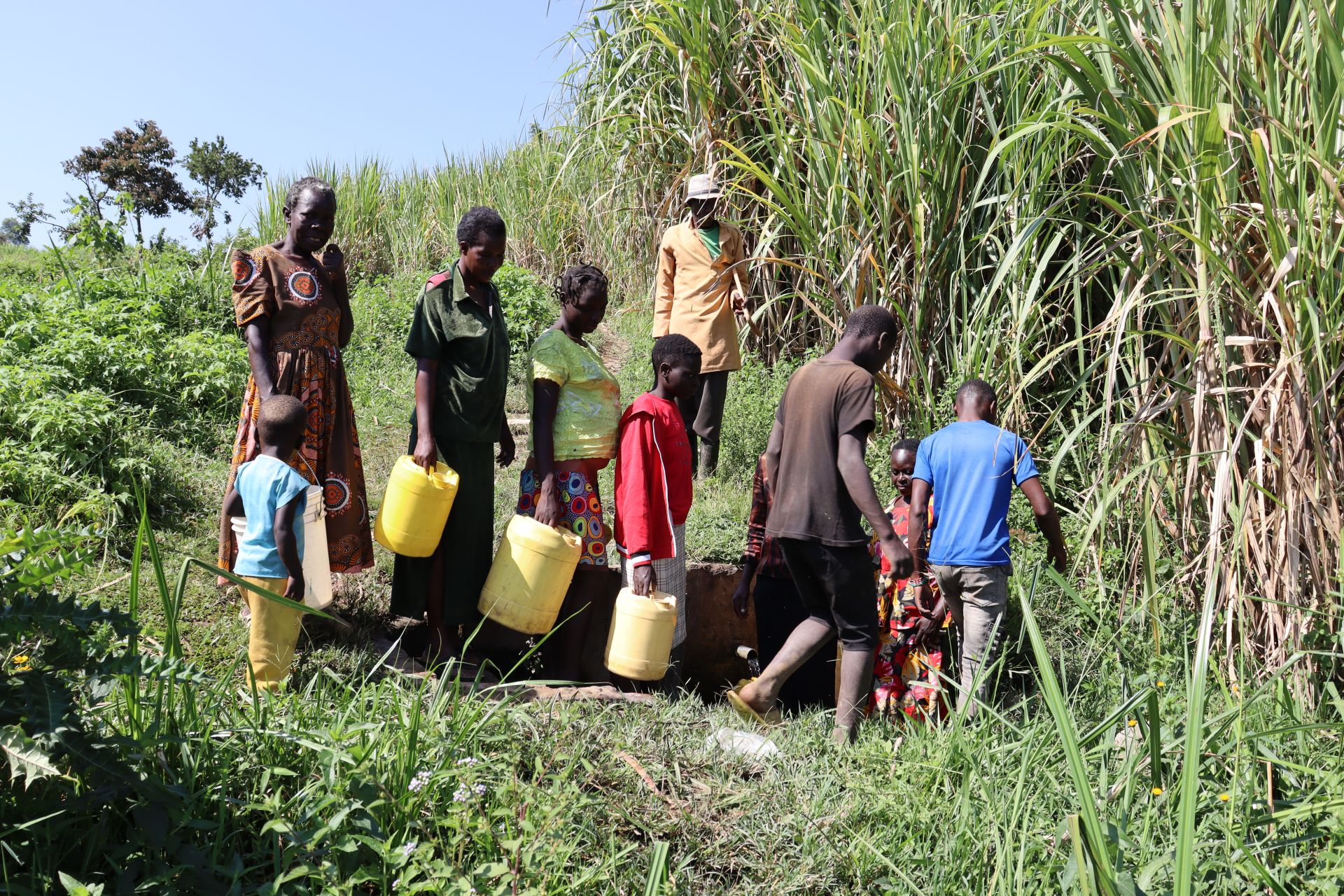
Community members wait for their turn to collect water.
"Quarreling definitely affects the relationships we have with community members, and this is extended to my business, too. Most of my customers who buy kales, onions, sweet potatoes, bananas from me are my neighbors, and so if for example my grandchild involves herself in fights with other children, the parents of the children would get so angry at me and would go days without purchasing my farm products just because of the small quarrels and disagreements between my grandchildren and their children," Janet explained.
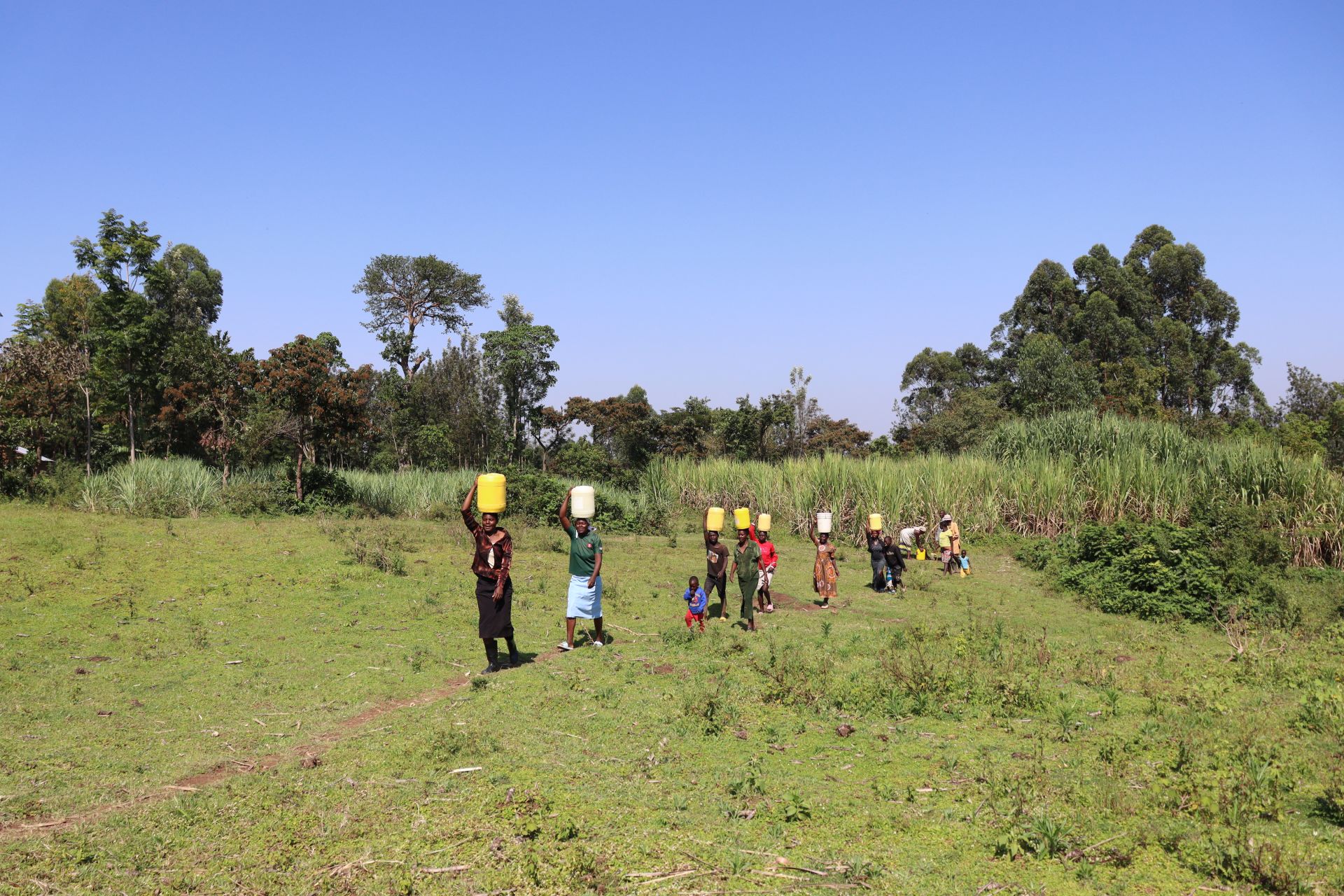
Making the heavy trek home with water.
What strikes Janet most deeply is how much the water struggle pulls her away from the work she loves. "I spend most of my time each day in my farm," she explains, "because my crops like onions and kales need frequent pruning, spraying, and watering — especially when they are still young." Her farm is not just her passion; it is what feeds her family. Every hour lost in a queue is an hour stolen from her crops, her income, and her future. "Waiting in long queues," she says, "disrupts my day's schedule." If that time were given back to her, she knows exactly what she would do with it: "I would 100% concentrate on my farm's activities."
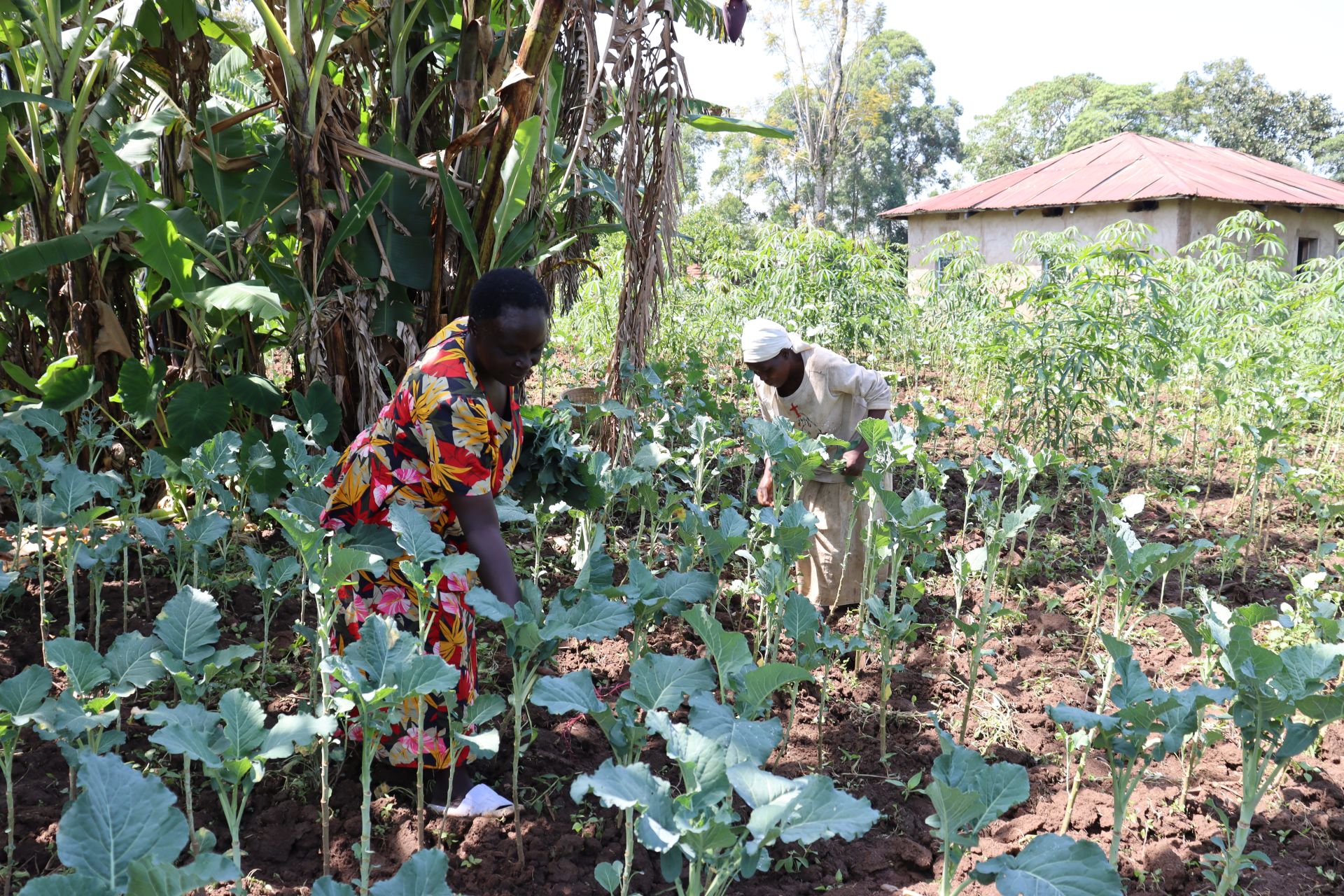
Janet tends her farm.
A new, protected water point would change everything for Janet. It would mean safe, quick access — no more broken staircases, no more clouded water, no more standing in line while her crops wait and her grandchildren come home shaken. It would mean the quarrels that strain her community ties — and her customer relationships — could finally ease. And it would mean that Janet, who has spent years pouring herself into her land to provide for those she loves, could do so with the one resource she's long been denied: time.
"Water is life," Janet says — and she means it in every sense. She uses it to cook, to clean, to bathe, to water her cattle, and to nurture the crops that sustain her family. "Without it," she says, "my life stops."
Steps Toward a Solution
Our technical experts worked with the local community to identify the most effective solution to their water crisis. They decided to safeguard the existing flowing spring.
Spring Protection
Springs are natural water sources that originate from deep underground. As water travels through various layers of the earth, it undergoes a natural filtration process, making it cleaner and safer to drink. To protect these spring sources from contamination, we construct a waterproof cement structure around layers of clay, stone, and soil. This design channels the spring water through a discharge pipe, facilitating easier, faster, and cleaner water collection.
Chlorine Dispenser
As an extra measure towards water quality safety, uniquely engineered chlorine dispensers are installed at all of our spring protection projects so community members can treat their water with pre-measured doses of chlorine. The chlorine treats any possible contamination and stays active for two to three days, ensuring water stays safe to use even when stored at home. Chlorine delivery and maintenance of the dispensers are part of our ongoing community support.
Community Education & Ownership
Hygiene and sanitation training are integral to our water projects. Training is tailored to each community's specific needs and includes key topics such as proper water handling, improved hygiene practices, disease transmission prevention, and care of the new water point. Safe water and improved hygiene habits foster a healthier future for everyone in the community.
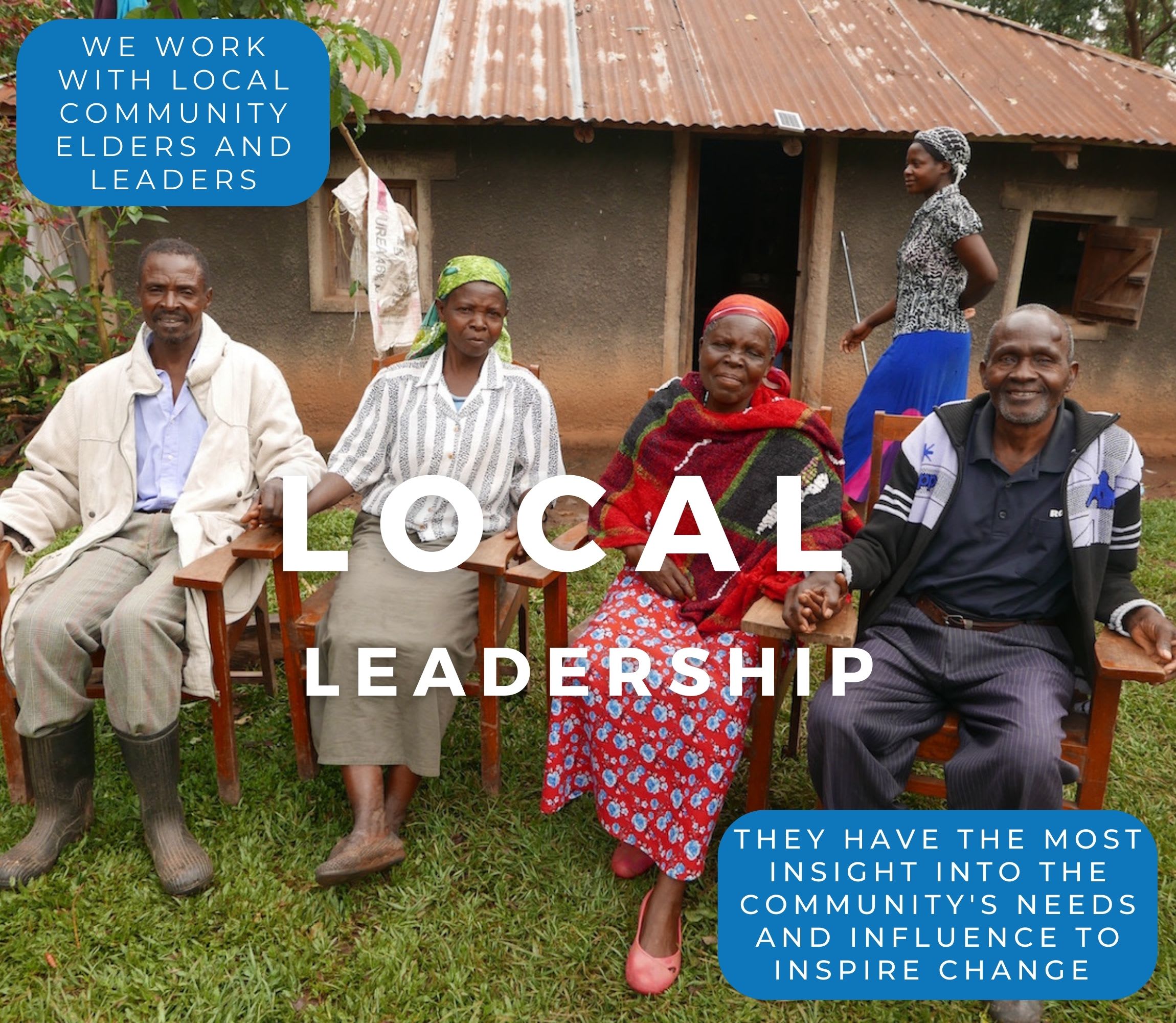
Encouraged and supported by our team's guidance, the community elects a water user committee representative of its diverse members. This committee assumes responsibility for maintaining the water point, organizing community efforts, and gathering fees to ensure its upkeep.