
Kevin Dreams of Being Healthy

May, 2026

Last year, your gift unlocked the potential for a brighter future for Kevin. Since then, he and the Ishiru Secondary School, with 383 students and teachers, have had clean, reliable water. Your contribution has made a significant impact. Thank you for making a difference!

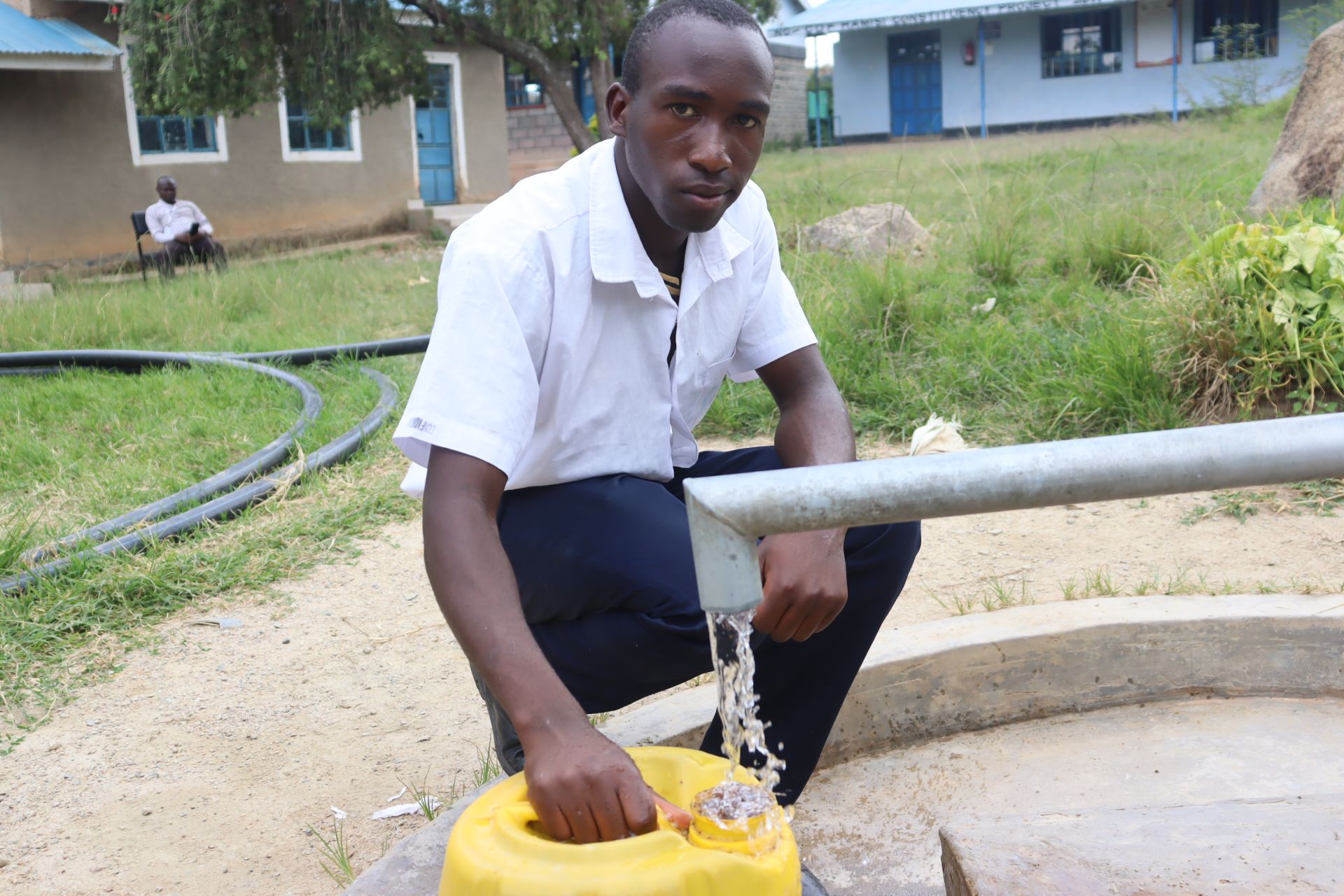
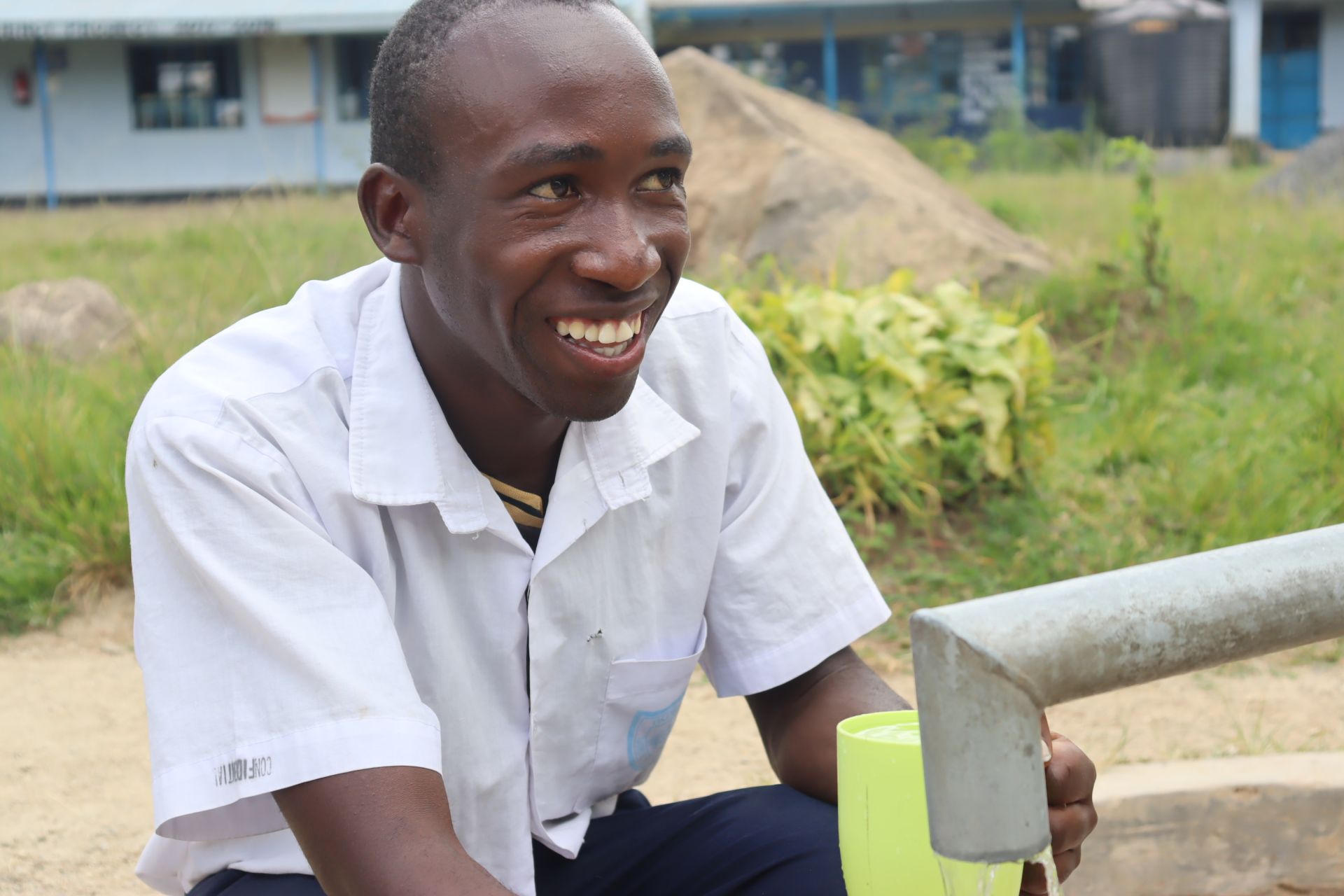
"The best thing about living with clean water is staying healthy, feeling comfortable, and having more time to focus on school instead of searching for water," celebrated Kevin.

Before the Well Installation

Like many young people in Western Kenya, 17-year-old Kevin is responsible for collecting water to meet his daily needs. Before last year’s water intervention, this task stole his time and negatively affected him.

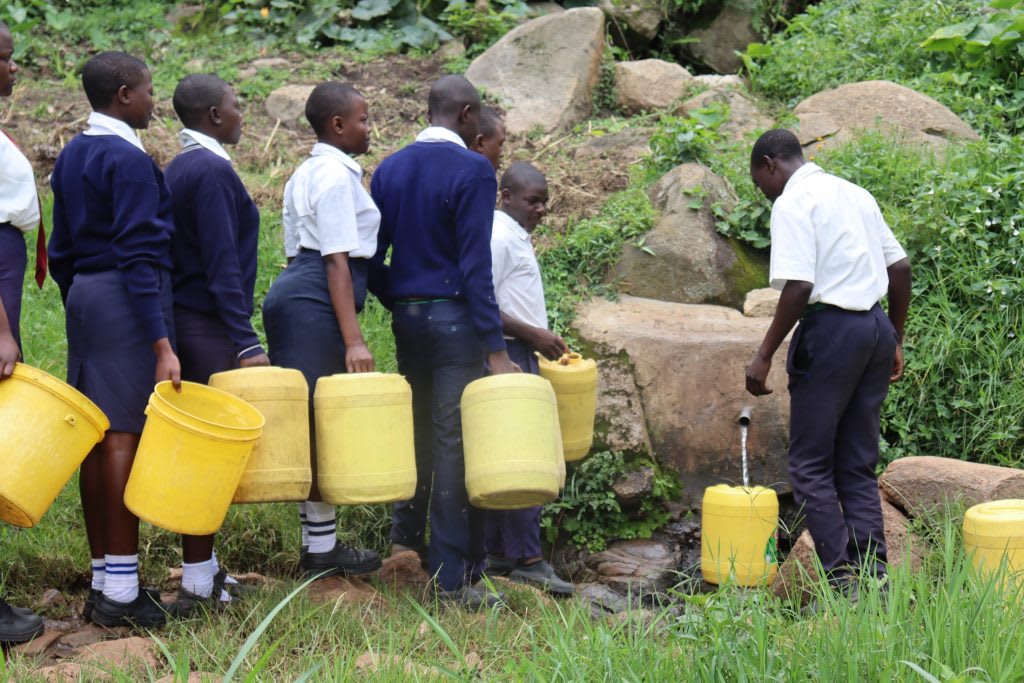
Students previously had to collect water from a community spring off-campus.

Drinking the water caused severe consequences. Many in the school community suffered from waterborne diseases that created health problems, affecting their daily lives. Limited accessibility also meant students wasted time collecting water instead of studying. The difficult journey to collect water sapped their physical and emotional energy, creating roadblocks to learning. For Kevin, it lessened his opportunity to concentrate in class.

"Before the project was built, we had many problems getting water at school. We used to walk long distances to fetch water from the community spring, and sometimes we arrived late to school because of the time spent fetching water. During dry seasons, the school tanks would dry up, and there was not enough water for drinking, cooking, or cleaning. The water was not always safe, and many students suffered from diseases such as typhoid and stomach problems. Some learners missed school because they were sick or tired from carrying water. It was very difficult for us, and it affected our learning and school activities," recalled Kevin.

Since the Well Installation

Your generous gift last year was much more than a simple donation; it was a powerful statement about your commitment to this school community and Kevin’s future. By supporting the water solution, you made clean water an everyday reality, fostering hope for a brighter future.


Reliable and clean water lays the groundwork for improved health, education, and economic possibilities, allowing people to thrive. We frequently hear from those we interview that "water is life!"

"I like that fetching water here is now easy and fast because the water is close to our classrooms. We no longer walk long distances or miss lessons looking for water. The water is also clean and safe, which helps us stay healthy and comfortable at school," said Kevin.

The Future is Looking Bright!

A year ago, you made a difference for Kevin and his classmates. This is just the first chapter of their story as access to clean water continues to improve their lives!

At The Water Project, we value sustainability and want to ensure that people continue to thrive. We commit to monitoring this project to ensure the water is always flowing and safe to consume. We inspect system hardware, monitor water availability, conduct sanitary inspections, and collect water-quality samples to identify risks. We work with our on-the-ground team to resolve them.

You gave Kevin a crucial tool for achieving his dreams: access to clean water. Together, we can excitedly expect that with this precious resource, his enthusiasm and courage will help him fulfill his dreams.

"Since the water point was installed, my academic performance has improved because I now arrive at school on time and attend classes more regularly. Now that fetching water takes less time, I use my extra time to study, complete my homework, play with friends, and participate in school activities," said Kevin.

"My dream is to work hard in school, succeed in my studies, and have a good future where I can help my family and community. I want to grow up healthy, achieve my goals, and become a responsible and successful person in life," Kevin envisioned.

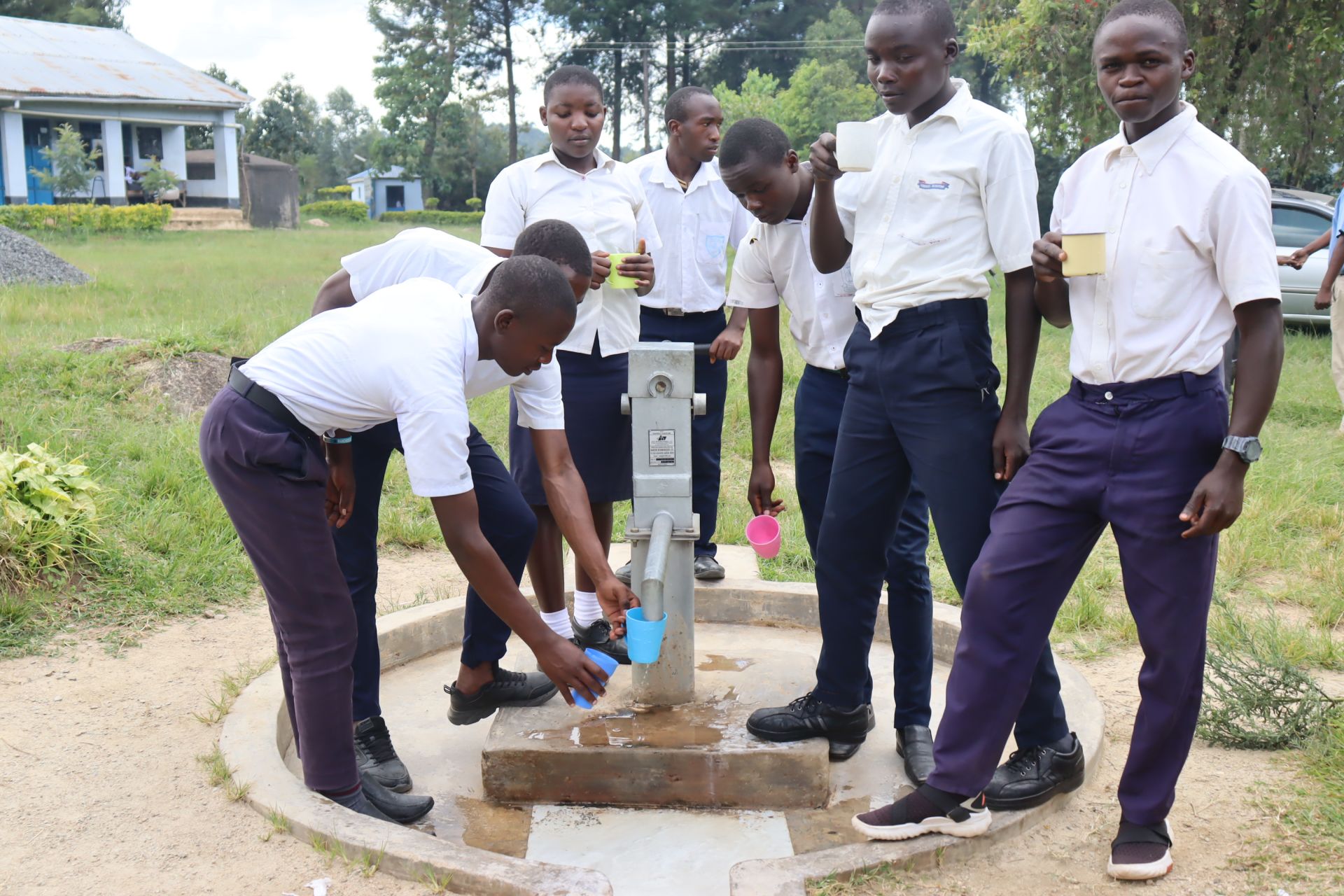
Kevin with classmates at the well.


Navigating through intense dry spells, performing preventative maintenance, conducting quality repairs when needed and continuing to assist community leaders to manage water points are all normal parts of keeping projects sustainable. The Water Promise community supports ongoing sustainability programs that help Ishiru Secondary School maintain access to safe, reliable water.

We’d love for you to join this world-changing group committed to sustainability.

The most impactful way to continue your support of Ishiru Secondary School – and hundreds of other places just like this – is by joining our community of monthly givers.

Your monthly giving will help provide clean water, every month... keeping The Water Promise.

Project Status


Project Type:  Borehole Well and Hand Pump

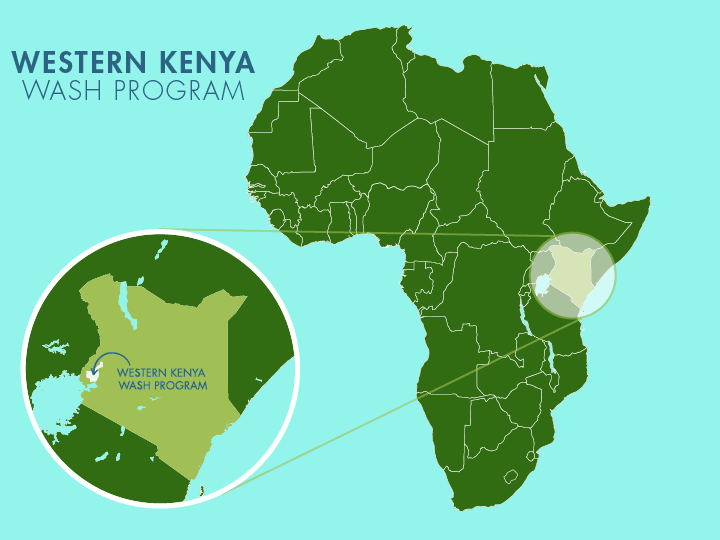
Regional Program: Western Kenya WaSH Program

Impact: 383 Served

Project Phase:  In Service - Jan 2025

Functionality Status:  Functional

Last Checkup: 04/03/2026

Project Features


Click icons to learn about each feature.


Community Profile

The 354 students and 29 staff members of Ishiru Secondary School struggle to access sufficient water to meet their daily needs, especially during the dry seasons when the rain tanks at the school run dry.

"During the long dry seasons, access to water is a big challenge. Therefore, students are forced to bring water from home, which most of the time is contaminated since they carry the water in dirty containers," said field officer Joel Otuya.

"This is dangerous since most of the water brought [from home] is usually contaminated, hence making both students and teachers ill. The illness increases absenteeism in school, making them lag behind in teaching and learning. Food quality is also compromised as a result of using contaminated water brought by students from home. The most commonly reported health consequences are typhoid, diarrhea, flu, and dysentery, which are a result of consuming dirty, contaminated water," continued Joel.

The school sometimes tries to borrow water from neighbors, but they demand payment, and the school can not afford the expense. So, instead, when the water from the tanks and the water students haul from home runs out, there is no choice but for teachers to interrupt the normal routine and send students to a nearby spring to collect water to meet the school's needs.

"I most of the time lose teaching time since the students are usually away fetching water or even due to sicknesses instead of being in class to learn. Due to the low levels of hygiene, classrooms, staffroom, and latrines are very dusty and dirty, putting us at great risk of falling sick," said 48-year-old senior teacher Khayesi Khasi, shown below teaching.
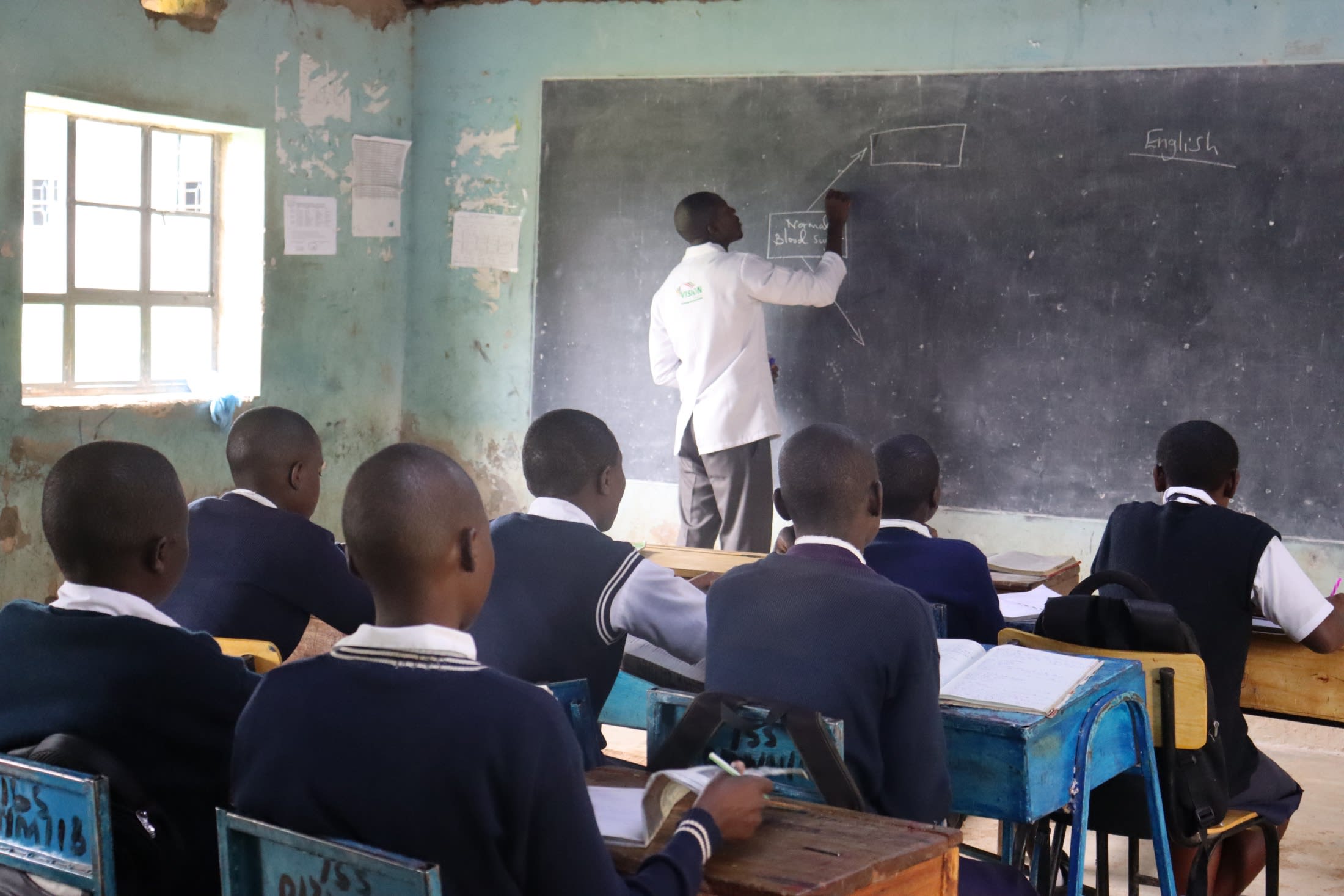
"Both [the] teaching and [the] learning processes are hampered since students have to get water from [the] spring, which is quite a distance from the school," said Joel.

"I waste a lot of time at the spring fetching water during class. This has affected my performance since most of my time is spent fetching water; therefore, I have no time both at home and at school. I'm also at risk whenever we are sent by the teachers to go fetch water such that some community members go ahead and harass us and also abuse us," said 18-year-old Joylynne Khagali, shown below, collecting water from the spring.

The installation of a well will enable students to efficiently collect water outside their classrooms so they can continue learning instead of missing valuable class time. Hopefully, with access to water, students and teachers alike will also experience less water-related illness, and the hygiene standards at the school will improve.

Note: Our proposed water point can only serve 300 people per day. We hope to continue working with this community to identify other water solutions that will ensure all of the people in this community have access to safe and reliable drinking water. 

Water at schools is unique, which is why we need unique solutions.

The Proposed Solution, Determined Together...

At The Water Project, everyone has a part in conversations and solutions. We operate in transparency, believing it benefits everyone. We expect reliability from one another as well as our water solutions. Everyone involved makes this possible through hard work and dedication.

In a joint discovery process, community members determine their most advantageous water solution alongside our technical experts. Read more specifics about this solution on the What We're Building tab of this project page. Then, community members lend their support by collecting needed construction materials (sometimes for months ahead of time!), providing labor alongside our artisans, sheltering and feeding the builders, and supplying additional resources.

Water Access for Everyone

This water project is one piece in a large puzzle. In Kenya, Sierra Leone, and Uganda, we're working toward complete coverage of reliable, maintained water sources that guarantee public access now and in the future within a 30-minute round trip for each community, household, school, and health center. One day, we hope to report that this has been achieved!

Training on Health, Hygiene & More

With the community's input, we've identified topics where training will increase positive health outcomes at personal, household, and community levels. We'll coordinate with them to find the best training date. Some examples of what we train communities on are:

  • Improved hygiene, health, and sanitation habits
  • Safe water handling, storage & treatment
  • Disease prevention and proper handwashing
  • Income-generation
  • Community leadership, governance, & election of a water committee
  • Operation and maintenance of the water point

Handwashing Stations

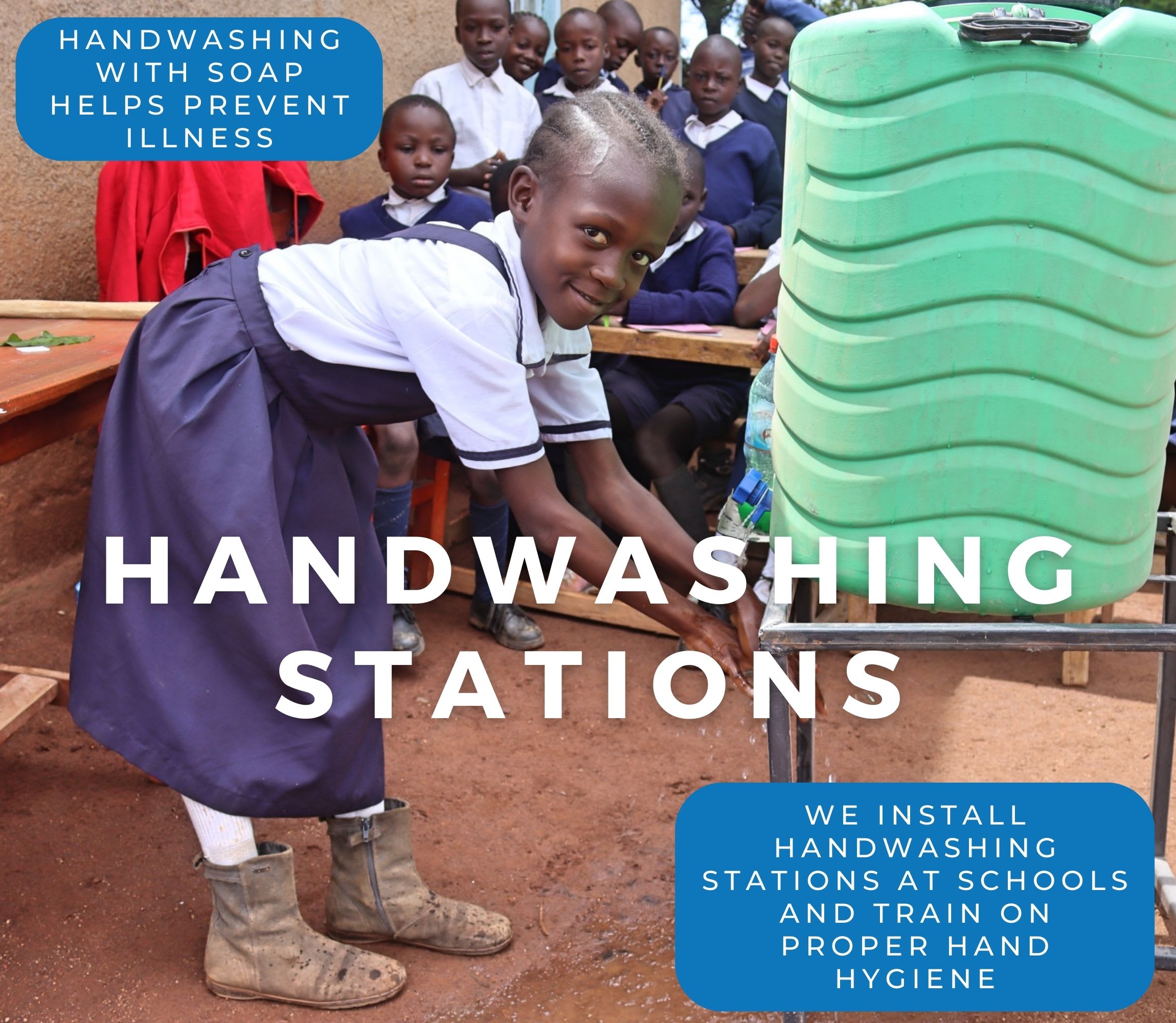
Alongside each water source, we also provide two new gravity-fed handwashing stations that will allow everyone at the school to wash their hands without running water. Handwashing is so important to help prevent future water-related illnesses in the school community.

The student health club will maintain the stations, fill them with water, and supply them with soap (which we will teach the school community how to make during the training!).

VIP Latrines

In addition, we will construct two triple-door Ventilated Improved Pit (VIP) latrine blocks designed to prevent fecal disease transmission. Each latrine will have a cement floor, which is easy to use and clean regularly. Three doors will serve the girls, and three doors will serve the boys.

Project Updates


January, 2025: Ishiru Secondary School Well Complete!

Your contribution has given Ishiru Secondary School in Kenya access to clean water, thanks to the completion of their borehole well! Clean, flowing water is already making a difference in the lives of the students and staff. This will provide them with a reliable water source for their daily needs.

We installed new latrines and handwashing stations, then trained students and staff on improved sanitation and hygiene practices. Together, these components will unlock the opportunity for these students to thrive!

"Access to clean water ensures that I am drinking clean water, which helps ensure I am in good health. Unlike before, a couple of times I have had to miss school and go to [the] hospital to be treated because of drinking dirty water. I am sure this will help save some money that they (her parents) have been using on treatment," said 16-year-old Barbara.

Barbara, by the new well.

Teachers were just as excited as the students about the new well on campus!

"I hope this waterpoint will solve issues on time wastage. During the dry season, students spend a lot of time queueing at the water point for water. Sometimes, this eats into time for lessons. This, in turn, causes a strain in terms of coverage of the syllabus. But now, things are going to be much better moving forward," shared 28-year-old teacher Basil Oluoch.

Mr. Oluoch.

How We Got the Water Flowing

The first step was to conduct a hydrogeological survey to determine the the best site for the school's well. Once we found the perfect spot, the team obtained approval from the government to begin drilling.

Parents, staff, and students all contributed to this well’s success, right from the start. To prepare for the well, the school collected fine sand and water for cement-making. When everything was ready, our drill team and staff arrived at the school to begin work.


Drilling started with excitement in the air. We continued drilling to reach a final depth of 77.8 meters with a final static water level of 13 meters.

The drilling process can take up to three consecutive days to complete due to this region’s hard bedrock, so the team set up a camp where they could rest and refuel. The school’s kitchen staff and parents helped provide meals for the team, while the school provided a safe place for the artisans’ accommodations and materials.

Once we reached the optimum depth, the team inserted permanent casing, then bailed out the dirty water at the bottom of the well. The workers installed pipes, flushed them, tested the well’s yield, and chlorinated the water.

We constructed a cement well pad to seal it off from any ground-level contaminants. Tiles were installed beneath the spout to protect the cement from the erosive force of the water. We included a short drainage channel and a soak pit to prevent standing water.

When the well pad was cured, we installed a new stainless steel hand pump and sampled the water for a quality test. The results showed this water was safe for drinking!


We officially gave ownership of the new borehole to the school’s students and teachers.

Students and staff celebrated the presence of clean water on campus. The event was an excellent chance to acknowledge the school administration and students, and remind them of our continued support. Happiness, thanksgiving, and appreciation were the order of the day, flowing in all directions.

VIP Latrines

Students celebrating the new latrines.

This project funded the installation of six new ventilated improved pit (VIP) latrines. These new latrines have cement floors designed to be easy to use and clean. They have locking doors for safety and privacy, as well as vents to keep air flowing out through the roof. With a well right on school property, there should be enough water to keep them clean.

Handwashing Stations

Handwashing station.

We also also set up two handwashing stations outside the latrines. Student Health Club members will teach other students how to wash their hands at the stations properly, fill the stations with water, and ensure that there is always soap available.

School Education

We scheduled hygiene and sanitation training with the school’s staff. When the training day arrived, facilitators Rose, Amos, Carol, and Patience deployed to the site to lead the event. 22 students and teachers attended the training.

We emphasized personal, menstrual, oral, and environmental hygiene. Proper water handling, soap-making, the ten steps of handwashing, and the importance of primary health care were discussed. We covered disease prevention, teen pregnancy, and child rights. Waterpoint, latrine, and handwashing station operation and maintenance, as well as leadership and governance were discussed. By the end of the training, each pupil understood their role in sustaining clean water and good health within their school community.

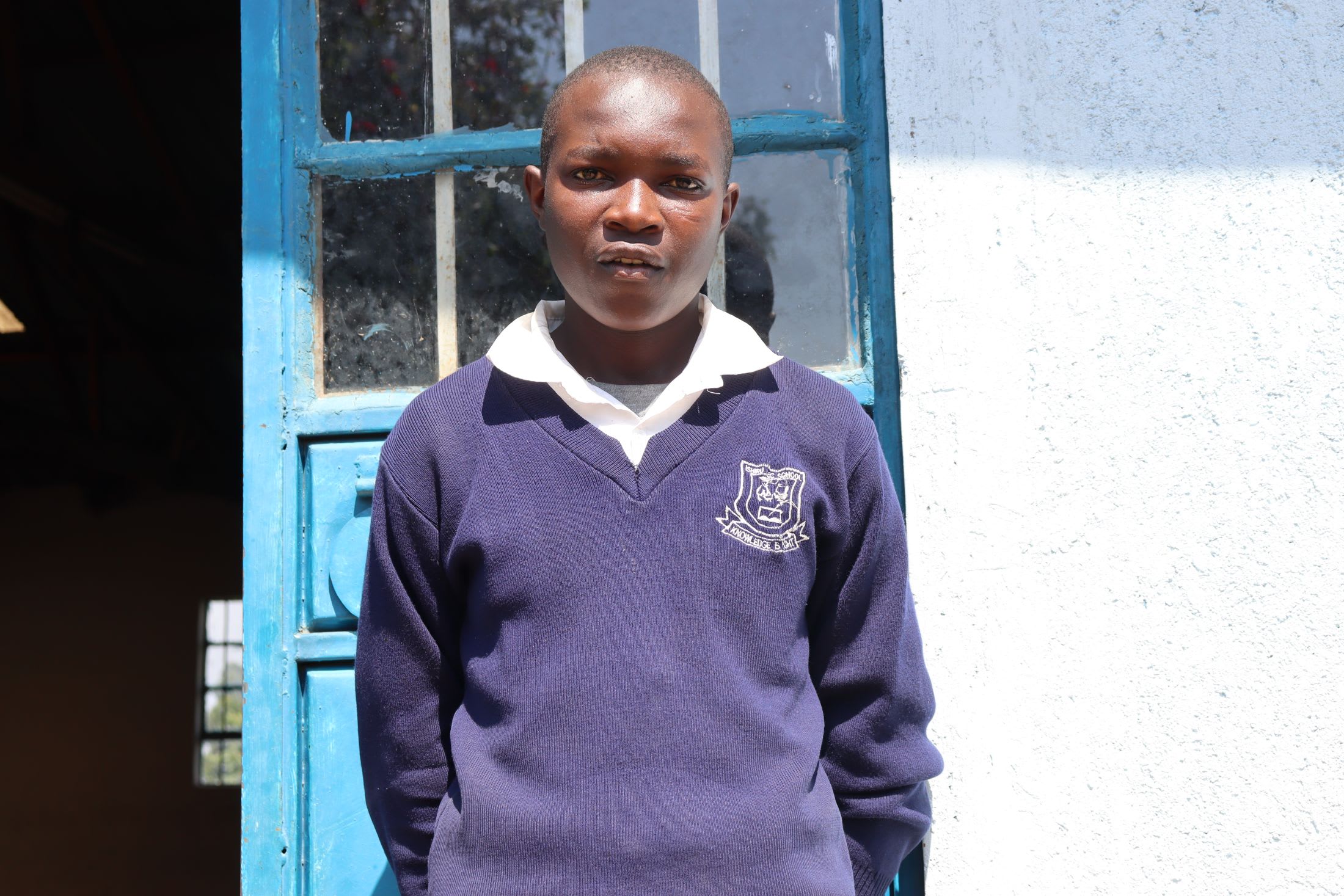
The students elected peers to lead their newly formed student health club. The student health club members will encourage good health and hygiene practices amongst their peers, teachers, and the larger community.

"Most of the students did not understand what menstrual hygiene was, including the girls themselves. At first, the class was very shy to open up and talk about it, but with the help of an illustration, they quickly picked up and shared some of their experiences. Personal hygiene was another interesting topic. The boys made the class laugh when most of them preferred to take a shower after every two days instead of a daily basis. But after the discussion, they promised to do better," shared Field Officer Patience Wanyonyi.

Learning to make soap.

"Soapmaking was very interesting. It was really fun to learn how to make this liquid soap that I get to use on a daily basis. I think we really have to do much better when it comes to the way we carry out hygiene practices. I hope that I will be able to be an example to others on matters [of] hygiene moving forward," said 18-year-old Marcel.

Marcel.

Thank you for making all of this possible!


November, 2024: Exciting Progress at Ishiru Secondary School!

We’re thrilled to share that, thanks to your generous support, significant change is coming for the entire Ishiru Secondary School. Construction has begun on the well, bringing them one step closer to having clean, reliable water.

But that's not all—during construction, we’re also providing vital health training. These sessions equip the school community with essential hygiene practices, ensuring that the benefits of clean water extend to lasting health improvements.

We’re so grateful for your role in making this possible. Stay tuned for more updates—soon, we’ll be celebrating the arrival of safe water at Ishiru Secondary School!


Project Photos


Contributors

Project Sponsor - Milliman IntelliScript