
Project Status


Project Type:  Borehole Well and Hand Pump

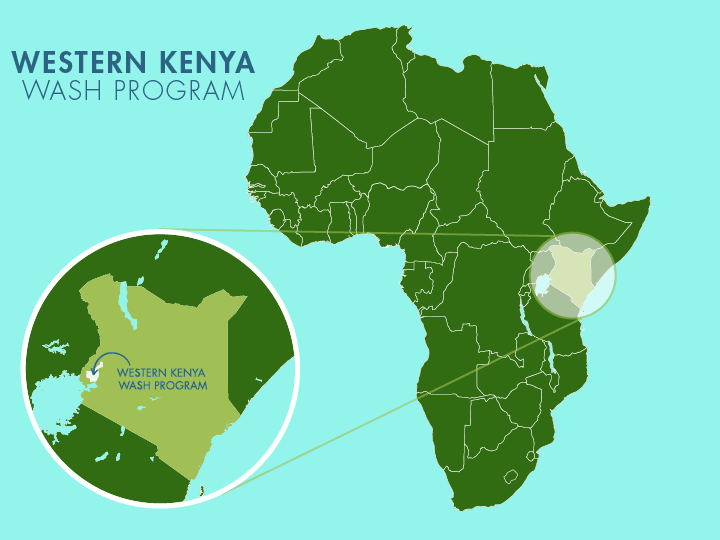
Regional Program: Western Kenya WaSH Program

Impact: 277 Served

Project Phase:  In Service - Feb 2026

Functionality Status:  Functional

Project Features


Click icons to learn about each feature.


Community Profile

The Emulele Primary School's 277 students and staff struggle to collect sufficient water. They have a few different available water sources—a protected dug well, a rain tank, and surface water students collect from a nearby stream—but none of them are reliable or provide safe water.

"The water users tried to solve their water crisis through [the] construction of a hand-dug [well] that has served them for many years. This hand-dug recently broke down, and it has incurred a lot of costs, causing a hindrance to the school budget. According to a response from the headteacher about the waterpoint, it is faulty, and they have spent a lot of money repairing the dug well from unreliable artisans," shared Field Officer Mitchelle Ijaza.

The insufficient dug-well.

"The collection area is damaged beyond repair, and the hand pump makes disturbing noises when pumping. It is also difficult to pump water. Therefore, it is time-consuming and unreliable. The protected dug well has not been in operation for the last year due [to] issues of seasonality and frequent breakdowns. The pumping strokes realize little water that is not enough to fill the containers within the shortest time to fulfill water needs in the school. This further causes overcrowding at [the] pump, forcing pupils to source [from] alternative water sources within and outside [of the] school compound."

Students collect water from the stream.

"The surface water is the only reliable source for Emulele Primary in terms of availability, but it is neither clean nor safe. This is a passing stream with contaminated water from upstream due to poor agricultural practices and other human activities, i.e., washing [and] feeding animals directly in the streams and stormwater from roads," said Mitchelle.

The last alternative is to use water from the rain tank, but the amount that can be collected during short rains quickly diminishes and is unsafe to drink.

"The water is only available during rainy seasons and is mostly used to clean the classrooms. The water is not safe for drinking," Mitchelle continued.

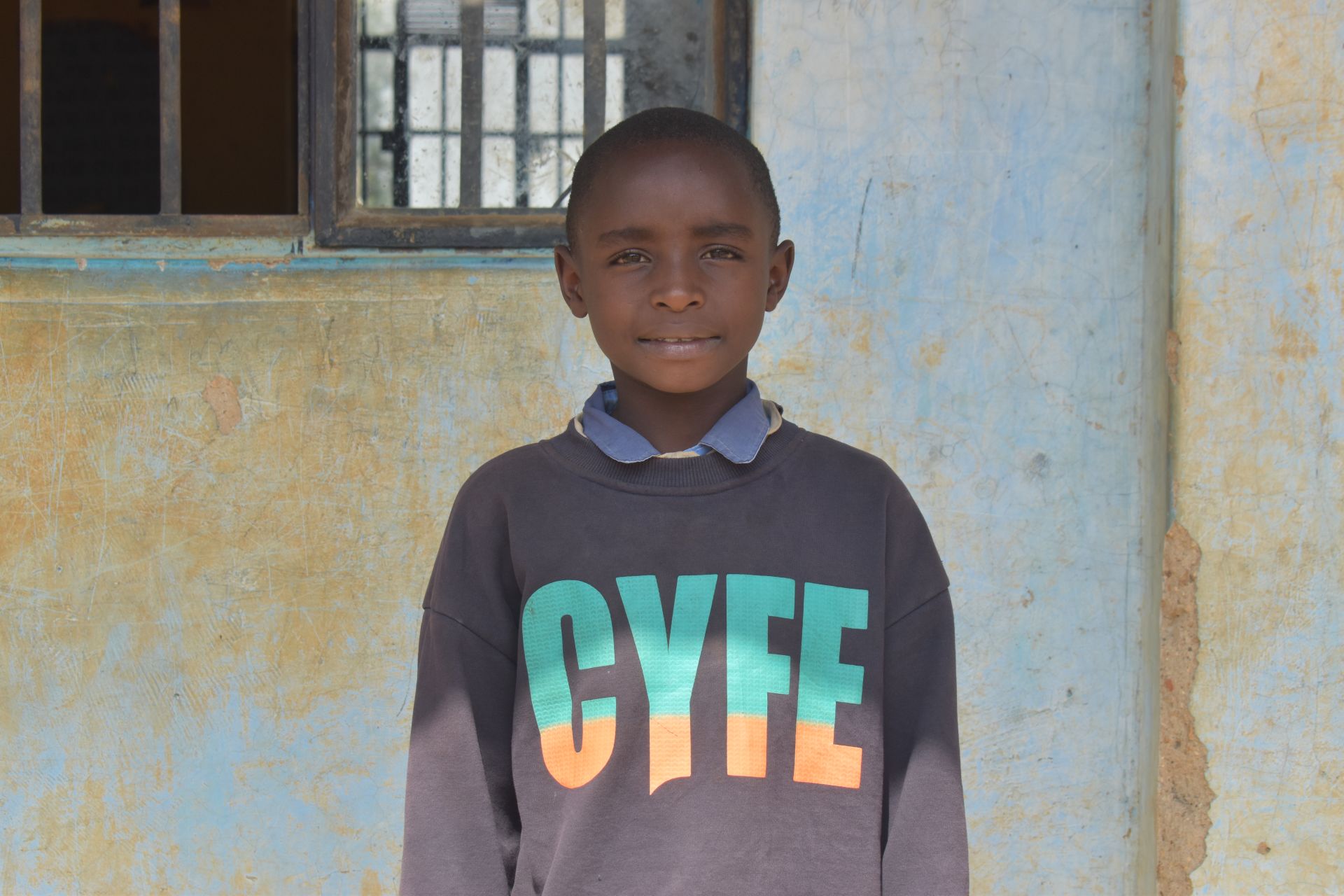
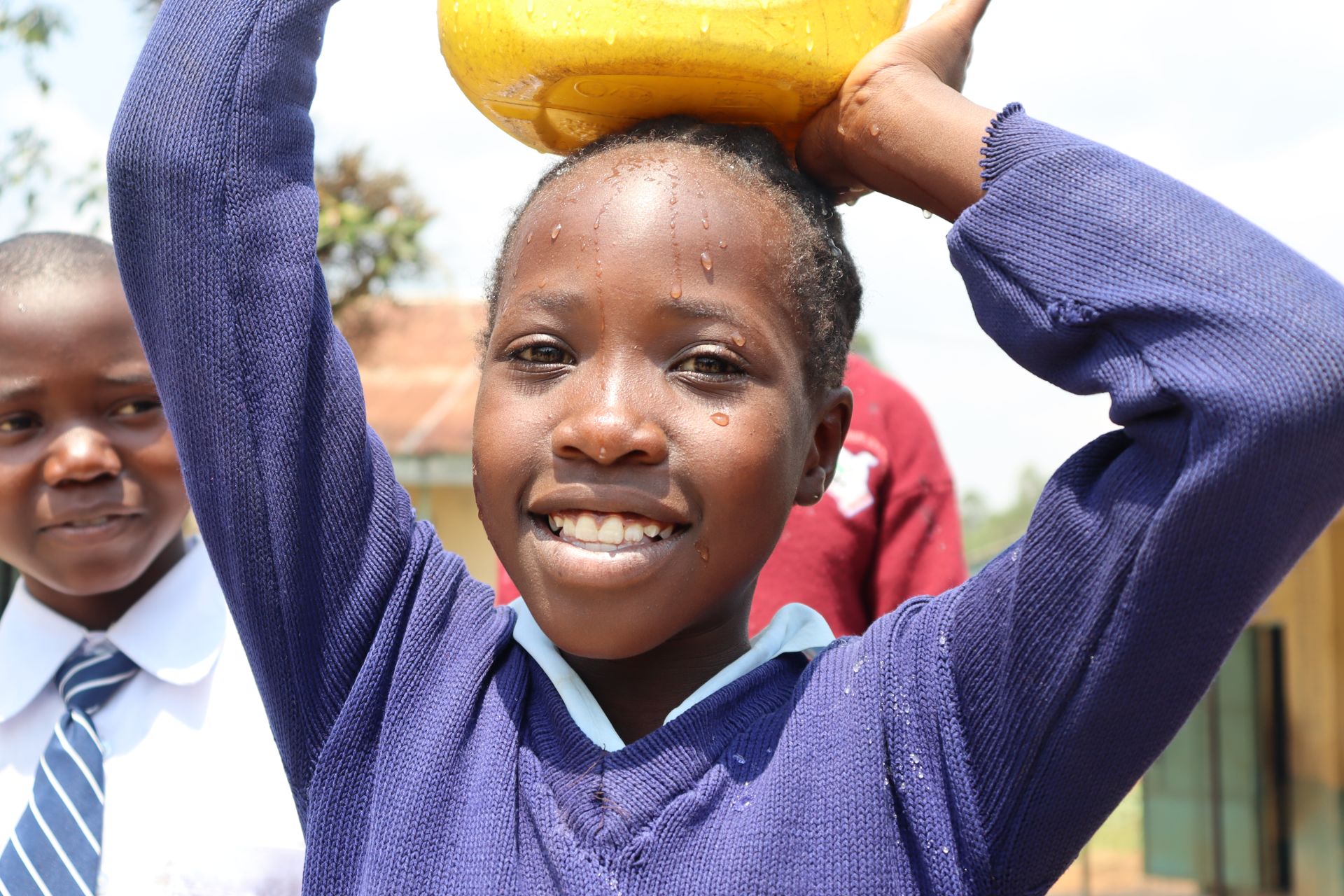
Ten-year-old Aisha bears the burden of collecting water every day while she should be learning.

"Fetching water affects my time at school, especially during morning hours, because we are required to clean classrooms and toilets before the classes begin. Fetching water consumes a lot of time because of limited water supply and long queues. Sometimes, I get pushed [to] the back of the queue, especially when Grade 7 and Grade 8 students come to fetch water. They do this saying they are supposed to be in class," said Aisha.

Aisha collects water at the stream.

"During cleaning days, we have to make long queues to fetch water to clean our classrooms and toilets. The water at the protected dug well is difficult to pump, so most students fetch water at the river outside the school compound. The surface water is far from the school, and the area is bushy and rocky, so it is not safe. The rainwater collection is mostly used for kitchen needs."

Aisha and her fellow students deserve a secure, convenient, and dependable water source, enabling them to focus on their education and build a better future, rather than spending valuable time and energy fetching water.

Steps Toward a Solution

Our technical experts worked with the local community to identify the most effective solution to their water crisis. They decided to drill a borehole well, construct a platform for the well, and attach a hand pump.

Well
Abundant water often lies just beneath our feet. Aquifers—natural underground rivers—flow through layers of sediment and rock, offering a constant supply of safe water. A borehole well is drilled deep into the earth to access this naturally filtered and protected water. We penetrate meters, sometimes even hundreds of meters, of soil, silt, rock, and more to reach the water underground. Once found, we construct a platform for the well and attach a hand pump. The community gains a safe, enclosed water source capable of providing approximately five gallons of water per minute. Learn more here!

Handwashing Stations
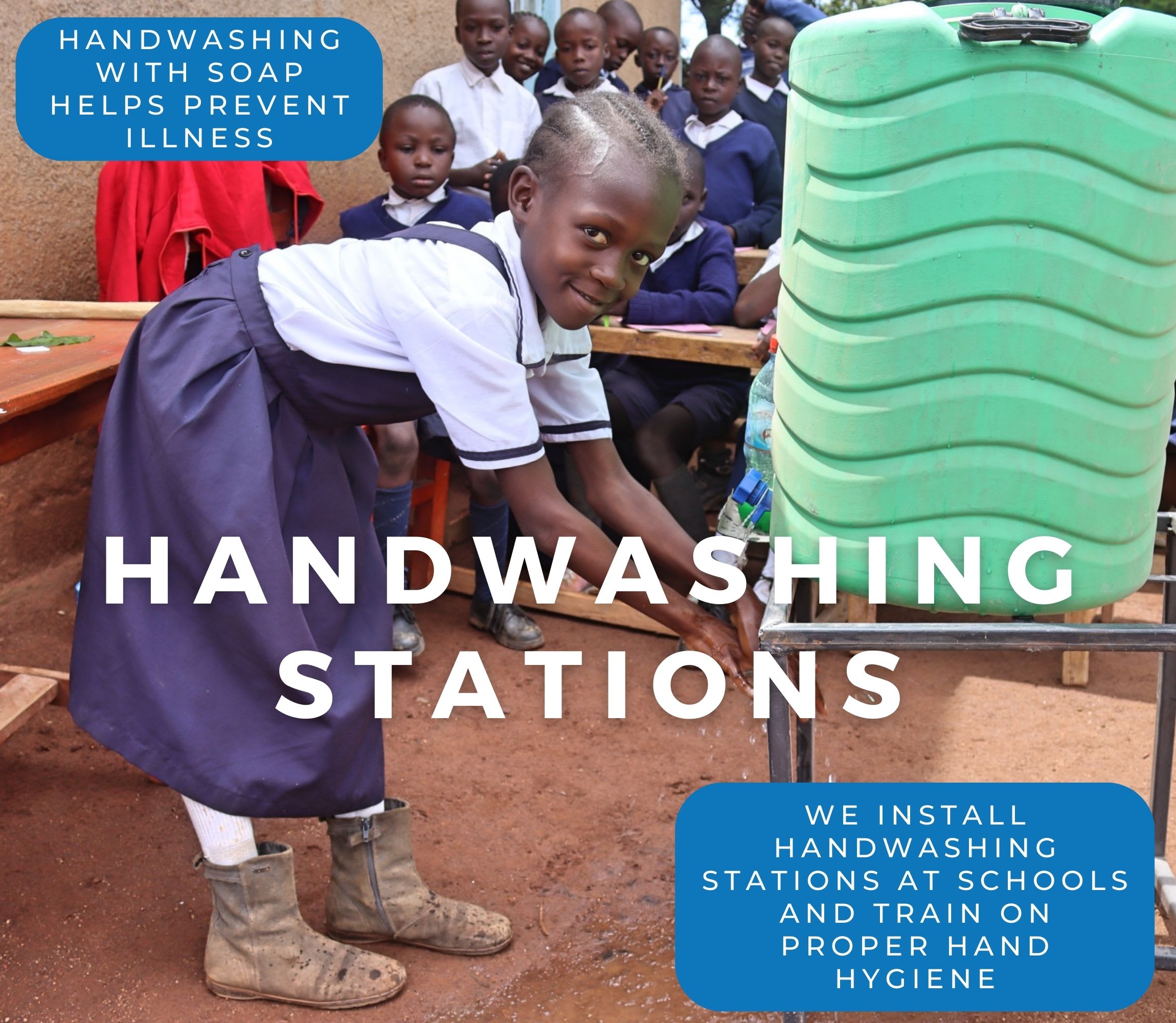
Alongside each water source, we install two gravity-fed handwashing stations, enabling everyone at the school to wash their hands. Handwashing is crucial for preventing water-related illnesses within the school and community. Student “health clubs” maintain the stations, fill them with water, and supply them with soap, which we often teach them how to make.

Latrines
We will construct two Ventilated Improved Pit (VIP) latrine blocks designed to prevent fecal disease transmission. Each latrine features a cement floor, making it easy to use and clean regularly. Three stalls will serve the girls, and three will serve the boys.

School Education & Ownership
Hygiene and sanitation training are integral to our water projects. Training is tailored to each school's specific needs and includes key topics such as proper water handling, improved hygiene practices, disease transmission prevention, and care of the new water point.

To ensure a lasting impact, we support forming a student health club composed of elected student representatives and a teacher. These clubs promote hygiene practices schoolwide and keep handwashing stations well-stocked. This student-led model encourages a sense of ownership and responsibility.

Safe water and improved hygiene habits foster a healthier future for everyone in the school and the surrounding community.
Project Updates


February, 2026: Emulele Primary School Well Complete!

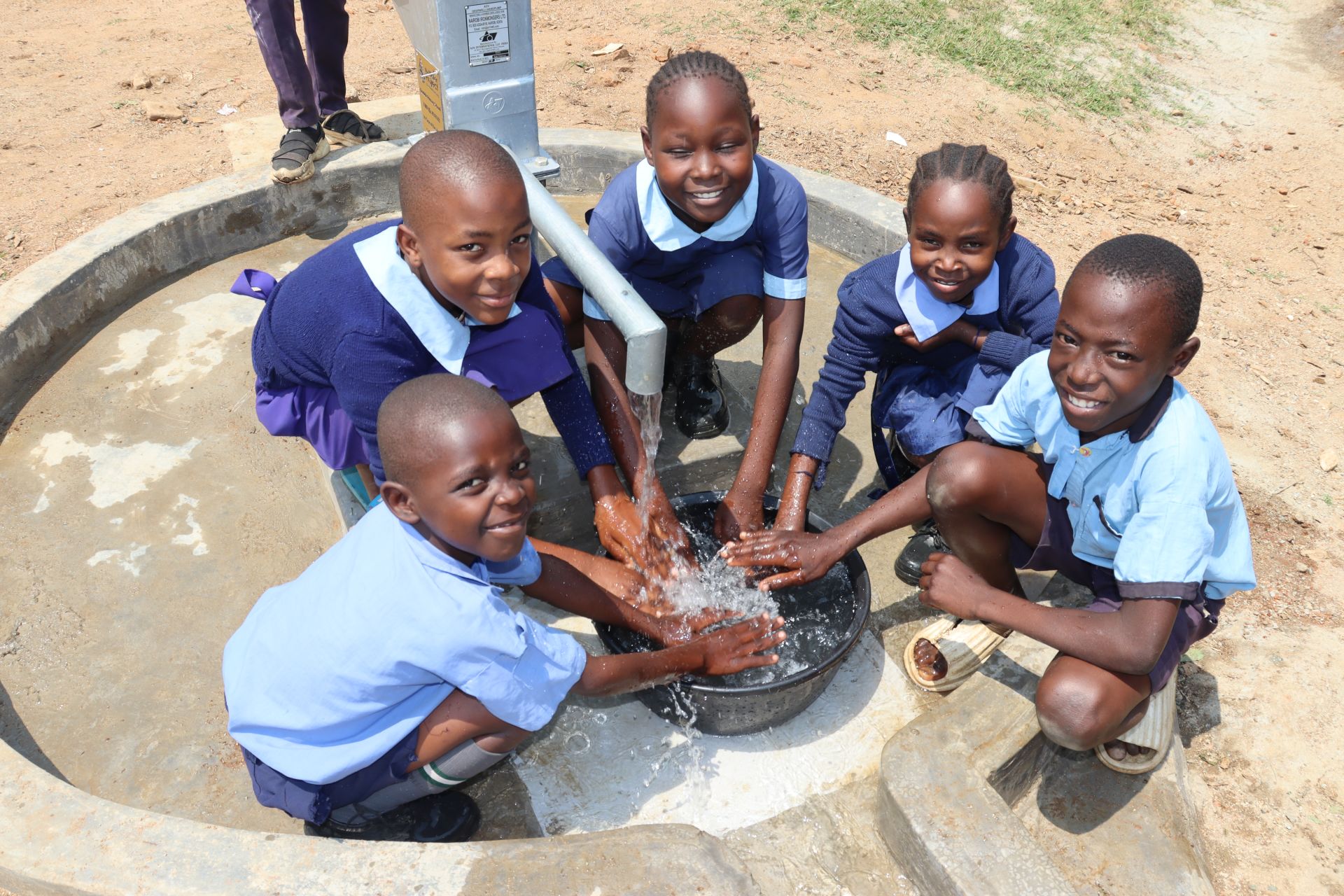
Your contribution has given access to clean water for the Emulele Primary School in Kenya, thanks to the completion of their borehole well! Clean, flowing water is already making a difference in the lives of the students and staff. This will provide them with a reliable water source for their daily needs.

We installed new latrines and handwashing stations, then trained students and staff on improved sanitation and hygiene practices. Together, these components will unlock the opportunity for these students to thrive!

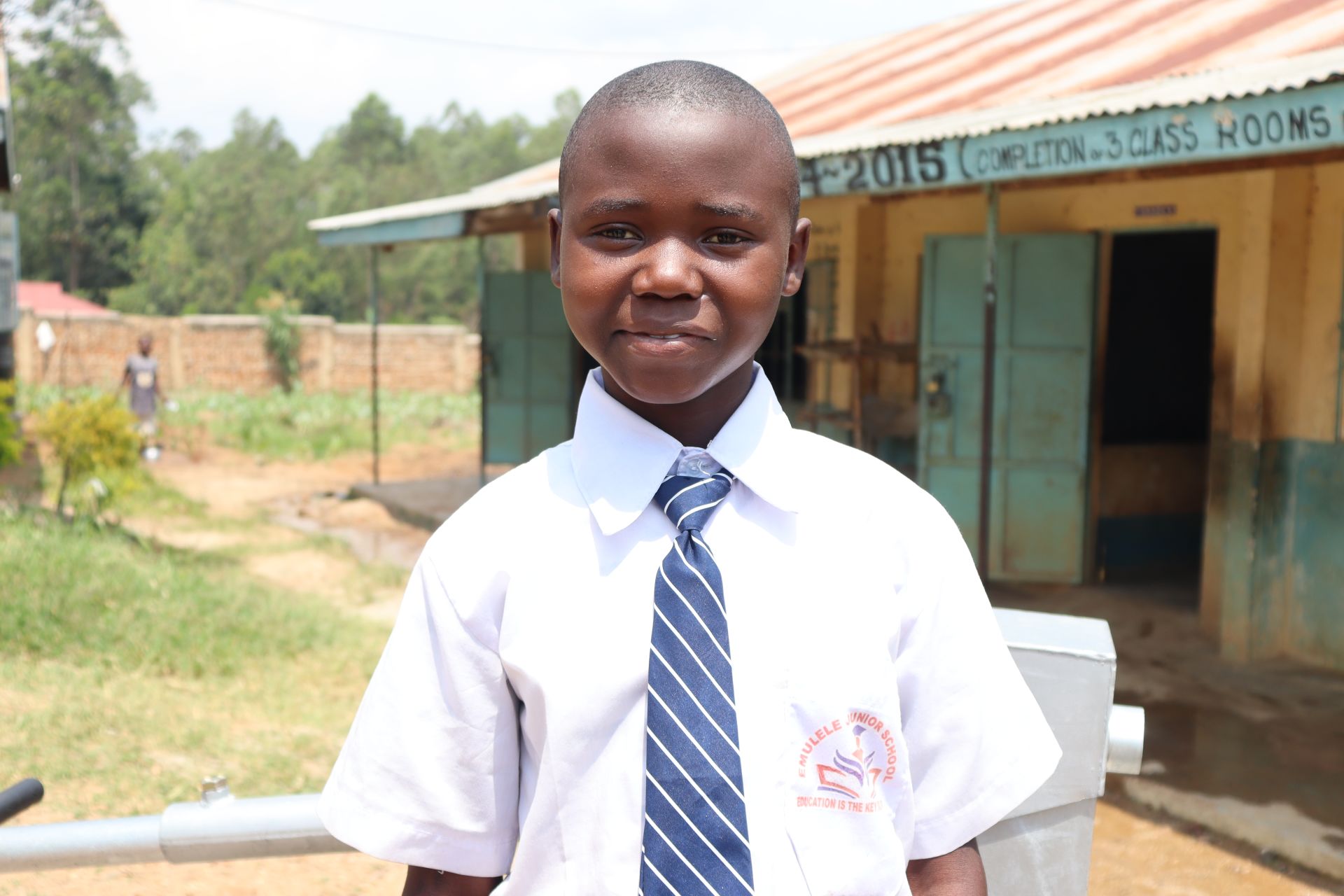
12-year-old Mitchell shared what the well means to her: "Reliable water will improve things for me. I can comfortably access clean, safe drinking water when I'm in school. I can use the water to clean the classrooms and the latrines. [I can] wash my hands when they are dirty, and this will improve my health at large. Some time back, we would be sent by the teacher to get water for the cook, but now there will be no more leaving the school to get water because the cook can get water by herself now from the borehole. I have also wanted to have a good future, and I believe [that] by having more time for my studies, I will improve my academics and get better results."

12-year-old Mitchell.

Teachers were just as excited as the students about the new well on campus!

Annie Mundia, a teacher at the school, said, "There will be better academic performance for the school as less time will be used to fetch water, so school children will concentrate more on schoolwork. My students will also have more time to nurture their talents."

Teacher Annie Mundia.

How We Got the Water Flowing

The first step was to conduct a hydrogeological survey to determine the best site for the school's well. Once we found the perfect spot, the team obtained government approval to begin drilling.

Parents, staff, and students all contributed to the well’s success from the start! To prepare for the well, the school collected fine sand and water for cement-making. When everything was ready, our drill team and staff arrived at the school to begin work.

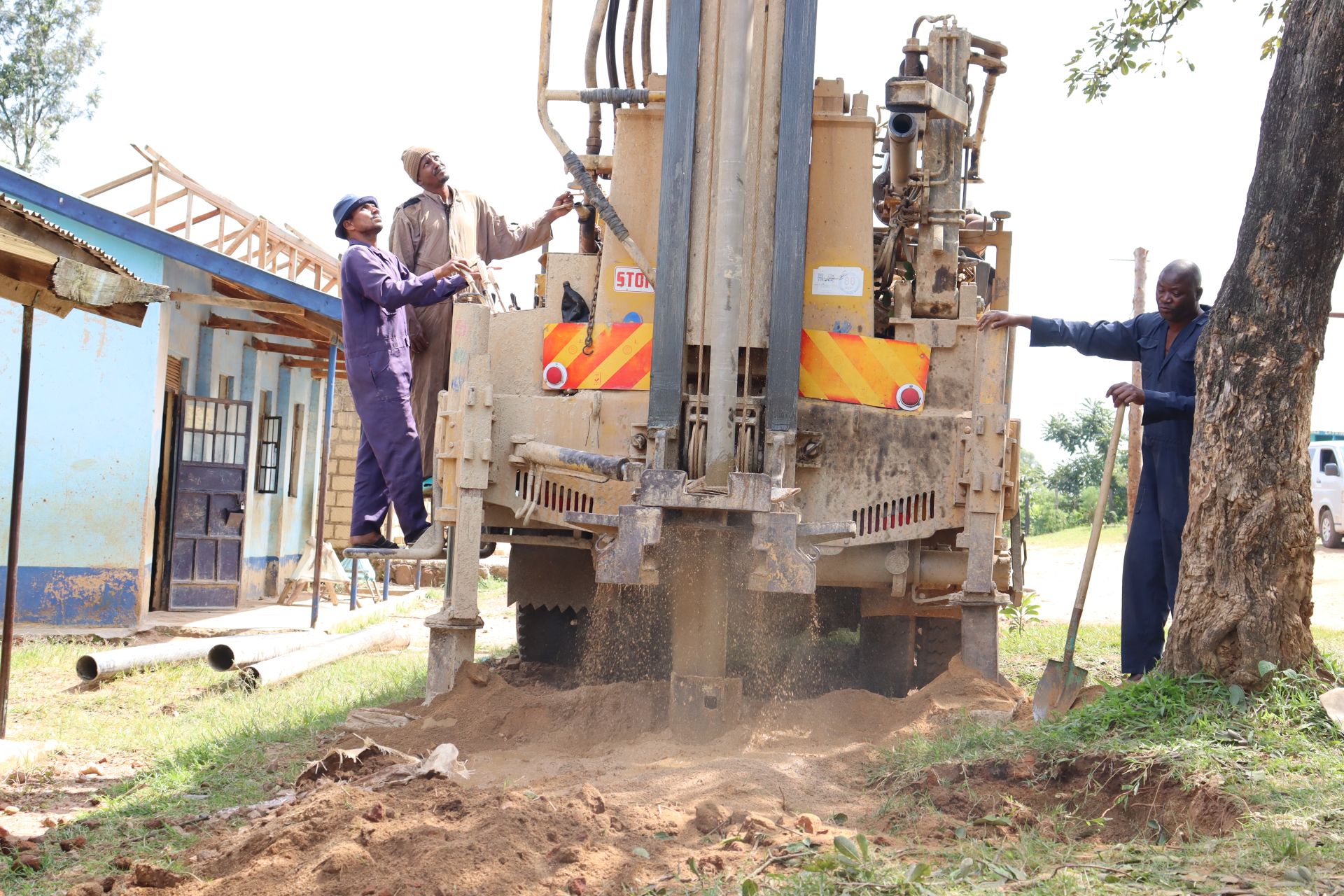
Drilling begins!

Drilling started with excitement in the air. We continued drilling to reach a final depth of 106 meters with a final static water level of 5.9 meters.

The drilling process can take up to three consecutive days to complete due to this region’s hard bedrock, so the team set up a camp where they could rest and refuel. The school’s kitchen staff and parents helped provide meals for the team, while the school provided a safe place for the artisans’ accommodations and storage of their materials.

Installing casing.

Once we reached the optimum depth, the team inserted permanent casing, then bailed out the dirty water at the bottom of the well. The workers installed pipes, flushed them, tested the well’s yield, and chlorinated the water.

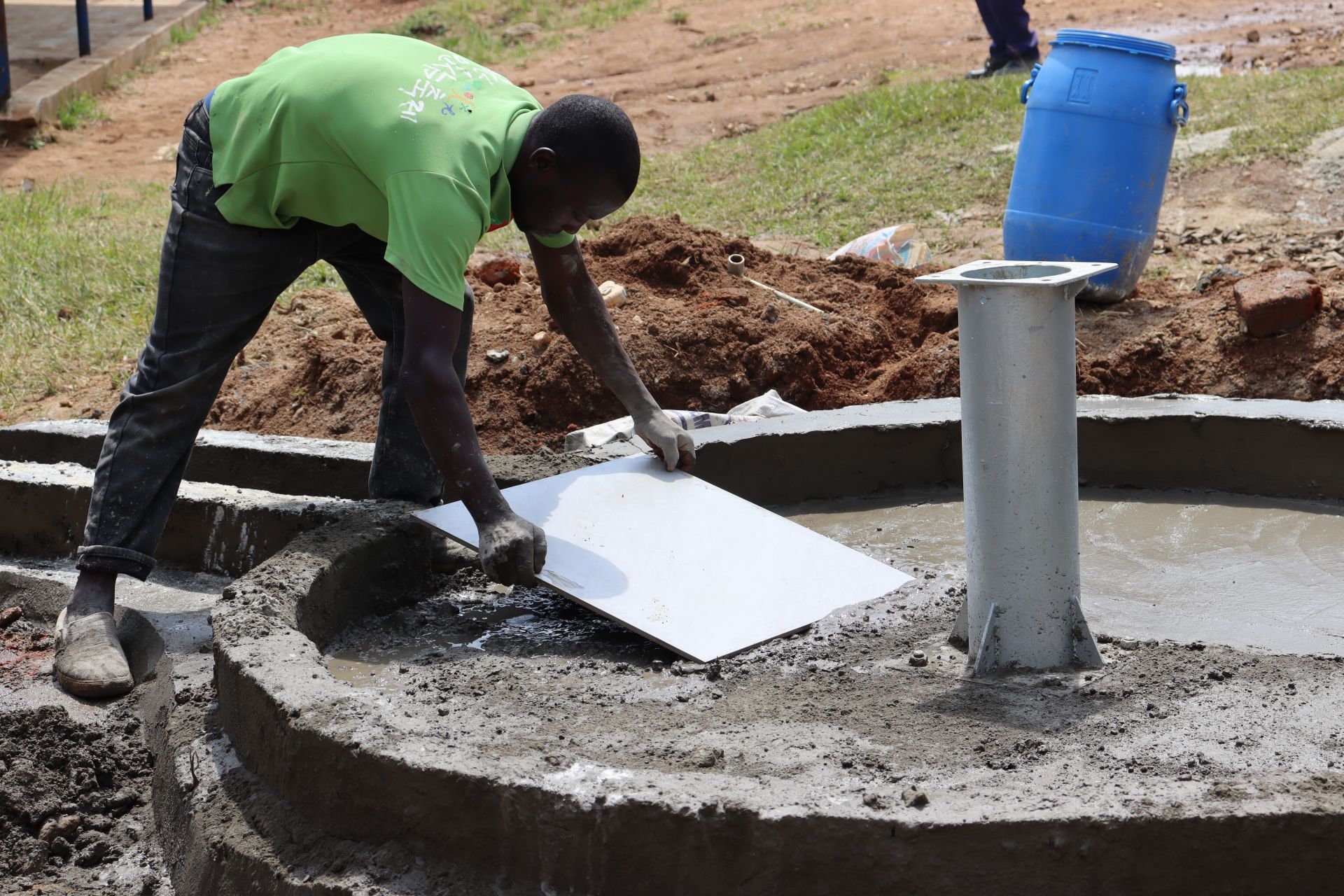
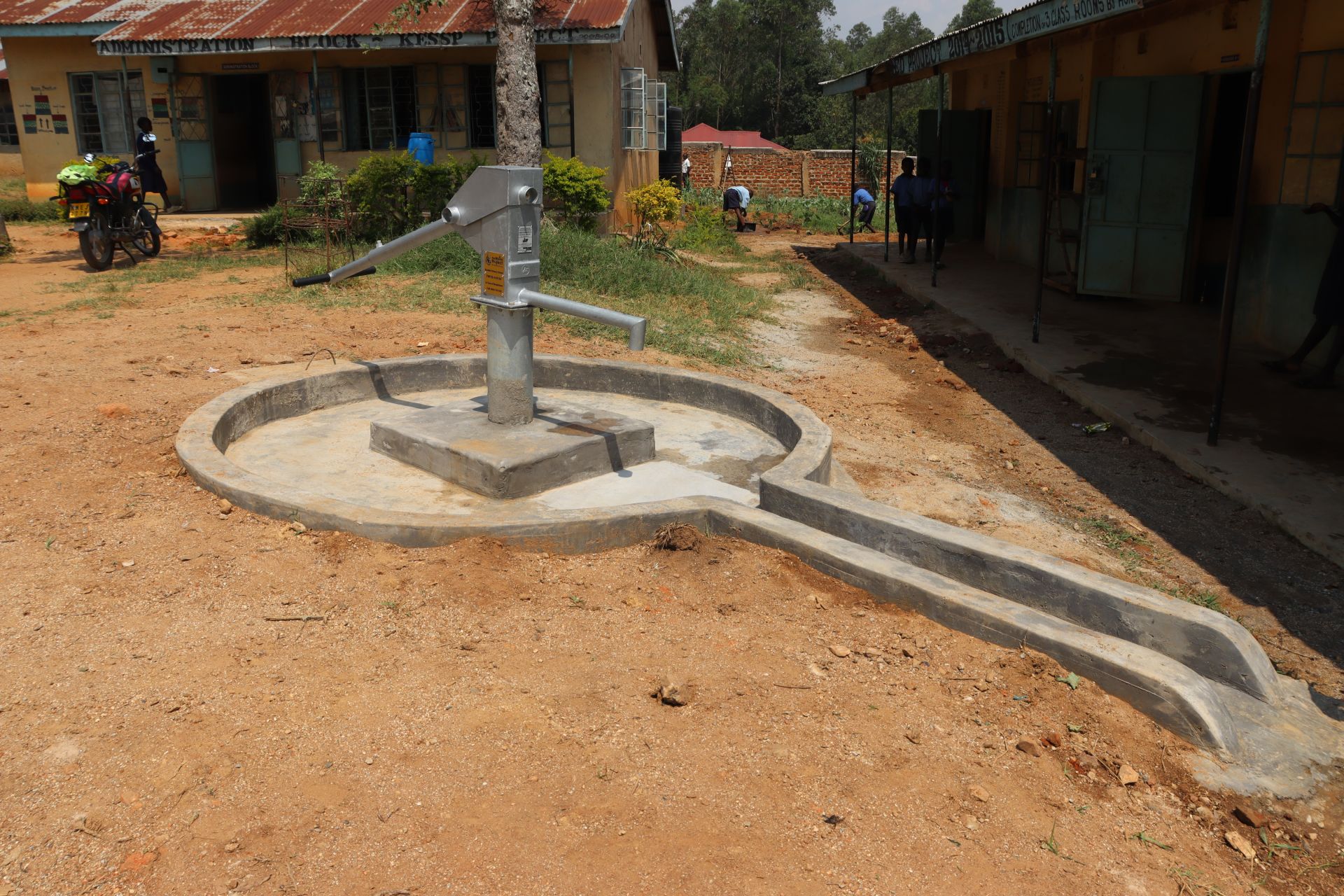
We constructed a cement well pad to seal it off from any ground-level contaminants. Tiles were installed beneath the spout to protect the cement from the erosive force of the water. We included a short drainage channel and a soak pit to prevent standing water.

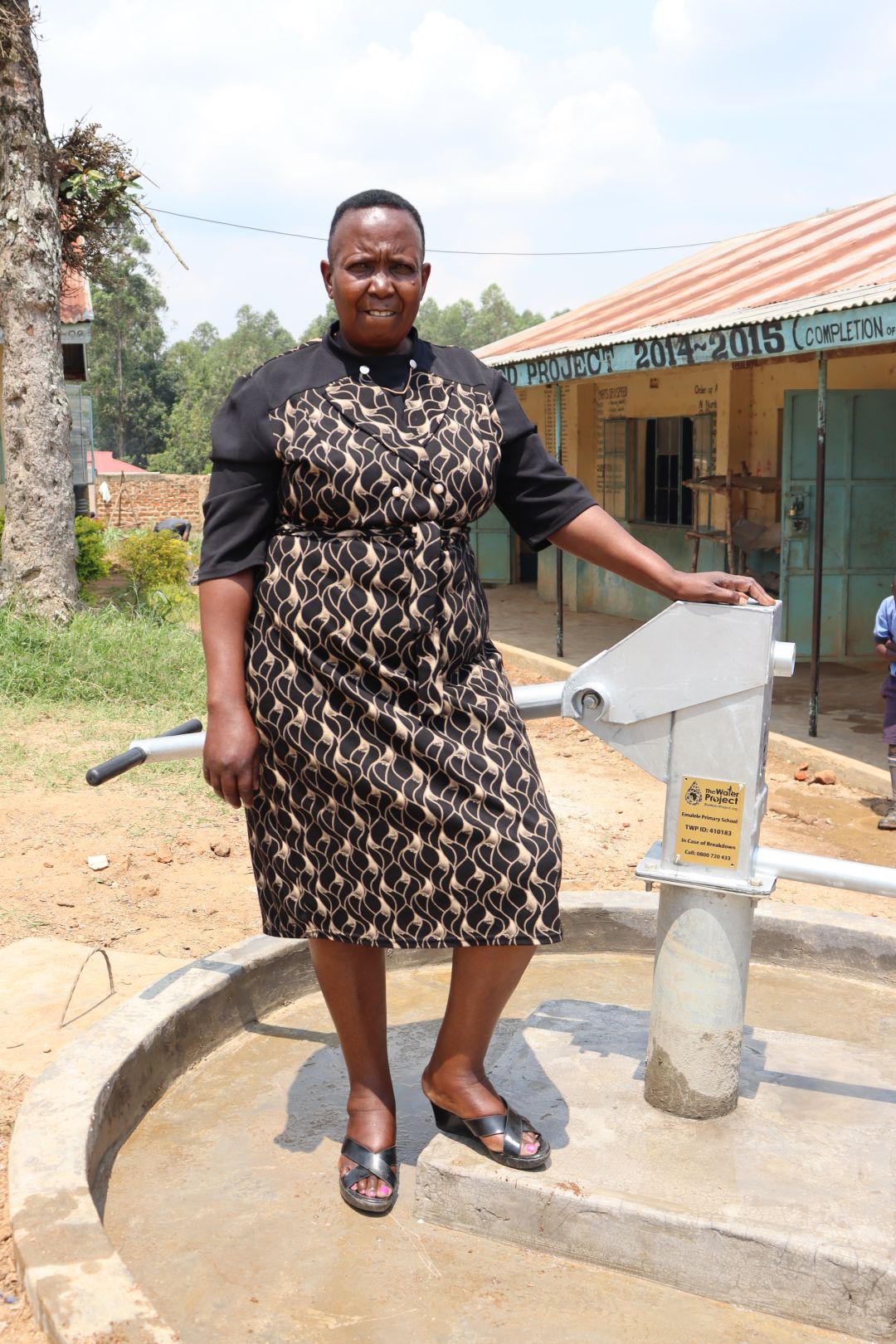
When the well pad was cured, we installed a new stainless steel hand pump and sampled the water for a quality test. The results showed that this water was safe for drinking!
We officially gave ownership of the new borehole to the school’s students and teachers.

Students and staff celebrated the presence of clean water on campus. The event provided an excellent opportunity to acknowledge the school administration and students, and to remind them of our continued support. Happiness, thanksgiving, and appreciation were the order of the day, flowing in all directions.

VIP Latrines

Students at their new latrines!

This project funded the installation of six new ventilated improved pit (VIP) latrines. These new latrines feature cement floors designed for easy use and cleaning. They have locking doors for safety and privacy, as well as vents to keep air flowing out through the roof. With a well right on school property, there should be enough water to keep them clean.

Handwashing Stations

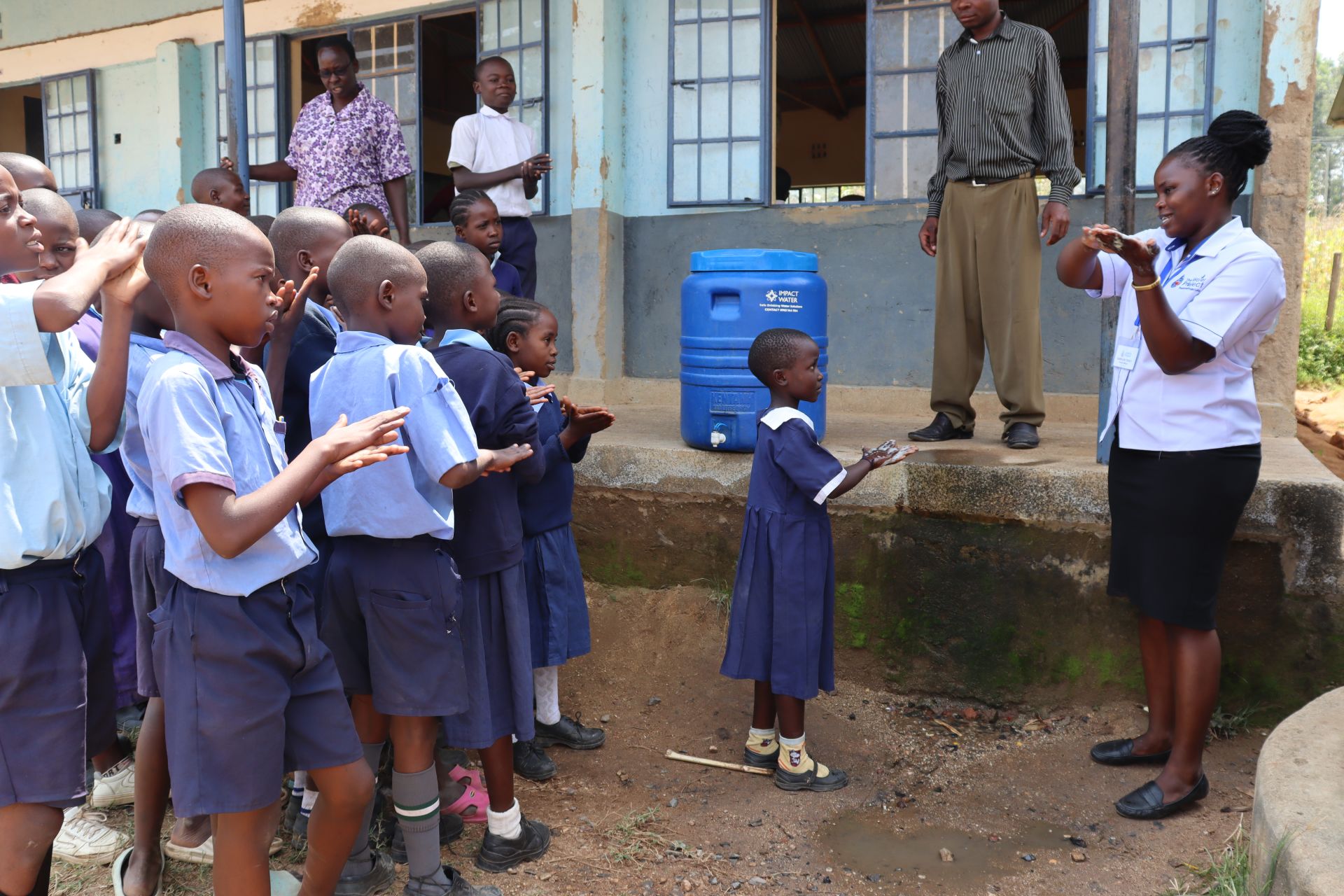
Training at the new handwashing station!

We set up two handwashing stations outside the latrines. Student Health Club members will teach other students how to wash their hands at the stations properly, refill the stations with water, and ensure that soap is always available.

School Education

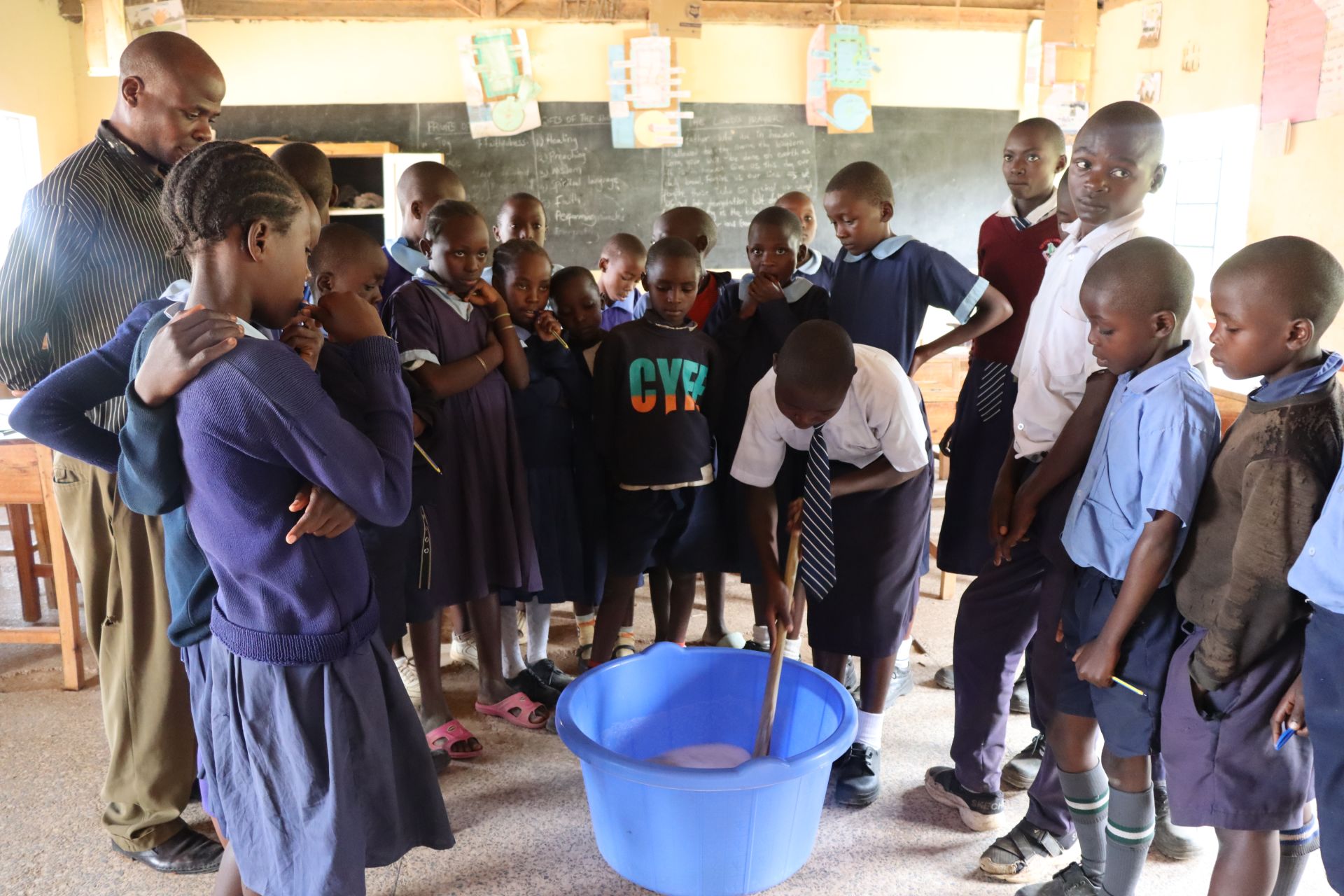
We scheduled hygiene and sanitation training with the school’s staff. When the training day arrived, facilitators Carolyne, Amos, and Wesley deployed to the site to lead the event. 25 students and teachers attended the training.

Training in session.

We emphasized personal, menstrual, oral, and environmental hygiene. Proper water handling, soap-making, the ten steps of handwashing, and the importance of primary health care were discussed. We covered disease prevention, teen pregnancy, and child rights. Waterpoint, latrine, and handwashing station operation and maintenance, as well as leadership and governance, were discussed. By the end of the training, each pupil understood their role in sustaining clean water and good health within their school community.

The students elected peers to lead their newly formed student health club. The student health club members will encourage good health and hygiene practices amongst their peers, teachers, and the larger community.

Dennis Kombo is nine years old. He is a member of the student health club, who is responsible for helping the school keep the waterpoint clean and functioning. He shared what impacted him most from the hygiene training.

Dennis.

"I have a better understanding of personal hygiene practices like having my hair well kept, bathing every day, wearing clean clothes, and washing my beddings at least once per week. Now I can also help my mother in cleaning the compound and the house, and also make sure that the sanitary areas in the home, like the latrine, are clean and safe from flies and bad smells," Dennis said.

"I am courageous, and I know that from now onwards, I will no longer have stomach aches because I have learnt how to wash my hands with clean and running water, unlike what I would do at home with water in a basin, which we would use together with my parents and siblings to wash hands. In school, we can now access clean water that we can use to clean our toilets, mop the classrooms, and wash the drinking water filters with enough clean water," Dennis celebrated.

Thank you for making all of this possible!


Update photo


December, 2025: Exciting Progress at Emulele Primary School!

We’re thrilled to share that, thanks to your generous support, significant change is coming for Aisha and the entire Emulele Primary School. Construction has begun on the well project, bringing them one step closer to having clean, reliable water.

But that's not all—during construction, we’re also providing vital health training. These sessions equip the community with essential hygiene practices, ensuring that the benefits of clean water extend to lasting health improvements.

We’re so grateful for your role in making this possible. Stay tuned for more updates—soon, we’ll be celebrating the arrival of safe water at Emulele Primary School!


Project Photos


Project Type

Abundant water is often right under our feet! Beneath the Earth’s surface, rivers called aquifers flow through layers of sediment and rock, providing a constant supply of safe water. For borehole wells, we drill deep into the earth, allowing us to access this water which is naturally filtered and protected from sources of contamination at the surface level. First, we decide where to drill by surveying the area and determining where aquifers are likely to sit. To reach the underground water, our drill rigs plunge through meters (sometimes even hundreds of meters!) of soil, silt, rock, and more. Once the drill finds water, we build a well platform and attach a hand pump. If all goes as planned, the community is left with a safe, closed water source providing around five gallons of water per minute! Learn more here!


Contributors

3 individual donor(s)