 Protected Dug Well
 Rehabilitation Project











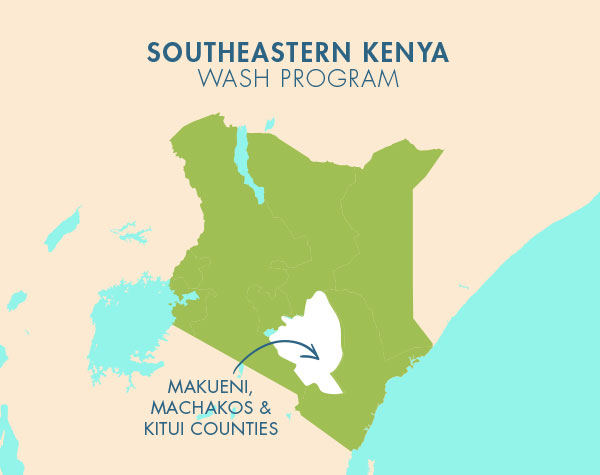
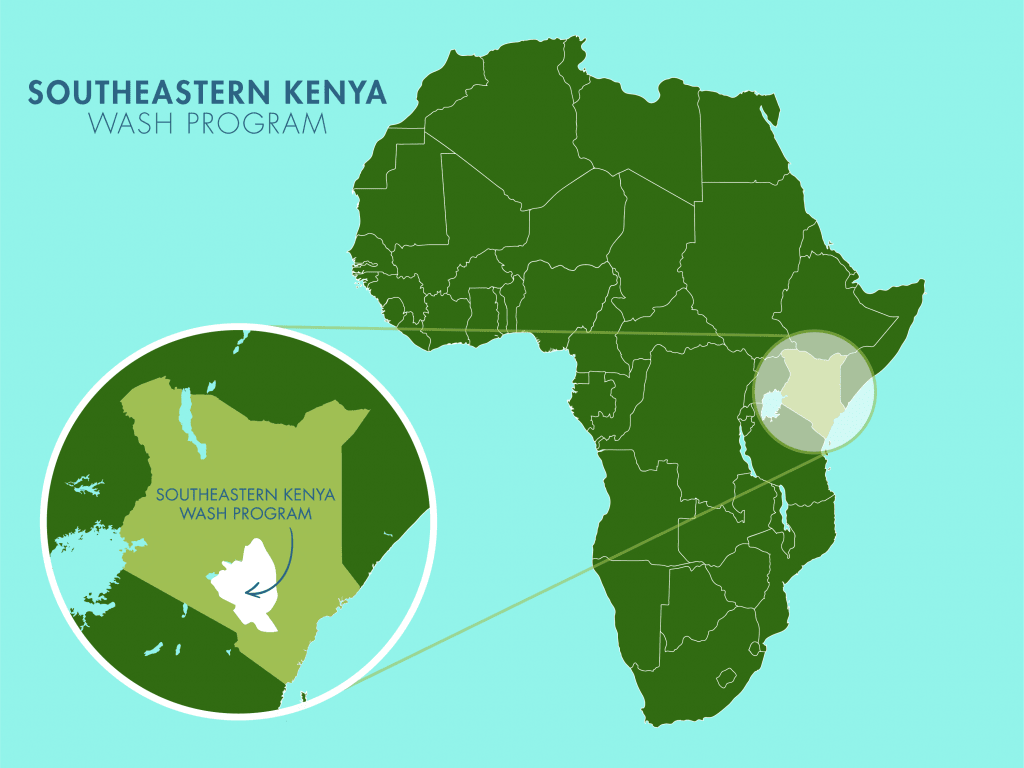
Museesu Community counts 450 residents in the steep, dusty hills of southwestern Kenya. Two protected dug wells already serve parts of the community, but households further out still rely on scoop holes — shallow, exposed pits shared with grazing livestock, where the water often runs brown. For the community's children, fetching water competes with school, and too often it wins.
Mutua, 16, spends about two hours a day fetching water. "Fetching water takes a long time because the nearest protected dug wells are quite far from my home," he explains. "During the dry season, many people depend on the same water points because other sources, especially the scoop holes, either dry up or become unsafe to use. As a result, there are usually long queues, and water is rationed so that everyone can get at least a small amount. Between walking the long distance, waiting for my turn, and carrying the water back home, I can spend several hours just collecting water." Even the wait isn't fair — "especially during the dry season," he says, "older people or those who arrive with several containers ask to fetch before me, and I have to wait even longer."
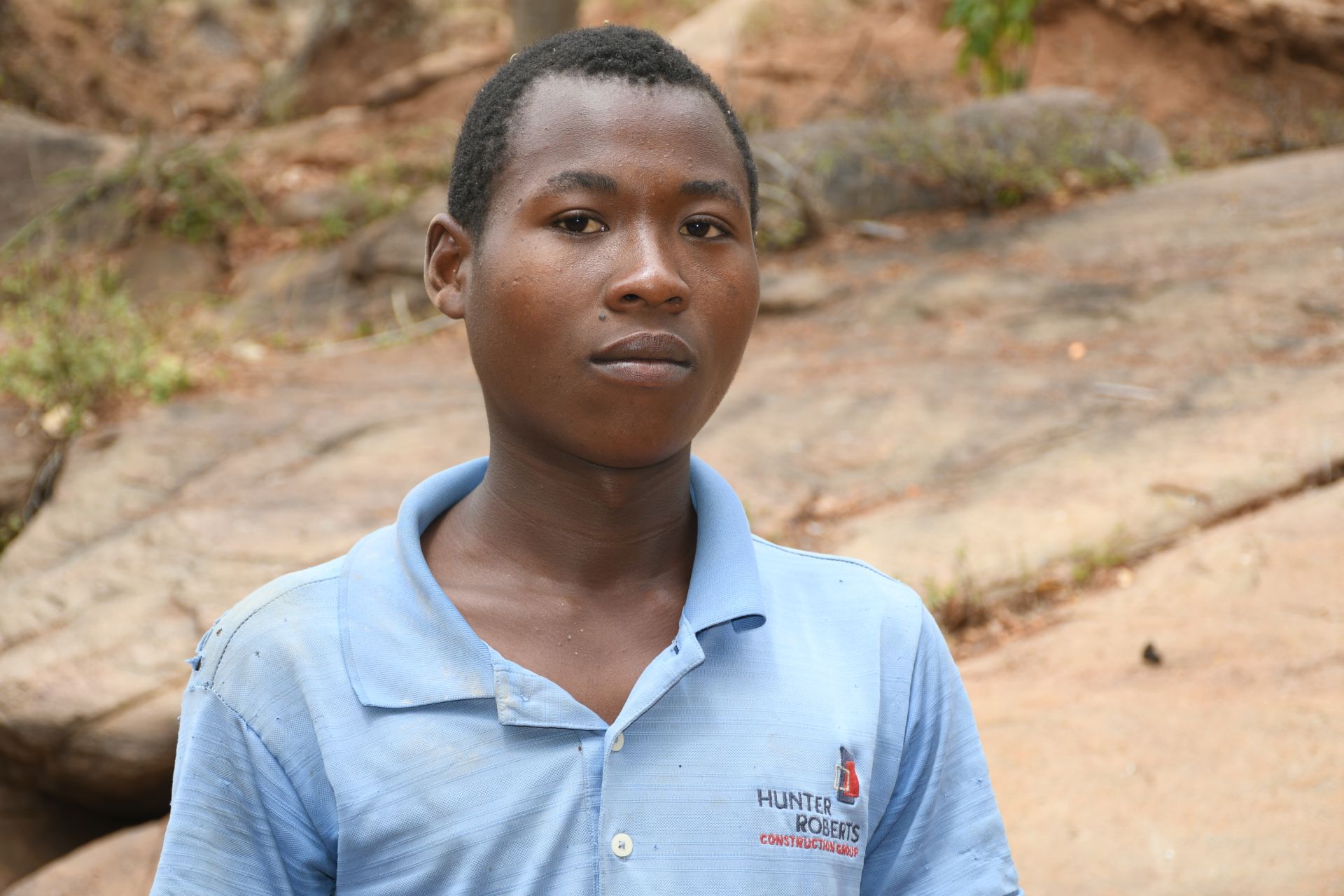
Mutua.
The cost shows up in his classroom. "When I spend many hours fetching water before or after school, I become tired and have less time to revise my notes or complete my homework," Mutua says. "Sometimes it is difficult to concentrate in class because of the physical exhaustion." He holds a clear dream — "My dream is to become a mechanic," he says, "I enjoy learning how machines work, and I hope to acquire the skills needed to repair vehicles and motorcycles so that I can earn a living and support my family" — but knows it depends on the time he doesn't currently have.
A more reliable water point would give that time back. "A new sand dam would increase the amount of water available in our community and reduce pressure on the existing protected dug wells," Mutua says. "It would mean fewer people would have to rely on contaminated scoop holes, and the distance I walk to fetch water would be reduced. Having more reliable access to clean water would lower the risk of diseases and reduce the physical strain of making long trips carrying heavy containers." Freed from hours of walking, he says simply, "I would dedicate more time to my studies because I want to perform well in school and achieve my dream of becoming a mechanic."
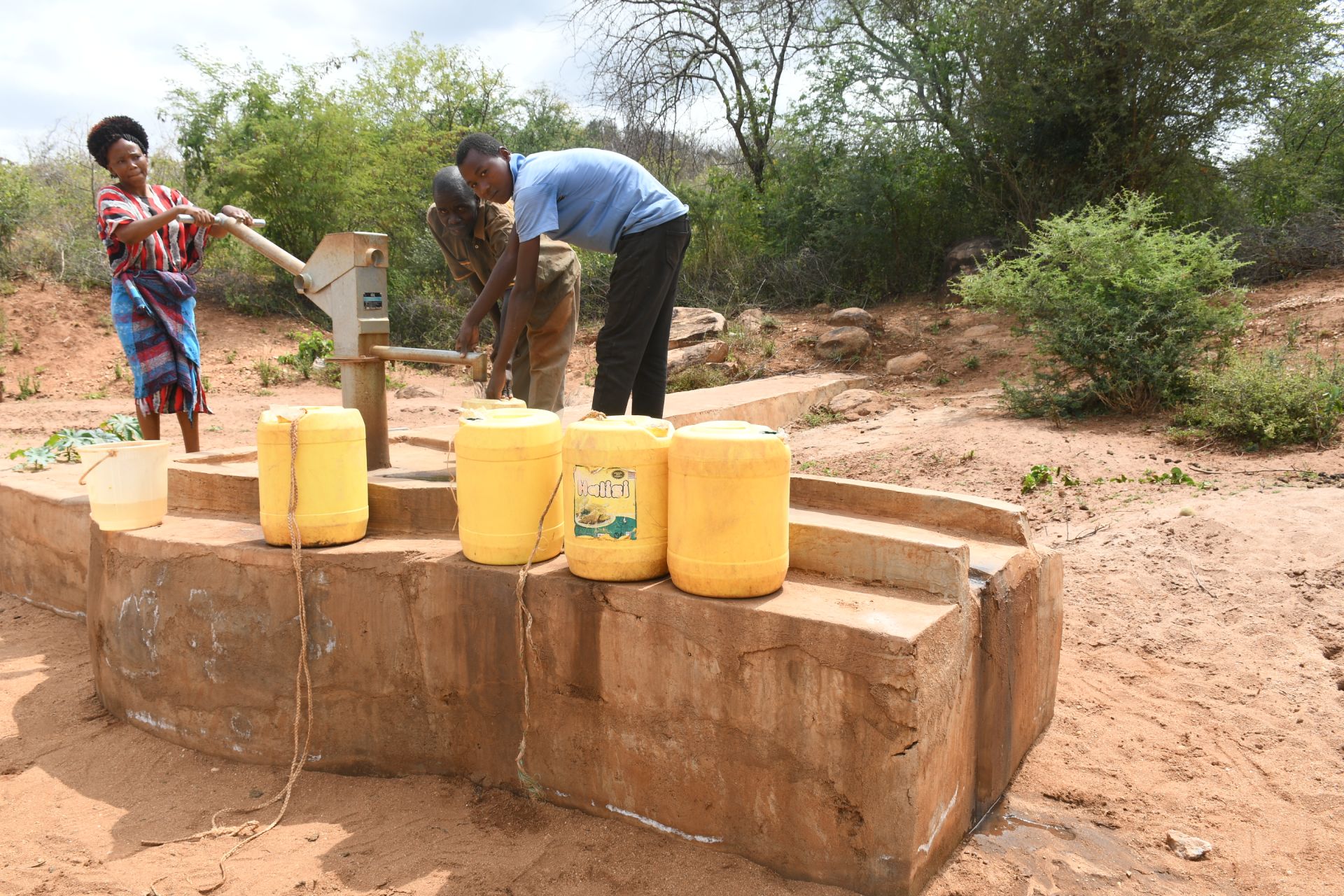
Mutua collects water from the distant well.
Asked how it feels to be sent for water, Mutua doesn't dress it up. "I feel discouraged because I know it will take a long time before I return home," he says. "I wish our community had enough water close to our homes so that young people like me could spend more time studying, developing our skills, and helping our families instead of searching for water every day." For a 16-year-old with a clear plan for his life, that wish is a request for the chance to pursue it.
Solving the water crisis in this community will require a multifaceted system that will work together to create a sustainable water source that will serve this community for years to come.
Steps Toward a Solution
Our technical experts worked with the local community to identify the most effective solution to their water crisis. Together, they decided to construct a protected dug well and sand dam.
Protected Dug Well Near A Sand Dam
Once a sand dam is installed and has time to mature by gathering sand and silt, groundwater increases significantly in the entire area surrounding the project. This provides a reliable source of groundwater that wasn’t possible before. As a result, wells can be constructed to take advantage of the water stored and filtered in the collected sand.
During the construction of the protected dug well, we will build a platform for the well and attach a hand pump. The community will gain a safe, enclosed water source capable of providing approximately five gallons of water per minute.
This protected dug well will be connected to a sand dam to obtain water.
Community Education & Ownership
Hygiene and sanitation training are integral to our water projects. Training is tailored to each community's specific needs and includes key topics such as proper water handling, improved hygiene practices, disease transmission prevention, and care of the new water point. Safe water and improved hygiene habits foster a healthier future for everyone in the community.
Encouraged and supported by our team's guidance, the community elects a water user committee representative of its diverse members. This committee assumes responsibility for maintaining the water point, organizing community efforts, and gathering fees to ensure its upkeep.