
Joy and Dignity for Students and Teachers at Ngungani Secondary School!

January, 2026

Last year, your gift unlocked the potential for a brighter future for Damaris Kithome and her school. Since then, she and the Ngungani Secondary School of 167 students and teachers have had clean, reliable water. Your contribution has made a significant impact. Thank you for making a difference!

"I’m most proud of the positive change in our learning environment. Our students are healthier, more motivated, and our school feels like a safe and organized place. The clean water has truly transformed our school," shared Ms. Kithome.

Before the Rain Tank Installation

Like many teachers in Kenya, Damaris Kithome, 31, is responsible for supervising her students as they collect water to meet their daily water needs. Before last year’s water intervention, this task stole her time.

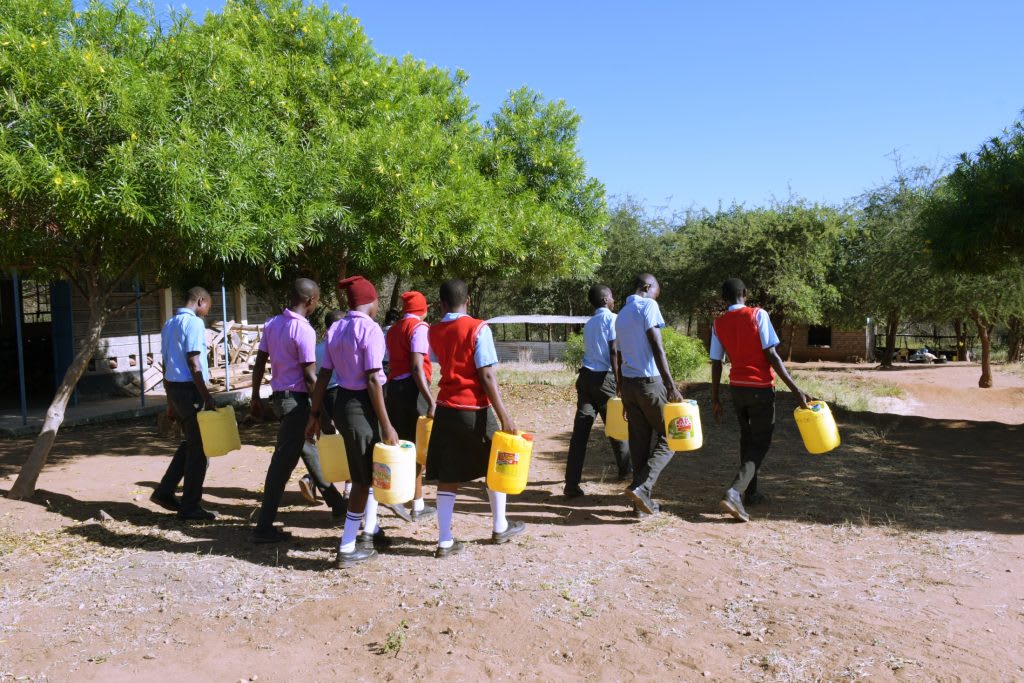
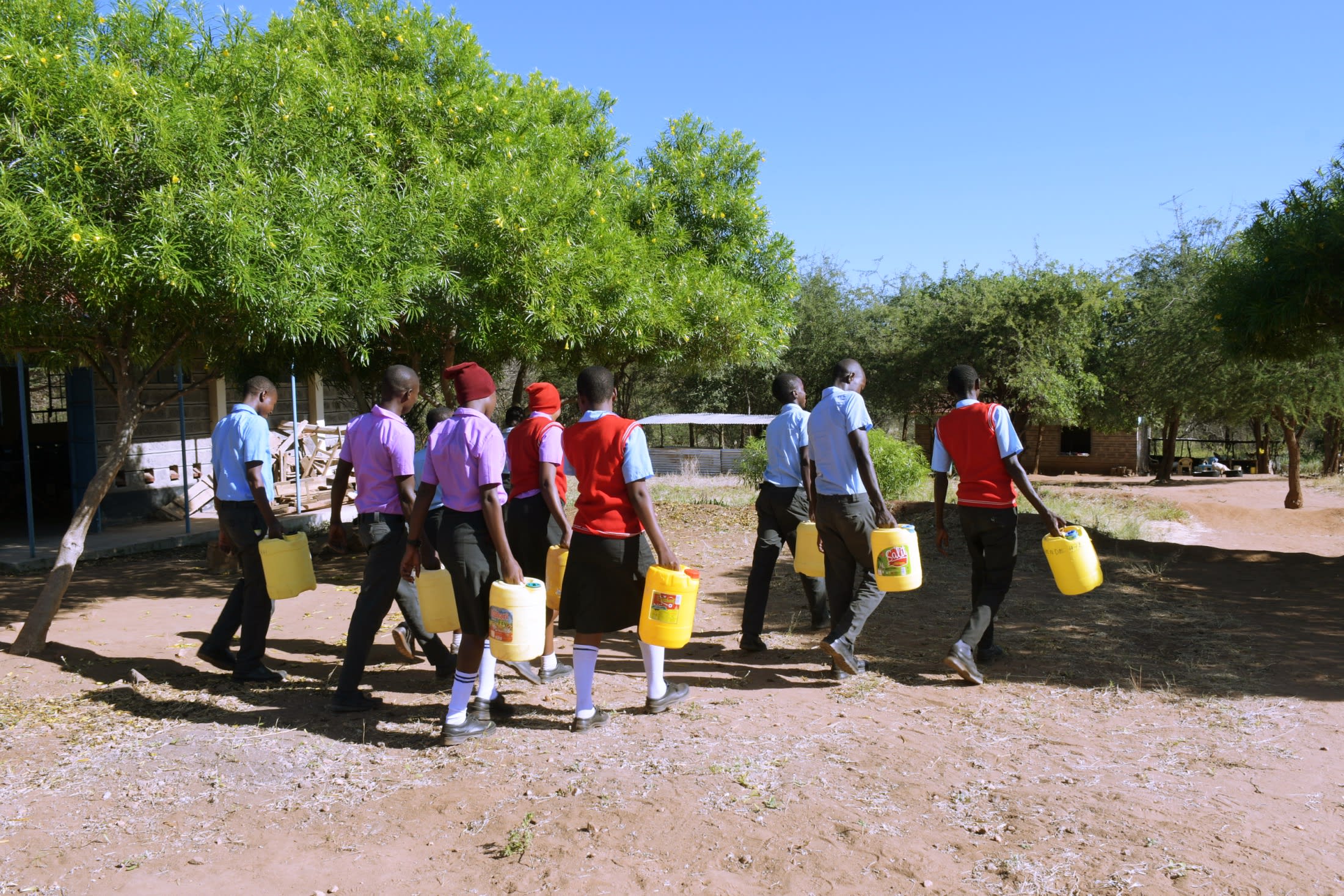
Students leaving school grounds to collect water before the rain tank installation.

Drinking the water caused severe consequences. Many children suffered from waterborne diseases that created health problems, affecting their daily lives. Limited accessibility also meant they wasted time collecting sufficient water to meet their needs. The difficult journey to collect water sapped their physical and emotional energy, creating roadblocks. For Damaris, in particular, it reduced her opportunities to support her students' learning.

"We did not have enough water in our school, and we would request learners to bring water from home, which was mostly acquired from scoop holes. We had to pay a water vendor to supply water to the school, which was costly and affected the running of school activities. The water was also contaminated, exposing our learners to various water-related infections, such as amoeba and typhoid, forcing them to be out of school when seeking treatment or unwell. The lack of adequate water in the school led to poor hygiene because water had to be used sparingly," recalled Ms. Kithome.

Since the Rain Tank Installation

Your generous gift last year was much more than a simple donation; it was a powerful statement about your commitment to this community and Ms. Kithomi’s future. By supporting the water solution, you made clean water an everyday reality, fostering hope for a brighter future.

Reliable and clean water lays the groundwork for improved health, education, and economic possibilities, allowing people to thrive. We frequently hear from those we interview that "water is life!"

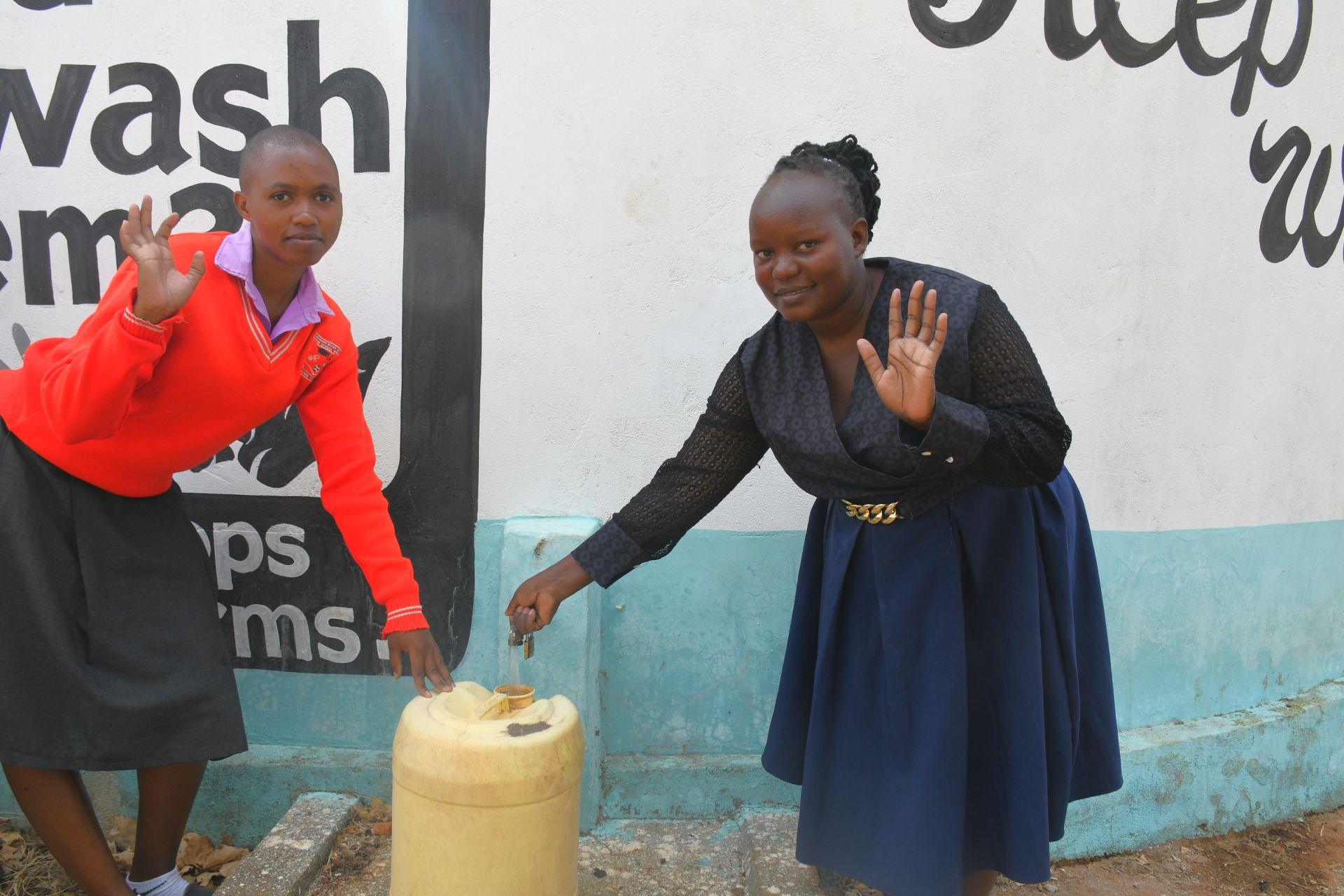
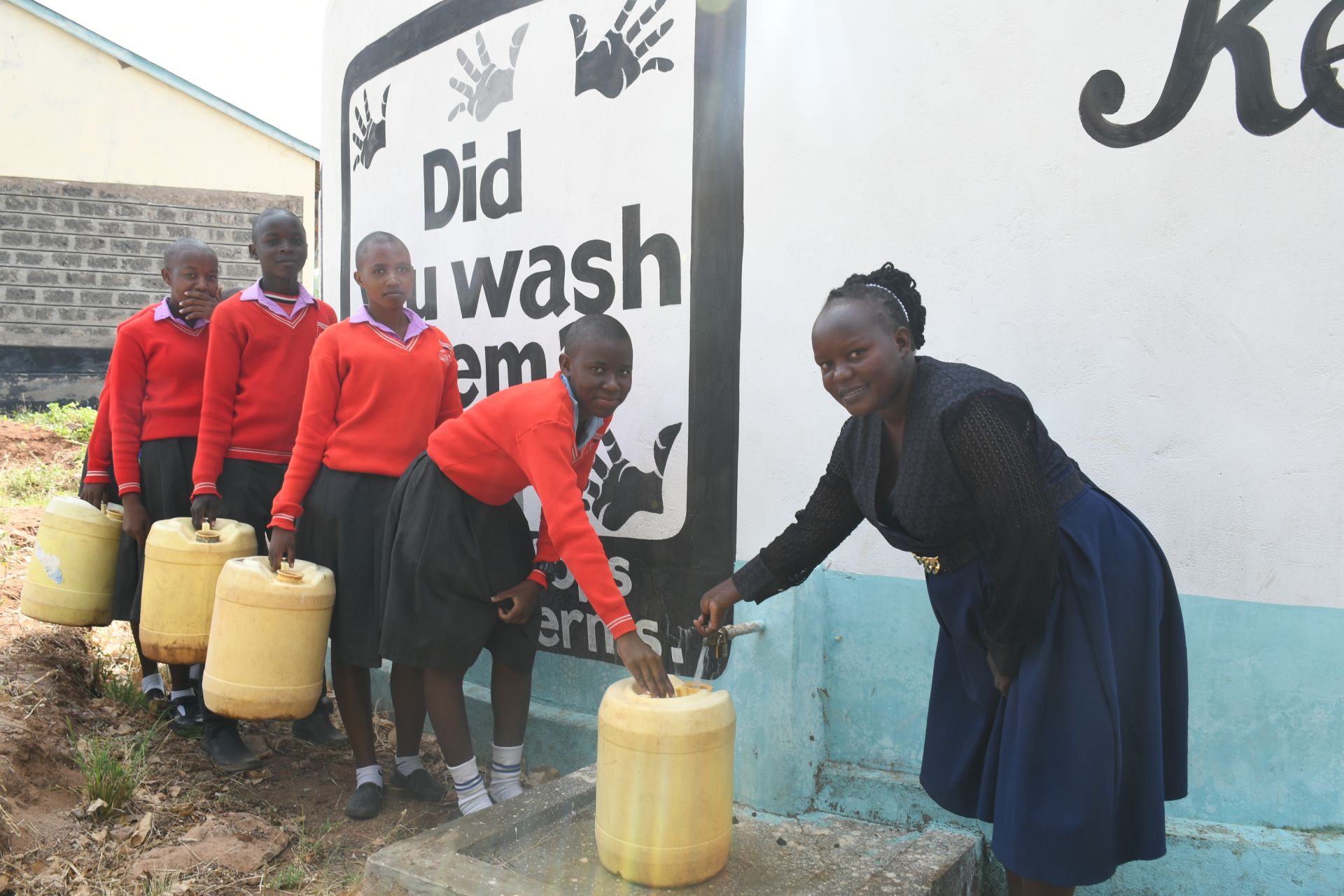
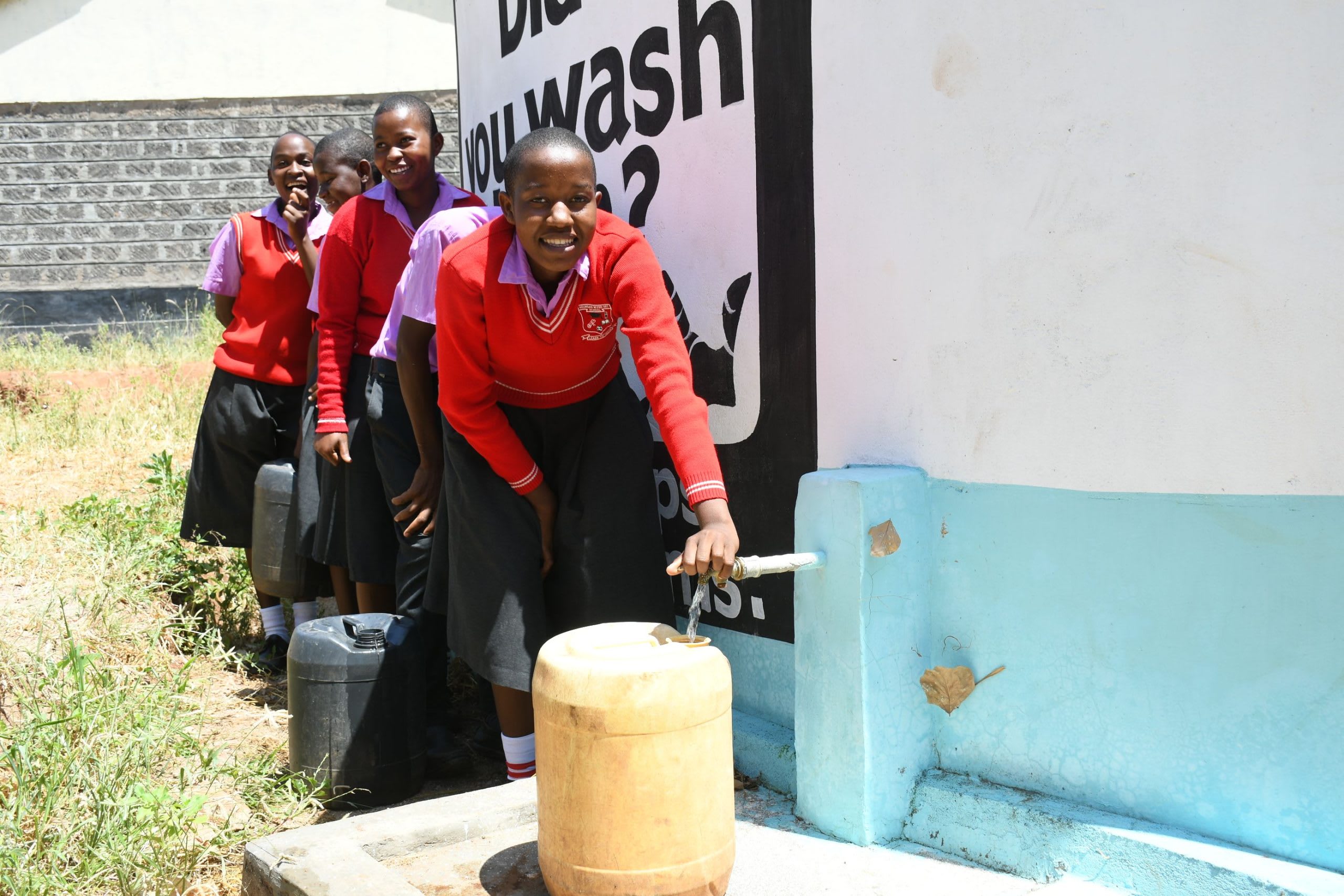
Ms. Kithome and a student collecting water from the rain tank.

"The best part is that we no longer need to fetch water from far. Having clean water within the school compound has brought [us] convenience. It's safe, sufficient, and always available when we need it—for cooking, cleaning, and handwashing," shared Ms. Kithome.

"Our overall health has greatly improved. We no longer experience frequent stomach problems or waterborne infections. I feel more energized and productive. We can now focus on teaching and other school programs without the constant worry of water shortage or illness," she continued.

The Future is Looking Bright!

A year ago, you made a difference for Damaris and her school. This is just the first chapter of their story as access to clean water continues to improve their lives!

At The Water Project, we value sustainability and want to ensure that people continue to thrive. We commit to monitoring this project to ensure the water is always flowing and safe to consume. We inspect the system hardware, track water availability, conduct sanitary inspections, and collect water quality samples to identify risks. We work with our team on the ground to resolve them.

You gave Damaris and her students a crucial tool for achieving their dreams: access to clean water. Together, we can excitedly expect that with this precious resource, her enthusiasm and courage will help her fulfill her dreams and support her students.

"The students are no longer sent out to fetch water or attend class after going hungry. They are more focused and perform better academically. They can now wash their hands, drink clean water, and have balanced meals prepared on time," said Ms. Kithome.

"We no longer spend time organizing water collection or dealing with complaints of illness due to contaminated water. We have more time to plan lessons and engage with students. It has truly brought relief and joy to our daily teaching lives."

"It’s the comfort and dignity it brings. You don’t realize how much stress water scarcity adds until it's gone. Clean water has restored our routine, our confidence, and our ability to plan and achieve."


Navigating through intense dry spells, performing preventative maintenance, conducting quality repairs when needed and continuing to assist community leaders to manage water points are all normal parts of keeping projects sustainable. The Water Promise community supports ongoing sustainability programs that help Ngungani Secondary School maintain access to safe, reliable water.

We’d love for you to join this world-changing group committed to sustainability.

The most impactful way to continue your support of Ngungani Secondary School – and hundreds of other places just like this – is by joining our community of monthly givers.

Your monthly giving will help provide clean water, every month... keeping The Water Promise.

Project Status


Project Type:  Rainwater Catchment

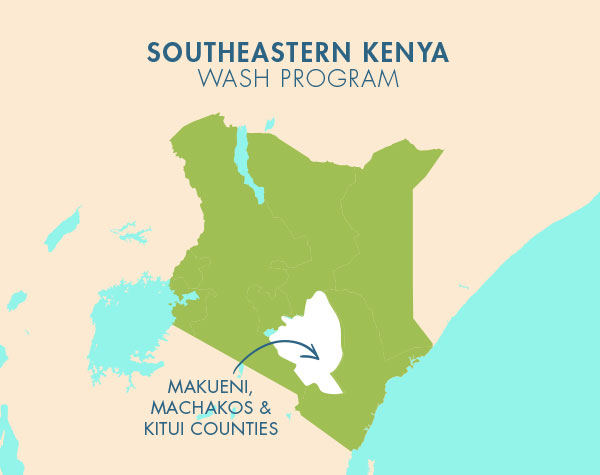
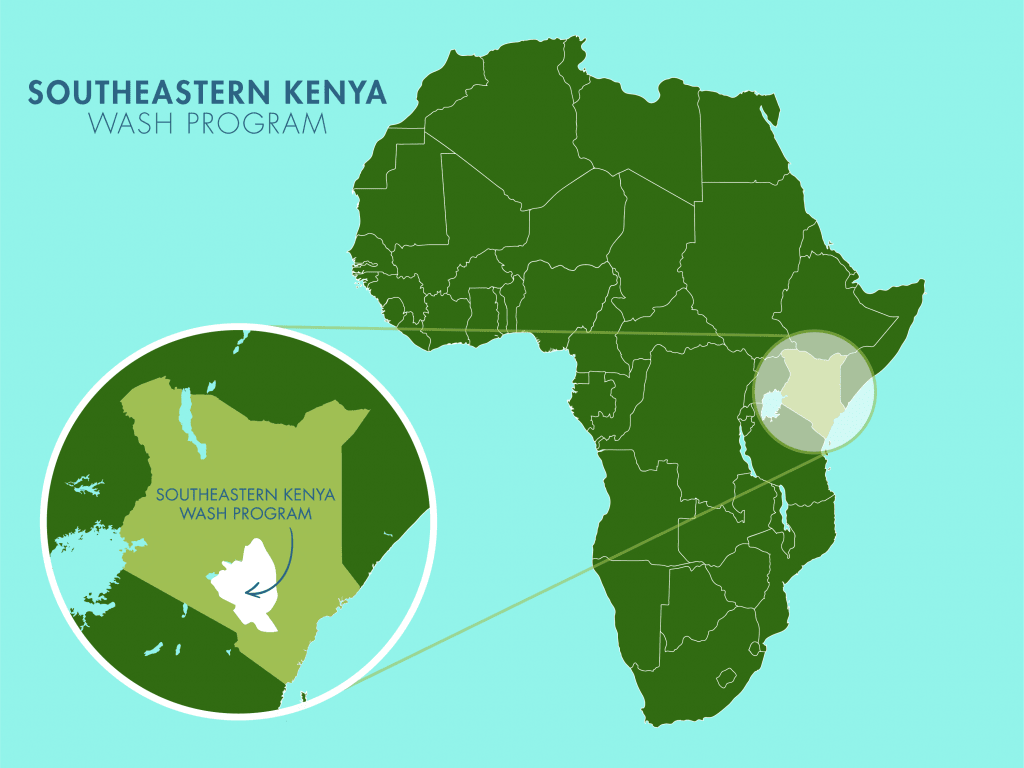
Regional Program: Southeastern Kenya WaSH Program

Impact: 167 Served

Project Phase:  In Service - Feb 2025

Functionality Status:  Functional

Last Checkup: 11/17/2025

Project Features


Click icons to learn about each feature.


Community Profile

The 167 students and staff of Ngungani Secondary School struggle to access sufficient water daily. Although they have a few possible water options, they all present challenges that make collecting enough water incredibly difficult, especially in this semi-arid climate.
Their primary water source is small rainwater tanks on the school grounds, but when they fill, they run dry quickly because they are not large enough. The next option is to collect water from scoop holes that only offer water at particular times of the year. And when neither of those is enough, the school must buy water from a vendor who delivers water collected from further away sources weekly, which raises school fees that many families already struggle to pay. This increase in school fees often means children have no choice but to stop attending because their families can't afford it.

Field officer Alex Koech said, "The existing rainwater tanks cannot provide water for the entire school population because of their meager capacity. Students are forced to fetch water from a scoop hole located off the school grounds at Thua River, about 5 kilometers (3 miles) away." A representative photo of a scoop hole can be seen below.
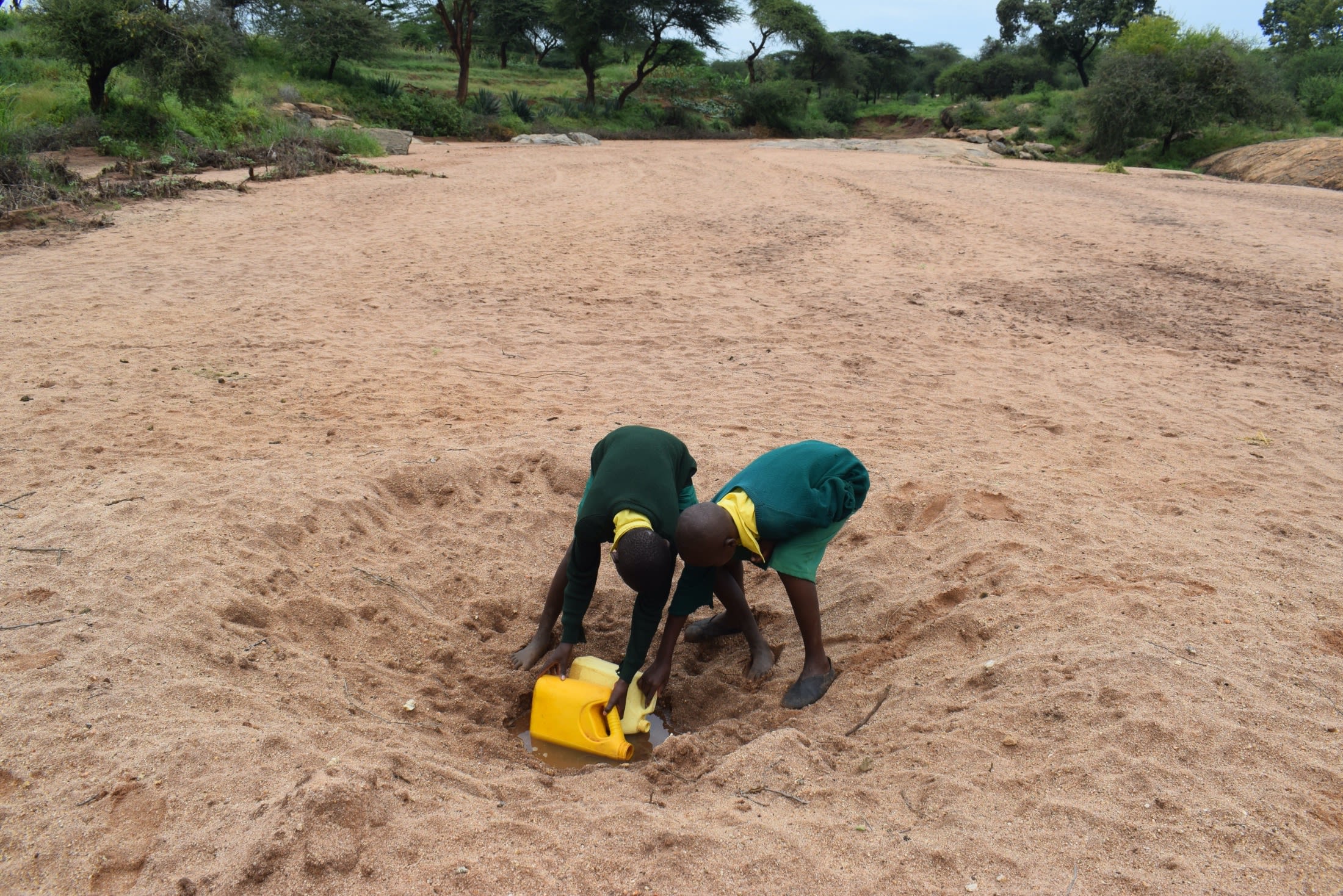
"The scoop hole is shared with the rest of the community members and runs dry during long droughts. It is also shared with the livestock that excretes in and close to the scoop hole, causing water contamination and, ultimately, water-related infections. The water is also not enough for the community and students because it is seasonal and mostly overcrowded," Alex continued.

31-year-old Teacher James Manzi (shown below) said, "The water expenses are very high, and parents have to pay for it through the school fees. I have had to teach on several occasions while thirsty because there is no water in school. This makes my voice hoarse and kills my morale, making students inattentive during lessons. "
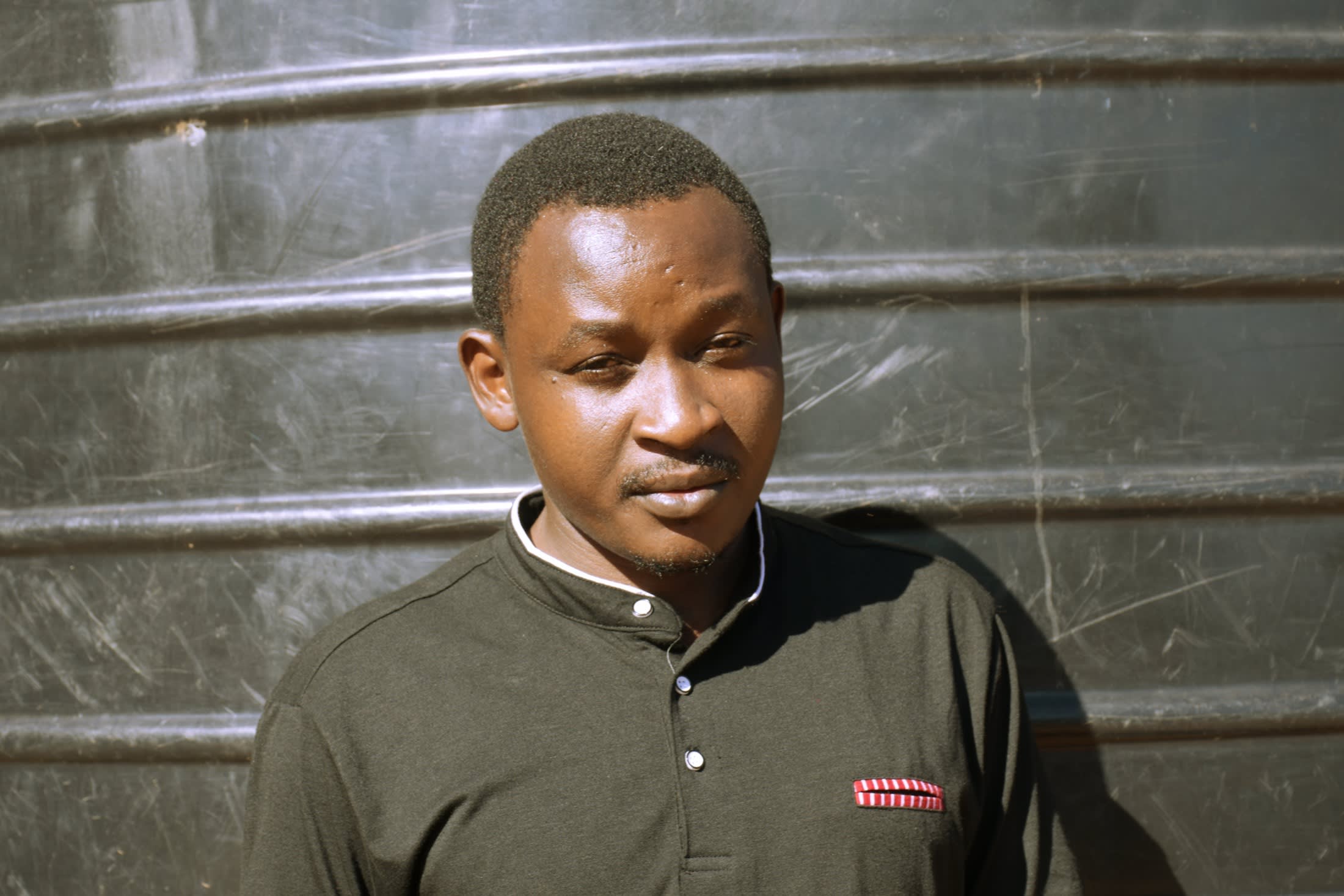
Students and teachers alike bear the burden of thirst at Ngungani Secondary School.

17-year-old Ruth M. (seen below) said, "Walking several kilometers in search of water is exhausting and time-consuming. I arrive at school tired, with my leg muscles burning from the long journey, which makes it difficult to focus in class."
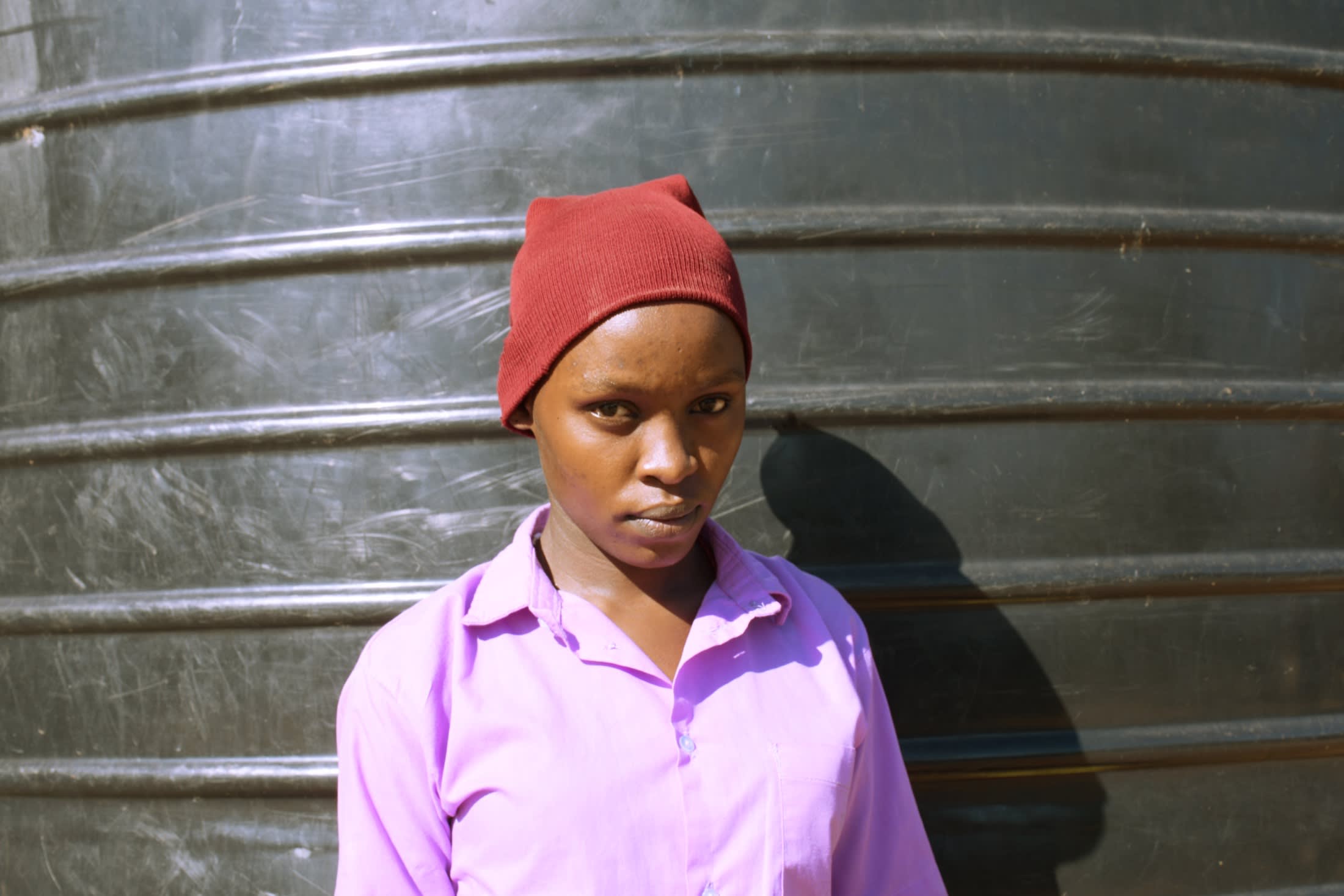
"There are times when there is no water in school, and I have to stay thirsty despite the hotness in the region," she continued.

Students waste valuable time and energy to scrounge enough water for their daily basic needs, interrupting their educations and futures.

"The implementation of a tank in our school means I will easily drink clean water whenever I feel thirsty; I will no longer need to go and fetch water from the distant Thua River," Ruth concluded.

"If we get a tank in our school that sustains us throughout the dry season, we will save on water expenses and use that money to purchase more learning materials. I will also get enough clean water to drink, and my voice while teaching would be better," James concluded.

To solve their water crisis, installing a 104,000-litre rainwater tank with an extensive guttering system is crucial to catch as much rain as possible outside of the dry season. Doing so will empower students and teachers alike to create a better future for their community.

Water at schools is unique, which is why we need unique solutions.

The Proposed Solution, Determined Together...

At The Water Project, everyone has a part in conversations and solutions. We operate in transparency, believing it benefits everyone. We expect reliability from one another as well as our water solutions. Everyone involved makes this possible through hard work and dedication.

In a joint discovery process, community members determine their most advantageous water solution alongside our technical experts. Read more specifics about this solution on the What We're Building tab of this project page. Then, community members lend their support by collecting needed construction materials (sometimes for months ahead of time!), providing labor alongside our artisans, sheltering and feeding the builders, and supplying additional resources.

Water Access for Everyone

This water project is one piece in a large puzzle. In Kenya, Sierra Leone, and Uganda, we're working toward complete coverage of reliable, maintained water sources that guarantee public access now and in the future within a 30-minute round trip for each community, household, school, and health center. One day, we hope to report that this has been achieved!

Training on Health, Hygiene & More

With the community's input, we've identified topics where training will increase positive health outcomes at personal, household, and community levels. We'll coordinate with them to find the best training date. Some examples of what we train communities on are:

  • Improved hygiene, health, and sanitation habits
  • Safe water handling, storage & treatment
  • Disease prevention and proper handwashing
  • Income-generation
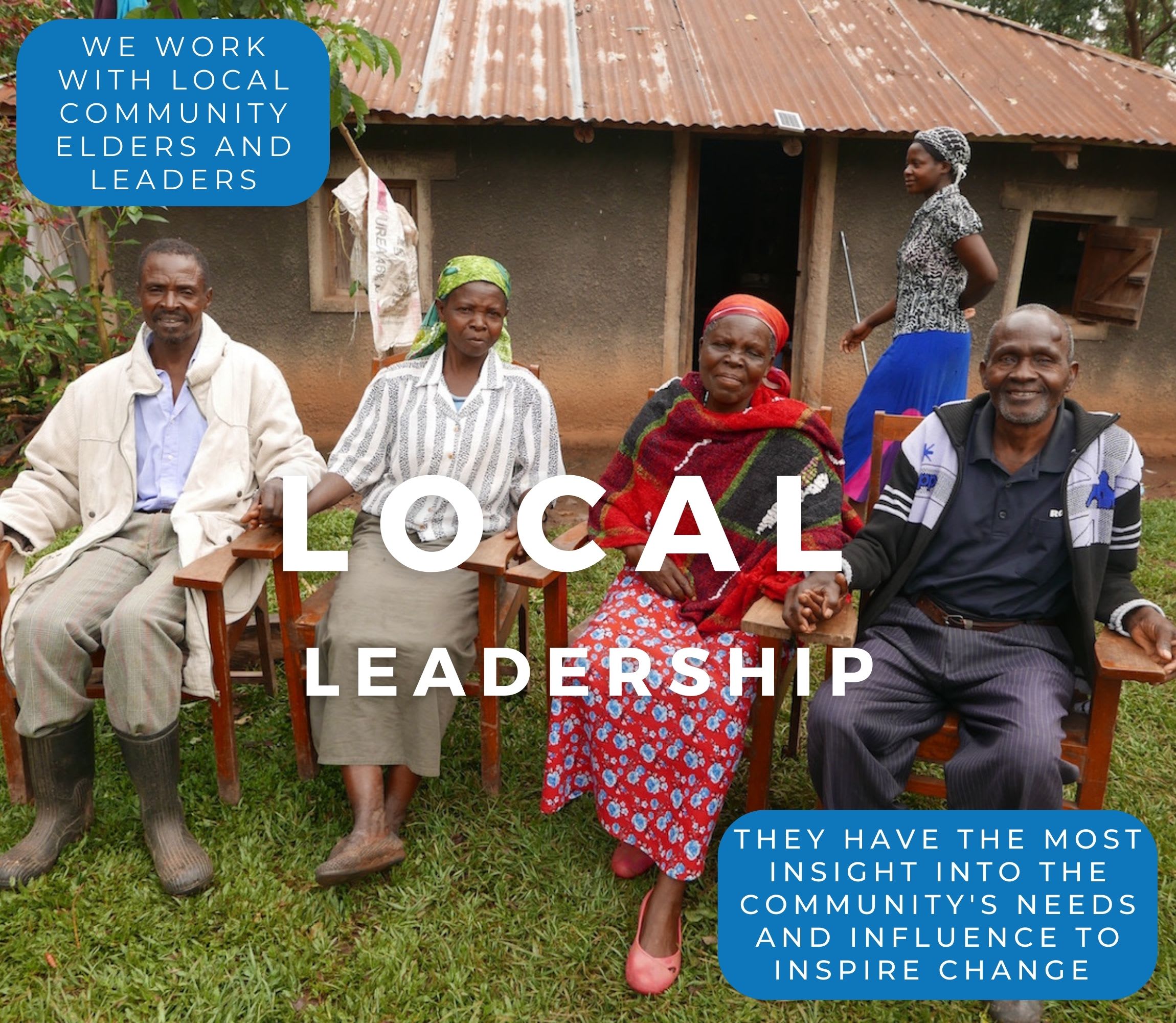
  • Community leadership, governance, & election of a water committee
  • Operation and maintenance of the water point

Handwashing Stations

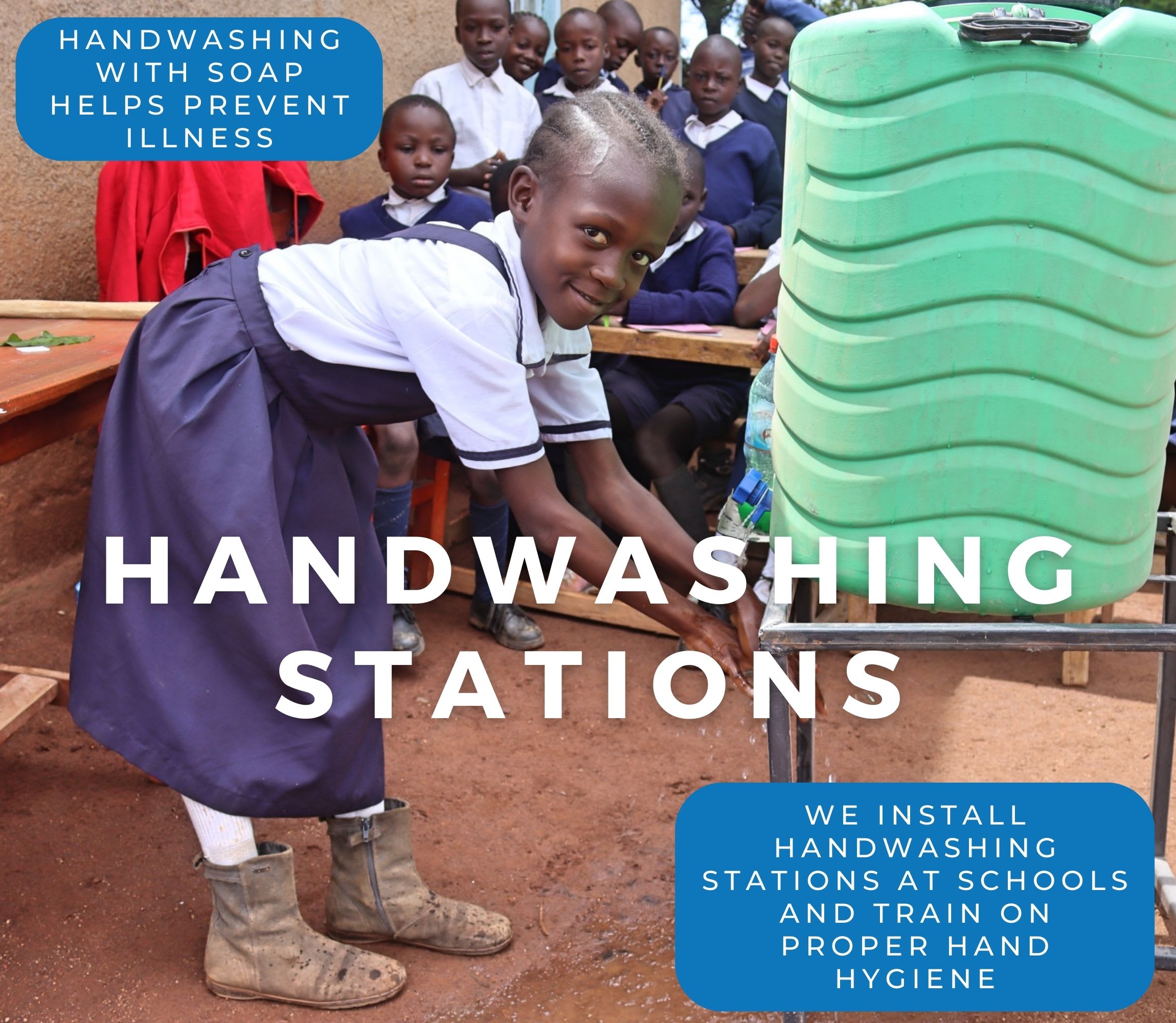
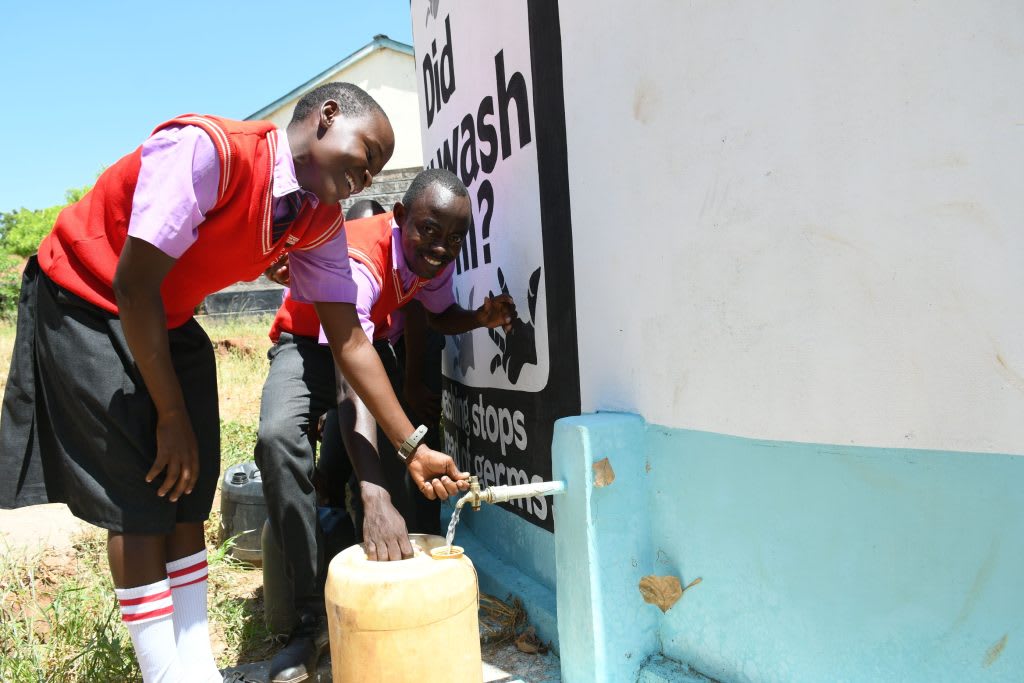
Alongside each water source in Southeast Kenya schools, we also provide three new handwashing stations fitted with three taps each, allowing nine students to wash their hands at once. These will allow everyone at the school to wash their hands without running water. Handwashing is so important to help prevent future water-related illnesses in the school community.

The student health club will maintain the stations, fill them with water, and supply them with soap (which we will teach the school community how to make during the training!).
Project Updates


April, 2025: Clean Water Flowing!

You were a major part of establishing a rain tank at the Ngungani Secondary School. When we install rain tanks, it often takes a rainy season for the project to reach its full potential.

We are thrilled to report the rain tank is now filled with water and fully functional, providing abundant water to the school. Thank you for making clean water a reality for these students. By having consistent access to reliable water, their health, energy, learning, and free time are sure to improve!


February, 2025: Ngungani Secondary School Rainwater Catchment Complete!

Your contribution has given access to clean water for the Ngungani Secondary School in Kenya, thanks to the completion of their 104,000-liter rain tank! Additionally, we installed handwashing stations and trained students and staff on sanitation and hygiene practices. Together, these components will unlock the opportunity for these students to thrive!

"With consistent access to clean water, I will be better hydrated, which will improve my concentration, cognitive function, and overall academic performance. [A] timely and sufficient water supply will ensure that meals are prepared on time, allowing me to attend classes well-fed and energized. Regular cleaning of classrooms and latrines will create a healthier learning environment, reducing distractions and enhancing comfort," said 17-year-old Eunice.

Eunice.

"I will be drinking clean water within the school throughout the day. I am glad that I will no longer be exposed to water-related infections, which forced me on several occasions to go home and seek treatment. I will now be attending school every day," Eunice continued.

Teachers were just as excited as the students about the new rain tank on campus!

Teacher Damaris Kayumya.

"Now that we have a reliable and local water source, the school will save on the high costs associated with purchasing water from vendors. Access to clean and safe water will reduce the risk of waterborne diseases, such as amoeba and typhoid, improving the overall health of students and reducing absenteeism," said 31-year-old teacher Damaris Kayumya.

Rain Tank Construction

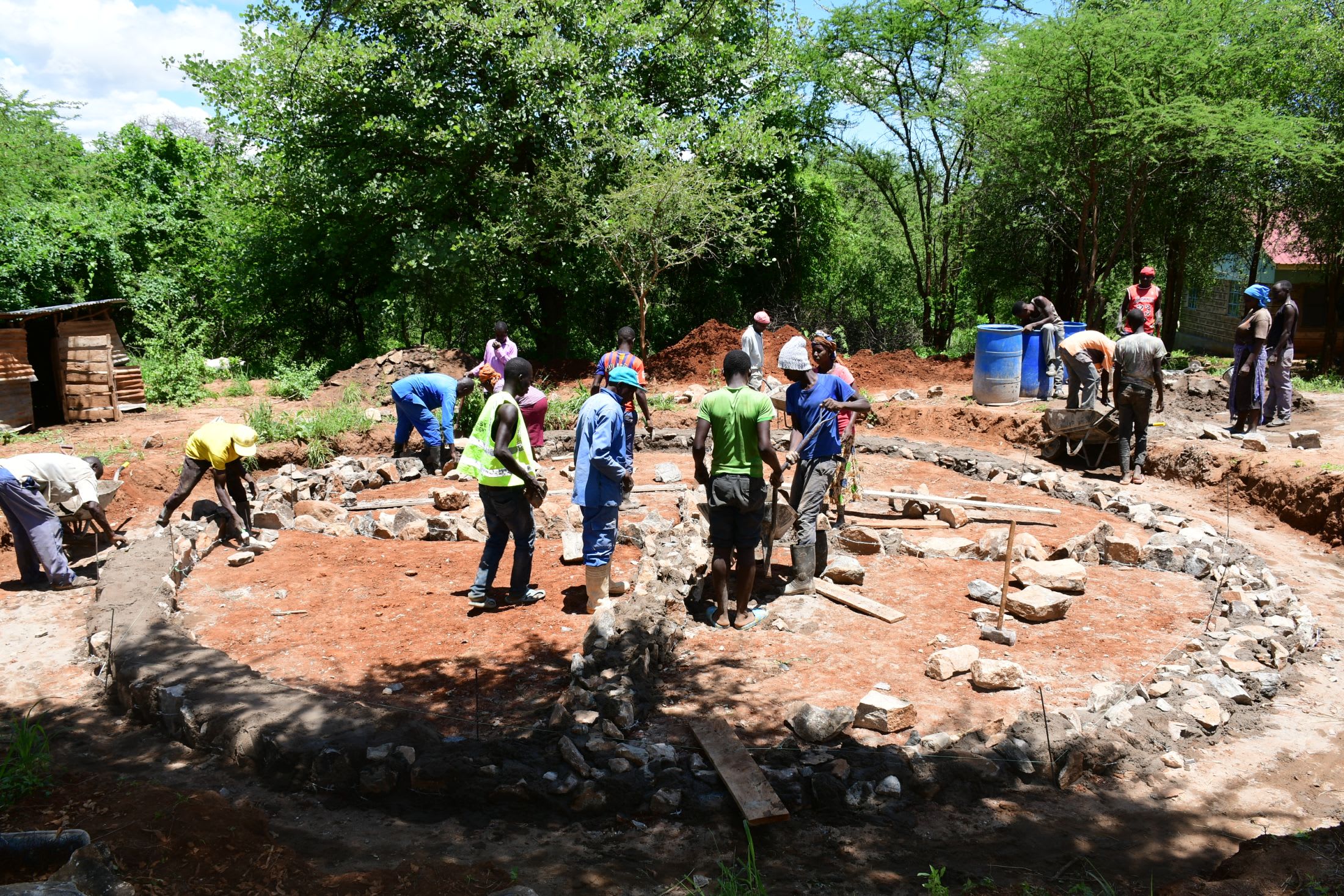
First, we held a meeting with all parents and the school’s headteacher to plan the project. The parents agreed to collect construction materials like sand, rocks, and water. We complemented their materials by delivering the expertise, tools, lumber, metal, cement, and a gutter system.

This tank is a whopping 104,000 liters, as it rarely rains in Southeastern Kenya. The more water the tank can store during the seasonal rains, the more water available through the dry months for the students!

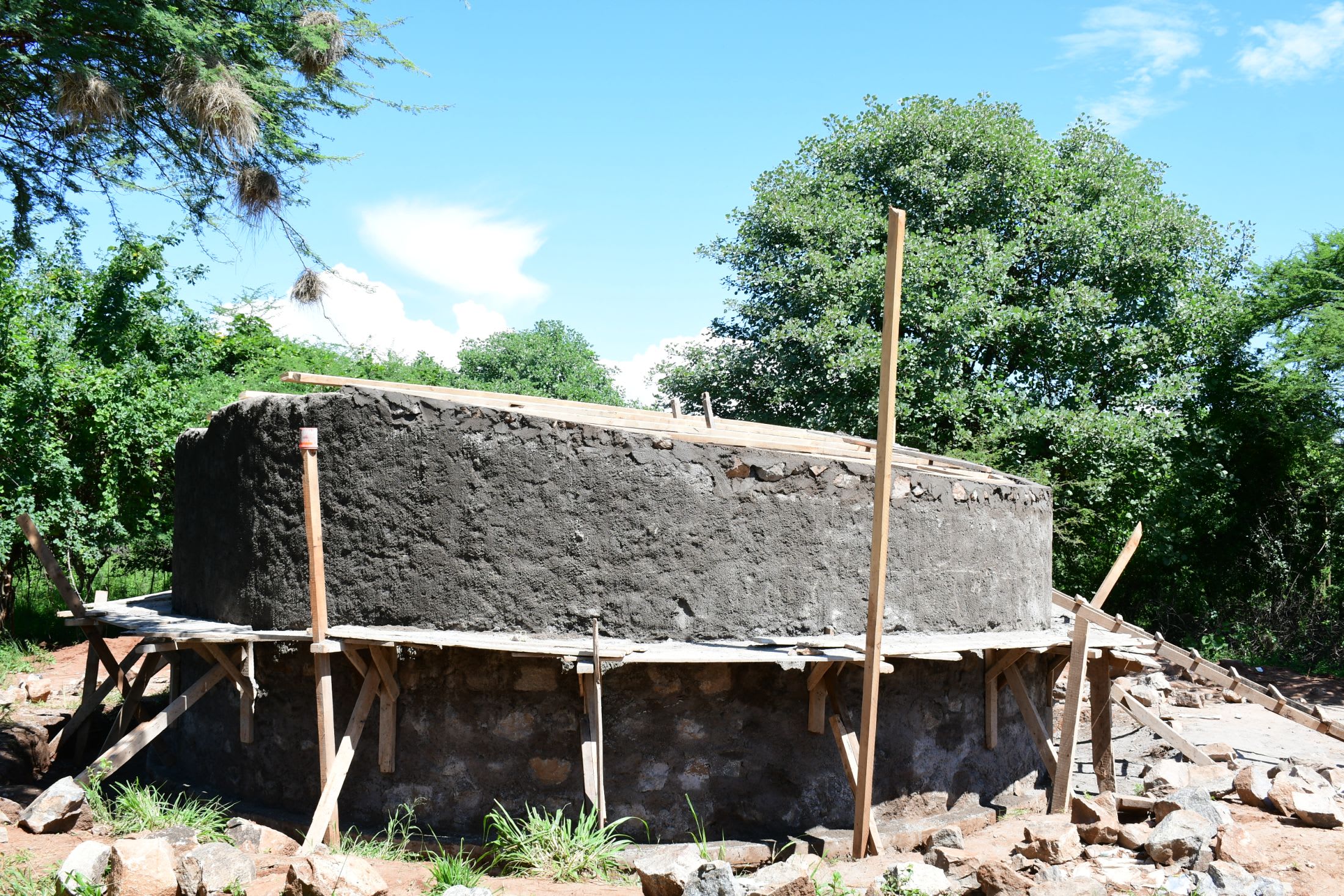
Construction for this large rain tank is much like constructing a concrete house. First, we leveled the ground for foundation excavation. Next, we laid alternating layers of rocks and mortar up to seven feet high for the tank's outer walls. With such sturdy construction (the walls are three feet thick!), the tank will stand for a long time.

We built a reinforced concrete column in the tank’s center to sustain the roof and prevent it from caving in. We plastered the walls inside and out with waterproof cement and installed guttering into the tank. Finally, we installed the roof of the tank, made of iron sheets and timber with vents to allow rainwater into the tank from the gutters.

Handwashing Stations

We delivered three new handwashing stations in time for training. Each new station has three taps, so that nine students can wash their hands simultaneously.

School Education

We trained on health, hygiene, and sanitation topics. These included student health club activities, disease prevention, personal hygiene, and handwashing. We also covered water hygiene, latrine hygiene, and soapmaking.

Soapmaking was a favorite activity among the 130 students who participated in the training.

"This training is of great importance in our lives, and I must admit that all the participants in the training have gained new ideas and skills, as well. Cases of absenteeism will decrease, and issues of stomachaches will be reduced. This is because the knowledge that we have gained from this training will help us improve our hygienic practices not only here in school but also at home, like washing our hands in the most critical moments, covering food, and ensuring that we maintain high standards of food hygiene, as well as drinking clean water among others," said Eunice, quoted earlier.

Thank you for making all of this possible!


January, 2025: Exciting Progress at Ngungani Secondary School, Thanks to You!

We’re thrilled to share that, thanks to your generous support, significant change is coming for James and the entire Ngungani Secondary School. Construction has begun on the rainwater catchment project, bringing them one step closer to having clean, reliable water.

But that's not all—during construction, we’re also providing vital health training. These sessions equip the community with essential hygiene practices, ensuring that the benefits of clean water extend to lasting health improvements.

We’re so grateful for your role in making this possible. Stay tuned for more updates—soon, we’ll be celebrating the arrival of safe water at Ngungani Secondary School!


Project Photos


Contributors

Data Abstract Solutions, Inc.
63 individual donor(s)