
Project Status


Project Type:  Rainwater Catchment

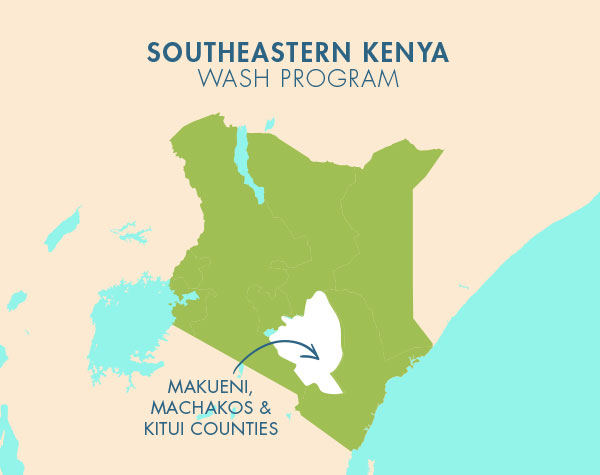
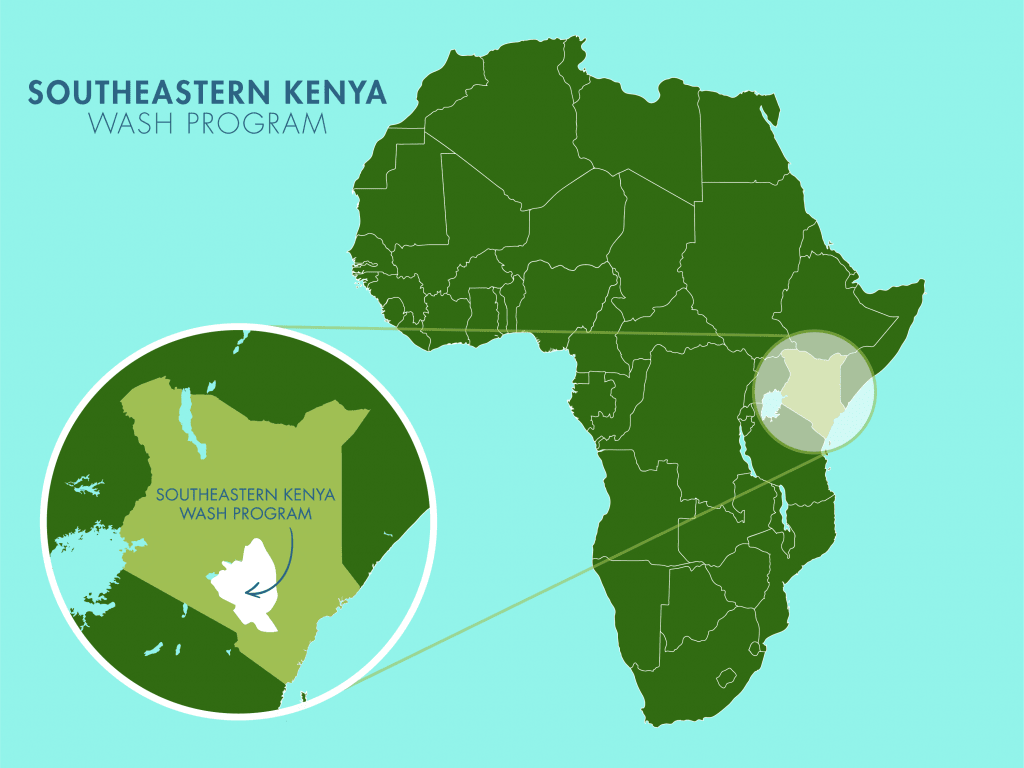
Regional Program: Southeastern Kenya WaSH Program

Impact: 126 Served

Project Phase:  In Service - Feb 2026

Functionality Status:  Functional

Project Features


Click icons to learn about each feature.


For the 112 students and 14 staff at the Kyethani Secondary School, the school day begins not with books, but with a battle for clean and sufficient water. With too little water to meet even their most basic needs, survival takes priority over education, putting the students' futures at risk.
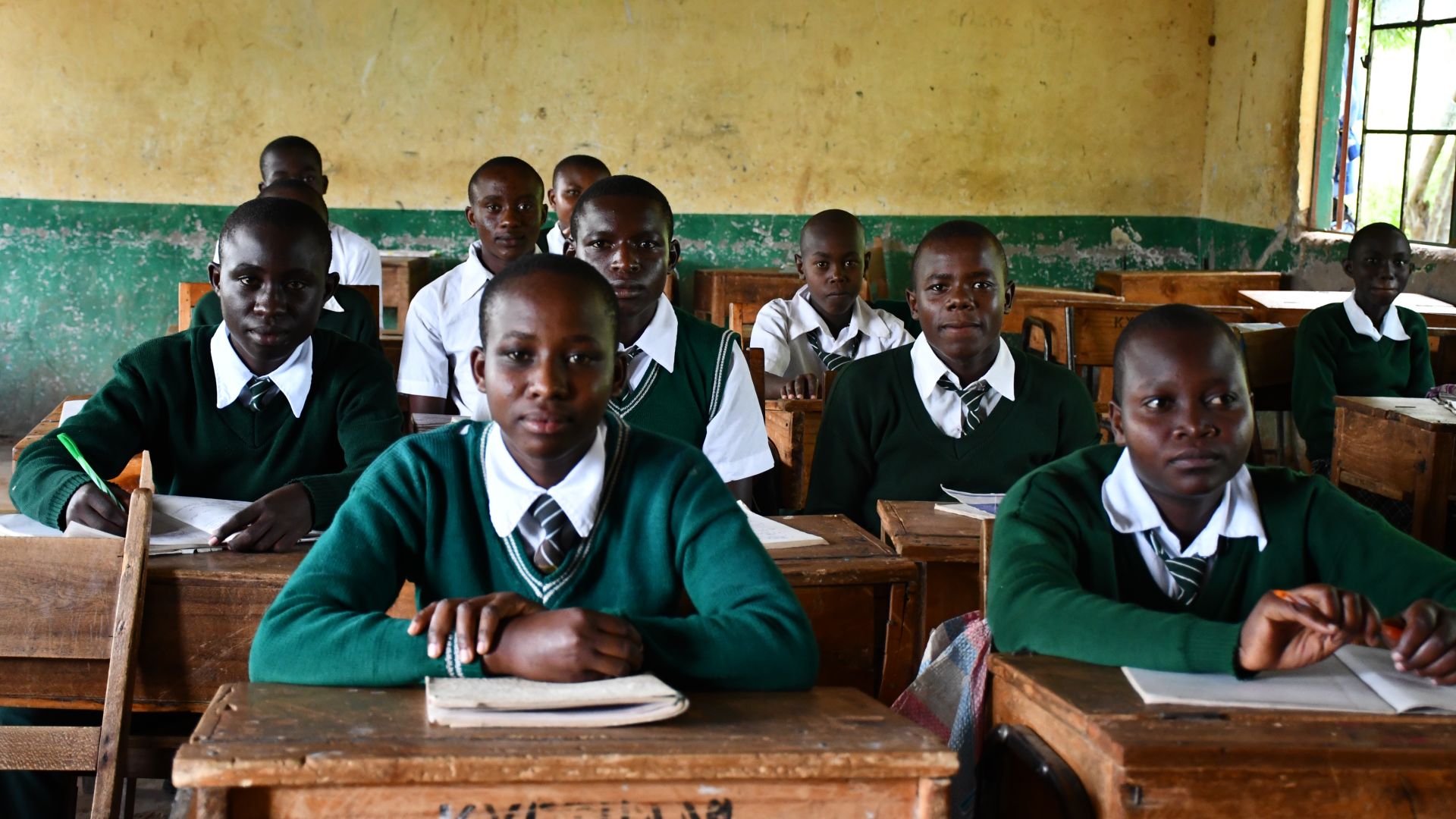
Kyethani Secondary School students in class.

Though a small rainwater harvesting tank lives on campus, it is direly insufficient. This semi-arid region of Kenya experiences long seasons of drought, leading to the tank being empty more often than not.

With no water on campus, the school is often forced to buy water from vendors. Unfortunately, that is a costly option, both financially and for their health. As if the lack of water isn't hard enough, the little water they can afford makes them ill with diseases like typhoid.

Typically, water vendors collect water from scoop holes and bring 20-liter jerrycans of water around to their customers, often using donkeys to transport the water. Scoop holes—just holes dug in dry riverbeds—are shared with animals and exposed to contamination, making them a health hazard.
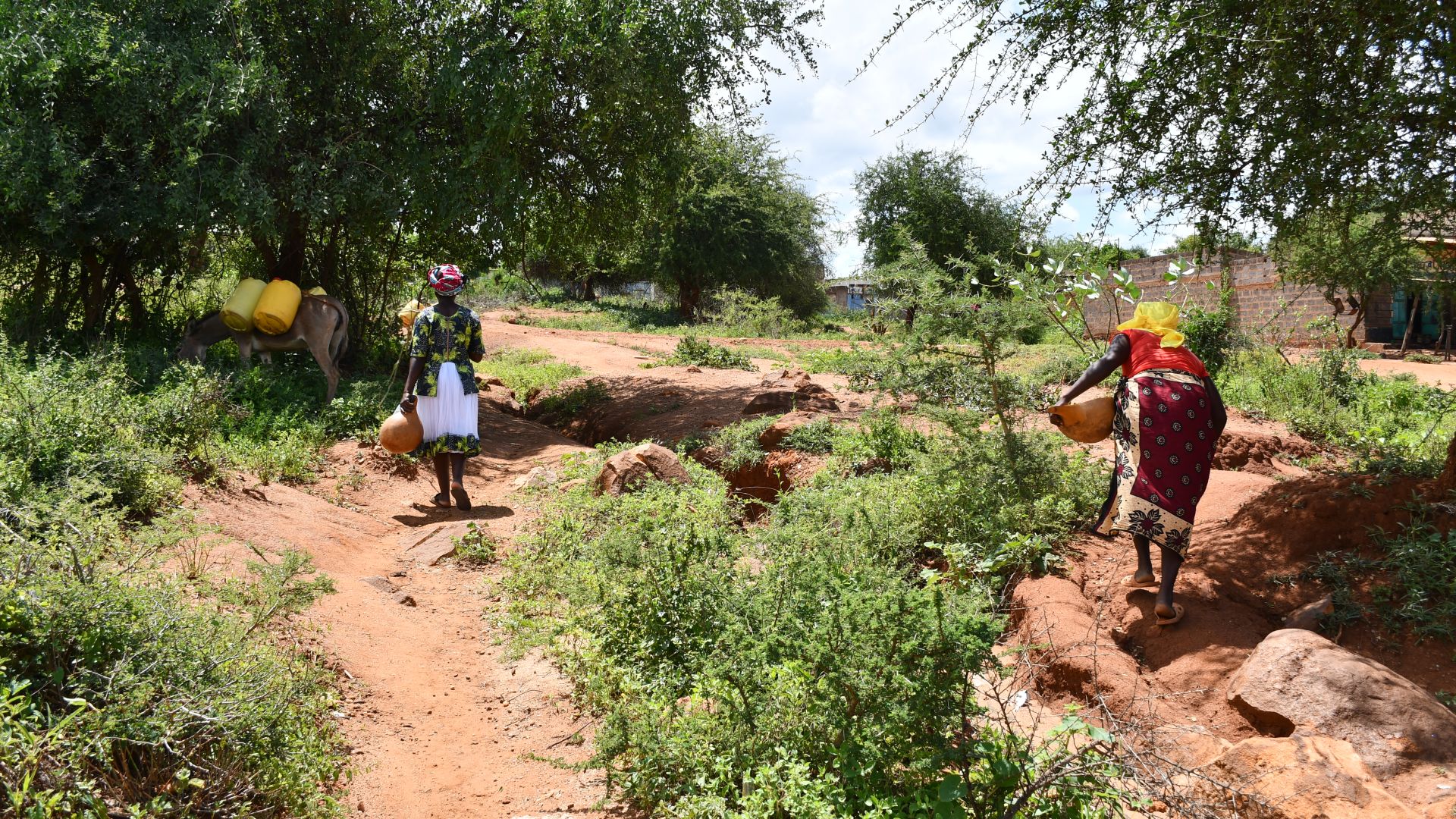
Water vendors.

Students' families, who often live on very little, are required to pay school fees and contribute to the high cost of water from vendors. If they fall behind, so do their children. If their parents get too far behind, students are sent home to collect school fees.

Mawia is seventeen years old. She loves biology and dreams of becoming a doctor. She has seen the devastating effects of contaminated water on one's health and wants to be a force of change in her community.

However, to achieve her dreams, she needs a good education, which is difficult to attain when she spends much of her time outside the classroom. Even when she is in class, it can be difficult to pay attention when her thirst consumes her.
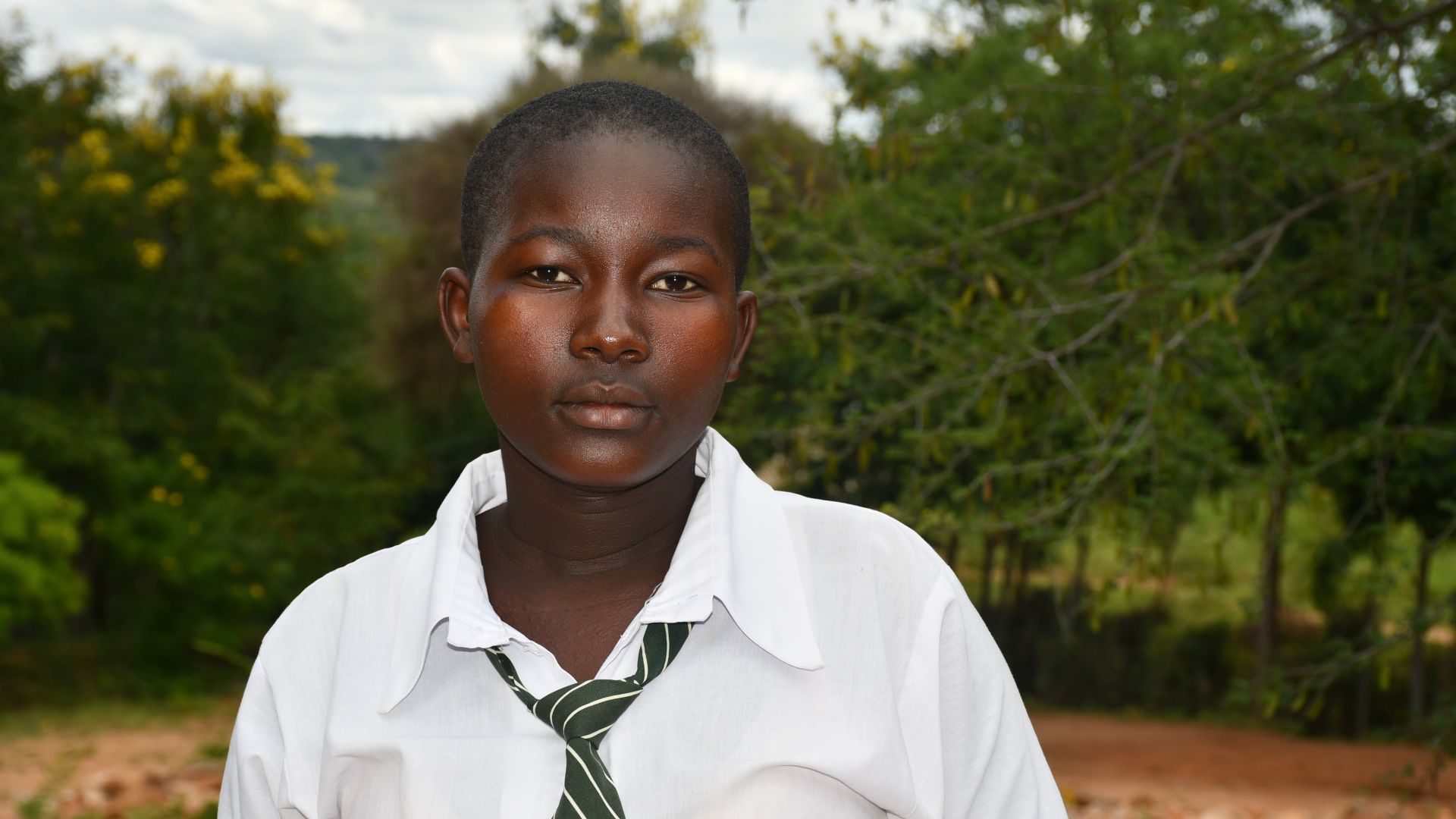
Mawia.

"Fetching water takes up time that I should be in class or studying. Sometimes I arrive late to lessons or miss them completely, and that affects my performance. The learning setting is also unconducive due to poor hygiene, which makes it difficult to concentrate in class."

"I get sick quite often, especially during the dry seasons when we rely on water brought by vendors. Sometimes the water looks clean, but it's not safe, and we end up with stomachaches or diarrhea," Mawia shared.

"There was a time last term when I drank water at school that had a strange taste. Later that evening, I had a bad stomachache and couldn't eat or study. I had to miss school for two days, and I felt weak and frustrated because I missed an important lesson in biology, which is my favorite subject," she continued.

The Tyaa River is quite a distance from the school, but students are often sent there to collect water when all else fails. This task is a heavy burden, making education the furthest thing from students' minds.

"I’m worried because the river is open and shared with animals. You never know what has gotten into the water upstream. The scooped-out sand in the scoop holes often collapses, and there have been times when some of us have fallen while trying to fill jerrycans."
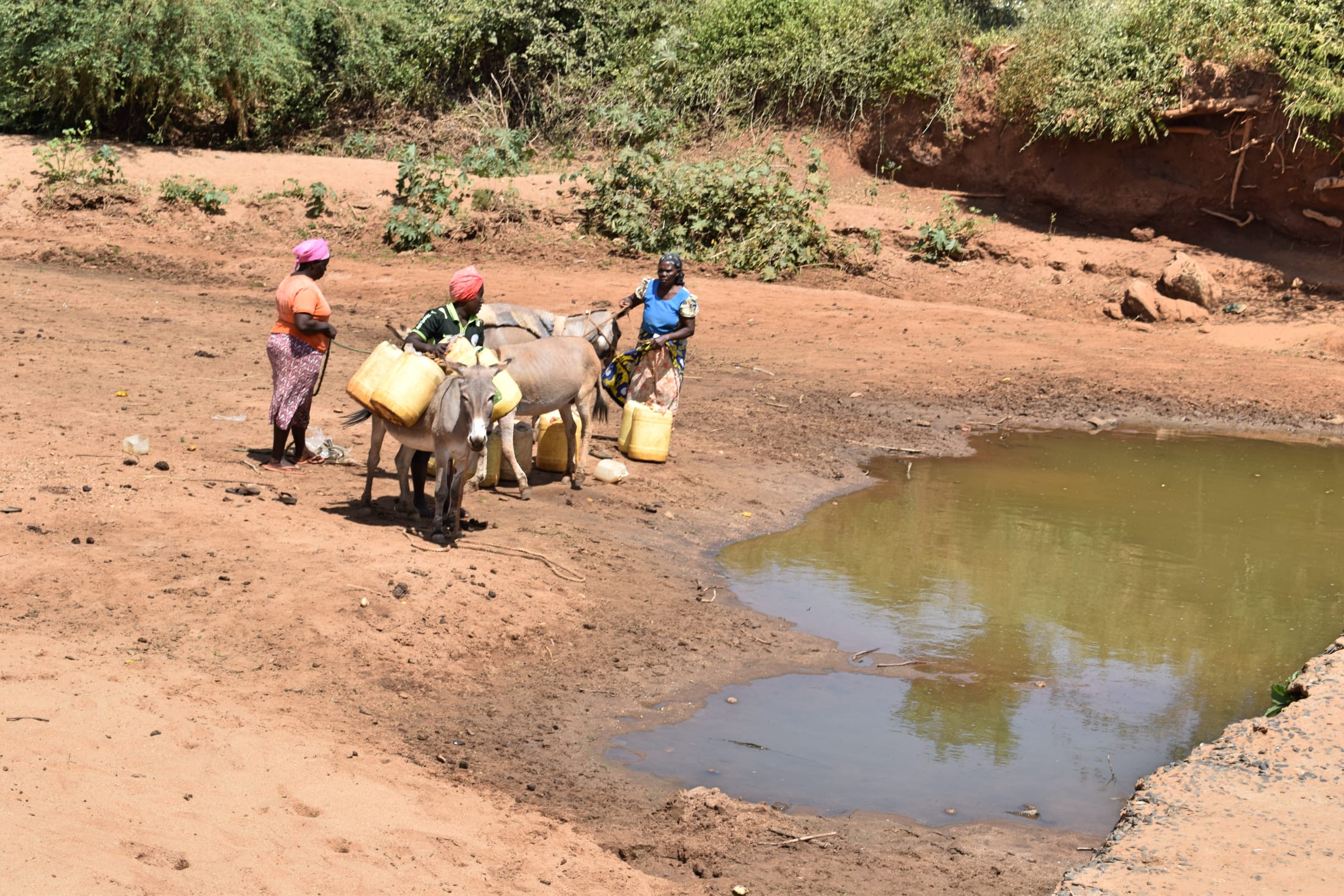
People collecting water from the Tyaa River, from a previous project.

"The river dries up sometimes, and the scoop holes become shallow and dirty. The tanks at school are too small, and the rainwater doesn’t last. It makes me feel sad and hopeless because we are trying hard to learn, but water problems slow us down," Mawia shared, frustrated by her current circumstances.

The worry that Mawia and her classmates feel steals from their school experience. There's less time for studying, playing, and dreaming, and their health is constantly at risk.

But safe, accessible water will change how their story ends!

Mawia will be able to attend class without fear, focus on her studies, and pursue her dreams without interruption.

She has the passion. With clean water, Mawia can gain the power to transform her future—and her community’s.

"I want to become a doctor. I’ve seen how sickness from dirty water affects my classmates and my family, and I want to help people live healthier lives. But to get there, I need time to study and focus—clean water would really help with that."

Steps Toward a Solution

Our technical experts worked with the local community to identify the most effective solution to their water crisis. Together, they decided to construct a rainwater harvesting system.

Rainwater Harvesting System
A rainwater collection system consists of gutters that channel rainwater effectively into large holding tanks. Attached to buildings with clean, suitable roofing, these systems are sized according to the population and rainfall patterns. Water can be stored for months, allowing for easy treatment and access. Learn more here!

Handwashing Stations
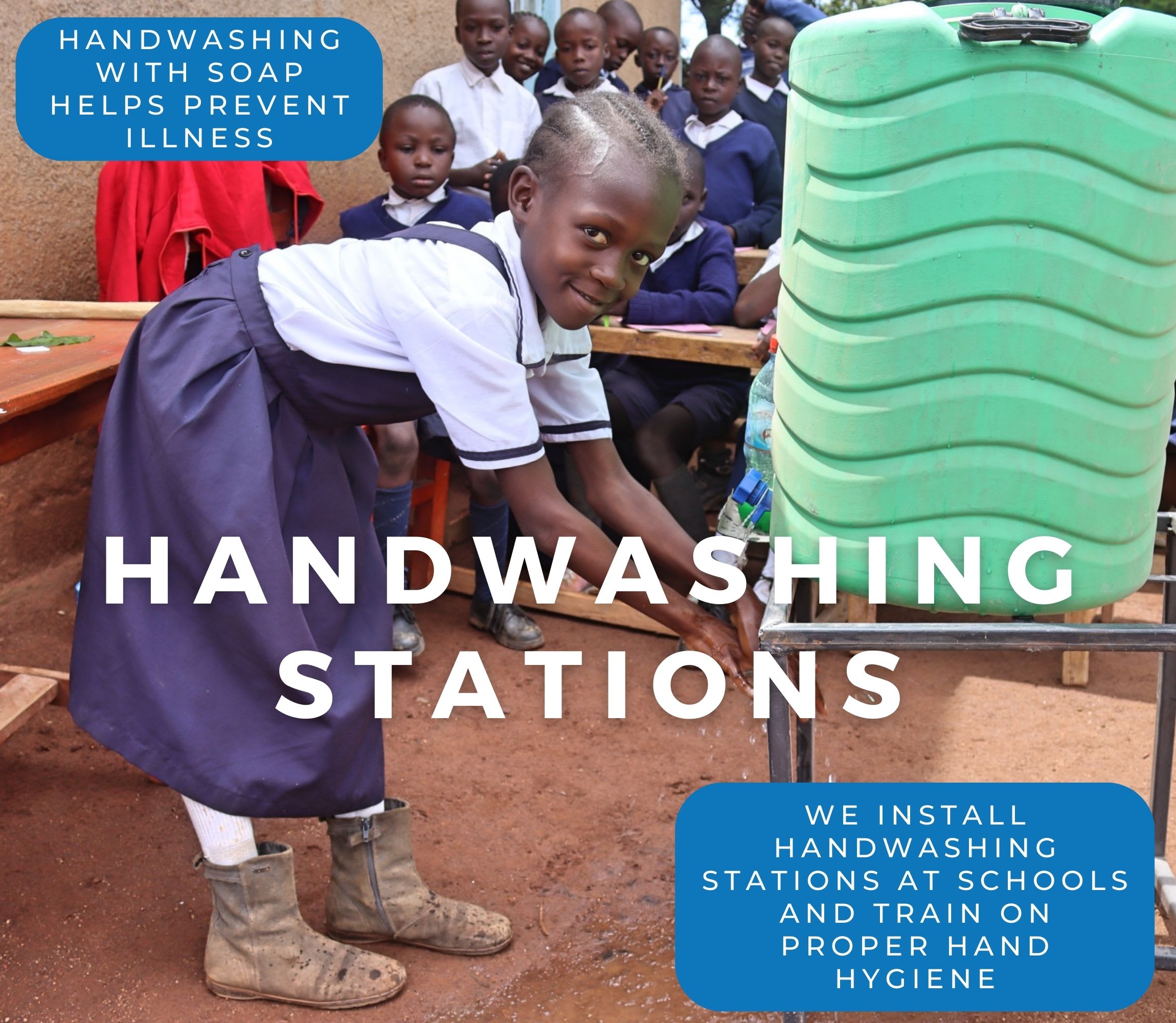
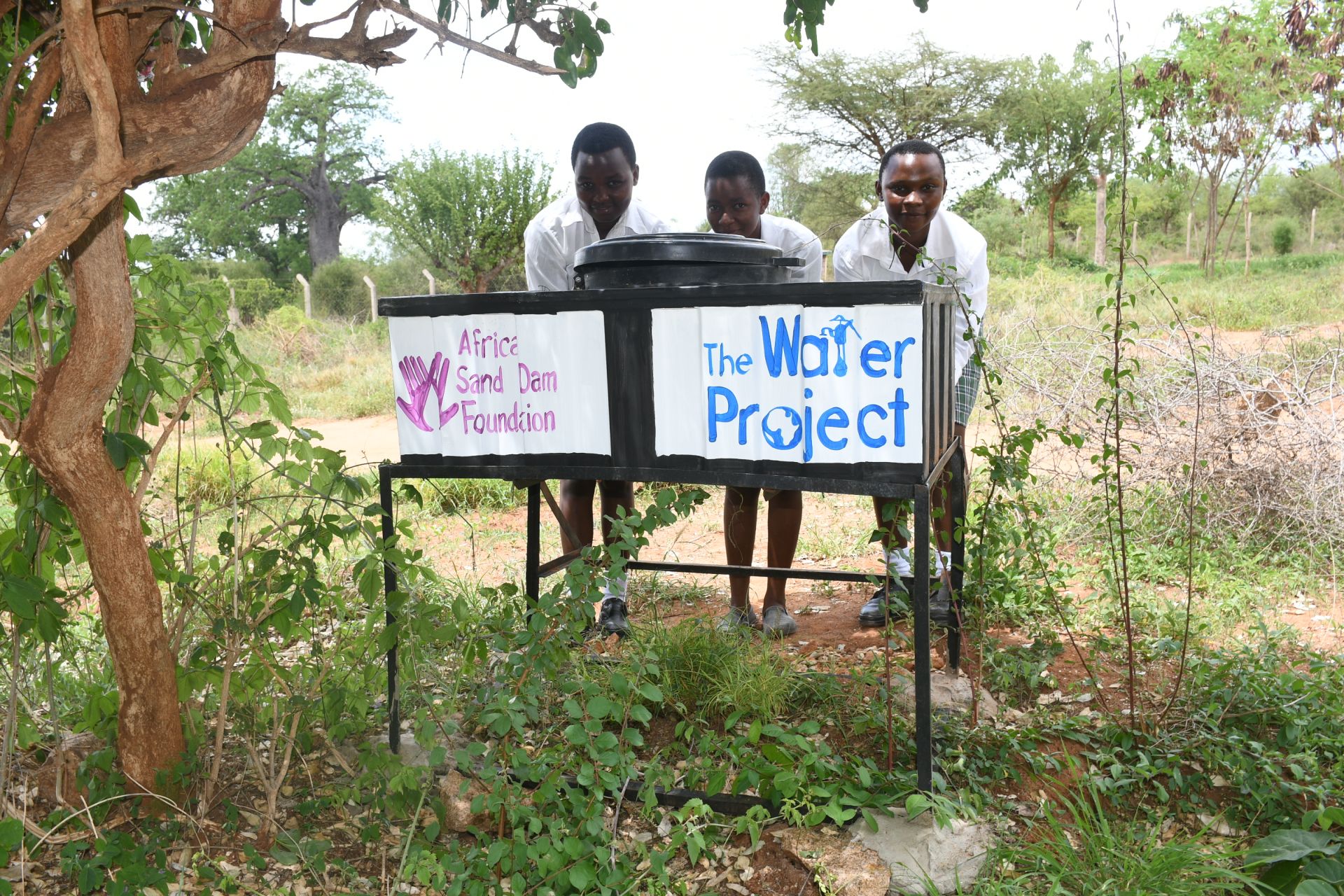
Alongside each water source, we install two gravity-fed handwashing stations, enabling everyone at the school to wash their hands. Handwashing is crucial for preventing water-related illnesses within the school and community. Student “health clubs” maintain the stations, fill them with water, and supply them with soap, which we often teach them how to make.

Community Education & Ownership
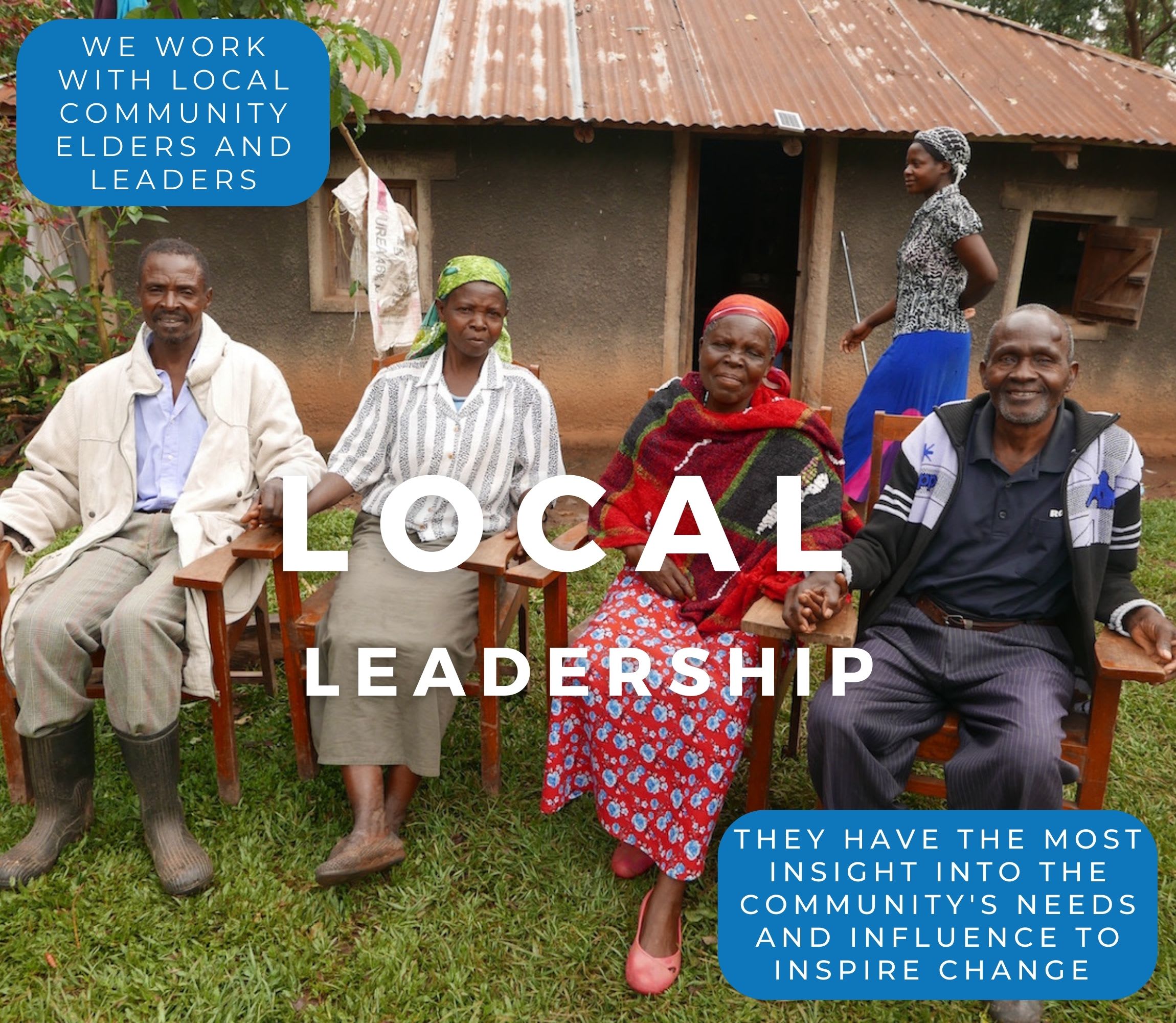
Hygiene and sanitation training are integral to our water projects. Training is tailored to each community's specific needs and includes key topics such as proper water handling, improved hygiene practices, disease transmission prevention, and care of the new water point. Safe water and improved hygiene habits foster a healthier future for everyone in the community. Encouraged and supported by the guidance of our team, a water user committee representative of the community's diverse members assumes responsibility for maintaining the water point, often gathering fees to ensure its upkeep.
Project Updates


February, 2026: Kyethani Secondary School Rainwater Tank Complete!

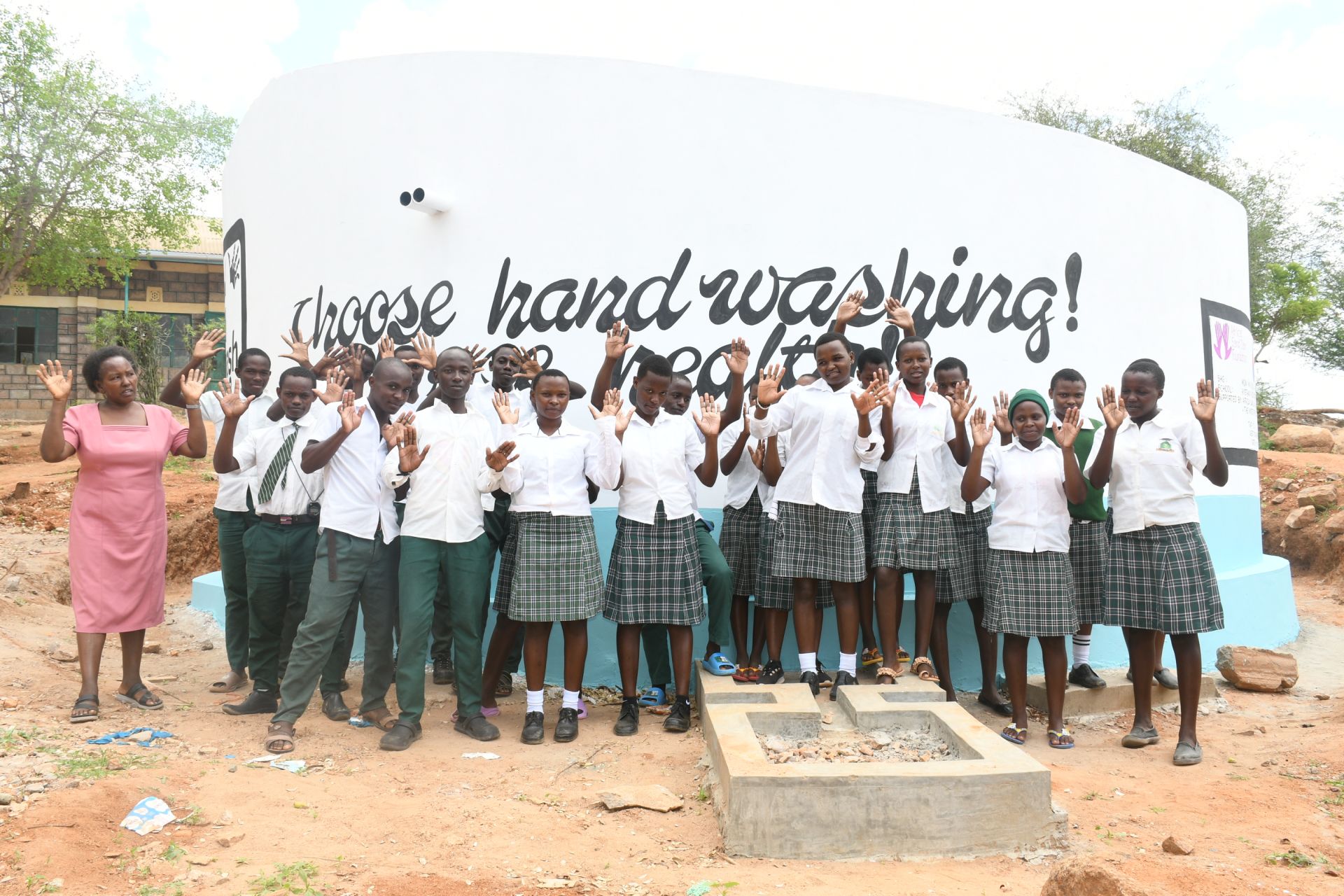
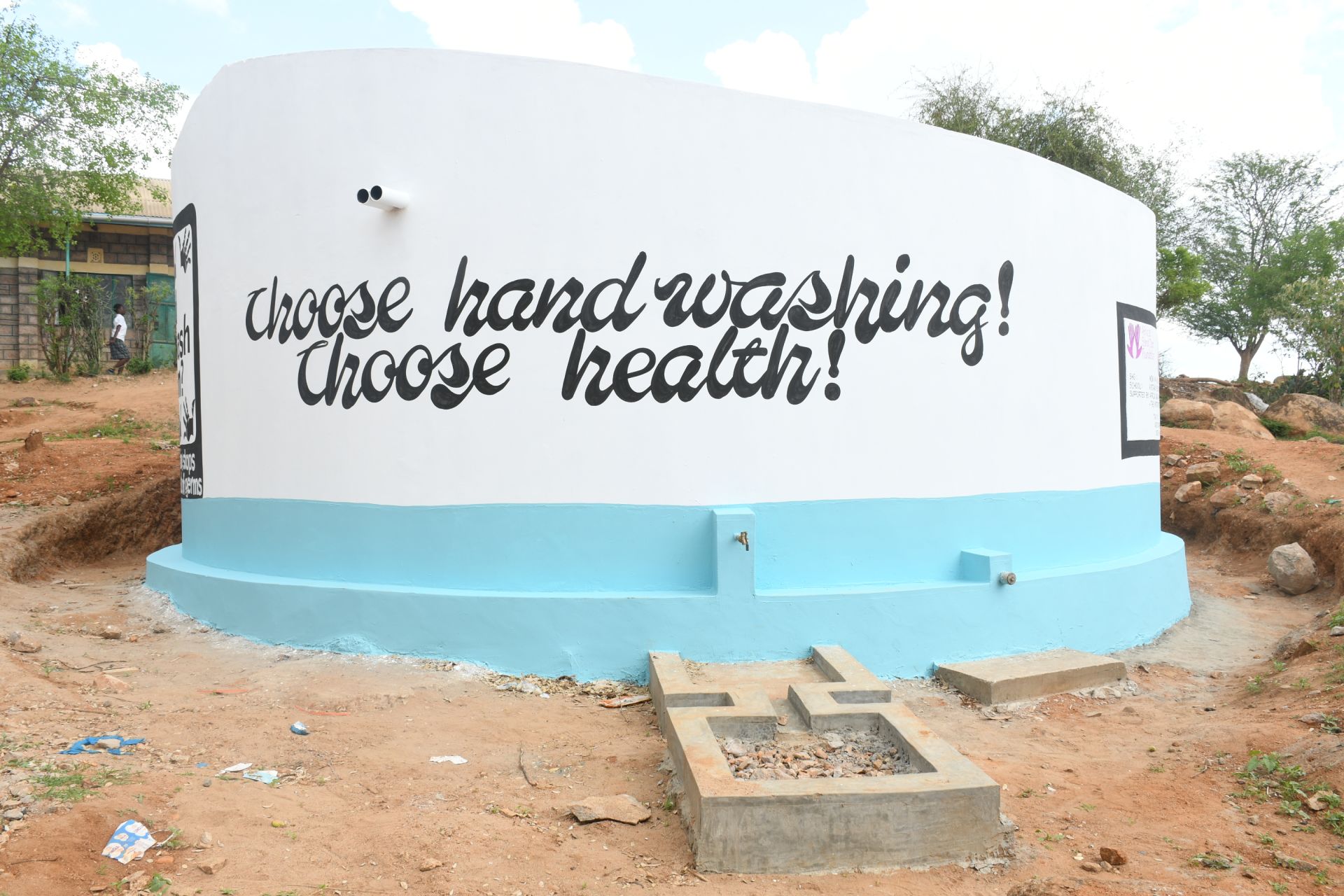
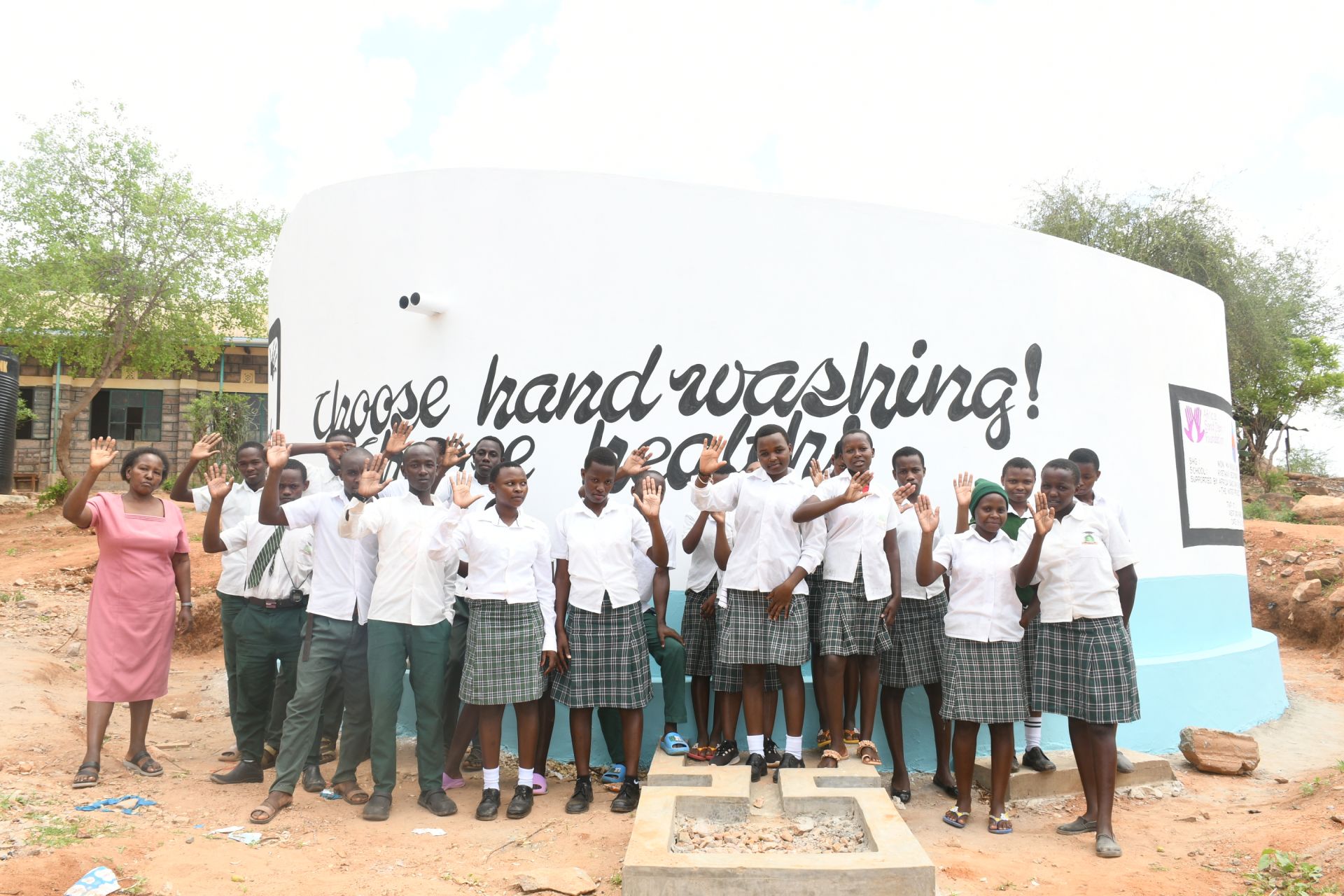
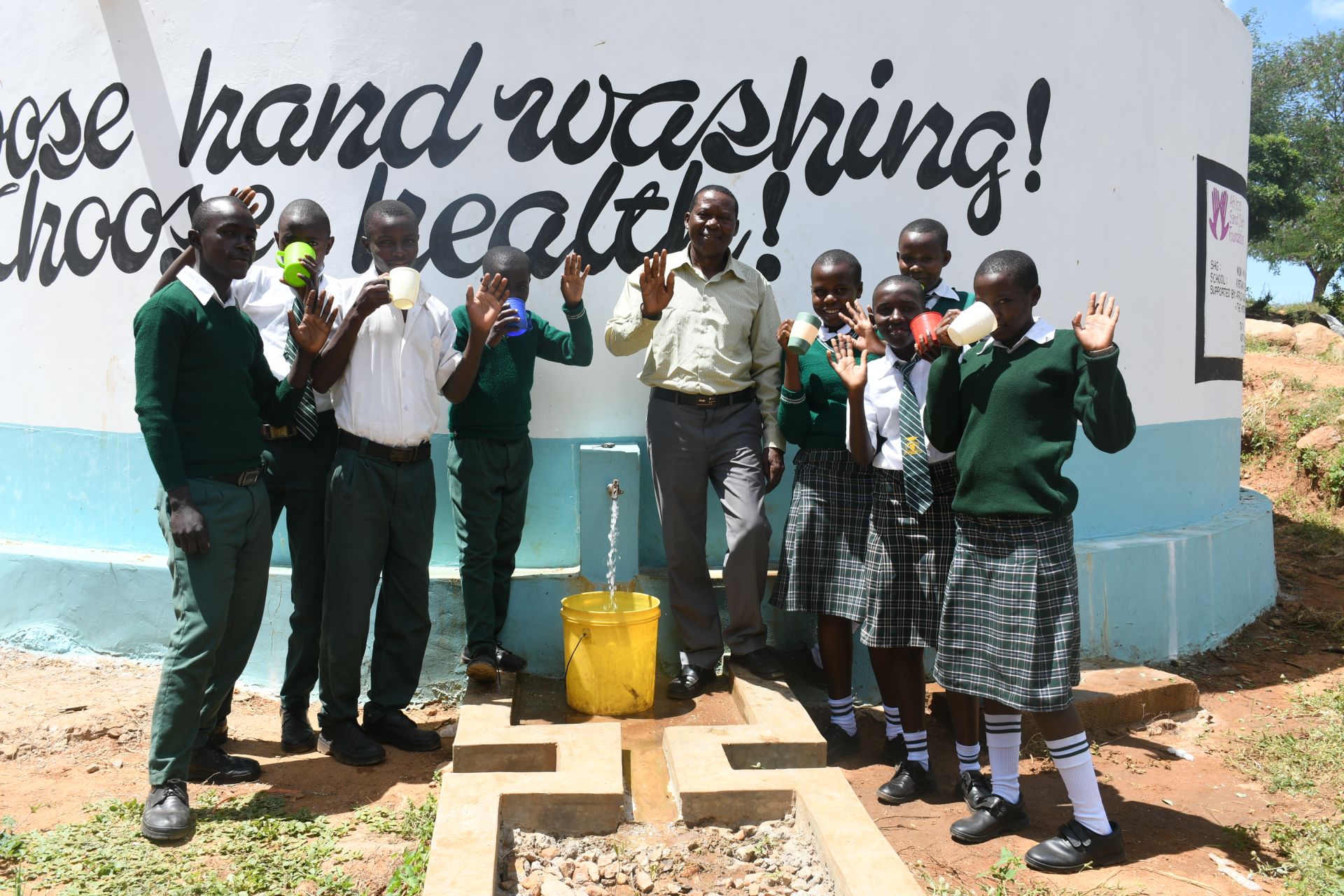
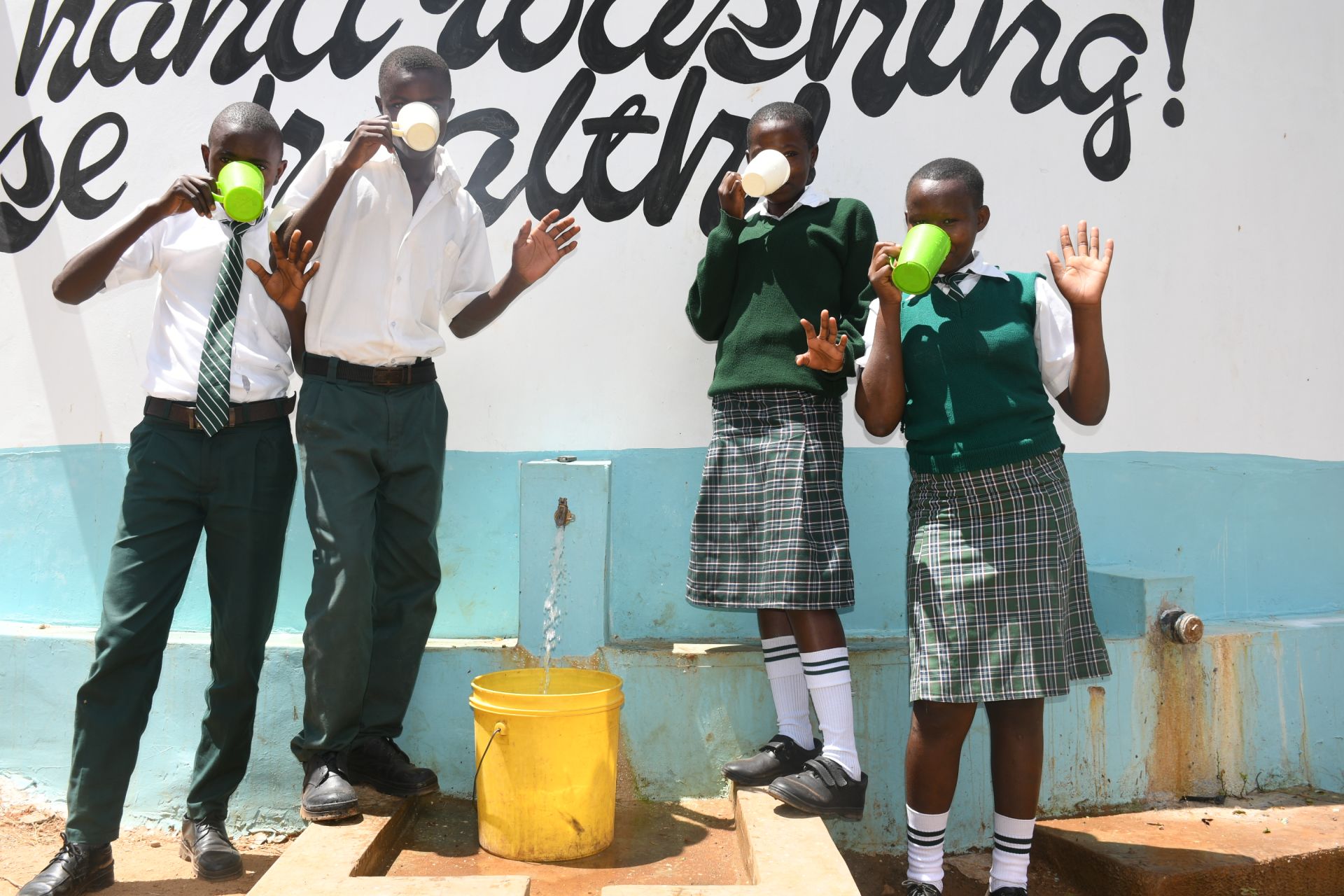
Your contribution has given access to clean water for the Kyethani Secondary School in Kenya, thanks to the completion of their 104,000-liter rain tank! Additionally, we installed handwashing stations and trained students and staff on sanitation and hygiene practices. Together, these components will unlock the opportunity for these students to thrive!

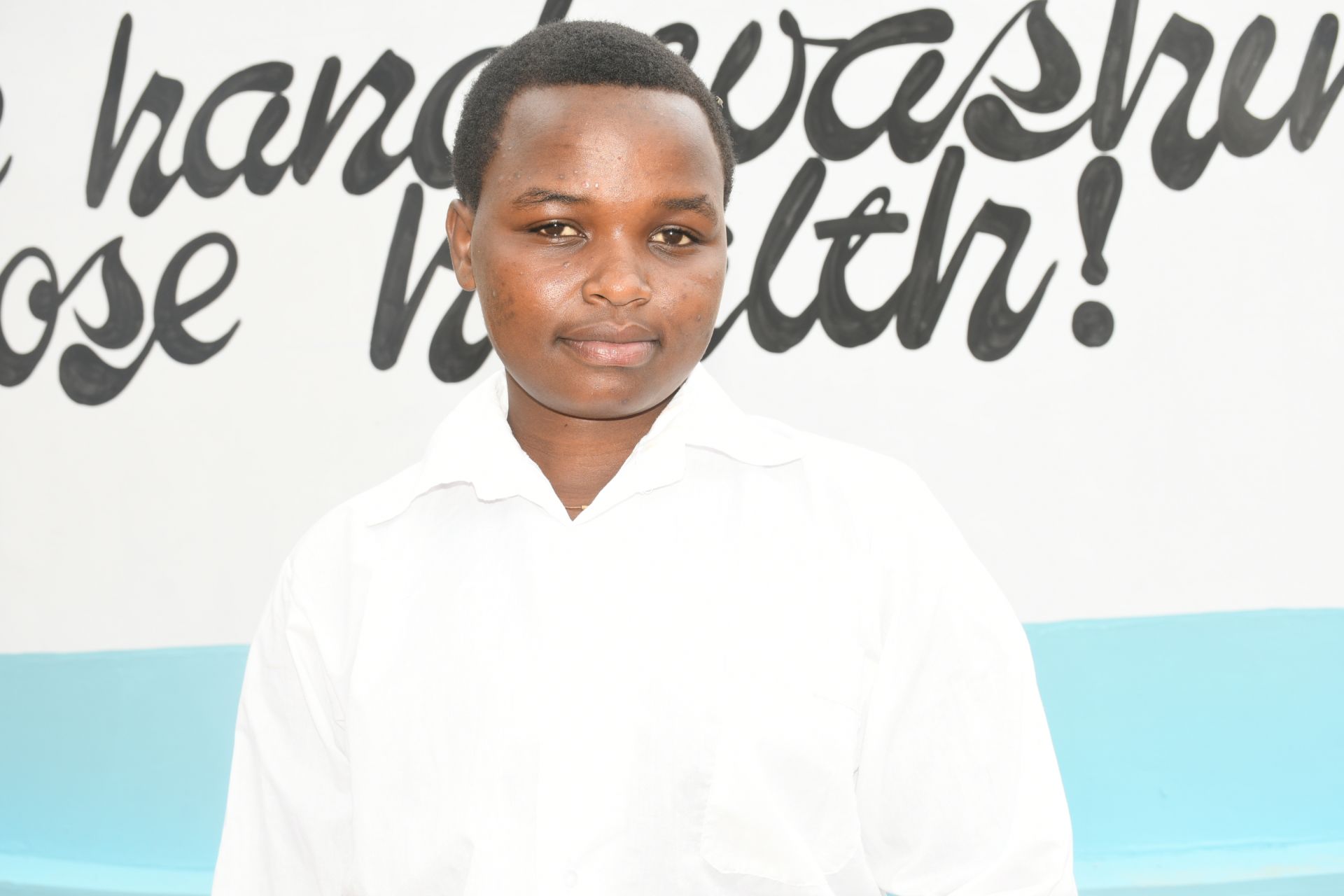
16-year-old Pauline is excited for clean water!

"Reliable water will improve learning in many ways. When students have enough clean water to drink, they stay alert and focused in class instead of feeling tired or dehydrated. Clean water also means fewer sicknesses, so learners will miss fewer school days. Science subjects like chemistry and biology depend on water for practicals, yet in the past, [our] lessons were sometimes postponed because there was no water. Now, students will learn without interruption and gain the hands-on skills needed to perform well in national exams. Having water for cleaning classrooms, toilets, and the school compound will also improve hygiene and make the school a more comfortable place to study. Meals will be prepared on time, giving students enough energy to learn and stay active throughout the day," Pauline shared.

Pauline.

Teachers were just as excited as the students about the new rain tank on campus!

"As a school, we have struggled for years with water scarcity, and it has affected almost every aspect of our operations. With the new 104,000-litre masonry rainwater tank, I hope it will finally end our dependence on expensive water vendors and unsafe scoop holes. Previously, we were forced to use water that was often drawn from unprotected sources, exposing learners to waterborne diseases like typhoid, amoeba, and diarrhoea. This created constant health concerns. We also faced challenges preparing meals on time because the kitchen lacked reliable water. Maintaining hygiene—especially in our latrines, classrooms, and science laboratories—was difficult during the drought season," shared teacher Rose Muchiri.

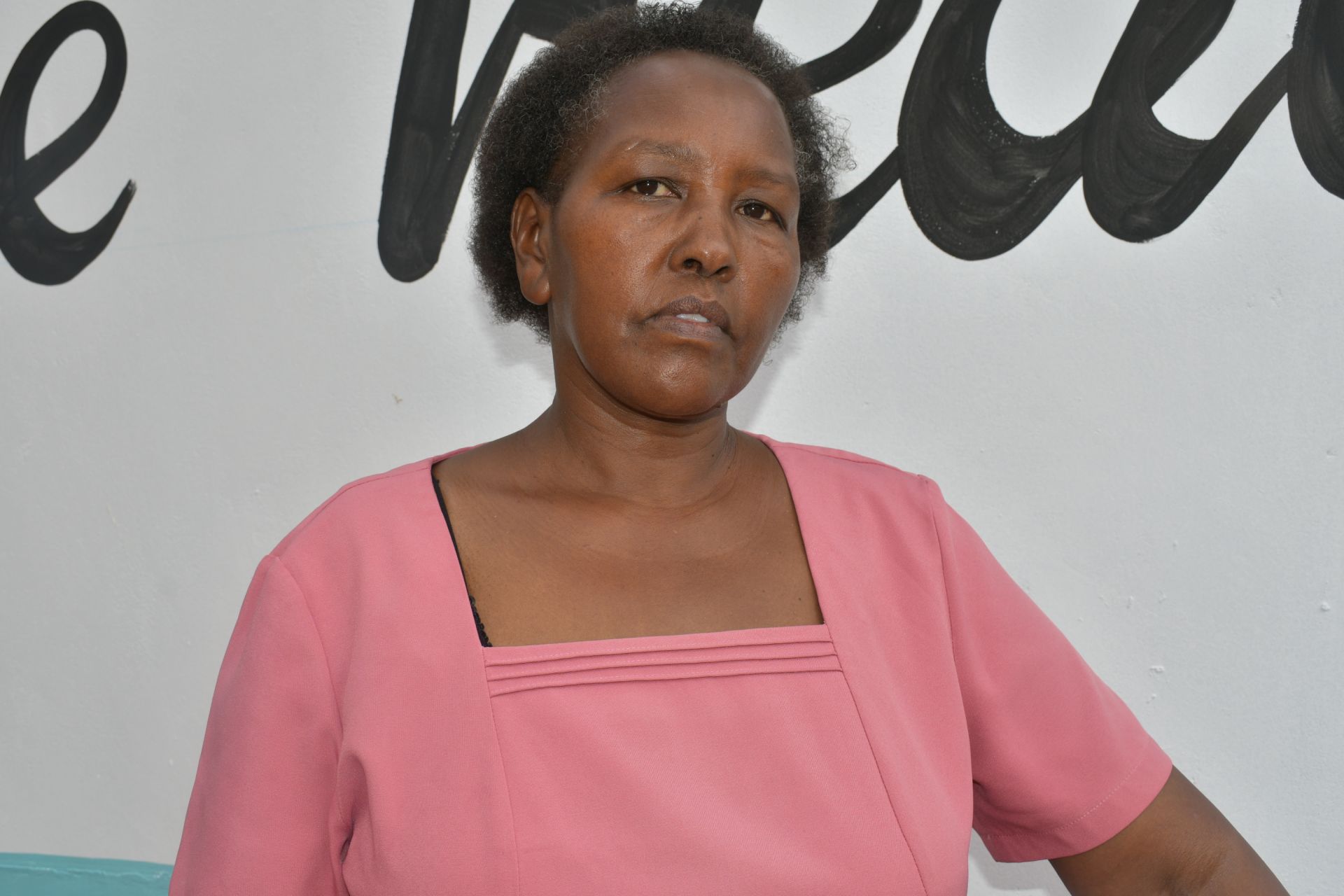
Teacher Rose Muchiri.

Rain Tank Construction

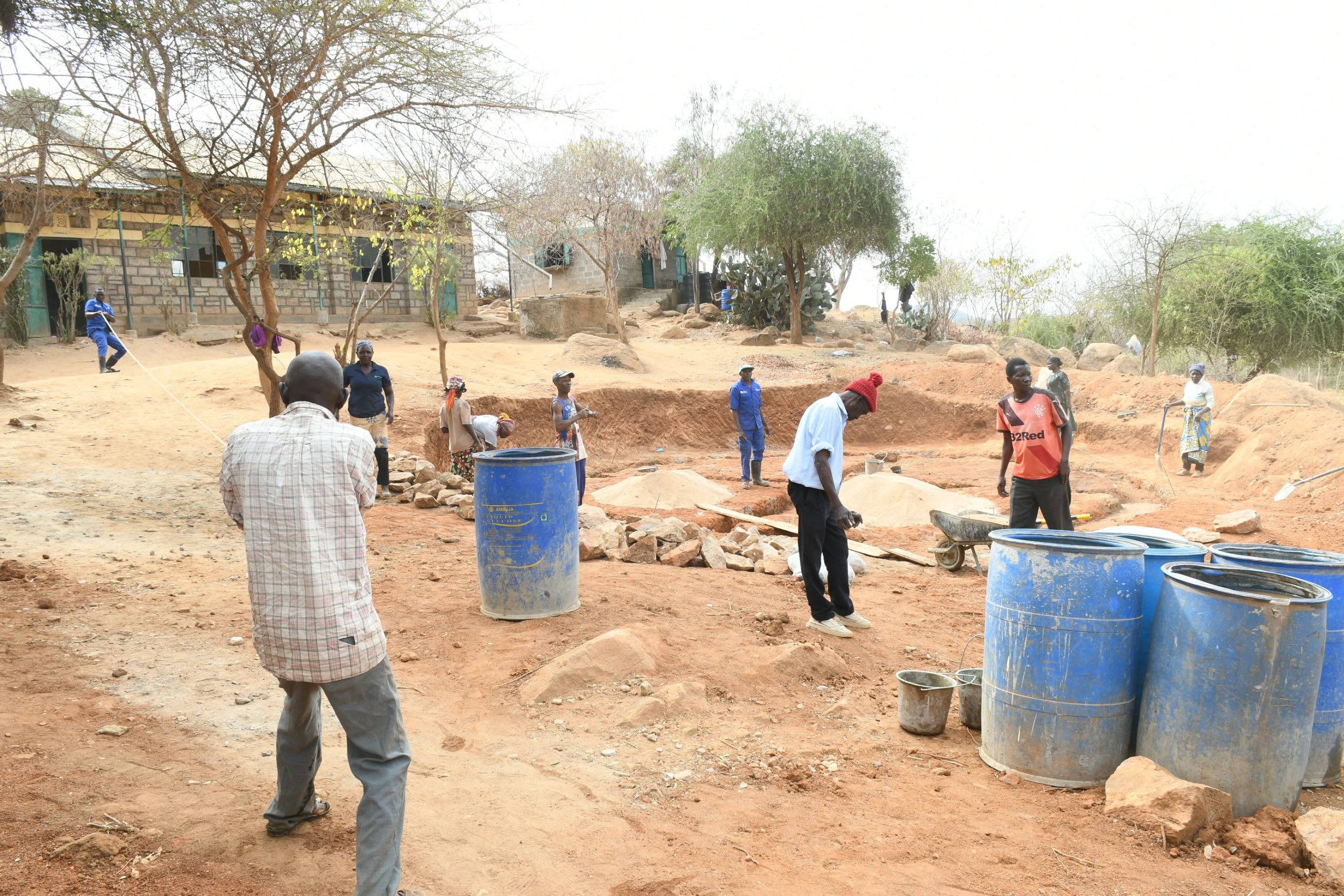
First, we held a meeting with all parents and the school’s headteacher to plan the project. The parents agreed to collect construction materials, such as sand, rocks, and water. We complemented their materials by delivering the expertise, tools, lumber, metal, cement, and a gutter system.

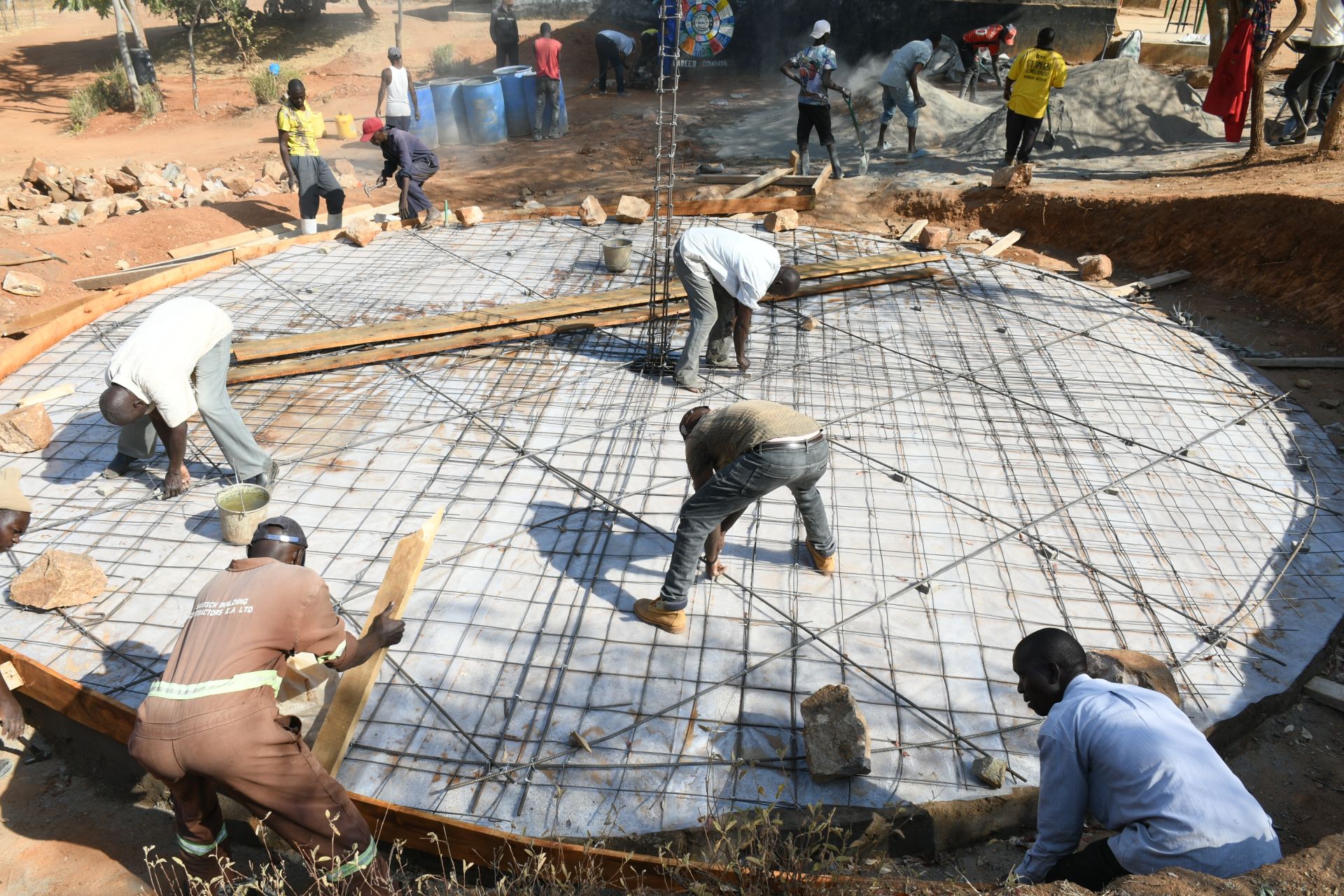
Establishing the foundation of the tank.

This tank holds a whopping 104,000 liters, as rainfall is rare in Southeastern Kenya. The more water the tank can store during the seasonal rains, the more water will be available for the students throughout the dry months!

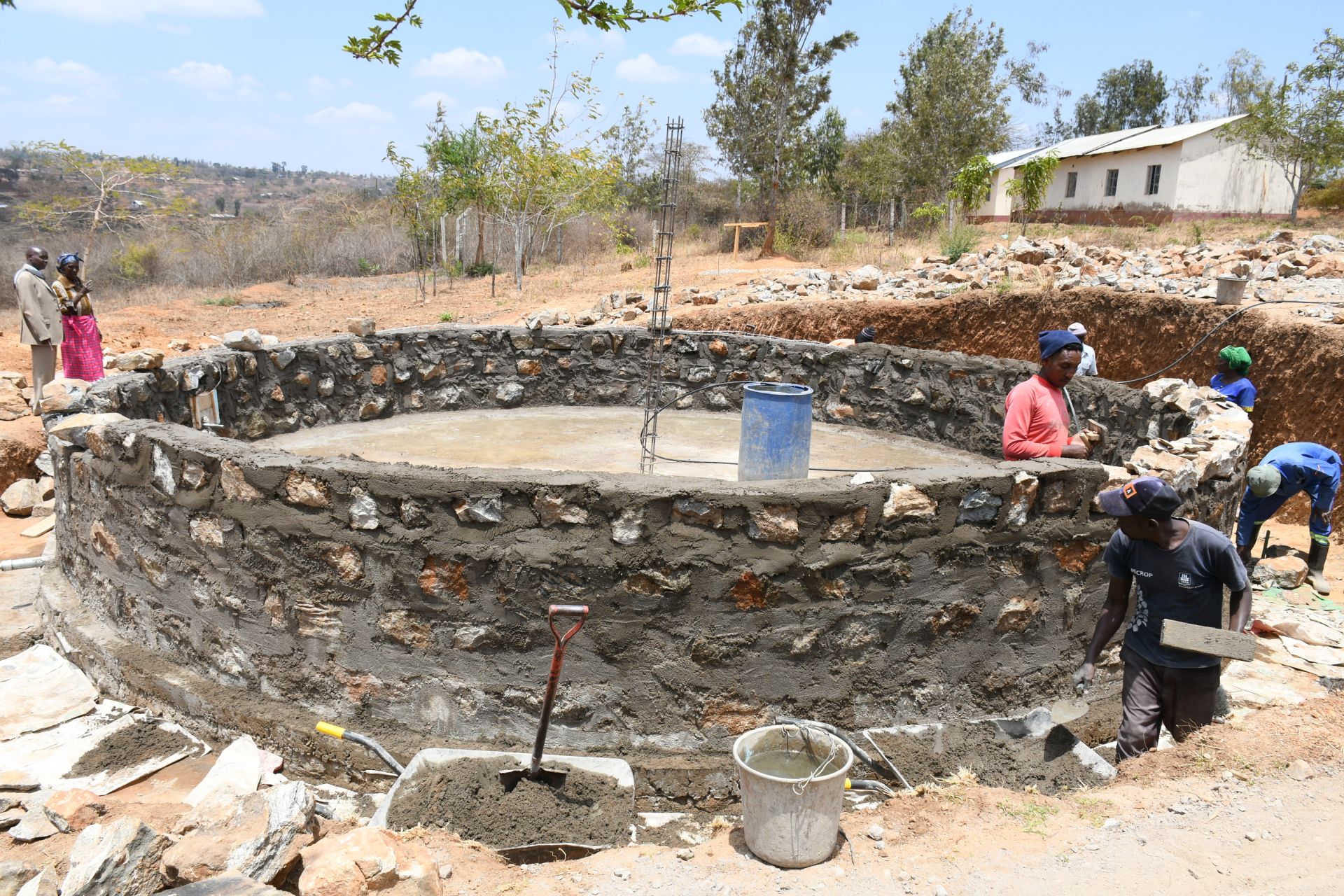
Constructing the walls of the tank.

Constructing this large rain tank is much like building a concrete house. First, we leveled the ground for foundation excavation. Next, we laid alternating layers of rocks and mortar up to seven feet high for the tank's outer walls. With such sturdy construction (the walls are three feet thick!), the tank will stand for a long time.

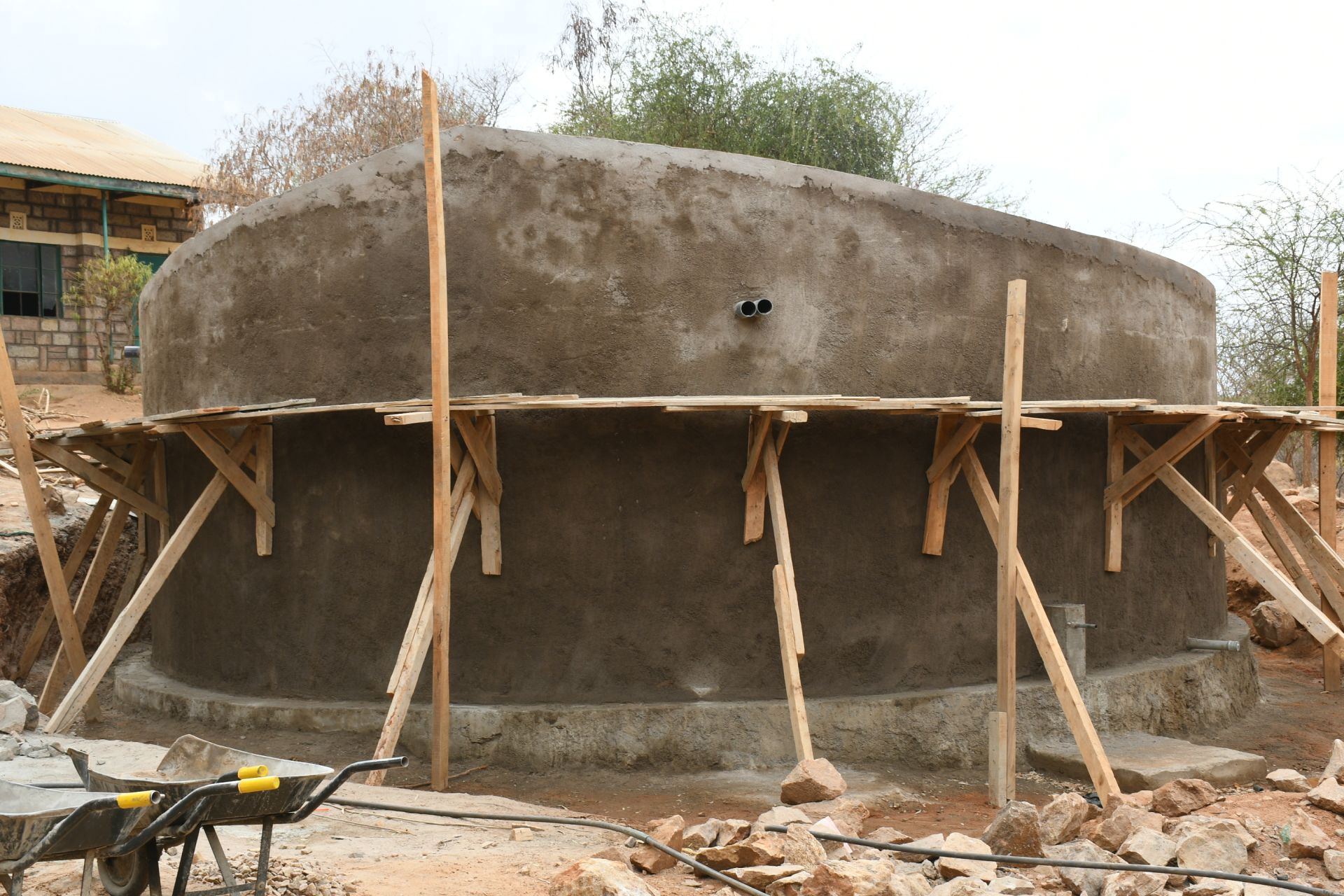
The walls are curing!

We built a reinforced concrete column in the center of the tank to support the roof and prevent it from collapsing. We plastered the walls inside and out with waterproof cement and installed guttering into the tank. Finally, we installed the roof of the tank, made of iron sheets and timber with vents to allow rainwater into the tank from the gutters.

The rainwater tank is complete!

Handwashing Stations

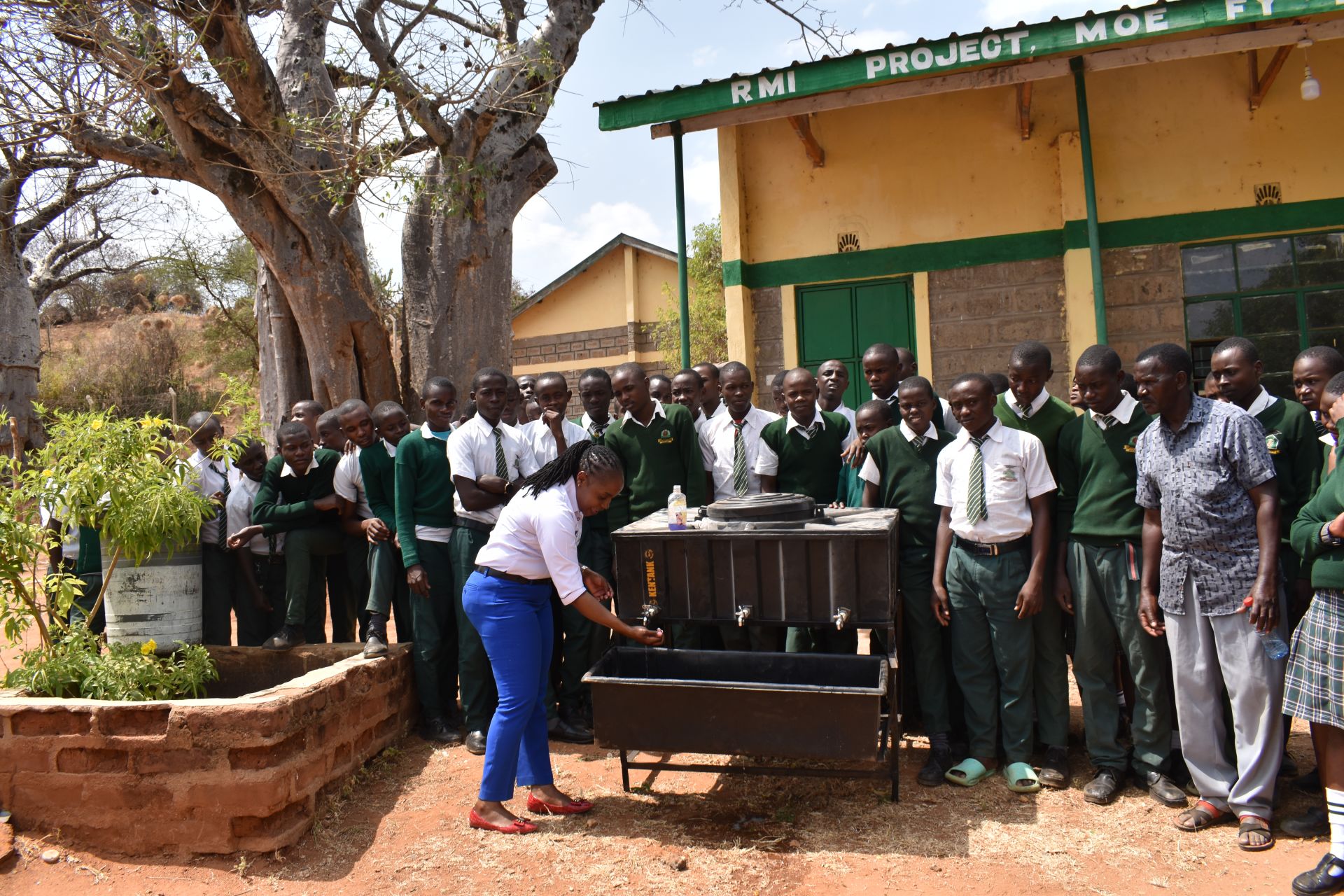
We delivered three new handwashing stations in time for training. Each new station has three taps, allowing nine students to wash their hands simultaneously.

Students utilize the new handwashing station!

School Education

We trained on health, hygiene, and sanitation topics. These included student health club activities, disease prevention, personal hygiene, and handwashing. We also covered topics such as water hygiene, latrine hygiene, and soap-making.

Students participate in handwashing and hygiene training.

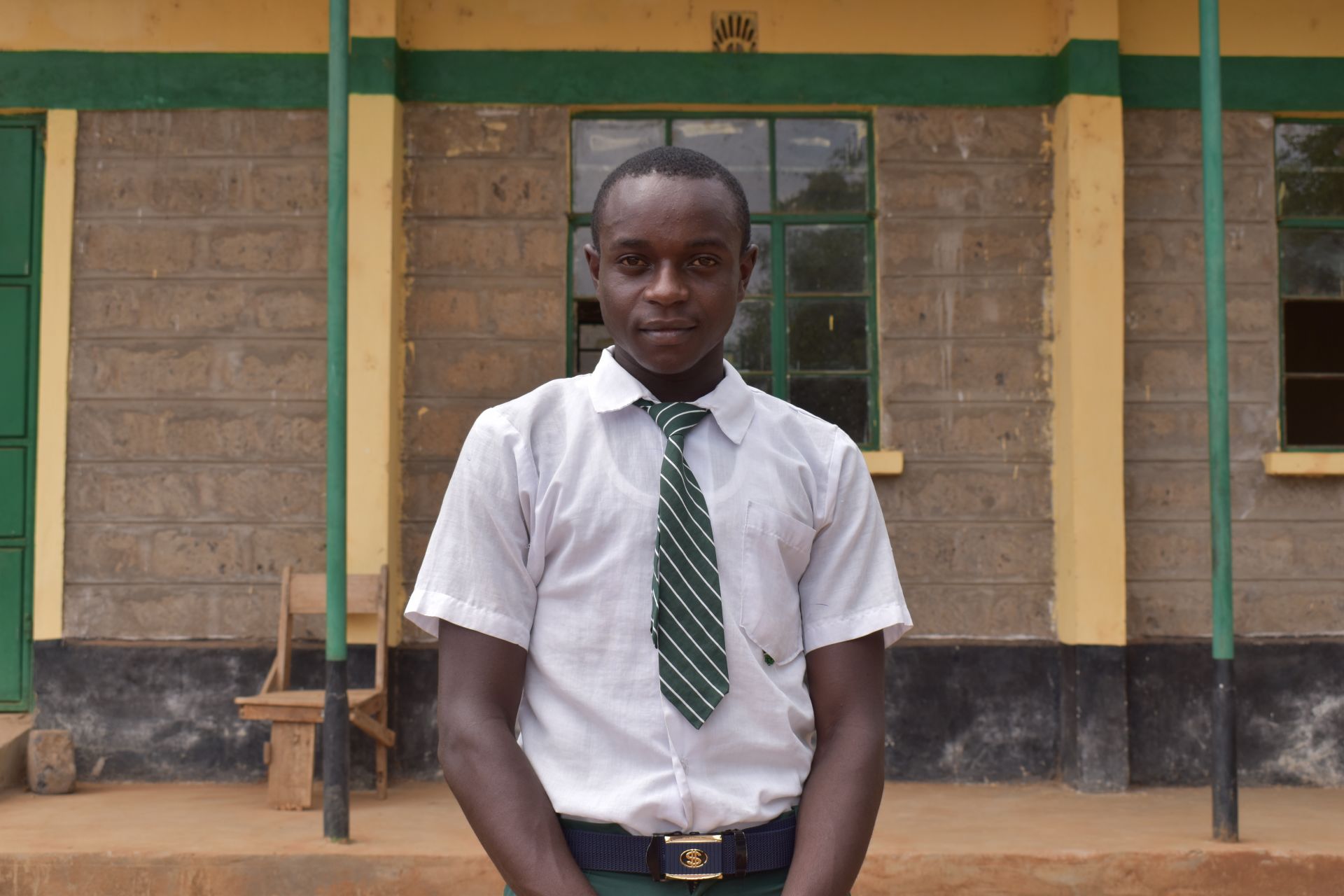
17-year-old James, the president of the Child Health Club, was deeply impacted by the training.

He shared, "This training completely changed how I view hygiene. Before, some of us—including myself—used to ignore hygiene messages because they sounded like common advice we had heard many times. But after learning practically and seeing the examples, I now understand that poor hygiene is a serious risk, especially in a school like ours, where clean water was a big challenge. The training helped me realize that keeping ourselves clean is not just about looking neat—it is about preventing diseases that can make us miss school, spend money on treatment, or even affect our families. It encouraged us to wash our hands more often, keep our surroundings clean, and use water responsibly. I now believe that if we all apply what we learned, we will have fewer sicknesses and a healthier school community."

James.

Thank you for making all of this possible!


Update photo


December, 2025: Exciting Progress at Kyethani Secondary School!

We’re thrilled to share that, thanks to your generous support, significant change is coming for Mawia and the entire Kyethani Secondary School. Construction has begun on the rainwater catchment project, bringing them one step closer to having clean, reliable water.

But that's not all—during construction, we’re also providing vital health training. These sessions equip the community with essential hygiene practices, ensuring that the benefits of clean water extend to lasting health improvements.

We’re so grateful for your role in making this possible. Stay tuned for more updates—soon, we’ll be celebrating the arrival of safe water at Kyethani Secondary School!


Project Photos


Project Type

For a rainwater collection system, we build gutters around a building with good, clean roofing to channel rain where we want it. From there, the water falls through a filtered inlet pipe into a high-capacity storage tank, the size of which is based on population and average rainfall patterns. In the tank, water can be stored for months, where it is easily treated and accessed. Learn more here!


Contributors

111 individual donor(s)