 Sand Dam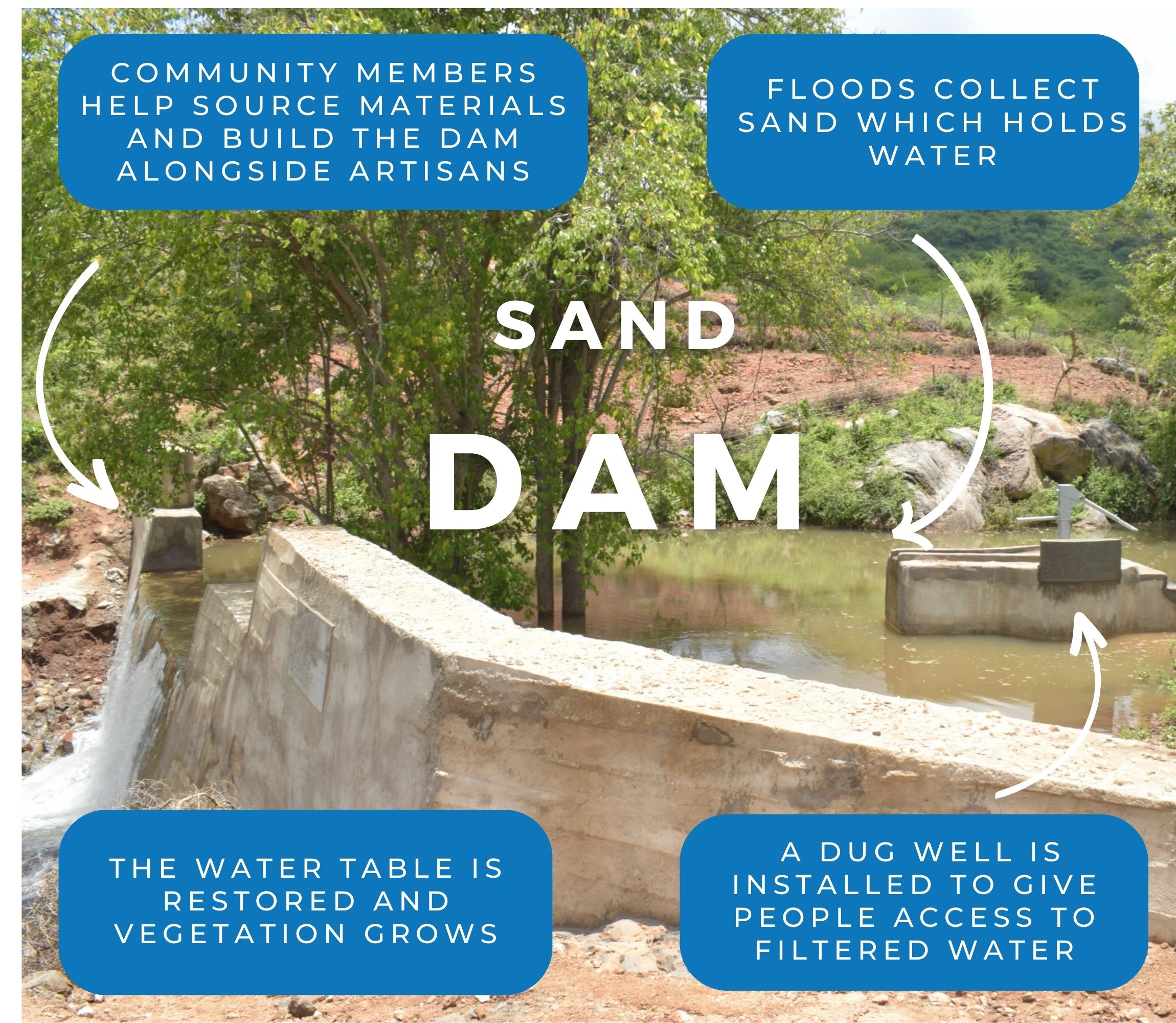
 Rehabilitation Project











Museesu Community is home to 450 people in the expansive rocky hills. The Museesu Self-Help Group has already built two sand dams and two protected dug wells, but many households still live too far to rely on them. When the dry season hits, families turn to scoop holes — shallow, unprotected holes shared with livestock, where a scoop of water can carry typhoid or a stomach illness.
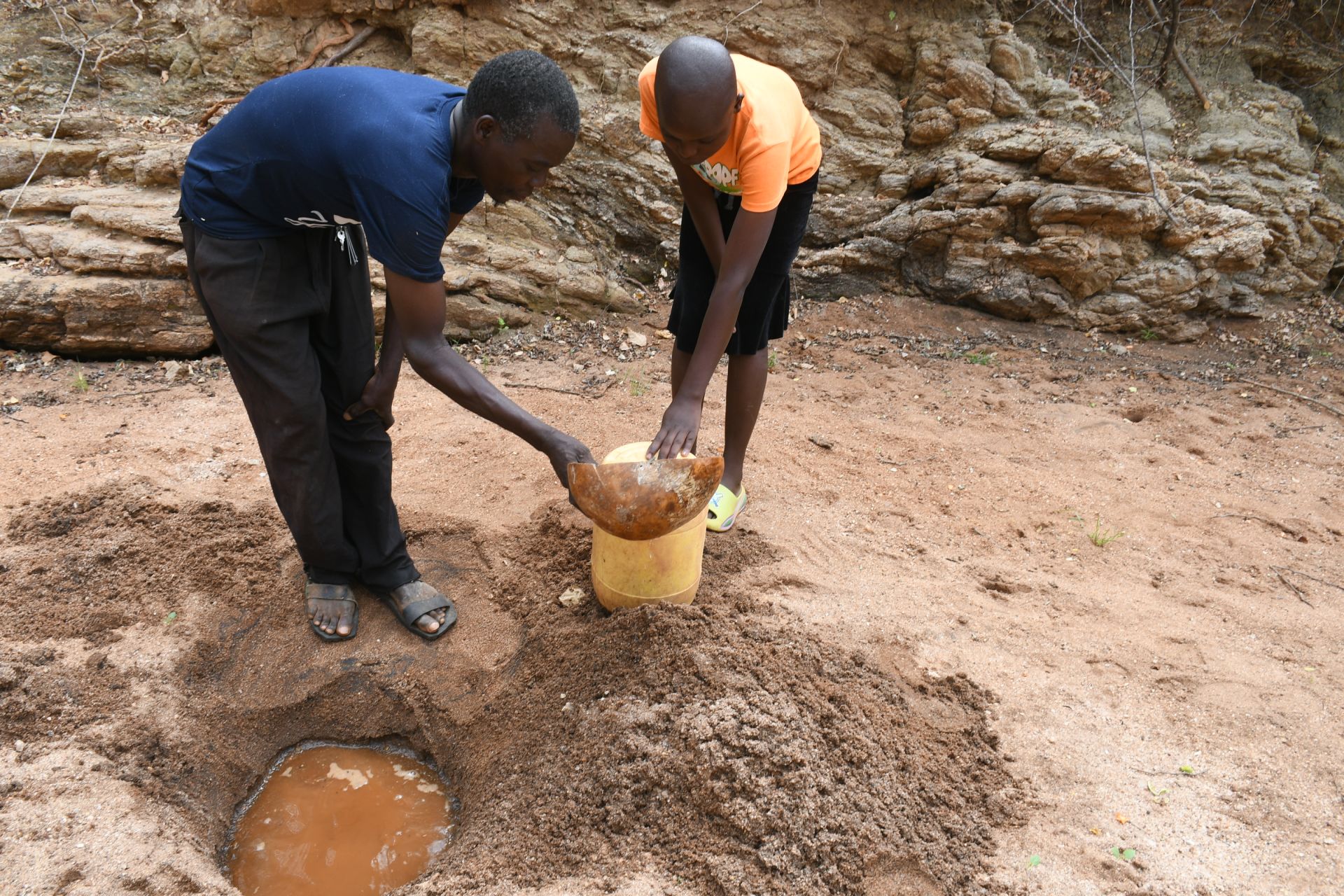
Community Members collect water from a scoop hole.
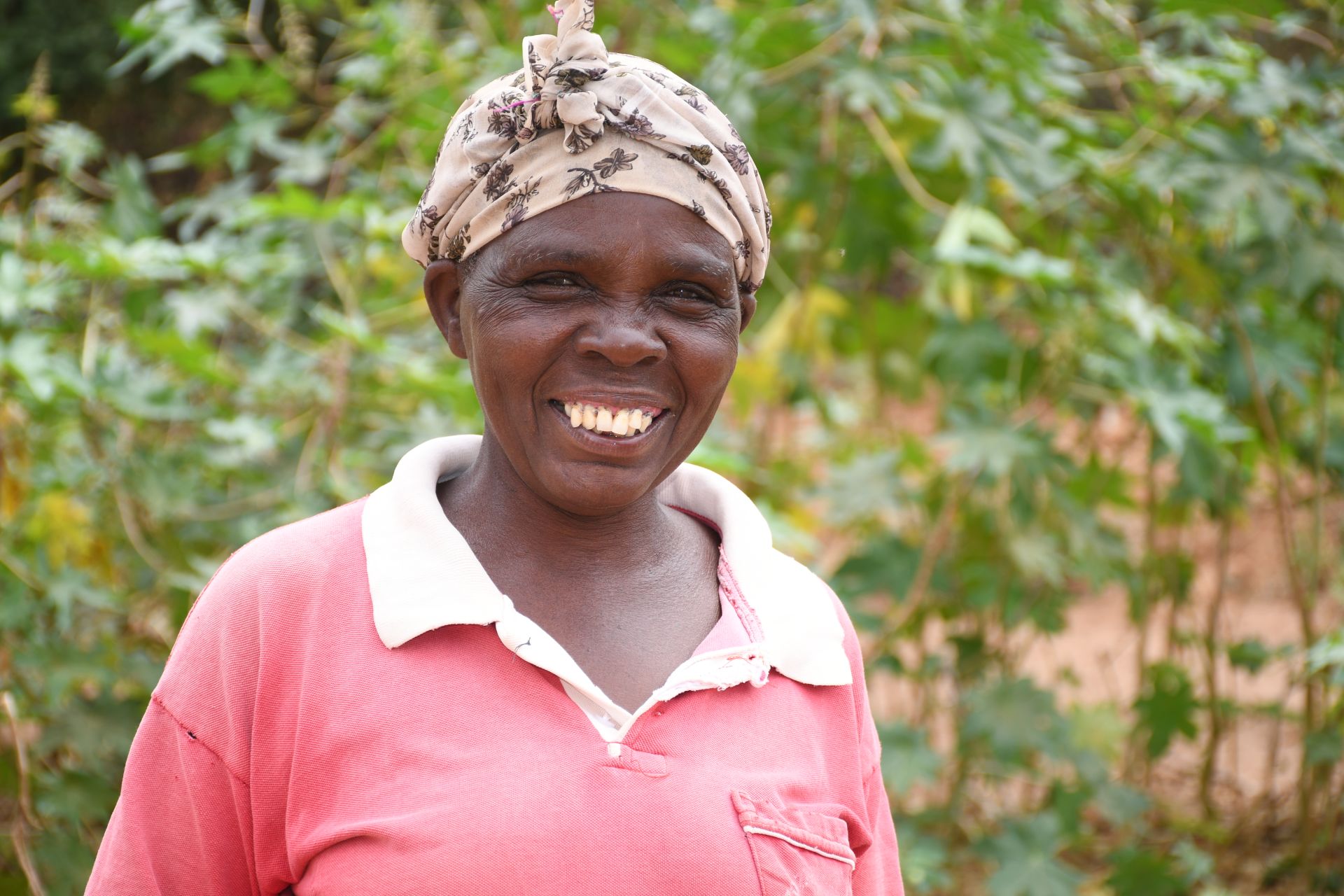
Mwende Munyoki, a 52-year-old farmer and mother, spends up to an hour reaching her main water source. "I am concerned because the scoop hole I often use is open and unprotected," she says. "Livestock and wild animals also use the same area, and animal waste can easily contaminate the water. People wash near the scoop hole, making the water even less safe for drinking. During the dry season, the scoop hole recharges very slowly, forcing many people to wait for hours to collect just a little water. I know this water is not always safe, but sometimes I have no other choice because the protected dug wells are too far from my home."
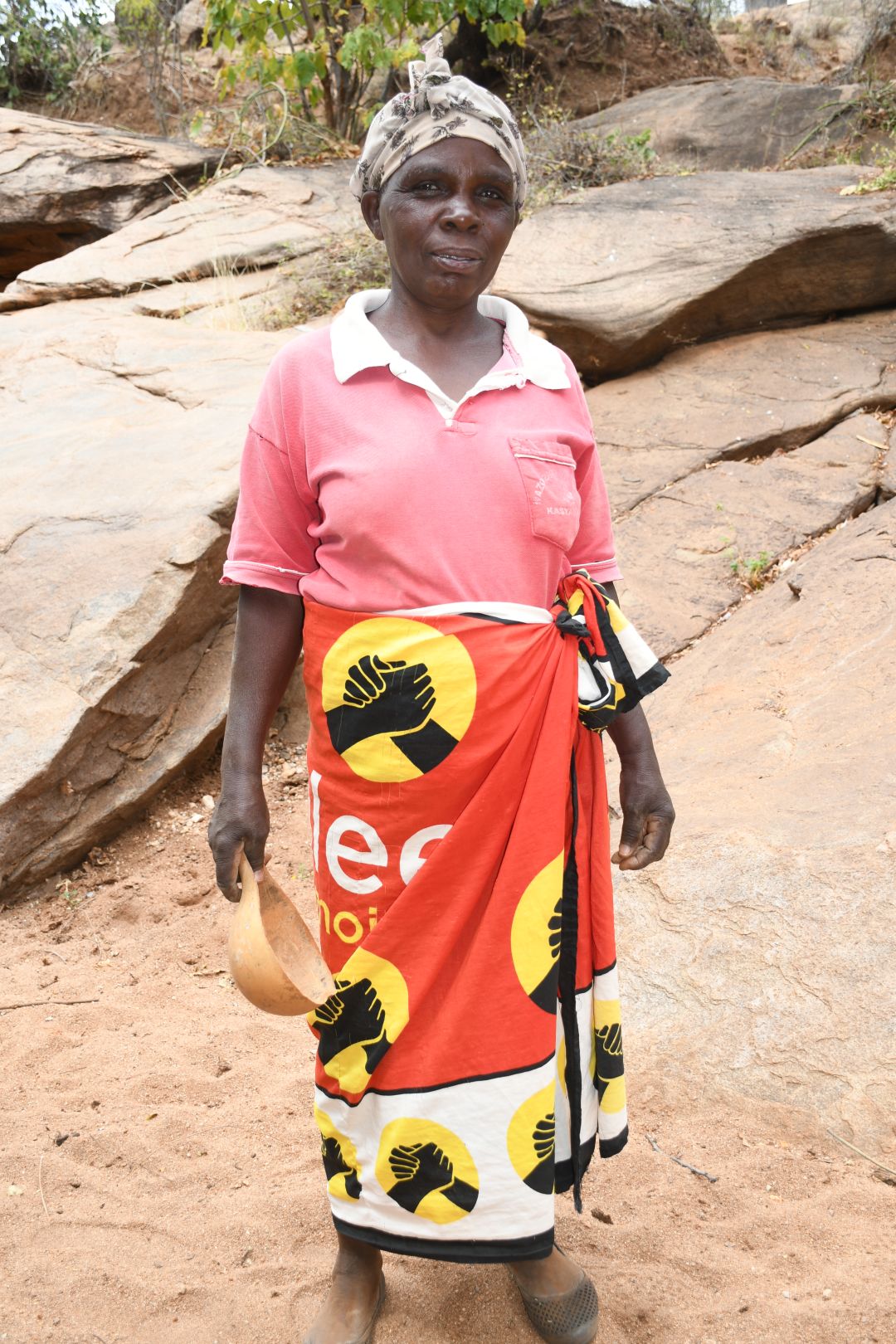
Ms. Munyoke.
The search for water also steals her time.
"If I did not have to spend so many hours every day looking for water, I would use that time to improve my family's livelihood," Mwende reflects. "I would expand my farming activities by growing vegetables and other crops that could feed my family and provide extra income. I would also spend more time caring for my livestock and carrying out other household responsibilities without feeling rushed or exhausted. Instead of planning my entire day around where I will find water, I would have time to participate more actively in our self-help group, learn new farming practices, and support my children and family."
A third sand dam would ease that burden. "A new sand dam would make a big difference for my family because it would provide more reliable and cleaner water closer to where we live," she says. "It would reduce our dependence on contaminated scoop holes, lowering the risk of illnesses such as typhoid, diarrhea, and stomach problems. We would also avoid walking long distances before sunrise or under the hot sun, which is physically exhausting and sometimes unsafe. Having enough clean water would allow us to maintain better hygiene at home, prepare food safely, and live healthier lives."
For Mwende, the stakes go beyond convenience.
"To me, water truly is life because everything my family depends on begins with water," she says. "We need it to drink, prepare food, keep ourselves and our home clean, care for our livestock, and grow crops that feed us and provide income. Without enough water, every day becomes a struggle, and it is difficult to plan for the future because all our energy goes into searching for this basic necessity. I believe that having reliable access to water would not only improve our health but also allow my family to work harder, earn a better living, and live with greater dignity and hope."
Solving the water crisis in this community will require a multifaceted system that will work together to create a sustainable water source that will serve this community for years to come.
Steps Toward a Solution
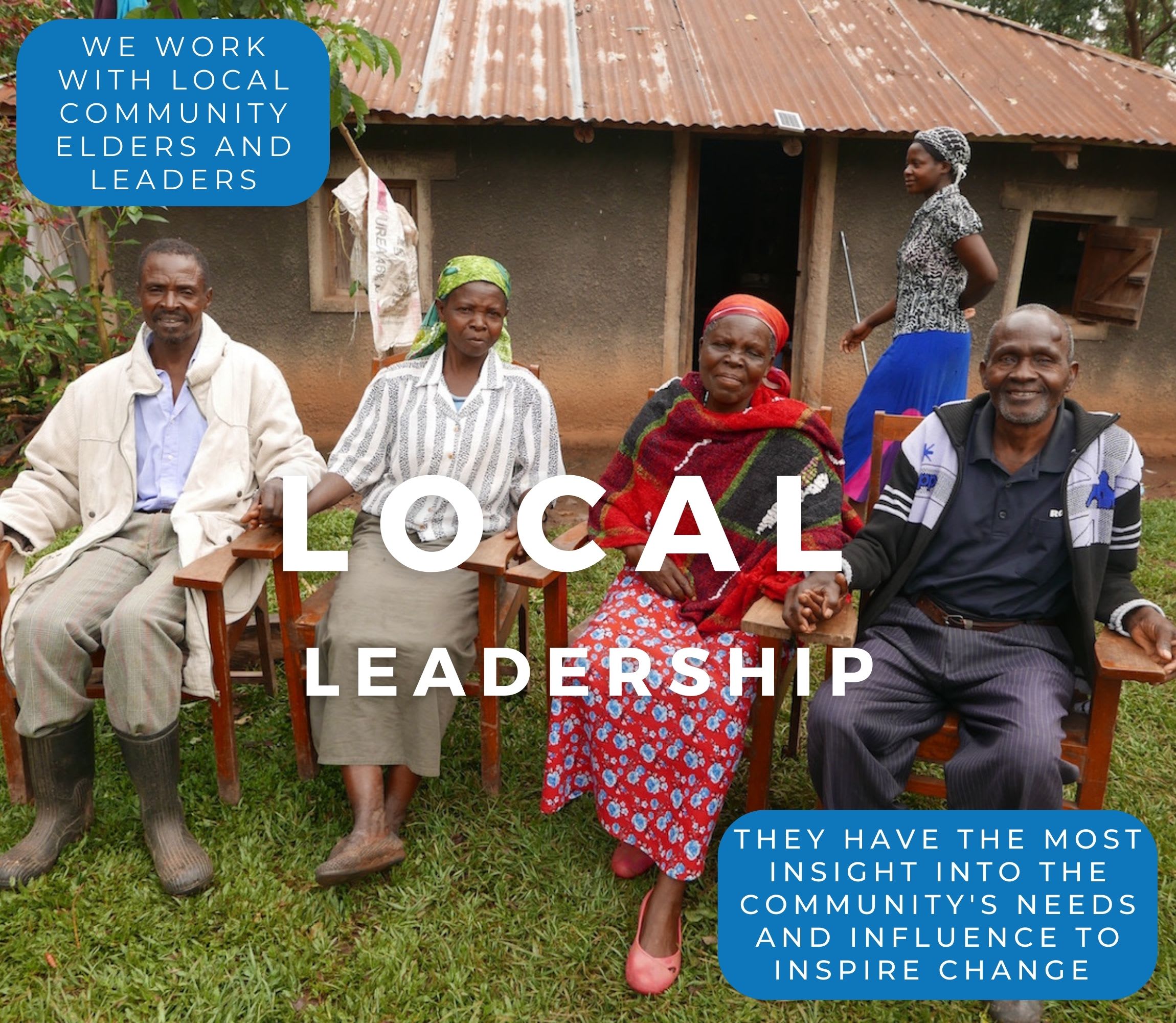
Our technical experts worked with the local community to identify the most effective solution to their water crisis. Together, they decided to construct a sand dam and a protected dug well.
Sand Dam
Sand dams are sought-after, climate-smart, and lasting water solutions providing hope and resilience to communities in arid Southeastern Kenya. Think of them like giant sandboxes constructed in seasonal rivers that would typically quickly dry up after the rainy season. Instead of holding water like traditional dams, they collect sand and silt.
When infrequent rains do come, these dams catch a percentage of the river's flow, letting most of the water continue downstream to other communities. But here's the magic: the sand they collect acts like a natural filter, holding onto water long after the river's gone dry. Then, wells are constructed nearby, creating a reliable water source even during the driest times.
And the benefits don't stop there! In communities impacted by climate change, sand dams replenish groundwater and prevent soil erosion. Even during severe droughts, the consistent water supply from these sand dams allows farmers to thrive, giving way for enough food not only for their families but also to sell in local markets.
The most remarkable aspect of sand dams is how they involve the local community every step of the way, giving them a sense of ownership and pride in solving their own water shortage and managing their own water resources.
This sand dam will be connected to a protected dug well to make the water more accessible.
Community Education & Ownership
Hygiene and sanitation training are integral to our water projects. Training is tailored to each community's specific needs and includes key topics such as proper water handling, improved hygiene practices, disease transmission prevention, and care of the new water point. Safe water and improved hygiene habits foster a healthier future for everyone in the community.
Encouraged and supported by our team's guidance, the community elects a water user committee representative of its diverse members. This committee assumes responsibility for maintaining the water point, organizing community efforts, and gathering fees to ensure its upkeep.