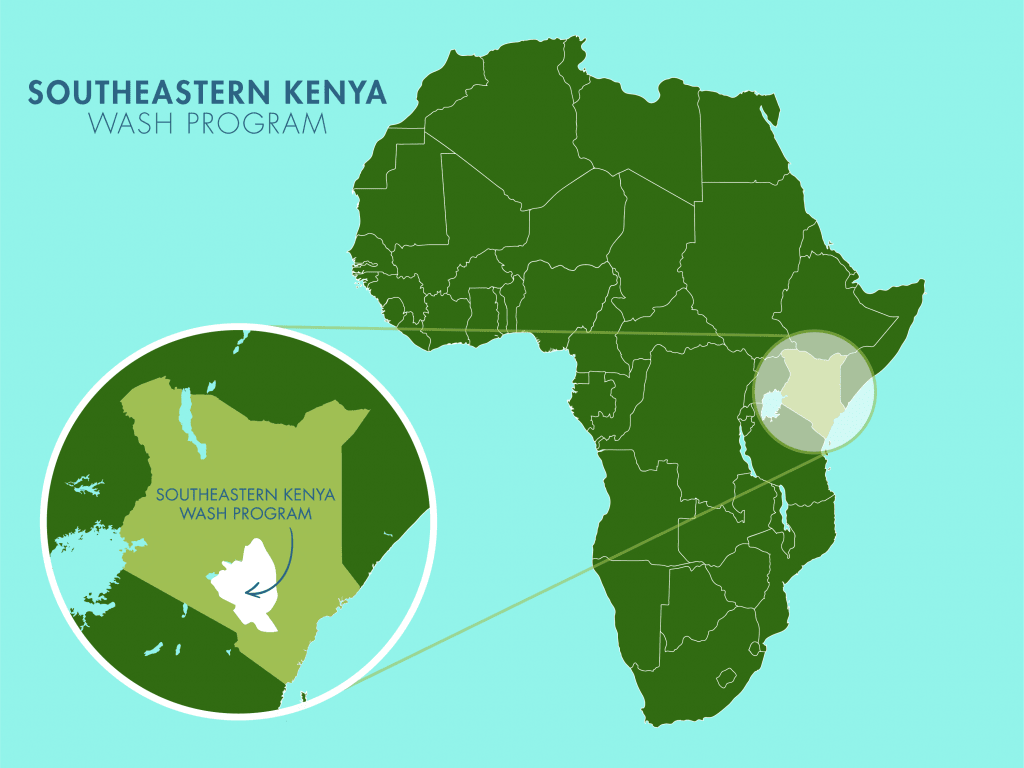
 Sand Dam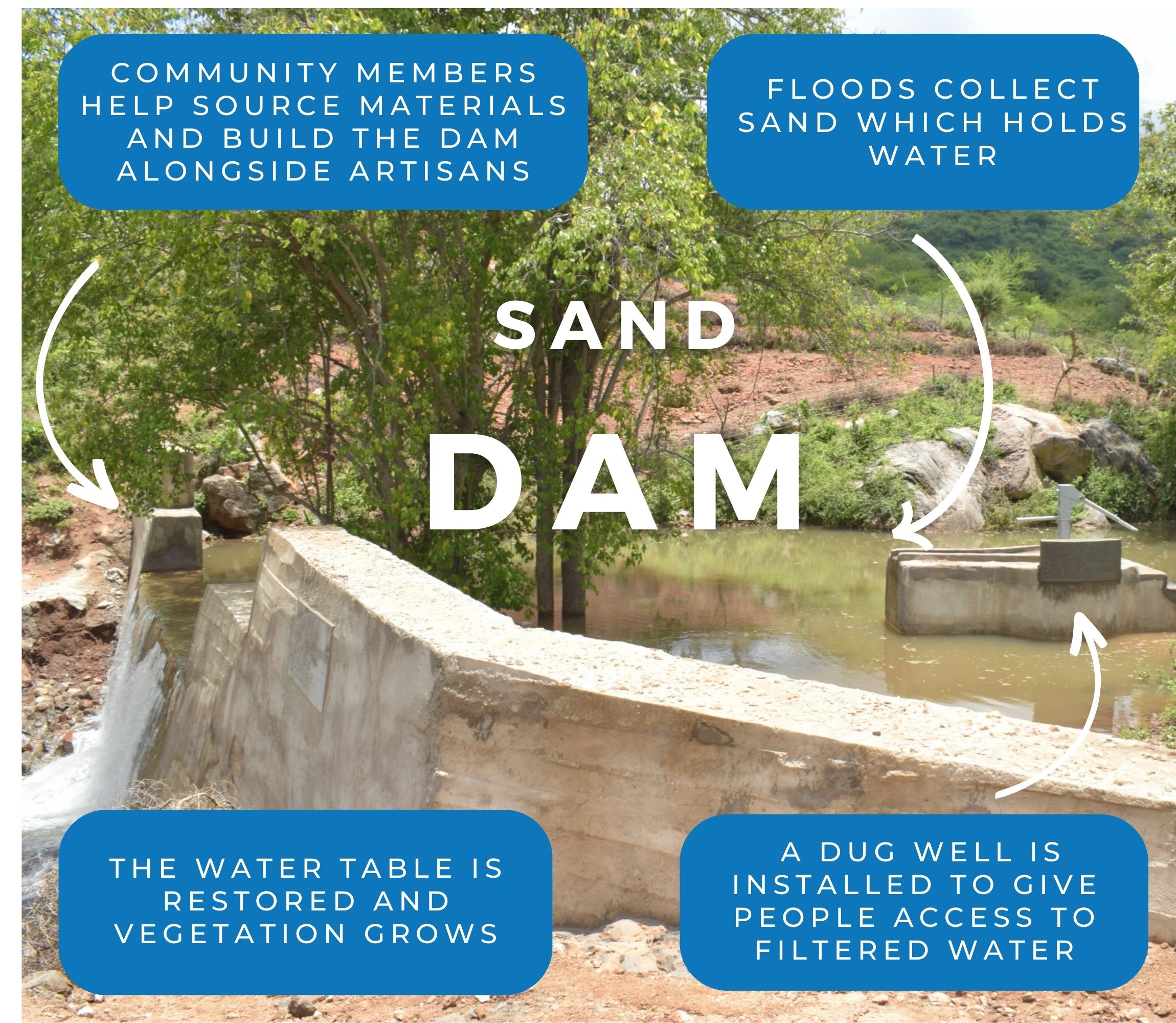
 Rehabilitation Project











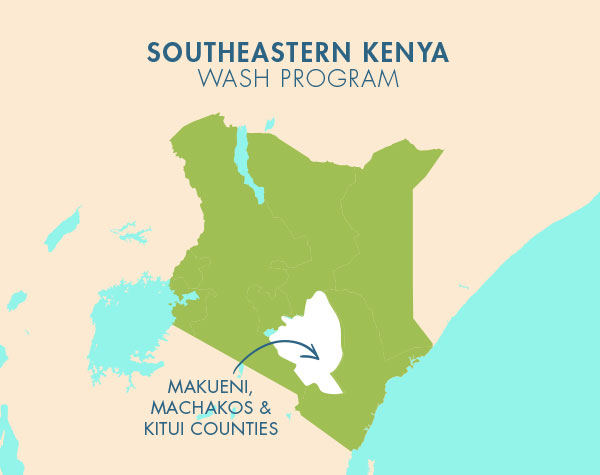
Veronica is a 12-year-old girl with a big dream of becoming a doctor one day. But every single day, she faces a problem that makes that dream harder to reach: a lack of clean, safe water.
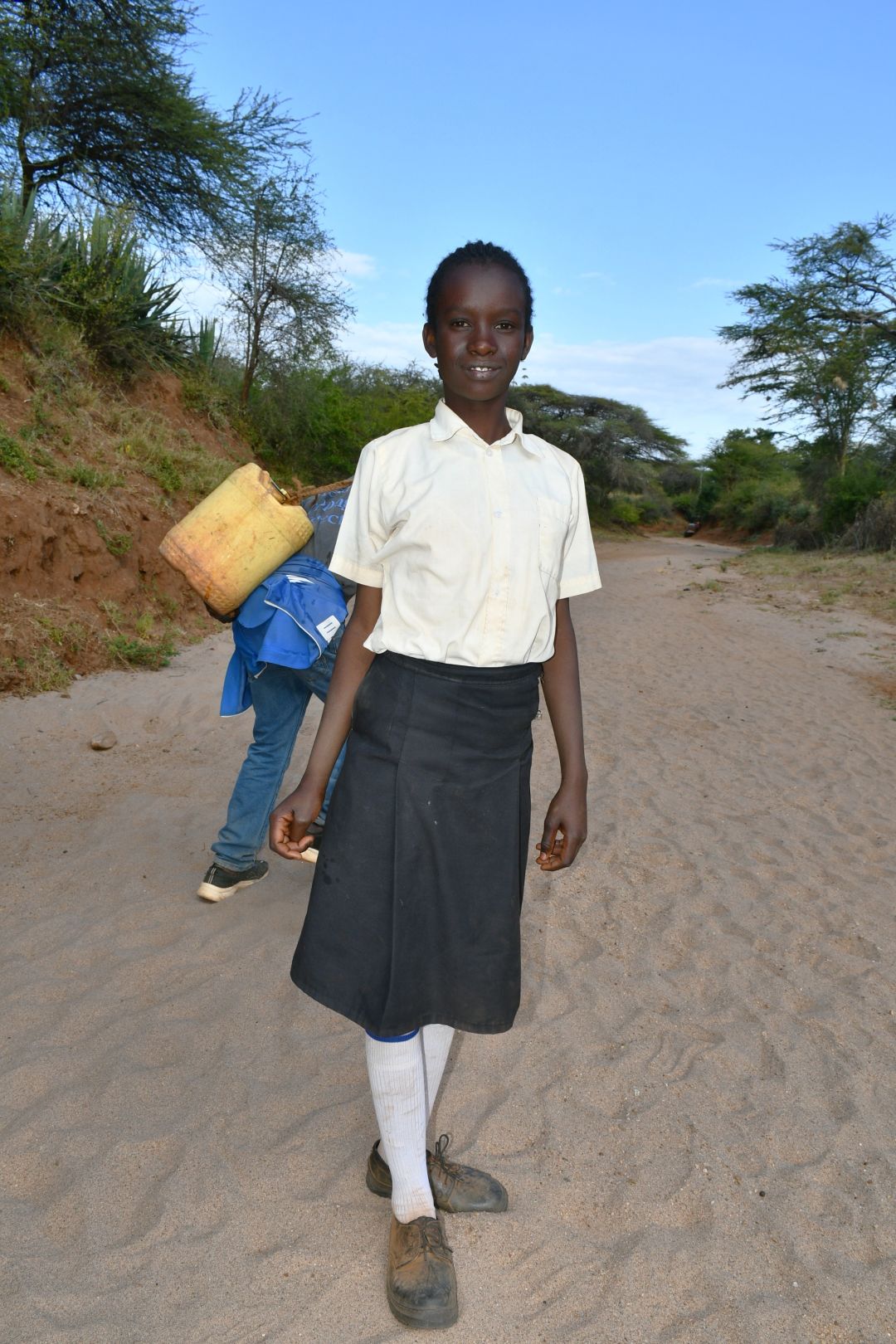
Veronica.
Getting water in the Ngongu Community of 1,000 people takes up two hours of Veronica's day and causes her great concern.
"I often feel worried and tired because I know the journey will be long and sometimes difficult," Veronica lamented. "The hot sun, the long distance, and the overcrowded water points make water collection exhausting. After school, I often spend a lot of time fetching water instead of studying or doing homework. By the time I return home, I am usually tired from the long walk and carrying water."
She walks long distances along rocky, dusty paths to reach a community kiosk, but she often finds long lines of people waiting for the same water. As she puts it, "The water points are often crowded because many people depend on the same sources."
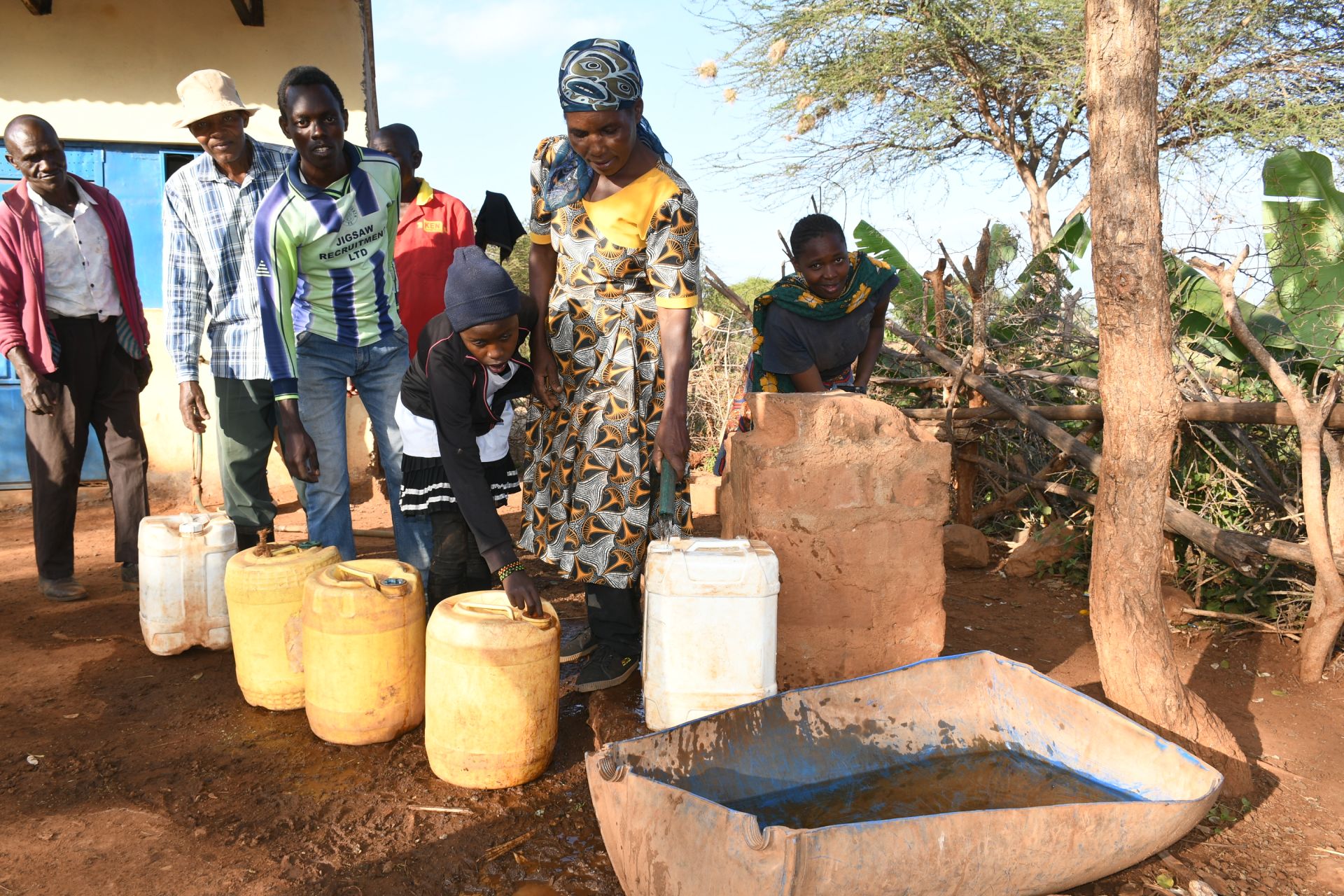
People waiting to collect water.
"Sometimes I feel frustrated when I have to spend my free time fetching water instead of studying or resting. However, I understand that my family needs water, so I do my best to help," she continued.
But Veronica's exhaustion is not the only issue. The water itself is a serious problem. It's often untreated and salty, and it makes people sick.
Veronica remembers one particularly hard time: "I remember a time when I developed a severe stomach upset after drinking water that had not been treated. I experienced stomach pains and diarrhea for several days. I felt weak and tired and could not fully participate in school activities. It was difficult to concentrate on my studies because I was uncomfortable and worried about my health. It was a stressful experience for both my family and me." Missing school means falling behind, and for a girl with her ambitions, that's a heavy price to pay.
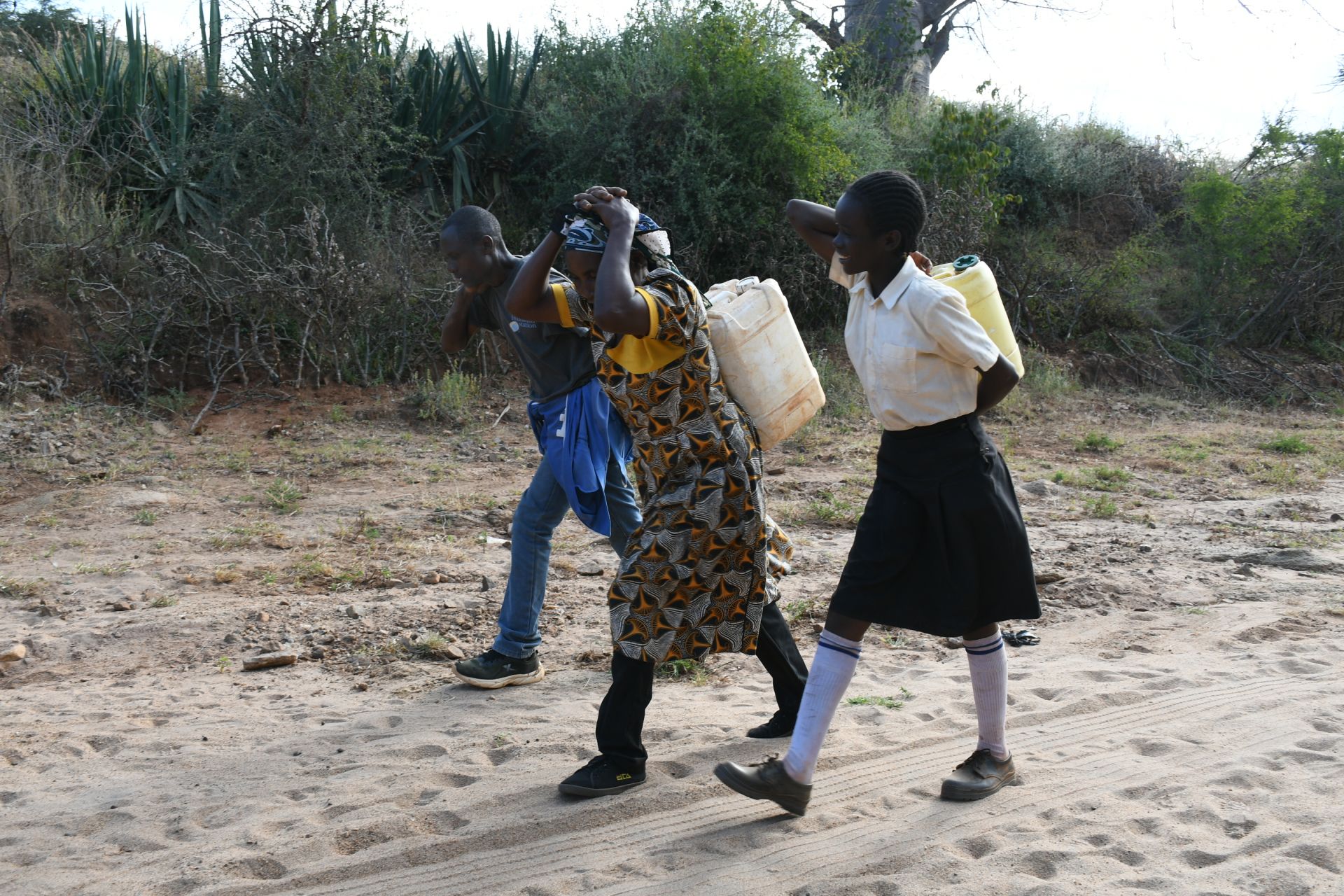
Veronica carries water home with other community members.
Veronica knows her parents are concerned for her when she is ill. "My parents try their best to care for me at home by giving me plenty of clean water and ensuring I rest. If my condition does not improve, they take me to the nearest health facility for treatment."
But with a visit to the health facility comes a financial burden that makes everything worse. "Sometimes my parents have to spend a significant amount of their limited income on water, leaving less money for food, school requirements, and other household expenses," she said.
It is an overwhelming burden on the entire family.
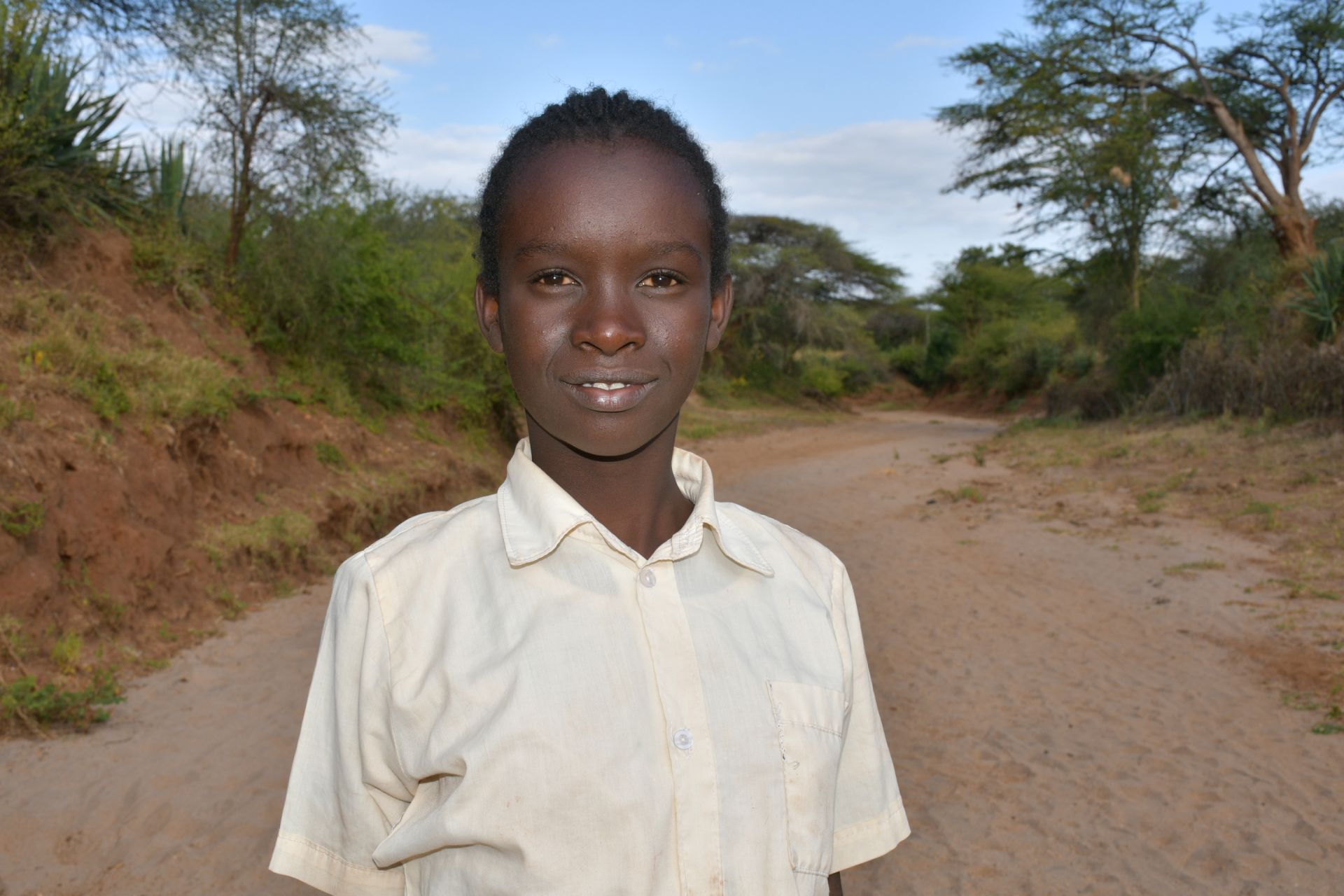
But Veronica is clear about how different her and her family's life could be if she had access to clean water nearby. "If I did not have to spend so much time fetching water, I would use that time to study, complete my homework, and revise for my exams."
"Having reliable access to water would give me more time to focus on my studies and move closer to achieving my goals." For Veronica, clean water isn't just a basic need; it's the key to her future.
Solving the water crisis in this community will require a multifaceted system that will work together to create a sustainable water source that will serve this community for years to come.
Steps Toward a Solution
Our technical experts worked with the local community to identify the most effective solution to their water crisis. Together, they decided to construct a sand dam and a protected dug well.
Sand Dam
Sand dams are sought-after, climate-smart, and lasting water solutions providing hope and resilience to communities in arid Southeastern Kenya. Think of them like giant sandboxes constructed in seasonal rivers that would typically quickly dry up after the rainy season. Instead of holding water like traditional dams, they collect sand and silt.
When infrequent rains do come, these dams catch a percentage of the river's flow, letting most of the water continue downstream to other communities. But here's the magic: the sand they collect acts like a natural filter, holding onto water long after the river's gone dry. Then, wells are constructed nearby, creating a reliable water source even during the driest times.
And the benefits don't stop there! In communities impacted by climate change, sand dams replenish groundwater and prevent soil erosion. Even during severe droughts, the consistent water supply from these sand dams allows farmers to thrive, giving way for enough food not only for their families but also to sell in local markets.
The most remarkable aspect of sand dams is how they involve the local community every step of the way, giving them a sense of ownership and pride in solving their own water shortage and managing their own water resources.
This sand dam will be connected to a protected dug well to make the water more accessible.
Community Education & Ownership
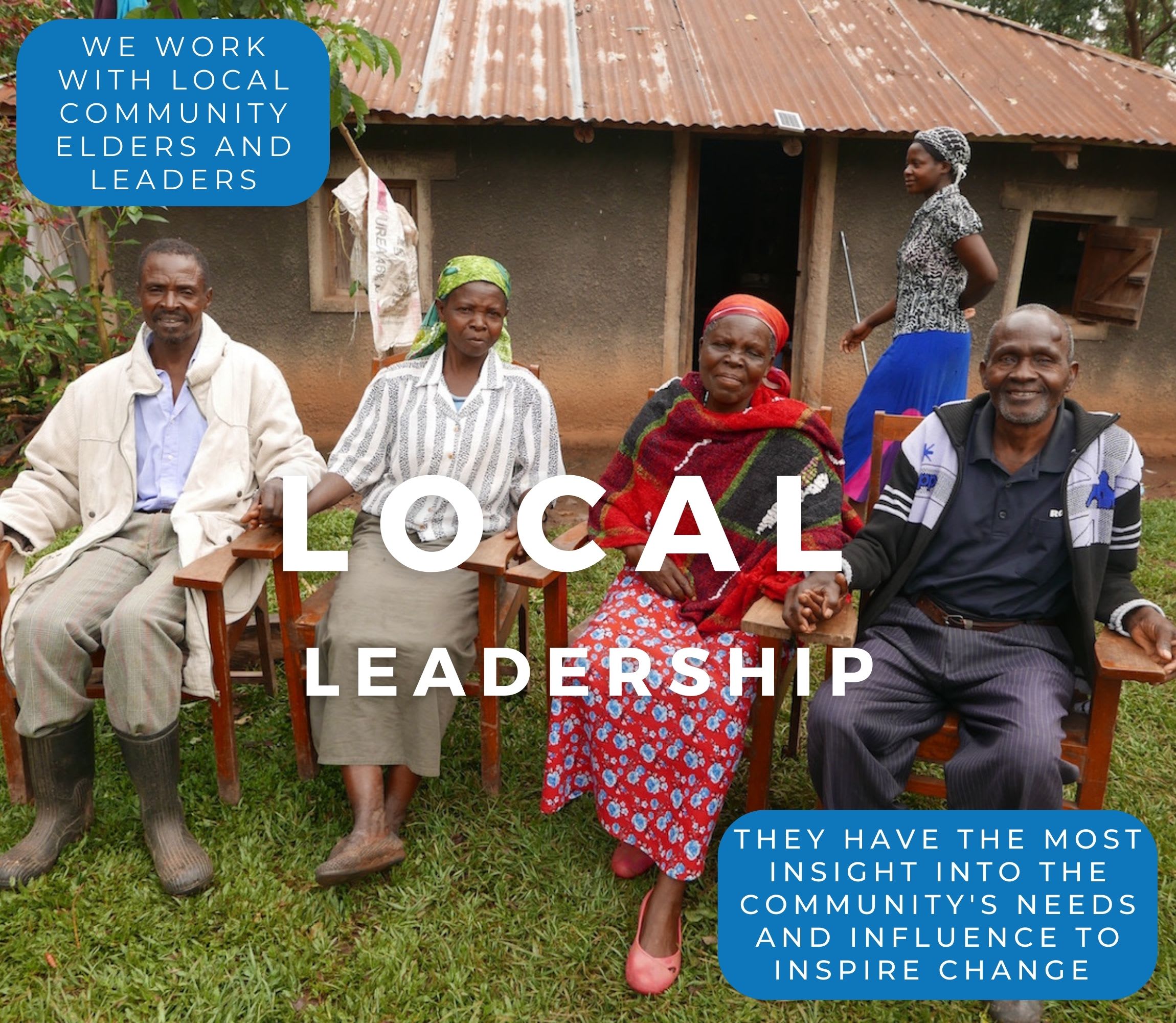
Hygiene and sanitation training are integral to our water projects. Training is tailored to each community's specific needs and includes key topics such as proper water handling, improved hygiene practices, disease transmission prevention, and care of the new water point. Safe water and improved hygiene habits foster a healthier future for everyone in the community.
Encouraged and supported by our team's guidance, the community elects a water user committee representative of its diverse members. This committee assumes responsibility for maintaining the water point, organizing community efforts, and gathering fees to ensure its upkeep.