Water that emerges as a spring can be easily tapped and used. Indeed, such sources are often highly desirable for community water supply projects as they can have a high natural water quality and require relatively basic engineering. This is both great news for the implementers (as developing the source is usually straightforward) and great news for the community who will have to look after the project into the future.
Taken as a whole, spring protection is often one of the most efficient and sustainable solution for water supply in small communities.
Springs are water sources that come from deep underground, where the water is filtered through natural layers until it is clean enough to drink. Once the water pushes through the surface of the Earth, however, outside elements like waste and runoff can contaminate the water quickly. We protect spring sources from contamination with a simple waterproof cement structure surrounding layers of clay, stone, and soil. This construction channels the spring’s water through a discharge pipe, making water collection easier, faster, and cleaner. Each spring protection also includes a chlorine dispenser at the waterpoint so community members can be assured that the water they are drinking is entirely safe.
Learn more about how spring protection works here!
Rehabilitation Project
Rehabilitation is not just fixing a pump - it’s total community re-engagement.
There’s only one thing we can think of that might be worse than not having safe water: having safe water, and then losing it because a project fell into disrepair.
Rehabilitation often proves to be a big challenge, as many wells have sit idle for years and there is typically little information about the specifics of the well. A borehole and dug well rehabilitation involves quite a bit of discovery. First, our teams work to discover as much as they can about the initial project. What materials were used? Was the borehole/protected dug well properly constructed? Many of these questions can only be answered by diving in, and doing “the work” which makes up a rehabilitation.
Once our teams have found the problem, they find the solution. Then, they reconstruct the well and install a hand pump.
Engagement and training with communities takes into account rehabilitation was needed and alters the program to suit the needs of the community. After all - engaging with this community in the same way which led to the initial, failed project will not bring new results. Our teams work to understand the social and support reasons leading to initial failure, and make those areas a focus of our ongoing engagement with communities.
Local Leadership
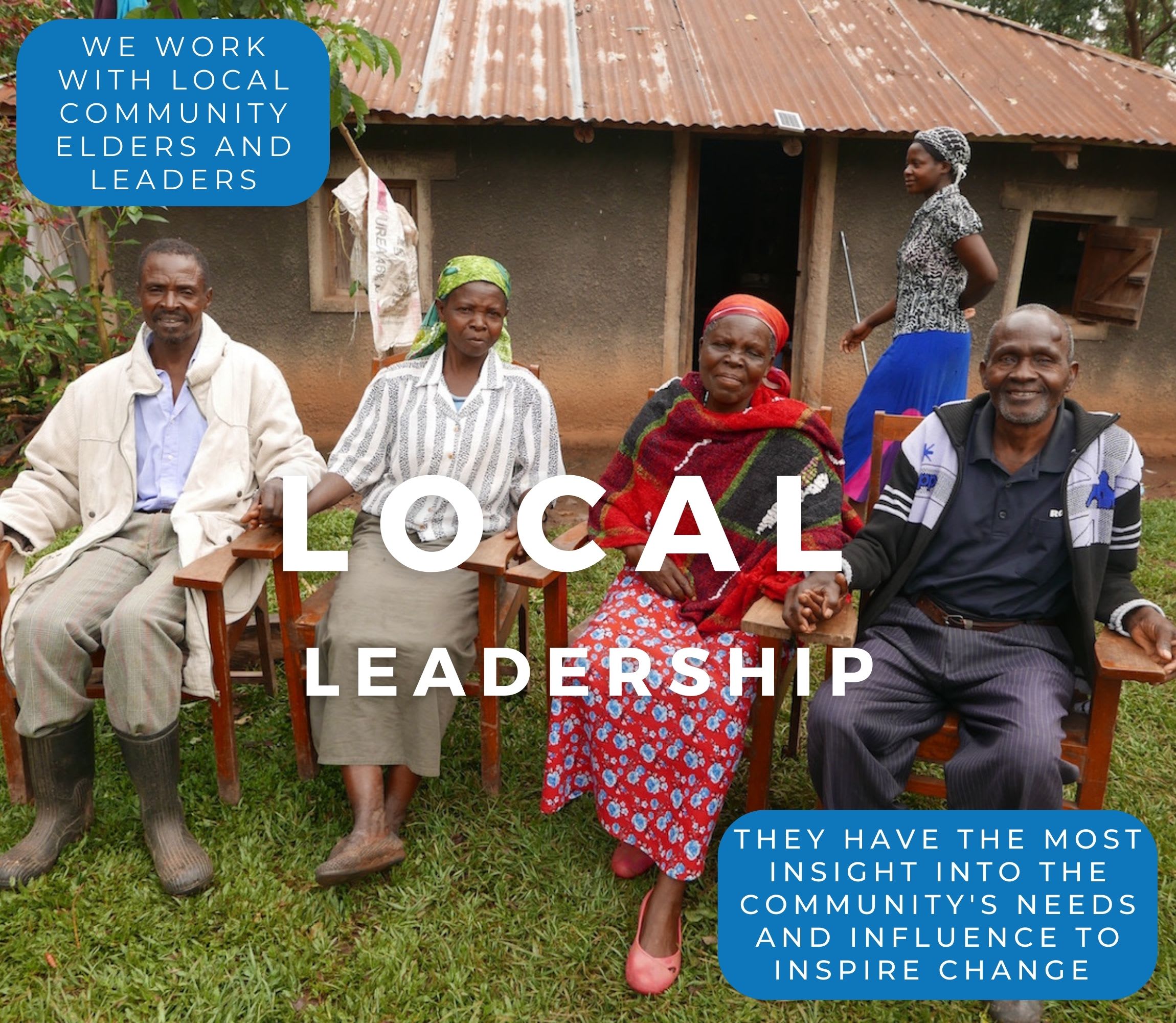
Water projects last because of local leaders. They help us understand the realities on the ground and carry our shared goals to their neighbors. The Water Project identifies and partners with local organizations that share our commitment to water that is reliable, verifiable, and clean. Together we build solutions that belong to the community and keep watch over them for years to come. Your partnership makes that lasting, local work possible.
Community Engagement
The communities we serve are partners in the project, not recipients of it. Long before a single pipe is laid, we sit down with community members to build relationships, plan the project together, agree on how the water point will be managed, and prepare for the ongoing costs of keeping it running. The people who will use the water hold a leading seat at the table. Every project takes real collaboration among many stakeholders, and at each step we hold to the values your partnership makes possible: reliability, relationship, and trust.
Hygiene and Sanitation Training
For many communities, water is only the beginning. When every drop has to be rationed, the things that keep people healthy, like bathing, cleaning, and handwashing, fall away, and where school was out of reach, the basics usually taught in health class were never learned. Water alone can't solve this, which is why your gift also funds hands-on training in every community, school, and health center we serve. We tailor each session to the region, but always cover the essentials: safe water handling and storage, personal and environmental hygiene, how disease spreads, how to form and run a water user committee, and how to operate and maintain the new water point. The goal is simple: to put people back in charge of their own health, so growth and development can begin.
Monitoring and Resolution
Across sub-Saharan Africa, too many wells fall into disrepair and are left behind. Reliability is the true measure of our work, so our commitment does not end when a project is finished. Water can only improve a life if it is there every time, and it can take only one sip of unsafe water to undo months of good health. That is why we measure downtime in hours, not days or weeks, and why every hour a water point is down matters. We monitor every project we have completed to keep the water running. Many donors sustain this work through The Water Promise, a community of monthly partners who keep water flowing long after installation day.
We’re working hard to make sure your gifts result in a lasting water project for the community it serves. Our engagement with a community begins many months before construction and lasts years after construction. The timeline here is focused on the physical construction of the water project. There is also training and engagement work that has already started.
Water project construction in the developing world is hard work. A lot of things can and do cause delays - which are normal. We attempt to make our best judgment of when construction will be complete, but the circumstances surrounding actual "in the field" conditions are far from our control.
Weather, supply availability, government paperwork, and progress of community involvement are just a few of the variables that can delay (and sometimes speed up) a project's completion.
We will always tell you if anything changes. And, if you get a notice like this – it’s actually further proof your gifts are being carefully used towards a water project that lasts.
Click icons to learn about each feature.
Community Profile
This project is a part of our shared program with Western Water And Sanitation Forum. Our team is pleased to directly share the report below (edited for clarity, as needed).
BACKGROUND INFORMATION
This unprotected spring is located in Mumuli Village 7km away from Kakamega County Headquarters, off Kakamega – Ingotse road, Kakamega Central Sub-county, and Lurambi Division, Shikoti location, Murumba sub-Location, Butsotso East ward. The spring serves over 25 households with a total population 175 of people including children. The population is made up of 100 females and 75 males.
Justification
During vetting of the spring by the WASH staff, it was evident that the water and sanitation situation at the unprotected spring was wanting. The spring is located downhill and since it is not protected, the water source is open to contamination by surface run off. The community members using the spring admitted that there have been cases of water borne diseases. The most affected were the children and pregnant women
The water is used for drinking for both human and animals, cooking, and irrigation on the farms especially during the dry period.
With regard to water improvement, the community members stated they have been drinking that water since they were born and very few boil or disinfect it because they cannot afford buying chlorine for the treatment and firewood or boiling. They are forced to go to the forest in search of firewood which is risky for women and children and if they are found in the forest they need to pay a fine of five hundred shillings.
Sanitation is also a big problem as many people have no good latrines and others even use bushes, also contaminating the water.
The community members are in dire need of support and are urging WEWASAFO and The Water Project to consider them and protect the spring so that they can reduce diarrhea diseases and reduce time wasted in order to engage in other economic activities.
Results of the Project:
Spring Protection
Protection of Marko Mutamba Mumuli spring is complete and now in use.
Before protection, water quality samples were collected from the spring and taken to the government laboratory for tests.The results revealed that the water from the spring was both bacteriologically and E. Coli contaminated. But now with protection and proper conservation of the water catchment area, the level of contamination has been completely minimized. Cases of water borne diseases are now expected to greatly reduce.
The community members are happy to use the spring since they know for sure that they are getting safe water. They are also confident that with the training they received from the WEWASAFO Wash team, they will now take sanitation and hygiene to the next level.
All Thanks to The Water Project for their continuous support to the community members.
Sanitation Platforms
Household sanitation platforms (cement slabs for latrine construction) have been installed for the community members who benefitted from them and are now using them.
Simon, one of the slab beneficiaries really thanked The Water Project for casting a slab for his family. He admitted that they can now use the toilet as opposed to the previous situation where they were forced to use the bush. Hygiene and Sanitation has improved in their home. Other community members are keen to replicate the same in their homes.
Project Updates
August, 2020: Through Their Eyes: COVID-19 Chronicles with Paulo Juma Mutamba
This post is part of a new series by The Water Project meant to highlight the perspectives and experiences of the people we serve and how the COVID-19 pandemic is impacting them. We invite you to read more of their stories here.
45-year-old Paulo Juma Mutamba is a farmer and pastor in Mumoli who depends on Marko Mutamba Mumuli Spring for all of hs daily water needs. He also serves as the chair of the spring's water user committee, helping to guide and inspire his community to uphold hygiene standards and best practices at the spring while looking out for its maintenance and care.
Paulo Juma Mutamba at home.
Our team recently visited Mumuli to conduct a COVID-19 prevention training (read more about it below!) and monitor their water point. Shortly after, we returned to check in on the community, offer a COVID-19 refresher training, and ask how the pandemic is affecting their lives.
It was during this most recent visit that Paulo shared his story of how the coronavirus has impacted his life. With his two young children hanging on his every word - and maybe an arm or two - Paulo spoke plainly and patiently about the changes the pandemic has brought to him, his family, and his community.
Video Part 1: Water - Paulo reflects on the changes clean water has brought to his community since the protection of Marko Mutamba Mumuli Spring.
Monitoring and Evaluation Officer Betty Muhongo Likhanga met Paulo outside his home to conduct the interview. Both Betty and Paulo observed social distancing and other precautions throughout the visit to ensure their health and safety. Their questions and answers have been edited for clarity and length.
Video Part 2: Training & Prevention - Paulo shares how his community is putting into practice what they learned from our team's COVID-19 sensitization training.
What is one thing that has changed in your community since the protection of Marko Mutamba Mumuli Spring?
"We no longer suffer from waterborne diseases, and it takes less time to draw water unlike when the water point was not installed."
How has having a clean water point helped you through the pandemic so far?
"The community members have been using the water from the spring to wash their hands and other water uses."
Paulo fetches water from one of the spring's 2 discharge pipes.
Since the outbreak of COVID-19 in Kenya, has fetching water changed for you because of restrictions, new rules, or your concerns about the virus?
"There is no overcrowding at the spring as we need to observe social distancing. The number of times one draws water has also increased as a lot of water is used for handwashing in every household to prevent infection of COVID-19."
Paulo fills his family's handwashing container with water from Marko Mutamba Mumuli Spring.
How has COVID-19 impacted your family?
"Our children are not going to school because of this pandemic. It's also difficult for a parent to have close monitoring of the children, especially teenagers."
What other challenges are you experiencing due to the COVID-19 pandemic?
"We are not able to go church which is a challenge, especially for me because I am a pastor."
Paulo washes his hands with soap and clean water from Marko Mutamba Mumuli Spring using the leaky tin handwashing station he set up outside his house.
What hygiene and sanitation steps have you and your community taken to stop the spread of the virus?
"We have improvised handwashing stations at our homes. We have encouraged community members to wash their hands so often for at least 20 seconds."
Camera operator Allan Amadaro talks with Paulo during the interview.
Like most governments around the world, the Kenyan government continues to set and adjust restrictions both nationally and regionally to help control the spread of the disease.
What restriction were you most excited to see lifted already?
"Worship places are open, so people can now go to church and worship but while maintaining the rules and regulations put in place."
What restriction are you still looking forward to being lifted?
"The opening of schools."
Paulo's son was all smiles in front of the camera.
When asked where he receives information about COVID-19, Paulo listed the radio, television, and our team's sensitization training.
What has been the most valuable part of the COVID-19 sensitization training you received from our team?
"One, washing hands so often for at least 20 seconds helps prevent the spread of Covid-19, and two, wearing of masks when visiting social gatherings also helps to prevent the spread of the virus."
May, 2020: COVID-19 Prevention Training Update at Mumuli Community, Marko Mutamba Mumuli Spring
We are carrying out awareness and prevention trainings on the virus in every community we serve. Very often, our teams are the first (and only) to bring news and information of the virus to rural communities like Mumuli, Kenya.
Community member addresses the group at training
We trained more than 34 people on the symptoms, transmission routes, and prevention of COVID-19. Due to public gathering concerns, we worked with trusted community leaders to gather a select group of community members who would then relay the information learned to the rest of their family and friends.
Community member reads an informational pamphlet on COVID-19
We covered essential hygiene lessons:
- Demonstrations on how to build a simple handwashing station
- Proper handwashing technique
- The importance of using soap and clean water for handwashing
- Cleaning and disinfecting commonly touched surfaces including at the water point.
Explaining how to observe social distancing while waiting to fetch water at the spring
We covered COVID-19-specific guidance in line with national and international standards:
- Information on the symptoms and transmission routes of COVID-19
- What social distancing is and how to practice it
- How to cough into an elbow
- Alternative ways to greet people without handshakes, fist bumps, etc.
- How to make and properly wear a facemask.
A man holds the reminder chart with prevention measures listed
During training, we installed a new handwashing station with soap near the community’s water point, along with a sign with reminders of what we covered.
Question and answer session
Due to the rampant spread of misinformation about COVID-19, we also dedicated time to a question and answer session to help debunk rumors about the disease and provide extra information where needed.
The Village Administrator address the group at training
We continue to stay in touch with this community as the pandemic progresses. We want to ensure their water point remains functional and their community stays informed about the virus.
Springs are water sources that come from deep underground, where the water is filtered through natural layers until it is clean enough to drink. Once the water pushes through the surface of the Earth, however, outside elements like waste and runoff can contaminate the water quickly. We protect spring sources from contamination with a simple waterproof cement structure surrounding layers of clay, stone, and soil. This construction channels the spring’s water through a discharge pipe, making water collection easier, faster, and cleaner. Each spring protection also includes a chlorine dispenser at the waterpoint so community members can be assured that the water they are drinking is entirely safe.
Learn more about how spring protection works here!
 Protected Spring
 Rehabilitation Project