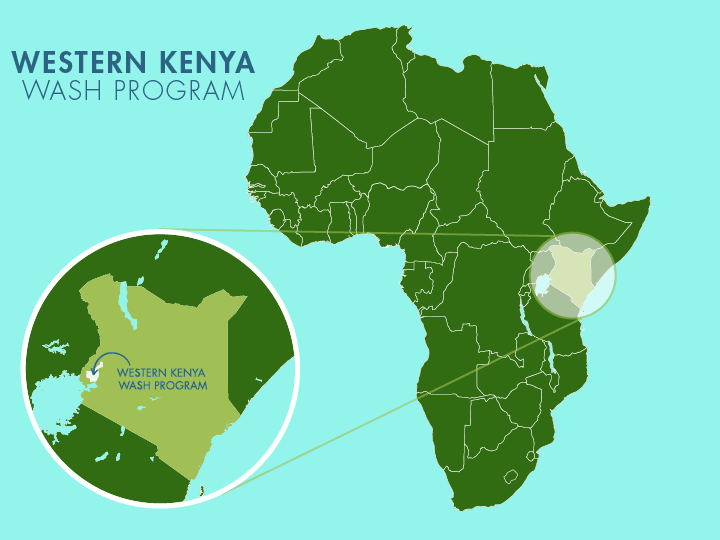
The Water Project’s WaSH program in Western Kenya aims to access, protect, filter, and purify the abundant waters that are available through two seasonal rains, prevalent springs, high water tables, and deep aquifers in the region. Explore water projects in communities, schools, and churches in Western Kenya such as protected springs, rainwater catchment systems, and water wells. This program emphasizes the power of strategic geographical saturation of projects, effective hygiene and sanitation training, and relational networking between NGOs, health workers, local politicians, and educators.
Springs are water sources that come from deep underground, where the water is filtered through natural layers until it is clean enough to drink. Once the water pushes through the surface of the Earth, however, outside elements like waste and runoff can contaminate the water quickly. We protect spring sources from contamination with a simple waterproof cement structure surrounding layers of clay, stone, and soil. This construction channels the spring’s water through a discharge pipe, making water collection easier, faster, and cleaner. Each spring protection also includes a chlorine dispenser at the waterpoint so community members can be assured that the water they are drinking is entirely safe.
Learn more about how spring protection works here!
Rehabilitation Project
Rehabilitation is not just fixing a pump - it’s total community re-engagement.
There’s only one thing we can think of that might be worse than not having safe water: having safe water, and then losing it because a project fell into disrepair.
Rehabilitation often proves to be a big challenge, as many wells have sit idle for years and there is typically little information about the specifics of the well. A borehole and dug well rehabilitation involves quite a bit of discovery. First, our teams work to discover as much as they can about the initial project. What materials were used? Was the borehole/protected dug well properly constructed? Many of these questions can only be answered by diving in, and doing “the work” which makes up a rehabilitation.
Once our teams have found the problem, they find the solution. Then, they reconstruct the well and install a hand pump.
Engagement and training with communities takes into account rehabilitation was needed and alters the program to suit the needs of the community. After all - engaging with this community in the same way which led to the initial, failed project will not bring new results. Our teams work to understand the social and support reasons leading to initial failure, and make those areas a focus of our ongoing engagement with communities.
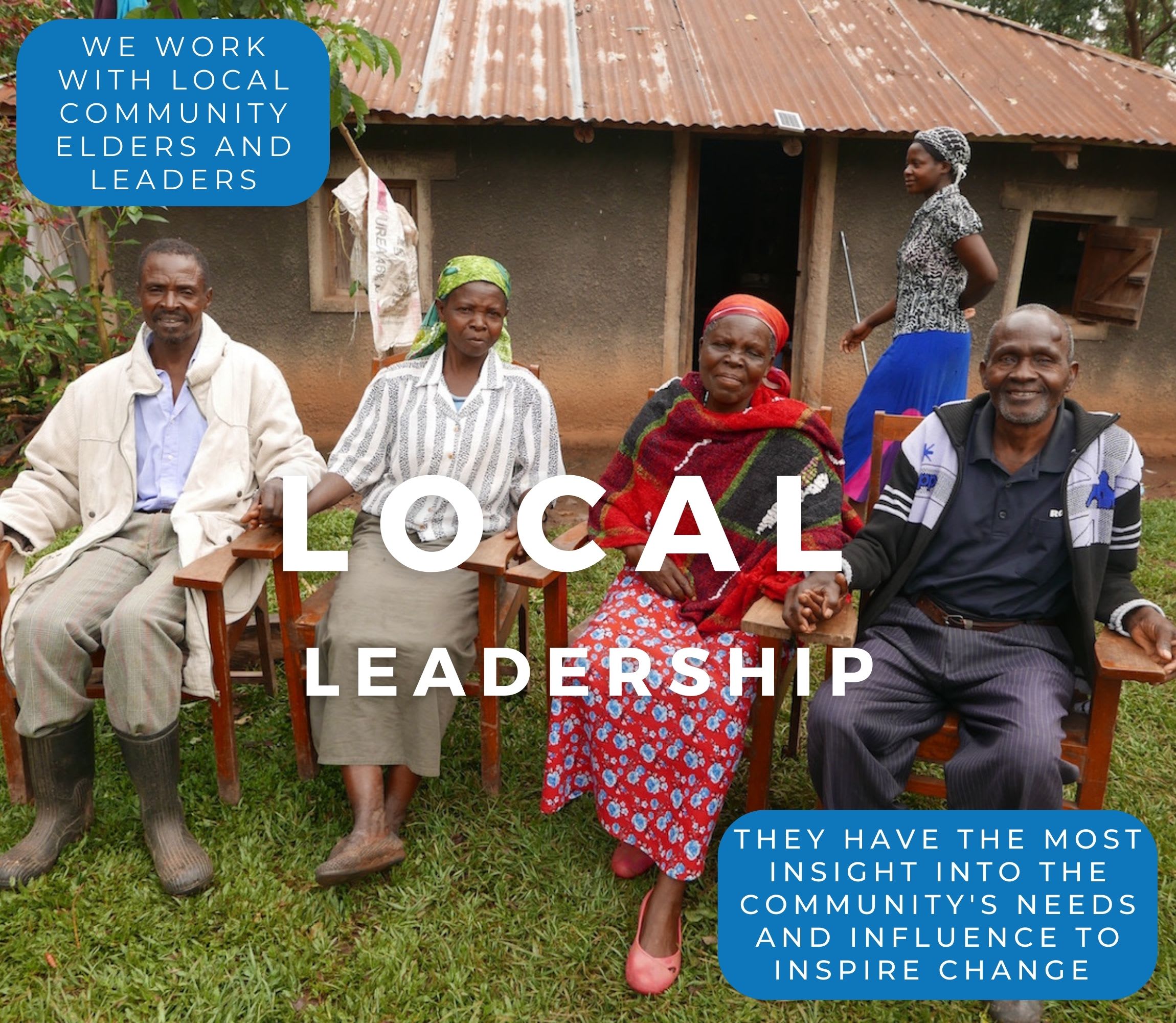
Local Leadership
Water projects last because of local leaders. They help us understand the realities on the ground and carry our shared goals to their neighbors. The Water Project identifies and partners with local organizations that share our commitment to water that is reliable, verifiable, and clean. Together we build solutions that belong to the community and keep watch over them for years to come. Your partnership makes that lasting, local work possible.
Community Engagement
The communities we serve are partners in the project, not recipients of it. Long before a single pipe is laid, we sit down with community members to build relationships, plan the project together, agree on how the water point will be managed, and prepare for the ongoing costs of keeping it running. The people who will use the water hold a leading seat at the table. Every project takes real collaboration among many stakeholders, and at each step we hold to the values your partnership makes possible: reliability, relationship, and trust.
Chlorine Dispenser
At every spring protection project, we install a specially engineered chlorine dispenser right at the water point, so families can treat their water with a pre-measured, safe dose in seconds. Diluted chlorine is a trusted part of water treatment worldwide, and it keeps working for two to three days, so water stays safe even after it is carried home and stored. We provide the chlorine and maintain the dispensers as part of our ongoing support, so your partnership keeps protecting health well beyond installation day.
Sanitation Platform (SanPlat)
Easily made latrine slabs encourage household bathroom construction.
Proper hygiene and sanitation facilities go hand-in-hand with access to clean, reliable water.
A SanPlat is most literally the slab one would squat over when utilizing the bathroom.
The community chooses 5 households to receive SanPlats made on site under our training and guidance. The goal: seeing the need for safe latrines throughout their community, each household will be inspired to build their own.
Hygiene and Sanitation Training
For many communities, water is only the beginning. When every drop has to be rationed, the things that keep people healthy, like bathing, cleaning, and handwashing, fall away, and where school was out of reach, the basics usually taught in health class were never learned. Water alone can't solve this, which is why your gift also funds hands-on training in every community, school, and health center we serve. We tailor each session to the region, but always cover the essentials: safe water handling and storage, personal and environmental hygiene, how disease spreads, how to form and run a water user committee, and how to operate and maintain the new water point. The goal is simple: to put people back in charge of their own health, so growth and development can begin.
Monitoring and Resolution
Across sub-Saharan Africa, too many wells fall into disrepair and are left behind. Reliability is the true measure of our work, so our commitment does not end when a project is finished. Water can only improve a life if it is there every time, and it can take only one sip of unsafe water to undo months of good health. That is why we measure downtime in hours, not days or weeks, and why every hour a water point is down matters. We monitor every project we have completed to keep the water running. Many donors sustain this work through The Water Promise, a community of monthly partners who keep water flowing long after installation day.
We’re working hard to make sure your gifts result in a lasting water project for the community it serves. Our engagement with a community begins many months before construction and lasts years after construction. The timeline here is focused on the physical construction of the water project. There is also training and engagement work that has already started.
Water project construction in the developing world is hard work. A lot of things can and do cause delays - which are normal. We attempt to make our best judgment of when construction will be complete, but the circumstances surrounding actual "in the field" conditions are far from our control.
Weather, supply availability, government paperwork, and progress of community involvement are just a few of the variables that can delay (and sometimes speed up) a project's completion.
We will always tell you if anything changes. And, if you get a notice like this – it’s actually further proof your gifts are being carefully used towards a water project that lasts.
Click icons to learn about each feature.
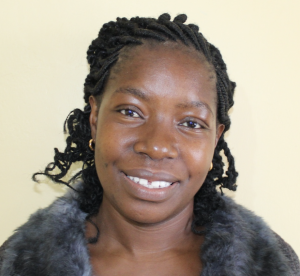
Report Submitted by Christine Masinde, Field Officer
Christine loves her job because she gets to work with communities and see their lives transformed through the provision of clean, safe water. She loves seeing people’s joy and excitement and is passionate about reaching as many people in Kenya as possible. Christine holds a degree in Project Management from the Kenya Institute of Management.
Christine has been a Field Officer since 2018, with WeWaSaFo, The Water Project's trusted partner in our Western Kenya WaSH Program.
"My name is Sarah, and I have been married in this community for the last 12 years. The greatest challenge in this community is accessing safe, clean drinking water. I cannot count the number of times that I have had to take my children to the health center for treatment. At times, they are suffering from typhoid and other times bacteriological infection."
In Mbande Community, both the women and men are seen going down to the spring to fetch water. A person makes an average of 5-10 trips per day, depending on what their family needs to accomplish. There will be several trips on laundry day, and fewer when they just need to drink and cook. These water trips begin as early as 6am.
Most people farm and then sell their extra produce at the local market. Lots of farmers choose to specialize in sugarcane since there's a nearby sugar factory that buys it. Each morning after getting water, cleaning and taking breakfast, some of them have to travel to Malava Town for their jobs.
Water
The main source of water for Mbande Community is Handa Spring. The water is entirely open to the surrounding environment and gets particularly dirty after it rains. The water is always a cloudy color, which darkens are more and more people stir up the water as they dunk their containers to fill them. They submerge their jerrycans to dodge insects and other things floating on the surface.
The community uses this water to meet all of their needs, even drinking. They're constantly suffering from diarrhea, stomaches, and headaches. If they make it to a health clinic, they'll often find out it's typhoid.
Sanitation
Less than half of households have a pit latrine, most of which are old and full. Because so many households are still missing this important facility, they're using the bushes. There are no opportunities for handwashing, nor many helpful tools like dish racks or clotheslines.
Sarah Wamalwa is a 48-year-old housewife. She recounts the greatest challenge she has had to face each day regarding lack of proper sanitation.
"It's a shame that I have a latrine that is not in a very good state. I wish I had a toilet that is structurally good so that I can wash with water when it's dirty and also proudly show my visitors when they need to use the latrine," she said.
"My children fear falling in the latrine due to the big hole, hence they opt to use the banana plantations. When my in-laws come, I ask my neighbor so that they can use her toilet. But for how long will my good neighbor allow me to share her toilet?"
Here's what we're going to do about it:
Training
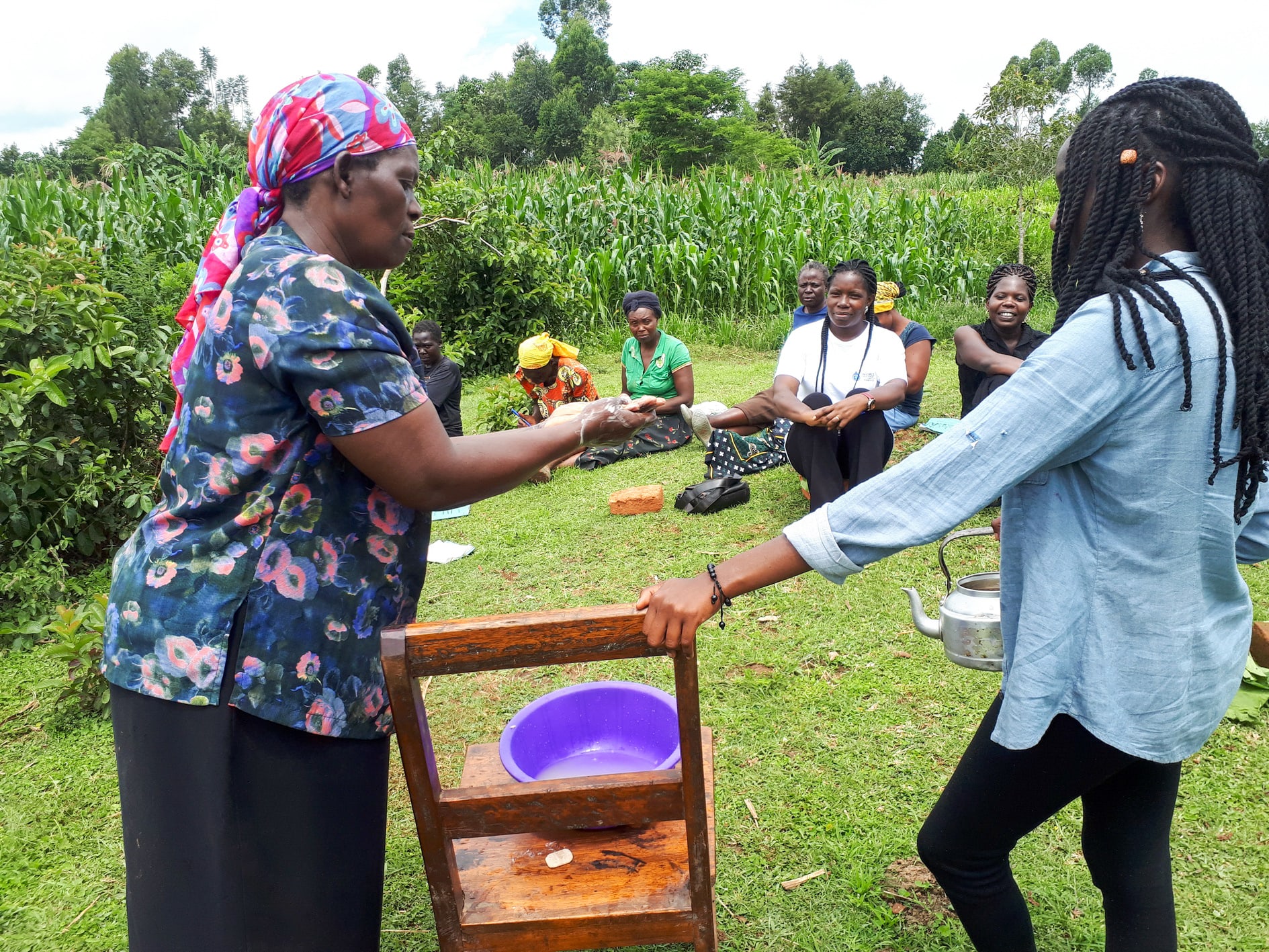
Community members will attend hygiene and sanitation training for at least two days. This training will ensure participants have the knowledge they need about healthy practices and their importance. The facilitator plans to use PHAST (Participatory Hygiene and Sanitation Transformation), CLTS (Community-Led Total Sanitation), ABCD (Asset-Based Community Development), group discussions, handouts, and demonstrations at the spring. One of the most important topics we plan to cover is the handling, storage, and treatment of water. Having a clean water source will be extremely helpful, but it is useless if water gets contaminated by the time it’s consumed. Hand-washing will also be a big topic.
Training will also result in the formation of a committee that will oversee operations and maintenance at the spring. They will enforce proper behavior around the spring and delegate tasks that will help preserve the site, such as building a fence and digging proper drainage. The fence will keep out destructive animals, and the drainage will keep the area’s mosquito population at a minimum.
Sanitation Platforms
On the final day of training, participants will select five families that should benefit from new latrine floors.
Training will also inform the community and selected families on what they need to contribute to make this project a success. They must mobilize locally available materials, such as bricks, clean sand, hardcore, and ballast. The five families chosen for sanitation platforms must prepare by sinking a pit for the sanitation platforms to be placed over. All community members must work together to make sure that accommodations and food are always provided for the work teams.
Spring Protection
Protecting the spring will ensure that the water is safe, adequate and secure. Construction will keep surface runoff and other contaminants out of the water. With the community’s high involvement in the process, there should be a good sense of responsibility and ownership for the new clean water source.
Fetching water is predominantly a female role, done by both women and young girls. Protecting the spring and offering training and support will, therefore, help empower the female members of the community by giving them more time and efforts to engage and invest in income-generating activities.
This project is a part of our shared program with Western Water And Sanitation Forum (WEWASAFO). Our team is pleased to provide the reports for this project (edited for readability) thanks to the hard work of our friends in Kenya.
Project Updates
January, 2021: Through Their Eyes: COVID-19 Chronicles with Sarah Wamalwa Mukeya
This post is part of a new series by The Water Project meant to highlight the perspectives and experiences of the people we serve and how the COVID-19 pandemic is impacting them. We invite you to read more of their stories here.
Our team recently visited Mbande to conduct a COVID-19 prevention training (read more about it below!) and monitor their water point, Handa Spring. Shortly after, we returned to check in on the community, offer a COVID-19 refresher training, and ask how the pandemic is affecting their lives.
It was during this most recent visit that Sarah Wamalwa Mukeya shared her story of how the coronavirus is impacting her life and her community. Sarah serves as the elected Treasurer of the spring's water user committee. At home, she is kept busy as a mother, especially with her two young school-aged children in grades one and four. Though both Sarah's daughter and son just returned to school full-time in January, they had been at home since March due to Kenya's national coronavirus-related school closures.
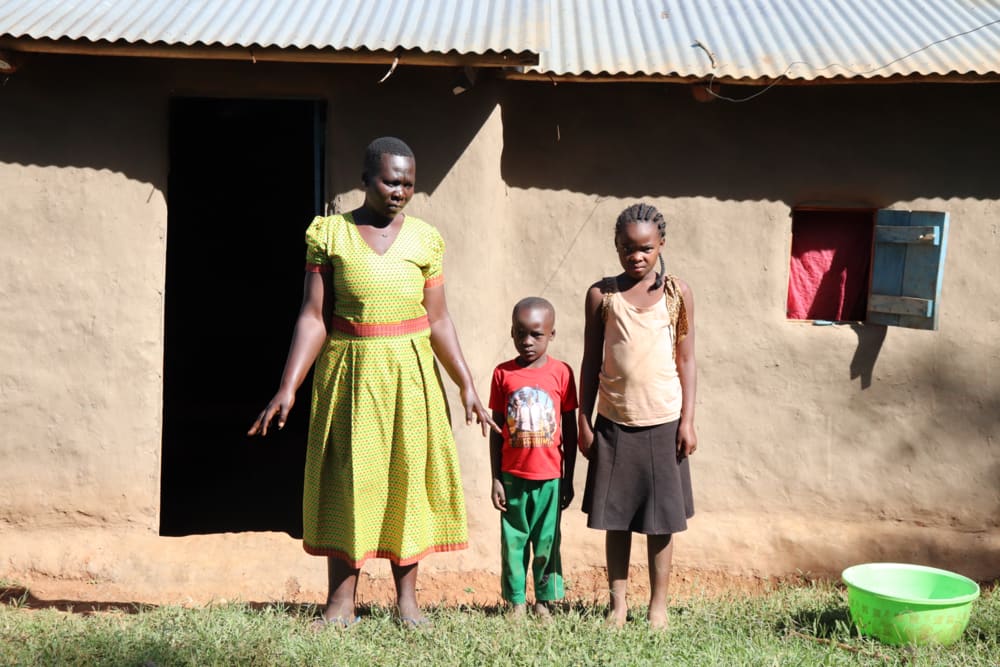
Sarah with her daughter and son at home
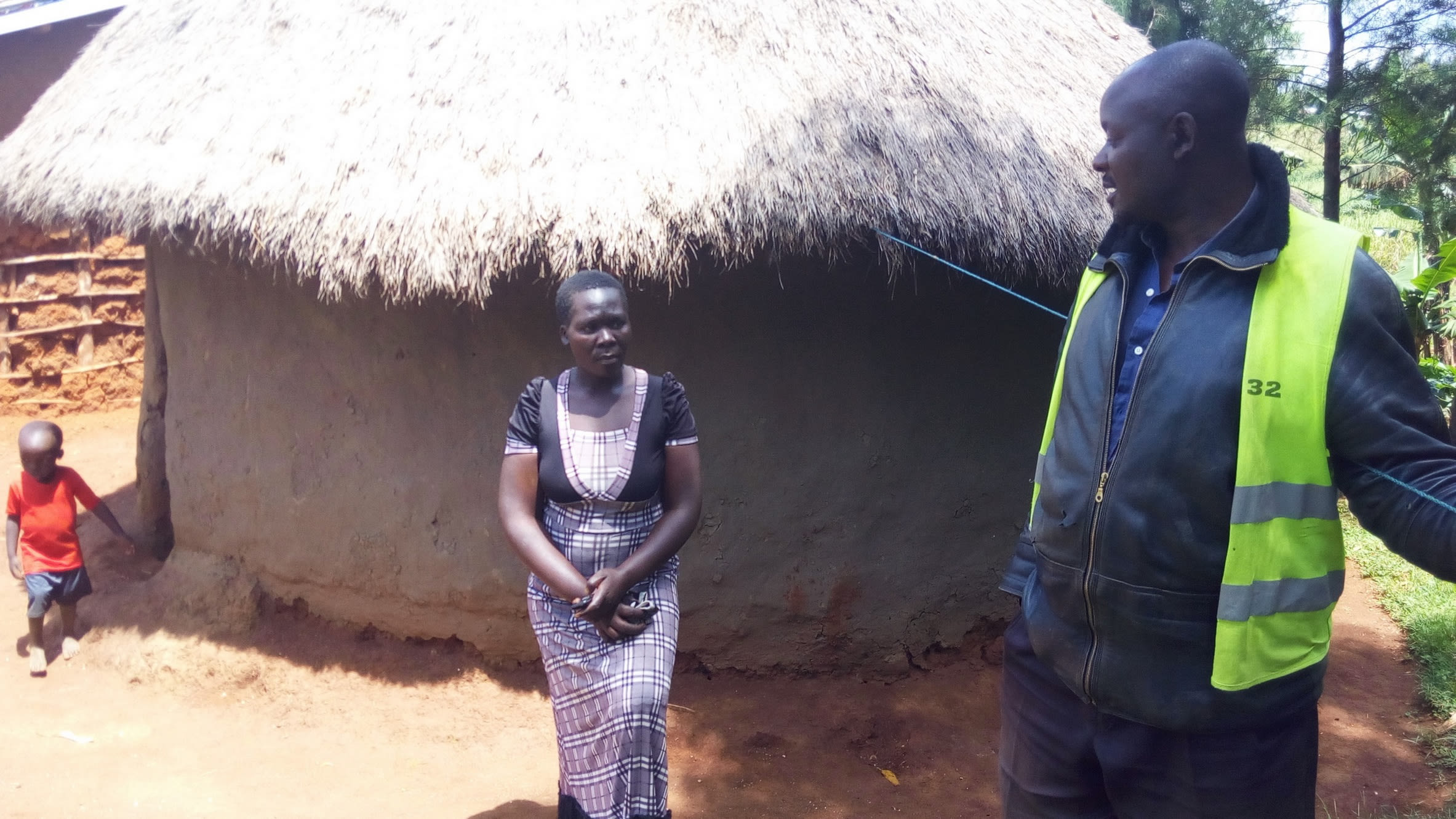
Field Officer Christine Masinde met Sarah outside her home to conduct the interview. Both Christine and Sarah observed physical distancing and other precautions throughout the visit to ensure their health and safety. The following is Sarah's story, in her own words.
What is one thing that has changed in your community since the completion of the water project?
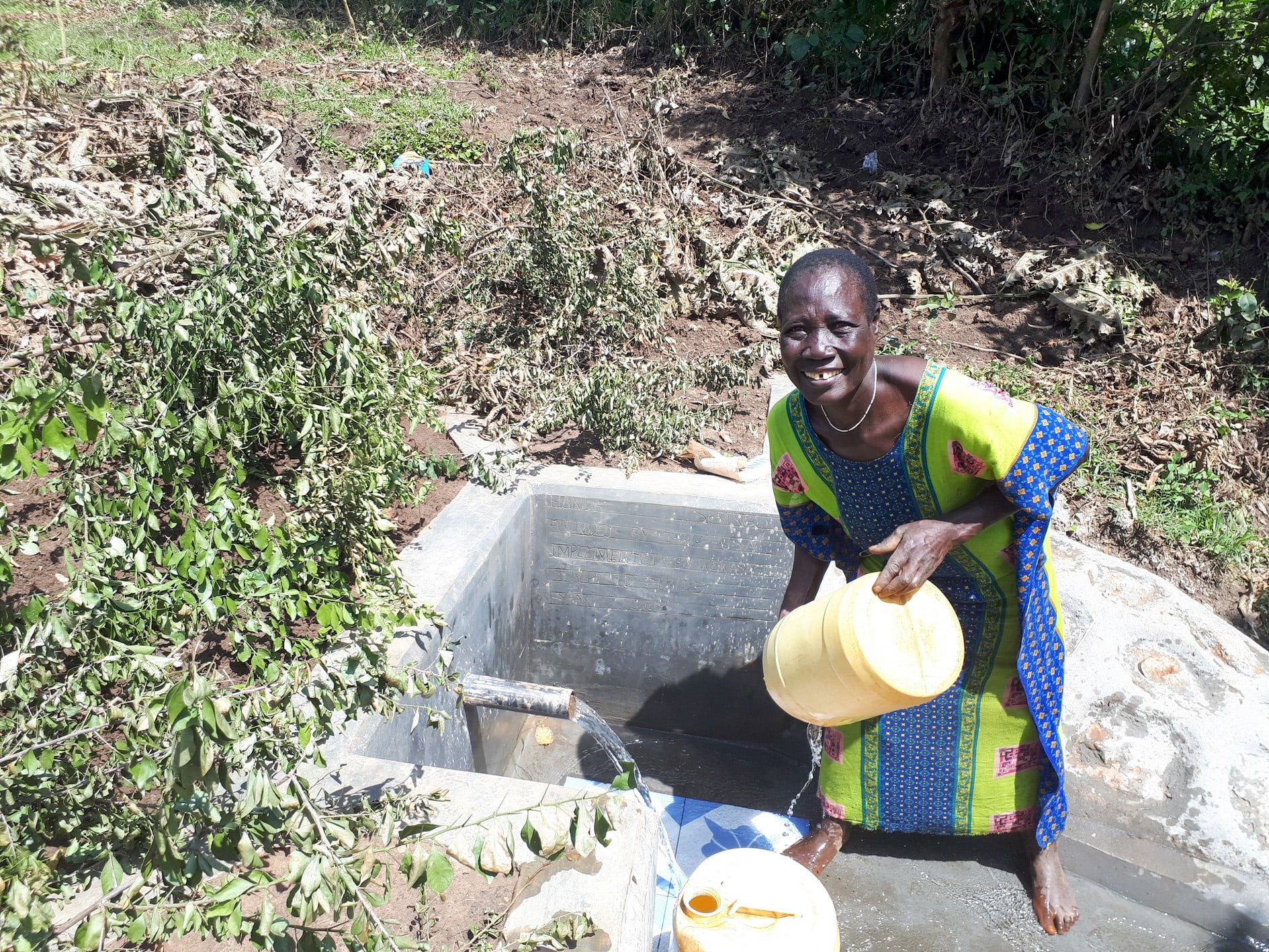
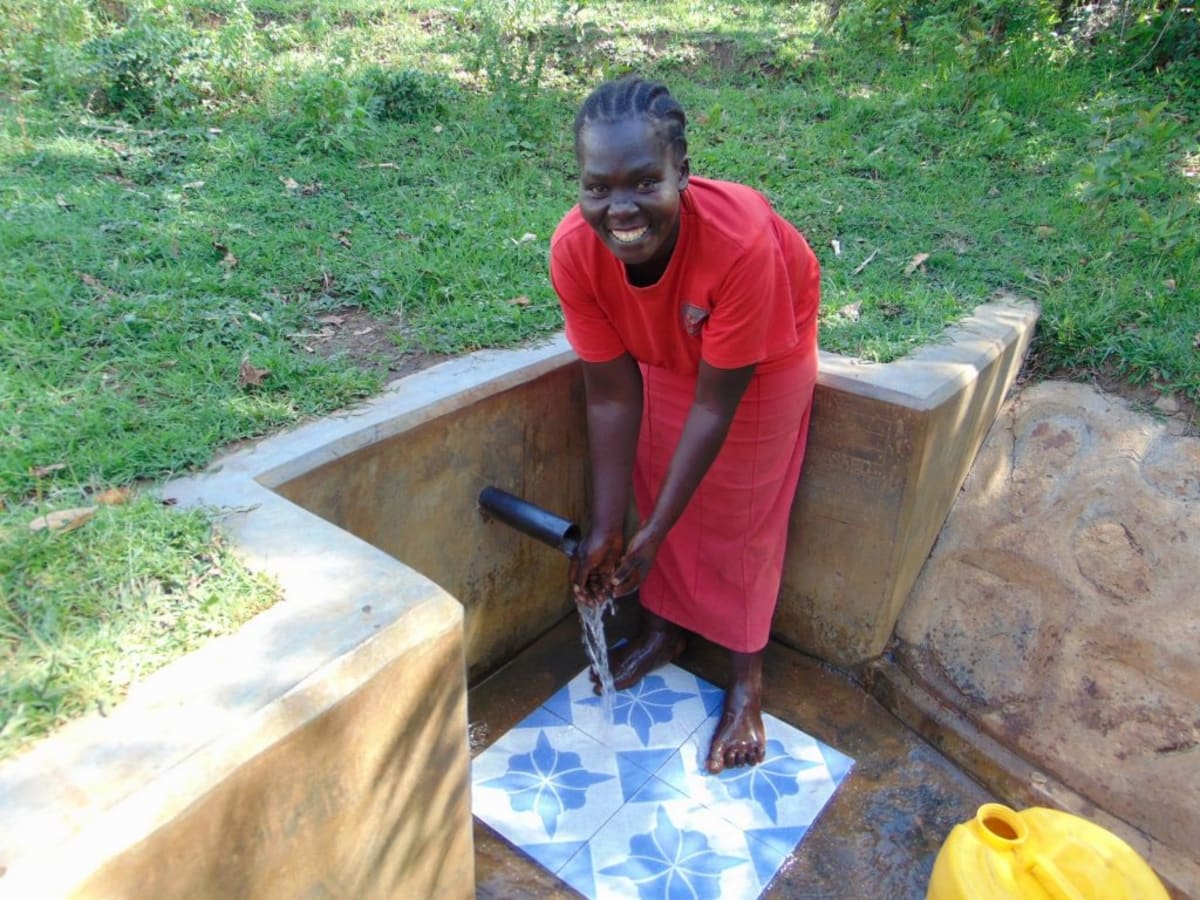
"Protection of Handa Spring has been very beneficial to us since we now have clean and safe water which has reduced cases of typhoid, diarrhea, and other water-related diseases. Fetching water is easier and faster than before. "
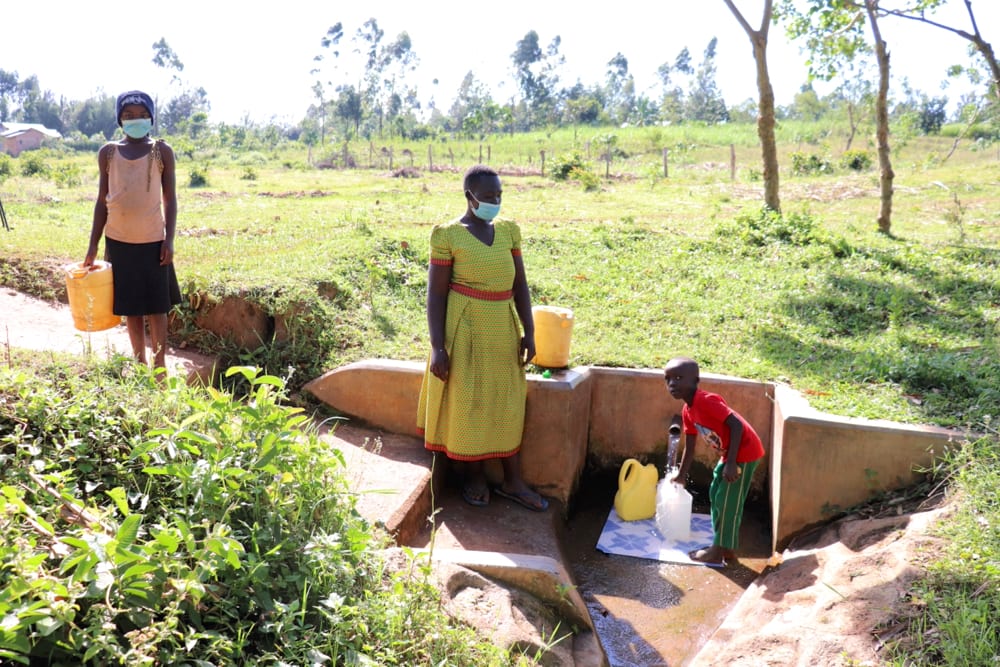
Sarah fetches water from Handa Spring.
How has having a clean water point helped you through the pandemic so far?
"Clean water is available throughout the year and we use it for drinking, cleaning, cooking, and watering vegetables during dry seasons. We are able to wash our hands as many times as possible in order to prevent the spread of COVID-19."
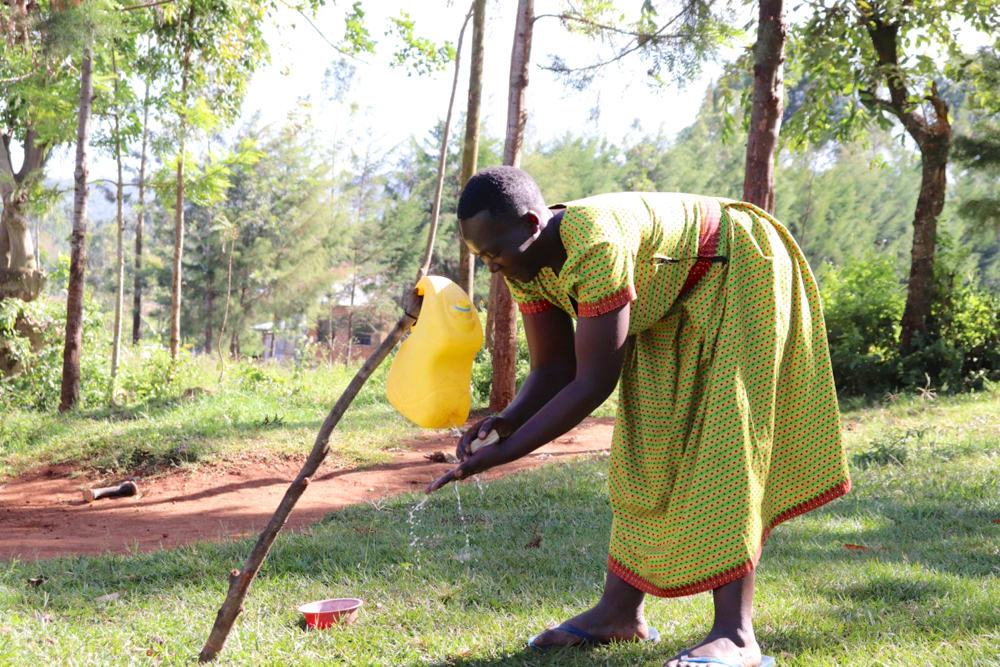
Sarah refills her handwashing station at home with water from Handa Spring.
Since the outbreak of COVID-19 in Kenya, has fetching water changed for you because of restrictions, new rules, or your concerns about the virus?
"When we go to fetch water, we have to keep social distance and we also have to wear masks. We take as little time as possible at the spring."
Sarah at the spring with her daughter and son to fetch water
How has COVID-19 impacted your family?
"As part of measures to curb the spread of COVID-19 in Kenya, all the learning institutions were closed down by the government in March. Since then, my children have been at home until recently, when my daughter, who is in Grade Four, went back to school. Now we have to provide masks and soap as part of school requirements. This is a burden to us since we have no source of income. "
Handwashing at home
What other challenges are you experiencing due to the COVID-19 pandemic?
"My husband was permanently employed before the COVID-19 pandemic, but now he is jobless. He was working as a hotelier but when the government put in place restrictions to reduce the spread of the coronavirus, the hotel was closed.
Life has not been easy; I had to seek assistance from my parents in order to put a meal on the table. The surplus food in storage was exhausted a long time ago. Therefore, we live from hand to mouth without any savings."
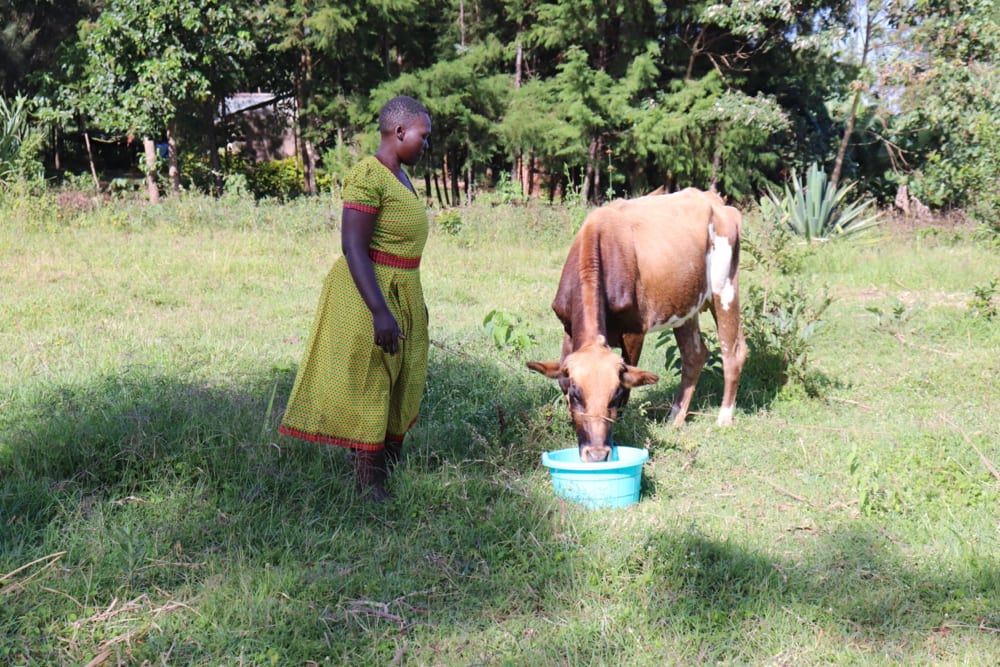
Giving her a cow a fresh drink from the spring
What hygiene and sanitation steps have you and your community taken to stop the spread of the virus?
"In order to curb the spread of COVID-19, We observe social distancing, wear masks when we go out, and wash our hands frequently with soap and clean water."
Sarah masked up
Like most governments around the world, the Kenyan government continues to set and adjust restrictions both nationally and regionally to help control the spread of the virus.
What restriction were you most excited to see lifted already?
"The partial opening of schools was the most exciting for me. My joy is to see my children in school because I believe their future will be secured through education."
What restriction are you still looking forward to being lifted?
"The government has announced that all learning institutions will be opened in January 2021. I can't wait for my son in Grade One to go back to school because he loves school. My wish is that things go back to normal so that the economy can open up; then, my husband will be able to find a job to support the family."
Since we spoke with Sarah, the Kenyan government fully reopened all school levels to in-person learning. Students' first day back was January 4, 2021.
What has been the most valuable part of the COVID-19 sensitization training you received from our team?
"Before the COVID-19 sensitization training, we never took information about COVID-19 seriously. But the TWP trainers took their time to explain to us about coronavirus, how it is spread, and how to prevent it. They emphasized social distancing, wearing masks, and washing hands properly and frequently with soap and clean water. We were also taught how to make a tippy tap (handwashing station) from locally available materials. We have put into practice what we learned and we are confident that no one from our community will contract the virus."
September, 2019: Giving Update: Mbande Community, Handa Spring
A year ago, your generous donation helped Mbande Community in Kenya access clean water.
There’s an incredible community of monthly donors who have come alongside you in supporting clean water at Handa Spring in Mbande. Month after month, their giving supports ongoing sustainability programs that help this community maintain access to safe, reliable water. Read more…
August, 2018: Mbande Community Project Complete
Mbande Community now has clean water! Handa Spring has been transformed into a flowing source of clean water thanks to your donation. The spring is protected from contamination, five sanitation platforms have been provided for the community, and training has been done on sanitation and hygiene.
New Knowledge
During our supervision on the spring protection process, we talked to one of the community members, Mrs. Sarah Wamalwa, and decided on a suitable day for hygiene and sanitation training based on the season's activities. She then went around telling other community members about the planned training. Based on the population in this area, we expected around 20 people to come. However, we had 16 of which very few were men. It turns out most of the men had left the village in search of casual labor jobs.
We met in a field near the spring. The weather was favorable, though a bit sunny. Being the rainy season, we were lucky that it didn't start to rain while we were out there.
We covered several topics including leadership and governance; operation and maintenance of the spring; healthcare; family planning; immunizations; the spread of disease and prevention. We also covered water treatment methods, personal care like handwashing, environmental hygiene, hygiene promotion, and many other things.
Water pollution and water treatment were both memorable topics for the participants. They were asked to name ways of treating water, and they mentioned boiling water, chlorinating, and using waterguard.
In addition to the water treatment methods mentioned above, the participants were taught about solar disinfection. They were very impressed with it and promised to use this method because it is easy and doesn't need anything but a clear container, sun, and time.
Mrs. Ruth Shikuku is a community health volunteer says she learned a lot from the training.
"This training has come in handy for us as community health volunteers since it has emphasized what we teach the community members about water, sanitation and hygiene practices and their importance," she said.
"Now they will take it seriously and personally, I have acquired more knowledge about health. I promise to pass this information to other volunteers in other villages so that Malava becomes a healthy area free from preventable diseases."
The group posing for a picture after spring management training.
Sanitation Platforms
All five sanitation platforms have been installed and make wonderful, easy to clean latrine floors. These five families are happy about this milestone of having a private latrine of their own and are optimistic that people will no longer leave waste outdoors. We are continuing to encourage families to finish building walls and roofs over their new latrine floors.
Spring Protection
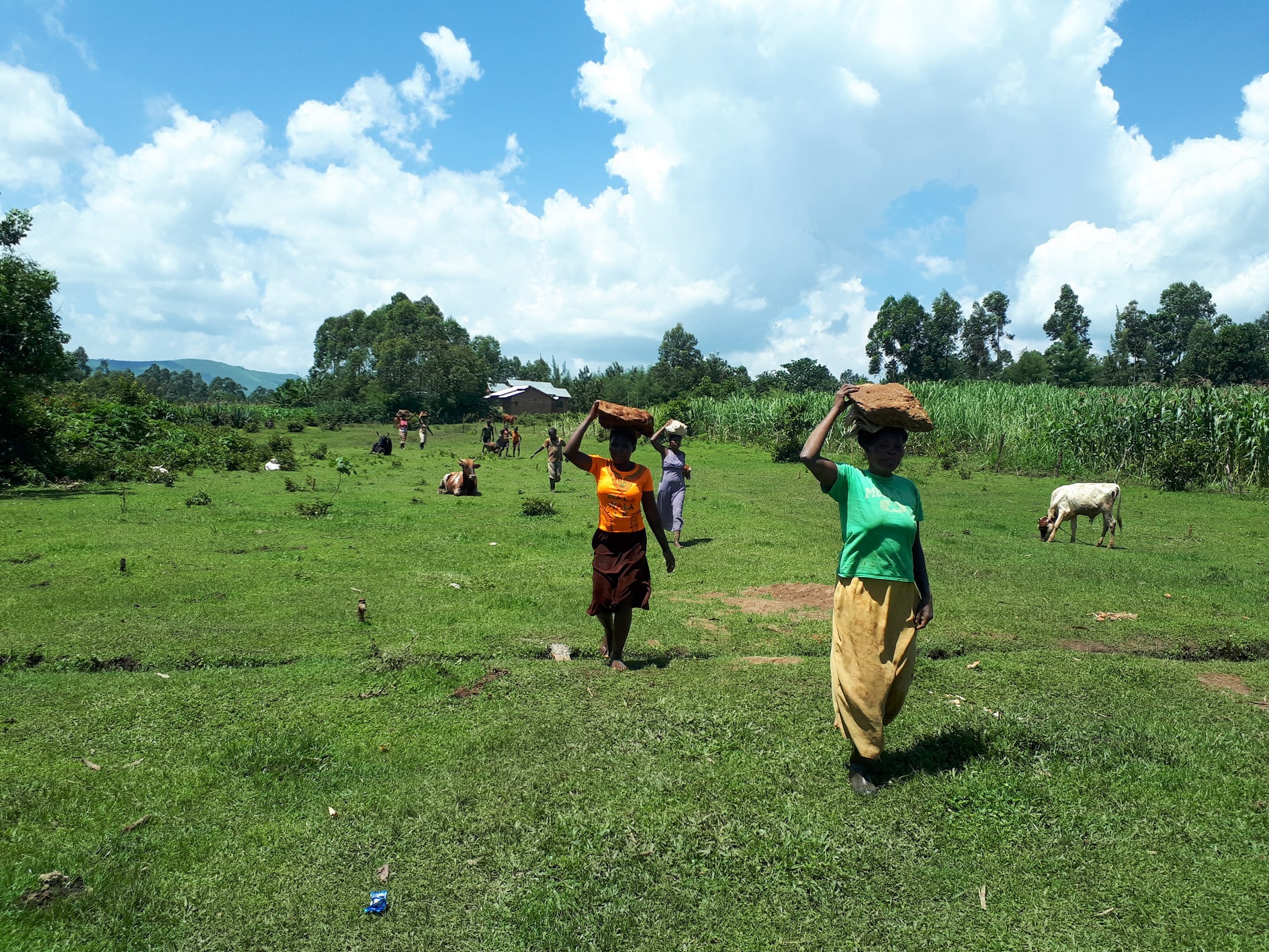
Community members provided all locally available construction materials, e.g bricks, wheelbarrows of clean sand, wheelbarrows of ballast, fencing poles and gravel. Accommodations and meals were provided for the artisan, too. The women were especially helpful throughout the construction process, for many of the men refused to volunteer without getting paid an hourly wage. Women, however, said they would do whatever it takes to get clean water for their families.
Women carrying stones to the artisan working on the spring.
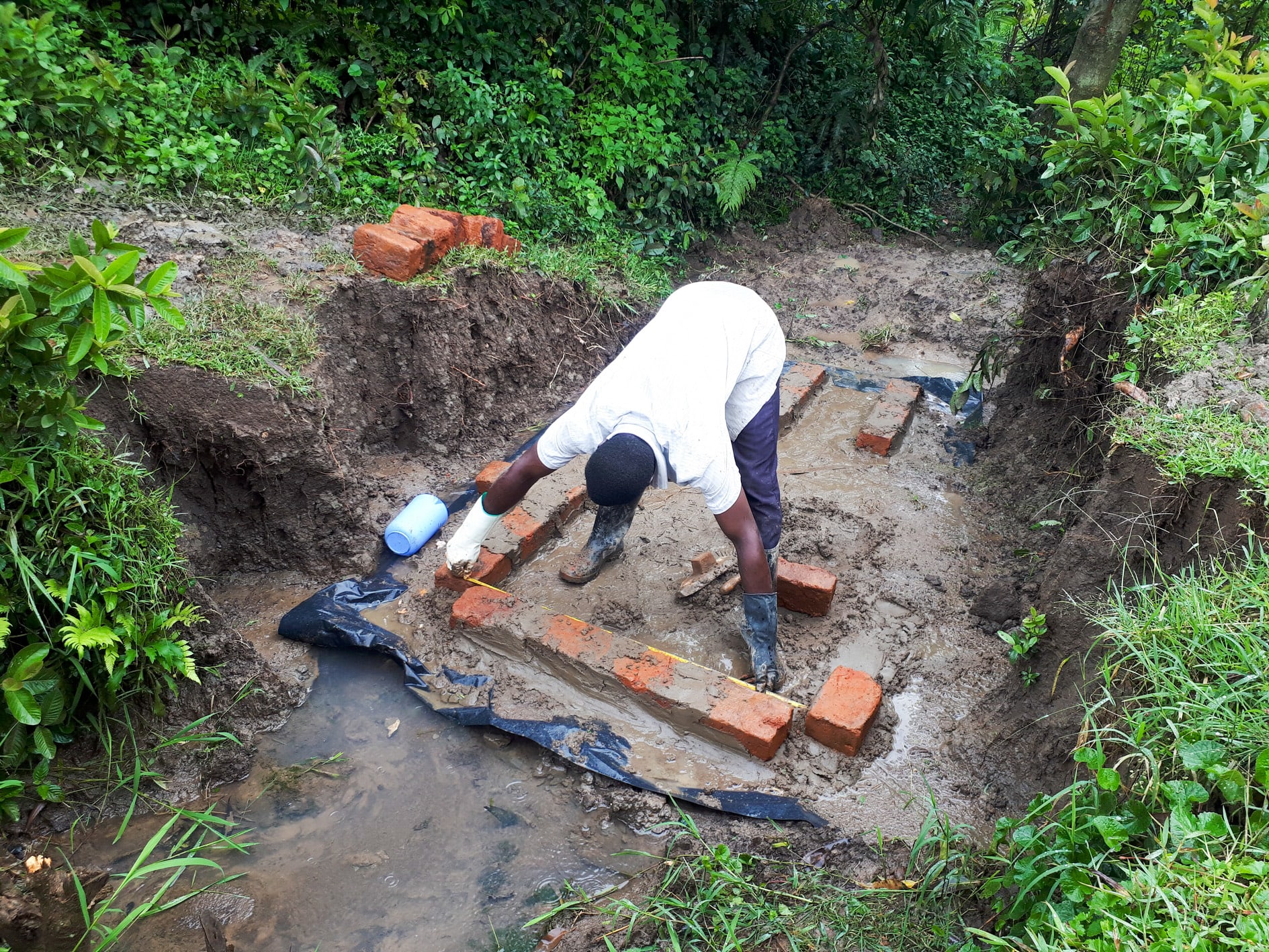
The spring area was excavated to create space for setting the foundation of polyethylene, wire mesh and concrete. After the base had been set, both wing walls and the headwall were set in place using brickwork. The discharge pipe was fixed low in place through the headwall to direct the water from the reservoir to the drawing area.
Starting on the walls
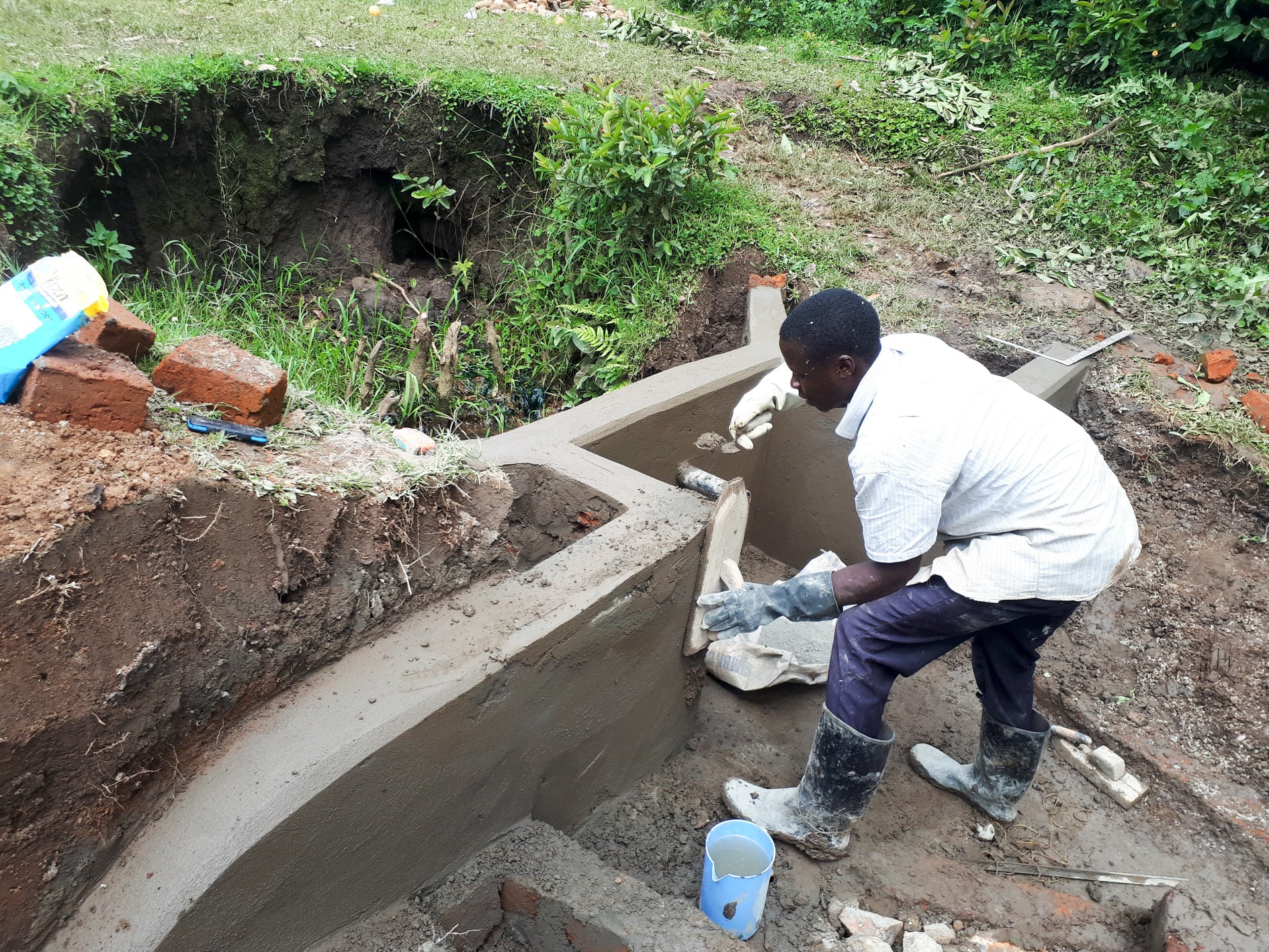
As the wing walls and headwall cured, the stairs were set and ceramic tiles were fixed directly below the discharge pipe. This protects the concrete from the erosive force of the falling water and beautifies the spring. The process of plastering the headwall and wing walls on both sides reinforces the brickwork and prevents water from the reservoir from seeping through the walls and allows pressure to build in the collection box to push water up through the discharge pipe.
Plastering the spring walls
The source area was filled up with clean stones and sand and covered with a polyethylene membrane to eliminate any potential sources of contamination. The concrete dried over the course of two weeks. The community members put tree branches that had thorns over the spring box to prevent people from stepping on it and later put up a fence around the area. They have also planted grass and trees in order to enhance the spring's functionality and sustainability.
As soon as the spring protection was ready for use, the field officer made a visit to officially hand it over to the community.
"When my daughter-in-law Sarah told me about your organization and your intention to protect our spring, I didn't take her seriously because I have had different groups of people who had come and promised to protect the spring only to disappear forever!" Mr. Mark Handa said.
"This is a dream come true for us and I am glad my family and the community at large can now access clean and safe water. This will now minimize trips to the hospital since water-related diseases will be a thing of the past. I promise to take good care of this spring and I won't allow anyone to joke around with it."
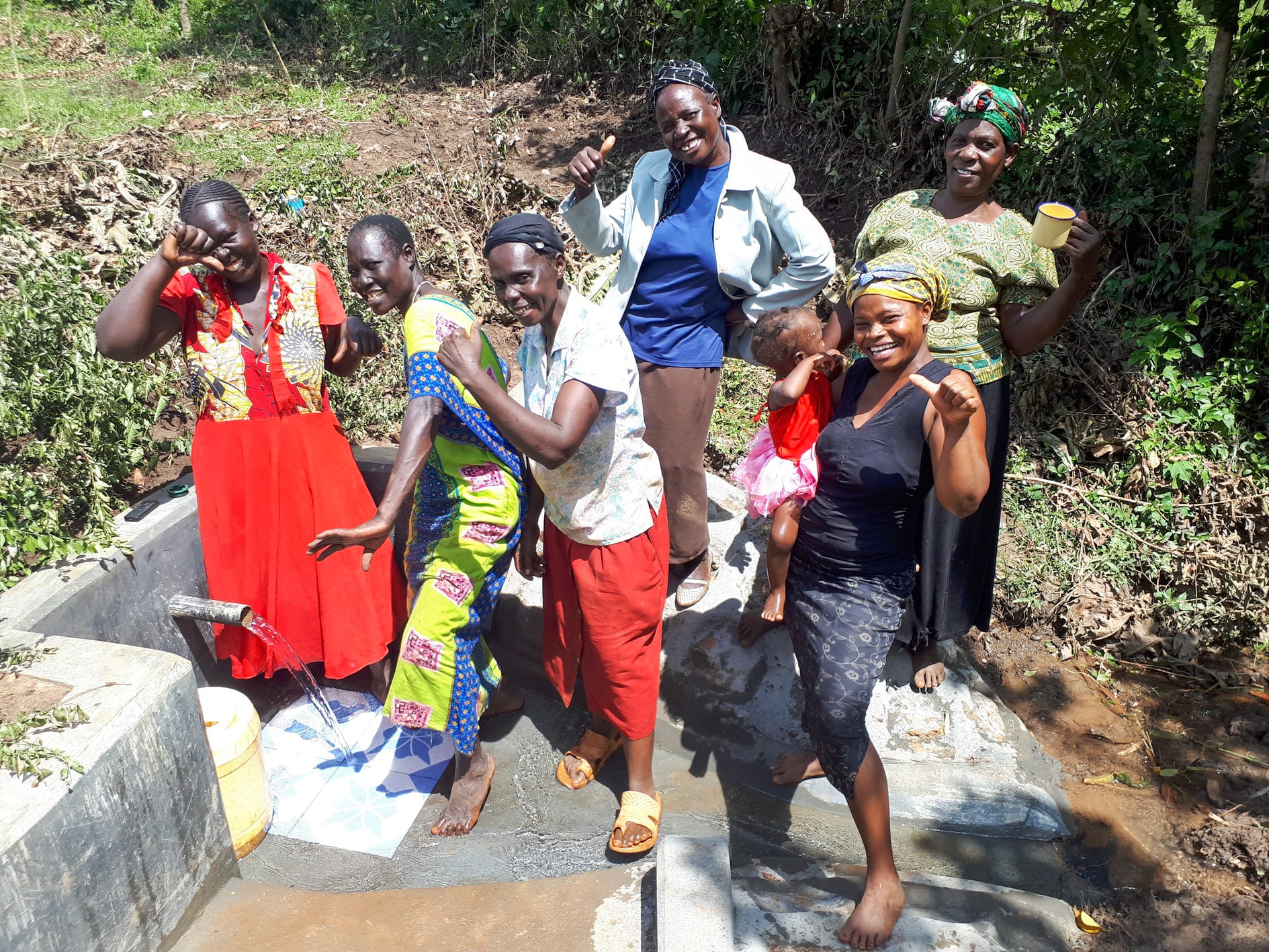
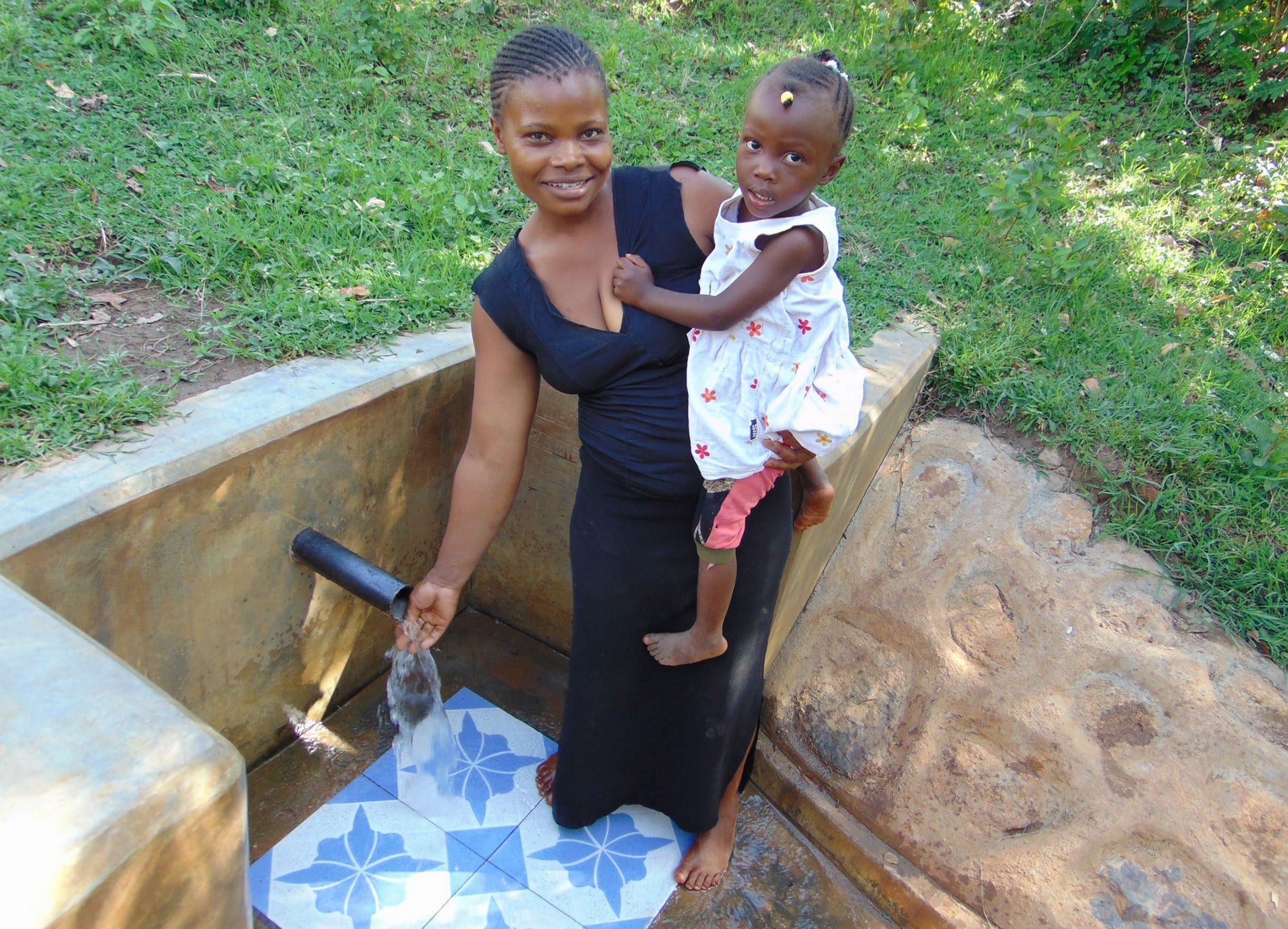
Women gathered at Handa Spring to witness clean water flowing from the pipe.
"Our hard work has paid off," they exclaimed!
May, 2018: Mbande Community Project Underway
Dirty water from Handa Spring is making people in Mbande Community sick. Thanks to your generosity, we’re working to install a clean water point and much more.
Get to know your community through the narrative and pictures we’ve posted, and read about this water, sanitation and hygiene project. We look forward to reaching out with more good news!
Project Videos
Project Photos
Project Type
Springs are water sources that come from deep underground, where the water is filtered through natural layers until it is clean enough to drink. Once the water pushes through the surface of the Earth, however, outside elements like waste and runoff can contaminate the water quickly. We protect spring sources from contamination with a simple waterproof cement structure surrounding layers of clay, stone, and soil. This construction channels the spring’s water through a discharge pipe, making water collection easier, faster, and cleaner. Each spring protection also includes a chlorine dispenser at the waterpoint so community members can be assured that the water they are drinking is entirely safe.
Learn more about how spring protection works here!
Giving Update: Mbande Community, Handa Spring
September, 2019
A year ago, your generous donation helped Mbande Community in Kenya access clean water – creating a life-changing moment for Sarah Wamalwa. Thank you!
Keeping The Water Promise
There's an incredible community of monthly donors who have come alongside you in supporting clean water in Mbande Community.
This giving community supports ongoing sustainability programs that help Mbande Community maintain access to safe, reliable water. Together, they keep The Water Promise.
We’re confident you'll love joining this world-changing group committed to sustainability!
Since the protection of Handa Spring in Mbande last year, community members here have had access to clean and safe water which has reduced waterborne diseases and infections that were caused by contaminated water before the spring was protected. They have also embraced personal and environmental hygiene as they were trained, which has reduced the spread of germs that cause communicable diseases.
The sanitation and hygiene training we had after the project was implemented has had a positive impact on the community members since they now have clotheslines, dishracks, and leaky tins near their latrines for handwashing. Their compounds are clean, as are their latrines. The spring is also well-maintained.
"Protection of Handa Spring has really improved our health since the water is free from contamination and safe for drinking," said Mrs. Sarah Wamalwa, who serves as the Secretary of the water committee.
"We hardly get sick, unlike before where each day you could hear of people suffering from waterborne and water-related diseases. Fetching water is faster which gives me more time to spend on other productive activities like going to the farm since farm products are our main source of income."
Sarah with Fabian
"We do not have major challenges as such concerning water since [the] protection of the spring solved most of our problems. A few community members sometimes don't keep to the hygiene standards of their homes and bodies but we keep on reminding them that it is for their own good as a result with time they have seen positive results by realizing that they get sick less frequently."
Fabian Mkea
Fabian Mkea, a 4-year-old boy we met at the well, was not to be left behind in sharing how the spring protection has impacted his life as well.
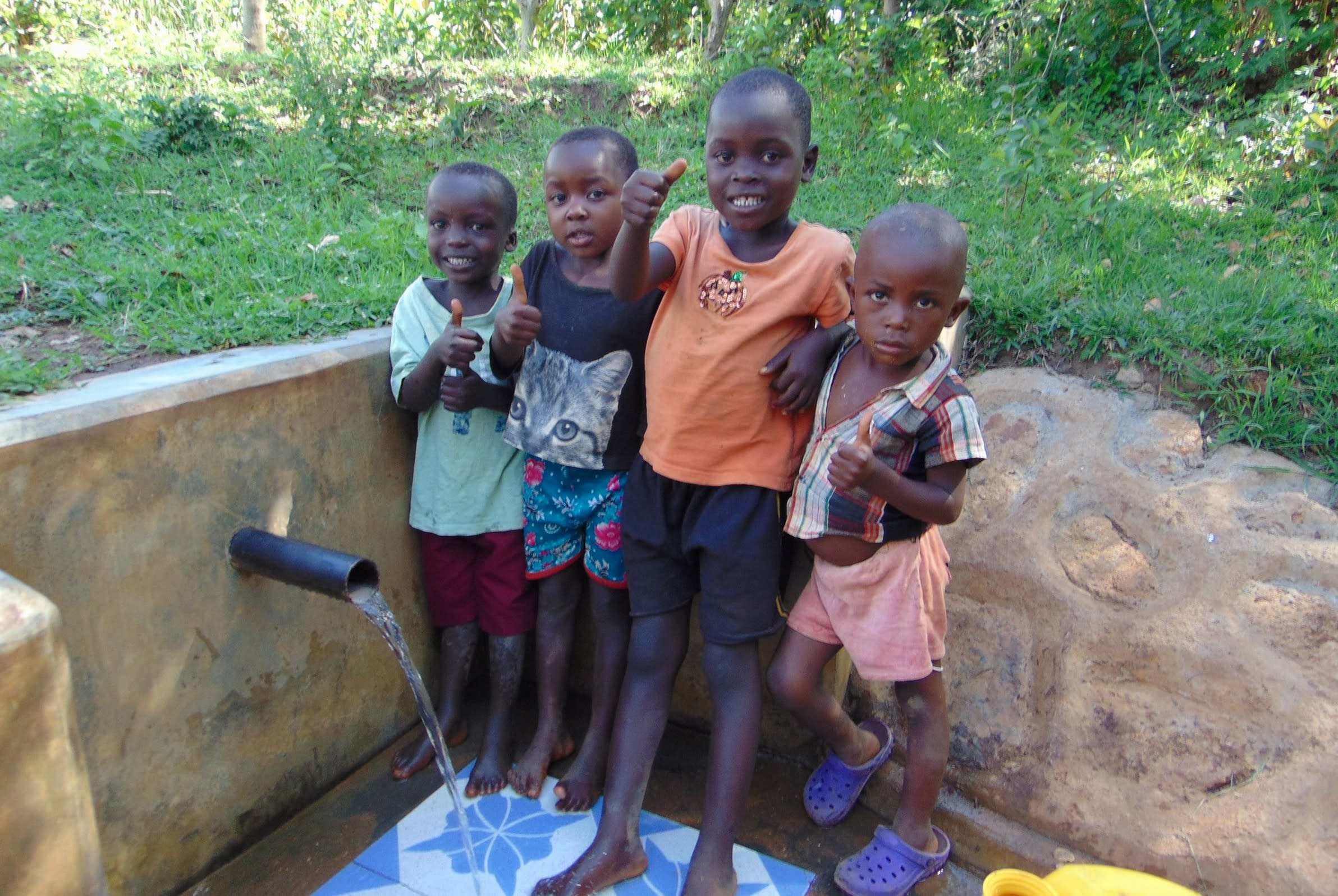
"Fetching water from the spring is safer and easier for me and my siblings than before it was protected. I assist my mum to fetch water and still get enough time to do my homework and play with my friends too."
Navigating through intense dry spells, performing preventative maintenance, conducting quality repairs when needed and continuing to assist community leaders to manage water points are all normal parts of keeping projects sustainable. The Water Promise community supports ongoing sustainability programs that help Mbande Community maintain access to safe, reliable water.
We’d love for you to join this world-changing group committed to sustainability.
The most impactful way to continue your support of Mbande Community – and hundreds of other places just like this – is by joining our community of monthly givers.
Your monthly giving will help provide clean water, every month... keeping The Water Promise.
 Protected Spring
 Rehabilitation Project