
Better Health and More Opportunities for the Future

April, 2026

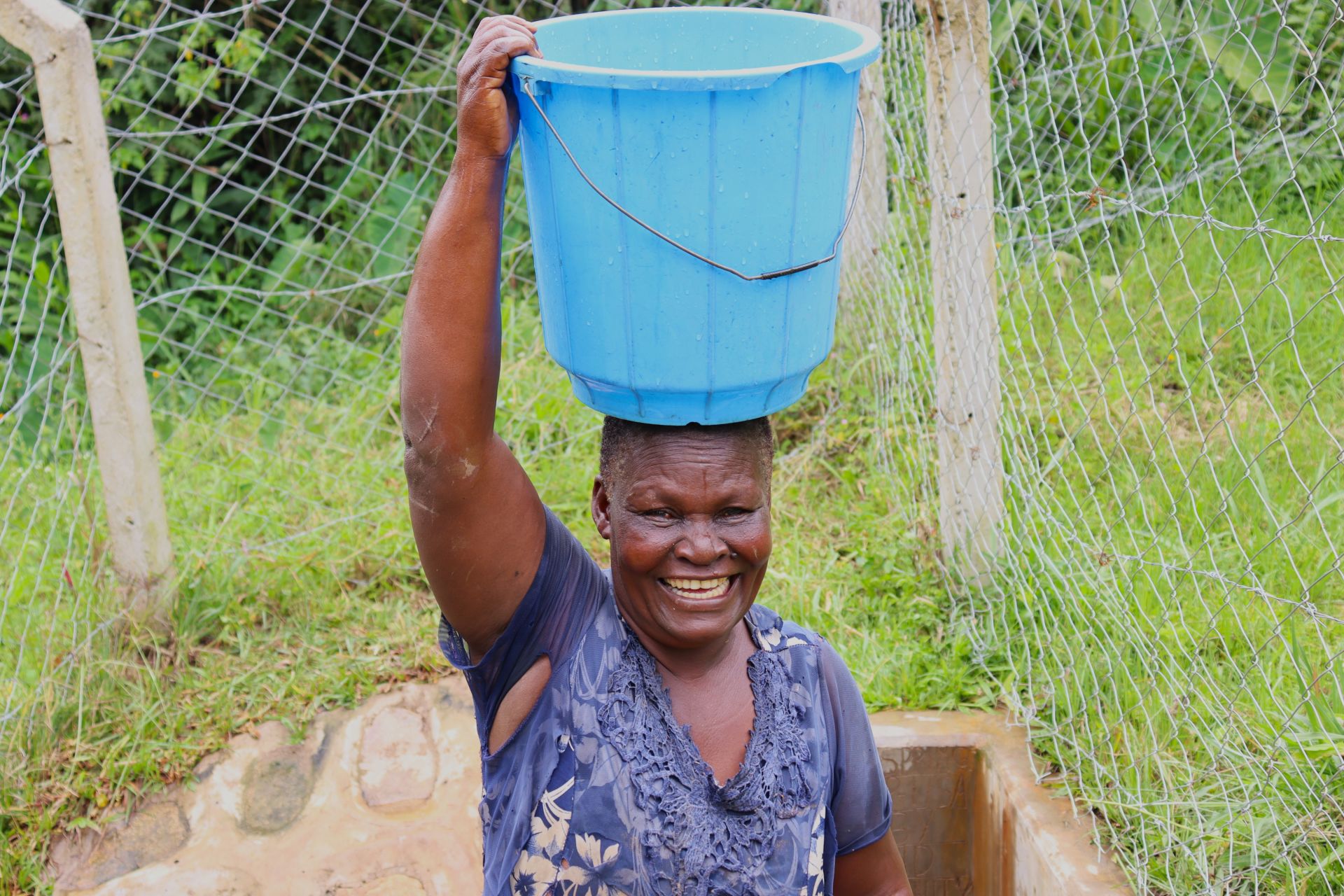
Last year, your gift unlocked the potential for a brighter future for Catherine. Since then, she and the Lukorido Community of 180 residents have had clean, reliable water. Your contribution has made a significant impact. Thank you for making a difference!

"Since the new water point is closer to my home, I'm now able to fetch water and return home in under ten minutes!" said Catherine.

Before the Spring Protection

Like many in Western Kenya, 63-year-old Catherine Ibrahim was responsible for collecting water to meet her daily water needs. Before last year’s water intervention, this task stole her time and negatively affected her.

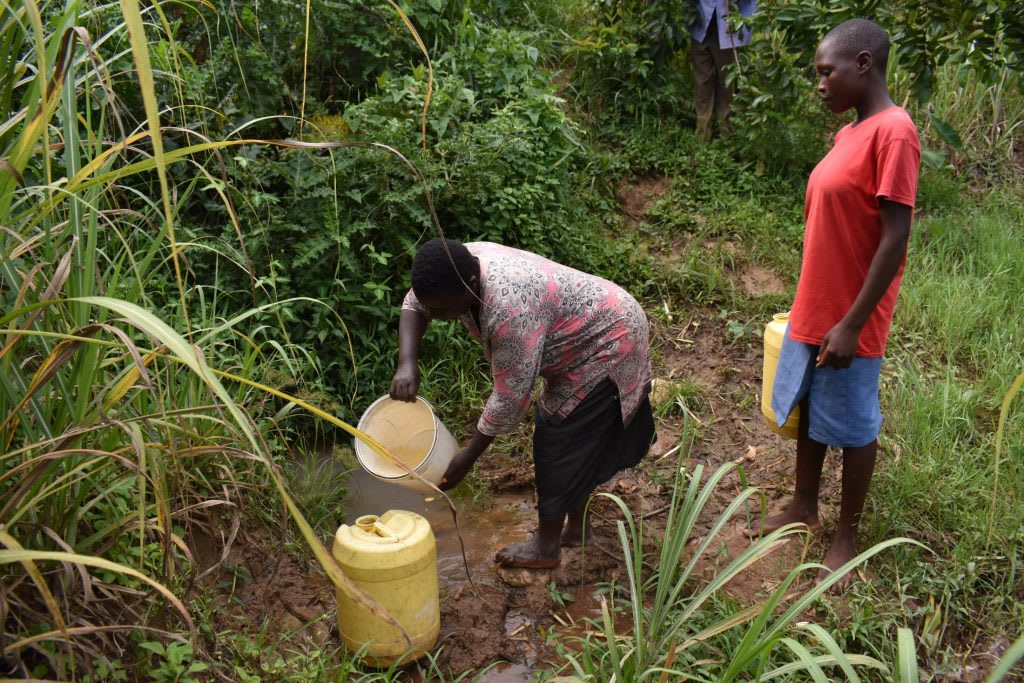
A community member collects water from the previous water source.

Drinking the water caused severe consequences. Many in the community suffered from waterborne diseases that created health problems, affecting their daily lives. Limited accessibility also meant people wasted time collecting sufficient water to meet their needs. The difficult journey to collect water sapped their physical and emotional energy, creating roadblocks. For Catherine, it lessened her opportunity to stay healthy and accomplish her daily tasks.

"Previously, I would walk a long distance to fetch water from another protected spring. The nearest water point was a contaminated scoop hole whose water often made me sick," shared Catherine.

Since the Spring Protection

Your generous gift last year was much more than a simple donation; it was a powerful statement about your commitment to this community and Catherine’s future. By supporting the water solution, you made clean water an everyday reality, fostering hope for a brighter future.


Reliable and clean water lays the groundwork for improved health, education, and economic possibilities, allowing people to thrive. We frequently hear from those we interview that "water is life!"

"Thanks to the safe and clean water, I'm now healthier than I was before. The threat of frequent water-related illnesses has drastically reduced. I can now save some money instead of spending it on treatment," said Catherine.

She continued: "Clean water translates to better health and [a] lower risk of illnesses. I have managed to stay healthy for the last year. I can't think of anything better than the fact that I've managed to stay healthy for a whole year!"

The Future is Looking Bright!

A year ago, you made a difference for Catherine and her community. This is just the first chapter of their story as access to clean water continues to improve their lives!

At The Water Project, we value sustainability and want to ensure that people continue to thrive. We commit to monitoring this project to ensure the water is always flowing and safe to consume. We inspect system hardware, monitor water availability, conduct sanitary inspections, and collect water-quality samples to identify risks. We work with our on-the-ground team to resolve them.

You gave Catherine a crucial tool for achieving her dreams: access to clean water. Together, we can excitedly expect that with this precious resource, her enthusiasm and courage will help Catherine fulfill her dreams.

"I have cattle, and I'm looking forward to increasing my herd. I'd love to expand my farming activities so as to increase my income," Catherine declared.


Navigating through intense dry spells, performing preventative maintenance, conducting quality repairs when needed and continuing to assist community leaders to manage water points are all normal parts of keeping projects sustainable. The Water Promise community supports ongoing sustainability programs that help Lukorido Community maintain access to safe, reliable water.

We’d love for you to join this world-changing group committed to sustainability.

The most impactful way to continue your support of Lukorido Community – and hundreds of other places just like this – is by joining our community of monthly givers.

Your monthly giving will help provide clean water, every month... keeping The Water Promise.

Project Status


Project Type:  Protected Spring

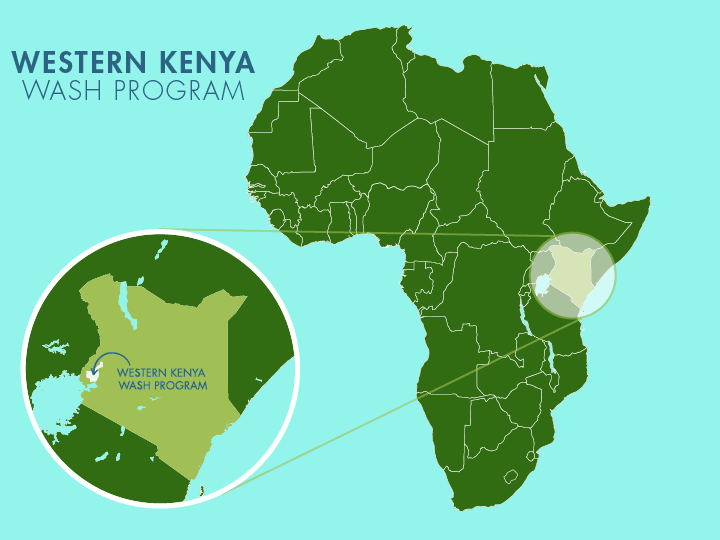
Regional Program: Western Kenya WaSH Program

Impact: 180 Served

Project Phase:  In Service - Jan 2025

Functionality Status:  Functional

Last Checkup: 02/10/2026

Project Features


Click icons to learn about each feature.


The 180 community members who call Lukorido Community home struggle to access water they can drink without worrying if it will make them ill.

"In this community, there is no protected spring around, so community members rely on the unprotected springs, which most of them are seasonal or low yield, with only Robert Lumbasi Spring having good discharge yield," said field officer Stella Inganji.
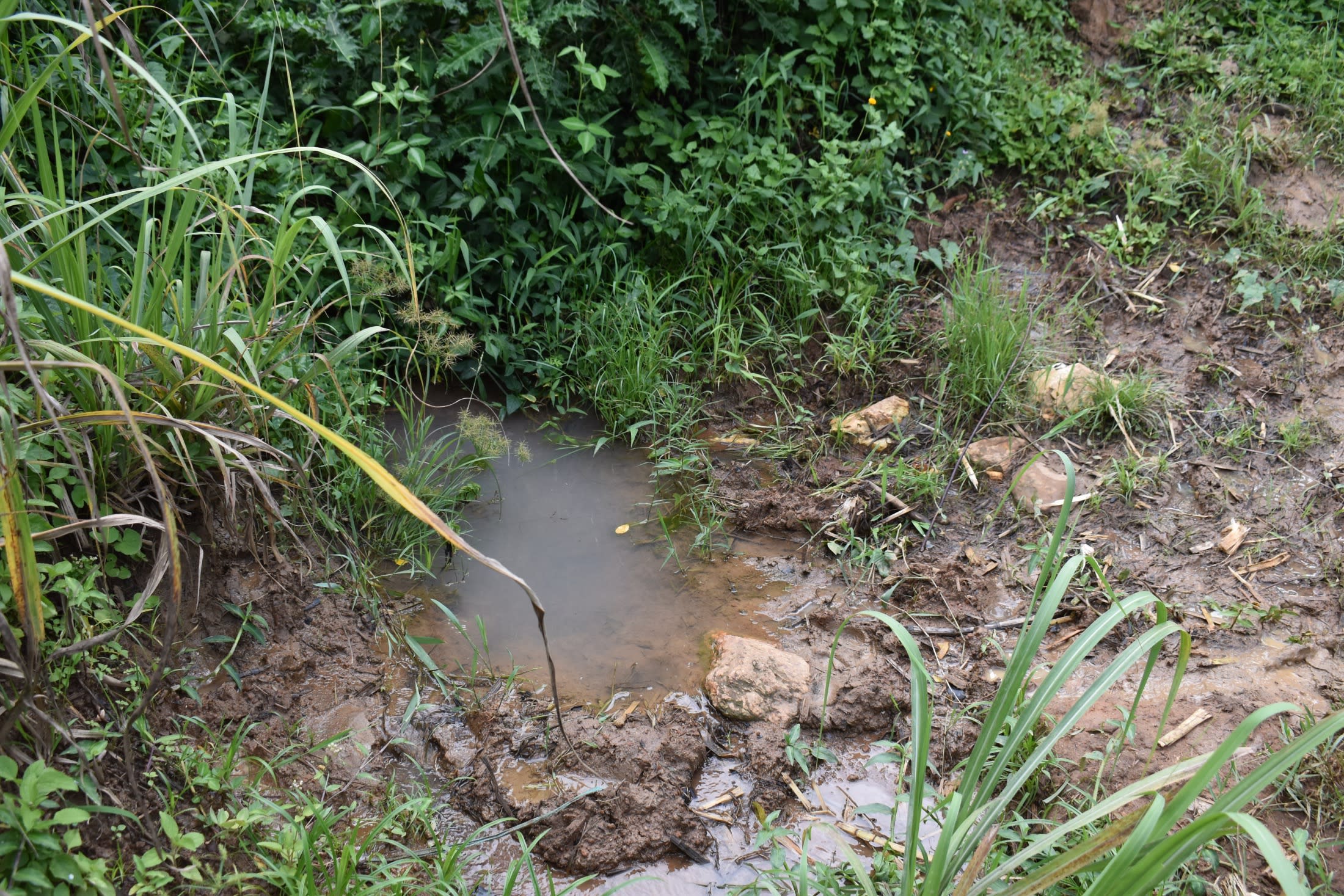
Stella continued: "Water has been a big challenge to this community where their water point is open. The spring is open to all kinds of contamination, which is dangerous to human consumption. The place is too dirty, with stagnant water all over and mud spread in the entire place. Most of them complain of waterborne diseases such as diarrhea and typhoid fever, and they fear if not assisted early, it may attract some deadly and dangerous big diseases like cholera."

"Secondly, the water source is in a sloped area where it is difficult to access, especially during [the] rainy season. The place is swampy and slippery, which can cause injuries when someone falls. Also, it is a bit bushy where it is dangerous, especially to the young ones if bitten by harmful animals," continued Stella.

"Just to think of coming to collect water always make me sick because the water point environment itself is very dirty, and to make it worse, the spring is at swampy area. Accessing it is also very difficult with stagnant water all over the place which makes it slippery and muddy," said 42-year-old farmer Wilmina Muyale, shown below collecting water from the unprotected spring.

"This water is too dirty, and because we do not have a choice or alternative water source, we normally take it like that, which affects our health often. Just recently, my younger brother was rushed to the hospital complaining of stomachache and vomiting after consuming the water. That is just one of many cases in the area. So this is the situation we always experience being in and out of hospital for treatment, and it's expensive," said 12-year-old Juliet A.

The protection of the spring will enable people like Wilmina and Juliet to collect water without fear and use their resources and time for other important daily tasks.

"The proposed water solution will not only bring light and good health to this community but also will improve the living standards of many households," concluded Stella.

The Proposed Solution, Determined Together...

At The Water Project, everyone has a part in conversations and solutions. We operate in transparency, believing it benefits everyone. We expect reliability from one another as well as our water solutions. Everyone involved makes this possible through hard work and dedication.

In a joint discovery process, community members determine their most advantageous water solution alongside our technical experts. Read more specifics about this solution on the What We're Building tab of this project page. Then, community members lend their support by collecting needed construction materials (sometimes for months ahead of time!), providing labor alongside our artisans, sheltering and feeding the builders, and supplying additional resources.

Water Access for Everyone

This water project is one piece in a large puzzle. In Kenya, Sierra Leone, and Uganda, we're working toward complete coverage of reliable, maintained water sources that guarantee public access now and in the future within a 30-minute round trip for each community, household, school, and health center. One day, we hope to report that this has been achieved!

Training on Health, Hygiene & More

With the community's input, we've identified topics where training will increase positive health outcomes at personal, household, and community levels. We'll coordinate with them to find the best training date. Some examples of what we train communities on are:

  • Improved hygiene, health, and sanitation habits
  • Safe water handling, storage & treatment
  • Disease prevention and proper handwashing
  • Income-generation
  • Community leadership, governance, & election of a water committee
  • Operation and maintenance of the water point

Chlorine Dispensers

Installing chlorine dispensers is an important piece of our spring protection projects. Protecting a spring provides community members with an improved water source, but it doesn’t prevent contamination once the water is collected and stored. For example, if the water is clean and the container is dirty, the water will become contaminated.

We ensure that each chlorine dispenser is filled with diluted chlorine on a consistent schedule so that people can add pre-measured drops to each container of water they collect. That way, community members can feel even more confident in the quality of their water.

Project Updates


January, 2025: Lukorido Community Spring Protection Complete!

Your contribution has made access to clean water for the Lukorido Community possible!

We transformed their spring into a flowing source of naturally filtered water. A chlorine dispenser was installed to provide added protection, and we trained the community on improved sanitation and hygiene practices. Together, these components will unlock the opportunity for community members to thrive!

"I will enjoy drinking clean and safe water, unlike before when I usually contracted waterborne diseases as a result of consuming dirty water. The money I have been spending on treatment can be used to clear school fees for my grandchildren. My son, Andrew, will live a healthy life, be able to concentrate on his manual work, and be a better person in society," shared 62-year-old farmer Catherine Ibrahim.

Ms. Ibrahim.

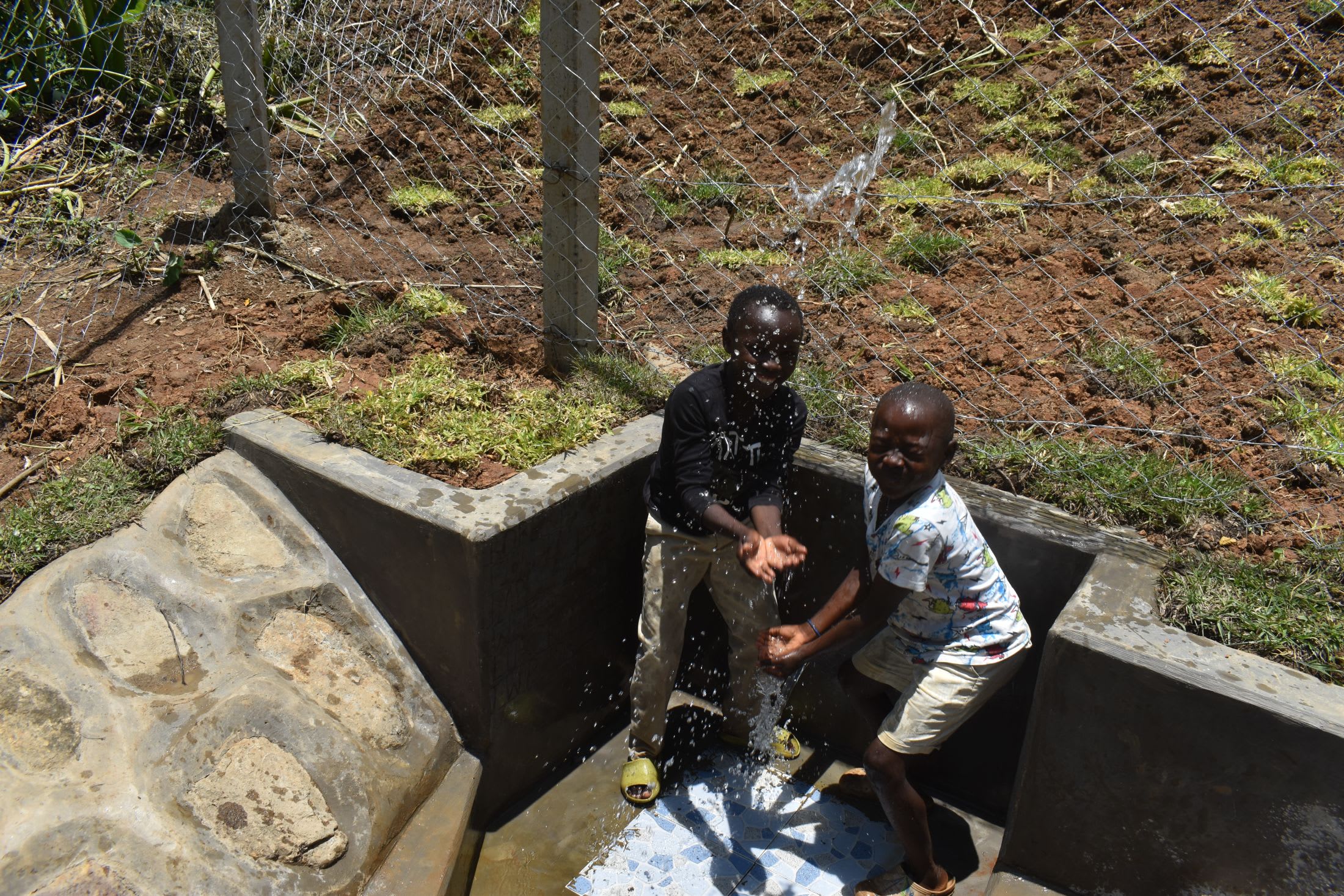
Children were just as excited as adults about clean water access!

"I will be able to concentrate on my studies and maximize the available time to revise well for my exams. My parents will have an easy time collecting water, unlike before. Also, the hard-earned money they have been using for typhoid treatment can be saved for future use," said eleven-year-old Benjamin.

Benjamin (left) at the spring.

Preparing for Spring Protection

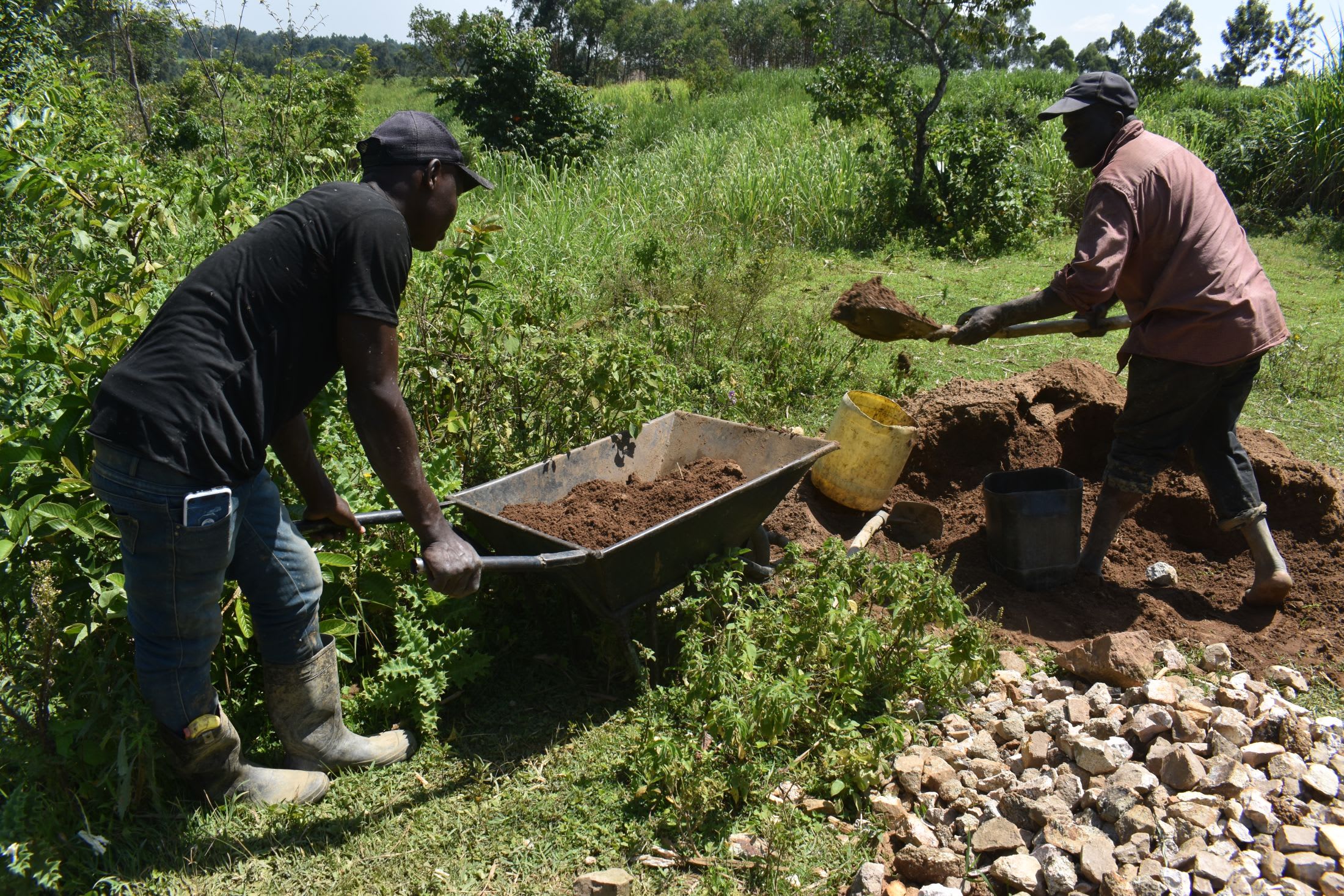
Community members worked together to source all locally available construction materials for the spring. These included bricks, sand, stones, and fencing poles. Because people have to carry most items by hand, the material-collection process can take anywhere from a few weeks to months.

Community members gathering materials.

When the community was ready, we delivered the remaining construction materials, including cement, plastic tarps, and hardware. Then our construction artisan and field officers deployed to the spring to begin work.

Protecting the Protecting the Spring: A Step-by-Step Process

First, we excavated the spring area. This includes digging a drainage channel below the spring and several runoff diversion channels above and around the spring to help divert surface contaminants away.

Excavating the spring.

To ensure community members could still access water throughout the construction process, we also dug temporary channels around the construction site to allow water to continue to flow. Excavation created space for setting the spring's foundation.

Laying the foundation.

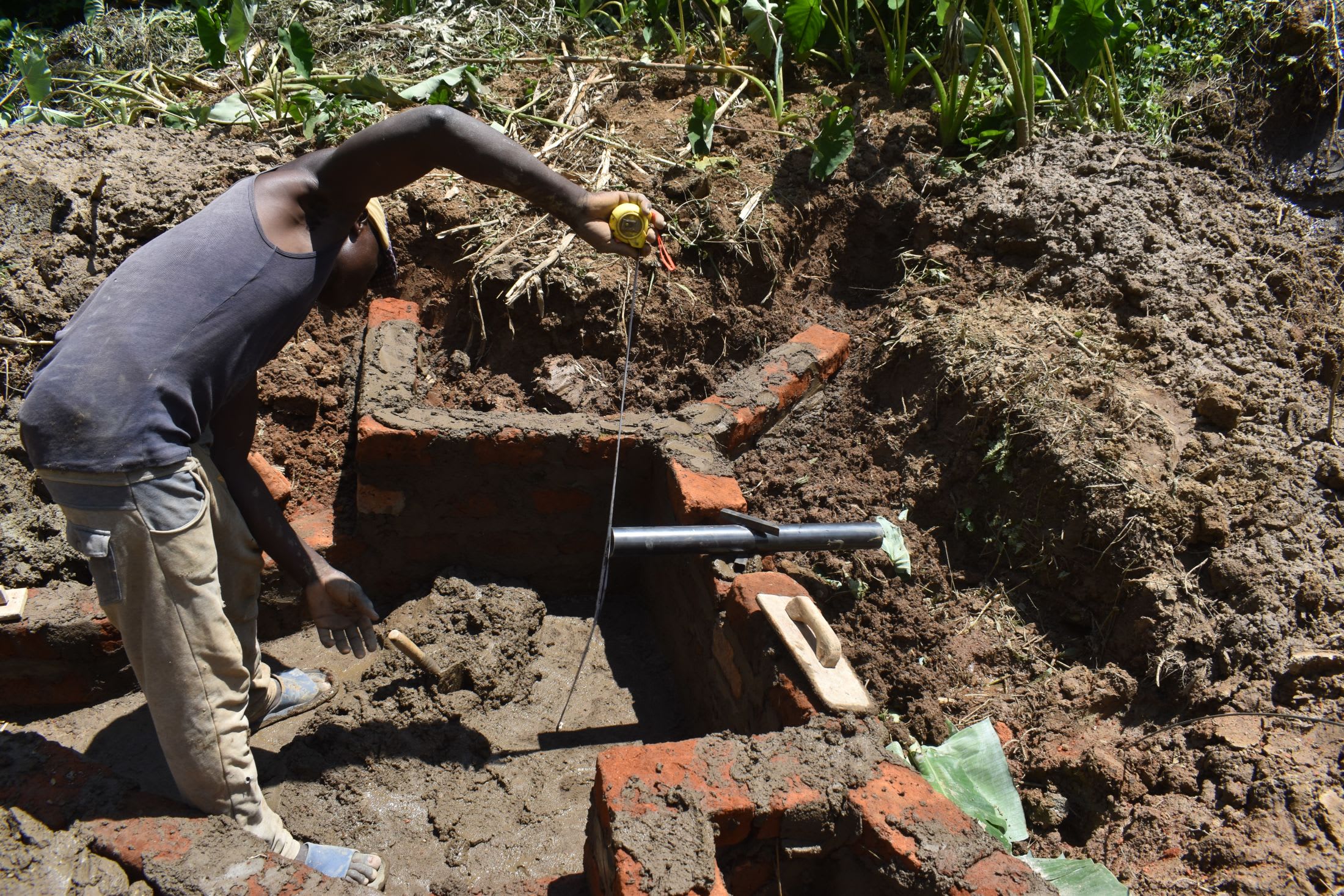
After establishing the base, made of thick plastic, wire, concrete and waterproof cement, we started brickwork to build the spring walls and stairs. Once the walls were tall enough, we began one of the most crucial steps: setting the discharge pipe. The discharge pipe needs to be positioned low enough so the water level never rises above the spring's eye, yet high enough to allow room for the average collection container (20-liters) to sit beneath the pipe without making contact, to prevent cross-contamination.

Setting the discharge pipe.

If we place the pipe too high, back pressure could force water to emerge elsewhere. Too low, and community members would not be able to access the water easily.

In coordination with the walls and stairs, we cemented stones on both sides of the spring's drainage channel. These stones discourage people and animals from standing in that area, which could cause soil erosion and a clogged drainage area.

Cementing stones to protect the spring.

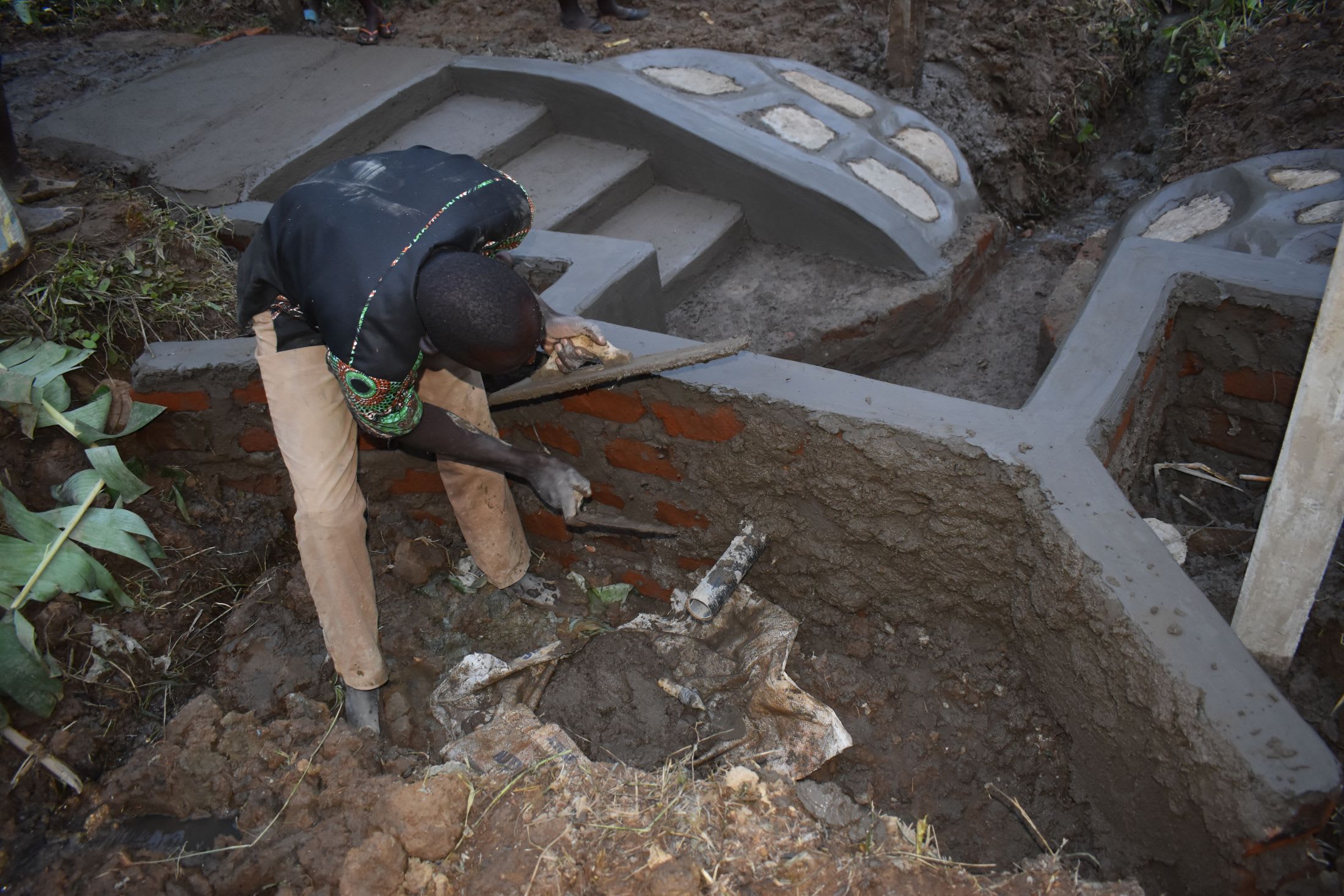
We then cemented and plastered the spring walls. These finishing layers reinforce the brickwork and prevent water in the reservoir from seeping through. In turn, enough pressure builds to push water out through the discharge pipe.

Plastering the walls and stairs.

As the walls cured, we finished the stairs and installed tiles beneath the discharge pipe. The tiles protect the concrete from the falling water's erosive force.

Tile setting.

We redirected the temporary diversion channels back into the reservoir box and closed all other exits to force water through only the discharge pipe. We filled the reservoir area with the large, clean stones arranging them in layers like a well-fitting puzzle. We covered the rocks with thick plastic and piled enough dirt on top to compensate for future settling.

Backfilling.

Community members transplanted grass to help prevent erosion and the collection area was fenced. The fence prevents people or animals from walking in the area above the spring, as compaction of this area can potentially compromise water quality.

Community members planting grass around the spring.

The construction process took about two weeks of work and patience. As soon as the spring was ready, people got the okay from their local field officers to fetch water.

We officially gave ownership of the waterpoint to the Lukorido Community.

The spring is complete!

Happiness and thanksgiving flowed in all directions!

Training on Health, Hygiene, and More

Together with the community, we found their preferred date for training. When the day arrived, facilitators Gladys and Nelly deployed to the site to lead the event. Twenty-two people attended the training.

Training begins.

We discussed personal, oral, and environmental hygiene, emphasizing proper water handling, soap-making, and the ten steps of handwashing. We also highlighted the importance of primary health care and covered the operation and maintenance of the water point, as well as leadership and governance. By the end of the training, each participant had a clear understanding of their role in maintaining clean water and promoting good health within their community.

We held an election for the newly formed water user committee who will oversee the maintenance of the spring. We brainstormed income-generating activities and encouraged them to start a group savings account for future minor repairs to the spring.

"They were willing and ready to learn despite having a lot of work to do. Some of the participants were having their sugarcane harvested that day but having told them about the training prior to the training date they didn't fail to show up. This clearly showed commitment and enthusiasm for the training," said facilitator Gladys.

33-year-old Rachel Nanja, a local farmer, shared what she gained from the training.

Ms. Rachel Nanja.

"This training has enabled me [to] learn new ideas and skills I knew nothing about, for example ten steps of hand washing, dental hygiene and soap making process. This will go a long way in improving hygiene practices and standards in my community."

Thank you for making all of this possible!


December, 2024: Exciting Progress in Lukorido Community!

We’re thrilled to share that, thanks to your generous support, significant change is coming for the entire Lukorido Community. Construction has begun on the spring protection project, bringing them one step closer to having clean, reliable water.

But that's not all—during construction, we’re also providing vital health training. These sessions equip the community with essential hygiene practices, ensuring that the benefits of clean water extend to lasting health improvements.

We’re so grateful for your role in making this possible. Stay tuned for more updates—soon, we’ll be celebrating the arrival of safe water in Lukorido Community!


Project Photos


Contributors

15 individual donor(s)