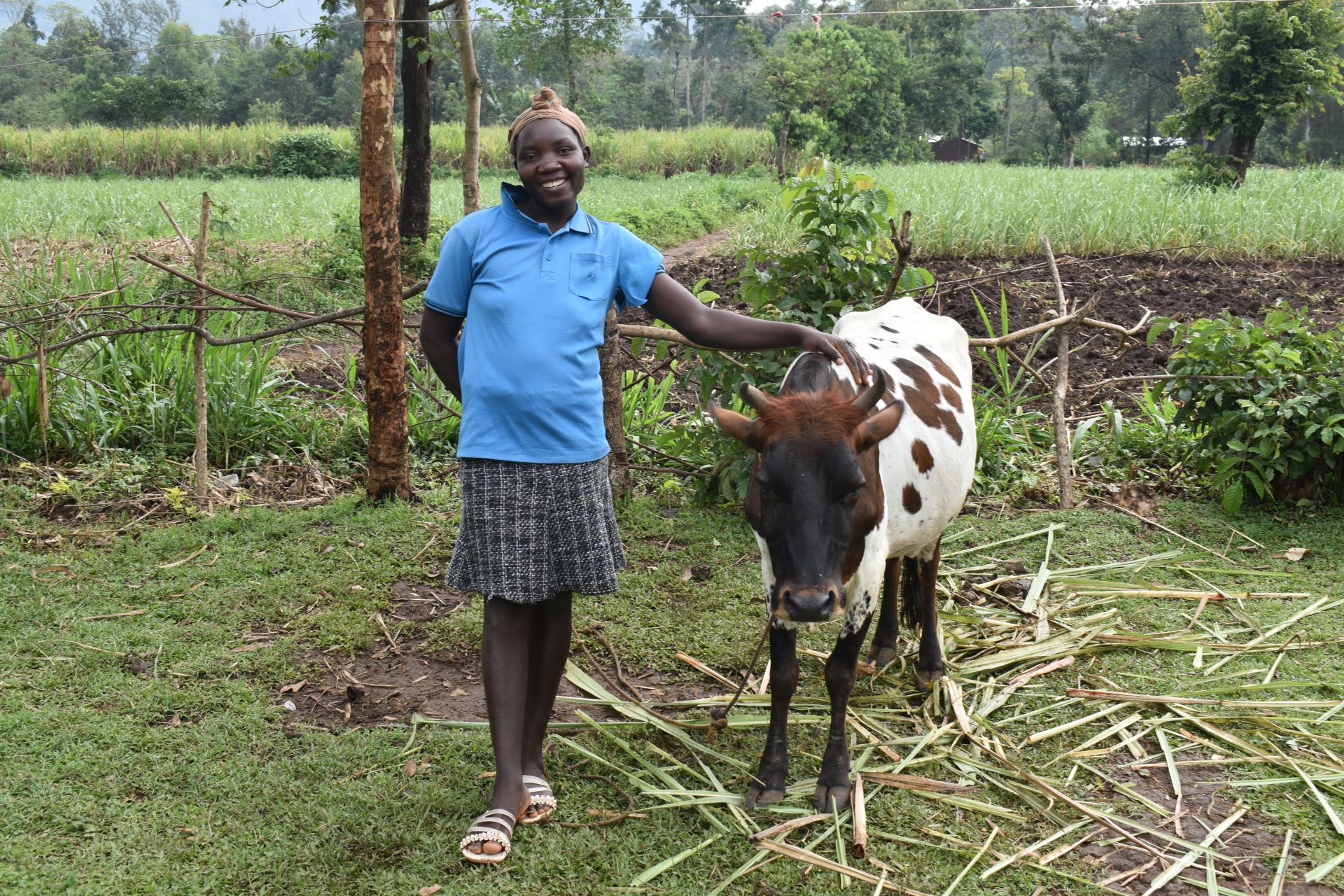

"Clean water brings peace of mind in a family!"

April, 2026

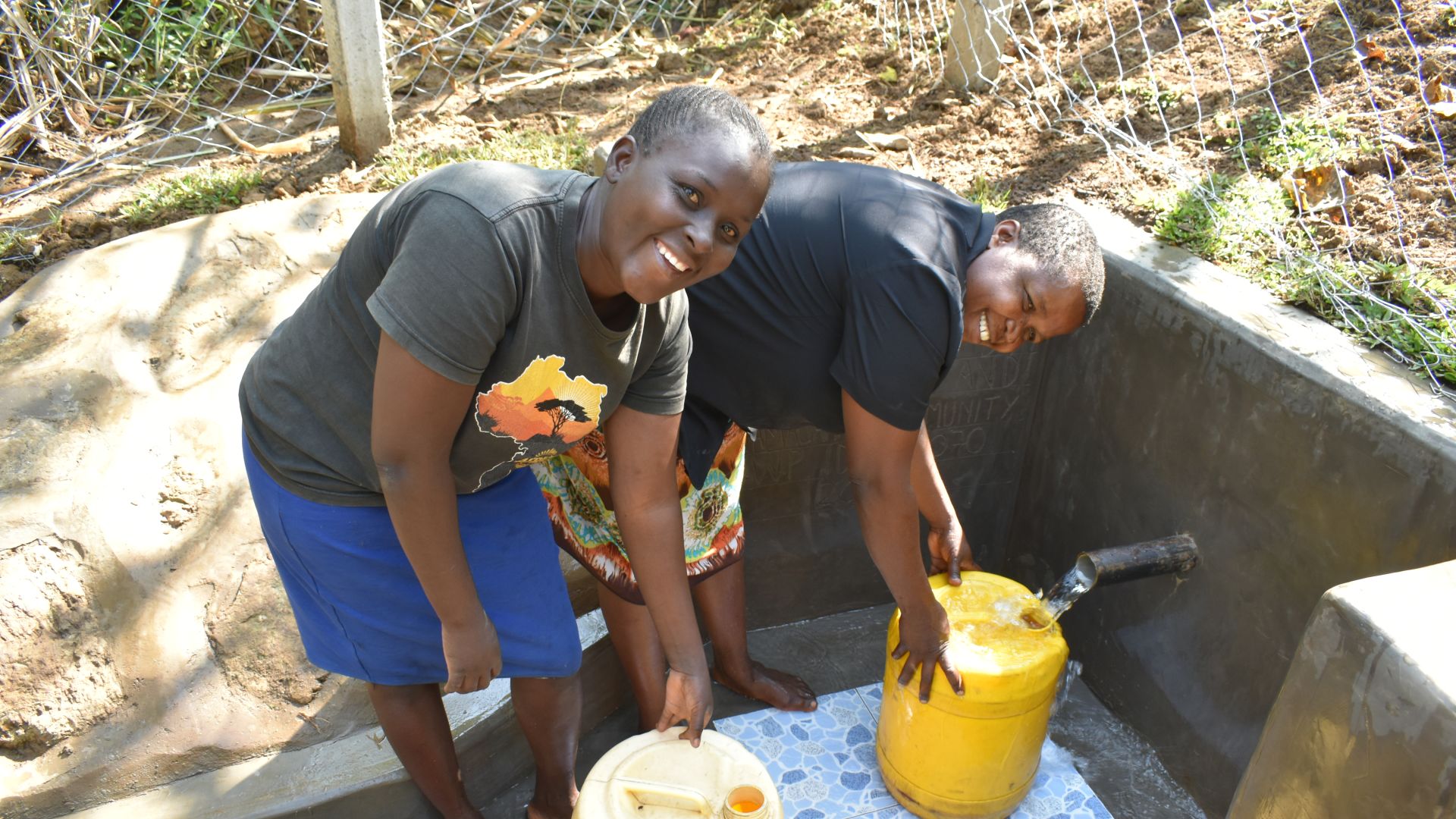
Last year, your gift unlocked the potential for a brighter future for Centrine. Since then, she and the Namagara Community of 1,500 residents have had clean, reliable water. Your contribution has made a significant impact. Thank you for making a difference!

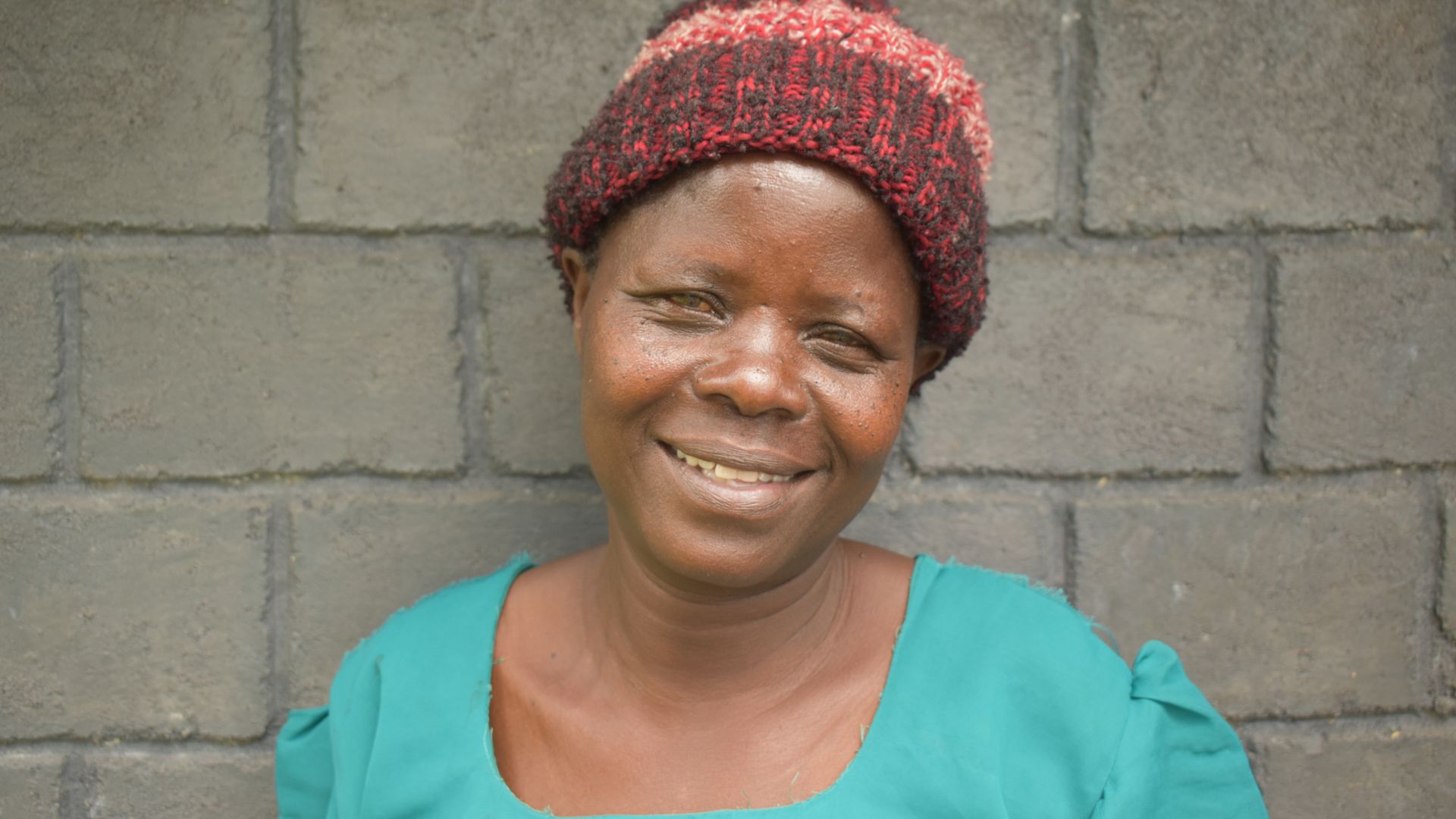
"Clean water brings peace of mind in a family. No anticipation of waterborne diseases, especially amongst the children," celebrated Centrine.

Before the Spring Protection

Like many women in Western Kenya, 24-year-old farmer Centrine Mudagi is responsible for collecting water to meet her family's daily water needs. Before last year’s water intervention, this task stole her time and negatively affected her.

The spring before protection.

Drinking the water caused severe consequences. Many in the community suffered from waterborne diseases that created health problems, affecting their daily lives. Limited accessibility also meant people wasted time collecting sufficient water to meet their needs. The difficult journey to collect water sapped their physical and emotional energy, creating roadblocks. For Centrine, it lessened her opportunity to stay healthy.

"Our biggest problem as a community before this project was access to the water point and congestion at the water point due to the limited quantity of water. Our water could even get contaminated due to the water that used to stagnate at the drawing point," shared Centrine.

Since the Spring Protection

Your generous gift last year was much more than a simple donation; it was a powerful statement about your commitment to this community and Centrine’s future. By supporting the water solution, you made clean water an everyday reality, fostering hope for a brighter future.

Reliable and clean water lays the groundwork for improved health, education, and economic possibilities, allowing people to thrive. We frequently hear from those we interview that "water is life!"

"Worry is not in my mind when it comes to fetching water. First, it's because I no longer worry about falls and getting hurt; the staircases sorted this. Secondly, it's the water, it's clean. I don't worry about it getting contaminated by the stagnant water at the waterpoint," said Centrine.

"I've been able to save much time. which I've put in working on my farm. Enough time at my farm has enabled me to get much produce that has seen me [to] buy a cow and goats. I believe these animals will provide milk for my family, and I can also sell them to do a much bigger project once they multiply. Clean water has seen to my farming expansion, from plant farming to animal farming. I am super proud of who I am becoming," she continued.

The Future is Looking Bright!

A year ago, you made a difference for Centrine and her community. This is just the first chapter of their story as access to clean water continues to improve their lives!

At The Water Project, we value sustainability and want to ensure that people continue to thrive. We commit to monitoring this project to ensure the water is always flowing and safe to consume. We inspect system hardware, monitor water availability, conduct sanitary inspections, and collect water-quality samples to identify risks. We work with our on-the-ground team to resolve them.

You gave Centrine a crucial tool for achieving her dreams: access to clean water. Together, we can excitedly expect that with this precious resource, her enthusiasm and courage will help her fulfill her dreams.

"My dream is to join hands with my husband and build a bigger house for our family. With the kind of investment we have started now in animal keeping, I believe we will accomplish this dream," Centrine declared.


Navigating through intense dry spells, performing preventative maintenance, conducting quality repairs when needed and continuing to assist community leaders to manage water points are all normal parts of keeping projects sustainable. The Water Promise community supports ongoing sustainability programs that help Namagara Community maintain access to safe, reliable water.

We’d love for you to join this world-changing group committed to sustainability.

The most impactful way to continue your support of Namagara Community – and hundreds of other places just like this – is by joining our community of monthly givers.

Your monthly giving will help provide clean water, every month... keeping The Water Promise.

Project Status


Project Type:  Protected Spring

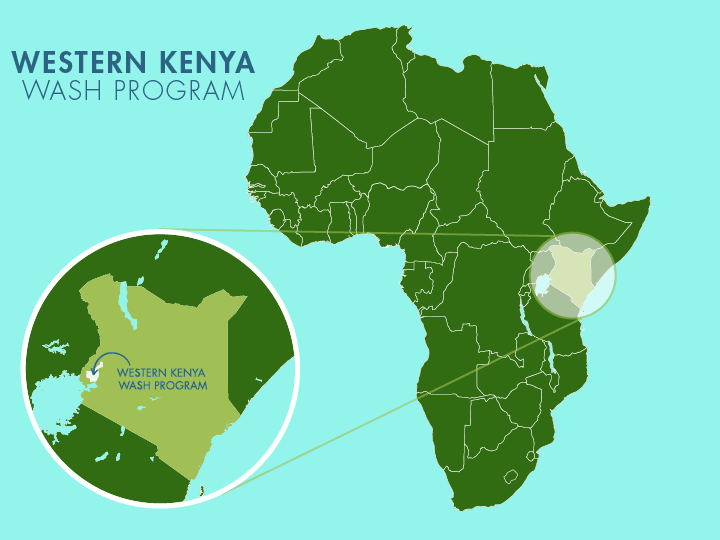
Regional Program: Western Kenya WaSH Program

Impact: 1,500 Served

Project Phase:  In Service - Apr 2025

Functionality Status:  Functional

Last Checkup: 04/08/2026

Project Features


Click icons to learn about each feature.


Namagara is a huge community of 1,500 people, all relying on Sospeter Shamala Spring for their water. The spring is broken down and dangerous to access, and it has been for the last eight years.

Community members navigating down to the spring.

23-year-old farmer Centrine Mudagi shared, "Considering the number of accidents I personally have had on that slope, my safety is [a] great concern because I worry that someday I may not be able to live the story. It scares me that I might get a fracture that might immobilize me forever."

Centrine hauling water.

"The area around the spring is muddy and unkempt. Human activity [such as] farming around the spring has contributed to the poor hygiene around the spring. Blocked drainage [caused] debris in the water [and] stagnating at the drawing point. The terrain at this waterpoint is extremely dangerous, especially during rainy seasons. Cases of falls have been witnessed, with the community members getting injured. The elderly cannot access the waterpoint, forcing them to rely on other people to bring the water upstream so that they can carry it home," Field Officer Lillian Achieng' said, describing the state of the spring.

She continued, "The water looks clear at [first] sight but could be contaminated due to the overflow, flooded water at the drawing point, and other water oozing from different points around the waterpoint."

Without accessible, safe water, Centrine and the rest of her large community will continue to risk their safety every time they collect water—up to ten times a day!

Not only are they risking their safety, but they must also wait in long lines. With 1500 people relying on one spring, it steals their time, which is crucial for farmers like Centrine to earn a living.

Farming Activities.

"I love working on my farm a lot. If I am not fetching water, I'll be on my farm to maximize my farm produce. Water is the engine that runs my home. I am not able to do much in my home without water. Cooking, bathing, laundry, cleaning utensils, drinking, and even quenching my animal's thirst can only be done using water," Centrine shared.

Protecting the spring in the Namagara Community will allow the community members to collect water more peacefully and efficiently. Centrine will have time to tend her farm and care for her family without worrying about falling and getting injured.

Centrine has big hopes of feeling safe at her spring again.

She said, "Our feet won't step in the flooded water at the waterpoint again. I won't be worried [about] an insect or animal biting my child because of stepping in the flooded water. We won't experience falls again and this will assure our safety."

Steps Toward a Solution

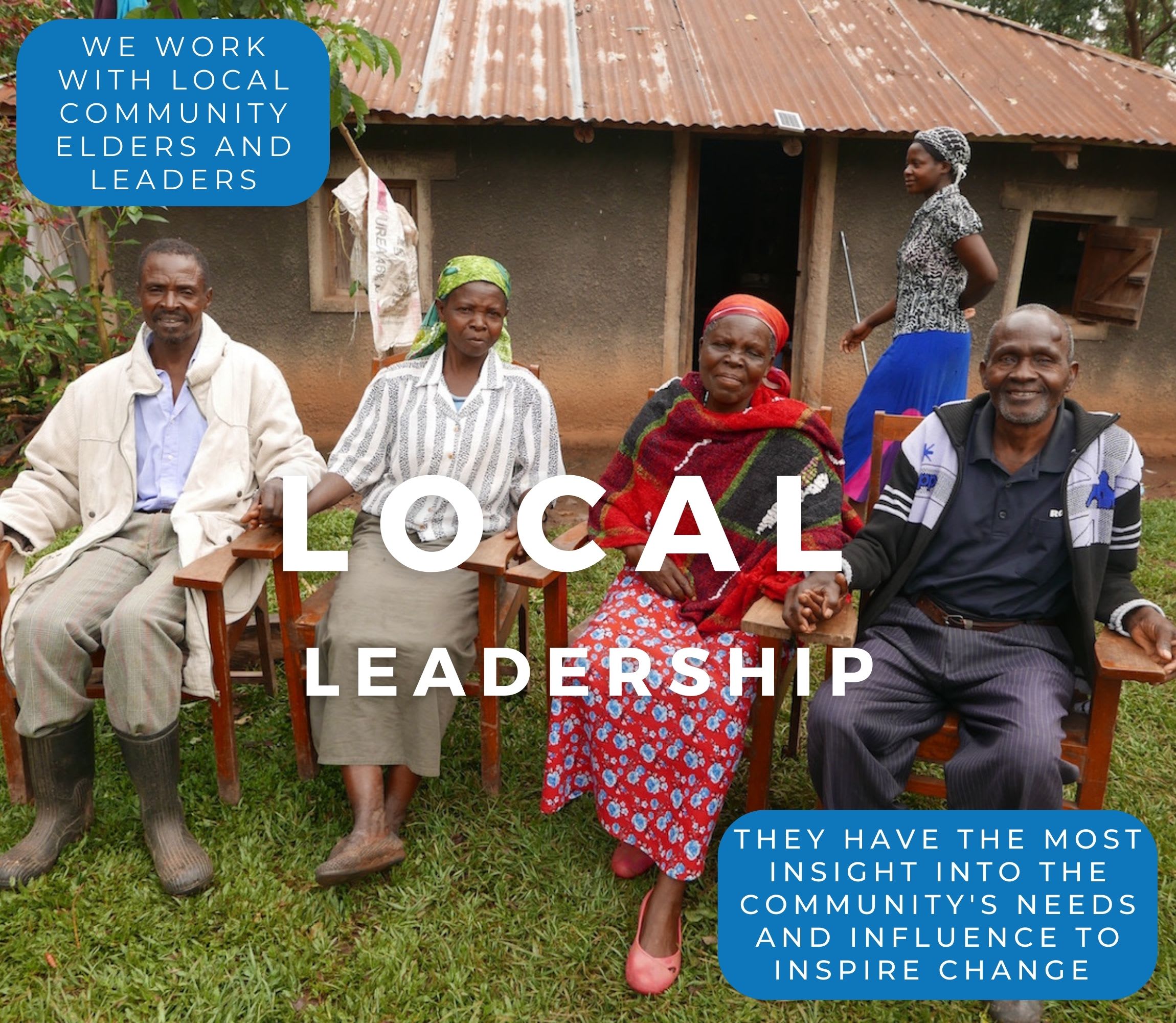
Our technical experts worked with the local community to identify the most effective solution to their water crisis. They decided to safeguard the existing flowing spring.

Spring Protection
Springs are natural water sources that originate from deep underground. As water travels through various layers of the earth, it undergoes a natural filtration process, making it cleaner and safer to drink. To protect these spring sources from contamination, we construct a waterproof cement structure around layers of clay, stone, and soil. This design channels the spring water through a discharge pipe, facilitating easier, faster, and cleaner water collection.

Chlorine Dispenser
As an extra measure towards water quality safety, uniquely engineered chlorine dispensers are installed at all of our spring protection projects so community members can treat their water with pre-measured doses of chlorine. The chlorine treats any residual contamination and stays active for two to three days, ensuring water stays safe to use even when stored at home. Chlorine delivery and maintenance of the dispensers are part of our ongoing community support.

Community Education & Ownership
Hygiene and sanitation training are integral to our water projects. Training is tailored to each community's specific needs and includes key topics such as proper water handling, improved hygiene practices, disease transmission prevention, and care of the new water point. Safe water and improved hygiene habits foster a healthier future for everyone in the community. Encouraged and supported by the guidance of our team, a water user committee representative of the community's diverse members assumes responsibility for maintaining the water point, often gathering fees to ensure its upkeep.

Project Updates


April, 2025: Namagara Community Spring Protection Complete!

Your contribution has made access to clean water for the Namagara Community possible!

We transformed their spring into a flowing source of naturally filtered water. A chlorine dispenser was installed to provide added protection and we trained the community on improved sanitation and hygiene practices. Together, these components will unlock the opportunity for community members to thrive!

"My life revolves in this community as a farmer. Easy access to this spring will save on my time, which I will spend on my farm, which is my source of livelihood. I won't waste time navigating my way down [to] or up [from] the spring, especially during the rainy season. With extra money from produce in my pocket, my children will have their education paid for, and this will see them forge into their future with confidence. When I produce more on my farm, my children will have enough food even after selling some. The new spring has turned into my time saver instead of [the] time waster that it used to be. This time will be turned into money through farming more," shared Centrine Madagi, a 23-year-old farmer and mother in the community.

Children were just as excited as adults about clean water access!

12-year-old Laban is hopeful for the change the spring protection will bring. "A lot will improve for me because I'll get water quickly due to the new staircases creating more time to study while at home and also play with my friends. I will fetch more water for my mum, unlike before when the terrain used to limit me. I used to be afraid to come to the spring because of two things. The first one [was] fear of falling, and the second one [was] breaking my container, but all these were always kept in my heart because I didn't want to disappoint my mum and also look like a coward. The new waterpoint has eliminated this fear."

Preparing for Spring Protection

Community members worked together to source all locally available construction materials for the spring. These included bricks, sand, stones, and fencing poles. Because people have to carry most items by hand, the material-collection process can take anywhere from a few weeks to months.

When the community was ready, we delivered the remaining construction materials, including cement, plastic tarps, and hardware. Then our construction artisan and field officers deployed to the spring to begin work.

Protecting the Spring: A Step-by-Step Process

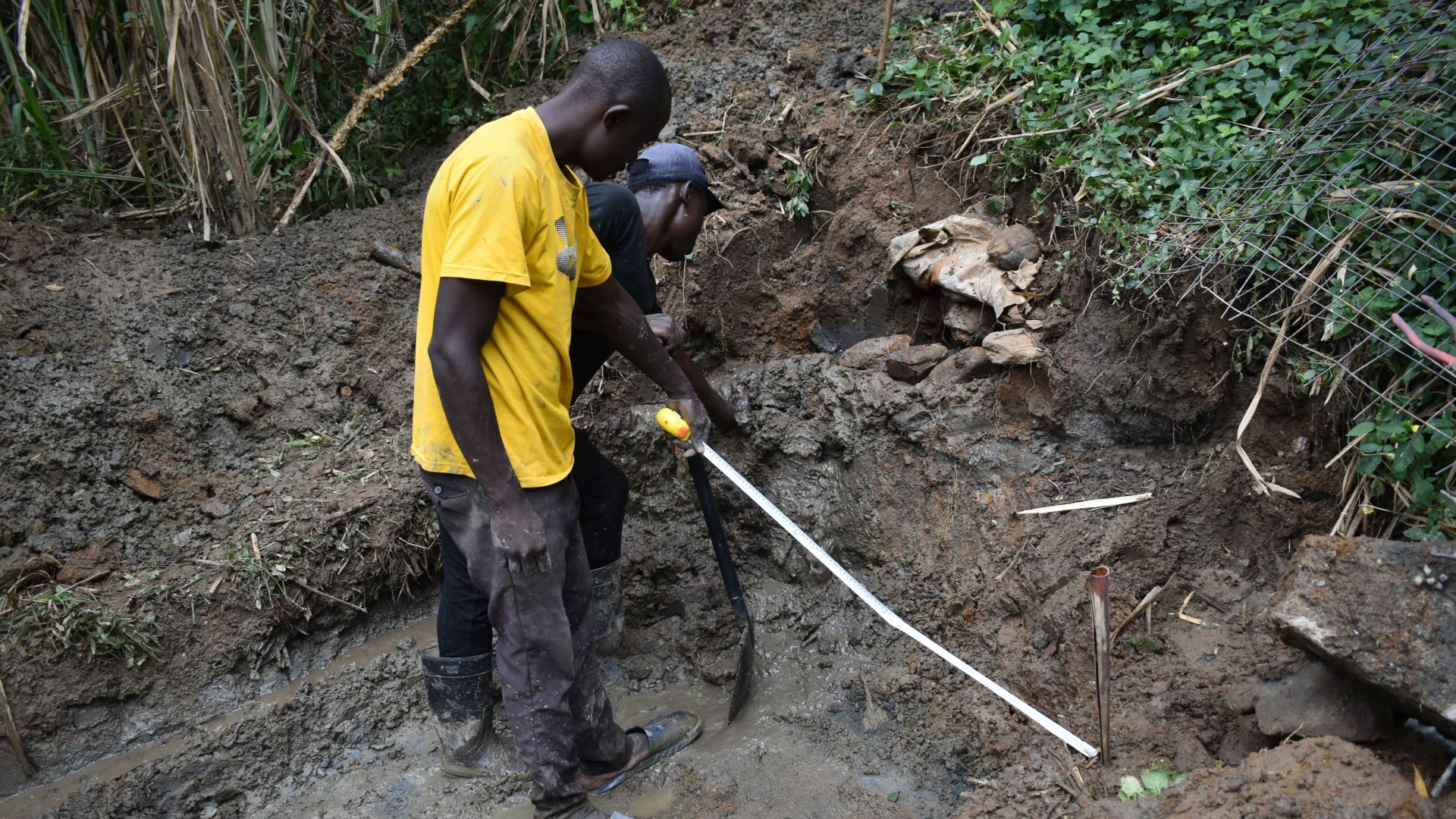
First, we excavated the spring area. This includes digging a drainage channel below the spring and several runoff diversion channels above and around the spring to help divert surface contaminants away.

To ensure community members could still access water throughout the construction process, we also dug temporary channels around the construction site to allow water to continue to flow. Excavation created space for setting the spring's foundation.

Setting the foundation.

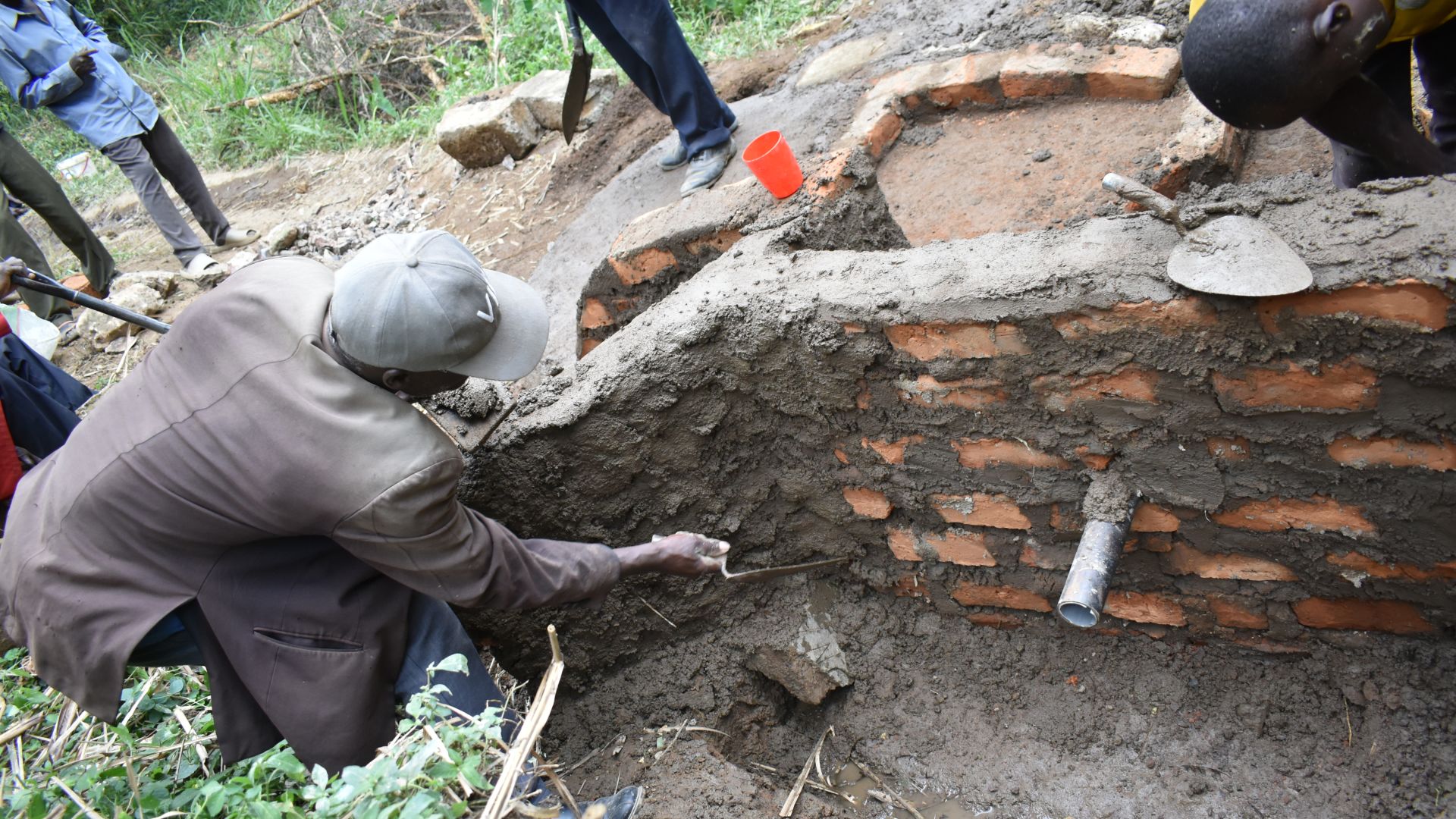
After establishing the base, made of thick plastic, wire, concrete and waterproof cement, we started brickwork to build the spring walls and stairs. Once the walls were tall enough, we began one of the most crucial steps: setting the discharge pipe. The discharge pipe needs to be positioned low enough so the water level never rises above the spring's eye yet high enough to allow room for the average collection container (20 liters) to sit beneath the pipe without making contact to prevent cross-contamination.

If we place the pipe too high, back pressure could force water to emerge elsewhere. Too low, and community members would not be able to access the water easily.

In coordination with the walls and stairs, we cemented stones on both sides of the spring's drainage channel. These stones discourage people and animals from standing in that area, which could cause soil erosion and a clogged drainage area.

We then cemented and plastered the spring walls. These finishing layers reinforce the brickwork and prevent water in the reservoir from seeping through. In turn, enough pressure builds to push water out through the discharge pipe.

As the walls cured, we finished the stairs and installed tiles beneath the discharge pipe. The tiles protect the concrete from the falling water's erosive force.

We redirected the temporary diversion channels back into the reservoir box and closed all other exits to force water through only the discharge pipe. We filled the reservoir area with the large, clean stones arranging them in layers like a well-fitting puzzle. We covered the rocks with thick plastic and piled enough dirt on top to compensate for future settling.

Community members transplanted grass to help prevent erosion and the collection area was fenced. The fence prevents people or animals from walking in the area above the spring, as compaction of this area can potentially compromise water quality.

The construction process took about two weeks of work and patience. As soon as the spring was ready, people got the okay from their local field officers to fetch water.

We officially gave ownership of the waterpoint to the Namagara Community.

Happiness and thanksgiving flowed in all directions!

Training on Health, Hygiene, and More

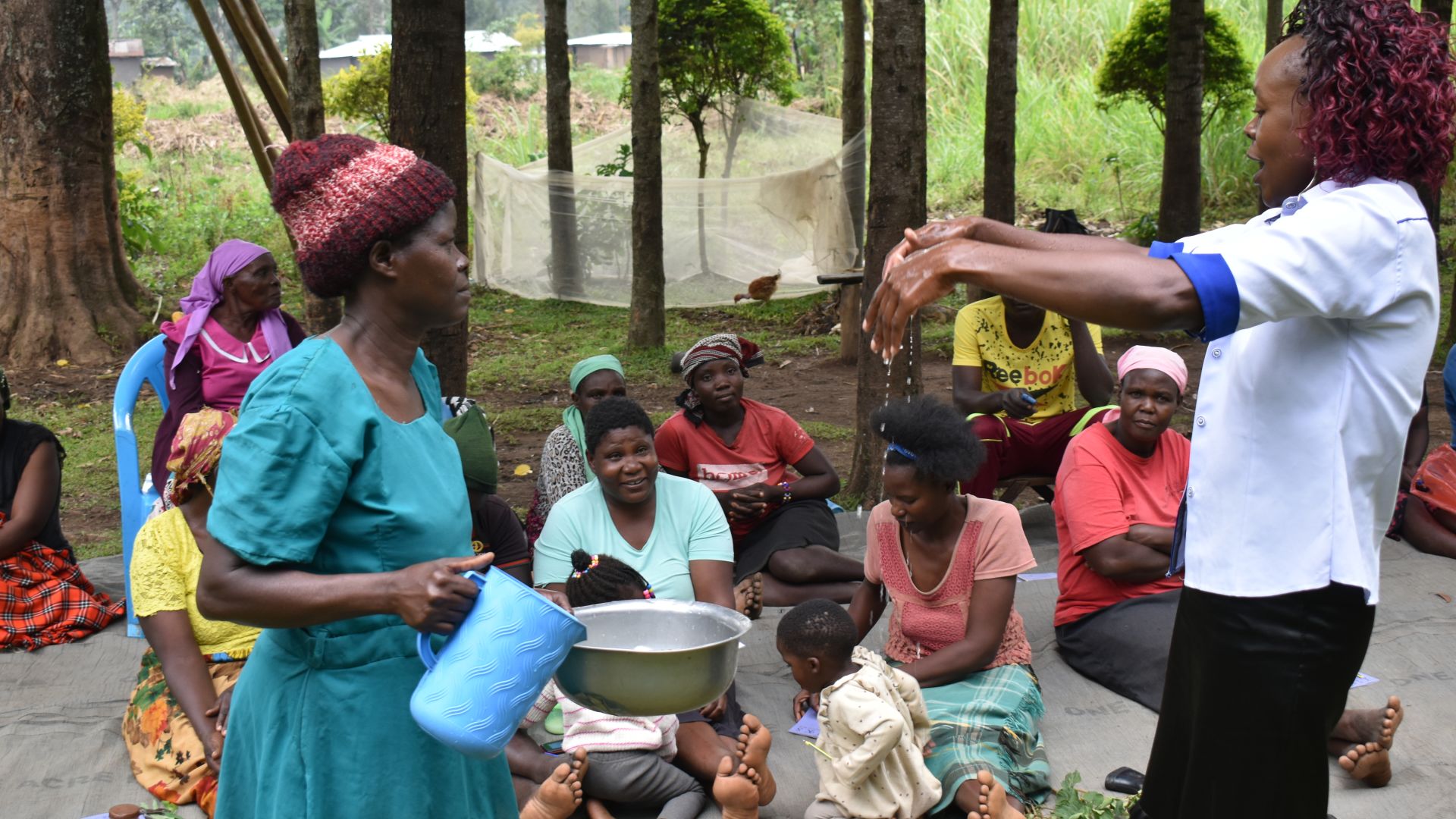
Together with the community, we found their preferred date for training. When the day arrived, facilitators deployed to the site to lead the event. 19 people attended the training, including 14 women and 5 men.

We discussed personal, oral, and environmental hygiene, emphasizing proper water handling, soap-making, and the ten steps of handwashing. We also highlighted the importance of primary health care and covered the operation and maintenance of the water point, as well as leadership and governance. By the end of the training, each participant had a clear understanding of their role in maintaining clean water and promoting good health within their community.

We held an election for the newly formed water user committee who will oversee the maintenance of the spring. We brainstormed income-generating activities and encouraged them to start a group savings account for future minor repairs to the spring.

"The participants' enthusiasm for the training was demonstrated when it started raining in the middle of the training. They carried the training materials into the house, continued with the training and still brought them out to continue with the training when the rains stopped. They also took part in the practical sessions cheerfully," shared Field Officer Lillian Achieng.

50-year-old Jael Jairus found the hygiene and sanitation training very educative! "I would say all topics were interesting but personal hygiene stood out for me. There are things I've always done wrong unknowingly. [An] example is how I've been brushing [my] teeth and washing my hands. All along, I've been brushing my teeth at the wrong times, i.e., before meals, and also using the wrong motions, brush, and toothpaste. Today, I've learned how to wash my hands correctly and when to wash them. I have never known that not drying my inner wears to dry completely can cause me more harm than good."

Jael Jairus.

"I have learned that soap and water go hand in hand when it comes to hygiene. The soap making session crowned the training because I will make soap to use at home and also sell to create some income for me," she concluded.

Thank you for making all of this possible!


February, 2025: Exciting Progress in Namagara Community, Thanks to You!

We’re thrilled to share that, thanks to your generous support, significant change is coming for Centrine and the entire Namagara Community. Construction has begun on the spring protection project, bringing them one step closer to having clean, reliable water.

But that's not all—during construction, we’re also providing vital health training. These sessions equip the community with essential hygiene practices, ensuring that the benefits of clean water extend to lasting health improvements.

We’re so grateful for your role in making this possible. Stay tuned for more updates—soon, we’ll be celebrating the arrival of safe water in the Namagara Community!


Project Photos


Contributors

1 individual donor(s)