June, 2025: Kwava Community Spring Protected!
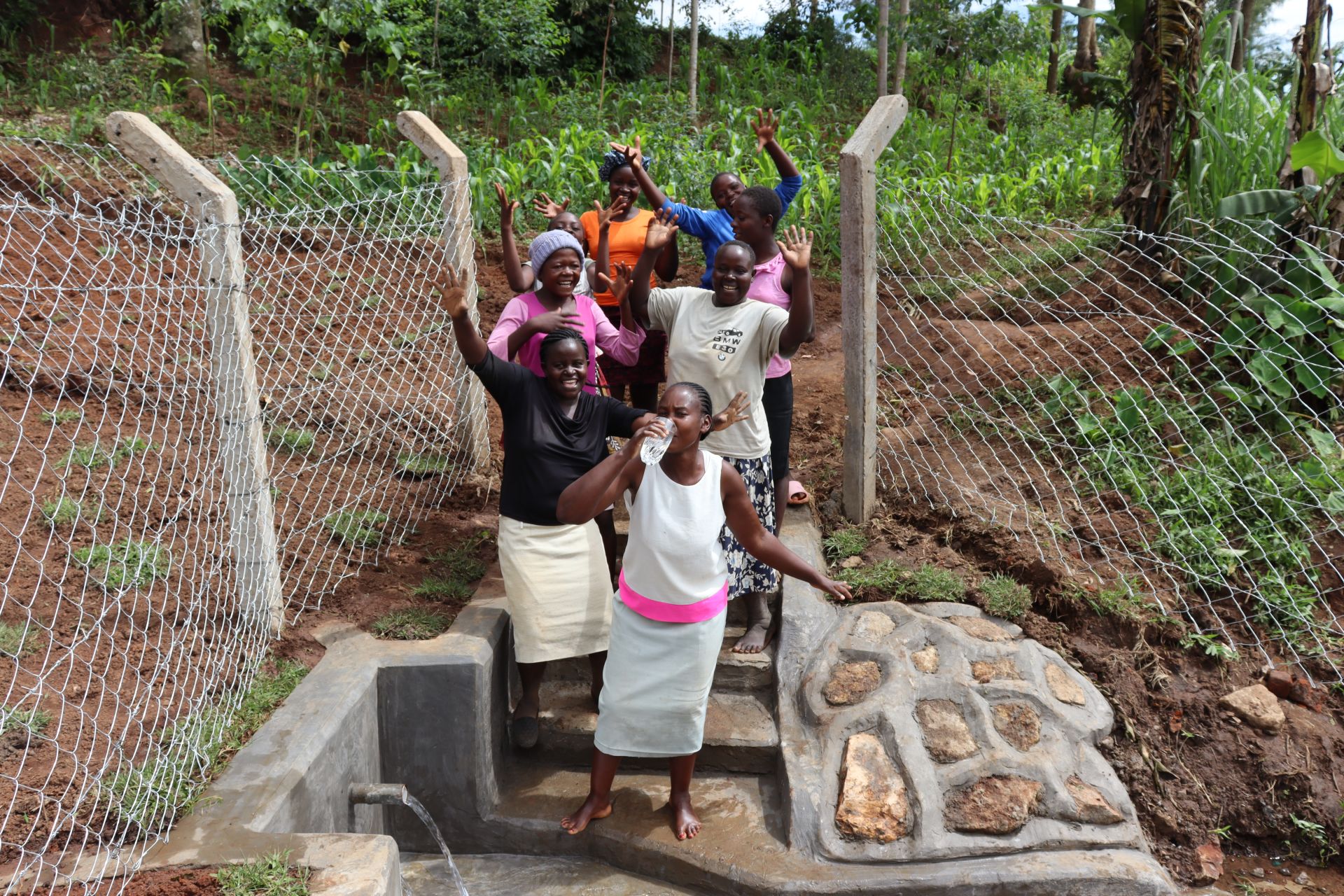
Your contribution has made access to clean water for the Kwava Community possible!
We transformed their spring into a flowing source of naturally filtered water. A chlorine dispenser is installed to provide added protection, and we trained the community on improved sanitation and hygiene practices. Together, these components will unlock the opportunity for community members to thrive!
"I will enjoy drinking clean and safe water, unlike before when dirty water made me sick frequently. I am also certain that water will be reliable and accessible at all times, unlike before when it could be unavailable for some days due to poor workmanship, forcing me to look for it elsewhere, and as a result, a lot of time was wasted in the process," shared Janepher Ong'anyo, a 36-year-old teacher and member of the local water user committee.
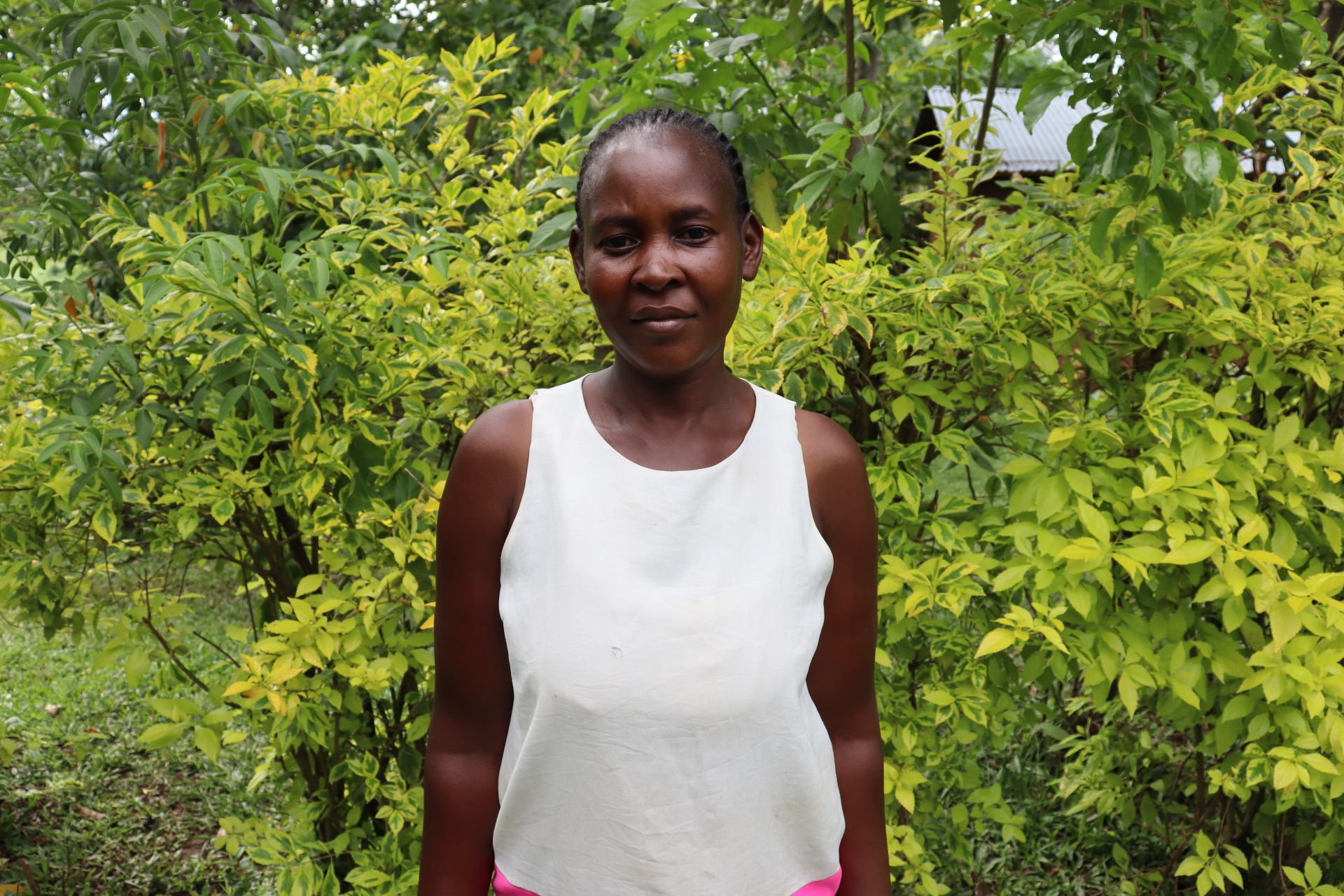
Ms. Ong'anyo.
She continued: "My son Elvis will enjoy good health as a result of consuming clean and safe water, thus enabling him to concentrate on his studies and playing to ensure that his dream of being the best footballer one day comes true."
Children were just as excited as adults about clean water access!
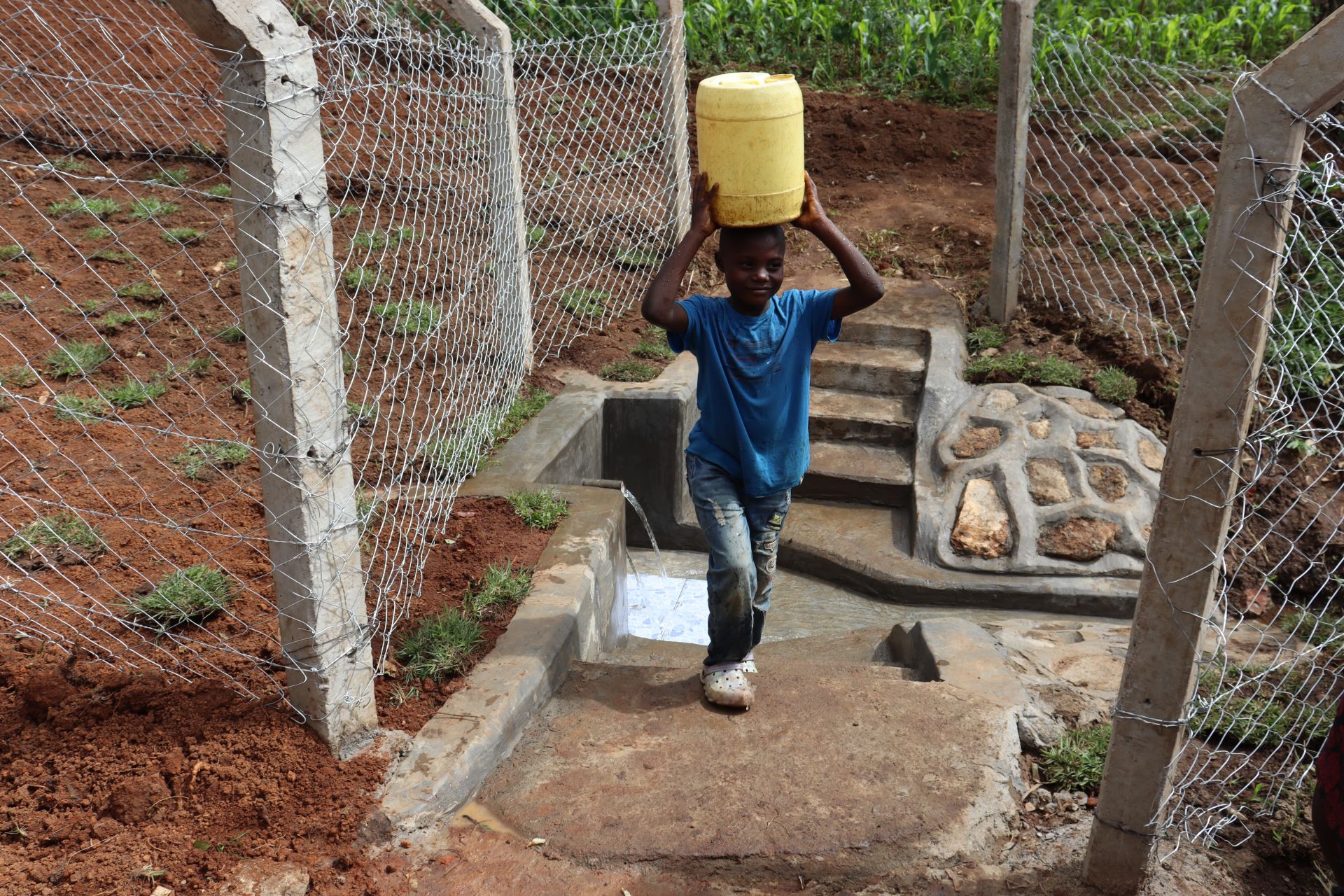
Alex collects water from the newly protected spring.
"I will be able to quench my thirst whenever I am thirsty, hence making me concentrate in class," said 10-year-old Alex.
Preparing for Spring Protection
Community members worked together to source all locally available construction materials for the spring. These included bricks, sand, stones, and fencing poles. Because people have to carry most items by hand, the material-collection process can take anywhere from a few weeks to months.
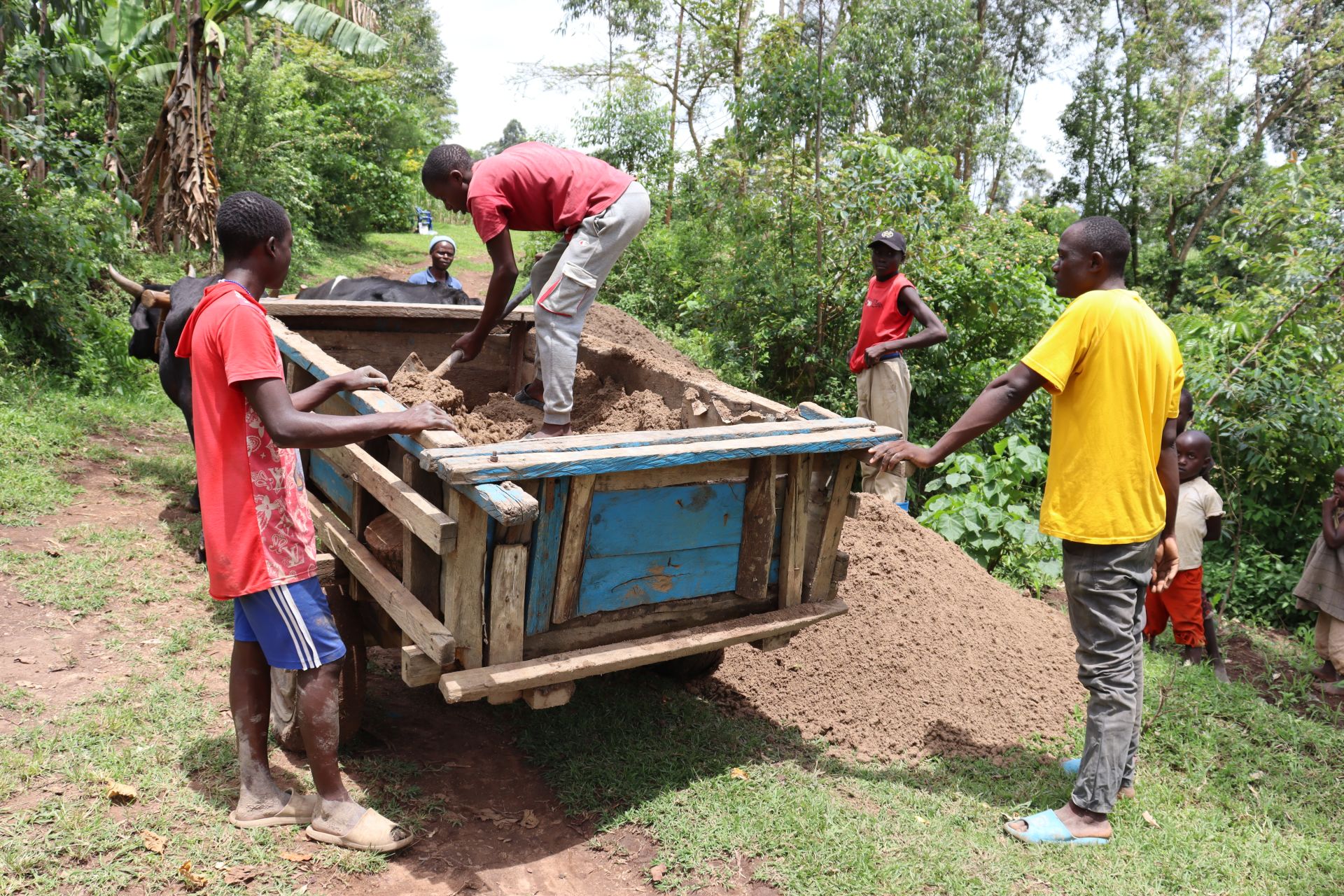
"The community members cooperated so well in material gathering, by forming a committee and scheduling meetings to discuss how the required local materials could be raised before the implementation month. There are those who had stones, others bricks, and the remaining stones were crushed to make ballast (stone). Sand was available at the nearby river. Therefore, the community members organised for it to be ferried to the construction site. As the construction month drew nearer, all the local materials were availed at the construction site. The unskilled labourers did an excellent job throughout the entire construction process, making the work of the artisans run smoothly. Accommodation and food for the artisans were also provided on time, making [the] construction process a success," reported Field Officer Gladys Chepkorir.
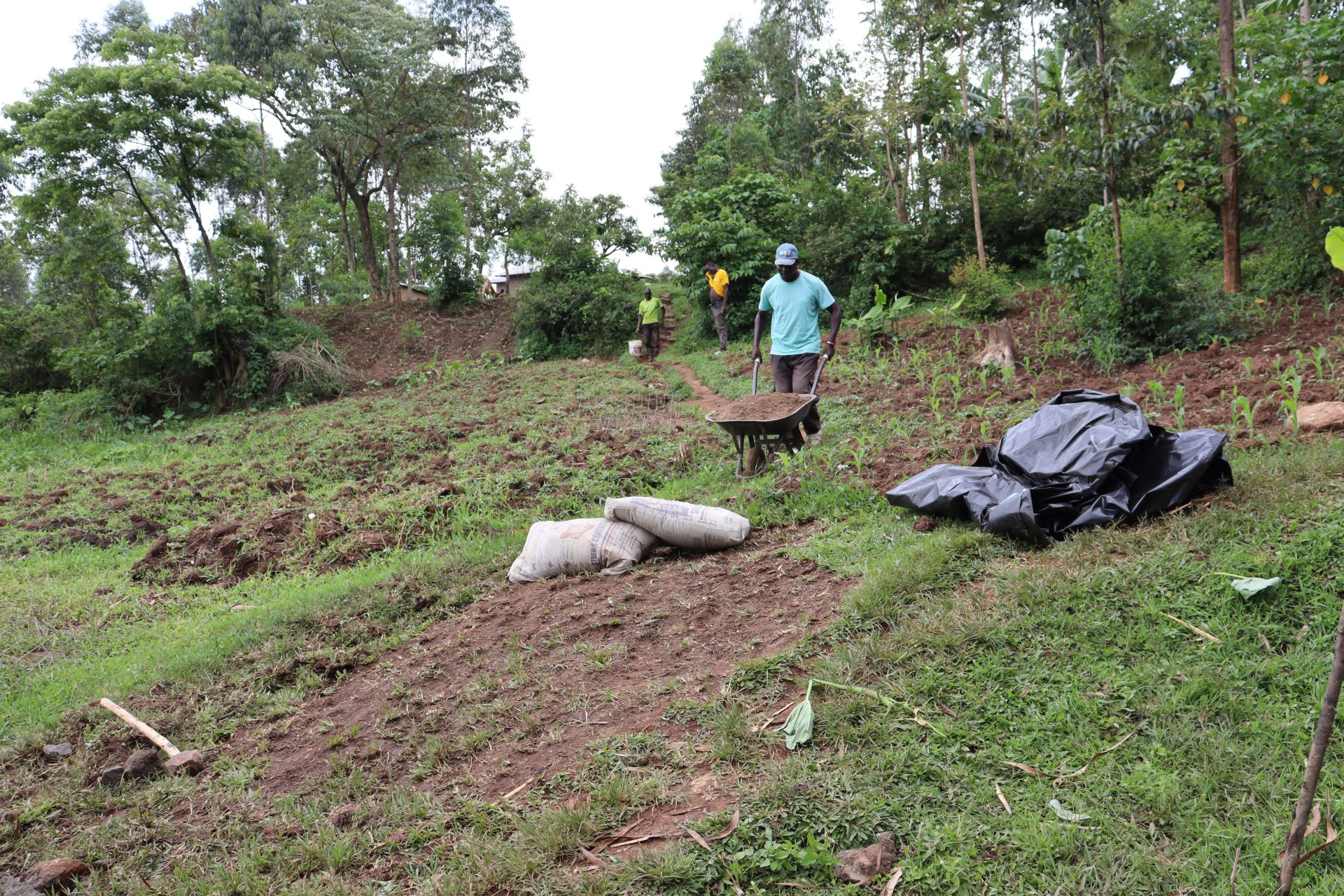
When the community was ready, we delivered the remaining construction materials, including cement, plastic tarps, and hardware. Then our construction artisan and field officers deployed to the spring to begin work.
Protecting the Spring: A Step-by-Step Process
First, we excavated the spring area. This includes digging a drainage channel below the spring and several runoff diversion channels above and around the spring to help divert surface contaminants away.
To ensure community members could still access water throughout the construction process, we also dug temporary channels around the construction site to allow water to continue to flow. Excavation created space for setting the spring's foundation.
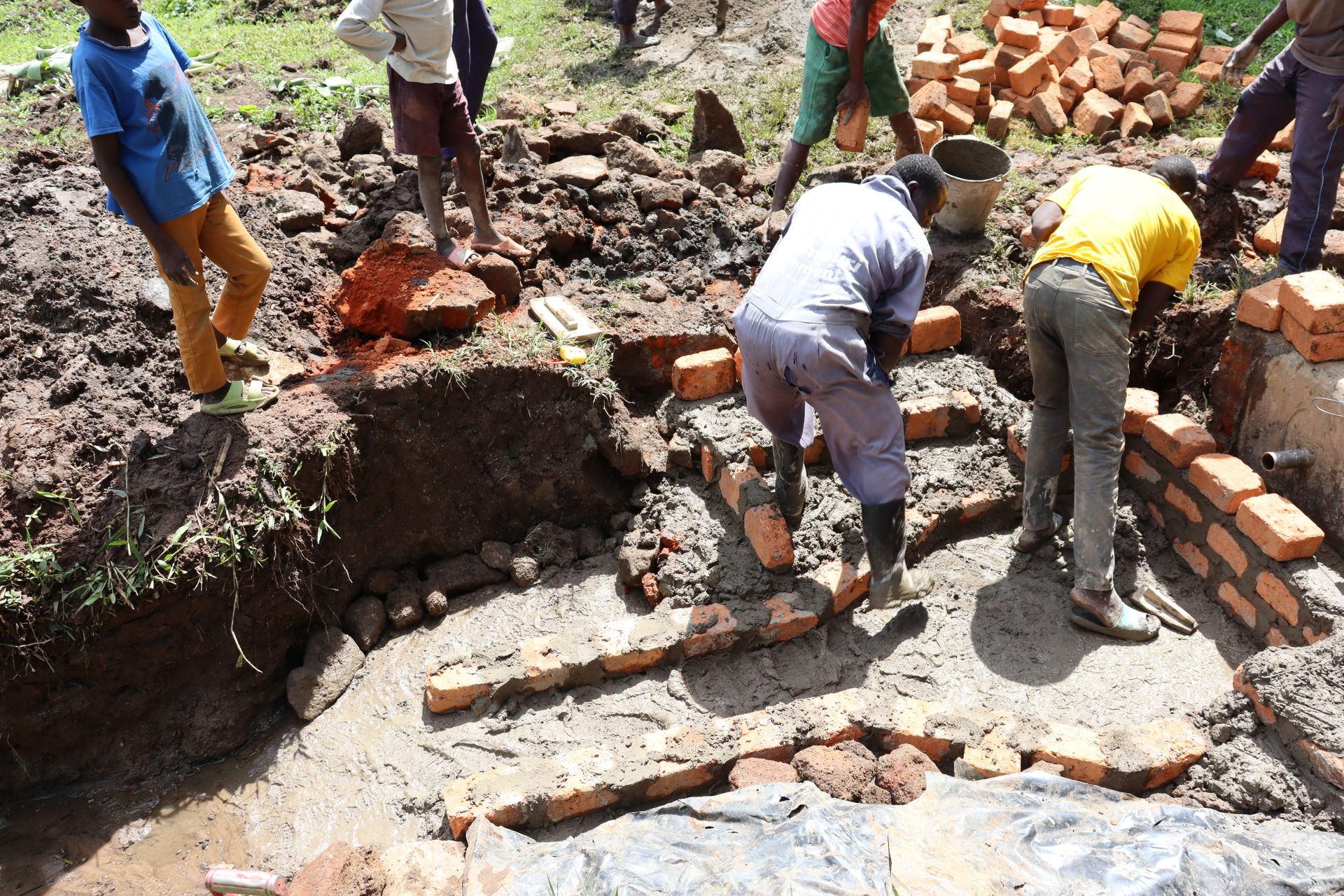
After establishing the base, made of thick plastic, wire, concrete and waterproof cement, we started brickwork to build the spring walls and stairs. Once the walls were tall enough, we began one of the most crucial steps: setting the discharge pipe. The discharge pipe needs to be positioned low enough so the water level never rises above the spring's eye, yet high enough to allow room for the average collection container (20-liters) to sit beneath the pipe without making contact, to prevent cross-contamination.
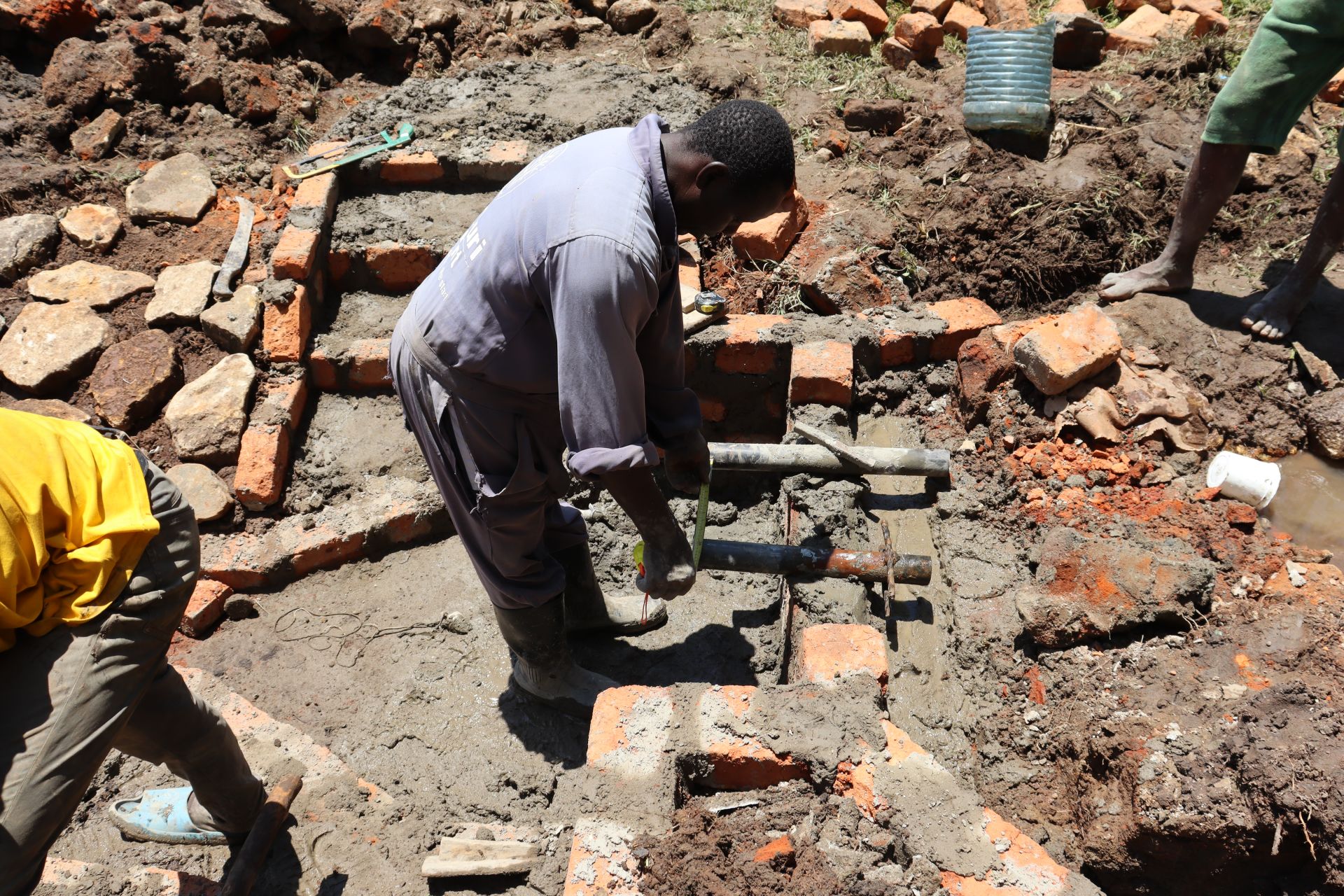
If we place the pipe too high, back pressure could force water to emerge elsewhere. Too low, and community members would not be able to access the water easily.
In coordination with the walls and stairs, we cemented stones on both sides of the spring's drainage channel. These stones discourage people and animals from standing in that area, which could cause soil erosion and a clogged drainage area.
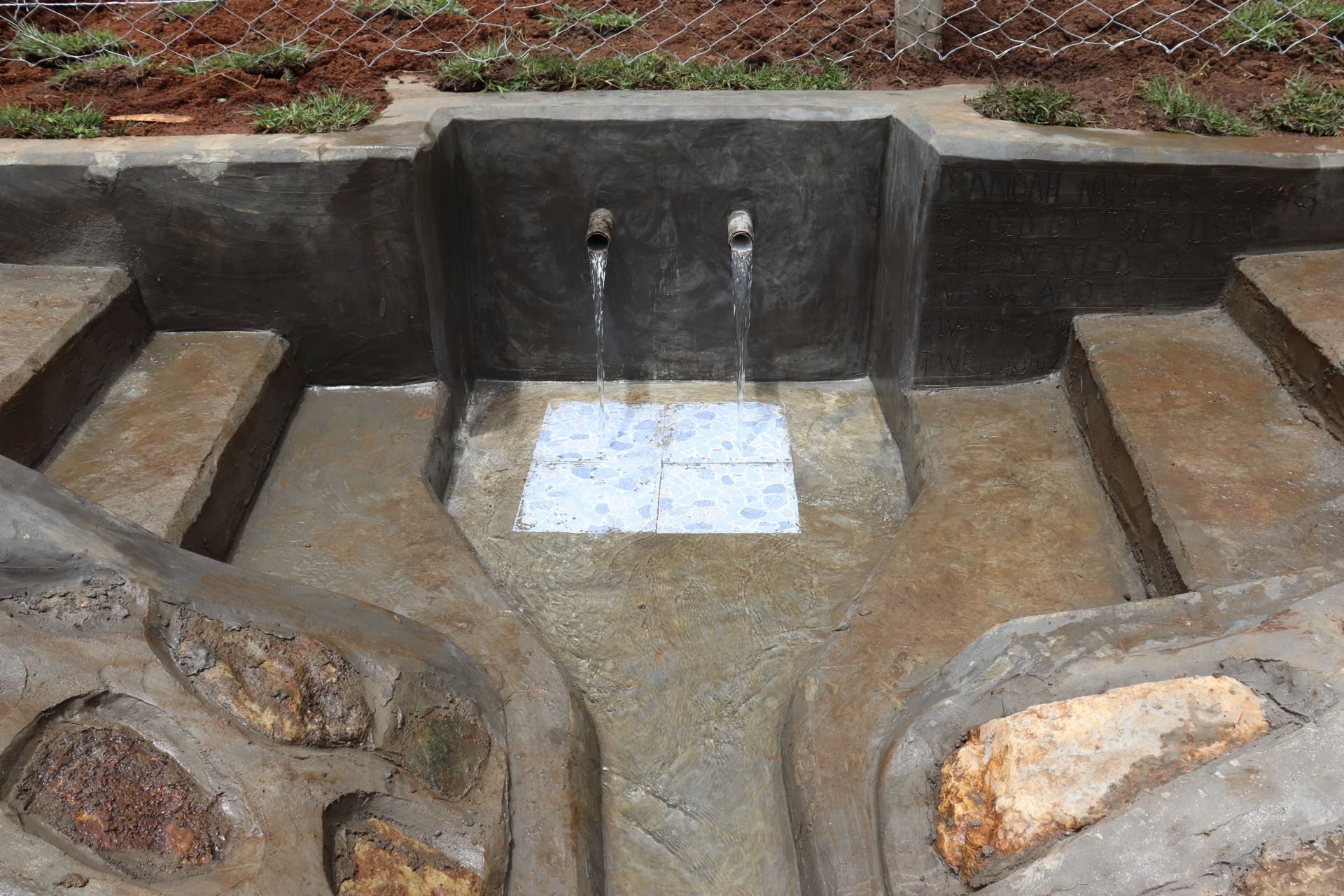
We then cemented and plastered the spring walls. These finishing layers reinforce the brickwork and prevent water in the reservoir from seeping through. In turn, enough pressure builds to push water out through the discharge pipe.
As the walls cured, we finished the stairs and installed tiles beneath the discharge pipe. The tiles protect the concrete from the falling water's erosive force.
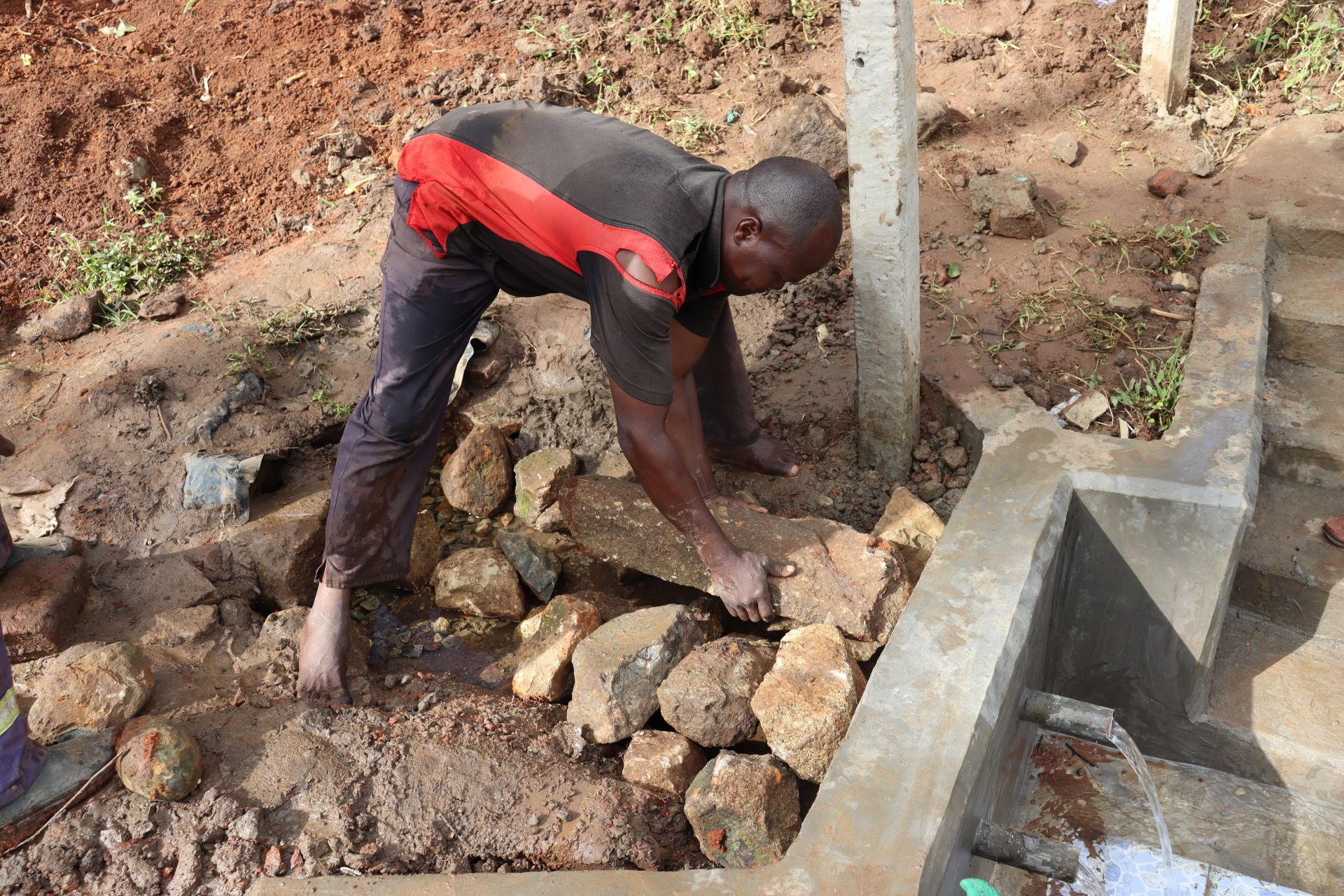
We redirected the temporary diversion channels back into the reservoir box and closed all other exits to force water through only the discharge pipe. We filled the reservoir area with the large, clean stones arranging them in layers like a well-fitting puzzle. We covered the rocks with thick plastic and piled enough dirt on top to compensate for future settling.

Community members transplanted grass to help prevent erosion and the collection area was fenced. The fence prevents people or animals from walking in the area above the spring, as compaction of this area can potentially compromise water quality.
The construction process took about two weeks of work and patience. As soon as the spring was ready, people received permission from their local field officers to fetch water.
We officially transferred ownership of the waterpoint to the Kwava Community. Happiness and thanksgiving flowed in all directions!
Training on Health, Hygiene, and More
Together with the community, we determined their preferred training date. When the day arrived, facilitators Gladys and Wilson deployed to the site to lead the event. 25 people attended the training, including 19 women and six men.
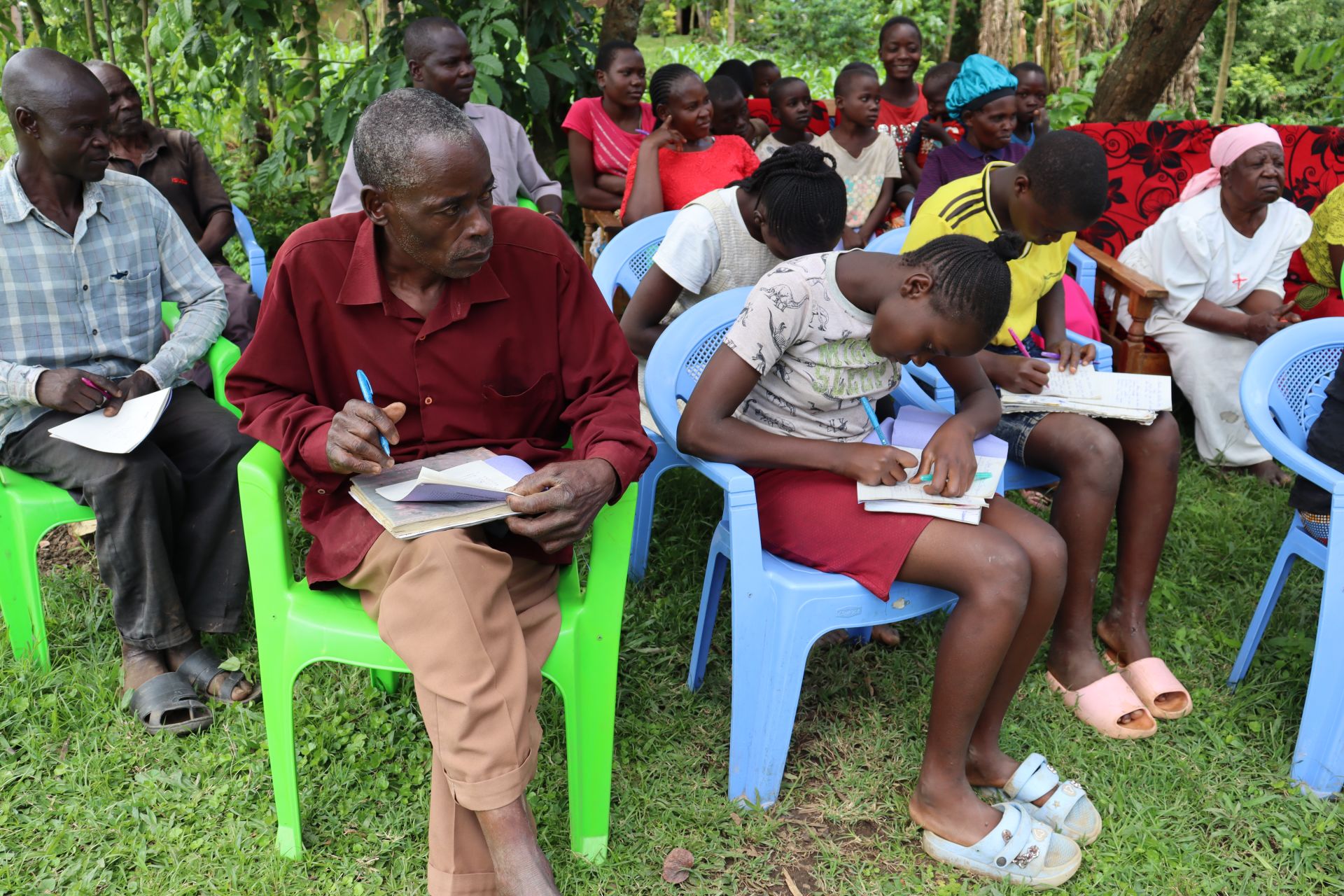
We discussed personal, oral, and environmental hygiene, emphasizing proper water handling, soap-making, and the ten steps of handwashing. We also highlighted the importance of primary health care and covered the operation and maintenance of the water point, as well as leadership and governance. By the end of the training, each participant had a clear understanding of their role in maintaining clean water and promoting good health within their community.
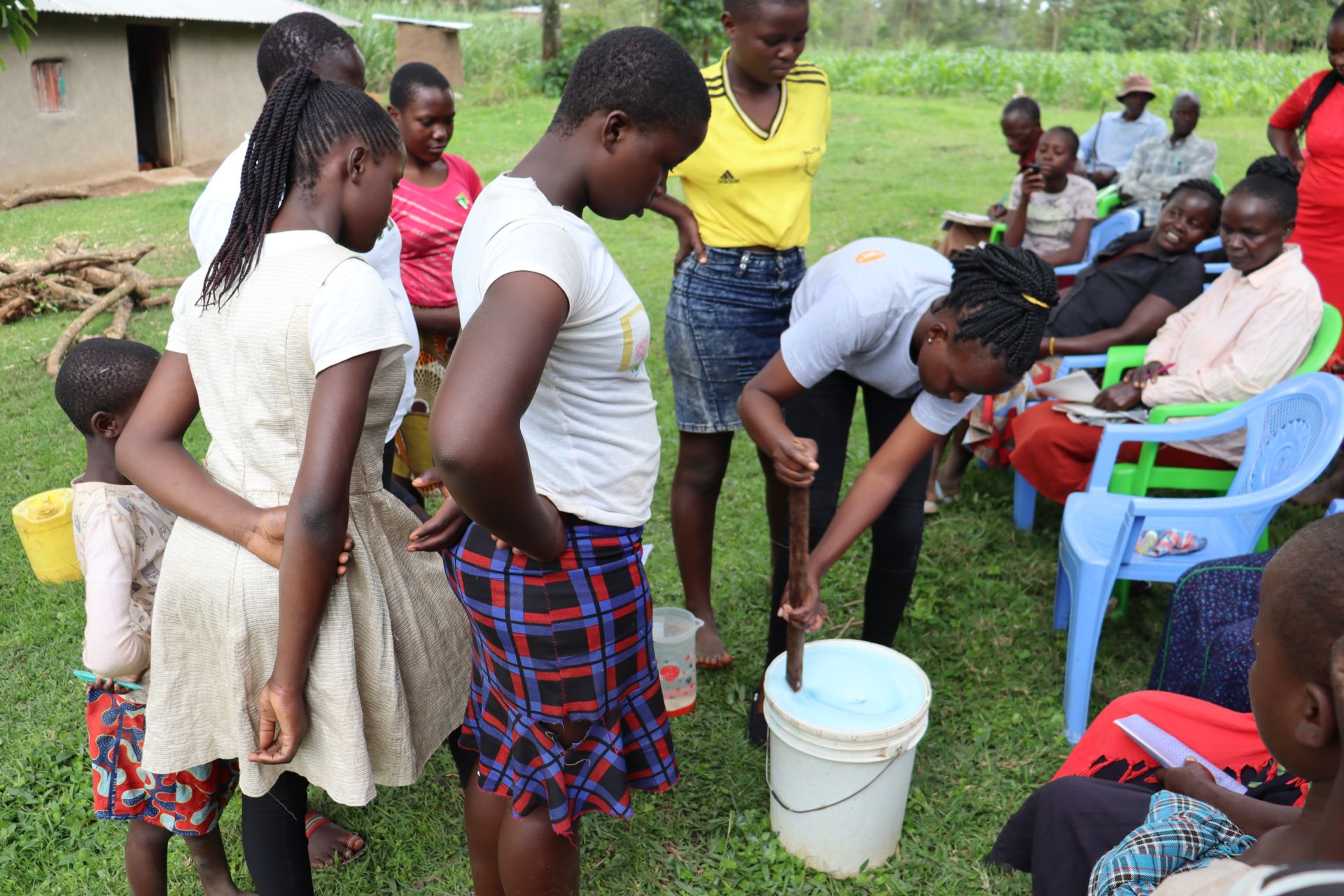
Soapmaking session.
We held an election for the newly formed water user committee, which will oversee the maintenance of the spring. We brainstormed income-generating activities and encouraged them to start a group savings account for future minor repairs to the spring.
"Having told them about the training prior to the training date, we found participants, especially the elderly women already seated at the training venue, a clear indication they were eager and ready to learn," shared Field Officer Gladys Chepkorir.
"The ten steps of hand washing prompted [the] most discussion and interest from participants. Most of them admitted that they have been washing hands with water in a basin and passing it [along] to the next person to use," Gladys noted.
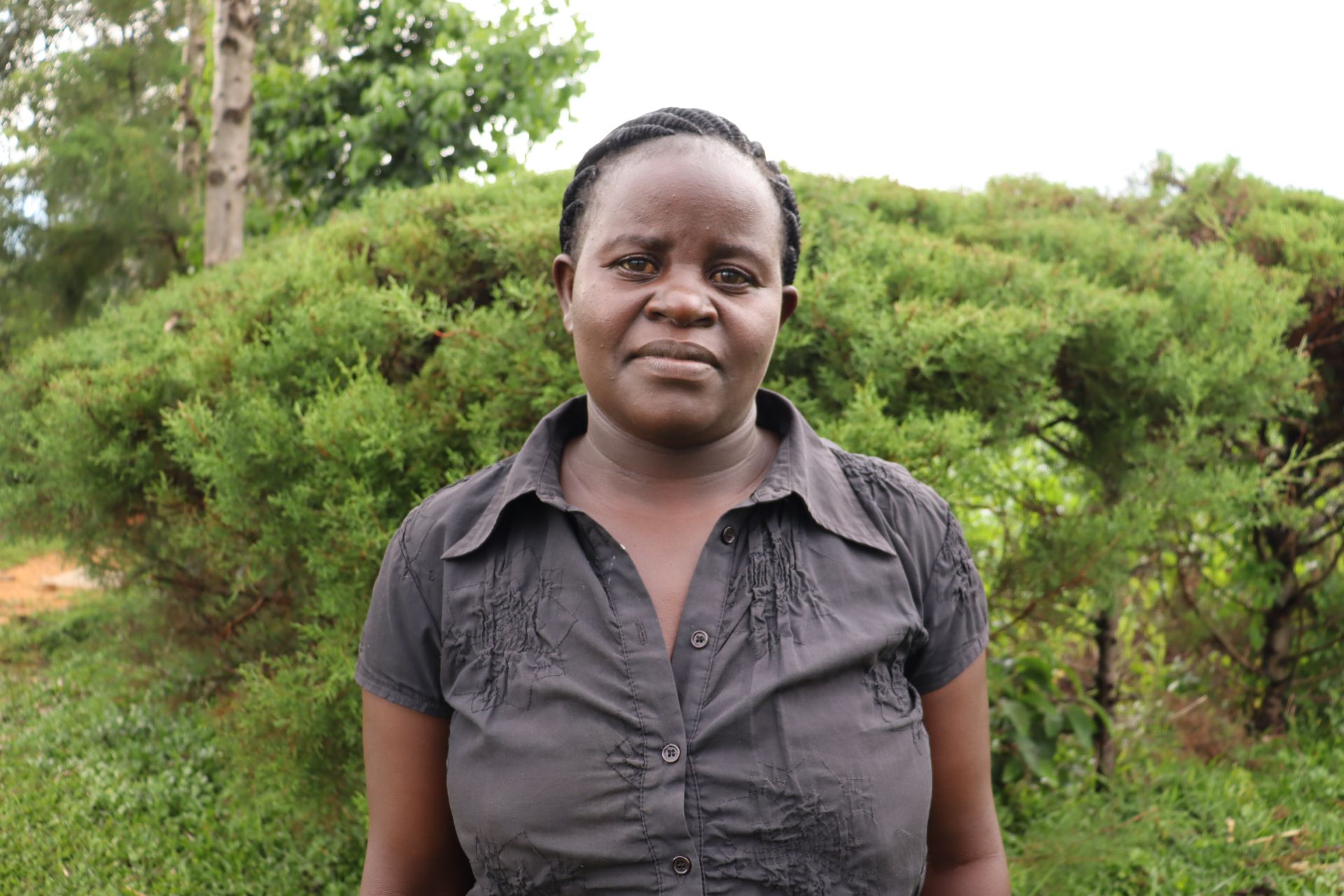
Jackline Maikuva.
"This training has enabled me [to] learn new ideas and skills I didn't know, for instance, [the] soap-making process. My community members will be able to make soap on their own and sell it, thus being a source of income to their households. Also, washing hands using the same soap will enable them [to] improve on hygienic practices at their homes, because we have learned the importance of good hygiene practices," Jackline, 35, said.
Thank you for making all of this possible!
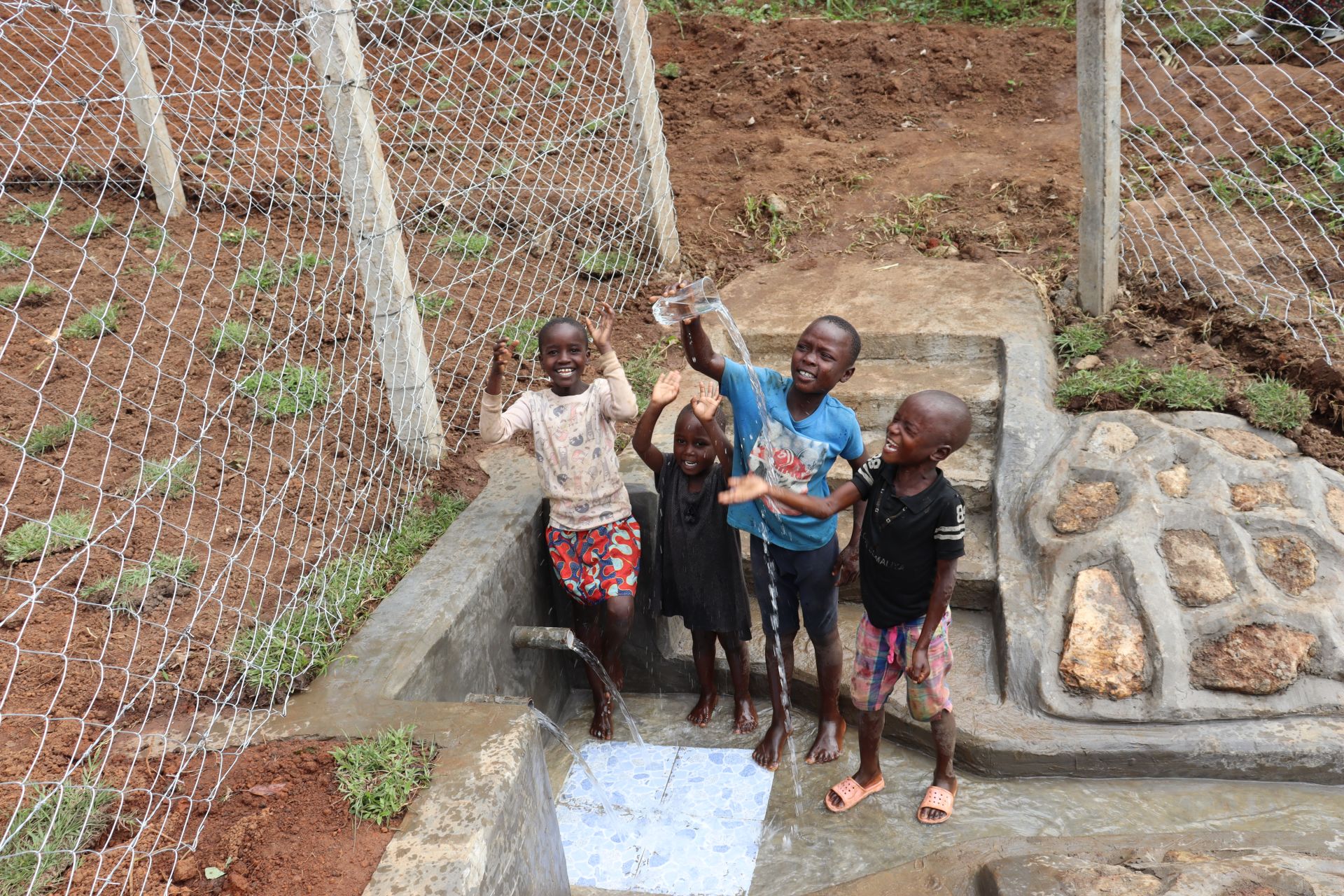
 Protected Spring
 Rehabilitation Project