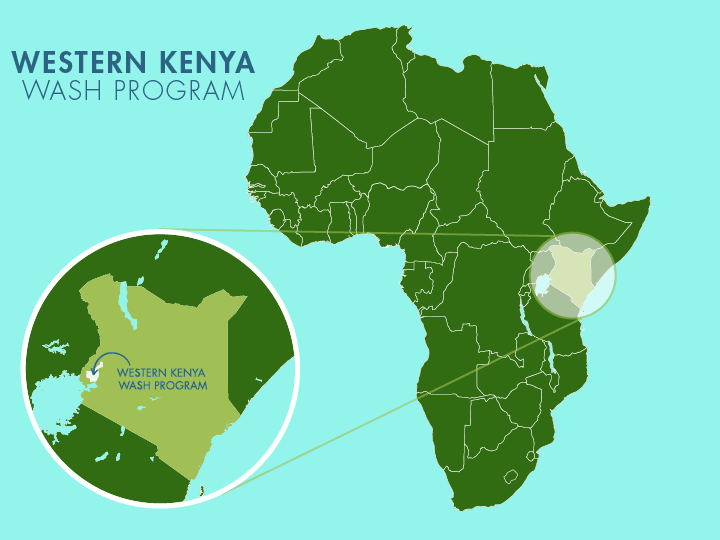

Project Status


Project Type:  Protected Spring

Regional Program: Western Kenya WaSH Program

Impact: 280 Served

Project Phase:  In Service - Aug 2026

Functionality Status:  Functional

Project Features


Click icons to learn about each feature.


For five long years, the Mwiyenga Community of 280 residents has struggled to access clean water. Their only "reliable" source of water is the crumbling Mwipera Spring, which was once protected but now offers contaminated water.
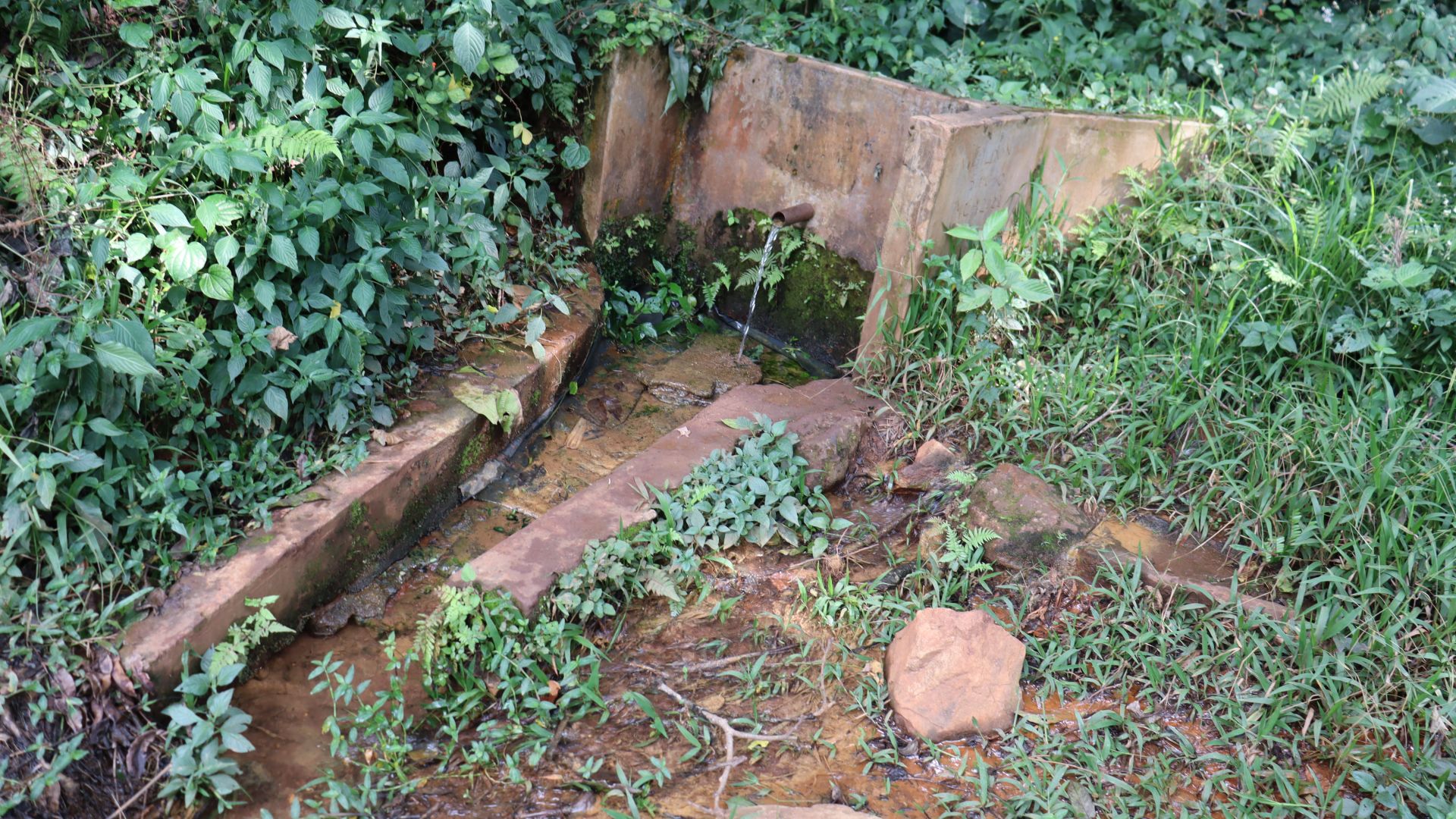
The spring in need of repair.

Rebecca is seventeen years old. Her life hasn't been easy, but she continues to persevere. She has a toddler and continues her education. Rebecca has to make several trips a day to the spring, just to fetch sufficient water for her and her family. What she finds at the spring, is long lines, contaminated water, and a tedious trek home.

"The queue at the waterpoint usually makes fetching water take very long. Sometimes, the people at the waterpoint refuse to be orderly and struggle for the water, this makes it take long. The breakage of the spring box and leakages happening around the structure mean the pipe discharges very little water, that causes one to wait for a long time," she observed.
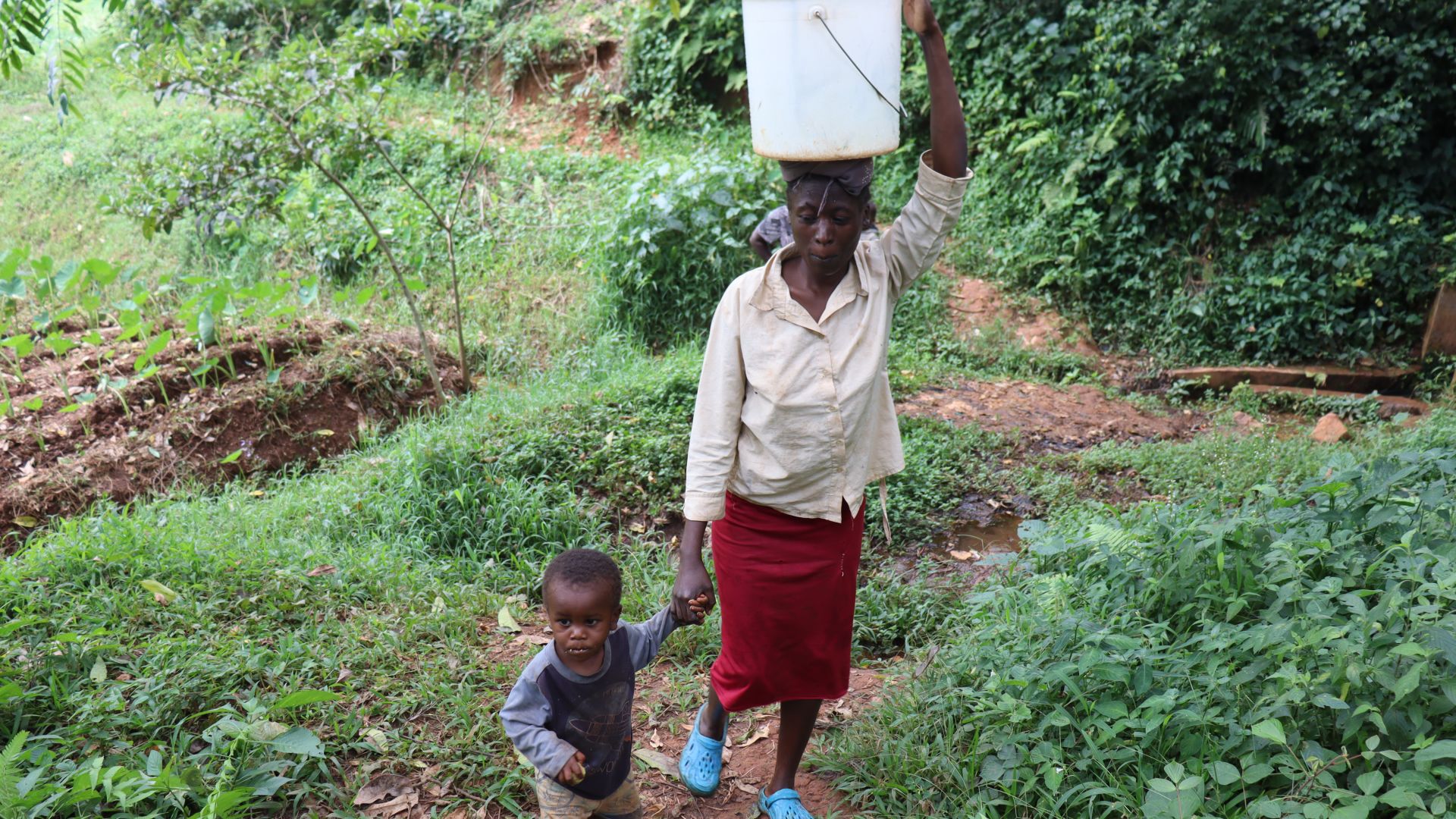
Rebecca and her son.

"Going to the water source, especially early mornings or late in the evenings, is usually a struggle because the road to the spring is very bushy and slippery. Many times I have fallen down coming with water from the spring. Once, I even met a snake as I was going for water. I was really afraid," she recalled.

After she works so hard to get water to her home, Rebecca often faces water-related illnesses.

"There was a day I could not sleep at all at night because of the stomach upset and diarrhea. Most of the night was spent running to the washroom to relieve myself; that was a very ugly sight to behold," she shared.

In an attempt to ease her illness, Rebecca said, "First, I took a home remedy of rice water and some painkillers to ease the pain. When it did not work as we first thought it would, I was rushed to [the] hospital where I was put on a [drip] because of all the fluids I had lost."

Sadly, this wasn't the only time she's experienced such severe illness, nor the last.

All the time she spends collecting water and suffering its consequences hinders her education as well.

"Most times, I have to miss school when I'm unwell in order to seek treatment. But, if, for example, there is an exam going on, I have to try as much as possible in order to be in school," Rebecca lamented.
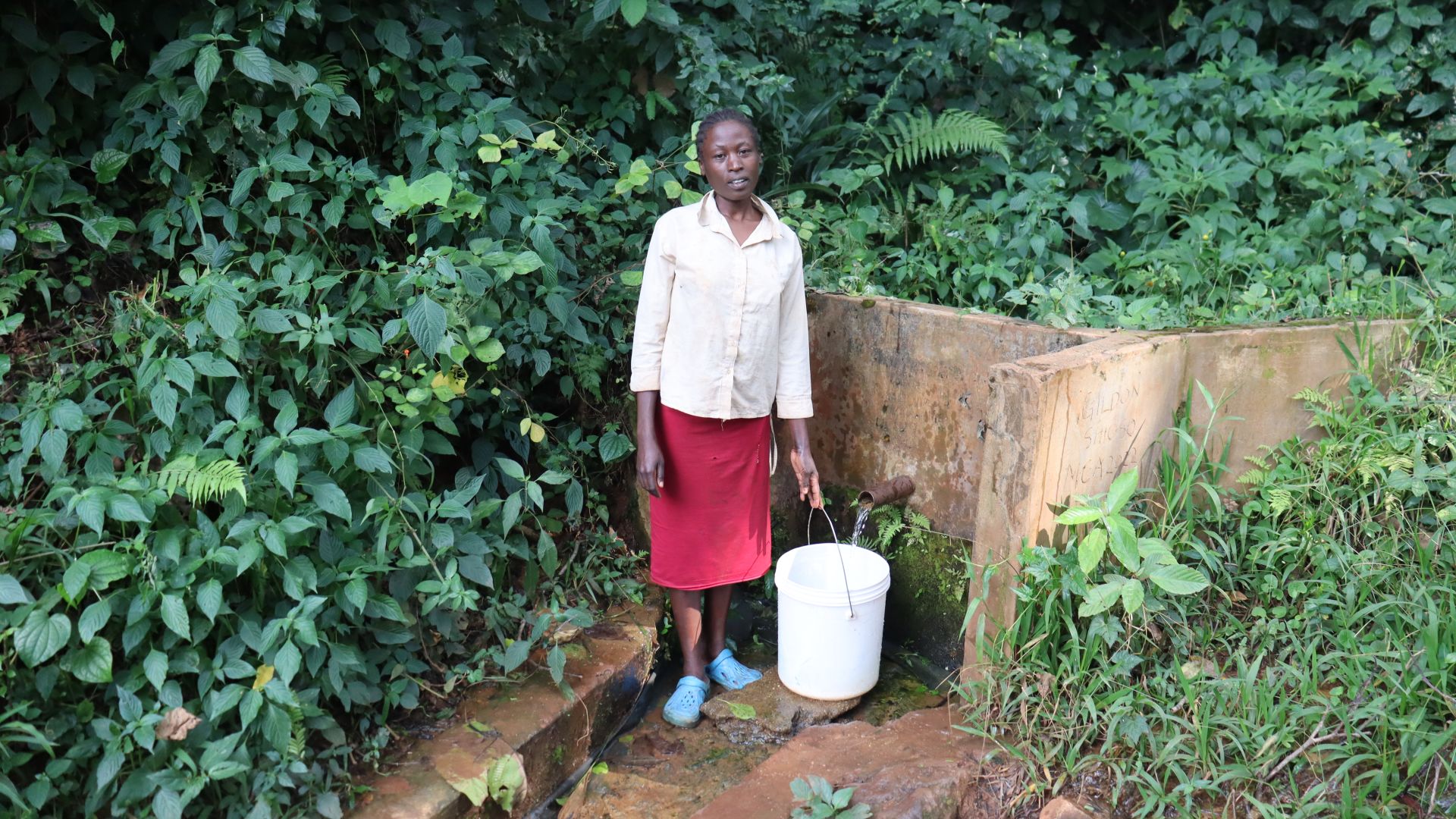
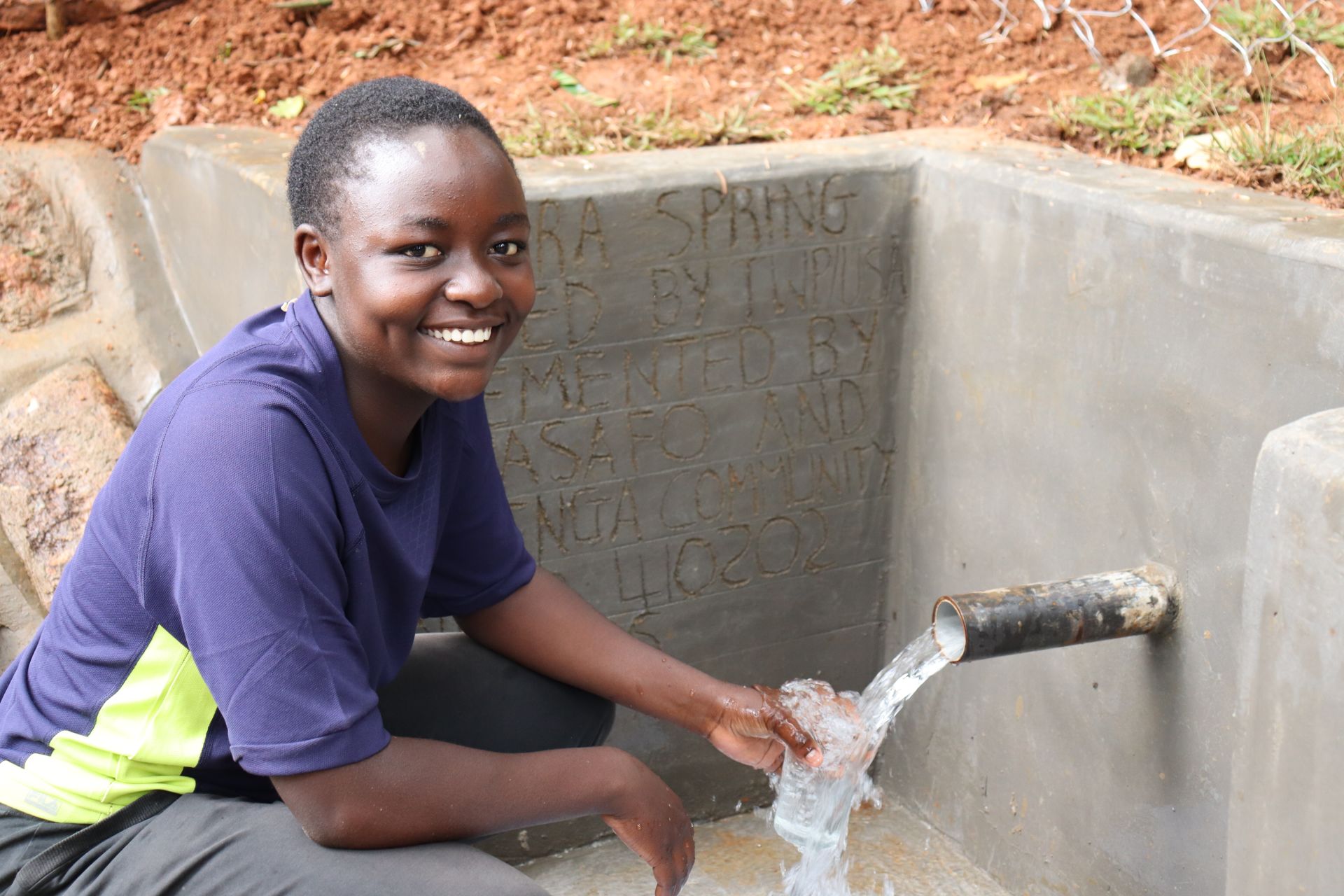
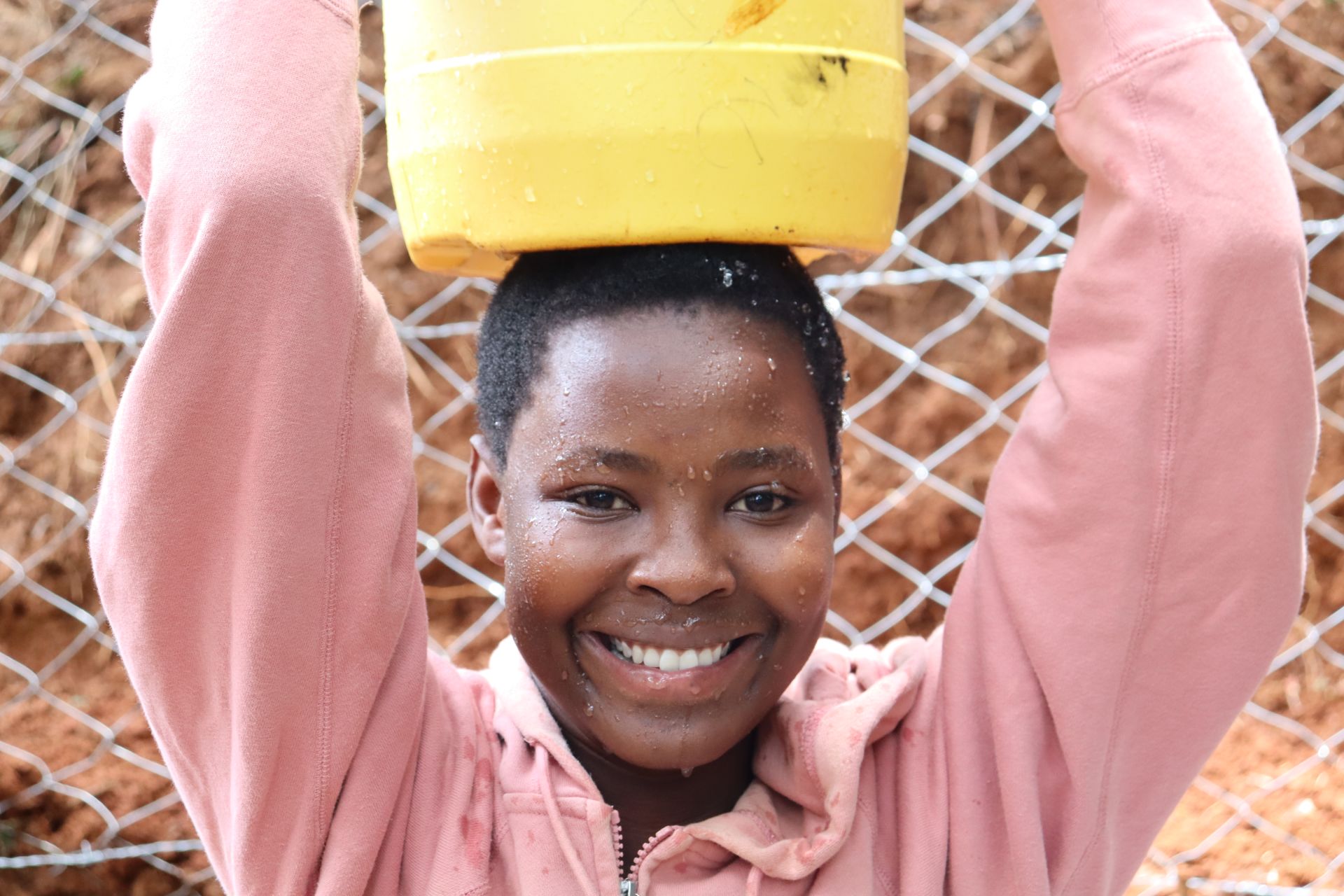
Rebecca in the spring.

Rebecca is a woman with plans and a future. In the face of the impossible, she went back to school. She is determined to build a life for herself and her child, but the water crisis will devastate those plans if they are not remedied.

"I intend to finish school and hopefully acquire some skills and knowledge on agribusiness. I really enjoy farming, and I would like to use my passion to generate income for myself and my child," Rebecca announced.

Steps Toward a Solution

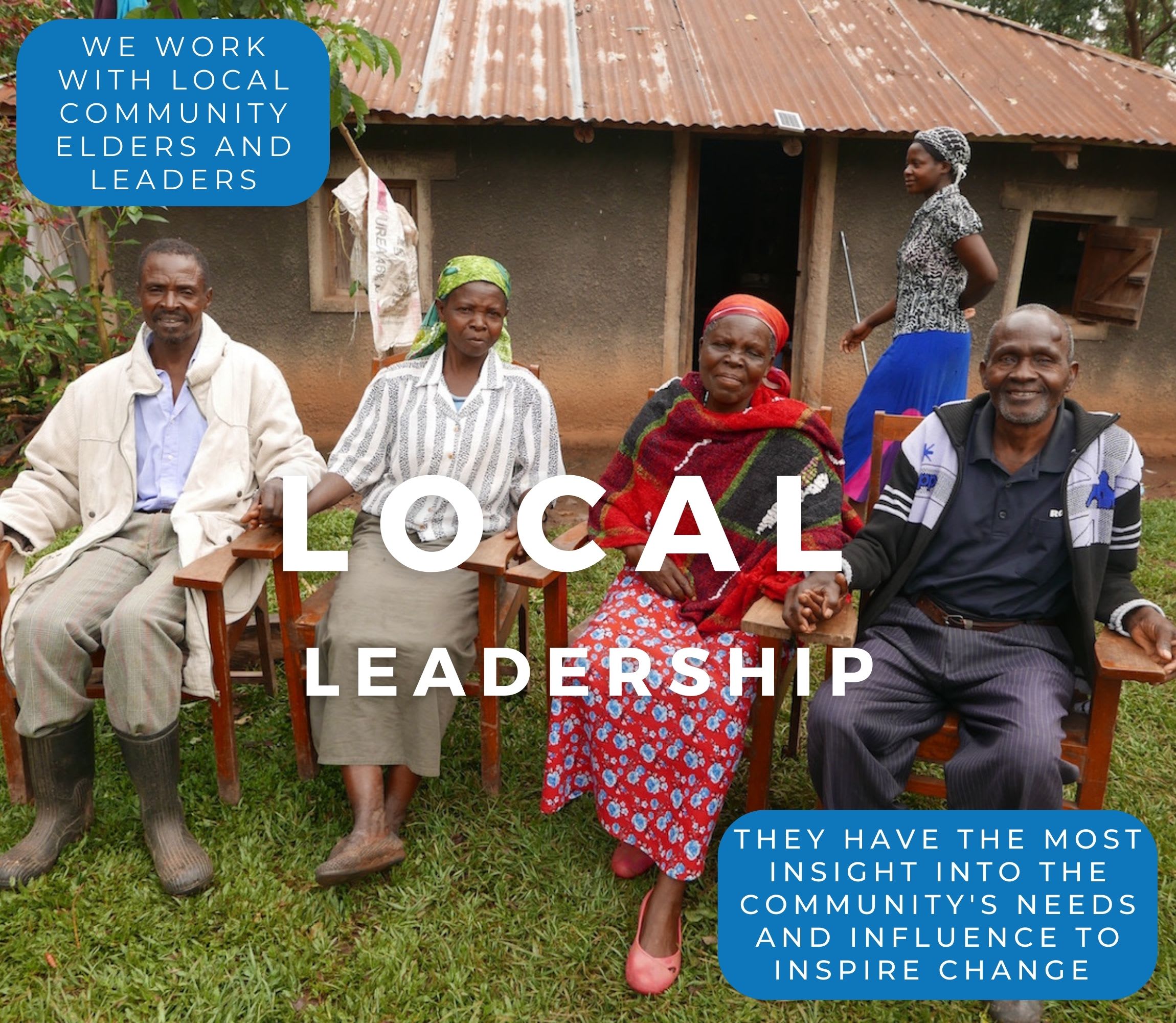
Our technical experts worked with the local community to identify the most effective solution to their water crisis. They decided to safeguard the existing flowing spring.

Spring Protection
Springs are natural water sources that originate from deep underground. As water travels through various layers of the earth, it undergoes a natural filtration process, making it cleaner and safer to drink. To protect these spring sources from contamination, we construct a waterproof cement structure around layers of clay, stone, and soil. This design channels the spring water through a discharge pipe, facilitating easier, faster, and cleaner water collection.

Accessibility Upgrade
At some protected springs, the path down to the water is steep, narrow, and slippery—especially in the rainy season. By extending the concrete stairway and improving the approach, we make it safer and easier for families, older adults, and children to reach the spring for daily water collection.

Chlorine Dispenser
As an extra measure towards water quality safety, uniquely engineered chlorine dispensers are installed at all of our spring protection projects so community members can treat their water with pre-measured doses of chlorine. The chlorine treats any possible contamination and stays active for two to three days, ensuring water stays safe to use even when stored at home. Chlorine delivery and maintenance of the dispensers are part of our ongoing community support.

Community Education & Ownership
Hygiene and sanitation training are integral to our water projects. Training is tailored to each community's specific needs and includes key topics such as proper water handling, improved hygiene practices, disease transmission prevention, and care of the new water point. Safe water and improved hygiene habits foster a healthier future for everyone in the community.

Encouraged and supported by our team's guidance, the community elects a water user committee representative of its diverse members. This committee assumes responsibility for maintaining the water point, organizing community efforts, and gathering fees to ensure its upkeep.
Project Updates


August, 2026: Mwiyenga Community Spring Protection Complete!

Your contribution has made access to clean water for the Mwiyenga Community possible!

We transformed their spring into a flowing source of naturally filtered water. A chlorine dispenser is installed to provide added protection, and we trained the community on improved sanitation and hygiene practices. Together, these components will unlock the opportunity for community members to thrive!

"I believe this will help me get more income for myself. I love farming, especially vegetables. With this water point, I will get some time to myself, which I can engage in planting different types of vegetables and selling them around here and even at the marketplace, earning me more income for my household," said Noel Muchwana, a 55-year-old farmer.

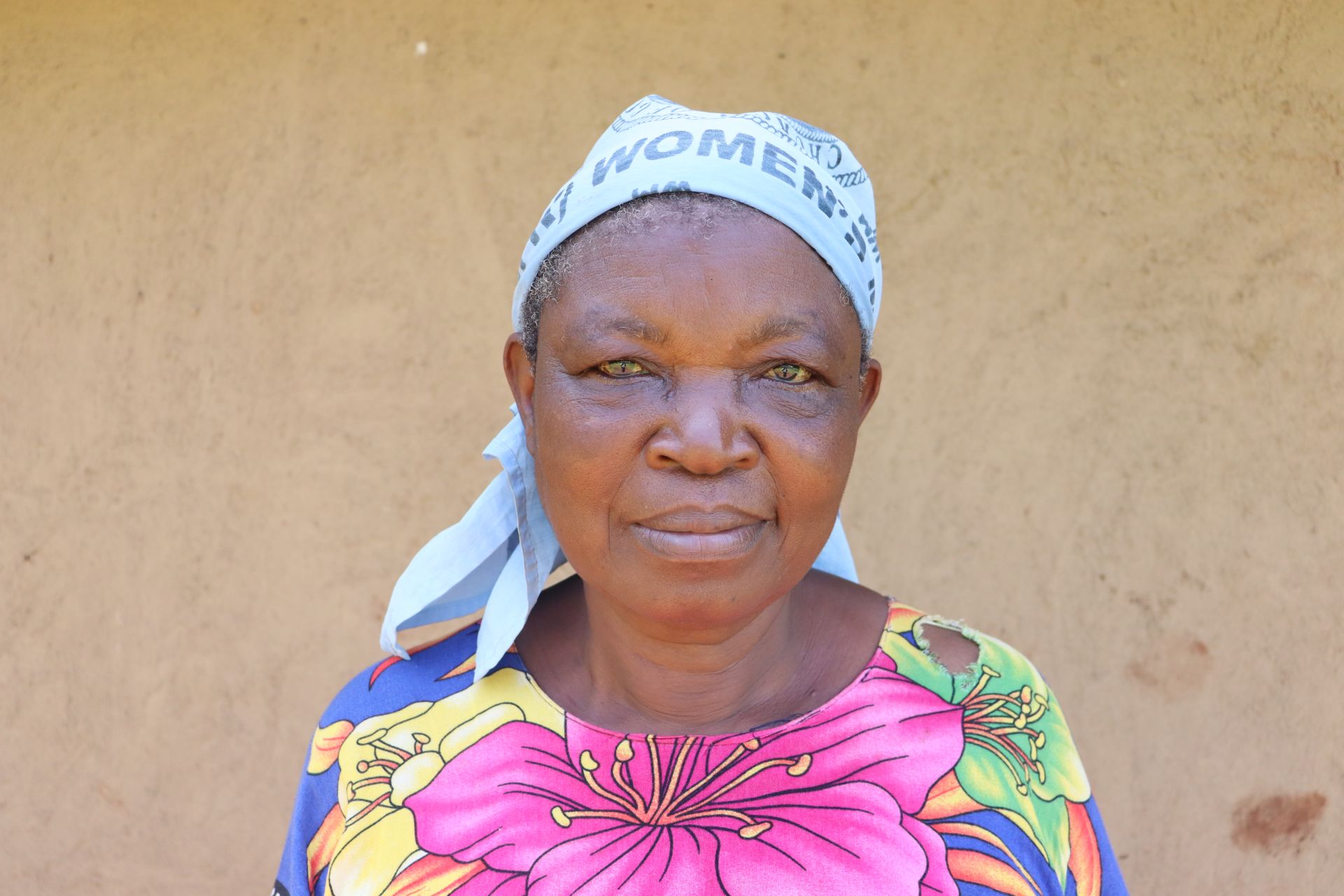
Ms. Muchwana.

Children were just as excited as adults about clean water access!

"Reliable water will definitely improve things for me. The new water point will make things better for me because now, very little time will be taken at the spring to get water. The discharge rate is really high, which means, no room for congestion. This means peace for me. Now, I can go [whenever it] suits me and get my water," said 15-year-old Jane.

Jane.

Preparing for Spring Protection

Community members worked together to source all locally available construction materials for the spring. These included bricks, sand, stones, and fencing poles. Because people have to carry most items by hand, the material-collection process can take anywhere from a few weeks to months.

When the community was ready, we delivered the remaining construction materials, including cement, plastic tarps, and hardware. Then our construction artisan and field officers deployed to the spring to begin work.

Protecting the Spring: A Step-by-Step Process

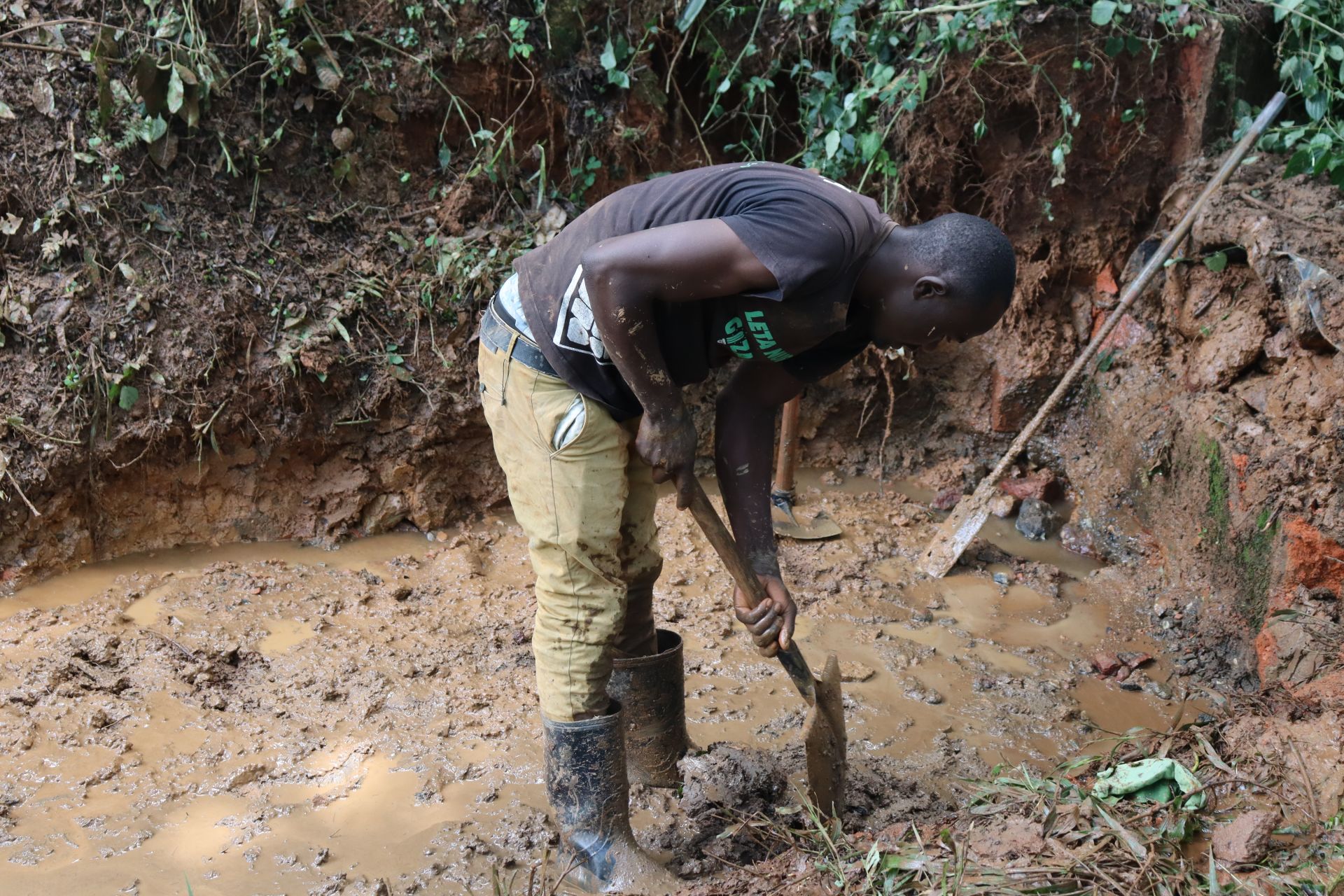
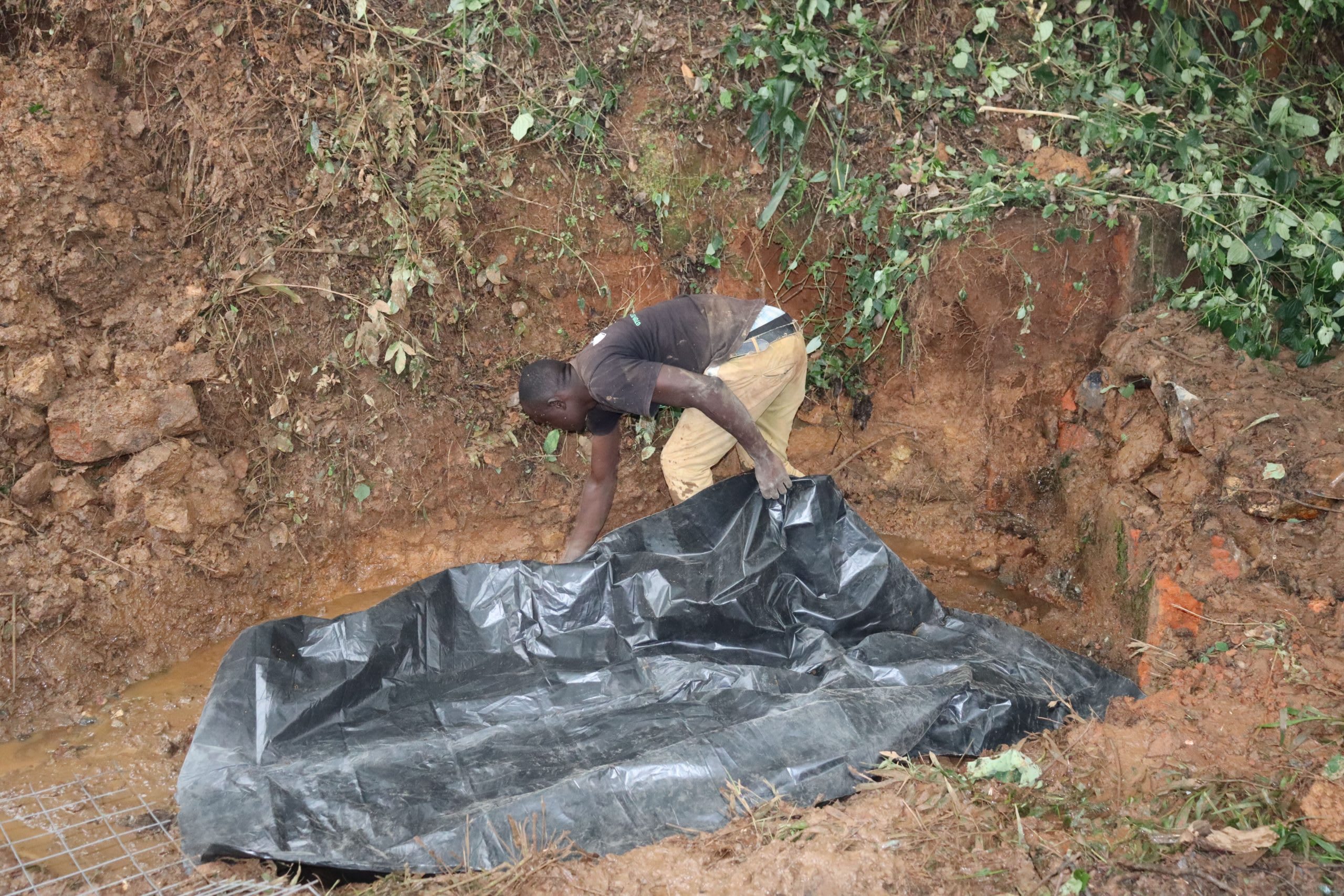
First, we excavated the spring area. This includes digging a drainage channel below the spring and several runoff diversion channels above and around the spring to help divert surface contaminants away.

To ensure community members could still access water throughout the construction process, we also dug temporary channels around the construction site to allow water to continue to flow. Excavation created space for setting the spring's foundation.

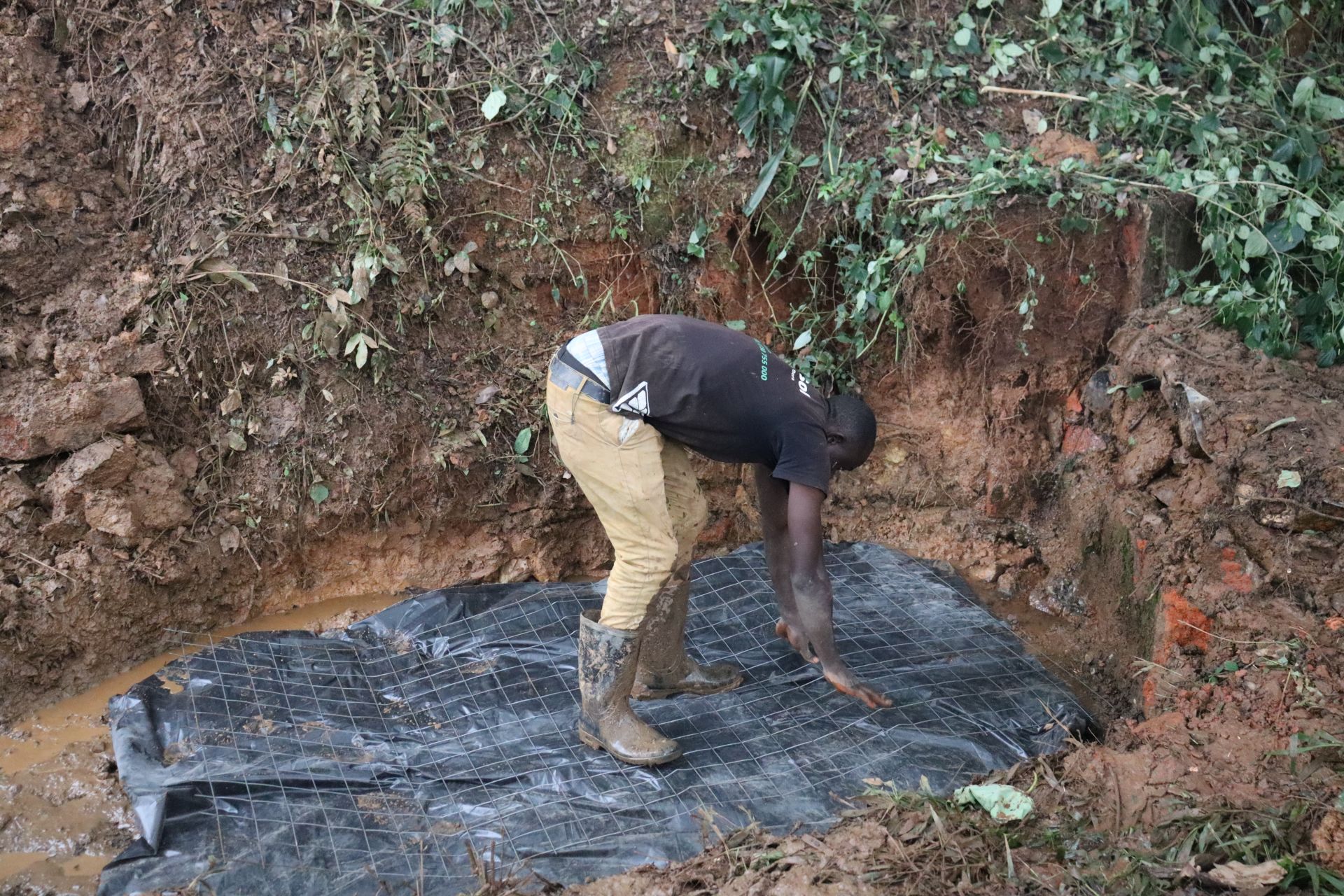
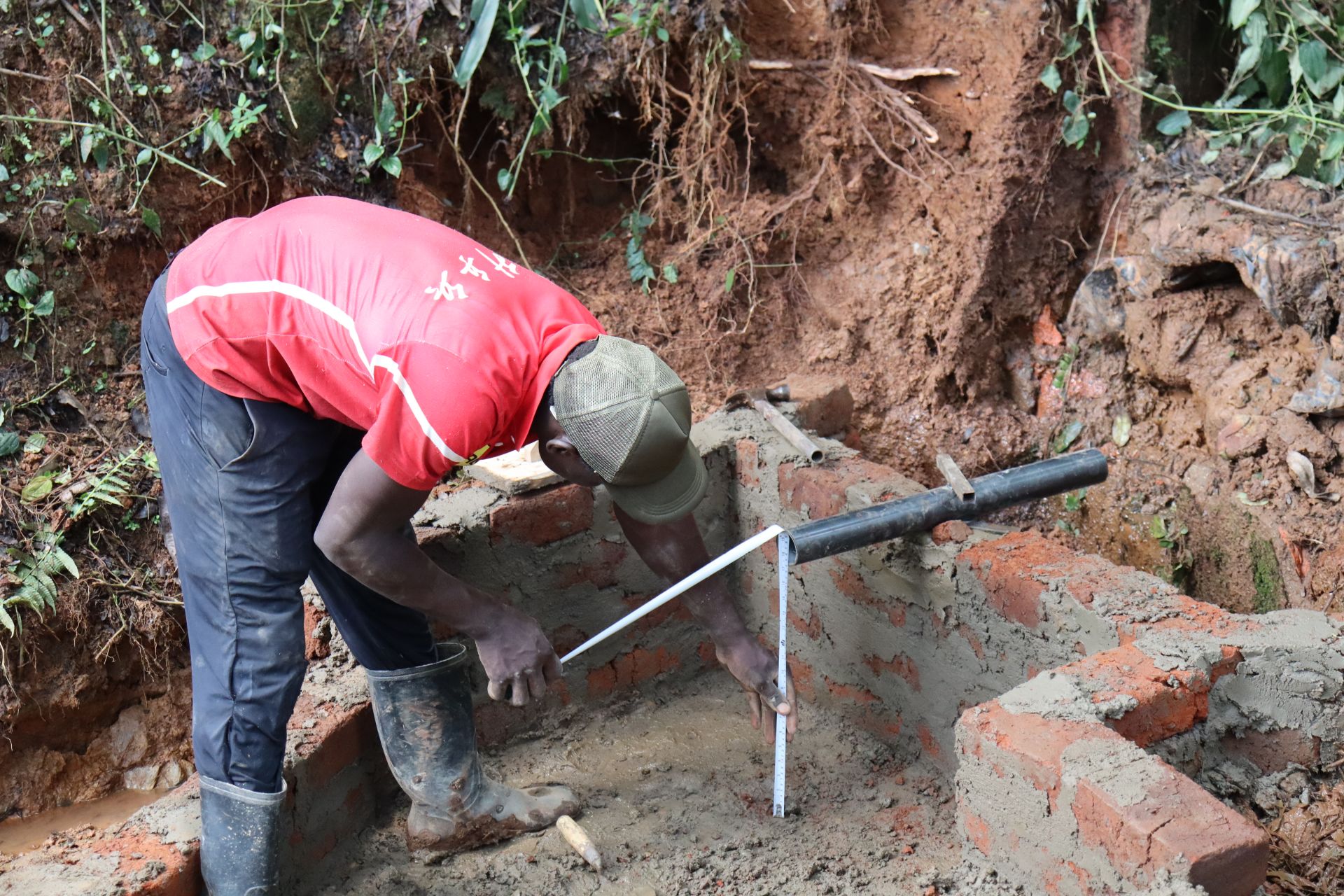
After establishing the base, made of thick plastic, wire, concrete and waterproof cement, we started brickwork to build the spring walls and stairs. Once the walls were tall enough, we began one of the most crucial steps: setting the discharge pipe. The discharge pipe needs to be positioned low enough so the water level never rises above the spring's eye, yet high enough to allow room for the average collection container (20-liters) to sit beneath the pipe without making contact, to prevent cross-contamination.

If we place the pipe too high, back pressure could force water to emerge elsewhere. Too low, and community members would not be able to access the water easily.

In coordination with the walls and stairs, we cemented stones on both sides of the spring's drainage channel. These stones discourage people and animals from standing in that area, which could cause soil erosion and a clogged drainage area.

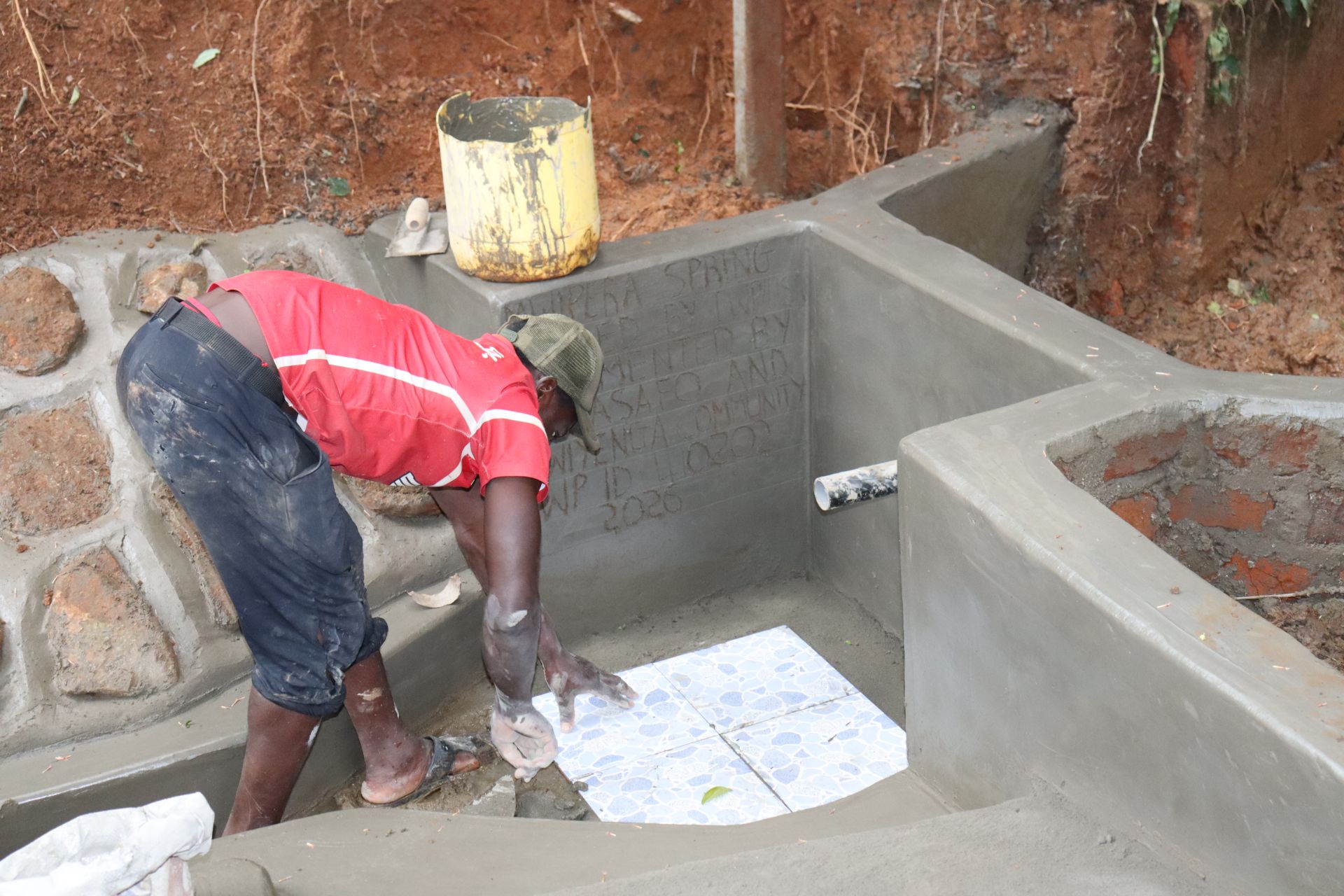
We then cemented and plastered the spring walls. These finishing layers reinforce the brickwork and prevent water in the reservoir from seeping through. In turn, enough pressure builds to push water out through the discharge pipe.

As the walls cured, we finished the stairs and installed tiles beneath the discharge pipe. The tiles protect the concrete from the falling water's erosive force.

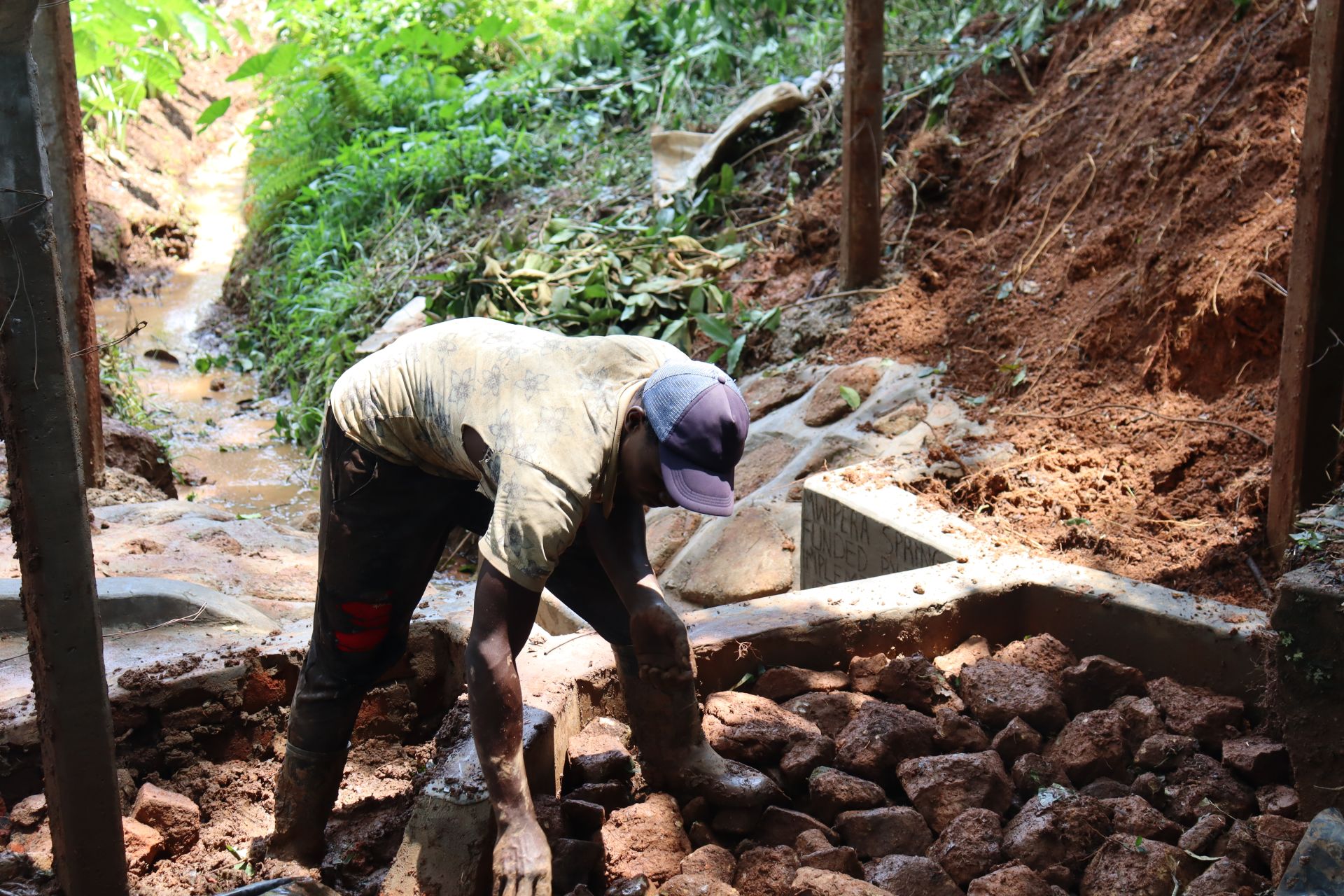
We redirected the temporary diversion channels back into the reservoir box and closed all other exits to force water through only the discharge pipe. We filled the reservoir area with the large, clean stones arranging them in layers like a well-fitting puzzle. We covered the rocks with thick plastic and piled enough dirt on top to compensate for future settling.

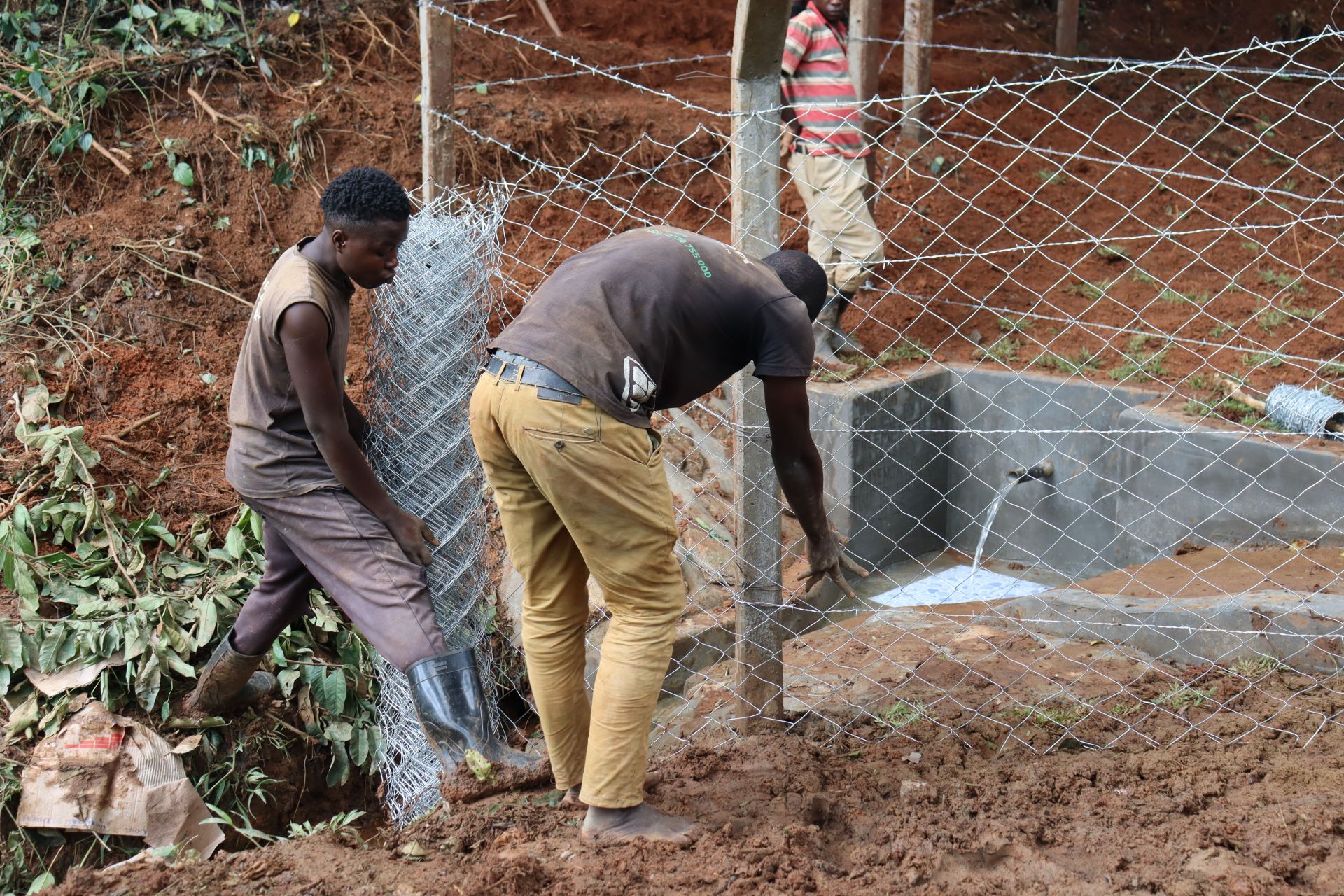
Community members transplanted grass to help prevent erosion and the collection area was fenced. The fence prevents people or animals from walking in the area above the spring, as compaction of this area can potentially compromise water quality.

The construction process took about two weeks of work and patience. As soon as the spring was ready, people received permission from their local field officers to fetch water.

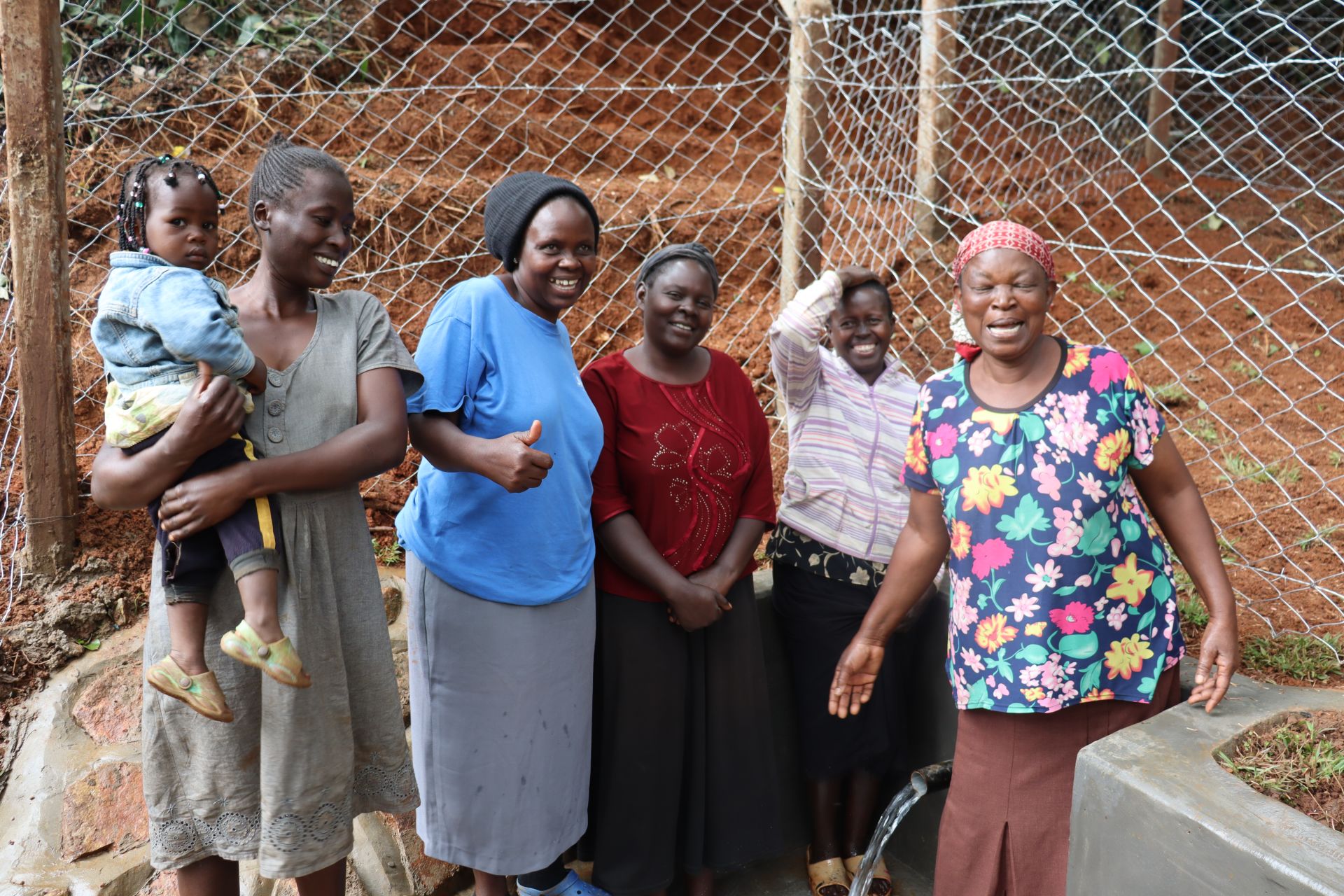
We officially transferred ownership of the waterpoint to the Mwiyenga Community. Happiness and thanksgiving flowed in all directions!

Training on Health, Hygiene, and More

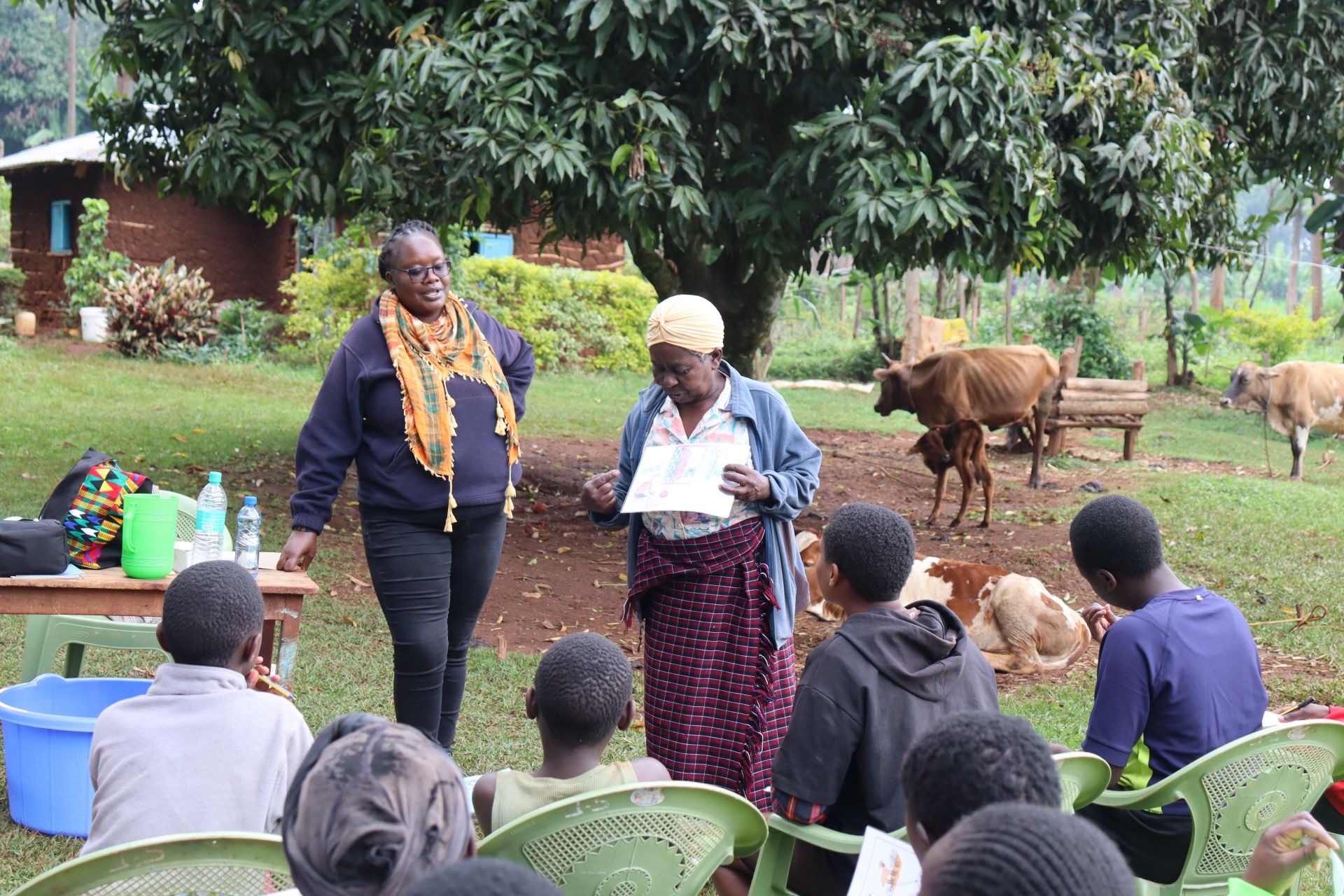
Together with the community, we determined their preferred training date. When the day arrived, facilitators Sam Simidi, Patience Njeri Wanyonyi, and Joel Otuya deployed to the site to lead the event. 28 people attended the training, including 25 women and three men.

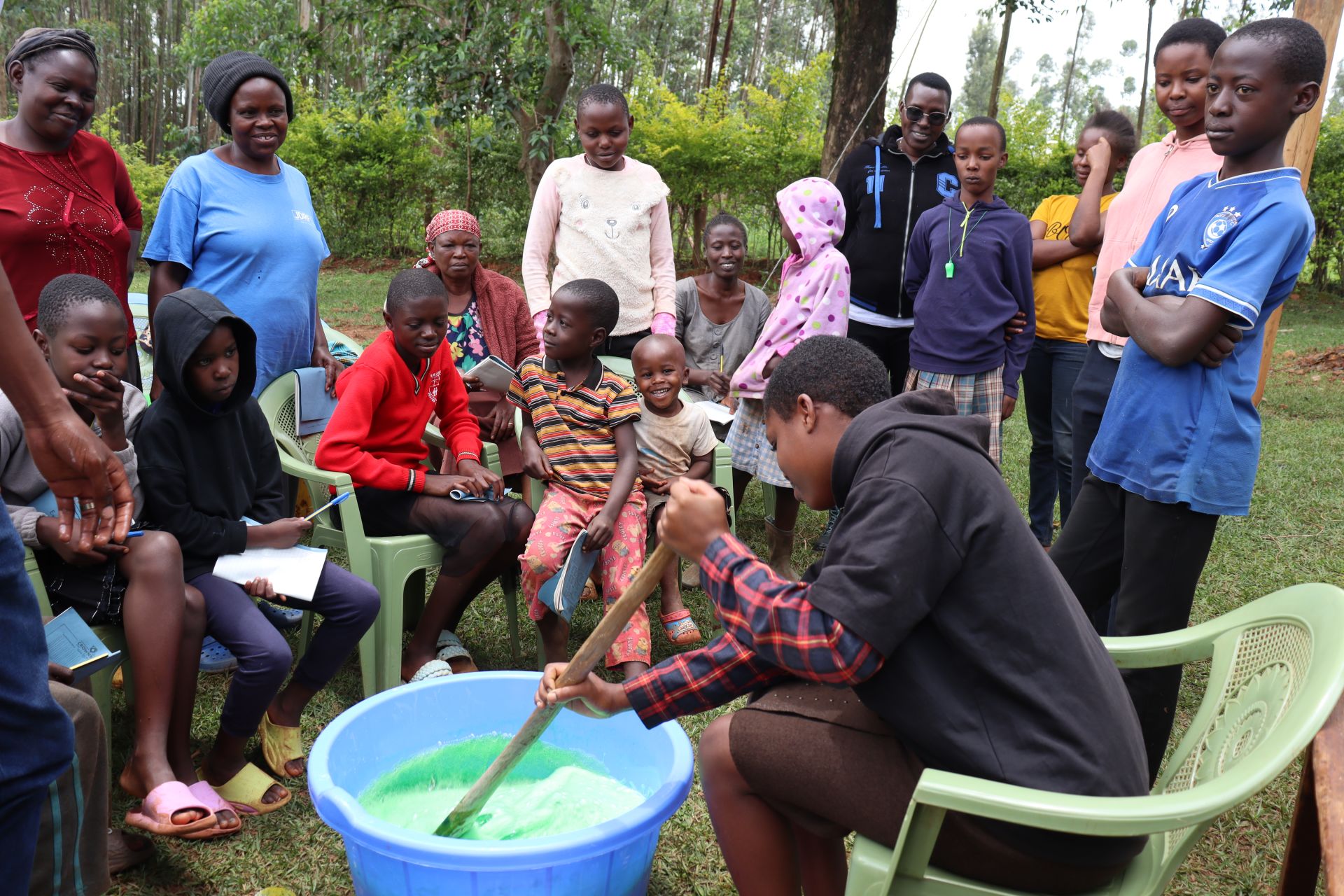
We discussed personal, oral, and environmental hygiene, emphasizing proper water handling, soap-making, and the ten steps of handwashing. We also highlighted the importance of primary health care and covered the operation and maintenance of the water point, as well as leadership and governance. By the end of the training, each participant had a clear understanding of their role in maintaining clean water and promoting good health within their community.

We held an election for the newly formed water user committee, which will oversee the maintenance of the spring. We brainstormed income-generating activities and encouraged them to start a group savings account for future minor repairs to the spring.

Field Officer Patience Njeri Wanyonyi shared: "The women present were really interested in knowing more about how they could make money for themselves, without depending on the men to provide things for them. Sam led the discussion on smart farming, describing to them that it is not about having a big piece of land; you can start with what you have. Most women were really interested, impressed, and challenged themselves to try [it] out."

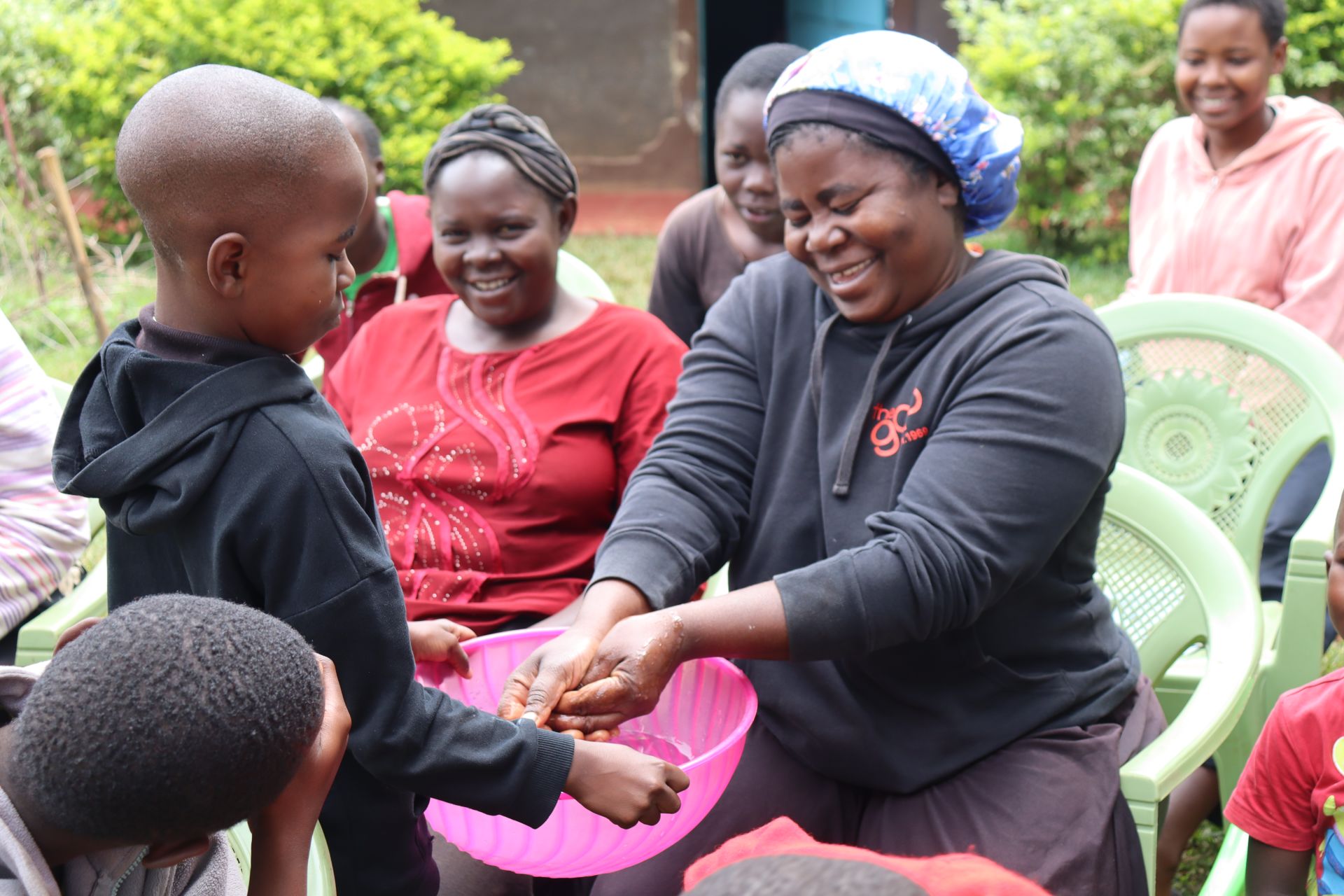
Faith (right) practices proper handwashing technique during the training.

"After COVID-19, some practices like hand washing disappeared immediately. The training was a good reminder [of] why those practices were and still are a very important and necessary part of life. Actually, while the training was ongoing, I immediately put a hand-washing station outside the latrines," said 38-year-old Faith Imisa, a participant who works as a caterer and farmer.

Thank you for making all of this possible!


Update photo


July, 2026: Exciting Progress in Mwiyenga Community!

We’re thrilled to share that, thanks to your generous support, significant change is coming for Rebecca and the entire Mwiyenga Community. Construction has begun on the spring protection project, bringing them one step closer to having clean, reliable water.

But that's not all—during construction, we’re also providing vital health training. These sessions equip the community with essential hygiene practices, ensuring that the benefits of clean water extend to lasting health improvements.

We’re so grateful for your role in making this possible. Stay tuned for more updates—soon, we’ll be celebrating the arrival of safe water in the Mwiyenga Community!


Loading photos...


Project Type

Springs are water sources that come from deep underground, where the water is filtered through natural layers until it is clean enough to drink. Once the water pushes through the surface of the Earth, however, outside elements like waste and runoff can contaminate the water quickly. We protect spring sources from contamination with a simple waterproof cement structure surrounding layers of clay, stone, and soil. This construction channels the spring’s water through a discharge pipe, making water collection easier, faster, and cleaner. Each spring protection also includes a chlorine dispenser at the waterpoint so community members can be assured that the water they are drinking is entirely safe. Learn more here!


Contributors

First Congregational Church of Chatham
Calvert School Fifth Grade for Water 2025 - 2026
5 individual donor(s)